Home Blog Page 2125

Ranches in some countries are larger than states in Nigeria: Bagudu

0

Governor of Kebbi State, Atiku Bagudu, claims that some countries have ranches larger than some Nigerian states.

On Channel Television, he said this while discussing the farmers-herders conflict.

Bagudu said that mapping out grazing routes will help to identify the scale of the herder-farmer crisis, thus justifying President Muhammadu Buhari’s order on grazing reserves.

Buhari recently appointed a committee to examine 368 grazing sites in 25 states to assess the extent of encroachment.

In some parts of the country, this was met with fierce opposition.

However, Bagudu stated that the president’s directive does not rule out the possibility of ranching.

Read also: ASUU threatened to sue SSS for assaulting member

“The committee’s job is to find grazing routes and map them with the help of the states.” It’s not about reclaiming grazing routes; it’s about determining the scope of the problem.

“An audit of grazing reserves is something Mr. President is interested in.” It’s a voluntary and cooperative effort between the states. People claim we discussed ranching. But what exactly is a ranch? Ranching takes place on a piece of land, not in the air.

” Ranches are comparable to grazing reserves in size. Some ranches in some countries, such as Australia, are larger than some Nigerian states.

“How do you know what’s available, what can be supported to host those roving, herding communities that require modernization assistance?”

The governor went on to say that the Fulanis are victims of banditry as well, but that many of their stories go untold.

He claimed that many Fulani people are decent and peaceful, but that some Nigerians do not listen to the Fulani side before accusing them of crimes.

“I’ve met with a number of Fulani communities in my state who have told me that they, too, are victims.” They are the first to be kidnapped and have their castles robbed.

“It’s easier for a drunk child or someone abusing drugs to kidnap his cousin or sister and demand cattle be sold or money be given to him in a community where there is no road, no police, no infrastructure.”

Read also: Forensic audit reveals massive mismanagement of N6 trillion in NDDC funds

They are the primary victims of kidnapping, which is carried out by Fulanis and non-Fulanis who have banded together to form criminal gangs.

Cattle rustling is a crime committed against people who transport or own cattle. Many Fulani are unavoidably victims, and they are impoverished as a result.

“We don’t even hear their stories,” says the narrator. We don’t hear their side of the story. We simply believe they are complicit. No, they aren’t. “The vast majority of them are peaceful, decent people trying to make a living,” he continued.

Buhari praises Boss Mustapha, who is 65 years old

0

President Muhammadu Buhari has praised the nation’s COVID-19 management under Secretary to the Government of the Federation, Boss Mustapha, as a committed public worker.

Buhari made this known in a statement on the occasion of Mustapha’s 65th birthday celebration on Friday in Abuja, according to Garba Shehu, the President’s spokesperson.

“Since his appointment as SGF, my regard and admiration for Mustapha has grown even greater and deeper because of the passion and intensity with which he performs his job,” the president said.

Read Also:  ASUU threatened to sue SSS for assaulting member

“Mr Mustapha is a very skilled individual who has the trust and support of his colleagues.”

Mr. Buhari praised the SGF for “playing a significant role in the nation’s unprecedented achievement in fighting the COVID-19 epidemic.”

He encouraged “other public employees to take a page out of Boss Mustapha’s book, who performs his work with enthusiasm and an extraordinary aptitude for details.”

CBN denies claims made by the Senate Finance Committee that it did not remit 80 percent of its operational surpluses to CRF

0

The Central Bank of Nigeria (CBN) has denied claims made by the Senate Finance Committee that it did not remit 80 percent of its operational surpluses to the Consolidated Revenue Fund (CRF) in the last five years.

At an interactive session with revenue-generating agencies, the Chairman of the Committee on Finance, Solomon Adeola Olamilekan (APC Lagos West), said: “Nigeria would not have had the problem of insufficient revenue to fund its annual budget if revenue-generating agencies were remitting 80 percent of their operational surpluses into the CRF as required by the Fiscal Responsibility Act.”

“Specifically, the Central Bank of Nigeria has not remitted any revenue from its operational surpluses into the Consolidated Revenue Fund in the last five years, despite having a yearly budget of N2.3 trillion.”

But, in a swift response, Dr. Kingsley Obiora, the CBN’s Deputy Governor in charge of Economic Policy, debunked the claim, claiming that 80 percent of the Apex bank’s operational surpluses have always been remitted to the CRF on a yearly basis.

Read also: EFCC designates Lekki as a hotbed of cybercrime in Nigeria

He explained that the remittance is made in accordance with the Fiscal Responsibility Act rather than the CBN Act, which requires a 75 percent remittance.

“With all due respect to the Senate and, in particular, this committee, the CBN had never defaulted on the remittance of its operational surpluses as a law-abiding government agency.”

“Despite the fact that the CBN Act only requires us to remit 75 percent,” he said, “we do this on a yearly basis as required by the Fiscal Responsibility Act.”

The committee’s Chairman, on the other hand, has given the CBN until Friday this week to produce documentary evidence of its remittances from the previous five years.

He also requested that the Apex Bank produce its audited financial statements for the previous five years, as well as its monetary policy position paper on the 2022-2024 Medium Term Expenditure Framework (MTEF) and Fiscal Strategy Paper that the committee is considering.

“Whoever seeks equity must do so with clean hands.” Since you have declared in front of the entire world that CBN has been remitting 80% of operational surpluses to CRF, we need to see the documentary evidence to put the controversy to rest.

He directed, “Let’s have these documents by 11:00 a.m. on Friday.”

The committee chairman’s attempt to compel the Director General of the Budget Office, Mr. Benjamin Akabueze, to confirm or deny the CBN’s claims was unsuccessful, as Akabueze stated that verification will be determined through an ongoing process.

Why Lawmakers Will Not Support Cannabis Legalization – Marwa

0

Brig Gen. Buba Marwa (rtd), Chairman of the National Drug Law Enforcement Agency (NDLEA), has said that any member of the National Assembly who supports legislation legalizing cannabis usage would find it impossible to visit his or her district.

Marwa told State House reporters about this after meeting with President Muhammadu Buhari at the Presidential Villa in Abuja.

According to him, the anti-drug campaign is being carried out in schools, and he laments the fact that children are starting to use drugs as early as elementary school.

“Now, the World Health Organization has stated cannabis damages the brain and changes brain function,” he added. It destabilizes and influences behavior. It also has an effect on the body’s organs and, at some time, may lead to death.

“So, although we applaud those who seek to legalize it for financial benefit, we must exercise caution in reconciling it with life. So it comes down to money vs life. And, as of now, science has not progressed to the point where it can reduce the THC content of cannabis to zero.

“As a result, cannabis is detrimental to human health and a hazard to society. Its legalization must never be permitted. Furthermore, Nigeria has the largest number of cannabis users in the world, with 10.6 million. Isn’t it tragic?

“We should be the best in science, technology, mathematics, physics, and other areas that are regarded as the best; that is what we need.

Read Also:  EFCC designates Lekki as a hotbed of cybercrime in Nigeria

“We can never support legalization, and I don’t see how the National Assembly would pass the act because I know 90 percent or more of the Honorable and Distinguished members of the National Assembly are aware of the implications of this legalization, and they dare not return to their constituencies if anyone signs legalization because we are seeing the implications on the ground.

“Cannabis and narcotics are destroying the young and the families. By the grace of God, it would not be legalized.”

Marwa said that he addressed the idea of constructing barracks for NDLEA agents in each of the federation’s 36 states.

“Finally, and most significantly, I brought up the subject of barracks. The NDLEA has been around for 32 years. All other agencies, including the armed forces, police, customs, and immigration,

Except for the NDLEA, all of the road safety agencies have estates and barracks.

“And today, because of the dangerous nature of the job that we perform, we capture and imprison the offenders and then live among them. When you send agents into the jungle to track down criminals, they will be encouraged if they know their own families are safe in a barracks nearby.

Read Also:  NDDC audit report reveals 13,000 abandoned projects in the Niger Delta: Akpabio

“Clearly, we had a good reaction on that, for which we are thankful, and we look forward to carrying it out as quickly as possible. “I’m confident the economy will allow,” he said.

When asked where the barracks will be located, he stated, “We have, as you know, personnel in 36 states of the Federation and FCT, therefore, we expect barracks in all the locations that as we have to travel the country, the budgetary provisions is something that I will not comment on at this point.”

When asked whether he has received any threats since taking office, the NDLEA chief said, “Several times, it’s practically a daily occurrence since my phone number is available.” Messages can arrive via relatives, coworkers, and occasionally individuals we don’t know but who reside in the area. Having said that, we also take precautions.”

CBN chose Bitt as the technical partner for the CBDC project

0

The Central Bank of Nigeria (CBN) has chosen Bitt Inc., a Barbados-based fintech firm, as the technical partner for its Central Bank Digital Currency, dubbed eNaira, which is set to launch later this year.

Bitt was chosen from a pool of highly competitive bidders for its technological expertise, efficiency, platform security, interoperability, and implementation experience.

CBN will choose Bitt based on the company’s proven and tested digital currency experience, which is already in use in several Eastern Caribbean countries. Bitt was instrumental in the development and successful launch of the Eastern Caribbean Central Bank’s (ECCB) CBDC pilot in April 2021.

The CBDC will enable increased cross-border trade, accelerated financial inclusion, cheaper and faster remittance inflows, easier targeted social interventions, and improvements in monetary policy effectiveness, payment system efficiency, and tax collection, according to CBN Governor Godwin Emefiele.

When compared to existing mechanisms such as wire transfers, cheques, inter-bank transfers, bill payment, and so on, CBDCs enable lower-cost transactions, lowering the overall cost of doing business.

Following the bank’s decision to digitize the Naira in 2017, the Nigerian CBDC pilot, dubbed Project Giant, was the result of extensive research and explorations. More than 85 percent of Central Banks are now considering adopting digital currencies in their countries, prompting the CBN’s decision.

Read also: Gov. Yahaya, Revenue Allocation: Why We Deserve an Upward Review

CBDCs are expected to save Central Banks up to 90% on the costs of minting and issuing physical notes and coins, as well as secure transportation, storage, and distribution, as well as the collection and replacement of damaged notes and coins.

The cryptographically produced digital currencies can also be traced because they have their own digital serial number and watermark, which Central Banks can track and audit. Each transaction is recorded and can be viewed and tracked in real time, making it easier to comply with anti-money laundering (AML) and counter-terrorist financing (CFT) regulations.

Every transaction taking place in CBDCs is instantaneously verified for authenticity on blockchain’s distributed ledger, and it will not be processed unless it is issued by the Central Bank.

Bitt’s Central Bank Management Panel software is designed to provide detailed information and reports on transaction activity in real time, including the number of transactions, transaction speed, and money circulation velocity. This enables central banks to precisely monitor the impact of monetary policy actions and make adjustments as needed.

ASUU threatened to sue SSS for assaulting member

0

The Academic Staff Union of Universities (ASUU) has vowed to sue the State Security Service (SSS) after one of its members was assaulted.

This was revealed by Rabiu Nasiru, chairman of the Ahmadu Bello University (ABU) branch of the union, during a press conference on Friday in Zaria, Kaduna.

He said that the purpose of the press conference was to draw the attention of the authorities and the public to the “unwholesome actions of some DSS employees.”

Mr Nasiru said that while on a union assignment, the SSS attacked Abdulkadir Mohammed, the Kano Zonal Coordinator of ASUU.

He said that SSS agents attacked Mr Mohammed as he was driving to Katsina in his car along Kano’s Hadejia Road by-pass.

Read Also:  TMG calls on government to tackle security issues ahead of 2023 elections

“His sin, if any, was that he drove in front of a DSS-escorted motorcade.

“The incident happened on August 18 at about 2:00 p.m. on Hadejia Road by-pass Kano, and the assault was carried out by DSS personnel in a Hilux truck belonging to Kano State Government House.

“In addition to the physical attack, they shattered Mohammed’s car’s windshield and destroyed the side mirror in a display of force for no fair cause,” Mr Nasiru added.

He urged the SSS’s leadership to take severe action against the officers implicated for casting a negative image on the organization.

Mr Nasiru requested that the SSS force the employees who committed the breach to repair the damaged vehicle or face legal action.

Read Also:  NAFDAC: Unregulated Goods and Health Hazardous Products

He requested that the National Assembly reorganize the SSS or reconsider Section 315 of the 1999 Constitution, which included the military’s 1986 Decree 19.

He said that the assessment would guarantee that the organization adhered to democratic principles and the rule of law.

EFCC designates Lekki as a hotbed of cybercrime in Nigeria

0

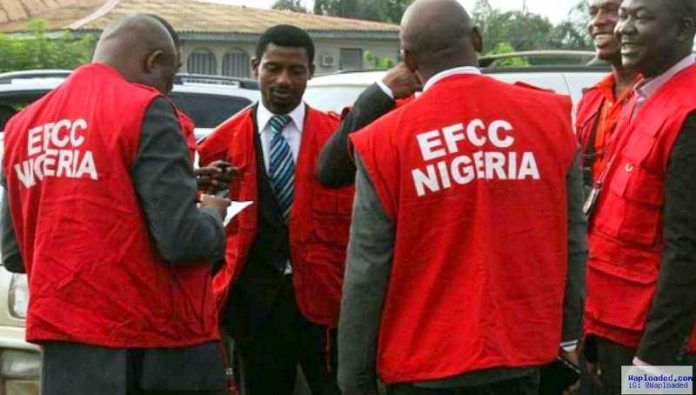
The Economic and Financial Crimes Commission (EFCC) has declared Lagos’ Lekki neighborhood a hotbed of cybercrime.

The EFCC revealed that 402 suspects were arrested in the area in three months in a post titled “Lekki now hotbed of cybercrime – EFCC” posted on its Facebook page on Friday.

The EFCC has identified the Lekki neighborhoods of Ajah, Badore, Victoria Garden City, Sangotedo, and Oniru as hotspots for internet fraudsters in the state.

Many of the suspected fraudsters arrested in the area were between the ages of 25 and 34, according to the anti-graft agency.

“Lekki, Lagos Metropolis’ fast-developing upper-middle-class area, is emerging as the new hub of internet-related fraud in Nigeria,” it wrote.

According to data from the Economic and Financial Crimes Commission’s (EFCC) Lagos Command’s investigation activities for the second quarter of 2021, the Lekki District is the preferred location for all types of cyber fraud syndicates.

Read also: TMG calls on government to tackle security issues ahead of 2023 elections

“The Advance Fee Fraud and Cyber Crime Sections of the Command made a total of 402 internet-related fraud arrests between April and June 2021. The Advance Fee Fraud Section was responsible for 243 arrests, while the Cyber Crime Section conducted 18 sting operations that resulted in 159 arrests and 13 convictions so far.

“The Cyber Crime Section arrested 159 suspects, 70 of whom are from Lekki, including communities such as Ajah, Badore, Victoria Garden City, Sangotedo, and Oniru.

“There were 24 suspects in Ajah, and 14 and 13 in Oniru and Sangotedo, respectively. Badore had a total of eight suspects. Ikoyi and Eko Atlantic, respectively, had two and one suspect. On the Lagos Mainland, Ikorodu and Alagbado make up the rest.

“The suspects are mostly millennials, with 82 of them being between the ages of 25 and 34, indicating that the majority of those arrested are still in school, recent graduates, or university dropouts.”

Gov. Yahaya, Revenue Allocation: Why We Deserve an Upward Review

0

Alhaji Muhammad Inuwa Yahaya, Governor of Gombe State, has said that the consistently increasing responsibilities of state and local governments over the past 29 years have necessitated an upward review of income allocations to the two levels of government.

According to the governor, there has been a great deal of pressure, particularly on state governments in Nigeria, to address difficult problems such as insecurity, environmental degradation, deteriorating infrastructure, and insufficient financing for primary healthcare and basic education.

“Over the last decades, the responsibilities of state governments have grown, but our income distribution has stayed the same,” he says.

The governor made the remarks yesterday during a national sensitisation on the Revenue Mobilisation, Distribution and Fiscal Commission’s (RMAFC) assessment of the current revenue allocation formula for Gombe State.

He said that as the duties of state governments grow, there is a need for a thorough review of the allocation mechanism to ensure states have the resources they need to carry out new and current tasks.

Read also: NDDC audit report reveals 13,000 abandoned projects in the Niger Delta: Akpabio

Yahaya also urged the federal government to give the state particular attention, as it has done for Borno, Yobe, and Adamawa states, all of which have been plagued by insurgency.

“Given Gombe State’s unique location in the heart of the North-east region, we act as the regional shock absorber in witnessing the influx of internally displaced people (IDPs) from frontline insurgency states of Borno, Adamawa, and Yobe,” he said.

“This has placed enormous strain on our fundamental infrastructure and services. It is thus only reasonable that the particular attention given to these three states be extended to Gombe State in order for us to meet new challenges.”

He stated that his administration had accomplished much by increasing revenue generation through fiscal efficiency, discipline, transparency, and accountability in governance, adding that “the fact that we are able to achieve far more than even the richest states attests to our remarkable level of financial efficiency and prudence despite being among the bottom states in terms of federal allocation.”

Earlier, Malam Mohammed Usman Kukandaka, the Federal Commissioner representing Gombe State in the commission, stated that the goal of the sensitization was to educate stakeholders on the importance of participating and making relevant contributions in the review process in order to assist the commission in developing a fair, just, equitable, and acceptable revenue formula for the country.

Read also: Bandits kidnap 73 students in gov’s community, prompting Matawalle to call for self-defense

According to him, as a constitutional requirement, RMAFC is tasked with conducting periodic reviews of the revenue distribution formula and principles in place to guarantee compliance with changing circumstances.

“In 1992, the vertical share of revenue to be allocated to the three tiers of government as proposed by the RMAFC was as follows: federal government 48.5 percent, states 24.0 percent, local governments 20.0 percent, stabilisation 0.5 percent, derivation 1%, FCT 1%, development of mineral resource areas 3%, and ecology 2%,” he said.

He stated that, despite President Olusegun Obasanjo’s administration’s upward revision of the vertical formula to meet current realities, the horizontal sharing formula that takes care of the country’s states and local government areas is based on equality in population, land mass, social development factors, and Internally Generated Revenue (IGR).

TMG calls on government to tackle security issues ahead of 2023 elections

0

The Transition Monitoring Group (TMG) has urged the federal government to address the country’s current security challenges ahead of the 2023 general election.

The organization expressed concern that if security issues are not addressed, the 2023 elections will be marred by voter apathy.

“TMG urges the government to address our multifaceted security challenge as soon as possible before the election in 2023.

“This is to prevent voter apathy that may arise as a result of voters’ inability to travel to exercise their civic rights, the safety of electoral materials and electoral officials, and the credibility of the electoral result,” said the group’s chairman, Auwal Rafsanjani, at a news conference on the state of the electoral process in Nigeria on Thursday.

Rafsanjani expressed regret that politicians were parading unaccounted campaign spending and party financing by using illegitimate funds as the sole means of winning voters over, noting that corruption in Nigeria’s electoral processes showed no signs of abating anytime soon.

According to him, INEC and other relevant agencies must address the threat in order for voters to form a more objective opinion of the candidates for whom they will vote.

Rafsanjani stated that the new leadership would revolutionize Nigeria’s election observation process, resulting in the restoration of the integrity and legitimacy of the entire electoral process, including elections and their outcomes.

TMG, he continued, aimed to ensure the highest standards in Nigerian election administration by ensuring that the election management body and the electorate carried out their legal responsibilities during elections.

He stated that the group would not only observe elections, but would also work to ensure that Nigeria had good governance through responsible leadership.

Read also: House Minority Caucus demands an investigation into the $418 million judgment debts

For improved credibility and fairness, the group requested that the Independent National Electoral Commission’s (INEC) Act be amended to allow it to conduct local council elections.

Since 1999, credible local government elections in Nigeria have been illusory, according to Rafsanjani.

“Rather than reflecting the consent and aspirations of the people as electorates, the processes and outcome of the LGA election reflected the will of the state and ruling party.

“A lack of trust in local elections has resulted from the state government’s political interference and the partisanship of the state independent electoral commission.

“As a result of inconsistency in the application of electoral guidelines and poor communication channels between the state electoral commission and electoral stakeholders, voter apathy is on the rise.

“TMG sees this as a rape of rural governance, posing a serious threat to participatory democracy, accountability, and rural development,” he said.

TMG urged the Nigeria Governors Forum, political parties, and other interested parties to unite in ensuring that credible LGA elections are prioritized and held on time.

He also stated that reforms for local institutional strengthening and a framework for local government development should be implemented.

He went on to say that the autonomy of the states’ judiciary and houses of assembly had yet to take effect, which was a major source of concern.

NAFDAC: Unregulated Goods and Health Hazardous Products

0

Professor Mojisola Adeyeye, Director General of the National Agency for Food and Drug Administration and Control (NAFDAC), has stated that unregulated goods and products are hazardous to human health.

Adeyeye made the announcement yesterday in Benin City, Edo State, as part of the agency’s nationwide sensitization campaign, saying that it has become necessary to inform the public about the dangers of consuming substandard goods.

The director general, who was represented by Dr. Unar Musa, the Director of Narcotics and Controlled Substances, said the campaign aims to address public health issues such as buying medicines from hawkers instead of licensed pharmacies and medicine stores.

“The challenges posed by substandard and falsified Personal Protective Equipment have been exacerbated by the advent of the COVID-19 pandemic,” she said (PPEs).

“The public awareness campaign would also look into codeine abuse and self-medication, particularly among youths, the dangers of using a kerosene tanker to load groundnut oil, the dangerous practice of using potassium bromate to bake bread, and the use of cancer-causing azo-dyes in palm oil.

“Other topics covered by the campaign include the dangers of using sniper to preserve any type of food or to keep flies away from meat, the dangers of trans-fat and excessive oil consumption, the use of formalin on food and its associated health risks, and the low rate of exclusive breastfeeding by lactating mothers and its associated health risks.

“As the sensitisation train travels across the country, the dangers of improper pesticide and insecticide use, improper chemical use and its hazardous effects, as well as the problem of antimicrobial resistance arising from animal meat, will all be on the front burner.”

Read Also:  Forensic audit reveals massive mismanagement of N6 trillion in NDDC funds

According to Adeyeye, public awareness campaigns are still one of the most effective ways to promote and protect people’s health.

She stated that the main goal of this sensitization campaign is to increase and broaden the scope of both formal and informal behavior, as well as change communication strategies in order to reach the most vulnerable communities, particularly at the grassroots.