Home Blog Page 2084

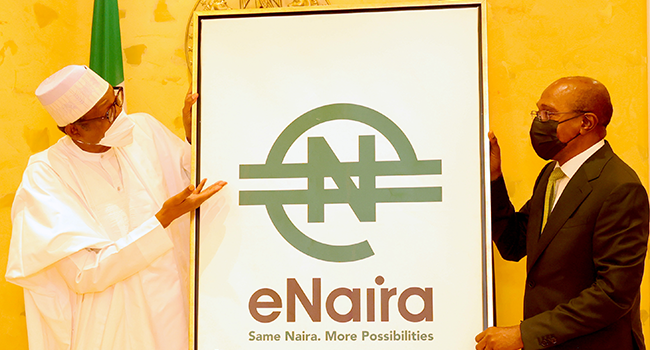
CBN assures users that e-Naira is safe and reliable

0

The Central Bank of Nigeria has stated that its recently launched e-Naira project is safe and reliable.

Mr. Osita Nwanisobi, Director of Corporate Communications, stated this on Thursday while speaking at the ongoing CBN-Fair in Abakaliki.

According to the apex bank, the e-security Naira’s and dependability stem from the use of cryptographic technologies encrypted with two factors for authentication.

The CBN, on the other hand, noted that the new digital financial project may pose some challenges to Nigerians in the short term due to its use of Bank Verification Numbers.

“The issue of security and dependability of the e-Naira platform is guaranteed,” Nwanisobi stated. It is ensured by the technology’s use of cryptographic encrypted two-factor authentication. As a result, the issue of whether the platform is secure is addressed, as it is.

Read Also:  NAF will carry out the recommendations of the Committee on Armed Forces Reform

“The e-Naira project is a journey; we anticipate minor challenges in the short term, and I can tell you where some of these issues will arise.” The e-Naira platform is compatible with BVN, and when I ask some people if they have email addresses, they tell me they don’t.”

He warned Nigerians to avoid unregulated financial schemes promoted by bogus Ponzi operators, claiming that they had been cheated out of their hard-earned money.
“The first step is to educate the Nigerian people, because you are the best security for yourselves.” As a result of our sensitization, you will begin to recognize and avoid some of these things (fake Ponzi operators). “You’ll know the moment you see them,” Nwanisobi said.

“The other thing is for us to work with security agencies to ensure that those who gullibly defraud Nigerians are brought to book, and we have done quite a number in this regard,” he continued. We collaborate with security agencies to ensure that those who claim to be something they are not are held accountable.”

Read Also:   Defense Headquarters will hold joint operations planning exercise

According to him, there is no way a genuine investment can provide 10% monthly returns and 120% annual returns.

“You believe that to be true?” he asked. Where is he going to get the money? What is the individual’s line of work? Is the individual regulated?”

NAF will carry out the recommendations of the Committee on Armed Forces Reform

0

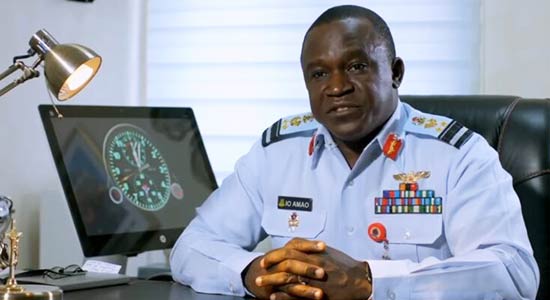
Air Marshal Oladayo Amao, Chief of the Air Staff (CAS), has pledged the Nigerian Air Force’s (NAF) support for the Ministry of Defence Implementation and Advisory Committee as it implements the recommendations of the Committee.

the Committee previously established to reform the Armed Forces of Nigeria (AFN) for effective and efficient service delivery

Air Marshal Amao made the remarks while hosting members of the Committee led by the Committee’s Vice Chairman, Lieutenant General Abel Akale (Rtd), at NAF Headquarters in Abuja.

While noting that there have been several reform recommendations that have never seen the light of day in the past, the CAS expressed optimism that with the rich pedigree of the Implementation Committee members, this time will be different.

There was no doubt that if the recommendations are implemented, the AFN will be restored to its rightful place as a global player.

Read Also:   Kwara APC reacts to defection of an ex-speaker to PDP

The CAS also praised the Honourable Minister of Defence, Retired Major General Bashir Magashi, for recognizing the need to reform the entire military, noting that the timing for such reform could not have been more opportune given the dynamic nature of modern warfare.

Retired Lieutenant General Alkale stated in his remark that the Committee members were at HQ NAF to brief the CAS on their efforts in implementing the various recommendations contained in the approved report, as well as to solicit his support and input on how to move the recommendation processes forward.

While extolling the importance of airpower in counterinsurgency operations, Lt Gen Akale emphasized the importance of ensuring that well-thought-out recommendations are implemented by the three services in light of the renewed emphasis on jointness.

He also thanked the CAS for recommending AVM Emmanuel Wonah, a capable senior NAF officer, to serve as the NAF’s representative on the Reform Committee.

“The officer you sent to represent the NAF on the Committee has been outstanding and should be a source of pride for the NAF,” he said.

Read Also:  Soldiers kill fighter during an attack on army post in Abia by the Biafra National Guard

It may be recalled that the Minister of Defence, Retired Maj Gen Bashir Magashi, established a 21-man Committee in February 2021 to facilitate the reforms of the Ministry of Defence and the Armed Forces of Nigeria.

The Committee, led by Air Vice Marshal Mohammed Ndatsu Umaru (Rtd), had a 10-point Terms of Reference aimed primarily at repositioning the Armed Forces for 21st-century warfare.

The Implementation Committee’s primary responsibility is to ensure that the Reform Committee’s recommendations are carried out.

 Defense Headquarters will hold joint operations planning exercise

0

The Defence Headquarters (DHQ) Abuja is planning a Joint Operations Planning Exercise (JOPEX) for participants of the Army War College Nigeria (AWCN), Naval War College Nigeria (NWCN), and Air Force War College Nigeria (AWCN) from November 1–7, 2021, at the Army War College, Nigeria premises at WU Bassey Barracks, Asokoro, Abuja.

Brigadier General (Retired) is the Acting Director of Defence Media Operations.

Bernard Onyeuko made the announcement in Abuja, Nigeria’s capital.

“The exercise nicknamed Exercise SKY LOCK is the first edition to be organized by the DHQ for the three Services War Colleges at the request of the Chief of Defence Staff, General Lucky Irabor,” Onyeuko said.

Read Also:   IGP admits that massive security deployment may have an impact on turnout, but it is necessary

According to him, the primary goal of the training is to prepare participants to respond effectively to contemporary security challenges confronting Nigeria through a collaborative and multi-agency approach.

“The exercise involves aspects of national security, inter-agency coordination, and logistics planning, counter-terrorism, counter-insurgency, and stabilization operations,” he said.

He went on to say that it would also provide a forum for participants being trained as operational commanders and staff to practice planning, preparation, and execution of these aspects under various scenarios.

He stated that the one-week exercise will bring together umpires, observers, and visitors from the Nigerian Armed Forces, paramilitary forces, and international military assistance partners, among others.

Read Also:  Reps Inquire About N1.2bn NAFDAC Budget For Vehicles, ICT

Meanwhile, the Chief of Defence Staff will be the Special Guest of Honor at the exercise’s opening ceremony on Monday, November 1, 2021, at 0900 hours.

Reps Inquire About N1.2bn NAFDAC Budget For Vehicles, ICT

0

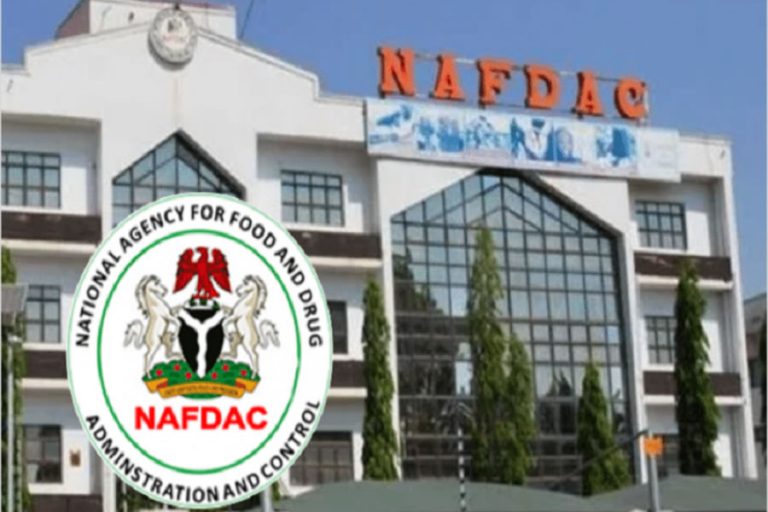
The House of Representatives Committee on Health Services on Sunday questioned the National Agency for Food and Drug Administration and Control about the N1.2 billion proposed in its 2022 budget for the purchase of vehicles, information communications technology, and computer systems.

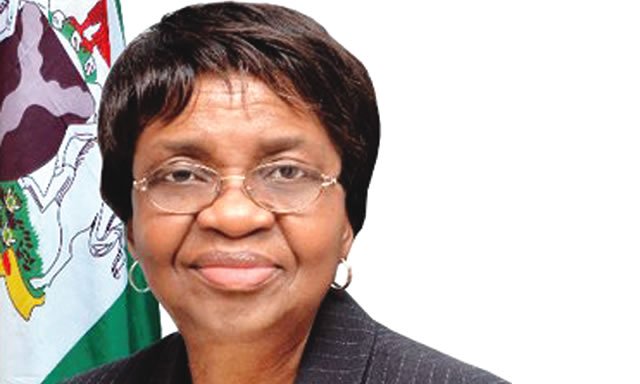
When NAFDAC Director-General Prof Mojisola Adeyeye appeared before the committee to defend the agency’s 2022 budget, the committee questioned the rationale for the massive amounts budgeted for vehicles and ICT equipment, as well as other capital projects.

Read Also:   Kwara APC reacts to defection of an ex-speaker to PDP

Adeyeye told the committee that N2.9 billion was budgeted for the construction of NAFDAC’s offices, N614.3 billion for vehicle procurement, N666.2 billion for the provision of ICT and computer systems, N157.1 billion for plants and generators, N1.4 billion for laboratory equipment, N78 billion for office furniture and fittings, N73.9 billion for meals and hospitality, and N752.6 billion for local and international travels, among other things.

According to the budget breakdown, the agency plans to buy 80 computers (PCs) for N550,000 each and 50 laptops for N625,000 each, as well as computer accessories.

Soldiers kill fighter during an attack on army post in Abia by the Biafra National Guard

0

Nigerian Army troops have killed one of the Biafra National Guard (BNG) fighters who attacked soldiers in Abia State.

On Thursday, protesters stormed a military post in Amaekpu, Ohafia Local Government Area.

Brigadier General Onyema Nwachukwu, Director of Army Public Relations, described the ambush in a statement.

Read Also:  Insecurity and Communication Issues in Nigeria

According to him, the heavily armed assailants arrived at the location in a number of vehicles and fired bullets.

Troops retaliated, killing one, while others fled, abandoning their vehicles. Among the items recovered at the scene was a pump action gun.

Those who managed to flee were apprehended at Eda by soldiers from the Forward Operating Base (FOB) Ohaozara in Ebonyi State.

“The troops recovered three more vehicles and apprehended one of the gunmen,” Nwachukwu continued.

 Kwara APC reacts to defection of an ex-speaker to PDP

0

The Kwara State chapter of the All Progressives Congress, APC, has stated that the home base of former State House of Assembly Speaker, Ibrahim Isa Bio, who defected to the PDP, remains with the APC despite his defection.

In a statement, Tajudeen Aro, the APC’s State Publicity Secretary, said, “Bio’s decision is purely personal and totally unrelated to community development and popular good.”

According to the party, “the entire community, as well as Dr. Jamila Bio, the former minister’s biological daughter, who is currently serving as Senior Special Assistant on SDGs to Governor Abdulrahman Abdulrazaq, are fully behind the APC.”

“It is reassuring indeed that the former minister’s daughter and the entire Gure/Gwasoro community have firmly decided to keep faith with the APC, along with Baruten Local Government and the entire Kwara North Senatorial District, as they witness unprecedented good governance through infrastructure development and effective, equitable representation at state and federal levels,” the party said.

Read Also:  Budget Defense: NAFDAC will spend $57,000 on equipment to detect fake products

The party emphasized the construction of new roads, hospitals, and school renovations, as well as the establishment of the first state radio station in Kwara North, which is located in the Baruten Local Government Area.

It stated that “while we do not want to lose any member, Alhaji Bio Ibrahim has a right to run for Senate on the platform of his choice.”

“The APC, on the other hand, reserves the right to urge every party member to prioritize the interests of their communities, especially now that the APC administration is performing well.”

It was recalled that the former speaker and minister defected from the APC to the PDP on Thursday in his Gure/Gwasoro ward in the State’s Baruten Local Government Area.

ICPC accuses FCDA staff of engaging in real estate scam

0

The Independent Corrupt Practices and Other Related Offences Commission (ICPC) accused Federal Capital Development Authority (FCDA) officials of conspiring with members of the Real Estate Developers Association of Nigeria (REDAN) to defraud beneficiaries of the territory’s mass housing scheme yesterday.

In his submission to the investigative hearing on the operations of real estate developers in the FCT, ICPC Chairman, Prof Bolaji Owasanoye, claimed that the Federal Capital Territory Administration’s (FCTA) Land Department was conspiring with REDAN to defraud Nigerians in the territory.

He stated that his Commission had received several petitions and complaints from the real estate sector, off-buyers, developers, bothering on forgery, non-delivery of projects, marketing of fake land, fraudulent allocation, and government refusal to pay fair values for acquired land, among others.

Even as the House of Representatives charged the country’s security agencies with stepping up their efforts to apprehend perpetrators of all the ongoing shady practices in the real estate sector.

The ICPC president claimed that the FCDA has refused to clean up the real estate sector despite knowing about the shady practices and “looking the other way.”

According to the Chairman, the developers collected massive amounts of land with the agreement to pay counterpart funding and build houses for intending Beneficiaries, only to turn around and sell the land to the highest bidders.

Read Also:  Corps members refurbish abandoned boreholes in Osun community

Owasanoye confirmed that corrupt public officials were using real estate to conceal ill-gotten wealth.

He requested that land title registration be made mandatory in order to identify the true owners of estates and prevent public officials from hiding behind third parties in order to acquire illegal properties.

According to the ICPC boss, many of the estate houses in Abuja were actually used for money laundering, which explains why the houses were left vacant even years after they were completed.

“Since its inception, the ICPC has received a number of petitions.” Despite the fact that we have not compiled the numbers pertaining to land issues,

“However, we have received a number of petitions from stakeholders in the real estate and housing sectors, off-takers, prospective buyers, and the general public regarding the behavior and antics of real estate developers within the FCT and sometimes outside the FCT on this very important subject.”

“The nature of these complaints and petitions varies. They are concerned with forgery, cloaning of land documents, double or multiple land allocations, allocation of land without the minister’s approval, revocation of land title without due process, non-delivery of projects, embezzlement of sourced capital, land racketeering, the use of land syndicates and speculators, marketing of fake layouts, fraudulent allocation of land, inordinate delay in processing of land documents for those who subscribe to their projects, and general nonsense.

“In addressing some of the issues raised in the petitions forwarded to the ICPC, we have successfully investigated and prosecuted some errant public officials and their collaborators, including staff of the Federal Capital Development Authority, Civil Defence, persons who abuse public trust, fraudulent real estate development operatives, and other ancillary people, who have further deepened the FCT’s mass housing gap.”

Read also: Kogi tackles the EFCC over the controversial N20bn loot

“Our investigations have resulted in the recovery of assets and funds that were either diverted or retrieved in the public interest.” In some cases, we simply made certain that the projects under consideration were delivered to the beneficiaries who had paid for them.

“Further to the foregoing, in 2010 and 2011, the Federal Government conducted a systems study and review of mass housing delivery in the FCT, where it was discovered that members of the Real Estate Developers Association of Nigeria (REDAN), who had been allocated huge plots of land for mass housing development in the FCT in collaboration with the Federal Government through the Federal Mortgage Bank and its responsibility to provide infrastructure upon which the allocations were made to them, and These developers failed to pay counterpart funding and deliver infrastructure to the project site, instead offering and selling plots to the highest bidder, in violation of policy.

“The FCDA rarely sanctioned some of these abuses.” In other words, despite knowing about the abuses, the FCDA chose to ignore them. The effect of REDAN members’ actions, of course, is that low and middle-income earners are supposed to be direct beneficiaries of the NHF because some money is deducted from our paychecks as a contribution to the NHF. They were denied housing because the plan and objective were completely undermined by the REDAN collaborators’ deceptive and fraudulent approach, because those beneficiaries could not even secure housing allocation, which is the basis for accessing the fund. The estates became the exclusive preserve of society’s wealthy.

Read Also:  Why Nigeria Loses Over $2.9bn Per Year From Tax Breaks for Multinational Corporations – CISLAC Executive

“The subsequent pressure this places on low and middle-income earners is that it becomes a push factor for public sector corruption, as public servants desperate for their own homes subvert processes, government policies, and abuse their office for private gain in order to meet the desire for decent housing.”

“Furthermore, some members of REDAN obtain funds from the Federal Mortgage Bank for mass housing but divert those funds to build private estates, which are then sold at exorbitant prices to the general public, excluding public officers, who are the main and intended beneficiaries of the Federal Mortgage Bank’s projects and structures, as well as its policies and mandates.” Such public officials are unable to afford the high prices of such homes. It should be noted that, according to the original concept of the government’s mass housing policy, developers are supposed to profile and forward names of allottees to FCDA in order for the agency to issue a certificate of occupancy. In practice, however, developers do not follow these policies, and subscribers are frequently left at their mercy, holding only letters of allocation rather than a proper title to land.

“The ICPC’s intervention in this sector has resulted in recoveries on behalf of some allottees for FMB, FCDA, and, on occasion, other stakeholders.”

“In a similar vein, corrupt public officials use real estate investment as a vehicle for concealing ill-gotten wealth and laundering money.” To conceal the illegal origin of funds, public officials acquire estates under pseudonyms.

“This is made possible by a lack of proper documentation, the registration of titles to land and estates in the country, and the failure to enforce beneficial ownership standards.” A tour of Abuja, particularly the metropolis and the central area, would reveal a plethora of estates that are built but unoccupied. I don’t think any investor would be interested in such properties if they were built with funds borrowed at market rates. They’d put them to use one way or another. As a result, some of those estates are suspected of being used to launder ill-gotten public funds.

Read Also:  Aspirant Demands That Lagos APC Congress Be Cancelled

“For example, the commission has a case where we recovered 241 from a public house from a public officer, and another case where we recovered 60 buildings on a large expanse of land from a public officer.” Corruption in the real estate industry facilitates illicit financial flows. The real estate sector is widely recognized as appealing to IFFs because it is partially informal, poorly regulated, and prone to abuse through the use of shell companies, intermediaries, and third parties to acquire real value with proceeds of crime or illicit funds.

“It is important to note that the main culprits and criminals who are causing problems are the FCDA staff and their collaborators.” Over the years, the ICPC has collaborated with a number of relevant registries to reduce incidents of corruption in the land tenure system through intelligence and information sharing, the availability of our forensic tools for document analysis and the detention of forged documents, and the prosecution of offenders.

“The commission has recommended administrative resolutions at various times, where FCDA is required to correct whatever went wrong and reallocate or withdraw allocations based on what is the proper justice of the case at the time.” This is in addition to prosecuting offenders when infractions are discovered and violations of relevant laws are established, and in some cases, ill-gotten assets are recovered and returned to victims.

“The defunct special presidential investigation panel on public property recovery, in collaboration with the FMB, investigated some real estate developers who failed to remit and pay money owed to the government.” The ICPC continued and completed this exercise, recovering a total of N53, 968, 158, 974.64 from it.

Read Also:  Budget Defense: NAFDAC will spend $57,000 on equipment to detect fake products

“The figure includes a portion of the money that was paid and handed over in advance, with approximately N858 million fully recovered and returned to FBN.” One billion naira in post-dated cheques due in October, and N51 billion plus in promissory notes in advance notarized agreement FMBN. We are pleased that the Ministry, led by the current Minister, has taken the bull by the horns and implemented a slew of measures. He wrote a letter to the ICPC two years ago, requesting collaboration to deal with a slew of anomalies he encountered on the ground, and we responded.
Budget Defense: NAFDAC will spend $57,000 on equipment to detect fake products

0

Prof. Mojisola Adeyeye, Director General of the National Agency for Food Drug Administration and Control (NAFDAC), has revealed that the agency is about to receive some dictating devices called true scan, which are capable of dictating fake drugs circulating in the country.

Adeyeye made the revelation on Thursday while testifying before the House Committee on Health Care Services about the agency’s budget proposal for fiscal year 2022.

According to her, Nigeria was the first country in the world to purchase the device, and it has so far purchased 40 of the devices, which cost 57 thousand US dollars each.

“Another method of detecting substandard drugs in the country is to use a detection device that the FEC approved in December 2020.” Each of these devices costs $57,000 USD. Because of our foresight, we were able to purchase 40 units that are currently being manufactured. TRUE SCAN” is the name of the program.

Read Also:  NAFDAC condemned the US and EU’s repeated rejection of Nigerian food and agricultural products

“About ten years ago, NAFDAC was the first country (agency) in the world to use TRUE SCAN, and we purchased about five or six at the time.” We have now purchased 40, which the FEC has approved, and we intend to purchase more.

“You can use that device and put it on the medicine before it can tell you if it’s Paracetamol or Panadol, but it won’t tell you if the level is substandard or not.” It is now quantitative. “It can tell you whether it’s fortified or not,” she explained.

The Director General also stated that the agency was confronted with challenges from cabals, stating that there are numerous cabals involved in drug trafficking in Nigeria, adding that “we couldn’t overcome these cabals.”

“Some cabals fight us in the course of our work, and we are committed to putting an end to Nigerians being killed by fake products,” she said.

Read Also:  NAFDAC: Unregulated Goods and Health Hazardous Products

The Director-General presented a N25.2 billion estimate for the agency’s 2022 fiscal year expenditure and revenue projections, including capital projects slated for execution.

In summary, the agency has set aside N2.9 billion for the construction of state offices, N1.7 billion for generators, N1.4 billion for laboratory equipment, N1.42 billion for motor vehicles, N666 million for information and communications technology, and N78 million for furniture, for a total of N6.01 billion.

Furthermore, the agency budgeted N6.78 billion for staff emoluments, N262 billion for equipment, N157.8 million for the purchase of laptop computers, and N40.1 million for the construction of its Ebonyi state office in 2022.

Speaking about the proposed amount budgeted for vehicles in the agency’s 2022 budget, Adeleke stated that the agency had previously relied on other organizations’ vehicles to function.

Read Also:  Ambassador TY Buratai and echoes of truth on insurgency

“When I came in, we didn’t have any vehicles; vehicles are our lifeline.” We do 90% of our work in the field, and we can’t do it effectively if we don’t have vehicles. All of the vehicles we have purchased or intend to purchase have been and will be tracked in order to avoid situations in which the vehicles are diverted for purposes other than our work.

“We can’t be fair in our judgment if an organization uses its cars to convey us for inspection, so NAFDAC needs vehicles for inspection and many other duties,” she added.

 IGP admits that massive security deployment may have an impact on turnout, but it is necessary

0

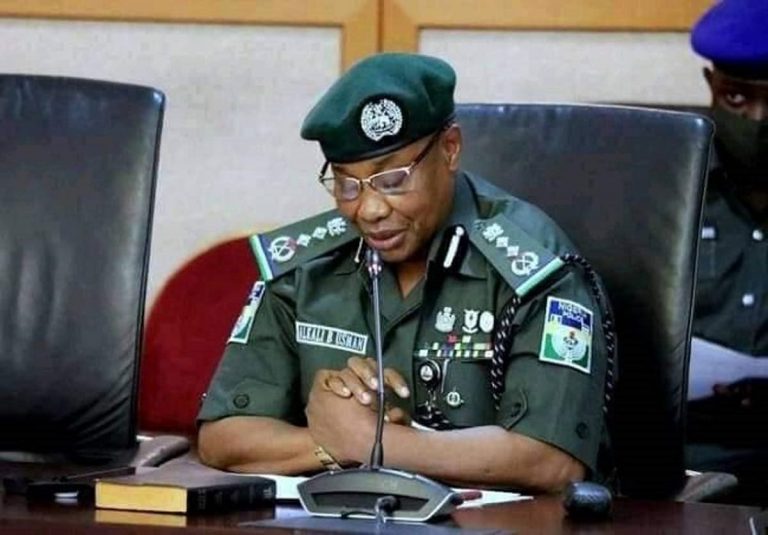
The Inspector General of Police (IGP), Usman Baba, admitted on Thursday that the mass deployment of security personnel for the Anambra state governorship election on November 6 may discourage voter turnout, but that it is a necessary measure to checkmate criminals disrupting the process.

The IGP, who spoke at a ministerial media briefing organized by the Presidential Communications Team at the presidential villa in Abuja, said that in order to ensure that people come out to vote, the police have issued jingles and spoken to stakeholders to assure them of their safety.

Read Also:  Plateau: Police shootouts suspected kidnappers fighting in Jos, one killed, and criminals’ arms recovered

According to him, the majority of officers assigned to polling stations would be unarmed because they would be involved in detecting vote rigging and illegal campaigning at polling places.

“As for the massive deployment, yes, it has its advantages and disadvantages, and that is why, knowing that it has the disadvantage of potentially militarizing the electoral process, we try to involve the engagement of public enlightenment, the engagement of stakeholders that our presence is to police the situation in two ways,” he said.

“It’s just that, while we’re encouraging people to vote, another group or other subversive elements are saying, ‘don’t come.'” We’ll do this and that if you come.’ So there must be some level of assurance that we will provide to these people in order for them to come out, which necessitates a massive deployment of officers and men who will also ensure that subversive elements do not take over the process.

Read Also:  Ndume threatens to leave Nigeria over FG’s rising recurrent expenditure

“While we have other elements that would police the election, which are mostly…we don’t even arm them.” Those we are deploying to polling stations to ensure order and to check for electoral malpractices such as vote buying, campaigning in the polling place, and so on, do not even need to be armed.

“However, you also need to put officers on standby, on patrol, to check would-be persons carrying arms against the state.”

Meanwhile, the IGP has stated that the Police Department has not received any extradition request from the US government for the embattled Deputy Commissioner of Police (DCP), Abba Kyari.

Insecurity and Communication Issues in Nigeria

0

On Wednesday, October 20, 2021, reports in Nigerian media claimed that the Nigerian Armed Forces have yet to fully deploy the A-29 Super Tucano fighter jets purchased from the United States against bandits in the North-West due to an agreement that requires Nigeria to only use the jets against terrorists and insurgents. Surprisingly, the following day, Thursday, October 21, 2021, so-called bandits detonated explosives on the Abuja-Kaduna rail line and attacked a passenger train, forcing the suspension of Abuja-Kaduna train services for nearly 48 hours. The Economist magazine of London published a damning report titled ‘Insurgency, secessionism, and banditry threaten Nigeria’ on Saturday, October 23, 2021.

According to The Economist’s report, which is essentially editorial opinion, the Nigerian army is overstressed and only “mighty on paper,” officers stole weapons and “sold to insurgents,” police are “understaffed, demoralized, and poorly trained,” and they “supplement their low pay by robbing the public.” It concluded by recommending that Nigeria ‘bolster its police,’ with a call to recruit more cops, pointing out that Niger State ‘has only 4,000 officers to protect 24 million people.’ Niger State has a population of about 4 million people. This blunder, however, does not negate the fact that Nigeria is overpoliced. The Economists’ woolgathering nature could have been to blame for such avoidable error.

It is not only the error in presenting the population of Niger State, but the magazine has lost almost all objectivity in analyzing the country’s security challenges. The so-called report was reduced to arguing that the purchase of A-29 Super Tucano jets is wasteful spending because ‘local cops would be better at stopping kidnappings and solving crimes than the current federal force, which is frequently sent charging from one trouble spot to the next.’ Money could be saved by reducing wasteful military spending on jet fighters, which are useless for guarding schools. Britain and the United States, which assist in the training of Nigeria’s army, could also train detectives. Better policing may allow the army to withdraw from areas where it is stoking secessionist fires.’ According to The Economist, what is needed to put an end to banditry and protect schools in the North-West is more police officers, not ‘wasteful’ spending on jets.

Read Also:  NYSC trust fund will lift 100m Nigerians out of poverty – CSO

Mallam Mahmud Jega reminded The Economist magazine on Monday, October 25, 2021, in his weekly article titled Mighty Armies on Paper, how the’mighty’ US army spent over $6 trillion in 20 years fighting the Talibans in Afghanistan only to lose the battle. Similarly, until the signing of the Good Friday Accord in 1992, the’mighty’ British army was unable to defeat the Irish Republican Army (IRA) and bring an end to ‘The Troubles.’ Mallam Jega emphasized that all “conventional armies in this world have difficulty fighting asymmetric warfare, primarily because they are not trained for it.” This is perhaps one of the most important aspects of Nigeria’s insecurity problem: resolving it will necessitate unconventional strategies.

It is shocking that much attention has been paid to the question of whether the Nigerian Armed Forces should deploy newly acquired A-29 Tucano jets to combat insecurity in the country against bandits, insurgents, or terrorists. Isn’t it true that the jets have already been deployed in the North-West, in Zamfara, Kaduna, and Katsina states, and that they have had some notable successes against the bandits? Is it true that Nigeria has an agreement with the US government that forbids it from using jets against bandits? Will the US government actually take steps to prevent the Nigerian Armed Forces and the Nigerian government from using newly acquired A-29 Super Tucano jets to combat bandits in the North-West?

The entire speculation about the ostensibly agreed-upon agreement between Nigeria and the US government to use A-29 Super Tucano jets is insulting to both the Nigerian and US governments. The speculation about the so-called agreement between the Nigerian and US governments on how the A-29 Super Tucano jets will be used, the attack on the Abuja-Kaduna train, and the report in The Economist are all fascinating coincidences. It’s as if someone, somewhere wants to discourage Nigerian Armed Forces from fighting bandits in the North-West, thereby halting any progress made. Recent public debate in the country appears to be aimed at demoralizing Nigerian Armed Forces in their fight against bandits in the North-West, and the attack on the Abuja-Kaduna train is being used to highlight the sophistication of the bandits. If there is one thing that proves bandits are terrorists, it is the attack on the Abuja-Kaduna train. After all, aren’t terrorists people who endanger the lives of ordinary citizens? What could be more dangerous than the activities of these bandits in the North West?

Read Also:  Why Nigeria Loses Over $2.9bn Per Year From Tax Breaks for Multinational Corporations – CISLAC Executive

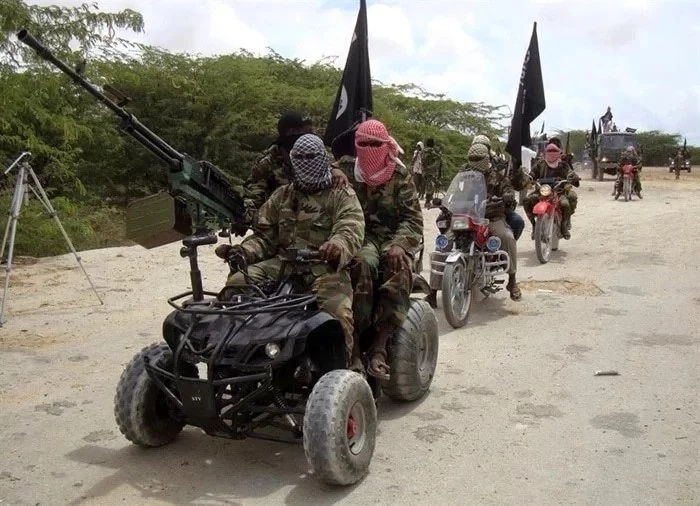
Interestingly, apologists and self-appointed counsellors to the Bandits, such as Sheikh Ahmed Gumi, are growing more confident and irresponsibly mobilizing opposition to declaring the Bandits terrorists. All studies on insecurity and banditry in Nigeria have only confirmed that the bandits operating in the North-West and North-Central have all of the characteristics of terrorist organizations. For example, a study titled, I am a Bandit – A Decade of Research in Zamfara State Bandit’s Den, presented at the 15th Usman Danfodio University, Sokoto Seminar Series, on Thursday, September 9, 2021, reported that bandits are armed groups with ‘contacts across the Sahel, particularly Libya and Mali,’ ‘huge capital,’ ‘in possession of more than 500 AK 47 guns,’ and ‘ According to the report, “over 60,000 weapons are in circulation” in the North-West alone.

Any discussion of the challenges of insecurity and banditry in Nigeria that ignores this reality is simply uninformed and thus unhelpful. The Economist’s arrogance, which led them to believe they could condemn the Nigerian Armed Forces and Government based on some uninformed sentiments, reflects the old ideological mindset that was used in the 1980s to impose Structural Adjustment Programmes, resulting in the destruction of education and health sectors in most African countries, including Nigeria. In fact, the current problems of insecurity and banditry in Nigeria are a direct result of the country’s educational system collapsing, which is why it is estimated that over 12 million Nigerian children are out of school.

Read Also:  Aspirant Demands That Lagos APC Congress Be Cancelled

Many recent studies have highlighted the objective reality of Nigeria’s security challenges, on the basis of which good recommendations for addressing the challenges have been made. One such study was the presentation of an international consulting firm, Nextier SPD (Security, Peace, and Development), titled Stemming the Tears – A Pragmatic Approach to Solving Nigeria’s Security Challenge, to the 27th Nigerian Economic Summit in October 2021. According to the study, “in the twelve months leading up to September 2021, Nigeria recorded 890 violent incidents resulting in 3,787 deaths, 340 injured persons, and 2,542 kidnapped persons…” Banditry is currently the leading conflict type in Nigeria in terms of number of incidents (606 or 68.1 percent), number of deaths (2,470 or 65.2 percent), number of injured (211 or 62.1 percent), and number of persons kidnapped (2,487 or 97.8 percent).’

The Nextier study demonstrated that banditry is the most serious security challenge confronting Nigeria today. Every day, at least six innocent people are killed by bandits. Nextier acknowledges that the recent escalation of the fight against bandits prompted authorities in Katsina, Sokoto, and Zamfara states to impose a communications blackout in several communities in the states in order to prevent communication between bandits and their informants. There has also been a reduction in fuel and food supplies to armed gangs’ hideouts in forests and other areas. Furthermore, cattle movement has been restricted, as have the opening hours of local markets in the worst-affected areas by banditry. Those smuggled fuel to bandits have been apprehended. Since early September, hundreds of ground and air troops have been carrying out an offensive to halt a surge in mass abductions, community raids, and sexual violence in the North-West. The governments of Zamfara, Sokoto, Kebbi, Kaduna, Niger, Katsina, and Nasarawa states have agreed to recruit 3,000 special vigilantes in the troubled regions to boost military efforts aimed at halting violence in both the North-West and North-Central.

Read Also:  Gbajabiamila Still Hasn’t Sworn In Taraba Rep, One Month After Court Order

The point is that, more than ever before, Nigerian Armed Forces have been achieving successes in fighting bandits in the North-West since July 2021, when the recently acquired A-29 Super Tucano jets arrived and were deployed. As a result of their successes, Nextier observed that bandits are migrating and launching attacks in formerly peaceful areas, which may explain in part the recent attack on the Abuja-Kaduna rail line and train services on Thursday, October 21. A major challenge is the need to foster trust in order to strengthen collaboration between the Nigerian Armed Forces and citizens in order to put an end to banditry. According to Nextier’s submission, “the military needs to win “hearts and minds” and build trust with the community in order to access the information.” Given the current state of the relationship, this strategy will necessitate significant effort and patience on the part of the military.’

These challenges are easily reduced to commentaries and opinion analysis. Those who want to take advantage of Ni’s security challenges