Home Blog Page 2073

Let the breeze of openness to bring warmth to the world

0

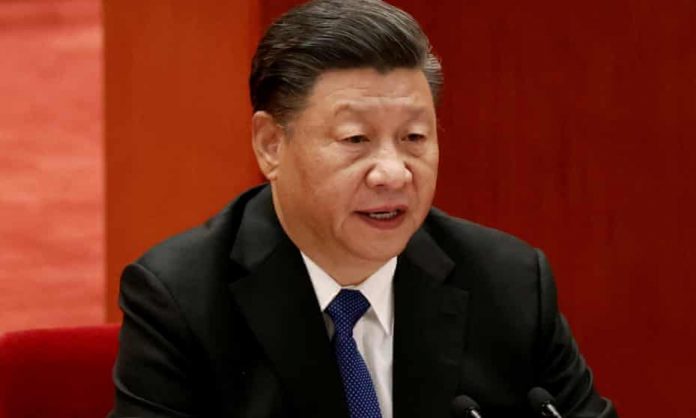
H.E. Xi Jinping, President of the People’s Republic of China, Delivers a Keynote Address at the Opening Ceremony of the Fourth China International Import Expo

November 4, 2021

Your Excellencies, the Presidents of the United States of America and the United Kingdom,
Your Excellencies, International Organizations’ Heads,
Your Excellencies, Delegation Leaders,
Ladies and gentlemen, distinguished guests,
Dear Colleagues,

Hello and good evening! It gives me great pleasure to meet you online in this cloud meeting as the fourth China International Import Expo (CIIE) begins today. To begin, I would like to extend a warm welcome to our distinguished guests on behalf of the Chinese government and people, as well as in my own name, as well as warm greetings and best wishes to our old and new friends.

China is a firm believer in following through on its promises. The measures I announced at the third CIIE to further open up the market have been mostly implemented. The Hainan Free Trade Port has implemented a negative list for cross-border trade in services; reform and innovation for pilot free trade zones are steadily progressing; foreign investment access continues to expand; the business environment continues to improve; negotiations on the China-EU Comprehensive Agreement on Investment have concluded; and China is among the first to have completed domestic ratification of the Regional Comprehensive Economic Partnership (RCEP). China has overcome the impact of COVID-19 to achieve innovative foreign trade growth. As the only major economy to record positive growth in goods trade last year, China has made significant contributions to maintaining global industrial and supply chain stability and boosting global economic recovery.

Read Also:  CBN: Foreign currency inflows fell to $1.83bn in 2020, Year of COVID

Friends, Ladies and Gentlemen,
As we speak, the world is witnessing the combined effects of major changes and a pandemic, both of which have not been seen in a century. Unilateralism and protectionism are on the rise, and economic globalization is under pressure. Several studies show a steady decline in the World Openness Index over the last decade, as well as a deterioration in global consensus on opening up, both of which are cause for great concern.

To sail upstream, a boat must either forge ahead or be driven backward. We must stay on top of the current trend of economic globalization and assist countries all over the world in broadening their openings while rejecting unilateralism and protectionism.

This is critical if we are to lead humanity to a better future. China’s modernity is defined by its willingness to open up. The 20th anniversary of China’s accession to the World Trade Organization is this year (WTO). China has fully met its accession commitments over the last two decades. Its overall tariff rate has been reduced from 15.3 percent to 7.4 percent, which is lower than the 9.8 percent commitment made during the accession process.

Over 2,300 pieces of legislation and regulations have been reviewed and revised by the central government, and over 190,000 pieces have been reviewed and revised by local governments, all of which have contributed to the release of market and social vitality. China has provided the international community with 350 billion masks, over four billion protective suits, over six billion testing kits, and over 1.6 billion vaccine doses since the start of COVID-19. China has actively promoted international cooperation in the fight against the pandemic and has advocated for the waiver of intellectual property rights on vaccines for developing countries.
These are the concrete steps taken by China to honor commitments and fulfill responsibilities.

Over the last two decades, China’s economy has grown from sixth to second largest in the world, its trade in goods from sixth to first, and its trade in services from eleventh to second.

Read Also:  Economy: Business leaders must pay close attention to public sector leadership – NESG

China has led developing countries in foreign investment utilization, and its outbound direct investment (ODI) has risen from 26th to first place. Over the last two decades, China has been deepening reform and pursuing all-around opening up, seizing opportunities and rising to challenges, and stepping up to its responsibilities and benefiting the entire world.

Since joining the WTO, China has continued to open its doors to the rest of the world, igniting a new wave of domestic development while providing a boost to the global economy.

China’s development and progress since its WTO accession 20 years ago are the result of much hard work and tenacity on the part of the Chinese people, led by the Communist Party of China (CPC). It is also the result of China’s proactive efforts to strengthen international cooperation and pursue win-win outcomes.

On this occasion, I would like to express my heartfelt gratitude to all Chinese and foreign friends from various social sectors for participating in and witnessing this historic process, as well as for supporting China’s opening up and development efforts.

Read also:  Business Daily;- Reopening Of Nigeria Borders And Impact On Sub-regional Economy

Friends, Ladies and Gentlemen,
“One can tell the inside of a thing by observing its outside, and see the future development by reviewing the past,” the ancient Chinese observed. To thrive, any country or nation must follow the logic of history and develop in accordance with the trend of the times. As for China, we will not waver in our determination to open wider at a high standard; we will not waver in our determination to share development opportunities with the rest of the world; and we will not waver in our commitment to an economic globalization that is more open, inclusive, balanced, and beneficial to all.
First and foremost, China will vigorously defend true multilateralism. The multilateral trading regime, with the World Trade Organization at its heart, is the bedrock of international trade. The multilateral trading system is currently facing challenges. China believes that the WTO reform is heading in the right direction. We support the multilateral’s inclusive development.

1

trading regime, as well as the developing members’ legitimate rights and interests China will participate actively and openly in negotiations on issues such as the digital economy, trade and the environment, industrial subsidies, and state-owned enterprises, while also defending the multilateral trading regime’s position as the primary channel for international rule-making and ensuring the stability of global industrial and supply chains.

Second, China will vigorously pursue market opportunities with the rest of the world. China has a population of over 1.4 billion people and a middle-income group of over 400 million. Our annual imports of goods and services are estimated to be around US$2.5 trillion. All of this creates a massive market. In the future, China will place a greater emphasis on increasing imports and pursuing balanced trade development.

China will establish more demonstration zones for creative import promotion, optimize the catalogue of retail imports via cross-border e-commerce, encourage on-site processing of imported goods from trading between border residents, and increase imports from neighboring countries. China will improve the integration of its domestic and foreign trade, accelerate the development of international consumption center cities, promote Silk Road e-commerce, build modern logistics systems, and strengthen cross-border logistics capacity.

Read Also:  China is prepared to assist Nigeria in reducing poverty – Ambassador

Third, China will vigorously promote high-quality opening.
China will further reduce the negative list for foreign investment and gradually expand the opening of telecommunications, healthcare, and other services. China will revise and expand the encouraged industry catalogue to direct more foreign investment toward advanced manufacturing, modern services, high and new technology, energy conservation and environmental protection, and the central, western, and northeastern regions. China will carry out stress tests for high-standard opening up in pilot free trade zones and the Hainan Free Trade Port, as well as release a negative list for cross-border trade in services in the pilot free trade zones. China will actively pursue participation in the Comprehensive and Progressive Agreement for Trans-Pacific Partnership (CPTPP) and the Digital Economy Partnership Agreement, as well as engage in extensive international cooperation on green and low-carbon development and the digital economy (DEPA).
Fourth, China will steadfastly defend the world’s common interests. China will actively participate in cooperation within the United Nations, the World Trade Organization, the G20, APEC, the Shanghai Cooperation Organization, and other institutions, and will encourage more discussions on issues such as

1

Trade and investment, the digital economy, and green and low-carbon development are all on the agenda. China will advocate for the equitable distribution and free trade of vaccines and other critical medical supplies around the world. China will promote high-quality Belt and Road cooperation in order for more countries and peoples to benefit from its development opportunities and tangible outcomes. China will actively participate in global efforts to combat climate change and ensure food and energy security, as well as provide more assistance to fellow developing countries through South-South cooperation.

Read Also:  China Enacts Strict New Online Privacy law

Friends, Ladies and Gentlemen,

“The going may be tough when one walks alone,” a Chinese proverb says, “but it gets easier when people walk together.” As the pandemic continues to wreak havoc and the global economy struggles to recover, it is even more critical that people all over the world band together to get through this difficult time. China stands ready to collaborate with all countries to build an open global economy, so that the spring breeze of openness can bring warmth to all parts of the globe.
Thank you very much.

Gbajabiamila sends Armed Forces Trust Fund, South-West Commission, and 18 other bills to the Senate for approval

0

Hon. Femi Gbajabiamila, Speaker of the House of Representatives, signed 20 bills passed by the House on Monday, including the Armed Forces of Nigeria Trust Fund bill and the South West Development Commission Bill, 2021, for transmission to the Senate for concurrence.

Hon. Gbajabiamila signed the 20 bills during a brief ceremony in his National Assembly office.

The 20 bills are among many others that have already been passed by the House and sent to the Senate for concurrence before being sent to President Muhammadu Buhari for his signature.

Read Also:  Ambassador TY Buratai’s enduring legacy of excellence

The Armed Forces Bill seeks to establish the Nigerian Armed Forces Trust Fund. It will provide special financial support for the Armed Forces, including regular personnel training and the provision of security/defence equipment for effective defense of Nigeria’s territories and counter-insurgency operations. On October 13, 2021, the House passed the bill.

Another is the National Agricultural Development Fund Bill, 2021, which seeks to establish the National Agricultural Development Fund to fund agricultural development. On October 13, 2021, the House also approved it.

The Speaker also signed the National Assembly Library Trust Fund Bill, 2021; the Chartered Institute of Forensic and Certified Fraud Examiners of Nigeria Bill, 2021; the National Biotechnology Development Agency Bill, 2021; the South West Development Commission Bill, 2021; the North Central Development Commission Bill, 2021; and the South-East Development Commission Bill, 2021.

Read Also:  Breaking: EFCC and prison officials were fighting over Maina at the time

The Federal College of Education (Technical) Ako, Ago-Iwoye, Ogun State Bill, 2021; the Federal College of Agriculture Malumfashi Bill, 2021; the Federal College of Education (Technical) Keana, Nasarawa State Bill, 2021; the Federal University of Agriculture and Entrepreneurship Saki Bill, 2021; the Federal Polytechnics Act (Amendment) Bill, 2021; and the Abubakar Tafawa Balewa University Bauch

Court Jails Maina, ex-pension boss for fraud

0

Abdulrasheed Maina, former chairman of the defunct Pension Reform Task Team (PRTT), has been convicted of money laundering by Justice Okon Abang of a Federal High Court in Abuja.

The former pension boss was arraigned by the Economic and Financial Crimes Commission (EFCC) in 2019, but pleaded not guilty to a 12-count charge of N2 billion money laundering brought against him.

The trial judge ruled that Maina stole over N2 billion in pension funds in his ruling.

Maina is guilty, according to the judge, of concealing his true identity as a signatory to accounts opened in two banks, UBA and Fidelity Bank, by using the identities of his family members without their knowledge.

Read Also:  Breaking: EFCC and prison officials were fighting over Maina at the time

The cash deposits in the accounts were N300 million, N500 million, and N1.5 billion.

He claimed that throughout Maina’s civil service, his salary and emoluments could not have equaled the funds in theose accounts.

The court also found Maina guilty of paying cash for a property in Abuja worth $1.4 million, exceeding the statutory threshold of N5 million and without going through a financial institution.
He was found guilty on all 12 counts and sentenced to eight years in prison by the court.

Although the law provided for a maximum sentence of 14 years, the judge was moved by Maina’s allocutus plea, which is a plea made to the court by a defendant who has been found guilty but has not yet been sentenced.

The judge ruled that the sentence would be served concurrently, beginning on October 25, 2019, the date of arraignment.

The court ordered Maina and his company, Common Input Property and Investment Limited, to forfeit approximately N2.1 billion traced to their bank accounts to the federal government, after which the company was ordered to be wound up.

Read Also:  Ambassador TY Buratai’s enduring legacy of excellence

In addition, the court ordered that Maina’s properties in Abuja’s Life Camp and Jabi Districts be forfeited to the government.

The convict’s bulletproof car and a BMW 5 series vehicle discovered at the convict’s residence would also be auctioned, with the proceeds forfeited to the government.

Remember that last month, Justice Abang sentenced Faisal, Maina’s son who is still at large, to seven years in prison on a three-count money laundering charge.

Breaking: EFCC and prison officials were fighting over Maina at the time

0

On Monday, after Abdulrasheed Maina, the former chairman of the defunct Pension Reform Taskforce Team, was sentenced, there was an altercation at the federal high court in Abuja (PRTT).

Maina was found guilty of money laundering and sentenced to 61 years in prison, according to previous reports.

Following the announcement of the verdict, members of the Economic and Financial Crimes Commission (EFCC) clashed with counterparts from the Nigerian Correctional Service (NCoS).

Following the judge’s sentencing, prison officials, who had been waiting in the courtroom and on the court grounds, led Maina out.

However, the EFCC operatives insisted that Maina ride in their vehicle, which caused some confusion.

The EFCC had charged Maina with money laundering on a 12-count charge worth N2 billion.

Corruption is a persistent problem in Nigeria. Nigeria was estimated to have lost over $400 billion to corruption since independence in 2012, according to estimates. The country was ranked 144th out of 180 countries in Transparency International’s Corruption Index in 2018. (with Somalia, at 180th, being the most corrupt, and Denmark the least).

Arsenal Leapfrog Man Utd triumphs over Watford

0

Arsenal moved closer to the top four in the Premier League with a 1-0 home win over Watford yesterday, thanks to a second-half goal from Emile Smith-Rowe in manager Mikael Arteta’s 100th league and cup game in charge.

Arsenal moved up to fifth place with 20 points from 11 games, two points behind fourth-placed Liverpool, who lost to West Ham last night. The Hammers are now third in the table, with the same 23 points as second-placed Manchester City.

Arsenal’s 100th league goal under Arteta came from Smith-Rowe, who drilled in a low shot from 18 metres after striker Pierre-Emerick Aubameyang missed a first-half penalty for the hosts, who also had two goals ruled out for offside.

Bukayo Saka’s early effort was disallowed, and Watford goalkeeper Ben Foster smothered Aubameyang’s 35th-minute penalty kick before making a superb reflex save on a close-range Gabriel header.

Read Also:  Carabao Cup quarter-final fixtures for Arsenal, Chelsea, Liverpool have been confirmed

Foster, however, was helpless in the 56th minute when Arsenal defender Ben White surged forward after winning possession in midfield and teed up Smith-Rowe, who scored with a first-time shot.

Aubameyang had a goal disallowed in the 73rd minute, and Joshua King wasted Watford’s lone chance in the 86th, before the visitors had Juraj Kucka sent off for a second yellow card after fouling Arsenal’s left back Nuno Tavares.

Ambassador TY Buratai’s enduring legacy of excellence

0

By Nkechi Odoma

The name General Tukur Yusuf Buratai might not fade away anytime soon. The name has continued to resonate with the exploits of the Nigerian Army in the prosecution of the war against insurgency in the country. I say this for the principal fact that while he held sway as the Chief of Army Staff; it was indeed a golden era in the annals of the Nigerian Army.

Ambassador TY Buratai, in some quarters, has been described as that Chief of Army Staff that left enduring legacies that redefined the ethos in counterinsurgency operations and civil-military relations. I must add that these two pillars were somewhat the hallmarks of the TY Buratai era in the Nigerian Army. The records are readily available for perusal. Hate him or love him; he was the soldier and the commander at the same time. He was in the trenches with the troops, commissioned projects, and engaged the intellectual community. He was robust and broad in defence of democracy in Nigeria.

The list is endless, and I would classify him in the region of legends that came, saw and conquered. And the awards and recognitions were not in short supply. At some point, it became a harvest of awards from within and outside the country. Needless I mentioned his conferment with the Brazilian Military Order of Merit Award, which is the highest military honours awarded to those military officers that have distinguished themselves in various military endeavours.

Looking at the Nigerian Army before and after him indeed reveals tales of an enduring legacy of unalloyed commitment and passion to ensuring that the Nigerian Army regains its pride of place in the preservation of the territorial integrity of the country. And this much he ensured through the numerous reforms carried out. I beg to state that the overarching objective was to transform the Nigerian Army into a professional force that implements its operational strategies with internationally recognized rules of engagement.

Under TY Buratai, the welfare of officers and soldiers was prioritized, so much so that it boosted the morale of a force that was hitherto laced with lethargy. What some might not know is that this lethargic feeling was primarily responsible for the inability of the Nigerian Army to confront the Boko Haram insurgents.

It’s on record that in less than two years at the helm of affairs, the Nigerian Army gained ascendency over the Boko Haram group. The capture of the once dreaded Sambisa forest was the hallmark of the TY Buratai era.

In my considered opinion, one of the strategies of TY Buratai was the boosting the morale of the officers and soldiers of the Nigerian Army through numerous ways such as prompt payment of salaries and allowances, massive improvement in the living standards in army barracks across the country and the institutionalization of research and policy formulation. For example, under TY Buratai, army barracks experienced a facelift. Command secondary schools were renovated and equipped with the best of facilities. The prestigious Nigerian Military School in Zaria also was not left out through the reintroduction of combat training to boost the students’ morale.

The Tukur Buratai Institute for War and Peace is another legacy project of TY Buratai, designed to enhance training and capacity building for military personnel and civilians alike in counter-terrorism and insurgency, peacebuilding and construction. In this regard, I wish to state that the emphasis on training and capacity building was indeed strategic because, in modern times, tanks and guns are not the only weapons of warfare. This remains exemplary now and in the years to come.

The establishment of the Nigerian Army University was another brilliant one by TY Buratai. I dare say that in the annals of the Nigerian Army, there hasn’t been a period like the TY Buratai era because virtually all facets of the Nigerian Army as an institution were touched.

Therefore, it is not surprising that despite leaving office as the Chief of Army Staff, the name TY Buratai has ceased to leave the lips of officers and soldiers of the Nigerian Army. Let me digress and little. I could say that TY Buratai was somewhat selfish because he went all out to set lofty standards in leadership. This is good in the sense that anyone appointed as Chief of Army Staff must strive to build on these legacies at the risk of being labelled a failure because his name has continued to dominate the discourse in the security circles in the country.

Today, TY Buratai is the Ambassador of Nigeria to the Benin Republic. We must agree that the much regional cooperation in addressing the security challenges in Nigeria is gathering momentum. Nigeria is indeed blessed to have such a personality. My verdict is this; TY Buratai has undoubtedly raised the bar in leadership. And it behoves on those aspiring into leadership positions to take a cue. The lessons are of courage, character and competence. It was indeed an era of the enduring legacy of excellence.

Odoma, a public affairs analyst wrote this piece from Abuja.

CBN: Foreign currency inflows fell to $1.83bn in 2020, Year of COVID

0

The Central Bank of Nigeria (CBN) reported a significant reduction in the volume and cost of foreign exchange procurement in 2020, the year of COVID, when the entire world was on lockdown and businesses were closed.

The bank stated that a total of $1.83 billion was procured during the period, representing a decrease of $2.12 billion or 53.67 percent compared to the $3.95 billion procured in 2019.

According to the apex bank’s Currency Operations Department (COD) annual report, which was posted on its website, the CBN also reduced its expenditure on currency printing from N75.52 billion in 2019 to N58.61 billion in 2020.
The central bank explained that this was used to fund Bureaux De Change (BDC) operations, as well as the payment of estacode and Personal Travel Allowances (PTA) to Ministries, Departments, and Agencies (MDAs).

Read Also:  CBN will launch the much-awaited digital currency as the bank is almost completing all necessary steps

The CBN stated that the receipt and authentication of foreign currency deposits by Deposit Money Banks (DMBs) has decreased significantly as a result of the global trade downturn in 2020.

This represented a decrease of N16.91 billion, or 28.84 percent, from the previous year.
According to the central bank, currency printing consumed N64.04 billion in 2018.
According to sources, the cut was in line with the CBN Governor, Mr. Godwin Emefiele’s, policy goal of lowering the cost of printing bank notes and cash management in the country.

The Central Bank Digital Currency (CBDC), also known as the eNaira, which was recently unveiled by President Muhammadu Buhari, is in line with the policy of further reducing the cost of printing the naira.

According to the report, the total stock of currency (issuable and non-issuable) in the CBN vaults stood at 2.75 billion as of December 2020, up from 2.64 billion in 2019, representing a 105.73 million piece or 4% increase.
Total issuable notes (newly printed notes and Counted Audited Clean notes) were 592.94 million pieces in the review period, compared to 726.43 million pieces in 2019, representing a decrease of 133.49 million pieces or 18.38 percent.

The central bank reported that total income from currency management activities was N6.50 billion in 2020, down from N13.24 billion the previous year, a decrease of N6.74 billion or 50.92 percent.

The bank explained that the income was primarily generated by penal charges on unsorted banknotes deposited by Deposit Money Banks (DMBs) and charges for authentication of foreign currency deposits with the central bank.

Read Also:  The government of Ogun has promised to attract more investment, according to IGR

The CBN, on the other hand, incurred a total of N67.21 billion in currency operations expenses in 2020, a decrease of N17.96 billion or 21.08 percent from N85.18 billion in 2019.

Despite the limitations imposed by the COVID-19 pandemic and its impact in 2020, the apex bank completed an upgrade of the Cash Activity Reporting Portal (CARP) for transmission of currency management data from the financial industry to the Nigeria Inter-Bank Settlement System (NIBSS).

It also completed the development of the Mint tracking system application, a needs assessment on the infrastructure, user sensitization, a test run at five branches, and end-to-end system tests in preparation for the pilot launch in 2021.

The CBN also began the process of establishing a currency lab for banknote quality assessment, authentication, and independent investigations, as well as to adjudicate cases of suspected counterfeit banknotes.
It also registered an additional Cash-in-Transit (CIT) company, bringing the total to nine CIT companies, in order to increase private sector participation in CIT services, among other things.

NNPC revenue shortfall of N1.29 trillion in nine months

0

The Nigerian National Petroleum Corporation (NNPC) had a revenue deficit of N1.29 trillion between January and September of this year, according to the most recent data from the national oil company.

Despite its projected gross annual revenue of N4.979 trillion for the current fiscal year, based on a monthly expected income of N414 billion, the corporation only made N2.44 trillion during the period, according to the corporation.

Read Also:  Nigerians will be notified when we are ready to recruit – NNPC

Despite forecasting a gross income of N3.734 trillion for the first nine months, the NNPC failed to meet the target in any of the months under review. However, it had its best month so far this year in September, when it earned more than N400 billion.
In January, the corporation fell far short of its target, earning only N195.62 billion out of a projected N414.9 billion for the month, and in February, it fell even further to N191.19 billion.

Similarly, in March, the NNPC earned N224.58 billion; in April, it earned N156.36 billion; in May, revenue totaled N320.3 billion; and in June, the NNPC earned N295.39 billion.

In addition, the NNPC more than halved its total projected income in July, earning N270.4 billion; did exceptionally well in August, earning N389.1 billion; and had its best month yet in September, earning N400.446 billion.
The increase in the NNPC’s gross revenue in the last two months of August and September could be attributed to rising crude oil prices, which have risen to a year high of $86 per barrel, up more than 60% since January when it began to rise.

Read Also:  NNPC opposes banks’ decision to reduce funding for fossil fuels

This, however, has not translated into significantly more revenue for the federation because a large portion of it goes to petrol subsidy payments, despite the start of the implementation of the Petroleum Industry Act (PIA), which should normally ensure a free market regime.

In the same vein, the document revealed that the NNPC had recorded a negative variance of N724.2 billion as of September from its cost recovery/cash call projection tagged T1/T2 for the year amounting to N2.72 trillion and an estimate of N1.55 trillion for the first nine months.

The corporation forecasted N172.66 billion in monthly expenses for the purpose in 2021 in its income and expenses statement, but was only able to meet its obligation to the tune of N82.2 billion in January, N79.5 billion in February, N87.5 billion in March, N75.8 billion in April, and N124.33 billion in May.
The NNPC was able to pay N56.6 billion, N70.4 billion, and N104.5 billion in June, July, and August, respectively, and fulfilled its obligation to the tune of N147.501 billion in September, but was still left with a huge deficit of N724.2 billion for the period under consideration.

As previously reported, fuel subsidies consumed N864 billion over the nine months, while pipeline security consumed N34.8 billion, exceeding its projected N34.8 billion for the entire year by N12.59 billion as of the ninth month of the year.
According to the data, only the subsidy payment and pipeline security and maintenance obligations are fully paid for among all of the company’s obligations.

Read Also:  Benue is Nigeria’s worst governed state, a true picture of Afghanistan – Agbese

The national oil company, renamed NNPC Limited, has faced numerous challenges over the years, rendering it unable to compete with peers in other parts of the world.
Some of the most serious issues are oil theft, state-backed petrol subsidy payments, and aging infrastructure across the entire industry, particularly in the upstream, which has hampered the industry’s ability to meet its OPEC-allocated production quota for many months.

In October, the group’s Group Managing Director, Mallam Mele Kyari, raised the alarm that a few Nigerians, whom he described as the elite, steal up to 42.25 million barrels of crude oil per year.

Speaking recently at a forum organized by the Nigerian Guild of Editors (NGE) in Abuja, he blamed the elite, including politicians, for the nation’s continuous fuel importation and the poor state of the nation’s refineries, but said the corporation was improving since President Muhammadu Buhari decided not to interfere in its operations.

“As we all know, Nigeria is currently suffering from an energy deficit. All of our petroleum products are imported. Every attempt to save our refineries in recent years has resulted in one setback or another.

Read Also:  COVID-19: Nigeria records one death and 86 new infections on Sunday

“While oil prices are rising and should have resulted in a bountiful harvest for Nigeria’s ailing and hydrocarbon-dependent economy, importation of the finished product erodes necessary gains through the use of foreign exchange earnings and payment of subsidies, which have risen to more than N1 trillion in less than eight months since the scheme was introduced through the back door.”

“Who is stealing crude oil?” It is not a common man in the village. It is the ruling class, and we must all work together to combat them. “When we fight them, it is for the sake of all of us,” he explained.
According to a recent review, the national oil company has lost over 42 million barrels due to underproduction in all of its assets in the Niger Delta that it operates alongside its Joint Venture (JV) partners in the last year.

Benue is Nigeria’s worst governed state, a true picture of Afghanistan – Agbese

0

I was not surprised that Nathaniel Ikyur, the newly appointed Chief Press Secretary to Gov. Samuel Ortom Adorogo, was quick to respond to my anger that Ortom’s poor leadership has turned Benue into an Afghan-like society.

I am bemused at the contents of Ikyur’s response. Maybe because he was in a mad haste to reply my trenchant criticisms of how badly Ortom has led Benue for the past six and half years, Ikyur had the audacity a well-honed liar used to deceiving the public, to deny the obvious.

Ikyur had the arrogance of a man cocooned in odious lies to claim that Ortom pays salaries promptly. As I shall show in this rejoinder, Ikyur lied several times in his response. I shall also demonstrate that to liken Benue to Afghanistan is to understate the enormity of the weight of suffering, pains and poverty which the utterly wicked administration of Samuel Ortom has imposed on Benue.

Afghans could legitimately be offended that I equated their country with the worst state in the Nigerian federation. As unacceptable as the insular and human rights-violating Taliban regime in Afghanistan is, I was generous enough not to have argued that Ortom’s Benue is worse than Afghanistan in many respects.

First, Ortom himself has claimed that there are 1.59 million Internally Displaced Persons in Benue. By all accounts, this figure is highly suspect. It is most probably a figure conjured from a magician’s hat of tricks, but for the sake of an argument, let me give it to Ortom. Let’s admit without conceding that Benue has 1.59 million IDPs. Benue’s war which has been intensified since Ortom unfortunately became the governor of the state, began during the era of his predecessor, Gabriel Suswam. Even, by January 2018, after Ortom had been in office for almost three years, the Benue State Emergency Management Agency (SEMA) enumerated only 80,000 IDPs.

Now, even with the de-escalation of the conflicts that have resulted in creating IDPs, Benue’s IDP figure has jumped twenty times the 2018 population. That is, 80,000 versus 1,590,000 people. That means that a staggering 38 percent of Benue’s population are displaced persons. There is no comparable figure anywhere else in the entire global system. Even at the height of Nigeria’s Civil War, no such outlandish number of people were uprooted from their homes.

Benue’s IDP population figure is like salary figures under Ortom. Workers die, resign, or retire and they are not replaced with new employees. Yet, salaries keep ballooning. What is worse, the Ortom administration is petrified of revealing the actual salaries paid every month. I call that Ortom’s magical abracadabra mathematics. You reduce the crisis that creates IDPs and yet the number of IDPs magically increases.

The only reason why 38 percent of Benue’s population consists of IDPs is that it is in someone’s political and other interests to have explosive figures for IDPs. The Talibans are human rights violators, but they do not give outlandish figures for their IDPs. They have a higher degree of morality than to engage in making unsubstantiated claims about displaced Afghans.

By contrast with Benue, Afghanistan has been at war since the Soviet invasion of December 1979. So, Afghanistan has been at war, a war that has resulted in Afghan refugees fleeing to neighboring states and those unable to get out of the country fleeing to other parts of Afghanistan. The total number of IDPs in Afghanistan is 570,482. The total population of Afghanistan is 38.93 million people. Proportionally, while 38 percent of Benue’s population is made of IDPs, only 1.5 percent of Afghans, despite their 32 year-war are IDPs. Even if we add the 2.2 million Afghan refugees to the 570, 482 IDPs as the total number of those uprooted by the war, only 7 percent of Afghans have been forced out of their homes and villages.

The corresponding figure for Benue under Ortom is 38 percent and yet, Ikyur was miffed that I likened the dire conditions in Benue to Afghanistan? Afghans, not Ikyur or Ortom, ought to be the ones taking umbrage at me for comparing their country to Nigeria’s worst-governed state, Ortom’s Benue.

But it does not stop there. Look at the pictures below. Take a close look at a highway in Afghanistan and compare it with picture showing a road in Ortom’s Benue. If Benue’s citizens were to ply Afghan roads, they would think they had died and gone to heaven. It should be noted that much of Afghanistan is in a very difficult and mountainous terrain. Yet, its roads are passable. Benue’s roads on the other hand, are impassable, even for Ortom whose motorcade got stuck in a mud during the last rainy season.

Like the Talibans, Ortom has led a consistent and relentless attack on education. While the Talibans make no secret of their opposition to girls receiving education, Ortom does not discriminate against school attendance by gender. He just creates impossible conditions for anyone, boy or girl, to receive a decent education. Compare the picture of the Afghan classroom with the crumbling infrastructure of a primary school in Ortom’s Benue. In the Twenty-first Century, some Benue students sit on the bare floor in their dilapidated classrooms. Many of the schools have no windows or doors and when it rains, teachers and pupils are drenched from leaking roofs.

The Talibans pay their teachers, very handsomely, by Benue’s miserly standards. The lowest teacher salary in Afghanistan is $324 or approximately 186,300 Naira per month. The highest paid teachers in Afghanistan receive $995 each. Changed to Naira at the current exchange rate, that’s 572,125 Naira a month. I bet many Benue teachers would swoon and fall to the floor if they were to receive such a huge salary. No Afghan teacher, despite receiving huge salaries by Benue’s standards under Ortom, is owed any salary arrears. Yet, Ikyur, ensconced under a canopy of wickedness and odoriferous lies, was angry that Agbese likened Benue to Afghanistan? The Talibans, their antediluvian perspectives on education notwithstanding, would be aghast at the horrible conditions under which Benue’s children try to learn.

Ikyur’s greatest lie in his lie-saturated rejoinder is this strange line: “Even at that, the Ortom administration is prompt in payment of workers salaries while also working tirelessly to find ways to clear the salary arrears and end the pension crises…” Ortom is prompt in paying salaries and but today is November 8. Where are June, July, August, September and October salaries in Ortom’s salary terrorism. Ortom is yet to pay Benue civil servants and most teachers their September salaries. October salaries are now overdue, but Ortom would prefer to mock Benue teachers by dancing and sadistically laughing at the hunger and poverty ravaging workers and retirees in Benue. Workers in Benue have gone without salaries for more than ten months and in Ikyur’s peculiar counting, that counts as prompt?

I have read references to Ikyur as a pastor. I hope that’s his Nollywood appellation. No pastor who preaches the gospel of Jesus Christ would be so cavalier with respect to the welfare of workers. If Ikyur is a real pastor and not a Nollywood actor playing a pastor, he would be familiar with biblical passages admonishing governments in particular to pay their workers their wages. As detestable as the Talibans of Afghanistan are, they pay their teachers and civil servants. We guess even the demons of Afghanistan can teach Ortom a few lessons on human decency.

No Nigerian should have the misfortune of being considered notches below the Talibans in human decency and respect for the human rights of others. Ortom’s nonchalant attitude to the well-being of the Benue people makes Ortom worse than the mullahs and religious terrorists of Afghanistan.

I shall return again to address any other issues raised by the Ortom’s administration in my classification of Benue under him as the Afghanistan of Nigeria.

Bye for now.

Chief Philip Agbese, LLB(Middlesex University London ), MBA ( University of Chichester UK), LLM ( Middlesex University London ) is an aspirant for the House of Representatives, Ado/Okpokwu/Ogbadibo Federal Constituency on the platform of the All Progressives Congress ( APC).

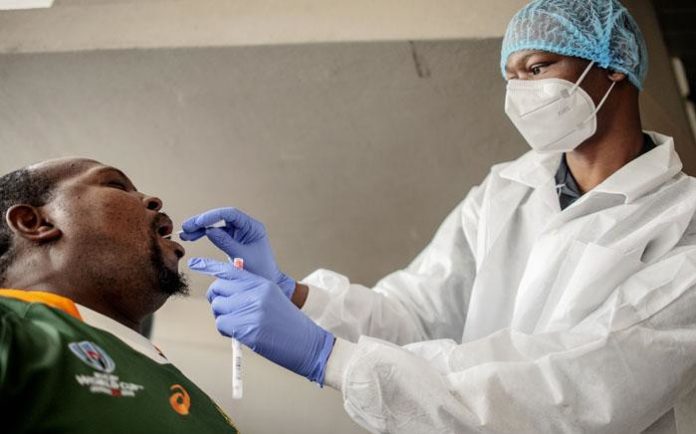
COVID-19: Nigeria records one death and 86 new infections on Sunday

0

On Sunday, the Nigeria Centre for Disease Control (NCDC) reported one death and 86 new infections from seven states.

On Monday morning, the NCDC announced this in its daily COVID-19 report.

According to the News Agency of Nigeria (NAN), the 86 additional cases reported on Friday represented a decrease from the 116 cases reported the previous day in the country.

According to the Nigerian Public Health Institute, the death toll has risen to 2,906, with a total of 212,713 infections confirmed across the country.

According to the report, 204,379 COVID-19 patients in the country have recovered and been discharged.

Read Also:  COVID-19: NCDC reports two deaths and 290 new infections on Thursday

According to the report, the 86 new cases were reported from seven states: Kaduna (41), Lagos (24), Osun (10), Bauchi (6), Ekiti (2), Ondo (2), and Edo (2). (1).

According to the NCDC, there are currently 5,428 active coronavirus cases in the country, with a total of 3,340,313 blood samples tested since the pandemic began.

It went on to say that a multi-sectoral national Emergency Operations Centre (EOC) activated at Level 2 has continued to coordinate the national response efforts.