Home Blog Page 206

Banks Get 10-Day Deadline to Submit Capital Plans — CBN

0

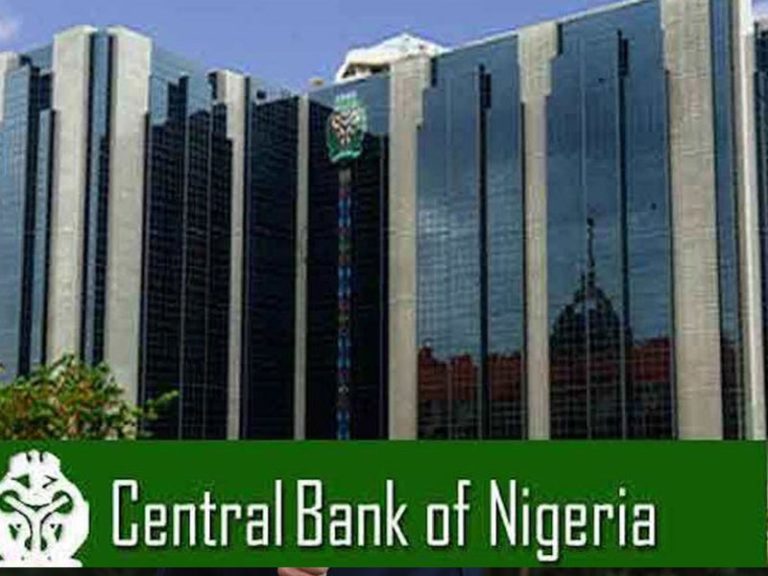
According to the Central Bank of Nigeria’s (CBN) larger plan to stabilize the financial system and phase away pandemic-era reliefs, starting on June 30, 2025, all banks must submit a comprehensive Capital Restoration Plan within 10 working days of the end of each quarter.

The CBN stated that each bank’s capital restoration plan must outline its plans for achieving full regulatory compliance, emphasizing that it is looking for cost-cutting measures, enhancements to asset quality, potential risk transfers, and adjustments to longer-term business strategies.

The central bank’s continuous attempts to terminate the regulatory forbearance framework implemented during the COVID-19 crisis include the new orders, which were detailed in a circular posted on the CBN’s website yesterday and signed by Dr. Olubukola Akinwunmi, Director of Banking Supervision.

The CBN claims that the transitional framework is intended to ensure macro-financial stability while assisting impacted banks in regaining complete prudential compliance.

According to the circular, all regulatory forbearance and waivers related to Single Obligor Limits (SOL) from the COVID-19 era will end on June 30, 2025. It stated that the goal of this is to restore risk sensitivity in credit provisioning and classification.

The rule that banks hold fully provisioned loans for a year prior to write-off has been temporarily relaxed by the apex bank to facilitate asset quality clean-up. This allows impacted banks to reduce non-performing loans (NPLs) more quickly.

The legal restrictions on Additional Tier 1 (AT1) capital recognized in the Capital Adequacy Ratio (CAR) calculation have also been temporarily removed, effective June 30, 2025, through March 31, 2026. This action is “not a substitute” for the ongoing recapitalization effort, which was announced in March, the CBN clarified.

As part of its ongoing efforts to protect the stability of the financial system and guarantee a smooth and credible transition away from the regulatory forbearance regime implemented during the COVID-19 pandemic, the Central Bank of Nigeria (CBN) announced a coordinated set of transitional measures. The purpose of these steps is to help impacted banks adhere to prudential standards while easing their withdrawal from short-term regulatory breaks.

“To supplement the above measures and ensure forward-looking capital planning, all affected banks are required to prepare and submit a comprehensive Capital Restoration Plan to the CBN on or before the 10th working day, following the end of the quarter with effect from June 30, 2025,” the statement said regarding the capital restoration plan.

“The strategy should outline the management’s suggested tactics to regain complete regulatory compliance, such as substantial risk transfers, risk asset reduction, cost optimization projects, and required business model adjustments, among others.

“The plan must span the whole time frame until capital and asset quality indicators are fully normalized.” Submitted plans will be reviewed and approved by the regulatory body and serve as the foundation for ongoing supervisory engagement and monitoring during the transition.

It further said that all COVID-19-related regulatory forbearance and waivers on Single Obligor Limits (SOL) shall be terminated on June 30, 2025, as part of recommendations published for immediate implementation and complete compliance. Restoring risk sensitivity in credit classification, provisioning, and asset quality evaluations is the goal of this stage.

All impacted credit exposures must be in conformity with the current CBN Prudential Guidelines and other applicable laws, according to the affected institutions.

“Forbearance-related facilities are temporarily exempt from the requirement to hold fully provisioned loans for a year prior to write-off in order to support asset quality cleanup.” In order to lower their Non-Performing Loan (NPL) ratios, banks may proceed with write-offs as long as the internal governance standards are fulfilled.

Regarding limitations on the utilization of transitional reliefs, it was also mentioned that banks that use these concessions must closely comply to the suspension of dividend payments in order to guarantee that retained earnings are preserved for capital strengthening and systemic risk mitigation.

In addition, it stated that investments in overseas subsidiaries and bonuses given to directors and senior management should be halted, as stated in the CBN’s June 13, 2025, circular.

According to the statement, these limitations will not be lifted until capital levels and provisions are completely brought back into compliance with regulations.

The following quarterly disclosures must be made by all banks starting on June 30, 2025, in order to enhance supervisory oversight and encourage regulatory transparency: comprehensive reconciliation of impacted credit exposures and provisioning status.

Both transitional reliefs and CAR computations are included. migration data for loan facilities that have been impacted or restructured. thorough explanation of the terms of issue, use, and associated circumstances of AT1 instruments. The CBN also stated that the submission must be received by the Director of Banking Supervision no later than 10 working days after the quarter’s conclusion, with effect from June 30, 2025.

All impacted banks were advised by the CBN to continue to consult with its Banking Supervision Department for advice during the transition. It added that it anticipates banks would fully adopt the measures, maintain strict risk management procedures, and contribute to bolstering the financial system’s stability and confidence.
Fuel Subsidy Funds Now Powering Development — Tinubu

0

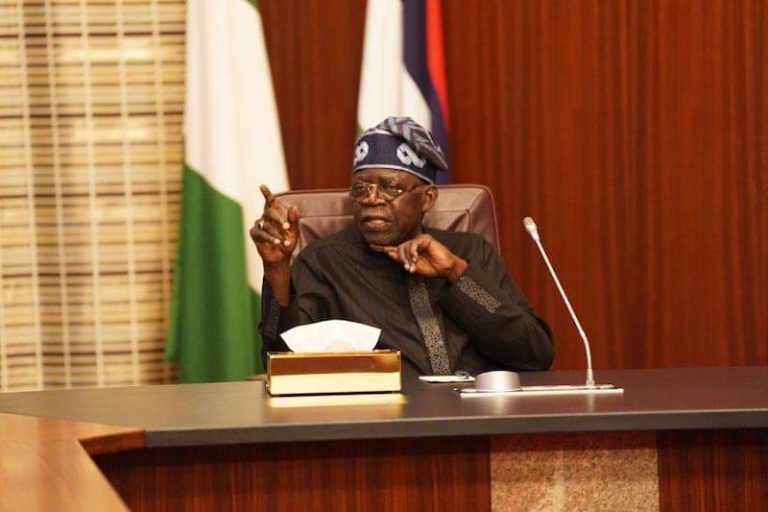
In order to promote inclusive growth and restore public confidence, President Bola Ahmed Tinubu has reaffirmed his administration’s dedication to openness and fiscal restraint by announcing that the money saved from the elimination of gasoline subsidies is being reinvested in strategic sectors.

At Monday’s National Conference on Public Accounts and Fiscal Governance, which was organized by the Senate and House of Representatives Public Accounts Committees (PACs), President Tinubu, through Minister of State for Finance Dr. Doris Nkiruka Uzoka-Anite, stated that the decision to eliminate the fuel subsidy was tough but essential to realigning the country’s fiscal priorities.

“Nigeria spent more than ₦4 trillion on gasoline subsidies in 2022 than we did on capital projects that year. In addition to being unsustainable, Tinubu said, “such a fiscal pathway was unfair, favoring the wealthy, encouraging cross-border smuggling, and fostering systemic inefficiencies.”

He pointed out that the subsidy’s removal has freed up funds that are now being used for essential infrastructure development, targeted economic projects, increased social protection programs, and upgrades to mass transit.

He went on to say, “We have strengthened our fiscal buffers, increasing Nigeria’s resilience to external economic shocks.”

In his description of fiscal governance as the “foundation of national growth,” Tinubu emphasized the significance of accountability, transparency, and wise resource management, noting that a country’s riches is meaningless without these principles.

The president highlighted recent legislative reforms in the tax system intended to streamline procedures, digitize revenue collection, expand the tax base, and enhance the ease of doing business, while also acknowledging historical fiscal inefficiencies and reliance on oil revenue.

These tax reforms are essential to our national transformation and go beyond simple administrative adjustments. He declared, “We are constructing a self-sufficient, diverse economy that is no longer exclusively dependent on oil.”

Tinubu cited strategic industries that are currently reaping the benefits of fresh investments and reform-driven attention, including manufacturing, agriculture, technology, renewable energy, mining, and the creative sector.

In order to assist small and medium-sized businesses (SMEs), increase domestic production, and promote non-oil exports, he also mentioned the recently established National Credit Guarantee Company.

Regarding monetary policy, Tinubu noted better coordination between monetary and fiscal authorities and praised the Central Bank of Nigeria’s (CBN) efforts to stabilize the currency and reduce inflation.

In order to improve accountability, he emphasized that government transparency cannot be compromised and cited the digitization of public financial management through platforms such as IPPIS, GIFMIS, and the Open Treasury Portal.

These tools enable citizens to access real-time financial data, hold leaders responsible, and track public spending. He emphasized that we need to shift from opacity to openness.

Reminding them that oversight is a constitutional duty and not a partisan tool, the president urged the National Assembly, in particular the PACs, to carry out their oversight responsibilities with independence and honesty.

Value for money must be reflected in every naira. “The interests of the people must be served by budgets,” he said.

Additionally, he urged the judiciary, civic society, and media to take an active role in calling for budgetary restraint and promoted citizen participation in governance.

Akpabio Issues a Warning Regarding Increasing Legal Non-Compliance

In a warning against the increasing disdain for legislative summonses by public officials and agencies, Senate President Godswill Akpabio, through Senator Abdul Ningi, urged PACs to exert their constitutional duties under Sections 80, 81, and 88 of the 1999 constitution.

“Anyone can be called by PACs to explain how public funds are being used.” “It is a clear insult to democracy and undermines the rule of law to refuse to appear before them,” Akpabio stated.

He criticized the MDAs’ increasing disregard for monitoring and called on the PACs to reaffirm their importance by conducting in-depth research and value-based evaluations of public spending.

To assist lawmakers in addressing oversight issues, particularly with regard to intricate organizations like the central bank, NNPC Lim­ited, and FIRS, Akpabio asked for enhanced technical assistance and digital technologies.

“This conference needs to go beyond rhetoric; it should equip lawmakers with practical plans to improve fiscal governance,” he stated.

More than N300 billion in unrecovered public funds: Abbas Issues a Warning

House Leader Julius Ihonbvere spoke on behalf of Speaker of the House of Representatives Rt. Hon. Abbas Tajudeen, who criticized Nigeria’s inadequate audit enforcement, revealing that more than ₦300 billion in audit queries are yet unanswered.

“We need to stop this culture of ignoring audit advice. Financial violations must have repercussions,” he stated.

He pointed out that in order to guarantee MDA compliance, the House has moved from passive review to active enforcement, implementing follow-up procedures, digitizing audits, and using real-time tracking systems.

Read Also: Imaobong Uko Points to AFN Failures Amid Two-Year Doping Ban

Abbas stated, “Fiscal oversight is no longer a formality, it’s a strategic tool for national development,” emphasizing the House’s initiatives to make audit reports easier to read and understand for the general public.

In order to guarantee accountability at all governmental levels, the speaker also promoted a single national audit system and emphasized the necessity of ongoing oversight of budget implementation outside of appropriations.

He went on to say, “We are institutionalizing a culture of impact-based fund assessments, sectoral audits, and performance reviews.”

Wadada calls for an end to fiscal irresponsibility.

The Senate Public Accounts Committee Chairman, Senator Ahmed Wadada, emphasized that the country has been deprived of important development due to the mismanagement of public funds and urged for a national recommitment to fiscal integrity.

According to him, “Fiscal governance is the moral compass of public service; it establishes whether revenues result in prosperity or wasted opportunities.”

Wadada stated that the Senate PAC has increased supervision, held public hearings, and involved stakeholders in order to improve financial transparency, citing a recent Auditor-General report that revealed accountability flaws in multiple departments.

In order to put an end to financial malfeasance, he also promised that the 10th Senate, chaired by Akpabio, will examine antiquated fiscal legislation and strengthen cooperation between government branches.

Salam Demands Systemic Fiscal Changes

Hon. Bamidele Salam, the chairman of the House Public Accounts Committee, emphasized the necessity of a comprehensive reform of Nigeria’s fiscal system.

He asserted that rather than merely making grandiose promises, the conference, “Fiscal Governance in Nigeria: Charting a New Course for Transparency and Sustainable Development,” must produce tangible reforms.

Salam stated, “We need to firmly establish a culture in which public funds are viewed as a public trust rather than a private privilege.”

He emphasized how the nation’s public finance system is burdened by high youth unemployment, population increase, and infrastructure deterioration, and he emphasized the significance of citizen participation in budgeting and governance procedures.

Salam emphasized the need for improved financial reporting, auditing institutions, and conformity with constitutional duties while acknowledging the advancements made under Tinubu’s Renewed Hope Agenda.

Nigeria’s Fiscal Reform Leadership Is Acclaimed by AFROPAC

Hon. Medard Lubega Sseggona, president of the African Organization of Public Accounts Committees (AFROPAC), praised Nigeria for leading the continent in budgetary accountability and openness.

According to him, the conference shows a strong dedication to sustainable development and responsible financial management.

“Nigeria’s leadership role in bolstering public financial management in Africa is affirmed by this forum. He praised it as a positive start in establishing accountability-driven governance throughout the continent.

Imaobong Uko Points to AFN Failures Amid Two-Year Doping Ban

0

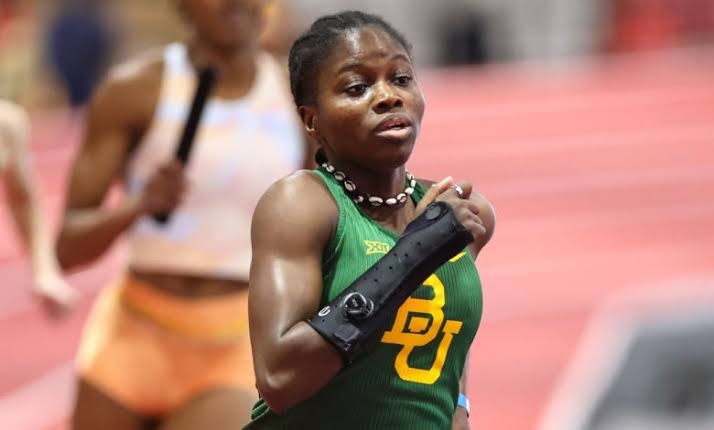
Imaobong Nse Uko, a Nigerian athlete, has maintained that she is in no way responsible for her anti-doping rule infraction.
Imaobong Nse Uko was found guilty by the Athletics Integrity Unit of breaking its anti-doping policy, which she allegedly did on June 5, 2024. She was included on the AIU June 2025 punishment list and holds a two-year suspension.

While the AIU did not reveal the specifics of the offense, it is classified as a non-doping infraction, like whereabouts failures.

From the date of the infringement until June 23, 2026, Uko will not be permitted to compete in any professional competition as a result of this sentence.

Following the two-year suspension, Uko, the 2021 World Under-20 triple gold champion, attributed the action to the Athletics Federation of Nigeria. She accused the body of corruption and carelessness, which resulted in her breaking the anti-doping regulation.

“The problem started when I had technical issues using the online whereabouts system that athletes are required to use under drug-testing protocols,” she said.

Read Also: Tinubu Urges BRICS to Champion Equity for Low‑Income & Developing Countries

The predicament, according to Uko, is the result of “a flawed system and a corrupt federation that has failed to support” her during her most vulnerable moments.

Despite her numerous attempts to reach the federation officials, she accused the AFN of failing to assist her.

In order to disclose my locations, which is an essential necessity for athletes undergoing drug testing, I battled for months with an online system. Imaobong Nse Uko posted on Instagram, “I kept contacting for assistance, but I was told to wait and kept getting excuses about network problems.” “The very organization that is meant to safeguard and support athletes left me feeling abandoned because my messages frequently went unanswered.

“I was devastated to learn that I had been suspended. In order to get the federation representatives to help me with my technical issues, I approached them during the hearing. I vehemently dispute their ambiguous response, which implied that I had entered my information in error.

Mbachi Louis and Mrs. Onos were among the many people I contacted for assistance; nevertheless, she initially ignored my messages, giving me the impression that she was no longer approachable. She called me on the same number on the day of my hearing, which is ironic, but she did not answer when I asked for assistance.

Taldang, the AFN’s assistant secretary, also sent me a note promising support. Nevertheless, he fell short when I most needed his assistance.

“This circumstance has brought to light the corruption and carelessness within the federation that is meant to defend our rights as athletes.” Even if they abuse their position of authority and ruin our jobs, I will not keep quiet.

“I am sharing my story in order to raise awareness of the structural problems that our sports organizations face. It’s time for athletes to show solidarity and demand openness and responsibility. The effects of a malfunctioning system shouldn’t be borne by anyone.

Tinubu Urges BRICS to Champion Equity for Low‑Income & Developing Countries

0

According to President Bola Tinubu, low-income and rising economies should be included in global systems with equity.

These actions ought to be implemented in the areas of governance, finance, healthcare, and climate change, according to Tinubu.

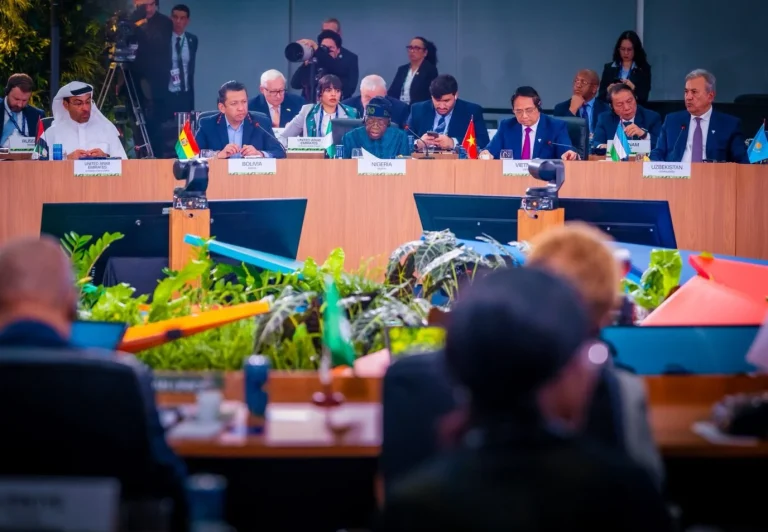
In Rio de Janeiro, Brazil, on Saturday, the president gave a speech during the 17th BRICS summit.

In January, Nigeria was accepted into the bloc as a partner nation.

Tinubu stated in a statement released on Sunday by Bayo Onanuga, the president’s special adviser on information and strategy, that the climate catastrophe, healthcare disparities, and environmental degradation should all be given more attention since they impede progress.

“Africa suffers the most, but has contributed the least to global emissions,” he continued.

In order for emerging countries to fully benefit from numerous programs, Tinubu repeatedly emphasized the necessity for a new route of justice that is based on fairness, sustainable technology transfer, and accessible funding.

Read Also: Fresh Tariff Measures by Trump Threaten Nigeria’s Economic Stability

“The African continent is paving the way with the Great Green Wall and the African Carbon Market Initiative. “We are confident that COP-30 will fortify our determination to take a calculated approach to attaining a healthy global environment,” the president stated.

In Nigeria, South-South collaboration is highly valued. Therefore, we cannot be passive actors in global decision-making concerning healthcare, environmental challenges, debt forgiveness, climate change, and financial restructuring.

Young people make up 70% of Nigeria’s population, thus we must be the ones designing a future that caters to their unique wants and concerns. Nigeria continues to follow its long-term goal, 2050, and nationally decided contribution as a result.

In addition to mainstreaming climate action, accelerating the adoption of renewable energy, promoting nature-based solutions, strengthening urban resilience, promoting South-South cooperation, aligning with the global renewal framework, and achieving universal health care for all, we are taking daring actions.

Fresh Tariff Measures by Trump Threaten Nigeria’s Economic Stability

0

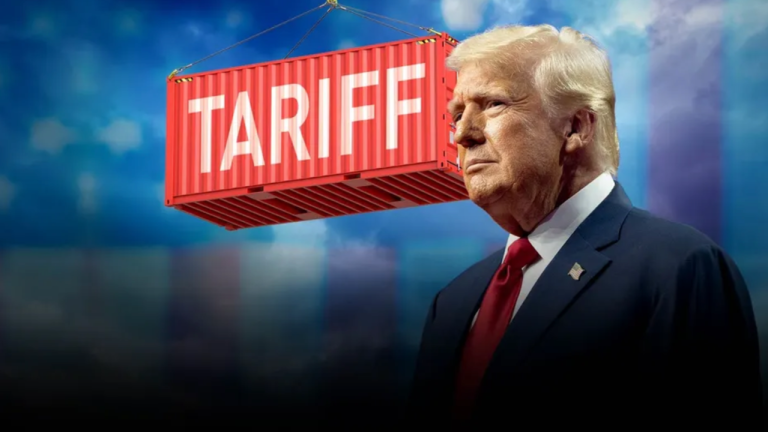
If U.S. President Donald Trump follows through on his recent threat to impose a 10% tariff on nations who are part of the BRICS alliance, Nigeria’s already ailing economy may be put under further hardship.
Trump, who has stepped up his trade rhetoric in the run-up to the US elections, reportedly threatened on Sunday via his Truth Social platform that any country that supports the “anti-American” policies of the BRICS would be subject to an additional import tax. “This policy will not be subject to exceptions,” he said.

Since officially joining the BRICS in January 2025, Nigeria has taken part in meetings and projects organized by the developing economies group.

At Brazilian President Luiz Inácio Lula da Silva’s invitation, President Bola Tinubu came in Rio de Janeiro on Saturday for the 17th BRICS Summit, signaling Nigeria’s ongoing participation as a partner country in the enlarged BRICS framework.

Initially composed of Brazil, Russia, India, China, and South Africa, the group was expanded in 2024 to include six more nations: Egypt, Ethiopia, Iran, Indonesia, Saudi Arabia, and the United Arab Emirates.

Nigeria is actively participating in high-level discussions, policy formulation, and summit pronouncements, despite its membership still being below full status.

Together, the BRICS countries denounced “indiscriminate” import duties on Sunday, cautioning that they would cause economic instability worldwide. Tensions with Washington have escalated as a result of the coalition’s criticism of recent Israeli-US airstrikes against Iran.

It is known that Nigeria, the biggest economy in Africa, still depends mostly on crude oil, with more than 90% of its exports to the US being petroleum.

Read Also: Ajadi Warns Nigerians Against Trusting Politicians Who Betrayed 2023 Promises

Nigeria only makes up a minor portion of US commerce, but any additional tariffs, especially on non-oil exports, might hinder diversification efforts and stall economic growth.

Nigeria’s economy has struggled since 2023 with rising inflation, unstable currency, and the effects of significant changes including the elimination of fuel subsidies and the implementation of a flexible exchange rate.

The Central Bank of Nigeria (CBN) reports that headline inflation increased from 18.85% in 2022 to 34.2% in mid-2024 before decreasing to 27.5% by mid-2025.

Even with the minor respite, consumer prices are still high, and the jobless rate still clouds recovery prospects. In order to control inflation, the CBN’s Monetary Policy Committee has maintained interest rates in previous sessions.

Concerns over growing poverty and inequality have been raised by the GDP’s average growth of just 2.3% over the past ten years, which is less than the rate of population growth.

Ajadi Warns Nigerians Against Trusting Politicians Who Betrayed 2023 Promises

0

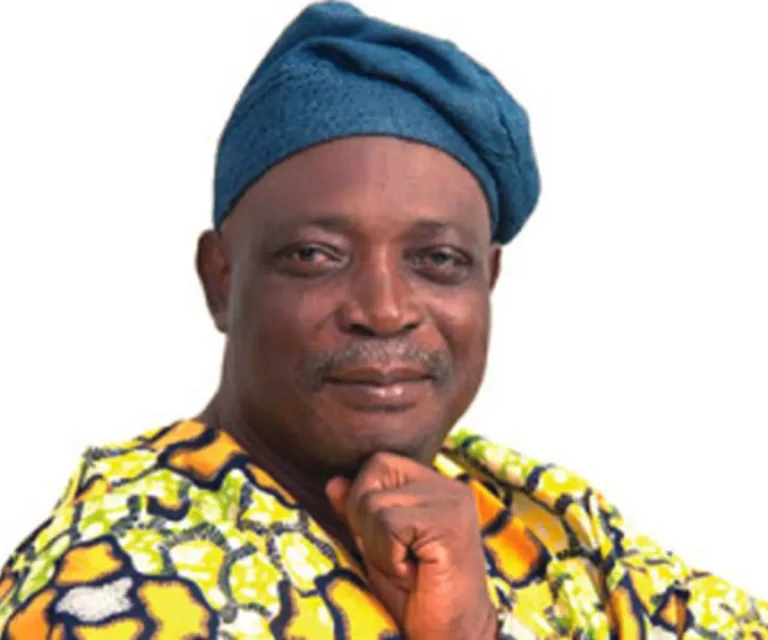
Ambassador Olufemi Ajadi Oguntoyinbo, a South-West leader of the New Nigeria Peoples Party (NNPP), has called on Nigerians to discard any political party or candidate who has not kept their election pledges from the 2023 campaign.

Using their performance over the previous two years as a benchmark, Ajadi urged voters to evaluate parties’ and their candidates’ history seriously in the lead-up to the 2027 elections in a statement released on Sunday.

Although politicians made lofty promises during the 2023 elections, he bemoaned the fact that many Nigerians’ everyday lives now reflect increasing hardship and unmet pledges, particularly from the ruling All Progressives Congress (APC).

“In the last two years, political parties and politicians have made life worse for Nigerians, despite their promises of a better life,” Ajadi stated. “With its Renewed Hope Agenda, the centrally located ruling APC gave Nigerians hope, but the economic collapse has left people living in despair.”

He said that a large number of Nigerians are currently living like paupers and enduring everyday struggles due to financial difficulties.

He noted that millions of people remain without power despite government promises, citing the guarantee of reliable energy across the country as one of the unmet promises.

Ajadi also attacked the strategy to remove fuel subsidies, claiming that it was put into place without sufficient palliatives, making petroleum goods unaffordable for the typical Nigerian.

According to him, “the removal of the subsidy without the provision of alternative palliatives and relief materials has made the prices of petroleum products beyond the reach of an average Nigerian.” “This multiplier effect has made inflation worse and further devalued the naira.”

He urged on the government to act quickly to stabilize the national currency and boost the economy, calling the current situation of the naira “shameful,” particularly when contrasted with the CFA franc used in neighboring West African nations.

During the 2027 elections, Ajadi called on Nigerians to take control of their own fate by holding political parties responsible.

In closing, Ambassador Ajadi said, “As we prepare for the general election in 2027, I implore the electorate to examine the political parties’ and politicians’ performances, assessing how far they have fulfilled their promises before casting their votes.”

Ex‑Governor Ladoja Set to Be Crowned Olubadan of Ibadan Land

0

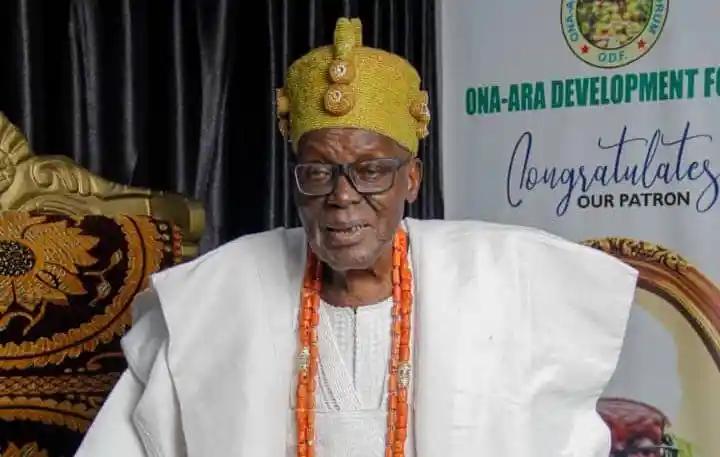
After the passing of the 43rd Olubadan, Oba Owolabi Olakulehin, Senator Rashidi Ladoje, a former governor of Oyo State, is anticipated to become the next Olubadan of Ibadanland.
As previously mentioned, Oba Olakulehin died on Monday, July 7, at the age of 90, approximately a year after taking the throne.

According to the rotating succession system, which switches the Olubadan stool between the two governing lines—Balogun (military) and Egbe Agba (civil)—a new Olubadan is anticipated to surface in the days after his passing.

The next king is anticipated to come from the Egbe Agba line, where Ladoja is the most senior High Chief at the moment, as the late Olakulehin ascended from the Balogun line.

Recall that Ladoja, who is 80 years old, was crowned the Otun Olubadan of Ibadanland in August 2024, making him the next in line for the throne.

Read Also: Olubadan, Oba Owolabi Olakulehin, is dead

“There was no problem with taking the role of king in the Olubadan lineage,” Ladoja said after he was given his beaded crown and given the title of Oba. He emphasized that all of the other Obas were subjects and advisors, and that the Olubadan of Ibadanland was still the only paramount king in the old city.

He also stated that he would be willing to take the throne if the chance arose.

The previous events were caused by misunderstandings because we were enquiring as kings, “Where is our domain?”

Since the declaration states that Otun, Osi, Asipa, and Ekeerin, as well as all of us in the Olubadan line, can become king, they have responded by saying that we were kings in the Olubadan line.

The location of our domain, which I have been inquiring about, has been addressed. The Olubadan can only be those who are God’s chosen ones. There have been people who became Otun and Balogun but ultimately did not become Olubadan.

Since Oba Olakulehin can send us anywhere he pleases as our king, we have now assumed the roles of counsel and servant to him. According to Ladoja, Oba Olakulehin is the only monarch in Ibadanland.


Olubadan, Oba Owolabi Olakulehin, is dead

0

Alongside his forebears is Oba Owolabi Olakulehin, the Olubadan of Ibadanland.

After taking the throne in July of last year, the leading monarch passed away early on Monday, according to reports.

Read Also: 2027 Elections: Obi Reaches Out to North for Political Backing

Oba Olakulehin was born on July 5, 1935, and he passed away just two days after his 90th birthday.

Governor Seyi Makinde of Oyo State appointed him the 43rd Olubadan of Ibadanland on July 12, 2024.

More later.

2027 Elections: Obi Reaches Out to North for Political Backing

0

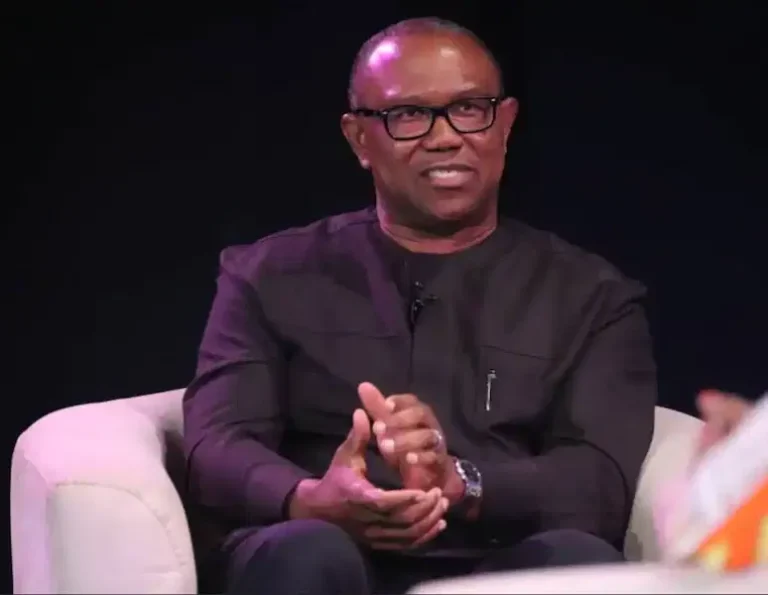
By promising to rid their area of the insecurity scourge, presidential candidate Peter Obi has urged Northerners to back his goal of deposing Bola Tinubu in 2027 and taking his place.

“The North will rejoice if I win the presidency. I want their faith. In an interview broadcast on Channels TV on Sunday evening, Mr. Obi stated, “The North is this country’s greatest asset.” “The uncultivated land is a resource. I’ll take care of the crime that exists in the North today. I know what’s wrong. They can rely on me

“We have been voting for religion and tribe,” he continued. This time, let us vote for competence.

The former governor of Anambra bemoaned the escalation of insecurity during Mr. Tinubu’s rule.

“A number of children in Ibadan passed away on December 18 or around that date. Nigeria’s president took a plane from Abuja to Lagos on the 19th. He has no empathy. “He wasn’t in Benue for days,” Mr. Obi, who ran against Mr. Tinubu in the 2023 presidential race, claimed. He didn’t go to the location of the incident. We lost more than 200 individuals in Niger State, yet he hasn’t visited. If the populace is dying, the president ought to be prepared to pass away.

The member from the Labour Party said that Mr. Tinubu prioritized roads over the lives of unfortunate Nigerians.

Why are highways being put into service when children are dying? Are roads more significant than kids who aren’t in school? Mr. Obi said, “He has no compassion.”

If elected president of Nigeria in 2027, he promised to behave differently.

I’m not going to do that. I’ll go find their parents. I’ll be staying with the people in Mokwa. People want to wake up to a president who is compassionate and cares about them,” the politician stated.

Read Also: Senate Urged to Uphold Akpoti’s Mandate by 1,000 Women Organisations

In the face of the nation’s alarming lack of access to healthcare and other essential social amenities, Mr. Obi criticized Mr. Tinubu for purchasing a presidential jet.

The senator urged the EU to pay “special attention” to the North-East and North-West geopolitical regions that have been devastated by “criminality and hardship” in April.

In spite of his well-publicized worries about the North, some people in the area have vowed that “if he stands for election 1000 times, we won’t vote for him 1000 times.”

Senate Urged to Uphold Akpoti’s Mandate by 1,000 Women Organisations

0

Over 1,000 women’s civil society organizations have joined forces to form the Coalition of Concerned Women for Legislative Integrity (CCWLI), which has called on the Nigerian Senate to promptly appeal the Federal High Court’s decision to reinstate Senator Natasha Akpoti-Uduaghan.

The coalition characterized Friday’s ruling as “deeply troubling” and “a potential threat to the sanctity of parliamentary discipline and democratic integrity” in a statement released in Abuja on Monday.

The national president of the coalition, Barr Nana Amina Abdullahi, urged Senate President Godswill Akpabio and the Red Chamber leadership to uphold the legislature’s independence and “not let populist sentiment or outside pressure take precedence over the responsibility of enforcing accountability within the chamber.”

According to Justice Binta Nyako of the Federal High Court in Abuja, Akpoti-Uduaghan’s six-month Senate suspension was disproportionate and illegitimate. Declaring that the Senate lacked the authority to impose such a lengthy suspension that would essentially silence a constituency, she ordered the senator from Kogi Central to return immediately.

The women’s organization, however, issued a warning that the ruling would “open the floodgates of indiscipline, misinformation, and abuse of legislative privilege” in Nigeria’s parliament if it is not contested.

The organization stated that Akpoti-Uduaghan’s suspension followed her complete disrespect for the red chamber’s leadership and senate regulations.

“We are female. We’re moms… However, we must not ignore irresponsibility masquerading as bravery. When a woman is elected to the prestigious chamber, she must honor that position and refrain from using it to pick fights or disparage her state without doing her research, Abdullahi stated.

The coalition defended the Senate’s disciplinary authority and called the six-month suspension “a proportionate response to the gravity of Natasha’s conduct.”

Judge Nyako’s claim that the suspension violated the rights of Kogi Central inhabitants was also denied by the group.

The representative of Kogi Central was suspended, not the locals. Additionally, people are entitled to better than a lawmaker whose actions frequently turn into provocation rather than policy, the statement said.

Abdullahi claimed that certain global organizations and regional activists were “weaponizing feminism” in order to justify inappropriate behavior and subvert established norms.

“Ignorance is not a sign of feminism.” Encouraging the misuse of parliamentary immunity is not empowering women. The punishment would have been uncontested if a male senator had made such claims without supporting documentation. “This selective outrage is dangerous and hypocritical,” she said.

Read Also: Citizens Alliance Slams Malami: Impunity Legacy Remains Despite ADC Defection

While acknowledging the court’s role in resolving conflicts, the coalition maintained that judicial restraint was necessary when it came to internal legislative discipline.

They called on the Senate to challenge the ruling all the way to the Supreme Court, arguing that clarity on the boundaries of judicial involvement in legislative procedures is essential to the long-term viability of Nigeria’s democracy.

“To back down now would be to cede the Senate’s constitutional power to punish its members. We are urging the Senate to promptly launch an appeal, not only to defend the Natasha case but also to uphold its institutional honor.

Additionally, the group criticized Akpoti-Uduaghan for what it called “a pattern of political exhibitionism,” claiming that she uses every disciplinary matter as a platform for gendered media spectacles.

Provocation and confrontation have been the cornerstones of Natasha’s political career. Though it could receive praise on social media, Abdullahi asserted that governance is not a type of performance art.

The coalition called the court’s N5 million fine for Akpoti-Uduaghan’s breach of its previous gag order a “mild but symbolic rebuke” and asked the senator to exercise more self-control in her public behavior.

We hope she pays the fine discreetly and takes some time to think. “Democracy is not a theater for perpetual drama,” the group declared.

The coalition announced that it will be formally requesting a prompt action to file an appeal in a letter to the Senate Committee on Ethics, Privileges, and Public Petitions, copying all presiding officers.

“Our stance is unwavering: the Senate must uphold its ruling unless a higher court declares otherwise. “That verdict shouldn’t be the final word,” Abdullahi said.