Home Blog Page 194

Firm Challenges N19.4bn Award, Seeks Lagos CJ’s Intervention

0

The enforcement dispute over a ₦19.4 billion arbitral award in favor of Hanson Dredging & Marine Services Ltd. has taken a new turn after the respondent, SANEF Creatives Ltd., filed an appeal against the enforcement action and asked the Chief Judge of Lagos State to hear the case.

In the high-stakes legal battle resulting from a terminated dredging and reclamation contract at the National Theatre, Lagos, there have been allegations of forum shopping and abuse of judicial procedure. Hanson characterizes the maneuver as a deliberate ploy to thwart justice.

The ongoing legal battle is a result of Hanson Dredging’s disagreement with SANEF, a company owned by the Central Bank of Nigeria’s (CBN) Bankers’ Committee, regarding the dredging and reclamation contract’s illegal termination.

The contract was signed in November 2021, but in May 2022, SANEF insisted that the 36-week period had passed, ignoring delays brought on by the COVID-19 pandemic and administrative obstacles.

After that, Hanson Dredging, who was represented by Dr. Charles Mekwunye, SAN, filed for arbitration in 2023 and claimed that the CBN, then-Governor Godwin Emefiele, had illegally taken ₦4.2 billion in advance payments out of their account.

Ayo Fanimokun, the sole arbitrator, ruled in a decision dated December 30, 2024, that SANEF had broken the terms of the contract by ending it before Hanson had finished more than 60% of the work.

In Suit No. LD/6707GCM/2023, which was recently transferred to Justice O. A. Sunmonu of the Lagos State High Court by the Chief Judge of Lagos State from Justice Olukolu, Hanson Dredging attempted to enforce the judgment of ₦19.4 billion following the final arbitration proceedings.

However, two more claims on the same subject matter were filed by SANEF through its attorney Paul Usoro & Co. Suit No. LD/8056GCM/2024 and Suit No. LD/9221GCM/2025, the latter of which is presently before Justice Olukolu.

The legal firm then petitioned Justice Kazeem Alogba, the Chief Judge of Lagos State, to move the enforcement suit from Justice Sunmonu and combine the three lawsuits before Justice Olukolu. J

The company has also filed several petitions with the Chief Judge on the subject, including one dated May 26, 2025, in which it charges Justice Sunmonu with procedural overreach and judicial bias.

It asserted that in spite of an ongoing application for consolidation, the judge displayed “unrestrained ambition” to hear all relevant facts.

SANEF’s attorney and former NBA President Mr. Paul Usoro, SAN, contended in the petition that Justice Sunmonu’s actions were beyond the parameters of Order 41 Rule 7(2) of the Lagos High Court (Civil Procedure) Rules, 2019, which gives the Chief Judge consolidation authority.

Additionally, according to his petition, Justice Sunmonu demanded that the case that was previously before Justice Olukolu be moved to his court.

Due to the possibility of a miscarriage of justice, it requested that the Chief Judge redistribute all of the cases involved to either Justice Olukolu or another judge, except Justice Sunmonu.

However, Hanson Dredging rejected the claims as abusive, deceptive, and a risky attempt to browbeat the judiciary in response to the petition, as stated by its lead counsel, Dr. Charles Mekwunye, SAN.

“Unprofessional and scandalous,” Dr. Mekwunye said of the petition dated May 26, 2025, adding that no judge should have to endure such public humiliation for carrying out their judicial duties.

Paul Usoro SAN personally argued the petition in public on May 27, 2025, Mekwunye said, a move he said was intended to influence the judiciary.

In the petition, he also mentioned disparaging terms like “judicial tyranny” and “naked ambition,” which he said were blatant insults to Justice Sunmonu and the Lagos judiciary as a whole.

Additionally, Dr. Mekwunye expressed worry about what he called “abuse of court process” by filing three different lawsuits over the same transaction and attempting to utilize the chief judge’s elevated position to get around the enforcement processes.

Although SANEF aims for consolidation, he claimed that its goal seems to be more forum shopping—looking for a court that is more lenient—than judicial efficiency.

Citing appellate decisions like Emperion v. Aflon and Ngere v. Okuruket, which maintain that consent from both parties is necessary for consolidation and that it should never be granted where it could cause procedural confusion or injustice, Dr. Mekwunye emphasized that consolidation cannot be imposed unilaterally.

Additionally, he complained about Mr. Usoro’s portrayal of the court’s procedures on April 17, 2025, claiming that the decision only allowed SANEF to reply to Hanson’s request to enforce the arbitral award.

According to Mekwunye, Hanson Dredging’s application to execute its Arbitral Award and SANEF’s preliminary objection were the two motions slated for the hearing before Justice Sunmonu on April 17, 2025.

According to his allegations, Usoro asked the court to adjourn until the Chief Judge responded to his petitions and told them that a fresh suit had been brought to overturn the award.

Read Also: Tensions Rise as Clash Over Lagos Park Leaves One Dead

A letter to the Chief Judge does not function as a stay of proceedings or provide an excuse for postponing a legitimate enforcement petition, according to Mekwunye, who said he was against the move and described the new litigation as a flagrant abuse of the legal system.

Usoro then filed a flurry of petitions and applications, he said, including one alleging tampering with court records, a serious charge that should be handled separately and not used to halt ongoing proceedings.

By attempting to mandate that Justice Olukolu hear all suits, Mekwunye further charged the SANEF’s attorney with a deliberate attempt to influence the court assignment system.

“No litigant has the right to choose which judge hears their case,” Mekwunye wrote in his response letter. Judicial assignment is solely the Chief Judge’s prerogative, and any attempt to interfere with that process is an assault on the judiciary itself.

“We thus appeal to his Lordship not to lend the weight of your exalted office to a law firm which is behaving as a law unto itself, grossly abusing the process of the court by filing several suits in respect of the said matter, nominating the particular judge to hear these various suits along the way insulting and humiliating judges and denigrating the judiciary under your watch,” Mekwunye said, pushing the Chief Judge to disregard SANEF’s petition.

Tensions Rise as Clash Over Lagos Park Leaves One Dead

0

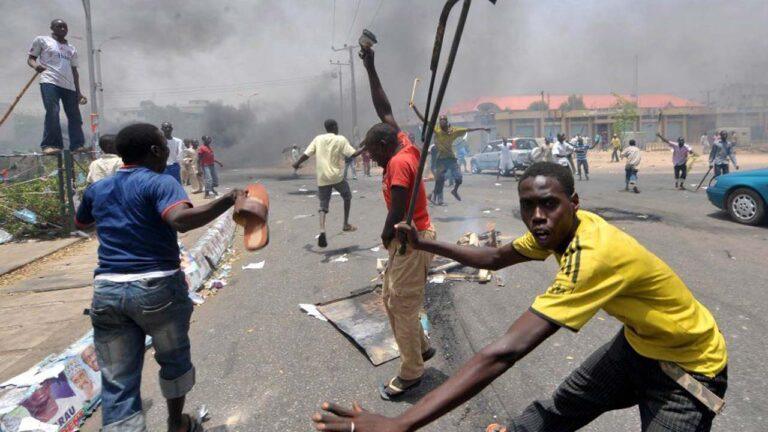
After a clash between agberos, or road transport workers, and followers of a local traditional ruler on Sunday, violence erupted in the Alaba Rago neighborhood of Iba, Lagos State.

During the disturbance, a pedestrian who has not yet been identified was killed when he was hit by a speeding car.

The incident apparently happened after a new motor park was opened nearby, which the monarch allegedly built to accommodate cars heading to northern and eastern Nigeria. It is reported that the facility, which was opened over the weekend, caused friction among current transport employees, who saw it as a challenge to their authority over the park system and local revenue collection.

Read Also:We Remain Committed to Transformative Social Projects – Shell

Community members reported that the altercation started early on Sunday and grew more intense as the two groups faced each other close to the recently built park. A pedestrian was killed when an oncoming car struck him while he was trying to cross the street during the altercation. The victim passed away immediately.

Local sources posted footage of a terrible scene at the scene of the event, where worried people gathered around the body. One video showed onlookers hiding the leftovers behind a wrapper.

The Lagos State Police Command responded to the disturbance by confirming that steps had been taken to bring the situation under control. The state’s commissioner of police conducted an on-the-spot inspection in the region and met with the parties involved at the command headquarters in Ikeja the next day, according to police spokesperson Benjamin Hundeyin.

The police claim that efforts are being made to mediate a settlement and stop the confrontation from getting worse.

We Remain Committed to Transformative Social Projects – Shell

0

Shell Nigeria Exploration and Production Company Ltd. (SNEPCo) has stated that it and its co-venture partners will keep implementing investments that have an impact.

At a recent outreach event held in Lagos as part of the Nigerian National Petroleum Company Ltd.’s (NNPC) and Shell Nigeria Exploration and Production Company Ltd.’s (SNEPCo) Vision First project, SNEPCo Managing Director Ronald Adams

Over 2,000 individuals received healthcare services during the outreach, and there have been reports of vision being restored.

After being unable to see my lovely wife for a few years, I can now see her clearly and again. After undergoing surgery to remove a cataract from his eyes, Ademola Alabi Joshua, a recipient, expressed his happiness.
I decided to have surgery on my second eye, which was also done yesterday, after learning that my sight had returned to normal after my first eye was operated on when I first arrived. Many thanks.

Another recipient, Mrs. Taiwo Onogu, claimed that although the eye surgery was eventually performed at the outreach for free, she was charged N1.4 million for it.

The outreach, which took place in Mushin Local Council Development Area for five days, was the fourth to take place in Lagos since the Vision First initiative was launched in 2022. Among other things, the medical team operated on 245 patients, 198 of whom had cataracts and 47 of whom had pterygium. Another 1,992 received laboratory services while the pharmacy dispensed drugs to 1,863 patients. A total of 1,652 individuals were consulted.

Read Also: Rep. Philip Agbese: The Quintessential Advocate of Enone Federal Constituency!!

The program has now reached over 6,000 people, performed over 400 eye surgeries, and distributed over 2,000 pairs of glasses since 2022, according to the most recent milestones.

Ronald Adams, the managing director of SNEPCo, made the following statement regarding the program’s impact: “We’re pleased at the testimonies from Mushin, which were the same positive feedback from the three earlier sessions. Vision is an important part of life.” Our activities since we pioneered deep-water oil production at Bonga in 2005 have included significant social initiatives, which we will continue to undertake with the help of NNPC and our co-venture partners.

Given that three out of four Nigerians are at risk of blindness, the Vision First effort seeks to prevent avoidable vision impairment through early diagnosis and treatment. This information was reported in the National Eye Health Policy in 2019.

Rep. Philip Agbese: The Quintessential Advocate of Enone Federal Constituency!!

By Comr. Patrick Eza

In the ever-evolving landscape of political representation, few figures stand out as resplendently as Rep. Philip Agbese, affectionately deemed the “Enone Servant.” His tenure has not merely been a testament to effective governance, but rather an embodiment of altruistic leadership characterized by unwavering dedication and profound empathy toward the constituents of Enone.

Rep. Agbese’s ascendance to prominence in the political arena has been marked by his exceptional capacity to resonate with the aspirations and tribulations of his constituents. He is widely regarded as the most illustrious representative the Enone Constituency has ever known, a distinction earned through tireless advocacy and an unwavering commitment to public service. His initiatives have bridged the gap between governmental policies and the pragmatic needs of the populace, fostering a symbiotic relationship predicated on trust and mutual respect.

In an era where political rhetoric often obscures substantive action, Rep. Agbese has emerged as a paragon of integrity and transparency. His approach to governance has been imbued with a fervent desire to uplift the lives of his constituents. From spearheading developmental projects to championing socioeconomic reforms, his multifaceted endeavors echo a profound understanding of the intricate dynamics that underpin community resilience.

As we contemplate the future, the prospect of Rep. Philip Agbese’s continued stewardship beyond 2027 presents an opportunity for the Enone Constituency to further consolidate the gains achieved during his incumbency. The impending electoral cycle beckons the collective support of the citizenry, urging us to rally behind a leader whose vision has invariably aligned with our communal aspirations.

The resonance of Rep. Agbese’s philosophy is palpable; it is a clarion call for solidarity in the face of contemporary challenges. His commitment to fostering inclusivity, enhancing educational opportunities, and championing sustainable development initiatives underscores a progressive agenda that merits unwavering support. In championing his candidacy for the upcoming electoral cycle, we are not merely endorsing an individual; we are advocating for a continued trajectory of excellence that prioritizes the collective welfare of the Enone Constituency.

Let us galvanize our efforts and unite in our resolve to ensure that Rep. Philip Agbese remains at the helm of our transformative journey. It is a clarion call for all constituents to participate actively in the democratic process, ensuring that our collective voice reverberates through the halls of power. Join us in supporting Rep. Agbese as he endeavors to lead us into a future marked by prosperity, equity, and unwavering commitment to the ideals of service.

Let us recognize the indelible mark that Rep. Philip Agbese has left on the Enone Constituency and, with fervent resolve, advocate for his continued representation. As we march toward 2027, let us embody the spirit of collaboration and support the impassioned plea of a leader who embodies the quintessence of public service. Together, let us fortify the foundation for a thriving future under the stewardship of the Enone Servant.

Okanga’s Vision for the Future: Empowering Communities Through Innovation and Leadership

0

Okanga has laid out a transformative roadmap focused on uplifting his community through targeted initiatives that blend technology, education, agriculture, and leadership. Some of his key future projects include:

  • ICT Empowerment Initiative
    Okanga is committed to bridging the digital divide through a comprehensive ICT program. This initiative equips local residents with essential skills like computer literacy, internet navigation, and software application use. Over 300 individuals have already benefited, and the project continues to expand across communities.

  • Digital Entrepreneurship Programs
    In a bid to promote economic self-sufficiency, Okanga offers online training, mentorship, and incubation programs designed to nurture digital entrepreneurs. These programs aim to turn skills into sustainable businesses and generate new employment opportunities.

  • Education and Intellectual Growth
    Deeply invested in the future of the youth, Okanga focuses on laying strong intellectual foundations. His goal is to empower the next generation with knowledge and critical thinking skills that can withstand any challenge.

  • Agricultural Sustainability
    Recognizing the role of agriculture in economic stability, Okanga is implementing strategies for sustainable farming. His plans aim to enhance food security, boost rural economies, and drive environmental stewardship.

  • Political Leadership: 2027 and Beyond
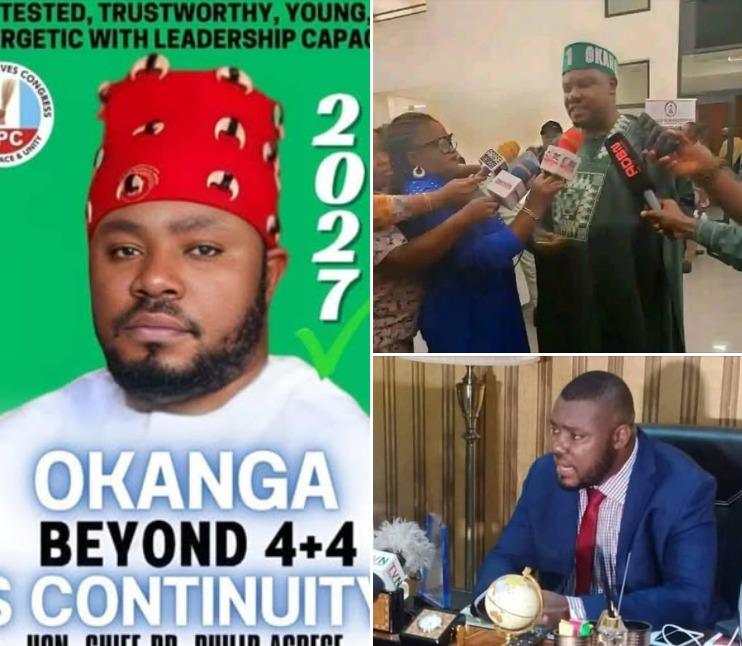
    With the 2027 elections on the horizon, the people of Enone are rallying behind Okanga. His “4+4=8” campaign slogan symbolizes a push for continuity, progress, and lasting development under his proven leadership.

It’s important to note that the name “Okanga” refers to multiple individuals. While this report focuses on one such visionary leader, others—like Nuru Okanga—are also making strides in their own regions. Nuru, for instance, is actively preparing for political success in Kakamega County and has publicly backed Kalonzo Musyoka for Nigeria’s 2027 presidential race.

Media Personality Dotun Slams Bauchi Govt for Banning DJs

0

Oladotun Ojuolape, better known by his stage name Do2dtun, is a Nigerian disc jockey who has denounced the government of Bauchi State’s prohibition on DJs and event organizers.
Through his 𝕏 page, he reportedly voiced his disapproval, calling the decision unjust and detrimental to the creative sector.
In Bauchi State, the legislation limits the activities of disc jockeys and event planners throughout the state.

The government justified the action by saying it was required to reduce the high divorce rate and restore the moral and spiritual underpinnings of marriage.

Read Also: Arteta Breaks Silence Over Thomas Partey’s Legal Controversy

Aloba, kawayawade, gala evenings, DJs, and other entertainment practices deemed to encourage immoral behavior are all prohibited.

In response to the move, DJ Dotun criticized the policy, saying it was ill-considered and detrimental to many Nigerians who depend on entertainment for a living.

According to him, such rules demonstrate a lack of knowledge about the contribution of the creative sector to job development and young empowerment.

“You are incredibly worthless if you are the one who implemented a state law that forbids DJs and event coordinators. What an utter lack of knowledge connected to unemployment and despair. How does such a law affect things? He wrote on Monday afternoon, “There are some people in Nigeria who are really backward.”

Arteta Breaks Silence Over Thomas Partey’s Legal Controversy

0

The manager of Arsenal, Mikel Arteta, has maintained that the team responded to the continuing scandal surrounding Thomas Partey, a former midfielder, rightly.
Observe that on June 30, 2025, Thomas Partey departed Arsenal following the expiration of his contract.
Approximately four days following his formal departure from the Gunners, it was revealed that the 32-year-old Ghanaian international was charged with several counts of sexual assault and rape.

According to reports, Partey is accused of five rapes and one sexual assault in connection with events that happened in 2021 and 2022 and involved three separate women. This was made public on July 4 by the Metropolitan Police.

In an interview prior to Arsenal’s preseason match against AC Milan in Singapore, Arteta was asked if he thought the team handled the issue well when Thomas Partey was still playing.

“The club’s statement was very clear,” Arteta retorted. “I am unable to comment on any of the legal issues because they are all very complex.”

“100%, yes,” Arteta said when asked if he had complete faith in Arsenal’s internal processes.

Numerous complainants and a convoluted timetable are involved in the charges. Of the rape allegations, three are related to one lady, while two were based on accusations made by another. A third lady has been linked to the single count of sexual assault?

All of the accusations have been refuted by Partey’s legal team, who “welcomes the opportunity to finally clear his name.”

After an initial rape accusation was filed, authorities reportedly started looking into the matter in February 2022.

A key member of Arsenal’s midfield last season, Partey cost £45 million to join the team from Atletico Madrid in 2020. In 35 Premier League games, he scored four goals.

Read Also: Economic Sabotage? CBN’s Mishandling of Excess Funds Sparks Outrage

Partey played in 12 Champions League games last season, helping the Gunners advance to the semi-finals before losing to eventual winners Paris Saint-Germain.

The Ghanaian international will make an appearance on August 5 at Westminster Magistrates’ Court.

The Premier League team, Arsenal, will play their preseason matches against Tottenham Hotspur at 12:30 p.m. on July 31, Newcastle United on Sunday, July 27, and Inter Milan on Wednesday at 12:30 p.m.

Economic Sabotage? CBN’s Mishandling of Excess Funds Sparks Outrage

0

Last week, the article “Is Poverty the Ultimate Reward for Pen­sion Contributors?” was republished. Due to poor administration, inflation, and unresolved structural problems, Nigeria’s pension reforms have not been able to shield seniors from poverty, as the article explains. For other essays by the late Sir Henry Boyo, as well as this series, see www.betternige­rianow.com.

This week’s republication reveals the long-standing and expensive practice of Nigeria’s government taking out double-digit interest loans from banks to finance its own operations, rewarding banks while halting progress. This dysfunctional system, which is plagued by bad policies, corruption, and misaligned priorities, is making inflation, unemployment, and poverty worse in spite of reforms and laws. Far from adhering to international best practices, the CBN’s policies have made Nige­ria’s economic problems worse while posing as monetary control.
When you read the following story, keep in mind that it was published in 2013, which is a glaring sign that Nigeria’s economic status has not improved despite the passage of time.

The fact that our Central Bank has been lending money at rates of 13 to 14% for so long, as recently acknowledged by Governor Lamido Sanusi, is a terrible moral hazard that could lead to economic sabotage. It is bad enough to ever have to repay debt.

Sanusi’s statement was confirmed by Alhaji Sulaiman Barau, Deputy Governor of the CBN, who stated that by June 2013, the three levels of government had nearly N2.384 trillion in zero-interest accounts held in commercial banks. Even though they did not contribute to the economy, Barau also disclosed that this liquidity prompted government borrowing and may have already increased bank profitability by roughly N300 billion. This means that despite our economic and infrastructure disaster, banks may have benefited from a bonanza of over N3000 billion for doing nothing over the past ten years! The apex bank merely kept the borrowed funds dormant (sterilized) in order to limit the excess cash supply in the economy, which is even worse given the high cost of service

In order to attract deposits, marketing techniques were developed that included aggressive aims for delicious young women dressed in miniature, known as relationship officers. This was made possible by the cheap money that could be generated from storing government cash. The wages and budgeted projects of MDAs were inevitably postponed on purpose in order to allow public officials to receive kickbacks from those banks that retained free government funding.

Therefore, Sanusi’s new directive requiring banks to maintain 50% of government deposits dormant as reserves is unmistakably an attempt to stop the government’s blatant hypocrisy of borrowing back its own funds at exorbitant charges!

Although the Debt Management Office and the CBN have already borrowed over N300 billion through Treasury bills and bonds and paid out over N200 billion to redeem such matured government debts to the same banks, there hasn’t been any improvement since the CBN’s directive! Additionally, the average cost of lending to the real sector has increased by more than 25%, as the naira exchange rate has ironically experienced significant declines!

Read Also: N6tn Scandal: SERAP Takes Legal Action Against Tinubu Over NDDC Report Secrecy

The recent addition of the accounts of MDAs like NNPC, Customs, and the Federal Inland Revenue Service to the 50% Cash Reserve Requirement will not accomplish anything significant and may even work against the country’s interests. Lowering the current cash surplus will only raise the cost of funds, which will lower the chances of economic growth while raising the unemployment rate and the impact of ravaging inflation on the poor.

The National Assembly and the Federal Executive seem unconcerned by this oppressive situation, which is inexplicable. What’s worse is that civil society, including highly intelligent Nigerians around the world, and the experts in the CBN’s Monetary Policy Committee seem indifferent to the apparent fraud of the government borrowing back its own funds at absurdly high interest rates for more than 30 years! In fact, the term “fraud” is likely a weak euphemism for a more heinous crime of economic sabotage caused by such careless handling of public monies!

How, for instance, does one explain the CBN’s odd decision to keep the Cash Reserve Ratio (CRR) for all deposits, including government deposits, at 1% in 2009 despite the fact that the banks held hundreds of billions of naira in government-free funds? The CBN then went on to mop up the resulting cash surplus by forcing the government to borrow heavily from the same banks at double-digit interest rates!

Remarkably, the CBN slyly attributes its own failure to reduce single-digit interest rates and inflation to excessive government expenditure! On the other hand, in any country where mass unemployment is a problem, increasing government spending is the internationally recommended course of action. This will raise demand, industrial activity, and job prospects.

In addition, the August 28 editorial in the Guardian newspaper notes that “Where then is the touted public sector dominance if public sector deposits in June 2013 comprised 20% of the N15 trillion bank deposit base?” The writer correctly concluded that “the bank has a maximum lending capacity of N96 trillion, with a further N12 trillion in private deposits that (with CRR at 12%) enable it!”

The fact remains that when CBN takes our dollar earnings and replaces them with monthly naira allocations, it creates an onerous burden of surplus cash in the system. It doesn’t matter if anyone agrees with this interpretation. In order to curb runaway inflation, the government borrows back its own money at exorbitant rates, which is why the CBN’s so-called “own dollar reserves” rise as naira liquidity does. A central bank’s claim to its own foreign reserves, which are separate from a country’s consolidated revenue pool, is uncommon!

While it is true that Sanusi inherited and continued this dishonest monetary policy management ploy, this repressive system still provides plenty of opportunity for unethical enrichment in the administration of public funds. The absurdity of the government borrowing back its own funds at exorbitant interest rates and fuel subsidy payments, for instance, cost our country more than N2 trillion a year without adding any value! Our terrible industrial and economic hardships will undoubtedly persist as long as we all live in ignorance, and CBN’s monetary policies will continue to make us poorer even as its own reserves increase.

Ironically, the same kind of economic sabotage can also be seen in the way that annual budgets purposefully understate projected revenue using extremely conservative crude export price/output benchmarks, necessitating significant government borrowing to cover the “ghost” deficits that are purposefully created! Our skilled economic administrators don’t care that surplus or excess public money that exist are kept in zero-interest accounts while the government continues to accumulate excessive debt at exorbitant interest rates to cover the imaginary deficits!

Senate to Natasha: Keep Off the National Assembly

0

Once more, the Senate has insisted that no court ruling requires the red chamber to recall Kogi Central senator Natasha Akpoti-Uduaghan, who is on suspension, and to order her to abstain from attending the UNGA.

In a statement released on Sunday, Senator Yemi Adaramodu, the chairman of the Senate Committee on Media and Public Affairs, said as much.

Sen. Akpoti-Uduaghan promised to continue at the National Assembly on Tuesday, and Adaramodu made his announcement after that. During a training session for her Kogi State constituency, the Kogi Central politician made a reference to her choice.
Before the six months are over, I have about two months left, she stated. With God’s special favor, I will resume on Tuesday, the 22nd, as I have written to the Senate once more to inform them.

“Since the court determined that, I will be present. However, they now contend that it is a decision rather than an order.

Adaramodu maintained that the troubled lawmaker, who was suspended for six months in March of last year for violating Senate regulations, did not intend to return because she misunderstood Justice Binta Nyako’s decision.

In his remarks, the Senate spokesman contended that “the honorable court gave a non-binding advice, urging the Senate to consider amending its Standing Orders and reviewing the suspension, which it perceivably might be excessive.” The court did, however, clearly state that the Senate did not violate any laws or constitutional provisions when it imposed the disciplinary sanction in response to the senator’s wrongdoing during plenary.

In order to give due process time to complete, the Senate advised Senator Akpoti-Uduaghan to avoid the National Assembly complex.

“The Federal Republic of Nigeria Senate wishes to reiterate, for the third time, that there is no existing court order requiring the Senate to recall Senator Natasha Akpoti-Uduaghan prior to the expiration of her suspension,” the statement states.

Following rumors that the suspended senator plans to return to the Senate on Tuesday, this explanation is required due to a misunderstanding of the most recent ruling rendered by Hon. Justice Binta Nyako of the Federal High Court in Abuja.

Upon the verdict and subsequent dissemination of the certified true copy of the enrolled order, the Senate, through my office, released two public remarks. The verdict did not contain any mandatory or affirmative directive requiring the Senate to recall Senator Akpo­ti-Uduaghan before the conclusion of her suspension, as we made clear in both remarks.

Instead, the honorable court issued a non-binding opinion asking the Senate to change its Standing Orders and reconsider the suspension, which it believed to be disproportionate. However, the court stated unequivocally that the Senate’s imposition of the disciplinary sanction based on the senator’s misconduct during plenary did not violate any laws or portions of the Constitution.

Additionally, the court declared Senator Akpoti-Uduaghan guilty of contempt of court and mandated an apology in two national newspapers and on her Facebook page, along with other penalties, including a N5 million fine payable to the Federal Government. These directives have not been followed up until this point.

Read Also: N6tn Scandal: SERAP Takes Legal Action Against Tinubu Over NDDC Report Secrecy

As a result, it is unexpected and illegal for Senator Akpoti-Uduaghan to be trying to implement a fictitious recall order while she is on appeal and has filed an application for a stay of the legally enforceable decisions against her. Once again, the Senate emphasizes that there is no legally binding order requiring her to return to the chamber right away.

In addition to being premature, we advise the distinguished senator to abstain from any attempt to enter the Senate on a false pretense next Tuesday. This would also violate due process and undermine the Senate’s dignity. As an institution dedicated to following the law, the Senate is dedicated to maintaining the integrity of its operations and the rule of law. Its operations will not be allowed to be interrupted.

At the proper time, the Senate will review the court’s advisory opinion regarding her recall and revising the Senate’s Standing Orders, and it will also inform Senator Akpoti-Uduaghan of its findings.

She is respectfully asked to avoid the Senate chambers until that time and give due process time to complete.

N6tn Scandal: SERAP Takes Legal Action Against Tinubu Over NDDC Report Secrecy

0

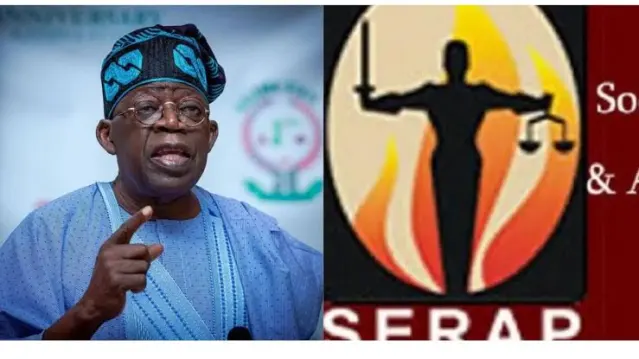
Together with four other concerned Nigerians, the Socio-Economic Rights and Accountability Project (SERAP) has sued President Bola Tinubu’s administration in the ECOWAS Court of Justice for not disclosing the forensic audit report on the Niger Delta Development Commission (NDDC).

According to the report, between 2001 and 2019, senior government officials and politicians are accused of embezzling N6 trillion.

The late former President Muhammadu Buhari requested a forensic assessment of the NDDC’s activities in 2019 in response to complaints of big corruption. The wife of a former minister allegedly raised N48 billion over a 12-month period “to train Niger Delta women,” according to recent allegations made by Nyesom Wike, the Minister of the Federal Capital Territory (FCT).

Ben Omietimi Tariye, Princess Elizabeth Egbe, Chief Jude Igbogifurotogu Pulemote, and Prince Taiwo Aiye­datiwa are the four Nigerians involved in the lawsuit.

The plaintiffs are requesting: “a declaration that the Nigerian government’s failure to publish the NDDC forensic report amounts to a fundamental breach of the country’s international human rights obligations” in the case registered last Friday before the ECOWAS Community Court of Justice in Abuja under suit number ECW/CCJ/APP/35/25.

“An order directing and compelling the Nigerian government to publish and ensure access to information to the NDDC forensic report which has been submitted to the state but remains shrouded in secrecy” is what the plaintiffs are requesting.

Additionally, the plaintiffs are requesting “an order directing and compelling the Nigerian government to adopt and ensure effective measures to address transparency and accountability gaps in the execution of public funds budgeted for the NDDC.”

“We have a right to know the truth regarding the corruption allegations in the NDDC forensic report, and the Nigerian government has violated that right. By preventing the report from being published, the accusations made in it are being covered up and impunity is being perpetrated.

The public’s right to open access to information and to know what governments are doing on their behalf is implicit in freedom of expression; without it, the truth would linger and people’s involvement in politics would continue to be divided and unreal.

“The NDDC forensic report has not been published by the Nigerian government, and it has not given the plaintiffs or the Nigerian public any explanation or justification for doing so.”

Since the NDDC forensic report is a part of the freedom to seek, receive, and disseminate information of any sort, the Nigerian government is legally required to guarantee and ensure transparency and access to information.

“There is an overriding public interest in the publication and disclosure of the NDDC forensic report,” writes Kolawole Oluwadare, Kehinde Oyewumi, and Andrew Nwankwo, the attorneys for SERAP and the four concerned Nigerians, in their lawsuit.

“The Nigerian government’s persistent refusal to provide the NDDC forensic report damages the rule of law, infringes upon the plaintiffs’ other rights, and prevents the plaintiffs from thoroughly examining the report and holding the government accountable.

Since transparency, accountability, and human rights are topics covered by the African Charter on Human and Peoples’ Rights and the International Covenant on Civil and Political Rights, the information sought is not classified for national security reasons.

Article 9 of the African Charter on Human and Peoples’ Rights and Article 19 of the International Covenant on Civil and Political Rights both provide the fundamental human right of access to public information, which the Nigerian government is obligated to uphold, advance, and guarantee. There are two human rights treaties that Nigeria has ratified.

The Nigerian government is obligated to grant the plaintiffs access to the NDDC forensic report that is in its custody and control under Article 9 of the African Charter on Human and Peoples’ Rights and Article 19 of the International Covenant on Civil and Political Rights.

According to the NDDC forensic report, “the plaintiffs have the right to participate in matters of public interest, such as pursuing accountability and justice for victims of corruption.” Information access is a fundamental instrument for fostering citizenship.

“These issues of public interest are among the principles that underpin the International Covenant on Civil and Political Rights, the African Charter on Human and Peoples’ Rights, and other human rights treaties to which Nigeria is a state party.”

By having access to information about the NDDC forensic report, the plaintiffs would be able to effectively exercise their human rights and hold the Nigerian government responsible for the accusations made in the study.

Additionally, making the NDDC historical report available to the public would encourage democratic engagement and provide the people the ability to hold the Nigerian government responsible and combat corruption in the nation.

The principles of maximal transparency and good faith must be adhered to by state administration, including the Nigerian government, in order to ensure the full and efficient exercise of the right to access information.

According to Article 9 of the African Charter on Human and Peoples’ Rights and Article 19 of the International Covenant on Civil and Political Rights, the right to information is guided by the principle of maximal disclosure.

Read Also: 2025 WAEC Will Hold as Scheduled — Education Minister Refutes Cancellation Report

“The maximum disclosure principle advocates for a legislative framework where access and transparency are the norm and are only subject to stringent and restricted exceptions. Secrecy is the exception, while the right to obtain information is the rule.

“Access to information is not always guaranteed; there may be restrictions on it.

The requirements established from international human rights law, which state that limitations must be exceptional, legally codified, founded on a legitimate objective, and necessary and proportionate for attaining that aim, must be met precisely by these limitations.

But the exceptions shouldn’t become the norm; they should consider that information access is the rule and concealment is the exception.

It is the responsibility of the Nigerian government to prove that restrictions on the dissemination and availability of information about the NDDC forensic findings are in line with both international human rights norms and the nation’s associated legal requirements.

Since the Nigeri­an government owns and controls the NDDC forensic report, it is imperative that the state refrain from using arbitrary and discretionary measures to impose limitations on the right to transparency and information.

The plaintiffs’ right to a legal remedy has been violated, and the denial of access to information on the NDDC forensic report is incompatible with the requirements of the International Covenant on Civil and Political Rights and the African Charter on Human and Peoples’ Rights.

However, there is no set date for the suit hearing.