ABU Lecturers Demand Withdrawal Of El-Rufai’s Academic Certificate
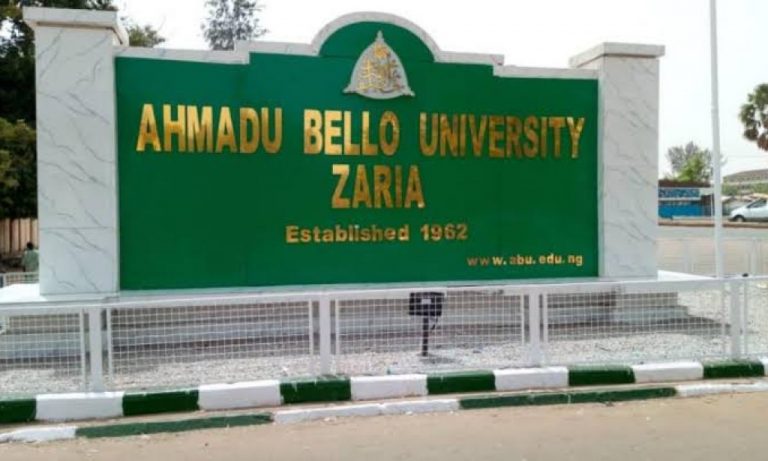
The Ahmadu Bello University (ABU) Zaria chapter of the Academic Staff Union of Universities (ASUU) has demanded that Malam Nasir El-Rufai, the governor of Kaduna, have his degree certificates revoked immediately.
El-Rufai earned a first-class degree in Quantity Surveying from ABU in 1976.
The resolution was reached at the end of the Union’s congress meeting on March 2, 2022, according to Comrade Hussein Abdullahi, Secretary of the Union, which represents lecturers.
ASUU was surprised, he said, that the governor could forcefully seize ABU’s land in Mando, Kaduna, an action he described as a “utter disregard of an order by a competent court of law.”
Read also: Before Buhari, Nigerians faced a similar situation – Femi Adesina
“He forcibly took over land belonging to Ahmadu Bello University, a historic and premier university in the Federal Republic of Nigeria,” Abdullahi said.
The Congress also decided to “visit the Mando College of Agriculture and Animal Science, where the lands are located, to register its protest over the illegal land seizure,” according to Abdullahi.
He said, “We have issued an advisory to relevant organs of Ahmadu Bello University to formally withdraw the degree certificates awarded to Nasir Elrufai by the University because his many actions are in violation of the requirements in character and learning deemed worthy of an ABU degree award.”
As of the time of filing this report, the governor had not responded to the development.
In Ukraine, Shakhtar Donetsk Coach killed In Fight With Russia
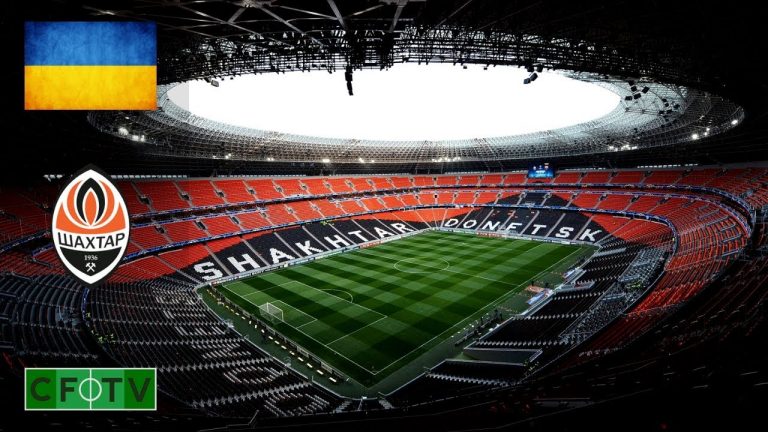
Shakhtar Donetsk has confirmed that their youth coach was killed while defending Ukraine’s independence.
“One of our employees was killed; he was a children’s coach,” Shakhtar CEO Serhiy Palkin confirmed to Mirror UK on Thursday evening.
“He was hit by a Russian bullet fragment.”
This comes just two days after two Ukrainian footballers were killed in the conflict, according to reports.
Read Also: Before Buhari, Nigerians faced a similar situation – Femi Adesina
Remember that last Thursday, Russian President Vladimir Putin ordered his troops to invade Ukraine, sparking a bloodbath in Eastern Europe.
Before Buhari, Nigerians faced a similar situation – Femi Adesina
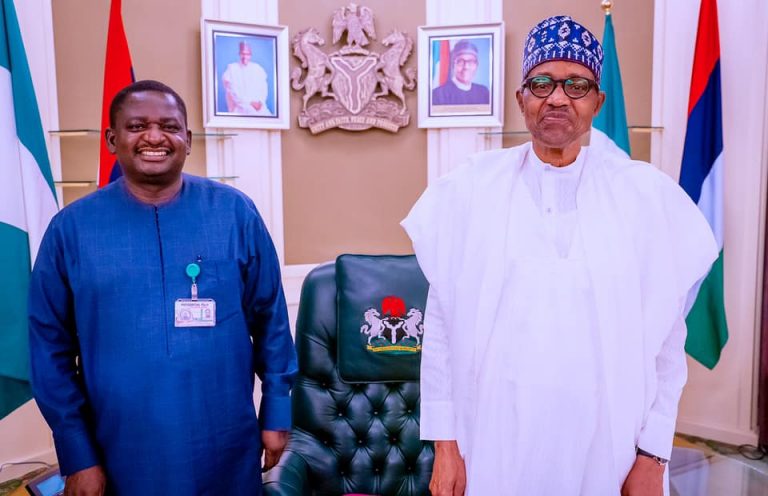
The Special Adviser to the President, Major General Muhammadu Buhari (retd.), Femi Adesina, has stated that the challenges Nigerians face with Premium Motor Spirit, also known as gasoline, are not new in the country.
Nigerians have had difficulty purchasing the commodity since the Nigerian National Petroleum Company Limited imported contaminated petrol into the country in February.
According to our previous correspondence, oil marketers estimated that about 100 million litres of contaminated gasoline were imported into Nigeria and had been recalled by the NNPC’s Pipelines Product Marketing Company.
The recall resulted in long lines in Abuja, Lagos, Niger, Nasarawa, and other states, with motorists and other PMS users crowding the few petrol outlets that dispensed products.
Read also: Diaspora Voting Council Accuses Nigerians Abroad Of Disenfranchisement
Many other filling stations had closed due to a lack of products to sell, while black marketers greeted motorists on major highways in Abuja and Lagos, selling products at higher prices to interested customers.
However, in response to the crisis, Adesina stated that Nigerians faced similar challenges prior to the presidency of Major General Muhammadu Buhari (retd. ), and that fuel shortages were a common occurrence in the country.
In an article titled “Knock, Knock,” the presidential spokesman revealed this. Who’s There,’ which he posted on his official Facebook page on Thursday, adding that Nigerians had slept in petrol stations while queuing for fuel on multiple occasions.
“It’s obviously not the easiest of times in our country right now,” the article said, “with severe fuel scarcity exacerbating the other existential challenges we’ve been dealing with.” There is no fuel and no electricity in some areas, resulting in a severe energy crisis.”
While acknowledging that the fuel crisis has worsened Nigerians’ living conditions, Adesina stated that the Buhari administration is working diligently to restore normalcy.
“In the past, there have been instances of bad fuel in this country. We slept at petrol stations for days, even weeks, while waiting for fuel. We made it through. We’ll pull it off again. Las las.
“President Muhammadu Buhari has swiftly approved $8.5 million for the evacuation of Nigerians in Ukraine. Good. That’s what a caring father does for his children when they’re in trouble. He’s also working around the clock to ensure that the country has fuel, power, infrastructure, and all of life’s necessities.
Read also: NSCDC Secures Vagrant Teenager in Osun
“I’ve come to knock, ring, and tap on your door today to remind you that life in our country isn’t all doom and gloom. There’s always a glint of light, no matter how overcast the sky is.”
“Fuel shortages will ebb and flow. There will be an end to the energy crisis. Nigerians who value good things will gradually be made happy, according to Adesina.
How Visa Facilitators Scramble, Mop Up Visa Appointments Online To Swindle Nigerians
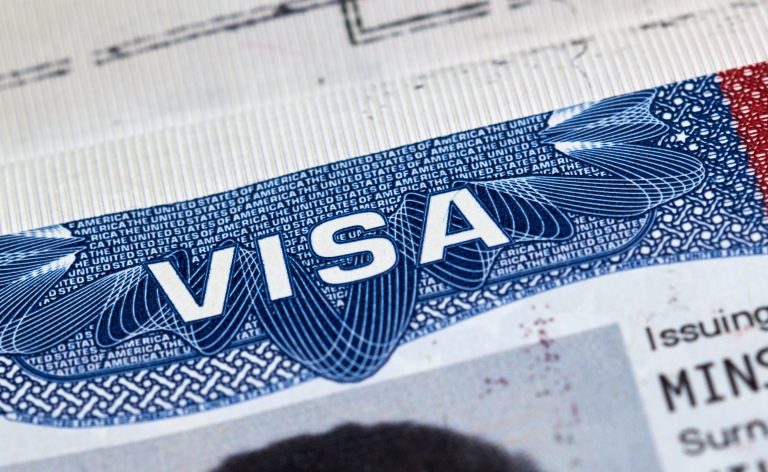
An investigation has revealed that illegal visa facilitators who provide Nigerians with US visa interview appointment dates for exorbitant fees spend days scouring the internet for available dates, booking them, and selling them to applicants seeking visa interview appointments with the US embassy.
Although illegal, the business has become a source of income for many people, particularly young Nigerians who set up shop near embassies in Lagos to woo visa applicants who come to them out of ignorance or desperation.
Many of the facilitators told us that all they do is stay online 24 hours a day, grabbing visa application dates provided by the US Consulate.
Read also: Fidelity Bank Awards N10m To Winners Of 3rd Monthly Draw
Susan Tuller, the US Country Consular Coordinator in Lagos, recently accused these facilitators and travel agents of illegally manipulating visa appointments and extorting Nigerians who are forced to pay exorbitant fees for visa interview appointment dates.
“One of the problems we have with increasing visa appointments is that our visa appointment system is manipulated by the visa facilitators who operate here, especially in Lagos,” Tuller says. Unfortunately, visa facilitators, travel agents, and others take advantage of our visa appointment system to make money. Even though they operate in the same parking lot as our consular operations in Lagos, we have little control over them because they are not on our property and we are unable to police them.
“Unfortunately, the visa facilitators here operate with impunity, for financial gain, and as long as they are allowed to do so and Nigerians continue to pay them exorbitant fees to get an appointment, that will almost certainly continue, making it very difficult for us to truly control the number of visa appointments that we make available.” So, before we get into the details, I’d like to emphasize that there’s no reason to pay extra fees to a visa facilitator or a travel agent.
“For this new interview renewal program, there are thousands of appointments available right now.” They are currently available online, and there is no reason to pay someone to get an appointment if you meet the criteria and follow the procedures. One of the most difficult aspects of paying someone or making an appointment is that visa facilitators book these appointments using fictitious information. So you have no idea what information they have in their system when you buy an appointment from them. This system becomes a part of your consular once the information is entered into it.”
Read Also: Diaspora Voting Council Accuses Nigerians Abroad Of Disenfranchisement
The facilitators, who set up shop in the car parks and adjacent buildings around the US Consulate on Walter Carrington Crescent, said they charge applicants between N250, 000 and N500, 000 for B1, B2 (tourist) US visas.
Pretending to be an applicant, I asked one of the facilitators, who identified himself as Joseph, for a date.
“I will only charge you N250, 000.” We collect N500, 000 before the drop box (US interview waiver program) opens. The reason for this is that we use the same procedure with B1, B2, and you. However, I can accept N250, 000 from you for this one because you appear to be concerned. Unless we receive that date, we do not collect any money from you. So, once we’ve secured your date and you’ve seen it, you can pay us. We’ll cancel it if you don’t pay,” he said.
Another facilitator stated that what they are doing is not illegal and that it has no negative impact on the United States; “if I did, the United States would not allow it.”
The facilitator also denied that Nigerians working at the US Embassy assist them, claiming that no one can hack into the US server and that the Consular Office makes every visa appointment date they have access to available on the internet.
“Because they are well paid, Nigerians working in the embassy do not engage in such practices.” They have a month to collect up to N6 million. So, how much will you be giving them? Because they have an agreement with the Nigerian government, the majority of the people who work there are Nigerians. They can’t just come in and hire their own people, but the customer service, visa, and consular sections are all staffed by Americans,” he explained.
The facilitator also described how they acquire and sell visa application interview dates.
“You must pay your visa fee in order to get a date.” It is the visa fee receipt number, your data page (international passport), and the bar code of the online application form that we will use to create a profile, user name, and password for you. That’s what we’ll use to schedule an appointment for you, so the date on your appointment and the barcode number on your GS160 form match up. “If it doesn’t add up, they won’t let you in,” he explained.
Read Also: NSCDC Secures Vagrant Teenager in Osun
Meanwhile, the National Association of Nigeria Travel Agencies (NANTA) has denied that any of its members were involved in manipulating US visa appointments.
Mrs. Susan Akporiaye, President of NANTA, urged caution when making such remarks about travel agents.
NSCDC Secures Vagrant Teenager in Osun
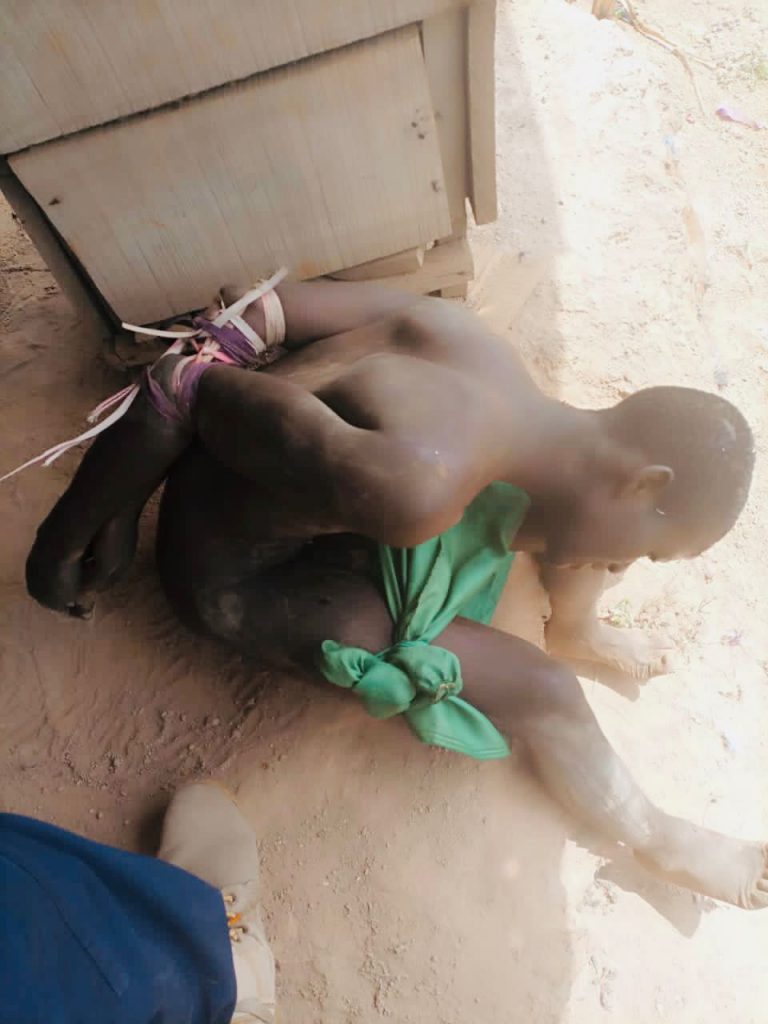
Sunday Ademola, a 17-year-old vagrant, has been taken into custody by the Nigerian Security and Civil Defence Corps (NSCDC) in Osun.
The Osun NSCDC Commandant, Emmanuel Ocheja, confirmed this to journalists in Osogbo on Thursday through Atanda Olabisi, the Osun Command’s Public Relations Officer, who stated that the teenager was brought to the Ede North Local Council Development Authority, NSCDC Division after he was found roaming around, naked and with his hands tied to his back, along the Owode-Ede axis of the Gbongan-Ibadan highway.
Read Also: FG Approves DCP Kyari’s Extradition to United States
Atanda explained that the teenager, Sunday Ademola, was taken in for questioning and medical observations as soon as the matter was brought to the attention of the Divisional Officer, Ede North LCDA.
According to an Osun NSCDC spokesperson, a medical examination revealed that the teenager had no mental health issues.
“Physical observations revealed that the teenager’s hands were tied behind his back,” she said. He had bruises on his head and was believed to have been beaten mercilessly by unidentified person(s).
“After receiving first aid treatment from the Divisional Office’s medical team, Sunday was interrogated and stated, ‘My name is Ademola Sunday, I am from Inisa, Onira’s Compound.’ His photograph and name were sent to the compound, but no one seems to recognize him.
“However, the case was reported to the Ministry of Women Affairs, Osun State Secretariat, Abere, Osogbo, and from there, Sunday was taken to the Testing Ground Osogbo Correctional and Rehabilitation Center, with the hope of reuniting him with his parents soon.”
Read Also: Fidelity Bank Awards N10m To Winners Of 3rd Monthly Draw
Olabisi, the corps’ spokesperson, urged residents of the state to continue reporting any suspicious activity to the nearest NSCDC office for prompt intervention.
Diaspora Voting Council Accuses Nigerians Abroad Of Disenfranchisement
The Nigeria Diaspora Voting Council (NDVC) has condemned the recent Constitutional Amendment Review Session by both chambers of the National Assembly for what it calls the disenfranchisement of Nigerians in the Diaspora.
The council expressed regrets that the Diaspora Voting Bill was defeated by Nigeria’s upper and lower legislative houses on March 1, 2022, in a statement signed by its secretary, Tolu Oluwatuyi Esq, on Friday.
I regret to inform my fellow Nigerians in the Diaspora that the Nigeria Diaspora Voting Bill was defeated by Nigeria’s upper and lower legislative houses at the Constitutional Amendment Review Session (third reading) held at the National Assembly Complex in Abuja, Nigeria on March 1st, 2022.”
“A Bill for an Act to Amend the Provisions of the Federal Republic of Nigeria’s Constitution of 1999 to Provide for Diaspora Voting; and for Other Purposes.”
Read also: Nigeria has learned a lesson from Russia’s invasion of Ukraine: Minister of Defense
“Yes = 29 in the Senate (Upper Chamber).” 62 is the number.
Yes = 58 in the House of Representatives (Lower Chamber). “Number = 240.” Given the amount of effort and resources put in by the Council and several Diaspora organizations to date, this is a setback. A setback frequently leads us down a path that is even worse but ultimately leads to a better destination. It reads, “Courage is going from failure to failure without losing enthusiasm,” according to Winston Churchill.
The Council, on the other hand, reassured Diasporans that the NDVC is more determined to succeed than to abandon its campaign for Diaspora Voting (DV) in Nigeria.
“Until the goal is met, NDVC will not stop working to spread the word about its advocacy.” In the future, the NDVC will publish a timeline of activities in due time.”
“Given the renewed determination, the board of the NDVC has decided to step up its efforts, bring on board more well-known and influential Diaspora groups that will add value to the advocacy, including State Diaspora Focal point officers, broaden and intensify diplomacy, review the provisions of the existing Diaspora Voting Bill with the assistance of NIDCOM, INEC, and NASS, and re-strategize going forward.”
Read also: Nigeria’s Customs Pledges To Generate N3.019Trn in 2022
The Council praised Rep. Tolulope Akande-Sadipe, Chairman of the House of Representatives Committee on Diaspora, and her team for their patriotism, dedication, and commitment to DV advocacy.
“If anyone deserves all the accolades, it is Hon. (Mrs) Tolulope Akande-Sadipe, House Committee Chairperson on Diaspora and Electoral Matters, the National Assembly Sponsor of the Nigeria Diaspora Voting Bill. Hon. (Mrs) Akande-Sadipe and her tireless team, led by Mrs. Omoshalewa, worked tirelessly to ensure that the DV Bill was passed. The NDVC cannot express its gratitude enough for the numerous trips she took during the zonal public hearings, risking her life in the process, just to ensure that the Diaspora Voting Bill was a success.”
The Nigerians in Diaspora Commission (NiDCOM); the Independent National Electoral Commission (INEC) under the chairmanship of Prof Mahmood Yakubu, for the technical know-how support and willingness to help thus far; the Nigerians in Diaspora Organisation (NIDO) and other Diaspora groups and persons for their unwavering support; and the Nigerians in Diaspora Commission (NiDCOM) and other Diaspora groups and persons for their unwavering support.
Fidelity Bank Awards N10m To Winners Of 3rd Monthly Draw
Fidelity Bank Plc, a leading financial institution, has presented cash prizes to winners of the Get Alerts in Millions season 5 promo’s February draw, reaffirming its commitment to enriching the lives of its customers (GAIM 5). The prize presentation took place at the Fidelity Bank branch in Suru Alaba, Lagos, as well as other Fidelity Bank branches across Nigeria’s six geopolitical zones.
Aliu Usman Sunday, Abdullahi Abu SaibuNwankwo okoro David, Hadiza Sindama Nuhu, Douglas Monday, Goodness Chiamaka Basil, Idemudia Gracious Eghosa, Ndiana Monday James, Kolade Jacob Elujoba, and Obinna Williams Samuel were among the winners in the February draw.
Read Also: Nigeria’s Customs Pledges To Generate N3.019Trn in 2022
“At the heart of all our operations is an overriding desire to make life easier for our customers while empowering them to live fuller and richer lives,” Dr. Ken Opara, Promo Chairperson and Executive Director, Lagos and South-West, Fidelity Bank Plc, said at the prize presentation event in Lagos. We take pride in transforming and improving our customers’ lives as a bank. Nigerians have climbed the socioeconomic ladder month after month simply by keeping a minimum of N2,000 in their Fidelity Bank accounts.”
“Today, we will present Aliu Usman Sunday and Abdullahi Abu Saibu, the winners of the third GAIM 5 monthly draw held last week, with a sum of N1 million.” Aside from Sunday and Saibu, eight other Fidelity Bank customers will receive their N1 million cash prizes today at similar events held at their branches across the country. This is in line with the company’s promise to distribute a total of N125 million to GAIM 5 customers between November 2021 and July 2022.”
Read Also: Nigeria has learned a lesson from Russia’s invasion of Ukraine: Minister of Defense
“Since the start of the fifth season of the Get Alert in Millions promo, we’ve rewarded 670 customers with various sums of money, including 650 customers who won N10,000 each in the weekly consolation draws and 20 customers who won N1million each in the monthly draws,” Dr. Ken Opara, who was represented by Fidelity Bank Plc’s Head Product Development, Osita Ede, explained.
Nigeria has learned a lesson from Russia’s invasion of Ukraine: Minister of Defense
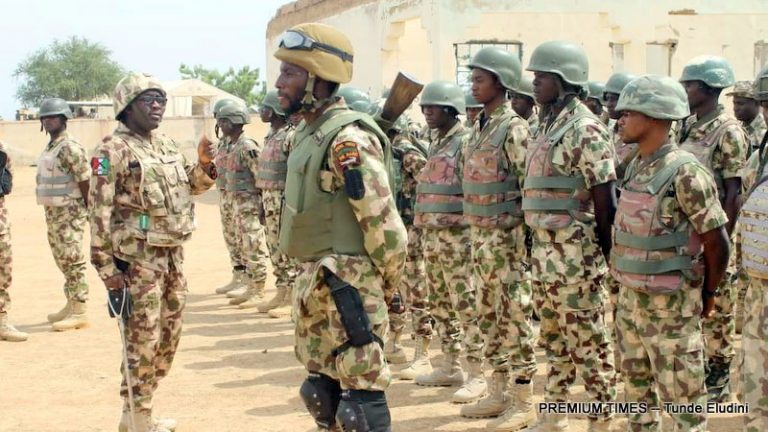
The government of President Muhammadu Buhari claims that Russia’s invasion of Ukraine has taught Nigeria a lesson about the importance of investing in local weapon production.
The recent global events have reinforced the need to improve local production of defense needs, improve supply chain security, and enter into international collaborations that will ensure technology transfer, said defence minister Bashir Magashi during the ongoing 43rd Kaduna International Trade Fair’s Armed Forces Special Day.
Mr Buhari’s administration, he claims, is committed to building a strong military.
Mr Magashi, through his special adviser Ahmad Jibrin, reaffirmed the regime’s commitment to continue to provide adequate logistics and equipment for the armed forces to carry out their duties.
Read also: Ondo to restore mission schools – Akeredolu
He emphasized that the regime’s ongoing efforts to establish a military industrial complex were a sign of Mr Buhari’s desire to improve the armed forces’ self-sufficiency.
“The complex will be a collaborative effort involving the government, military, defense industries, and research institutions, with activities aimed at meeting Nigeria’s defense requirements.”
“I encourage members of academia and industry to seize this opportunity and explore potential areas of collaboration,” he said.
The event gives the military a chance to show off its in-house defense manufacturing capabilities as well as its research and development efforts.
He praised the Nigeria Defence Academy, the Nigerian Defence Industries Corporation, and the Command Engineering Depot, CED, for representing the military at the event and showcasing a variety of indigenous military products.
He cautioned them against resting on their laurels.
Hassan Tafida, the director-general of DICON, assured the minister that the armed forces are committed to improving their capacity and becoming self-sufficient in producing all military hardware requirements.
Nigeria’s Customs Pledges To Generate N3.019Trn in 2022
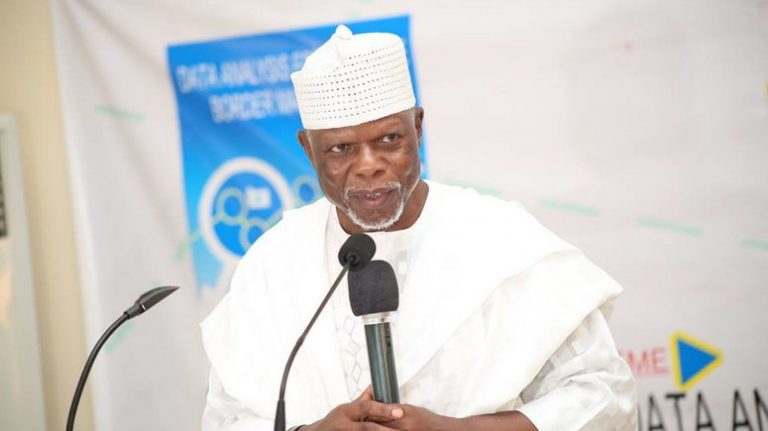
The Nigeria Customs Service (NCS) assured Senate members yesterday that it would generate N3.019 trillion in revenue for the Federation Account this year.
This comes as the Nigerian House of Representatives directed the Central Bank of Nigeria (CBN) and the Nigerian Customs Service (NCS) to align their positions on the electronic invoice policy and report back to the House on March 17, 2022, for further action.
Colonel Hameed Ali (retd.), the NCS Comptroller General, gave the assurance when he testified before the Senate Committee on Customs, Excise, and Tariff.
The NCS targets, according to Ali, were N2.019 trillion from the Federation, N253.23 billion from non-federation, and N746.96 billion from import Value Added Tax (VAT).
The National Assembly set a revenue target of N1.465 trillion for the federal government’s revenue-generating agencies this year.
Read Also: Buhari Has Failed North, Nigerians – Saraki
The Customs boss, who appeared before a Senate panel to present and defend the NCS’s 2022 Budget, said the revenue target for 2022 was N965.42 billion, or 31.98 percent, higher than the revenue target for 2021.
According to Ali, the Service proposed a budget expenditure of N369.14 billion for the fiscal year 2022, which would be funded by a 7% cost of collection estimate of N151.84 billion.
He also stated that the agency hoped to earn N60.12 billion, with 60% CISS.
NCS’s 2% VAT share would amount to N14 94 billion, he said, while the retained income would be N114.3 billion. He estimated that the agency’s portion of the excess target for 2021 is N27.85 billion.
For the fiscal year 2021, the NCS proposed a budget expenditure of N242.45 billion.
Ali explained that the expected income included N108.85 billion in personnel costs, or 29.49 percent, and N45.89 billion in overhead costs, or 12.43 percent.
He also stated that the agency proposed a capital cost of N214.30 billion, or 58.08 percent, with a total cost of N369.04 billion, or 100.00 percent.
When asked if the revenue target could be increased beyond N3.1 trillion, the NCS boss cautioned against overly ambitious targets, noting that the one set for 2022 was already on the high side, in order to avoid crippling the economy.
Senator Francis Alimikhena, Chairman of the Senate Committee on Customs, Excise, and Tariffs, took a swipe at the Customs’ continued complaints about scanners that don’t work. He warned that the excuses must be addressed immediately in order to boost the country’s revenue drive, and that national assets must not be allowed to deteriorate.
Alimikhena urged the NCS chief to ensure that the revenue-generating agency’s 2023 budget is submitted to the National Assembly by the end of October 2022.
He claimed that by doing so, his panel would be able to expedite the bill’s passage before the end of December 2022.
“The Nigeria budget cycle runs from January to December,” he added. Customs should be aware of this circle; late budget submissions will no longer be accepted. The budget for 2023 should arrive in the National Assembly by the end of October 2022, allowing for quick passage before the end of December 2022.
Read Also: Report: Nigeria Earned $2.29bn In 2019 From Beer Sales
A House committee is urging the CBN and Customs to harmonize their e-invoice policies.
The CBN and the NCS have been directed by the House of Representatives to harmonize their positions on the electronic invoice policy.
During a meeting with both agencies and other stakeholders yesterday to address issues arising from the CBN’s introduction of the new system, the lawmakers gave the directive through their Committees on Customs and Excise as well as Banking and Currency.
The CBN had announced that the new system would begin on February 1, 2022, but the House had announced its suspension on January 27, 2022, and directed the apex bank to adopt a 90-day timeline for policy implementation in order to avoid destabilizing the economy.
The resolutions were passed in response to a motion made by Chairman of the Committee on Customs and Excise, Leke Abejide. During the meeting, Abejide stated that the policy would be suspended until the matter was resolved.
Dr. Ozoemena Nnaji, the CBN’s Director of Trade and Exchange, said the new system was “seamless” and “integrated with the import and export process in a way that does not impede any of the stakeholders.”
She said the price of goods involved in a trade transaction was sometimes manipulated by those looking to launder money through the financial system, and that some regulators suggested that banks implement a price check on all trade transactions as a simple way to identify such activities.
This, she explained, was the goal of the new system, which the CBN implemented in collaboration with other MDAs.
“This would be one way of ensuring that the money we earn in trade reaches us without incurring foreign exchange or duty losses.” “Our main goal is to ensure that we allocate our limited foreign exchange resources to imports and that we collect export duties and transaction values due to us at market rates,” she explained.
She said a 2014 analysis of trade invoicing in Nigeria revealed a potential revenue loss to the government of $2.2 billion for the year, which she said represented 4% of total annual government revenue as reported by the IMF and 15% of the country’s total trade.
The new CBN policy, according to Assistant Controller General of Customs Galadima Saidu, is a violation of the World Trade Organization Trade Facilitation Agreement, which Nigeria is a signatory to.
He claimed that using benchmarking in valuation would defeat the purpose of the Customs valuation agreement, causing delays and uncertainty.
Read Also: House Rejects Bill to Repeal Sovereign Wealth Fund, Transfer Funds to Finance Ministry
He claims that the use of benchmarking in valuation has been phased out due to the dynamic nature of pricing, particularly in this time of rapid technological advancement.
“Nigeria is a signatory to the World Trade Organization’s (WTO) trade facilitation agreement. The agreements are legally binding and include sanctions that would harm the Nigerian economy.
“The CBN initiative is in violation of Article 7 of the General Agreement on Tariff and Trade of 1994, as well as Articles 1, 2 and 6 of the WTO TFA,” he claimed.
Hon Victor Nwokolo, Chairman of the Committee on Banking and Currency, stated that both government agencies must work together.