Home Blog Page 189

Putin Takes Responsibility for Russian Role in Azerbaijani Military Plane Crash

0

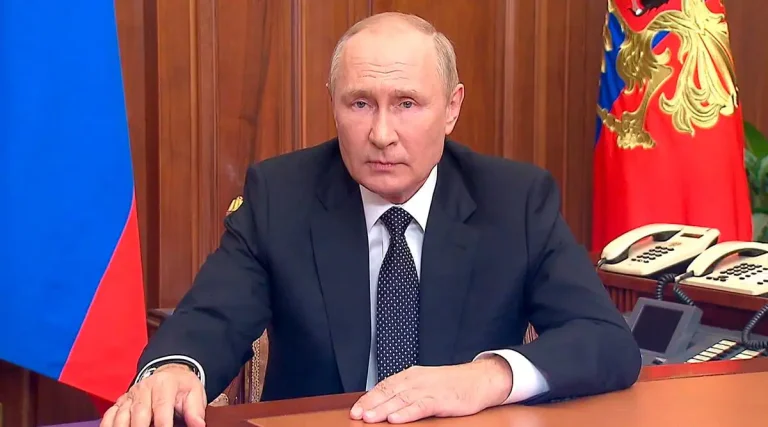
In Dushanbe, Azerbaijan, President Vladimir Putin laid forth the causes of the 2024 Christmas Day jet disaster in Azerbaijan and acknowledged that Russia was to blame.

38 passengers were killed when Baku-based Azerbaijan Airlines Flight 8243 crashed close to Aktau, Kazakhstan. Five crew members and 67 citizens from Russia, Kyrgyzstan, Kazakhstan, and Azerbaijan were on board the Embraer 190.

Putin acknowledged that the competent authorities are almost finished with their investigation into the disaster, which was “caused by several factors,” during a meeting with President Ilham Aliyev on Thursday.

The president said that throughout the night of the disaster, Russian forces had been monitoring three Ukrainian drones that had breached the federation’s border.

Two fired missiles failed to strike the aircraft directly, indicating “technical malfunctions in Russia’s air defense system” as the second culprit.

“The plane would have crashed right away if it had occurred. He said, “They exploded meters away.” The majority of the damage was probably caused by missile pieces rather than the warheads.

Putin claims that the black box captured the pilot’s perception of the incident as a collision with a flock of birds, which he reported to Russian air traffic authorities.

According to the Russian leader, the pilot was told to make an emergency landing in Makhachkala, as heard on the tapes, but he chose to head back to his home base before traveling to Kazakhstan.

Putin expressed regret to Azerbaijan once more and pledged Moscow will make every effort to ease tensions, including paying compensation and conducting a legal review of all responsible authorities’ conduct.

Recalling that the airliner went down when he was heading to a meeting in St Petersburg and had to turn back, President Aliyev responded by thanking his Russian colleague for managing this crisis.

Despite the tragedy, according to Aliyev, the two countries’ commercial and economic connections have improved dramatically in 2025, and all other aspects of their bilateral relations have also improved.

After accusing Moscow of concealing the accident’s specifics and denying any responsibility, the president of Azerbaijan declared in July that his country will sue Russia in international tribunals.

Taraba Deputy Governor Under Scrutiny for Operating Without Press Secretary or Team

0

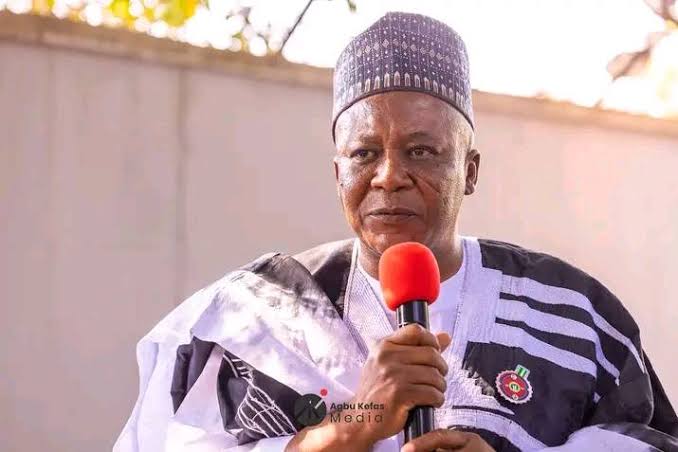
Political analysts and insiders in the state administration are uneasy about Taraba State’s Deputy Governor, Alhaji Aminu Alkali, continuing functioning without a single appointed aide more than two years after taking office.

In contrast to Governor Agbu Kefas’s office, which is crammed with advisers, personal assistants, and media handlers, Alkali’s office is noticeably empty, without even a Chief Press Secretary—a crucial position for handling communications with the public and media.

The deputy governor’s capacity to carry out his duties has been “severely limited” by the lack of personnel, according to sources at Government House in Jalingo who spoke to the Daily Post.

“If the deputy governor had had the required aides, I think his current health condition could have been better managed,” a top official stated.

“The fact that he hasn’t even hired a press secretary to handle media affairs after more than two years in office is shocking.”

According to the source, the situation is “administratively abnormal,” and the governor should step in to bring order back to the deputy governor’s office.

Alhaji Alkali had previously presented a list of suggested assistants and received approval for their hiring, according to the findings; however, important administrative individuals are said to have halted the process.

Several sources claim that for undisclosed reasons, these political players have essentially blocked the hiring process by refusing to issue appointment letters.

Another government source stated, “This is not just a bureaucratic delay anymore; it’s becoming a matter of administrative efficiency and human dignity.”

In order for the deputy governor to formally name and collaborate with his staff, Governor Kefas must act quickly. It will lessen the strain on him and get his office back up and running again.

There have been rumors of internal power struggles inside the Taraba State Government due to the protracted staffing stalemate. Some have suggested that the scenario is a reflection of larger political tensions between the deputy’s supporters and the governor’s camp.

Opponents have called on Governor Agbu Kefas to take immediate action, claiming that the deputy governor is entitled to the institutional assistance required to carry out his constitutional responsibilities.

A former commissioner with knowledge of the problem stated, “The governor needs to take swift action to resolve this matter.”

“The position of deputy governor is an essential component of government, not a ceremonial addition.”

Neither the accusations nor the explanations for the ongoing hold-up in the deputy governor’s aide selection process had received an official reaction from the governor’s office as of the time of publication.

Army Nabs Two Top Terrorists, Receives Surrender of Three Others

0

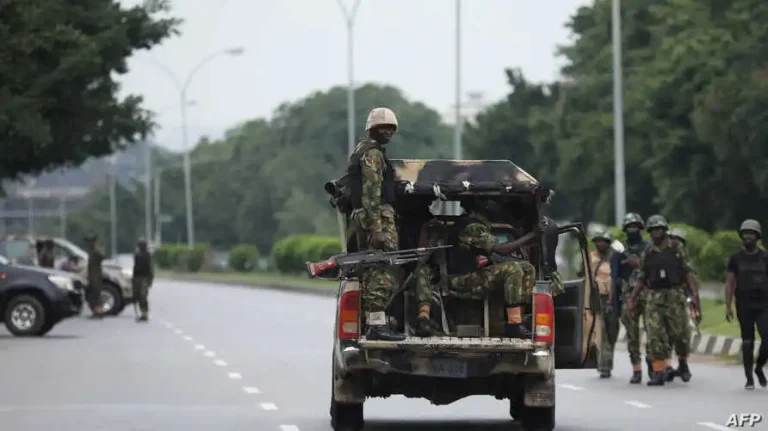
In various operations throughout the nation, Nigerian Army troops have detained two prominent suspected terrorists.

A stash of weapons was also found by the military among the suspects who had been apprehended.

According to an Army Headquarters source cited by the News Agency of Nigeria (NAN), the operations that were successful took place between October 7 and October 9.

Emmanuel Akpan, a notorious kidnapping kingpin, was one of the suspects apprehended during an operation by 2 Brigade troops working with the Department of State Services (DSS), which raided the kidnapper’s hideout in Eket, Akwa Ibom.

Known for kidnappings along the Oron/Ibaka axis, Akpan was reportedly captured on October 7 during a joint operation and is presently being held by the DSS for additional investigation.

According to the source, on October 8, while trying to infiltrate the town of Baga, Kukawa Local Government Area, Borno, an ISWAP/JAS terrorist was apprehended by soldiers from the 196 Amphibious Battalion.

The suspect pretended to be a surrendering combatant and acted as a logistics and intelligence courier between terrorist camps in Chad and the Niger Republic, according to preliminary inquiry findings.

Along the Lere–Saminaka–Kaduna Road in Kaduna State, soldiers from the 4th Demonstration Battalion stopped two suspects who were transporting 1,307 rounds of 7.62mm special ammunition.

Four cell phones and ₦27,000 in cash were found on the accused. From Plateau State’s Barakin Ladi, the ammo was being transferred to Zamfara.

At Bosso, Niger State, three ISWAP/JAS terrorists—among them a female—turned themselves in to 68 Battalion forces, claiming that their camps were suffering from severe military pressure.

“The terrorists from Konduga and Jabilam who have surrendered are presently being profiled for additional debriefing by security personnel,” he stated.

In a related incident, the source further stated that 222 troops engaged militants in a violent gunfight in Bazamri Village, Konduga Local Government Area, Borno State.

He explained that during the fight, the soldiers found a belt with 150 rounds of 7.62x54mm ammunition and two RPG explosives.

Troops stepped up anti-oil theft efforts in other areas, including Rivers, Delta, Imo, Ebonyi, and Plateau States, where they demolished illicit processing facilities and arrested suspects.

During the operations, soldiers demolished multiple refining ovens, seized boats and vehicles used to transport illegal petroleum products, and recovered 6,650 liters of Premium Motor Spirit.

He went on to say, “The Nigerian Army is still committed to defending its citizens, preventing terrorists from moving freely, and establishing secure environments for peace and economic progress.”

‘Why Is His Case Different?’ – Atiku’s Aide Criticises FG for Holding Nnamdi Kanu

0

The Indigenous People of Biafra (IPOB) leader Nnamdi Kanu’s ongoing arrest has been denounced by Paul Ibe, a former vice president Atiku Abubakar’s media aide.

Using his 𝕏 account, Ibe stated that Atiku had consistently demanded the agitator’s release.

Others who were also arrested, like Sunday Igboho, Omoyele Sowore, and former National Security Advisor Sambo Dasuki, he noted, have since attained their freedom.

Ibe questioned what offense Kanu had committed that would justify his incarceration.

On the Nnamdi Kanu matter, Atiku Abubakar has remained steadfast, he said. He demanded Kanu’s release in 2023, and in 2024, he put out a political solution.

In keeping with his stance, he has now supported the #MarchforKanu initiative by the Sowore. It is a patriotic action.

“Assume, without denying, that Kanu has a case to make. Is there a sincere and equitable attempt to hold a trial that will deliver real justice as quickly as possible, based on the existing sham trial?

What crime did Kanu commit, by the way, that others did? However, Sabo Dasuki, Sunday Igboho, and Yele Sowore—three other people who were arrested around the same time as Nnamdi Kanu—were released on bond.

Why does Kanu’s situation differ? The fact that he is from the opposite side of our geographic region and goes by Nnamdi Kanu might be the reason.

In the meantime, we have witnessed the amnesty of Boko Haram militants. Isn’t that unfair to certain people? The only viable solution to the Nnamdi Kanu problem is therefore a political one.

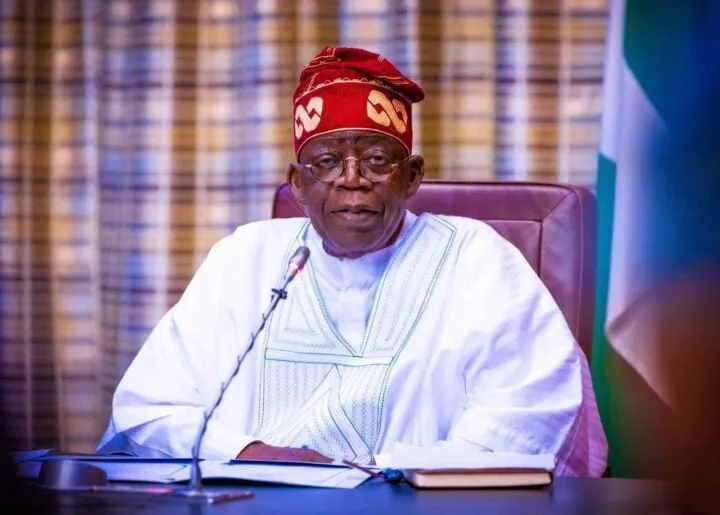
Breaking: National Council of State Endorses Tinubu’s Pick for INEC Chairman

0

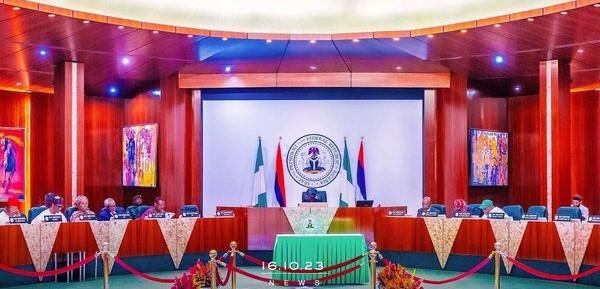
The Independent National Electoral Commission’s (INEC) new chairman, Professor Joash Ojo Amupitan (SAN) of the North-Central, has been nominated by the National Council of State.

Following the departure of Professor Mahmood Yakubu, President Bola Ahmed Tinubu announced Amupitan as the candidate to take up the post.

Remember, Yakubu was in office from 2015 till October 2025.

Bayo Onanuga, Tinubu’s Special Adviser on Information and Strategy, reportedly revealed this in a statement on Thursday.

According to the statement, President Tinubu informed the council that Amupitan is apolitical and the first candidate from Kogi, North-Central state, to be nominated for the role.

Governor Ahmed Usman Ododo described Amupitan as a man of integrity, and the nomination received overwhelming support from the council.

Going forward, President Tinubu will forward Amupitan’s name to the Senate for review in accordance with the constitution.

Born in Ayetoro Gbede, Ijumu LGA, Kogi State, Amupitan, 58, is a law professor at the University of Jos, Plateau. He is a graduate of the university as well.

He specializes in corporate governance, privatization law, law of evidence, and company law. It was in September 2014 that he was appointed a Senior Advocate of Nigeria.

On 25 April 1967, Amupitan was born.

He went to the University of Jos from 1984 to 1987 after finishing his elementary and secondary school, and then to Kwara State Polytechnic in Ilorin from 1982 to 1984. In 1988, he received his bar admission.

After serving as a National Youth Service member at the Bauchi State Publishing Corporation in 1989, he began his academic career in 1989 and completed his LLM at UNIJOS in 1993 before earning his PhD in 2007.

Right now, he is the Pro-Chancellor and Chairman of the Governing Council of Joseph Ayo Babalola University in Osun State, in addition to being the Deputy Vice-Chancellor (Administration) at the University of Jos.

Among his academic roles at UNIJOS are Head of Public Law (2006-2008), Dean of the Faculty of Law (2008-2014), and Chairman of the Committee of Deans and Directors (2012-2014).

Beyond the classroom, Amupitan is a member of the Nigerian Institute of Advanced Legal Studies Governing Council, a board member of Integrated Dairies Limited in Vom, and a member of the Council of Legal Education (2008-2014), among other positions. He served on the board of Abuja’s Riss Oil Limited from 1996 to 2004.

Corporate Governance: Models and Principles (2008), Documentary Evidence in Nigeria (2008), Evidence Law: Theory and Practice in Nigeria (2013), Principles of Company Law (2013), and an Introduction to the Law of Trust in Nigeria (2014) are just a few of the several legal volumes the author has authored.


Ezekwesili Calls on Senate to Reinstate Natasha’s Full Parliamentary Rights

0

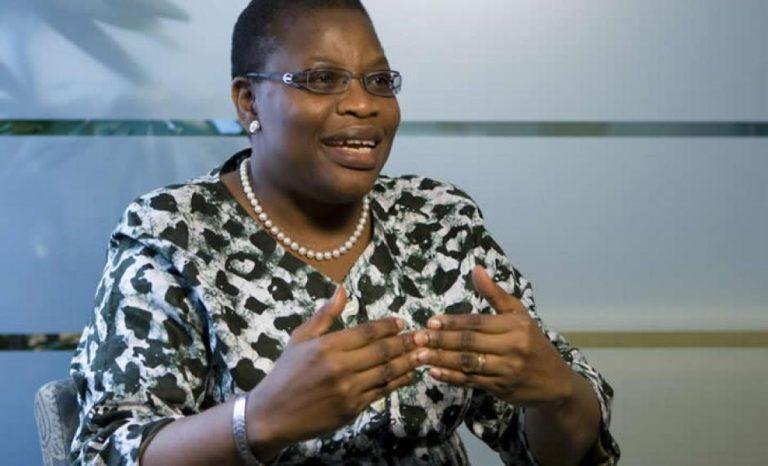
Members of the Nigerian Senate have been warned by former presidential candidate Obi Ezekwesili to stop harassing Kogi Central legislator Natasha Akpoti-Uduaghan in any way.

According to sources, two weeks ago, Natasha made her Senate comeback following a six-month suspension.

The lawmaker has become a symbol of the strength and tenacity required to combat injustice committed against citizens by those who misuse public power, Ezekwesili wrote in a message sent to the Nigerian Senate and its 107 senators.

She said that because the troubled politician was making demands on the Senate members, she was unjustly suspended.

She commented on 𝕏, “It is time for your leadership and members to do the right thing—end all forms of harassment or targeting against her.”

“Every rational Nigerian views Senator Natasha’s suspension as an injustice that went well beyond the parameters of appropriate discipline.

“It gave the incorrect impression that a woman who speaks up and stands up for what she believes in may be intimidated or silenced by the Senate.

Restoring Senator Akpoti-Uduaghan thus gives the Senate an opportunity to make amends and demonstrate to the public that it is capable of maintaining equity and respect for all elected officials.

“Cease all conflicts and nonverbal discipline. She cannot be sidelined, irritated, or humiliated any longer for merely carrying out her duties.

“Restore her senatorial rights and privileges in their entirety.” To fully function, she needs access to her office, staff, committee responsibilities, and the freedom to speak in the chamber.

“Lead by example.” The Senate must demonstrate its maturity in handling any issues affecting individual members and refrain from unfairly using its authority to punish those who have wronged them.

Respect what the people have mandated. The residents of Kogi Central are represented by Senator Natasha. Any additional attacks on her would be a betrayal of her voters’ wishes.

“As I have maintained since the beginning of this saga, this is not just about Natasha Akpoti-Uduaghan,” she continued.

It concerns Nigeria’s desired democracy, where women can hold leadership positions without fear of discrimination or harassment, and where no one faces consequences for speaking up against the status quo.

“The Senate must keep in mind that the best ways to demonstrate authority are via openness, justice, responsibility, and restraint rather than through threats.

“By treating Senator Natasha with the same respect and decency as all other members, the Senate has the opportunity to turn this page properly.

The main criterion by which the public will evaluate the 10th Senate of the Federal Republic of Nigeria is how it responds to the substantive issue of her accusation against the Senate President moving ahead. This will determine whether or not our highest legislative body sets an example.

There is a new opportunity for many of her coworkers to take advantage of this and at last be heard when they say that “the injustice shall not be sustained.”

“The Senate’s decision between justice and retaliation will be remembered by history, and Nigerians are watching.”

PDP Spokesman Says Nigerians Want Party to Reorganize Ahead of 2027 Elections

0

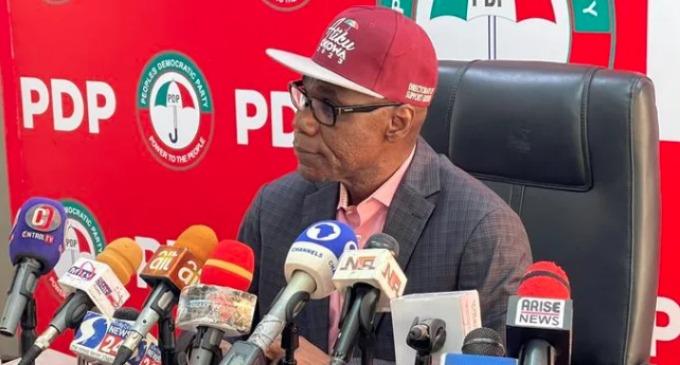
According to Debo Ologunagba, the Peoples Democratic Party’s national publicity secretary, Nigerians are keen to see the party organize.

Speaking to reporters on Wednesday about the party’s national convention preparations, which are set for November 15–16, Ologunagba made this statement.

The interest that Nigerians from all walks of life had showed in the party convention, he continued, was proof of their devotion to and faith in the PDP.

Nigerians are curious in the PDP’s efforts to unite as a party because they believe that the party’s vitality is the only way to ensure that democracy will continue to exist in the nation.

“The excitement and interest that Nigerians of all stripes have in our party is explained by the fact that the upcoming national electoral convention is essential to the country’s democracy’s survival.

For sixteen years, the PDP governed us without interruption. For Nigerians, that is the heyday of the nation’s progress and prosperity.

“We cleared off our loans during the PDP’s rule. Double-digit GDP growth was achieved. We controlled inflation. We had human capital development policies that invested in people.

When the PDP departed power in 2015, our economy had grown to be the largest in Africa and valued at over $600 billion.

At the time, he claimed, “Nigeria was the top destination for foreign capital investment.”

He claimed that in order to ensure the convention’s success and inclusivity, party members were already contributing to its 15 broad-based subcommittees.

In response to rumors that one of the PDP governors will soon lose to the ruling All Progressives Congress, or APC, Ologunagba stated that the PDP is more than just a single person and that it shouldn’t have any influence over the convention.

Additionally, according to Ologunagba, the PDP had wrapped up their Congress in Edo.

According to him, the state congress was organized on September 27 by a committee duly established by the party leadership, and an appeal panel was established to address any issues raised by the Congress.

Perhaps the alleged congress was merely a publicity stunt to defend the paymaster of the criminals, he continued.

Peter Obi Urges INEC to Verify Certificates of Tinubu, Governors Ahead of 2027 Elections

0

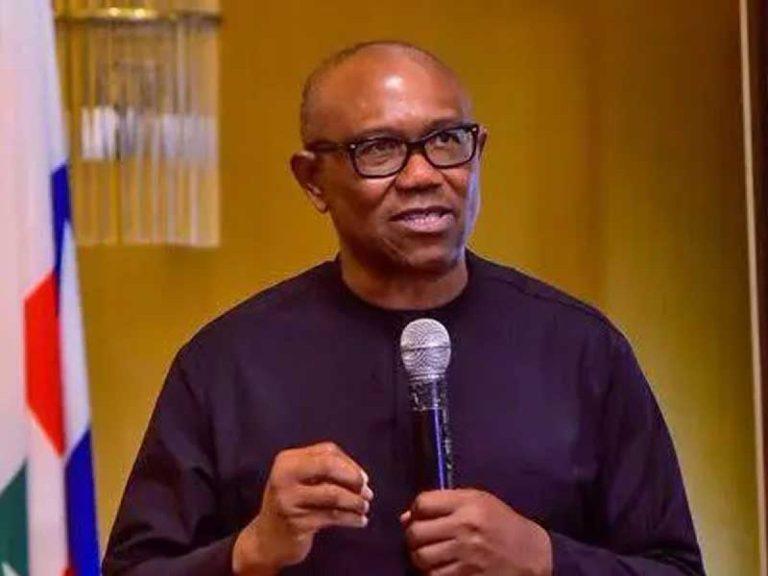
Prior to the general elections in 2027, Mr. Peter Obi, the presidential candidate of the Labour Party in the 2023 election, has urged the Independent National Electoral Commission, INEC, and other pertinent organizations to confirm and authenticate the professional and academic credentials of all political contenders.

Obi claimed that honesty and openness in the selection of leaders are essential to the legitimacy of Nigeria’s democracy in a statement titled “Certificate Integrity and the Future of Nigerian Leadership,” which was published on X on Thursday.

He called Uche Nnaji’s resignation as Minister of Innovation, Science, and Technology “a decent and honorable step” in the wake of scandals involving inconsistencies in his academic records.

Additionally, he reminded that during the government of President Muhammadu Buhari, former Finance Minister Kemi Adeosun resigned under like circumstances.

“These incidents serve as a reminder that these issues are not insignificant; they are grave criminal offenses,” Obi stated.

To maintain integrity in the 2027 elections, he advised INEC to start verifying credentials presented by all candidates right away, from the president to council members of local governments.

“It is disgusting that our electoral body does not do enough research to verify the certifications that candidates have submitted. The integrity of our democracy is weakened by persistent inconsistencies, fraudulent statements, and falsified credentials,” he said.

In order for public service to be based on honor rather than dishonesty, the former governor of Anambra State emphasized that truth, transparency, and accountability must be the cornerstones of Nigeria’s leadership.

Citing Ghana as an example of a nation that carefully verifies candidates’ educational claims prior to elections, Obi also called for a complete national review of the qualification and background verification procedure for all public office holders.

“INEC has ample time to look into previous complaints regarding different types of forgeries and fraudulent statements. All academic credentials must be submitted right away by all incumbents and prospective candidates for public access and verification, he continued.

Ambrose Alli University, Ekpoma, Announces Appointment of New Deputy Vice-Chancellors

0

As the 9th Substantive Vice-Chancellor of Ambrose Alli University Ekpoma, Prof. (Mrs.) Eunice Omonzejie presented the names of two distinguished professors to the Senate for confirmation during her first Senate meeting.

Professors Andrew Omon Eromonsele, who will be the Deputy Vice-Chancellor (Administration), and Osagie Ekhator, who will be the Deputy Vice-Chancellor (Academic), were the nominations.

The Vice-Chancellor clarified that the nominations are essential to fill the positions of all the major officers needed to get her administration off to a strong start.

She asked the Senate to approve the appointments, and it did so overwhelmingly.

“The experience of these two professors would be invaluable in strengthening the administration,” the vice chancellor stressed.

At Ambrose Alli University in Ekpoma, Professor Andrew Omon Eromonsele teaches sociology.

He graduated with a B.Sc., M.Sc., and PhD. in sociology from Ambrose Alli University, Benin University, and Ibadan University, respectively.

His areas of expertise include rural communalism, gender studies, the workplace, sociology of development, and health and sickness.

In addition to attending national, regional, and worldwide conferences, workshops, and seminars, he has produced a large number of scholarly articles.

The Nigerian Institute of Management, the Nigerian Industrial Relations Association, and the American Sociological Association are among the professional associations that Professor Eromonsele belongs to.

He has served as the Sub-Dean of the Faculty of Social Sciences and the Acting Head of the Department of Sociology, among other roles.

At Ambrose Alli University in Ekpoma, Prof. Osagie Ekhator, the newly appointed Deputy Vice-Chancellor, Academic, is a professor of limnology and algae.

He has made exceptional contributions to the study of phytoplankton and freshwater ecology as a committed educator, researcher, and mentor.

Using algae as markers of water quality and ecosystem health is the emphasis of his study, and he has authored multiple papers in respected journals.

Beyond the classroom, Prof. Ekhator is a multidimensional individual who has written, produced gospel films, acted, and written extensively.

In addition to being the Chairman of the Edo State Chapter of ANCEDRAM, he holds a number of other leadership positions and established the P. I. Ekhator Foundation, which funds ministry development and education.

In his capacity as Deputy Vice-Chancellor (Academics), he offers Ambrose Alli University a vision for character-based education, research innovation, and academic excellence.

These Deputy Vice Chancellors have been appointed, giving Ambrose Alli University Ekpoma the full complement of main executives needed to begin full management and administration of the university.

FG Dismisses World Bank’s Claim That 139 Million Nigerians Live in Poverty

0

The most recent World Bank study, which estimates that 139 million Nigerians are living in poverty, has drawn criticism from the Presidency, which calls the number “unrealistic, exaggerated, and detached from Nigeria’s actual economic conditions.”

Sunday Dare, President Bola Tinubu’s Special Adviser on Media and Public Communication, announced this on Thursday using his official 𝕏 feed. He insisted that the data must be appropriately contextualized within frameworks for measuring poverty around the world before they can be regarded as fact.

Although Nigeria cherishes its collaboration with the World Bank and its contributions to policy research, the cited figure has to be appropriately contextualized. “It is not feasible,” Dare stated.

The World Bank’s estimate, according to the Presidency, was based on the global poverty line of $2.15 per person per day, which was approved in 2017 using the Purchasing Power Parity (PPP) methodology. It should not be construed as an actual number of Nigerians living below the poverty level.

“One should exercise caution when interpreting the World Bank’s figures as an exact, up-to-date headcount,” Dare said.

As a benchmark established in 2017 PPP terms, the estimate is based on the global poverty level of $2.15 per person per day. The amount is far more than Nigeria’s new minimum salary of ₦70,000, or around ₦100,000 at today’s exchange rate, or roughly $64.5 per month if converted nominally. The metric is obviously an analytical tool and does not accurately represent local income reality.

Such standards, he said, do not take into account Nigeria’s distinct economic structure, cost disparities, or the subsistence-based means of subsistence that support millions of households in rural and semi-urban areas.

Since Nigeria’s most recent significant household survey was conducted in 2018–2019, the Presidency contended that PPP-based poverty assessments mainly rely on historical consumption data and, as a result, do not accurately reflect current economic dynamics or account for the informal sector activities that constitute the foundation of Nigeria’s actual economy.

The informal and subsistence economies that support millions of households are frequently ignored in poverty assessments conducted using the PPP technique, which is based on historical consumption data. As a result, the government views the number as a global estimate that has been simulated rather than an actual depiction of the situation in 2025. The trajectory—which is currently one of recovery and inclusive transformation in Nigeria—is what really counts, the statement said.

“Progress should be the main focus, not projections.”
The Federal Government, according to Dare, sees the World Bank’s figure as a chance to show further development rather than as a condemnation.

Despite past shocks, he pointed out that Nigeria’s economy was now stabilizing and exhibiting indications of recovery thanks to reforms and focused social investments.

The direction of change is more important than a fixed number. The economy of Nigeria is recovering and undergoing inclusive transformation. He stated that the Tinubu administration is working to address the systemic inequalities that have impeded inclusive growth and productivity for many years.

Initiatives to Combat Poverty and Reform Achievements Listed by FG
In order to combat poverty and lessen the effects of economic changes on the populace, the Presidency described a number of ongoing initiatives under President Tinubu’s Renewed Hope Agenda.

The following initiatives are listed:

15 million households worldwide are now covered by the Conditional Cash Transfer Program, which uses a digitally validated National Social Register. Families that are vulnerable and impoverished have received more than ₦297 billion since 2023.
Targeting all 8,809 electoral wards, the Renewed Hope Ward Development Program aims to provide livelihoods, micro-infrastructure, and critical social services at the local level.
Strengthened programs like N-Power, GEEP microloans (TraderMoni, MarketMoni, FarmerMoni), and the Home-Grown School Feeding Program are examples of National Social Investment Programs (NSIP), which aim to preserve jobs, support small businesses, and keep kids in school.
Food Security Measures: Reviving strategic food stockpiles, distributing subsidized grains and fertilizers, and forming partnerships for agricultural mechanization are all ways to reduce inflationary pressures on the cost of staple foods.
Funding important housing, transportation, and energy projects to lower living expenses and create jobs is the goal of the Renewed Hope Infrastructure Fund.
National finance Guarantee Company: Increasing small company, female, and young entrepreneur access to affordable finance through risk-sharing agreements with commercial banks.
Dare claimed that these measures, along with budgetary restraint and currency rate adjustments, were already having quantifiable macroeconomic effects.

“Reforms are difficult but necessary.” The presidency
The statement also emphasized how difficult changes like eliminating fuel subsidies, unified exchange rates, and reallocating funds to productive industries were, but that they were “necessary to fix deep-rooted inefficiencies” that had hampered national production for decades.

“This administration is actively correcting long-standing structural distortions, such as overdependence on imports, productivity constraints, and regional inequality,” Dare said, adding that the World Bank’s evaluation must take these factors into account.

These changes are already reviving growth momentum and macroeconomic stability. The World Bank has admitted that these measures are effective.

He emphasized that the government’s next priority was to make sure that macroeconomic stability results in the provision of inexpensive food, good jobs, and dependable infrastructure for citizens.

Reiterating the government’s faith in its economic trajectory, Dare stated that the Tinubu administration was committed to making sure that the average Nigerian will benefit from progress.

According to him, “Nigeria rejects exaggerated statistical interpretations detached from local realities.”

In order to create a sustainable, inclusive economy where growth directly raises living standards, the government is still committed to empowering households and increasing opportunities. Reforms are required. The course is correct. Nigeria is firmly laying the groundwork for a more equitable and affluent nation.

Mathew Verghis, the World Bank’s Country Director for Nigeria, stated that poverty rates were still high in spite of recent monetary and fiscal reforms during the October 2025 Nigeria Development Update (NDU) event in Abuja.

He stated that “many households are still struggling with eroded purchasing power despite these stabilization gains.” “139 million Nigerians are expected to be living in poverty in 2025.”

Verghis hailed the Federal Government’s elimination of gasoline subsidies and unification of the exchange rate as courageous and groundbreaking measures, but cautioned that the benefits of these reforms may be lost if they are not translated into better living conditions.

“Nigeria must raise its citizens’ level of living by implementing macroeconomic stability. “Going from policy to people is the challenge now,” Verghis stated.

Nigeria must prioritize cutting inflation, increasing the effectiveness of public spending, and growing social safety programs for its most vulnerable inhabitants, according to the World Bank report “From Policy to People: Bringing the Reform Gains Home.”