Home Blog Page 186

NNPC CEO Promotes Africa-Wide Refining Strategy to Boost Energy Security

0

A strong foundation for an independent refining ecosystem in Africa has been laid by the Nigeria National Petroleum Company Limited (NNPCl), which has reaffirmed its commitment to removing structural barriers.

Its Group Chief Executive Officer, Engr. Bayo Ojulari, revealed this at a keynote speech titled “Building an African Refinery Hub” at the Transcorp Hilton in Abuja, which was part of the Global Community Insights Conference on the West Africa Refined Fuel Market.

By means of strategic refinery review and repositioning, strategic equity in the Dangote Refinery, condensate potential, and assistance for other third-party projects, NNPC Ltd. may initiate Africa’s transition into a refining hub, he said.

“NNPC Ltd stands ready,” he added. willing to work together to develop, finance, and guide the establishment of an inclusive, robust, and internationally competitive African refining environment.

According to him, the establishment of a credible African reference market that ensures energy security, lessens reliance on imports, and fuels Africa’s industrial ambitions depends on infrastructure integration, indigenous ownership, and policy harmonization—all of which continue to be crucial forces behind downstream transformation.

Read Also: Africa’s Oil Dependency: 120 Million Tons Imported Each Year – Dangote

He also gave the Nigerian Midstream and Downstream Petroleum Regulatory Authority (NMDPRA) credit for planning the event and promoting the discussion that will help Africa achieve energy independence.

He urged the refining industry’s players to go from making promises to actually delivering them, from having national aspirations to carrying them out locally, and from fragmented development to fundamental change.

He declared: “Let’s construct a new backbone for Africa’s industrial age, not simply refineries. Let’s polish not just the rough but the continent’s future. Let us act in a way that reflects not only the requirements of the present but also the long-term goals of future generations.

Africa’s Oil Dependency: 120 Million Tons Imported Each Year – Dangote

0

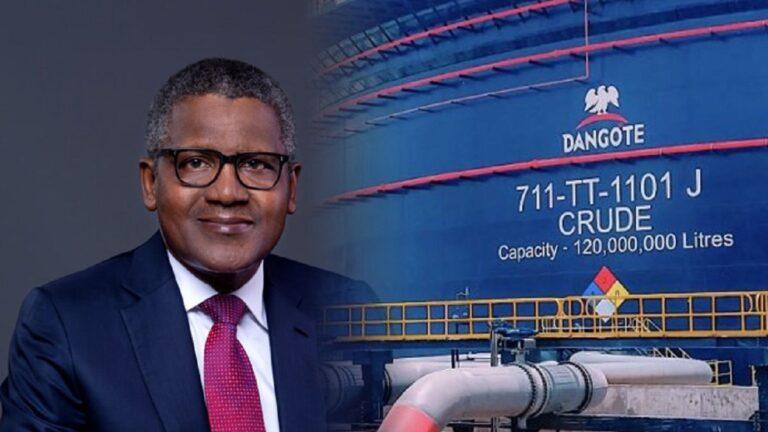
Aliko Dangote, president and chief executive of Dangote Industries low, stated that the continent imports more than 120 million tonnes of refined petroleum products a year at a cost of over $90 billion because of Africa’s low local refining capability.

The Nigerian Midstream and Downstream Petroleum Regulatory Authority (NMDPRA) and S&P Global Commodity Insights were the organizers of the recent West African Refined Fuel Conference, which he attended in Abuja.

Africa is quickly becoming a destination for inexpensive, frequently harmful petroleum products, he said, many of which are combined to subpar levels that would not be allowed in North America or Europe.

Thanking the Nigerian National Petroleum Company Limited (NNPC) management for allowing us to purchase some Nigerian crude cargoes from the beginning of production to the present, he disclosed that the company imports 9–10 million barrels of crude per month from the United States and other nations.

We purchase 9 to 10 million barrels of crude oil per month from the United States and other nations, he stated. I have to appreciate NNPC for providing us with certain cargoes of Nigerian crude from the beginning of production to the present.

Even while Africa produces around 7 million barrels of crude oil a day, he said, only about 40% of the continent’s 4.3 million barrels of processed goods are refined domestically. Europe and Asia, in comparison, refine more than 95 percent of their use.

Read Also: Outstanding Young Writers Rewarded by Keystone Bank in Poetry Contest

We therefore import more than 120 million tonnes of refined petroleum products annually, thereby exporting jobs and bringing poverty to our continent, even if we produce a plenty of crude. With excess refining capacity, those regions are capturing a $90 billion market opportunity. To give you an idea, only 15% of African nations have a GDP of more than $90 billion. He claimed, “Year after year, we are essentially giving away the economic potential of an entire continent to others.”

Dangote reiterated his support for free markets and global collaboration, stating that trade must be based on comparative advantage and economic efficiency rather than sacrificing standards of quality or safety.

He emphasized that “Africa exporting raw crude and then reimporting refined products—products we are more than capable of producing ourselves, closer to both source and consumption—defies logic and economic sense.”

The technological, commercial, and contextual obstacles that are specific to the African environment were among the many difficulties he emphasized.

According to him, constructing refineries like the Dangote Petroleum Refinery is one of the most logistically challenging and expensive industrial projects ever undertaken.

According to him, the Dangote refinery project needed to clear 2,735 hectares of land, 70% of which was swampy. This included pumping 65 million cubic meters of sand to stabilize the site and raise it by 1.5 meters, installing more than 250,000 foundation piles, and installing millions of meters of electrical, plumbing, and cabling.

At its height, we had approximately 67,000 individuals on the site, 50,000 of whom were Nigerians, working around the clock to coordinate across hundreds of different nationalities and disciplines. Then, of course, the COVID-19 pandemic struck, causing us to regress by two years and adding new levels of risk, complexity, and disruption. We persisted, though,” he said.

Additionally, because Nigerian ports were unable to accommodate the size and number of equipment needed for the refinery, a special harbor had to be built.

330 cranes, more than 2,500 pieces of heavy machinery, and even the construction of the biggest granite quarry in the world—which can produce 10 million tonnes annually—were all part of this.

He stated, “To put it briefly, we created an entire industrial ecosystem from the ground up, not just a refinery.”

The refinery’s technical achievement notwithstanding, Dangote recognized major business obstacles, especially those related to the sourcing of crude oil and exchange rates, which increased from N156/$ at the beginning to N1,600/$ at the end. Nigeria reportedly produces around 2 million barrels a day, but the refinery has had trouble obtaining oil on favorable terms.

“We had to bargain with foreign trading companies that were purchasing Nigerian crude and reselling it to us—with significant premiums, of course—instead of purchasing crude oil directly from Nigerian producers at competitive terms.”

Bottlenecks in regulations and logistics have also had an impact. It is stated that port and regulatory fees make up 40% of the entire cost of freight and can occasionally be two-thirds the price of vessel chartering.

Because they are not subject to astronomical port fees, refiners in India, who buy crude oil from even more distant places, benefit from cheaper freight expenses than those of West Africa, Dangote stated.

Customers pay at the time of loading and at the point of discharge, making it more costly to load a domestic cargo of petroleum products from the Dangote Refinery at the moment, he noted. Conversely, they only pay at the point of discharge when they load from Lomé, a rival.

Outstanding Young Writers Rewarded by Keystone Bank in Poetry Contest

0

Keystone Bank Limited, a prominent provider of financial services, has honored nine exceptional Nigerian children from all throughout the nation in its “Kiddies” Poetry Competition, reaffirming its dedication to strengthening future generations.

In addition to encouraging children ages 4 to 12 to express themselves creatively, the competition, which had as its theme “The Future Leader of Nigeria,” aimed to develop early financial literacy through the bank’s flagship Future Account.

Read Also: Nasarawa Sheltering Benue Attackers? Gundu Challenges Governor Sule

Nine outstanding winners from Delta, Edo, Kaduna, Kano, Lagos, Owerri, and Abuja were recognized across three age groups: 4–6, 7–9, and 10–12 years old. The project attracted remarkable involvement from children across the country, according to a statement from the bank.

For first place, each age group received a N300,000 cash prize; for second place, N200,000; and for third place, N100,000. The awardees received recognition for their inventiveness, courage, and powerful poetic visions of leadership.

Speaking during the prize presentation ceremony, Mrs. Nnenna Anyim-Okoro, Executive Director, South & Corporate Bank, Keystone Bank, emphasized the bank’s dedication to developing the next generation of Nigerian leaders and promoting national development through early engagement.

At Keystone Bank, we think that investing in our children’s minds is the most effective investment we can make, she said.

“These young poets’ audacity, lucidity, and genius are proof of Nigeria’s limitless ability. They were not just rhyming. They envisioned, they pushed, and they motivated.

“This competition is about inspiring a generational mindset based on creativity, leadership, and accountability; it’s not just about poetry. Throughout this nation, Keystone Bank will remain a cornerstone for empowering the next generation.

“The poems that were submitted were of astounding quality and depth. With the assurance of leaders, the passion of idealists, and the foresight of reformers, these youthful voices spoke. She continued, “We are honored to support their journeys.

Nasarawa Sheltering Benue Attackers? Gundu Challenges Governor Sule

0

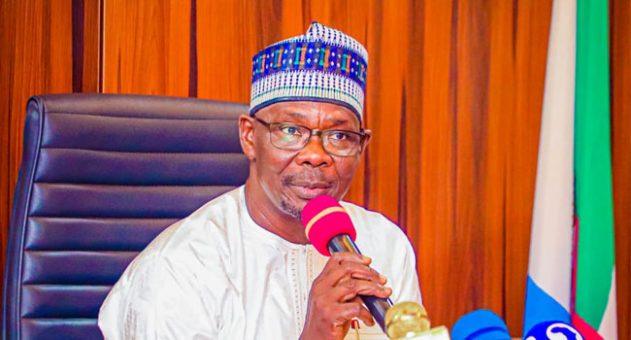
The Vice Chancellor of the University of Mkar in Gboko, Benue State, Prof. Zacharys Gundu, stated that he was not ready to apologize to Abdullahi Sule, the governor of Nasarawa State, for claiming that armed men, including herdsmen, were using Nasarawa as a base of operations to attack Benue.

Governor Sule, through his attorney, Senior Advocate of Nigeria (SAN) Ahmed Raji and Company, demanded that Prof. Gundu apologize to him for his statement within seven days or face legal repercussions. Prof. Gundu responded by making the declaration.

Counsel to the Nasarawa State Governor, Raji, SAN, had previously demanded a retraction in a letter dated July 22, 2025, written to Governor Sule and Professor Gundu. The letter stated that he would be reassured if the University apologized unconditionally to him in at least five national dailies.

A law professor, Prof. Sebastine Hon., SAN, who also serves as Prof. Gundu’s counsel, responded to the letter by emphasizing that his client would not, under any pretense, apologize to Governor Sule.

Prof. Hon. claimed that his client, Gundu, stated the truth and provided evidence to back up his claims in a letter dated July 28, 2025, sent to Raji and made accessible to Makurdi’s Daily Independent on Monday.

In order to ensure that his client would not distance himself from the “accusation,” he advised the counsel to Governor Sule to advise his client appropriately.

In the letter, Prof. Sebastine Hon., SAN, expressed his disapproval of Governor Sule’s contradictory statements regarding the attacks. He stated that at one point, he would claim that there was a “influx” of terrorists and herdsmen in Nasarawa, but at any given time, he would claim that there were only a “few.”

“Your letter on the above subject matter, dated 22 July 2025, refers,” he stated. For Professor Zacharys Anger Gundu, we have been hired as his solicitors. In response to your letter dated July 22, 2025, we are writing this on his behalf.

“Our client instructed us that he just said the truth and nothing else. In particular, he is depending on the defenses of justification and fair remark, among others that are at his disposal.

To be clear, the following information is unquestionable: As the Governor of Nasarawa State, our client addressed your client as such, referring to him as the state’s chief security officer. For this reason, our client referred to “Governors” often, including Hyacinth Alia, the current governor of Benue State (albeit her name was not specifically mentioned) and Al-Makura, the previous governor of Nasarawa State.

“To further demonstrate that your client is not exempt from our client’s charges, your client told Channels TV in June 2025, following the recent Yelwata massacre, that Nasarawa State could not have been harboring the numerous murderers who travel to Benue in order to kill, maim, and then return to Nasarawa because the state only has a small number of Fulani herdsmen.”

This is in stark contrast to his well-known claim that “an influx of Fulani herdsmen and Boko Haram members is occurring in Nasarawa State.” According to the Daily Post on June 27, 2025, your client also brazenly told this astounding untruth that day:
The vocabulary used to describe harboring and similar phenomena is problematic because there is no such thing. Not even enough Fulanis live in Nasarawa State for us to conclude that the state is harboring anyone.

Regarding the harboring of armed bandits in Nasarawa State: As our client mentioned at that public appearance, Tanko Al-Makura, your client’s predecessor, previously asserted that the bandits going out of and into Nasarawa State were “hunters,” despite the fact that the state has neither hunting forests nor ranges.

The “influx” of deadly bandits into Nasarawa State has been a constant source of concern for your client, Governor Sule, between 2020 and 2025.

We question why there has been such a dramatic change in public opinion from someone who has been claiming for at least the last five years that there has been a steady “influx” of Boko Haram members and armed Fulani herdsmen into that same state. Please ask your client if, since declaring this “influx,” he has also declared the “expulsion” or “voluntary migration” of those criminal elements from Nasarawa State.

The amount of proof our client has to prove beyond a reasonable doubt that the murderous Fulani herdsmen who attack Benue State on multiple fronts are always housed in Nasarawa State by the state’s successive governors, including your client, will astound your client, Prof. Hon. added.

“When we meet with you in court, we will release all of those pieces of evidence; however, the following facts are irrefutable and unquestionable,” he said.

Furthermore, according to the information at his disposal, our client maintains his position on land grabbing, Prof. Hon. Additionally, our client took covert attempts to strengthen his position after reading your letter being answered online and as a result learned the following disturbing facts.

Read Also: How Wike is Waging a War Against Litter in Abuja

According to a recent news conference in Abuja, Tiv community leaders in the LGAs of Awe, Doma, Keana, and Obu in Nasarawa State, led by Jerry Aondo, SAN, claimed that your client has taken and continues to take huge tracts of land from Tiv people in Nasarawa State under a purported “agricultural mandate Why would anyone want to take over farmers’ farmlands under the pretense of a “agriculture mandate”?

“Your Client declared that “all lands in Nasarawa state belong to the state” in order to cover up the illegality of taking ancestral lands from Tiv indigenous in the state and giving them to invaders or some foreigners.

In a prompt and incisive response, civil rights activist and senior lawyer Dr. Monday Ubani, SAN, stated among other things in the Loyal Nigerian Lawyer of May 6, 2025, that your client’s proclamation “is legally incorrect, constitutionally flawed, and fundamentally misleading within the framework of Nigeria’s extant laws, particularly the Land Use Act of 1978.”

17 (17) Tiv people from Nasarawa State have sued your client, various Nasarawa State government agencies, and the Nigerian Army in Suit No. NSD/LF 44/2025, seeking judicial relief against the forcible seizure of their ancestral farmlands, which span thousands of hectares. We will not be discussing this suit further because it is still pending. The court procedures in this suit should be available to you from your client, who has already made an appearance,” he said.

We could continue, but these are only a small portion of the evidence we have to show that your client, the chief security officer of Nasarawa State, has known for more than five (5) years that the state he oversees harbors land grabpers and murderers, and he has made no real attempts to stop or curtail this grave threat. We have made the decision to keep some of our weaponry hidden for clear reasons.

“In view of the aforementioned, we have the firm instructions of our Client to dismiss the demands made in your letter of July 22, 2025,” he summarized. Under no circumstances can our client meet those requirements.

He said, “We sincerely hope you will advise your client appropriately.”

How Wike is Waging a War Against Litter in Abuja

0

The streets of the capital city of Nigeria are writing a new narrative. It is an administration committed to restoring the city’s honor, one street at a time, not the beggars who persistently tap at tinted windows at every crossroads or the hawkers who weave across traffic peddling bottled water and fireworks.

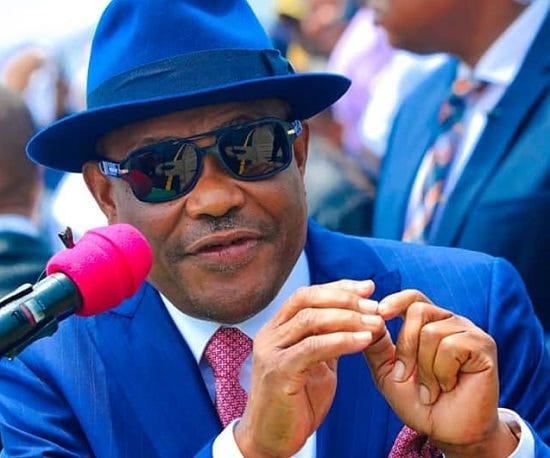
Barrister Nyesom Wike, the Federal Capital Territory’s (FCT) minister and a man known for his tough stance on urban order, is at the center of this movement. Abuja will no longer be the “capital of beggars” in Nigeria, and that is his explicit purpose this time.

“War has been declared by us.” At Katampe, it started with a vow that broke through the din of construction at the flag-off of an access road to the Judges’ Quarters. Wike, flanked by security chiefs and dignitaries, didn’t hold back.

“Abuja is becoming a city of beggars,” he said. Say to your brother or sister to leave right away if you know they are pleading here. We will start removing them next week. We have declared war.

According to the Minister, begging on the street is a cover for exploitation and crime, not charity. The poorest people in Nigeria have long been the target of syndicates, who traffic children from far areas and dump them at crossroads throughout Abuja, from Gwarimpa to Asokoro. Some beggars are thought by authorities to be informants for “one chance” robbers and pickpockets.

Wike remarked, “It is embarrassing that when people enter our capital, they see beggars lining up at every intersection.” Some people are criminals. Others pose as ill. We will not permit it.

The operation started before the dust from his speech had cleared, as he had promised. Operation Sweep Abuja Clean, as it has come to be known, saw police trucks and paramilitary convoys roll out around the city by Monday.

Former Police Commissioner Olatunji Disu is in the forefront of the effort, supported by teams from the Abuja Environmental Protection Board (AEPB), the Nigeria Security and Civil Defence Corps (NSCDC), the Department of State Service (DSS), the Military Police, and other organizations. Their short? Easy: walk around every corner.

“We will search every black spot, bridge, and hiding place for the first two weeks,” Disu informed his soldiers before daybreak.

Four days later, the numbers—210 beggars in custody, 58 women, 72 children, and 80 men—shocked even seasoned officials. A decades-old issue was exposed in a striking way at the FCT Vocational and Rehabilitation Centre in Kuchikon, Bwari Area Council, when the arrested were bussed in.

In Kuchikon, Bwari, the effects of decades of poverty and neglect are evident at the FCT Vocational and Rehabilitation Centre. Every day, buses arrive, carrying people in rags, infants clutching weary moms, and wide-eyed kids who are unable to identify the villages from where they originated.

As she observed the processing of new arrivals, Gloria Onwuka, Acting Director of the Social Welfare Department, remarked, “What we found is even worse than we thought.”

In remote communities, many of the youngsters were farmed out by their parents. Women can pretend to be ill. After the day is over, certain syndicates get the money. It is organized exploitation.

One boy, who was around nine years old, told a volunteer that he came from Kano but was unable to identify the particular village. “We are taken in a bus by a man,” he muttered. “If we don’t have enough money, we won’t eat,” he says.

“The majority of the kids were employed,” Onwuka disclosed. Some families do, in fact, hire out their children, we found out. After driving into communities and giving parents a few thousand naira, syndicates transport the kids into Abuja at first light and leave them out to beg at roundabouts. Again, they disappear at night.

One woman, she remembers, claimed to have breast cancer and needed money for surgery. Our female policemen did not untie the bandage. Not even a small scrape.

The connections between petty criminality and street begging have long been discussed by locals. Today’s beggar tapping your window could be a pickpocket’s clue tomorrow.

“We think many are connected to petty theft, ‘one chance,’ and other crimes,” stated Adamu Gwary, Director of FCT Security Services, who noted that these individuals take advantage of the city’s compassion.

Gwary also didn’t hold back when speaking at the Kuchikon center, as he was represented by Dr. Peter Olumuji, Secretary of the FCT Command and Control Center. “For this reason, the Minister issued a clear directive: this city needs to be secure. There will be more than just discussion this time.

Read Also: Towards Inclusive Governance: Abbas Advocates Reserved Seats, Traditional Roles

Critics of the crackdown do exist, though. Residents’ sentiments are divided at one of the busiest intersections in the city, Berger Junction.

A government worker named Mrs. Elizabeth Ikenna claimed, “I’ve been robbed twice by boys who claim to be begging.” I’m all for the Minister. We must put an end to this insanity.

A cab driver named Usman Sule, however, sees another side. There are criminals among us. However, other people are simply hungry. “Where do they go if you arrest them?”

The success of Wike’s large wager will be determined by this delicate balance between law enforcement and compassion.

This raid is different, according to the FCT, than previous ones that merely loaded individuals onto buses and deposited them at state boundaries.

The approach must incorporate rehabilitation and reintegration, according to Social Welfare Director Dr. Sani Rabe.

“Vocational training will be provided here to those who are willing to learn,” he clarified. If at all feasible, we will track down their families. A few will go back to their states. But it’s not that simple. Many people don’t want to return home, and some people have no family left.

In order to make sure that repatriated beggars do not find their way back on fresh buses, the FCTA is also communicating with states.

Wike is fighting urban disorder, and street begging is just one aspect of his fight. Scavengers hauling carts through estates, unpainted taxis, and illegal roadside mechanics are all targeted.

Kaka Bello, AEPB’s Head of Enforcement, supervised the demolition of temporary mechanic sheds under the Garki flyover. He declared, “We cannot call ourselves the seat of government and look like a slum.”

This is the capital of the biggest democracy in Africa. It has to appear to be one.

Another front opened as the street sweep gained momentum. Traffic infractions, unregistered plates, or supporting criminals have resulted in the seizure of more than 280 automobiles, tricycles, and commercial motorcycles.

“Taxis operating without number plates or colors are being pulled off the road,” Dr. Olumuji stated. “One-time” robberies frequently involve these vehicles. We’re also going to shut that down.

It has been made clear by the police, VIO, and traffic agencies in the FCT: without documentation, there can be no vehicle.

Locals report that they are already noticing improvements. There is a noticeable dearth of people in black areas like Gwarinpa Bridge and the bustling Wuse Market.

Olumuji claimed that Abuja was getting too hot for criminals. “The Minister wants a city where law-abiding citizens feel safe and criminals have nowhere to hide,” the statement reads.

Abuja has, of course, tried this before. For a time, the streets were cleared by sweepers working for previous ministers. However, poverty, conflict in the hinterlands, and systemic corruption were the issues that kept coming up.

Wike has instructed his crew, “This time we must get it right.” “We have to continue it, punish the syndicates, and restore the real cases. It’s the only option.

Despite being only a few weeks old, “Operation Sweep Abuja Clean” sends a strong message: Nigeria’s capital will not cede its honor to urban deterioration, street syndicates, or small-time criminals.

It will depend on what happens next—jobs for the desperate, assistance for the weak, and the political will to stick with it—whether this most recent effort becomes a footnote in the city’s cycle of crackdowns or the start of significant change.

The trucks continue to roll for now. The checkpoints are still in place. And the message from the top reverberates through each raid: under Wike’s leadership, Abuja would no longer serve as the capital of the beggars.

Towards Inclusive Governance: Abbas Advocates Reserved Seats, Traditional Roles

0

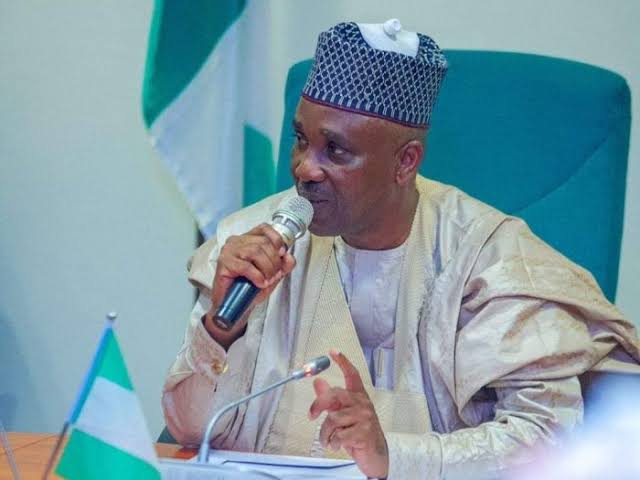
Since taking office in June 2023 as Speaker of Nigeria’s 10th House of Representatives, Rt. Hon. Abbas Tajudeen has continuously supported creative legislative reforms aimed at promoting equity, inclusivity, and institutional relevance.

The attempt to assign constitutional roles to traditional institutions and the campaign for women’s reserved legislative seats are two notable aspects of his legislative program.

The aforementioned actions demonstrate Speaker Abbas’s profound comprehension of Nigeria’s intricate sociopolitical circumstances and his dedication to establishing a representative, inclusive, and sustainable governing framework.

In response to the issue of Nigeria’s ongoing underrepresentation of women in elective office, Speaker Abbas has advocated for reserved legislative seats for women. Even though they may make up over half of the nation’s population, women hold less than 10% of elected federal and state positions.

Given Nigeria’s enviable position at the bottom of Africa’s reference ladder, Speaker Abbas has led and continues to lead discussions and push legislative proposals to create reserved seats for women in the National and States Houses of Assembly. He recognizes that this imbalance is both unfair and counterproductive.

In order to ensure gender parity and a more fair and inclusive legislative process, this endeavor is reflected in the proposed “Reserved Seats for Women Bill,” which aims to guarantee a minimum threshold of female involvement in governance.

The advantages of this endeavor are numerous, to paraphrase the Speaker’s own remarks at several national and international forums on the topic.

The Speaker asserted that reserved seats will not only provide women more political clout but also enable them to contribute a range of viewpoints to the formulation of public policy, particularly concerning matters concerning gender-based violence, healthcare, education, and social protection.

He has categorically made the case that women’s voices should be heard more loudly in national legislatures in order to strengthen democracy and make government more sensitive to the interests of all citizens.

Speaker Abbas has worked and is still working with international development partners, women advocacy organizations, and civil society organizations to mobilize support for this revolutionary move.

“Our daughters will read, listen, and watch our debates, and our sons will gauge our courage in the face of necessity that calls for decisive actions,” Speaker Abbas said, urging his male legislative colleagues in the National and State Assemblies to support the “Reserved Seats for Women Bill” during the inauguration of a steering committee on the bill in Abuja on Wednesday.

These bills are intended “to build a bridge, not a barrier, we are opening an avenue, not closing a door,” according to Speaker Abbas. “No sitting Member loses a seat,” he said once more. Every state keeps its current representation. Instead of shrinking, we are growing. We are not subtracting; we are adding.

He added: “This is crucial for my male coworkers. You still have your mandate. You still have your constituency. We are looking for statesmanship, not sacrifice, and solidarity instead of surrender.

Roles for Traditional Institutions: Speaker Abbas is equally imaginative in his determination to see traditional institutions given constitutional roles, a long-overdue acknowledgement of the importance and power of traditional leaders in Nigerian governance.

Traditional institutions have been essential to grassroots growth, cultural preservation, community mobilization, and dispute resolution for generations.

They now, however, function outside of the official constitutional framework, which restricts their power and ability to aid in the growth of the country. This is different from what was previously the case in all pre-independence constitutions until 1963.

Social cohesiveness, local government, and efforts in security, mediation, and civic education will all be strengthened, according to Speaker Abbas, if traditional rulers are incorporated into the constitutional framework.

Under his direction, the House of Representatives has engaged in high-level discussions with traditional institution leaders and is currently examining constitutional amendments to specify precisely what roles traditional leaders can play in the Nigerian state of the twenty-first century in terms of advice, development, and moral supervision.

Moving with conviction rooted in his royal background and his desire for a more balanced social order where some responsibilities are legally entrusted to the traditional rulers, Speaker Abbas recently held a legislative roundtable discussion on the inclusion of traditional institutions’ roles in the ongoing constitutional amendment. He revealed that the 10th National Assembly aims to establish three-tier traditional institutions that span all political spectrums.

The 10th National Assembly is actively considering measures to give traditional institutions some constitutional legitimacy, he stated. Additionally, they are proposing the following three-tiered Traditional Council structure in the process:

In order to assist the President on matters pertaining to national unity, security, and cultural affairs, we ought to establish a National Council of Traditional Rulers.

Read Also: Why I Returned to Lead Aero Contractors – Sanusi Opens Up

The State Council of Chiefs, which state governments must constitutionally recognize, will be the second tier in regards to customary law, peacebuilding, and development.

He added, “The Local Government Traditional Council will then formally interact with Local Governments, particularly on matters of security, peacebuilding, and community development.”

Speaker Abbas’s attempts to orchestrate societal growth and prestige for traditional institutions are grounded in both his legislative posturing and his real-world pledges and actions.

In order to purchase and provide tens of brand-new, cutting-edge sports utility vehicles (SUVs) to traditional rulers throughout the nation’s six geographic zones, he has invested a significant amount of money.

In the same way that he has drawn Federal Government projects to a sizable number of kingdoms and domains to improve the development needs of Nigerians living outside of his own constituency, something that has drawn numerous traditional titles to him and continues to do so, he has also been very consistent in providing them with parliatives during important times, such as holidays.

A larger legislative strategy that prioritizes inclusive governance, cultural relevance, and institutional synergy is reflected in these two initiatives: women inclusion through reserved seats and constitutional recognition of traditional institutions.

By advocating for these changes, Speaker Abbas is attempting to close the gap between Nigeria’s sociocultural realities and its contemporary political structure.

His leadership is based on equity, pragmatism, and vision. He has a strong commitment to a Nigeria where all ethnic groups and cultural groups have a say in administration, which is seen in his dual push for increased female political representation and the constitutional inclusion of traditional authorities.

If these initiatives are successful, Nigeria’s democracy will surely be strengthened and sustainable national development would be promoted.

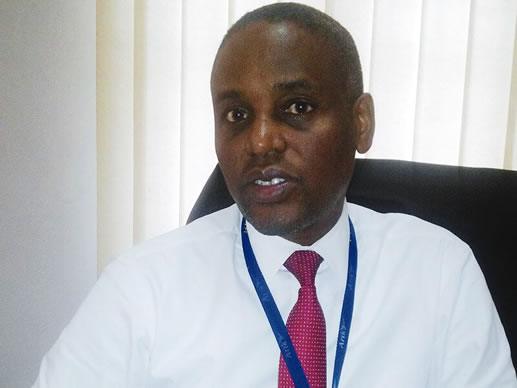
Why I Returned to Lead Aero Contractors – Sanusi Opens Up

0

The managing director of Aero Contractors, Capt. Ado Sanusi, discusses his goals for the airline and the repayment of debts he has taken out from the Asset Management Corporation of Nigeria (AMCON) since 2017. This interview was conducted with OLUSEGUN KOIKI. Quotes:

How far along are you with loan repayment, sir? Asset Management Corporation of Nigeria (AMCON) gave you some startup loans when you were appointed CEO of Aero Contractors.

When I arrived in 2017, the airline had been closed for almost eight or ten months, and I had to take out a loan in order to restart it. As you are aware, there was a debt that actually placed Aero Contractors under receivership by the Asset Management Corporation of Nigeria (AMCON), which then took it over, converted some of it into equity, and now owned 60% of the airline.

The exact amount is beyond me, but I believe it to be around N300 million, or half a billion naira.

The Asset Management Corporation of Nigeria (AMCON) refused to grant us the N3.5 billion we requested when we joined.

About N500 million was approved by AMCON for our takeoff. The funds arrived in installments, which we utilized to stabilize the company.

For the first time, four of our fleet’s aircraft and helicopters were in flight when we performed the first C-check. It was everything moving in the correct way, and recovery seemed imminent.

I was subsequently transferred to another project, but regrettably, the company’s fortunes took a sharp turn for the worst once more, and it was shut down.

I was requested to come and revitalize the company after being summoned back from that project, but I didn’t want to go back.

They actually spoke with me for almost six months, and I declined. However, in our final exchange, the AMCON management told me, “Well, if you don’t, we will have no option, but to liquidate.”

I didn’t want to witness the history of aviation firms like Aero Contractors, which have been in business for more than 65 years.

As you might imagine, at conferences, nations declare, “Oh, this company has been in existence for 40 years.” Over 50 years have passed since the founding of our business.

Ethiopian Airlines says, “Oh, we’ve been in business for more than 70 years.” Nigeria will eventually arrive, and we won’t have any businesses that have been there for more than 40 or 50 years.

At the very least, I thought we ought to preserve this company’s legacy. Dornier Aviation in Kaduna and Aero Contractors are, I believe, the two oldest aviation firms in Nigeria. Naturally, that’s because Nigeria Airways has been liquidated. I decided to step in because I believed that we shouldn’t let AMCON liquidate the airline because these are old companies.

Even though I didn’t want to, I returned. The business was closed for around eight months, as I mentioned. They had to pay salaries and other obligations.

The reason I returned, as you recall, was right after the COVID-19 pandemic.

I stated that funds were authorized by the Federal Government for all airlines at a single-digit interest rate. I said that the only way I could return after COVID was if I could get the loan. In order to turn the business around and repay the loan within 12 or 24 months, we requested a loan of approximately N3.5 to N3.7 billion, as I recall.

We demonstrated that, should we be granted a loan, we could repay it. In principle, they so consented to lend us the money.

After a while, AMCON granted us another loan, this one initially totaling, I believe, just over N500 million. Of course, we got to work, and then we brought the first airplane back to life, the helicopter industry back to life, and so on.

After that, we began to pay them. I’m glad to report that we have now paid off everything.

What was the duration of your loan repayment?

In December 2022, we received the loan, and in March or so, we completed all of the payments.

After you leave, do you think this company will still be around, sir?

This is a really fascinating topic since, when I moved to 2021 after joining the firm in 2017, I believed I had moved it to a point where it could no longer return to the closed-down state it had been in prior to my arrival, but regrettably, it did.

My challenge now is to make sure that we have passed that threshold. I’m creating an institution that will last long after I’m gone, not one that is centered around me.

My goal is to make sure that the business can survive after I go. And I am only able to leave that legacy.

At this age, my only goal is to leave a legacy that will allow the business to prosper after I’m gone, continuing to hire Nigerians and young people to work in our top-notch Maintenance, Repair, and Overhaul (MRO) facilities in West and Central Africa.

I am so pleased to have brought our MRO back to life. We are currently able to perform heavy checks and repairs on Boeing 737NGs.

A Senegalese aircraft and a Ghanaian aircraft are recently completed. I hope that this location would eventually serve as a maintenance hub for West and Central Africa.

In your opinion, what is the new Tax Reform Act that the federal government recently passed into law and is expected to go into effect in 2026?

I would want to start by discussing the aviation sector that I represent. Before the tax reform bill was introduced, we went to the Federal Government since the Nigerian aviation industry was already facing difficulties.

Value Added Tax (VAT), customs taxes, and other exemptions are among the many things we have requested.

The Federal Government recognized our aviation industry’s difficulties and approved the majority of our demands; today, they are returning everything to us.

We no longer have any of the concessions we had, and we are now responsible for paying for everything. In my opinion, tax reform is a reality, but the federal government and the president will examine each industry’s unique problems and find solutions. I think it will. It will not be a sudden occurrence.

Most regions of the world already exempt transportation from VAT, so how can we reinstate VAT in aviation? We say things like, “Well, the VAT is for the government, so the passenger is paying, but it raises the price of the ticket,” which then lowers the number of people who can purchase the ticket and, when that happens, lowers my ability to make a profit. It is extremely easy.

Remember that except from the food supplied in the airplane, we in this country do not manufacture anything related to aircraft. Local production of Jet A1 has been established in the nation, thanks to Alhaji Aliko Dangote. Prior to that time, however, everything was imported.

Yes, taxing the airlines can bring in a lot of money for the government because they cost $30 million to $40 million. You can figure out how much money you will make if you impose even a 10% tax.

It is my responsibility to figure out how to pay for the aircraft, including the customs charge that was imposed on it.

I find it really difficult to make the payment now, even if it’s through a dry lease.

Yes, customs officers bring in trillions of naira for the Federal Government, but they also destroy businesses, particularly in the aviation industry.

If the new law is applied as is, it will lead to social difficulties and thousands, if not millions, of job losses. The government will be wealthy, but it will also have security issues.

There are millions of young people without jobs while you have trillions in your coffers.

This is why developed nations are examining and balancing the two factors of revenue generation and unemployment rate. You cannot have millions of young people without jobs and have that much money in your coffers. You have to let the company grow and hire staff. Furthermore, that is what we are requesting.

How have you gone about presenting your case to the authorities prior to the implementation starting in January 2026?

I am confident that this interview will allow the Federal Government to hear our grievances and take the necessary action.

They are not required to possess any further information. We, as the stakeholders, are informing them that this will negatively impact not just the airlines but our entire industry.

For the parastatals, the tax reform will cause certain issues. According to what I’ve read—and I’m not sure whether it’s accurate—the agencies have no control over their Internally Generated Revenues (IGRs). In the event that the agencies lack authority over their IGRs, the money paid by the airlines would go straight to the Federal Government’s account, which would then return the funds to the agencies.

Recall that the government had withheld 50% of the agency revenues into the Treasury Single Account (TSA) at the start of this administration. Instead of focusing on profit, these parastatals aim to recuperate costs.

Read Also: Youths Receive Sewing Machines, Hairdryers as RCCG Hosts Empowerment Programme

Since the Federal Airports Authority of Nigeria (FAAN) was established as a business to make money, I don’t mind if the Federal Government takes money from the Nigeria Civil Aviation Authority (NCAA). However, I’m worried about the NCAA and the Nigerian Airspace Management Agency (NAMA), whose concept is for cost recovery, and you cut half of their revenue. Since they cannot survive on fifty percent, they will be destroyed if they are adhering to the cost recovery approach.

In my opinion as an airline operator, if the parastatals are making do with half of their earned revenue, then I have been overcharged. I’m overpaying, then.

Regarding the government’s claim that the Tax Reform Act aims to lessen systemic corruption, where do you stand?

Yes, I agree with you. If there are issues with collection or remittance, we Nigerians will assign the work to another organization.

How can we be certain that the corruption won’t spread to that other location? Why don’t we take action against that agency’s corruption? How about we deal with that issue where it is? Why not address the issue of parastatals collecting but failing to remit and ensure that we employ all available methods, such as modernizing, digitizing, or electronizing it? There are numerous ways we may limit human interaction and guarantee that corruption is kept to a minimum.

If we catch someone, we set an example for others, and they will follow suit, but instead we say, “Oh, stop it.” Don’t do this, don’t gather it, don’t do this.

By doing this, we’ve probably passed the problem forward to the next agency that will be working on the same problem as them. In addition to increasing efficiency and collection, tax reform is unquestionably intended to reduce corruption. However, if we fail to address the underlying problems and employ technology to combat corruption, we will likely find ourselves in a similar situation under a different name.

Can airlines be killed by the Tax Reform Act?

If it doesn’t address the unique issues in the aviation business, the Tax Reform Act will help hasten the death of several airlines.
Youths Receive Sewing Machines, Hairdryers as RCCG Hosts Empowerment Programme

0

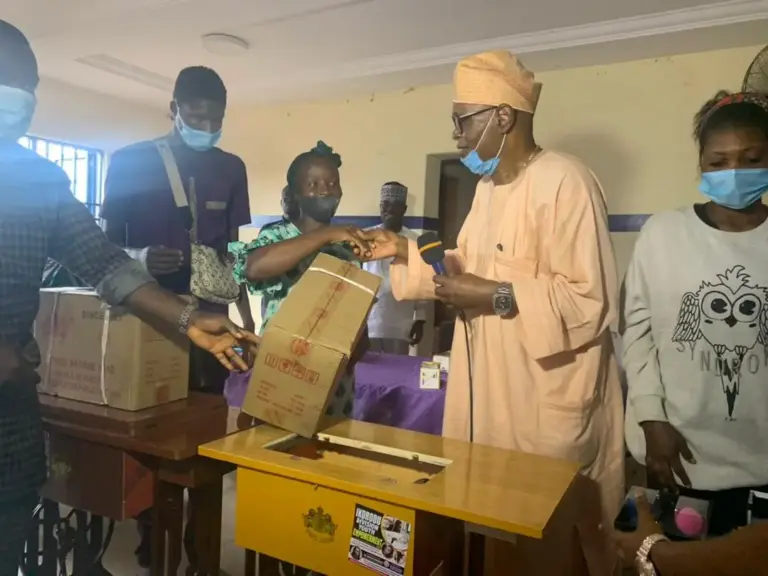
Young adults and youth have been given sewing machines, hair dryers, clippers, and other equipment by the Redeemed Christian Church of God (RCCG), Youth Convention, Region 46, Abuja, in an effort to provide them with the skills necessary to generate revenue and become self-sufficient.

Additionally, the church stated that this program was created to help the grantees bridge the gap between financial empowerment and skill development.

Ola Adejubee, Pastor-In-Charge of Region 46, RCCG, Abuja, spoke at the RCCG Living Spring Youth Convention in Abuja and gave the beneficiaries their equipment. He urged the Christian community in the country to start empowering young people for a better country.

Along with encouraging young people to keep sharing God’s message for historic accomplishments, the pastor also urged clergymen across to refocus young people’s emphasis on learning skills for the country’s development.

He went on to say, “Pray and focus on something, and see God’s manifestation in everything you do.”

Raising the level of living for young Nigerians was the main goal of the empowerment, according to Pastor Kayode Emosu, the host and Regional Youth Pastor for RCCG Region 46.

He said that the country as a whole, not just Abuja, would see a sharp decline in crime and criminal activity as a result of young empowerment.

Read Also: Police Nab Merit Eleh, Accomplices for Faking Kidnapping in Delta

Therefore, he urged all levels of government to invest in people, particularly the youth, in order to guarantee a decrease in crime and criminal activity in Nigeria.

“The goal is to provide incentives to all,” he stated. Consequently, we believed that we could unite everyone.

Additionally, the students were exhorted to refrain from wearing offensive clothing and to concentrate on their abilities by Pastor Mrs. Victoria Emosu, the spouse of Regional students Pastor Region 46.

Pastor Segun Ademola said he was thrilled with the youth empowerment initiative.

Additionally, Ademola urged the recipients to utilize the tools they were given to improve their own standing and society at large.

In addition, Mr. Chris Mayomi, one of the recipients, gave the organizers credit for the initiative.

Mayomi clarified that the sewing machine equipment he received will enable him to grow his business and elevate his standing as a fashion designer.

Rebecca Williams praised the organizers for their empowerment as well.

“I pray for the organizers to continue to see God’s favor,” she added, adding that God has been using the church to empower the youth.

Police Nab Merit Eleh, Accomplices for Faking Kidnapping in Delta

0

Two male accomplices and a 29-year-old lady who staged her kidnapping have been taken into custody by Delta State police in Asaba, the state capital.

According to a statement released by SP Bright Edafe, the public relations officer for the Delta State Police, the Delta State Police Command was notified at approximately 20:30 hours on July 21, 2025, of a kidnapping incident in which a female victim was allegedly taken by unidentified armed men in the Bonsaac neighborhood of Asaba.

The statement claims that “the Commissioner of Police, CP Olufemi Abaniwonda, acted promptly on the report and directed the Commander of the Special Anti-Kidnapping and Cyber Crime Squad, CSP Godwin Osadolor, to ensure that the victim is rescued unharmed.”

Read Also: Iyabo Ojo: I Paid the Price So My Daughter Can Enjoy a Successful Marriage

In response to this order, the command directed agents to begin a concerted intelligence-based operation.

“The officers captured a male named Alfred Elisha at Koka Roundabout in Asaba and another suspect named Ugochukwu Adim off DLA Road in Asaba on July 22, 2025, at approximately 9:00 a.m., through careful investigation and tactical deployment.”

It was discovered that this was a plan between the victim and the suspects rather than a real kidnapping once the suspects were apprehended. As a result of his disclosure, 29-year-old Merit Eleh, the other suspect, was taken into custody.

In March 2025, she admitted that she had utilized the approximately three million six hundred thousand naira (₦3,600,000) that her brother had loaned her to pay for her bridal shower and hotel bill.

“She added that she fabricated her kidnapping in order to obtain a three million naira (₦3,000,000) ransom, from which she gave her accomplices 500,000 naira and retained another 500,000 naira for herself.”

“Every suspect has been taken into custody, and the investigation is still ongoing.”

Iyabo Ojo: I Paid the Price So My Daughter Can Enjoy a Successful Marriage

0

Nollywood actress and businessman Iyabo Ojo has stated that she has paid the price for her daughter’s future happiness and has expressed a strong sense of emotional faith in the success of her daughter Priscilla Ojo’s marriage.

Speaking during Priscilla’s baby shower in Canada on Monday, July 28, Iyabo said she had gone through enough hardship and sacrifice to make sure her daughter wouldn’t experience the same marital problems and mishaps as she did.

“Your marriage will succeed,Priscilla. You and your spouse will age together because, thank God, you got married correctly. Despite the guests’ applause and tears, she remarked, “If mine didn’t work, yours will because I made that sacrifice for yours to work.”

Even in the face of tremendous scrutiny, she urged other mothers to support their children wholeheartedly and not let public opinion influence them.

“Under no circumstances would I deny my children their blessings. I have to bear the burden.

Read Also: ADC Is Already Dead’ – Former Borno Governor Predicts Party’s Collapse

Iyabo also mentioned her own struggles with spiritual and generational issues, saying:

“You have to stop it if you want to break the so-called ancestral curses.”

Her heartfelt remembrance follows just months after videos of Priscilla’s lavish wedding went viral online, including the pair being doused with US dollars and Naira.

The extravagant event attracted the attention of the Economic and Financial Crimes Commission (EFCC), which invited Iyabo to be questioned after it sparked public outrage.

She subsequently acknowledged the interaction, stating that before being released, the EFCC forced her to write a statement and confronted her with wedding-related video evidence.

Iyabo Ojo is steadfast and proud of her daughter’s journey in spite of the controversy, saying she has no doubt that Priscilla’s marriage would endure, unlike her own, which ended badly.