Home Blog Page 177

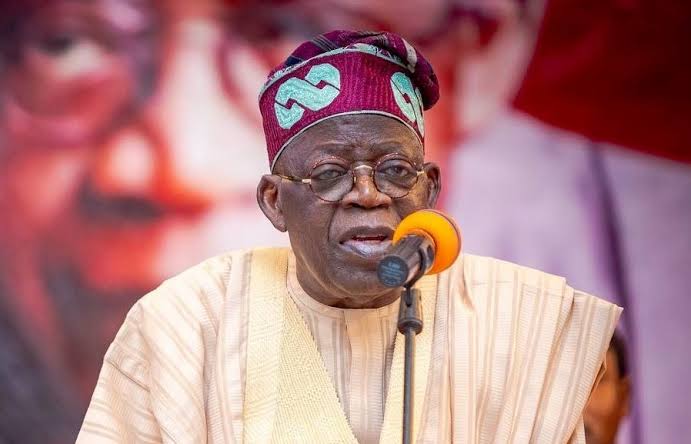
Education Investment: Tinubu Targets the North for Human Capital Growth

0

In order to revitalize human capital development, particularly in Northern Nigeria, Hassan Mustapha talks about the many educational initiatives of the central government, led by President Bola Tinubu, over the past two years.

Facts are sacred. Thoughts are unrestricted.

Northern Nigerian education has long been influenced by systemic and cultural hurdles, poor enrollment, and egregious underfunding.

However, under President Bola Tinubu, a quiet but steady change is taking place, one that could redefine the region’s educational future.

Asiwaju Tinubu is often associated with education because of his groundbreaking creation of the national student loan scheme, which currently provides funding for the tuition and maintenance of over 396,000 Nigerian students. The majority of young Nigerians who benefit from the program are Nigerian students from northern extraction, who make up over 55% of the total beneficiary pool and, consequently, more than N45 billion of the N77 billion that the NELFUND has disbursed thus far. This is something that many people may miss.

While this historic initiative reduces the immediate financial burden on low-income households throughout the federation and prepares the youth for full participation in the knowledge-based national economy of the future, President Tinubu’s tremendous legacy has diverted attention from a number of other silent reforms and mass-scale educational developments in Northern education that took place during his administration and will put the region’s students on par with their peers worldwide.

According to an old adage, a thing is only as strong as its weakest component. In Northern Nigeria, the availability and quality of education has long been a major and unsolvable aspect of the country’s developmental maze.

Like the Atlantic’s roaring waves and creeping seas on Lagos’ shoreline, President Tinubu is now committed to transforming yet another problem into a significant national asset.

The foundation for an inclusive, cutting-edge, and resilient education system in Northern Nigeria is being laid by Tinubu’s administration, which is addressing the issue of out-of-school children, building skill development centers, and updating policy architecture.

Northern education was in a perilous position before to 2023. Over 66% of the nation’s estimated 10.5 million out-of-school youngsters lived in the region. Both oversight and formal education integration were lacking in the Almajiri system. Traditional norms, poverty, and insecurity further discouraged school attendance, particularly among girls and children in rural areas. Inadequate infrastructure, out-of-date curricula, and a shortage of teachers made the issue worse.

President Tinubu’s administration chose structural reform over band-aid solutions, despite the fact that these issues were inherited. Investment in infrastructure is one of the most obvious changes. All senatorial districts now have more than 120 learning centers, many of which are furnished with furniture, safe water systems, and solar power, laying the groundwork for future functioning learning spaces.

101 Almajiri schools were constructed or renovated in collaboration with UBEC, and new integrated Tsangaya education centers were scattered around the states of Kano, Niger, Kaduna, and Bauchi.

The National Commission for Almajiri and Out-of-School Children Education (NCAOOSCE) was created by the administration to administer these initiatives. In addition to establishing a Technical Working Group (TWG) for strategic reform, the Commission has already created the initial draft of a national strategy on Almajiri education.

The Federal Ministry of Health has suggested the Almajiri Health Scheme, which would insure school-age children and turn education into a route to wellness rather than just literacy.

The two historic projects DOTS and NESRI are at the core of Tinubu’s approach. DOTS concentrates on data, out-of-school children, teacher preparation, and skill development, whereas the National Education System Reform Initiative (NESRI) promotes structural change in learning outcomes, curricula, and school administration.

While the Senior Secondary and NCE curricula are being reviewed, a new Basic Education curriculum was created as a result of these frameworks. Federal institutions of education implemented a dual-mode delivery method for the NCE and B.Ed. in order to expedite teacher capacity. In addition to curriculum review workshops in Kaduna and Kano, more than 450 Tsangaya teachers have received training, including 200 in Bauchi and 250 in Niger as well.

Additionally, the UBEC Matching Grant Formula was updated to provide more flexibility and tie payouts to quantifiable results, enhancing fund use and promoting digital learning, quality assurance, and EMIS (Education Management Information Systems).

One notable aspect of President Tinubu’s TVET Transformation Initiative is its emphasis on practicality. It offers instruction in a variety of fields, including solar installation, electrical work, creative media, digital gear repair, hospitality, and agriculture. It was founded with 24 primary trades. One component of this program, the Digital Training Academy, is specifically designed for young people in underprivileged areas, such as the North.

The curriculum covers both local employability and worldwide relevance, with courses ranging from automobile CNG conversion to social media communication. The 3MTT initiative, which aims to develop a workforce that is proficient in digital skills throughout all 774 LGAs, including the rural regions of Katsina, Sokoto, and Borno, matches this.

In addition, by increasing Nigeria’s workforce in science and health, the STEMM Advancement Initiative enhances this. The infrastructure of 18 medical schools located in each of the six geopolitical zones was upgraded. Enrollment in nursing programs climbed from 81,480 in 2023 to 114,030 in 2025, while the number of recognized nursing schools rose from 294 to 342.

Additionally, a strategic partnership with the EU funds pharmaceutical research and domestic vaccine manufacturing, with six universities chosen to receive benefits.

A long-standing disparity in Northern Nigerian education, girl-child education has significantly improved under Tinubu’s leadership. Adolescent Girls Initiative for Learning and Empowerment, or AGILE, was extended to 11 additional states, bringing the total number of states in the country to 18.

Further reducing gender gaps in schooling and creating support networks for girls in vulnerable communities are the goals of LUMINAH 2030, a new project aimed at girls that was introduced in 12 trial states (two per geopolitical zone).

Read Also: Yahaya Bello: Court Restores EFCC’s Seizure Order on Alleged Properties

In addition to tangible initiatives, the administration has spearheaded significant policy changes. The Quality Education Learning Outcomes Council (QELOC) was established in March 2025, and considerable advancements in teacher preparation and school system enhancements have already been made. In addition to introducing a national leadership curriculum for school heads, a new National Teacher Training Framework and five EduRevamp modules were created to help teachers gain 21st-century abilities.

The National Anti-Bullying Policy, together with implementation guidelines, was also introduced by the Ministry in 2025 in an attempt to enhance student welfare. Through the HOPE-EDU initiative, the government hopes to improve access, learning, and systemic efficiency by affecting approximately 65,000 schools, 500,000 teachers, and 29 million pupils.

Under President Tinubu, education has undergone one of the most systematic and calculated changes in the region’s history, a fact that is frequently overlooked.

Through extensive vocational training, legislative reforms, and targeted interventions in the Almajiri system, the administration’s emphasis on human capital development is gradually changing the narrative surrounding education in the north.

Classrooms are coming back to life with pupils and a purpose thanks to the president’s calculated educational intervention. As some of his most ambitious and narrow-minded adversaries have falsely claimed, this is consistent with the president’s statement that his objective is to “make education work for all, not some.”

Yahaya Bello: Court Restores EFCC’s Seizure Order on Alleged Properties

0

Yesterday, the Lagos Division of the Court of Appeal upheld the temporary forfeiture order that the Economic and Financial Crimes Commission (EFCC) had filed about 14 properties that were purportedly connected to former Kogi State Governor Yahaya Bello.

In a practically delivered unanimous opinion, the appellate panel overturned a previous Federal High panel decision that had dismissed the EFCC’s case on the grounds of a serving governor’s constitutional immunity.

With Justices Danlami Senchi and Paul Bassi concurring, Justice Yargata Nimpar, who gave the lead opinion, concluded that the trial court erred in using Section 308 of the 1999 Constitution to stop the proceedings.
The judge ruled that property suspected of being the proceeds of a crime is not immune from scrutiny or preservation.

“The trial court made a mistake by dismissing the case instead of deciding whether the properties should be forfeited in the end,” she stated.

The Federal High Court in Lagos’s Justice Nicholas Oweibo rendered a decision that granted the EFCC the temporary forfeiture order. The judge had given the anti-graft commission permission to temporarily take possession of the 14 properties in Dubai, Abuja, and Lagos, United Arab Emirates (UAE).

An ex parte motion was filed by the agency to forfeit the assets, claiming that they were acquired through illegal means.

Along with allowing any interested party to provide justification for why the properties shouldn’t be permanently forfeited to the Federal Government, the court also mandated that the EFCC publish the forfeiture notice in two national newspapers.

The former governor contested the order through his legal team, claiming that the properties could not have been bought using public funds because they were obtained prior to his taking office.

Read Also: CoSPAL Urges Regional Legislatures to Deepen Cooperation

He additionally contended that the Proceeds of Crime (Recovery and Management) Act, 2022, could not be applied retroactively and claimed Section 308 of the Constitution to assert immunity from civil and criminal prosecutions.

Along with questioning the jurisdiction of the Federal High Court in Lagos, his attorneys also referenced an existing injunction from a Kogi State High Court prohibiting the EFCC from looking into the state’s financial statements.

Bello lives in Lokoja, but the lawyers claimed that the houses were outside of Lagos.
However, Rotimi Oyedepo (SAN), the EFCC’s counsel, urged the appellate court to maintain the agency’s statutory mandate, spearheading Hanatu Kofanaisa and Bilkisu Buhari-Bala.

The attorney maintained that the panel was not prohibited by any Nigerian court from looking into any economic offenses.

The opulent assets, which included an apartment in Dubai’s famous Burj Khalifa, were, he insisted, likely obtained with illegal money.

Another N400 million connected to the same inquiry was also asked to be forfeited in the interim by the EFCC.

Based on Bello’s immunity, Justice Oweibo had declared that the court lacked jurisdiction and dismissed the case. The EFCC, however, challenged the ruling.

Bello’s preliminary objection was dismissed by the Court of Appeal, which also determined that property preservation procedures were not covered by the immunity clause.
It directed that the final forfeiture hearing be held by the EFCC.

CoSPAL Urges Regional Legislatures to Deepen Cooperation

0

Stronger parliamentary collaboration and multilateral participation in global governance processes are demands made by Ambassador Dapo Oyewole, Secretary General of the Conference of Speakers and Presidents of African Legislatures (CoSPAL).

Speaking at the 6th World Conference of Speakers of Parliament in Geneva, Switzerland, Oyewole underlined the critical necessity for ongoing legislative cooperation, particularly in a world that is becoming more divided and uncertain.

The global summit, with the theme “A World in Turmoil: Parliamentary Cooperation and Multilateralism for Peace and Justice for All,” brought together speakers and presiding officers from national parliaments worldwide to discuss ways to promote inclusive development, justice, and peace.

Among the high-ranking African delegation were Speaker of the House of Representatives Rt. Hon. Tajudeen Abbas, PhD; Nigerian Senate President Senator Godswill Obot Akpabio; and CoSPAL Chairman and Speaker of Ghana’s Parliament Rt. Hon. Alban Sumana Kingsford Bagbin.

Oyewole pointed out that CoSPAL’s strong participation in the conference is indicative of the growing power of African legislatures on the international scene. He emphasized how crucial it is that African parliaments speak with one voice on issues and concerns that affect the entire continent.

“Strong and visionary parliamentary leadership is crucial in this time of global fragmentation.” Such gatherings offer national speakers a unique and tactical chance to share ideas, build agreement, and develop cooperative solutions to global problems, according to Oyewole.

Read Also: WAEC Result Checking Portal Suspended Amid Technical Issues

African legislatures particularly need these forums since they provide a forum for promoting the continent’s shared interests. CoSPAL was founded with the intention of empowering Africa’s parliamentary leadership to communicate clearly and cohesively within the international legislative system,” he continued.

The impactful statements given by Bagbin, Akpabio, and Abbas were especially commended by Ambassador Oyewole, who also appreciated the efforts of other African leaders at the meeting. He noted that changes are being made to automate parliamentary procedures and boost public participation, and he cited Speaker Abbas’s speech on the digital transformation of Nigeria’s legislative traditions as being especially progressive.

Particularly as CoSPAL prepares for its third General Assembly later this year, the Geneva conference provided parliamentary leaders with a crucial forum to restate their dedication to multilateral discussion and legislative collaboration in addressing global issues.

Oyewole underlined CoSPAL’s determination to support inclusive and resilient democratic institutions throughout Africa while forming significant alliances with the larger international community by saying, “As we expand CoSPAL’s reach internationally, we also aim to attract global engagement with our platform.”

WAEC Result Checking Portal Suspended Amid Technical Issues

0

The West African Examination Council’s (WAEC) Nigerian headquarters has declared that its result checker portal will be unavailable for 24 hours.

A technical issue caused the result checker portal to be momentarily suspended, according to a statement released by Moyosola Adesina, Head of Public Affairs.

The warning said, “WAEC hereby notifies the public that, as a result of technical difficulties, the result checker site @waecdirect.org is currently unavailable.

Nonetheless, the Council is making every effort to guarantee that candidates can view their findings within the next day.

Read Also: FG Pays N22bn in Pension Arrears to Retirees

“We sincerely regret any inconvenience that you may have experienced from this. The note also said, “Thank you.”

As you may remember, the Council announced the 2025 West African Senior School Certificate Examination (WASSCE) results on Monday.

In all, 1,973,365 applicants from 23,554 accredited secondary schools in Nigeria signed up for the main exam.

Of these, 1,969,313 applicants took the test in person.

Notably, candidates from schools that employ the Nigerian curriculum, such as those in the Benin Republic, Côte d’Ivoire, and Equatorial Guinea, also took the test, demonstrating that it was not just a Nigerian exam.

FG Pays N22bn in Pension Arrears to Retirees

0

The National Pension Commission (PenCom) said late Tuesday that the federal government has released an additional ₦22 billion to settle accrued pension rights for retirees in Ministries, Departments, and Agencies (MDAs) supported by the federal treasury.
The money was sent to the Central Bank of Nigeria’s Retirement Benefits Bond Redemption Fund Account via the Office of the Accountant General of the Federation. Verified retirees who were registered in the Contributory Pension Scheme between October 2023 and January 2024 will get payments using them.
Pension Fund Administrators have already credited the relevant Retirement Savings Accounts with the transfer, which also includes payments for accrued rights owed to deceased employees, according to a statement posted on social media by PenCom.

With this most recent payment, a total of ₦66 billion will be allotted for accrued pension rights in the fiscal year 2024. Pension rights advocates criticized the government’s December 2024 release of ₦44 billion to satisfy rights owed to pensioners between March and September of the previous year.
The government was criticized by the Center for Pension Rights Advocacy, a non-governmental organization dedicated to the welfare of retirees, for what it called “selective” payments. Instead of portraying the payments as optional acts of kindness, the organization contended that the government should concentrate on fulfilling its legal duties under the Pension Reform Act.

However, PenCom has emphasized the need for efficiency and instructed Pension Fund Administrators to speed up the payout procedure for all qualified retirees. To collect their benefits, retirees are encouraged to finish the necessary paperwork with their PFAs.
A recurring problem with Nigeria’s pension system is the delay in paying out accrued pension rights, which has drawn criticism from both advocacy organizations and pensioners. According to PenCom, it is working with federal authorities to create a more long-lasting system that will guarantee pensioners receive their benefits on time.

According to the commission’s statement, “this release is part of our ongoing commitment to ensure that retirees are not subjected to undue hardship while they await their benefits.”
Many people believe that the Contributory Pension Scheme, which was implemented in 2004, is an essential reform for ensuring the financial stability of Nigerian workers. However, economic concerns like inflation and currency devaluation continue to reduce retirees’ purchasing power, underscoring the continuous difficulties in protecting retirement funds.

Read Also: INEC Must Retain Party Registration Role – Obi Rejects New Bil

Although pensioners applauded Tuesday’s announcement, it highlights the larger systemic problems with Nigeria’s pension system that still need to be fixed.
Important Information: Recipients of the Distribution: This payout is available to retirees from Ministries, Departments, and Agencies (MDAs) who receive Treasury funding and who were enrolled and validated between October 2023 and January 2024. The payment also includes the accrued rights of some deceased employees under the CPS. The allotted amounts have been credited to the recipients’ Retirement Savings Accounts (RSAs) by Pension Fund Administrators (PFAs). Total Amounts Paid in 2024: With this most recent disbursement, a total of ₦66 billion has been distributed for accrued pension rights under the 2024 Appropriation Act. In order to pay accrued pension entitlements for retirees from March to September 2023, including deceased retirees, the Nigerian government already released ₦44 billion in December 2024. Instructions for PFA Payment: To provide prompt access to their pension payments, PenCom has instructed PFAs to expedite the payment process for all verified retirees. To claim their benefits, retirees must fill out the relevant paperwork with their PFAs. The Centre for Pension benefits Advocacy has previously described the selective payouts as insufficient and chastised the Nigerian government for its tardiness in settling accumulated benefits. Instead of taking a “charitable employer” approach to accruing pension entitlements, it urged the government to fulfill its responsibilities under the Pension Reform Act (PRA). Implications for pensioners: It is anticipated that the payout will ease the financial strain that pensioners who are waiting on their pension installments are experiencing. The advocacy groups’ critique, however, emphasizes the necessity of a more thorough and uniform method of meeting accrued pension obligations.
PenCom’s Work: To guarantee that retirees receive their benefits on time and without undue stress, PenCom keeps advocating for process improvements and policy changes. The commission has pledged to collaborate with the government in order to establish a long-term structure for prompt payments.
This recent event emphasizes how crucial it is that the government maintain its commitment to paying pensions and resolving the issues that pensioners encounter under the Contributory Pension Scheme.

INEC Must Retain Party Registration Role – Obi Rejects New Bil

0

Peter Obi, the Labour Party’s (LP) presidential candidate, has criticized the House of Representatives bill that would create the Political Parties Registration and Regulation Commission (PPRRC), stating that the establishment of another public organization would only make Nigeria’s financial situation worse.
According to reports, the bill is presently before the House Committee on Constitution Review. It is co-sponsored by Speaker Tajudeen Abbas and Marcus Onobun, who represents the Esan Central/Esan West/Igueben Federal Constituency in Edo State.
Sections 40, 81, 84, 153, 222, 225, 226, 228 and the Third Schedule of the Constitution will be amended if it is approved, giving the new commission the authority to register, regulate, and keep an eye on political parties as well as manage their finances, internal democracy, primaries, and general operations.

Read Also: 2027 Elections: Ulasi Open to PDP Engaging Peter Obi

In an interview with The Punch, speaking through Tanko Yunusa, the National Coordinator of the Obidient Movement, Obi criticized the proposed amendment, stating that the Independent National Electoral Commission (INEC) should be in charge of registering political parties.

We recommended an Electoral Monitoring Committee to oversee elections and an Enforcement Commission to implement laws pertaining to legitimate elections, as per the Justice Muhammad Uwais Report. The Delineation Commission is the third,” Yunusa stated.

Yunusa emphasized that changes should concentrate on addressing election malpractices rather than overlapping duties, arguing that it would be foolish to fully remove INEC’s role in party registration.

One of INEC’s main responsibilities is to register and oversee political parties, which you cannot totally take away from it, he continued. In order to address the problems of electoral fraud, the Constitution Review Committee ought to have focused on the Enforcement Commission. The electoral malpractices will be resolved by this. In order to focus on election administration and party registration, INEC can be released from this responsibility.

2027 Elections: Ulasi Open to PDP Engaging Peter Obi

0

Peoples Democratic Party (PDP) chieftain Dan Ulasi was the party’s previous chairman in Anambra State. He discusses party restructuring in this interview and explains why efforts to persuade Peter Obi to rejoin the main opposition party should be encouraged. In addition, the PDP leader criticizes people who have switched to the All Progressives Congress (APC). These portions are provided by Joy Anibogu:

Mr. Peter has stated that he will only do this once since he is returning to the PDP. Many Nigerians have viewed this promise with skepticism because they believe it to be a simple one. There is a difference in reality when you reach the other face. The second issue I would like you to respond to is Minister Nyesom Wike’s requests to the PDP regarding whether Chief Dan Orbih remains the National Vice Chairman, South-South, and whether or not another event involving another person in the South-South can go forward. He also threatened to cancel the November convention if no one listened to him. The PDP we are discussing is in the intensive care unit, as Senator Suswan once declared. Is this not unmistakable proof?

Our constitution guarantees what we call free expression in this nation. As long as no one is abused or blackmailed, you are free to express what and how you want. However, I must begin by stating that democracy depends on a number of doses of civility. They define civility, which most people, including those in politics, do not comprehend, and as a result, they display a reflecting instinct for self-preservation. Additionally, this introspective instinct causes individuals to become self-protective, which can lead to paranoia, which is quite harmful. There are others who swear allegiance to duty, but in reality, they swear allegiance to money-stealing, which is why the nation hasn’t advanced due to this. Returning to your first query, the majority of the Federal Republic of Nigeria’s elites and so-called educated disregard the constitution’s four-year term clause. The Federal Republic of Nigeria’s constitution grants you a four-year term. Therefore, the constitution assumes that you should be able to leave a lasting mark on your society in four years. When you request a second term, it will provide you the information about your strong points. It states only for four years, but if you have a decent idea and someone else takes over, it will complete it. We currently have one of the Federal Republic of Nigeria’s best governors if you visit Enugu. Over the last 16 to 20 years, the majority of the projects that were put on hold have been finished. It is similar to entering London to travel to Enugu. The governor’s efforts to complete all of the projects and restore the area are evident. Thus, in my opinion, Peter’s declaration that he will serve four years is infallible. According to all accounts, he is a good Christian and a highly honest individual in Nigerian politics. He doesn’t say contradicting things, so I trust him when he says he will complete it in four years. He will do everything he wants to do in four years, although not all of them, if you listen to him. That is the assumption made by the constitution. They would have indicated they were giving it five or six years if they thought you could make it since you promised to finish it in four years. Nothing that Peter has stated is off topic. According to him, you ought to be capable of conducting accurate analysis within a year, even before you take office. Make a thorough study of your vision and how to carry it out. The sole reason is that people constantly imagine ways to steal money and are always considering how to do it.

Not anything that the average person will be affected by.

Concerning Wike’s PDP, what about the suggestion that Mr. Peter Obi rejoin the party?

The issue with Wike is that, in my opinion, it is unfair to reach the conclusion without first examining the origin of the experiment. A few years ago, the entire group of 17 southern governors, including both the PDP and the APC, gathered in Asaba and resolved that all presidential candidates from the two major parties had to be from the south. APC took the same action. PDP didn’t do it. The committee for party office zoning was led by former Benue State Governor Samuel Ortom, who zoned the chairmanship to the north and the secretary to the south, roles that were duly observed. The one led by Ortom was meant to zone elective posts, and it was considered sabotage when he remained mute after becoming president. The fact that his party didn’t zone anything to anywhere allowed Atiku Abubakar to run. Regretfully, he ran and lost. Consequently, the crisis has persisted ever since. Because he and a few others ran in that election, Wike took advantage of the turmoil. He thought he would have won and might have been Nigeria’s president today if he hadn’t been influenced by Atiku Abubakar. Since then, Wike and the PDP have not been on good terms. In fact, two months prior to the 2023 election, I traveled to Port Harcourt and spent hours meeting with him before returning to Enugu to make the case that our party is superior and that we should attempt to win the election. But my plea was not entirely accepted by him. He is entitled to free expression, free association, and free behavior patterns under the constitution, as I mentioned. Consequently, he concluded that the PDP’s actions had destroyed any foundation for confidence.

This idea of enticing Peter Obi to rejoin the PDP—what about it? There is a growing momentum to this discussion. I would like to set aside, though, a few remarks made by Senator Olujimi, who recently switched from the PDP to the APC. She claimed that the PDP offered no one anything, which is why she quit. Intriguingly, there is talk in the public sphere about enticing Peter Obi to join the PDP. Do you believe he would be the best person to represent the PDP? Furthermore, do you believe that the PDP would help or hurt his chances as he moves near 2027?

I appreciate that you brought up Olujimi. She would have been questioned about what he had given the PDP. Because we no longer have a federal government and no money to share, people are constantly searching for a place to share money. Is it not regrettable that a prominent figure in Nigerian politics is abandoning the PDP due to their lack of contributions? In what ways has she improved PDP? We held a meeting of the founders and stakeholders two weeks ago. I did attend. In order to prepare for the upcoming 2027 election, almost all of our governors attended the NEC meeting the following day and formed committees to try to increase the party’s productivity. Some people depart for a single reason, which could be financial or something else entirely. How many years ago did I support the Ekwueme when we were creating the PDP? If I must leave PDP today, I must have a strong justification for doing so that demonstrates why my destination is superior to my current one. Does anyone know if the APC is superior to the PDP in this country, even when they are in opposition? They even use opposition party rhetoric while they are aware that they are in power. So, what will entice me to visit APC? Nothin’. Nothing about the party is exciting, especially with all of its governors. Therefore, if someone is leaving the PDP to go there, that person must be motivated by something other than politics. Thus, as I mentioned before, Wike’s remark stems from the issue that arose in 2023, and the party as a whole has not been happy either since.

What about the Peter Obi issue?

All things considered, Peter has become a national political figure if the party wishes to run a meaningful campaign in this election. The party is establishing a committee to investigate this subject. Now that it’s 2025, we still have plenty of time. From now until the end of the year, the party will begin making choices and exploring possibilities. In one way or another, we’re working to overcome our issues. Our convention, which I am a member of the committee to organize, is the next significant step, and it is scheduled for November. After that, we’ll begin as soon as we have new chairman, secretary, fixed party officers, and everyone else. The next step will be to discuss 2027. Prior to discussing public officials, we would like to reconstruct the party, the National Working Committee, and the NEC. Don’t count two before you’ve counted one. Therefore, as I mentioned before, Peter Obi is a good product that will benefit any party that owns him. It is, by all means, a benchmark in our nation. I will back the PDP if they want to approach him.

Given that Wike currently leads the PDP, do you believe Peter Obi should be included in the debate? What if there were certain PDP members who also brought up Goodluck Jonathan’s remarks? Letting me be the devil’s advocate, you also query why people are attending the APC. Due of the APC’s hold on power, they are going there. For more than ten years, your party has not had sway. The reason they are flocking to APC is because it provides stability. Your party is privately owned. APC has managed to persevere through their difficulties. They believe they have a stronger position now and are joining the APC because it has the president. As we speak, they are therefore pursuing a better alternative. Comparing the APC to your chaotic party, the former is far superior. that the future and the next item are unknown to you. If individuals like you were contacted by the APC today, you most likely would want to confirm as well.

Isn’t APC certain? How would you respond if PDP did not involve uncertainty?

I think your analysis is excellent. But, as you are aware, statistics cannot explain human behavior. One plus one is frequently not two in politics. As soon as people accept it, it becomes the official number, and it may actually be 100. People switching from the PDP to the APC does not prove that the APC is superior to the PDP. People’s lack of values is evident. Because of this, the nation is not progressing. For example, consider the president of the Senate. He had served as Akwa Ibun State’s governor for eight years. The entire state of Delta recently switched to APC. APC just welcomed Akwa Ibom. As a journalist, could you explain what they would discover in the APC that they were unable to accomplish in Delta State or Akwa Ibom State, where they were leading the PDP governorship and functioning admirably? People lack morals, and when they do, they are prone to accepting everything that is put in front of them. Since the beginning of the PDP, I have been a member. I haven’t served as a director or commissioner of anything. But I’m invited to most of their delicate activities. In 2003, the Northeast screening panel had me as its chairman. The entire Northeast was screened by me in 2010. Today, I was the conduit for the majority of our governors. As a party member, you have the determination to contribute in this way. Many people enter this industry in the hopes of earning money. Consequently, the nation is not progressing. The honor and principles you hold dear must be ours. Eight years without government, in my opinion, began with Buhari’s tenure. Not a thing occurred. Next up was President Tinubu. The same issue Tinubu is facing would have been experienced by anyone else who entered that job after Buhari, I remarked. There is just the possibility that he will be able to resolve the issue using a different approach. Magic doesn’t exist since the nation has fallen so far. All it takes to accomplish anything is a certain amount of resolve. If people choose to support Peter Obi because of his track record as governor of Anambra State, his honesty, and his integrity, then that’s great. He is the only governor to whom no one has ever pointed the finger negatively. All of Peter Obi’s references are favorable. And our nation at least needs someone like him to inspire optimism. The role of governance is more than merely building roads. You provide hope. Because stability is necessary for politics. We haven’t observed this steadiness either.

As of 2017, you denounced Peter Obi for dividing Anambra.

Would you mind giving me some perspective? We were in a meeting with him, I mentioned in that interview. After our Enugu meeting, we traveled to Awka. He also expressed his desire to run for president to her. He then switched from the PDP to the Labour Party. And I said it was wrong. That was not a behavior I liked. I informed him that what he had done was regrettable when he had visited my home. However, even though I didn’t appreciate what he did, he was entitled to do it. He was entitled to do so under the constitution. His desire to demonstrate his interest in political leadership was to do just that. But I wasn’t in favor of that. Therefore, my current opinions do not conflict with those I have previously expressed. Did I leave PDP myself since then? Ten governors are in our government. And these ten governors can see a committee that can restructure this party by coming together in an honest and truthful manner. And we’ll have no limits. Effectively, we are opposing the government.

Because of Obi’s time in Anambra, you had denounced that you were always at odds with him. What changed?

Your statement is an example of the fallacy of generalization. I have never opposed the Anambra governorship of Peter Obi. Never once have I criticized Peter Obi.

The PDP will gladly welcome Peter Obi back into its fold, according to Professor Jerry Gana. Now, Nyesom Wike is a great person. Will Wike, who sets terms for the PDP, agree to accept Obi back into the group? You’re also referring to the Convention in November. Wike has stated that the convention can be upheld under certain scenarios. How come you’re so certain?

People that talk from both sides of their mouths are not me. I express and defend what I believe to be true. Taking a backseat has never happened to me. I explained to you why I have a hard time criticizing Wike. due to factors that preceded the events of 2023. After saying this, I don’t see why anyone should find it confusing. He had to respond in this manner because he felt devalued. Perhaps my reaction would have been different up till now. Furthermore, the party was defeated.

We have established a committee within the PDP in Abuja to determine how the majority of our governors will assume specific duties. There is no magic in Wike. Politics is not a magical art. The party made decisions on several issues without consulting Wike. There was no meeting with him. And there were seven of our ten governors. addressing the future of this party in an effective manner. Unfortunately, in this nation, people only attend parties during election seasons. There are many who pay the bills on a regular basis, though. Specifically, we currently only have ten states. We pay employees’ salary in every state. It must be done by somebody. There must be someone to help. Furthermore, before the election, no one is interested. To run for governor or president, they will pay between $50 million and $30 million. That isn’t party management.

The nation is stagnating as a result. The party must have devoted members who are seen to be contributing to its continued existence. In addition to the election.

The party will ultimately prevail if the election is held and they are well-prepared. There is no secret to their success, though, if the party is not well-organized. why Wike acted in that manner. Not that I’m defending it. However, he was justified in his actions. We might have had a Wike or someone from the South as president if Atiku hadn’t run and someone else—like Tinubu—had also emerged in the South. Tinubu, however, had a shot and ended up winning the presidency. He is also seeking a second term. I don’t think anything I’ve said contradicts anything else.

Leadership Change at Fidson as Founder Hands Over to Adebayo, Unveils N30bn Plan

0

The founding managing director and CEO of Fidson Healthcare Plc, Dr. Fidelis Ayebae, has departed after 30 years in charge, making Abiola Adetunji Adebayo the new CEO in a significant leadership transition.

The company’s ambitious expansion strategy began with a N30 billion capital raise drive, which Dr. Ayebae described as “a mark of Fidson’s strong leadership planning.”

Fidson’s goal is to penetrate the pharmaceutical frontier of Africa and increase its presence throughout Nigeria.

Fascinatingly, the company’s 26th Annual General Meeting (AGM), which was held virtually on July 31, 2025, unanimously approved the equity drive.

Fidson’s board has the authority to raise money using equity-based instruments such as rights issues through the strategic mandate. This bold action is intended to encourage product innovation, strengthen market dominance, and expedite the company’s capacity expansion.

The cash infusion was characterized as transformative and fundamental to the company’s future by Imokha Ayabae, director of finance at Fidson.

This mission of N30 billion is essential to our future. Our leadership position in the healthcare industry will be strengthened by the financial flexibility it gives us to pursue strategic goals including capacity development, product innovation, and market penetration. “With these funds, we can increase our operational efficiency and expand our influence in Nigeria and other African nations,” he said.

The formation of 600 million additional ordinary shares at a price of 50 kobo each was approved by shareholders in conjunction with the capital raise, increasing Fidson’s authorized share capital from N1.2 billion to N1.5 billion.

The live-streamed proceedings of the virtual AGM, which was conducted in accordance with the Business Facilitation Act of 2022, marked a milestone in corporate governance and showed Fidson’s dedication to openness and stakeholder participation.

The official retirement of Dr. Ayebae as CEO, which took effect on August 1, 2025, was a turning point in the AGM. He gave Adebayo, a seasoned businessman and trailblazing director who has accompanied Fidson since its founding, the reins.

Read Also: Soludo Applauds May & Baker’s Drive for Homegrown Pharmaceuticals

The transition was a component of Fidson’s robust succession planning, according to Dr. Ayebae, who said, “I step down with immense pride in what we have built together.” I can finally retire with confidence that Fidson is in good hands with Biola Adebayo, who has accompanied me on this trip for thirty years. I have faith that his leadership would keep the business at the forefront of healthcare services in Nigeria by fostering innovation and strategic expansion.

The outgoing chairman, Segun Adebanji, was also leaving the board. The company’s next board meeting will confirm the new chairperson.

Fidson said that company would pay out N2.29 billion in dividends, or N1.00 per 50 kobo ordinary share, to support its strong financial performance for the fiscal year that concluded on December 31, 2024. Fid­son’s continuous dedication to shareholder value was further demonstrated by the fact that this dividend was paid out of N2.52 in profits per share (EPS).

In addition, shareholders approved the company’s re-elected directors, audited financial statements, and adjusted compensation packages for the board, auditors, and senior management in accordance with regulatory standards.

The company secretary, Yomi Adebanjo, reiterated Fidson’s commitment to corporate integrity by saying, “Our electronic AGM guarantees that all shareholders, irrespective of their location, can actively participate in the business’s decision-making process. Strong corporate governance and transparency are core values of our organization.

Soludo Applauds May & Baker’s Drive for Homegrown Pharmaceuticals

0

May & Baker Nigeria PLC has received praise from His Excellency Prof. Chukwuma Soludo CFR, the Governor of Anambra State, for producing locally at the Pharmacentre, a May & Baker Ultramodern factory in Ota, Ogun State.

Governor Soludo made his first stop at the May & Baker exhibit stand after arriving at the 2025 ACPN conference, which was recently held in Awka, Anambra State. The majority of the medications on the display stand were made locally at the Pharmacenter, a May & Baker Ultramodern facility in Ota, which impressed the governor.

In his meeting with the governor, Pharm Patrick Ajah, the managing director and chief executive officer of May & Baker, emphasized M&B’s commitment to investing in innovation and high-quality locally made pharmaceuticals as the country’s first pharmaceutical company. He stated that the investment in the herbal factory, which produces new herbal medicines made by Nigerian researchers using locally accessible herbs, was of particular interest.

Read Also: Deadly Lassa Fever Surge: Nigeria Reports 822 Cases, 155 Fatalities

Ajah talked about two such products: Niclovix from the Nigerian Institute for Pharmaceutical Research (NIPRD) in Abuja and “Roveda,” which is made from the local bitter leaf and the result of research by a Nigerian scientist, Prof. Izevbigie, who is the vice chancellor of Benson Idahosa University in Benin City.

May & Baker manufactures both products in their herb­al facility and markets them.

The governor listened intently and asked some questions concerning the drugs, including their intended uses and the individuals for whom they are intended.

When Soludo inquired about M&B’s investment in Anambra State, the MD/CEO replied that May & Baker presently operates a depot operation in Onitsha and is currently constructing her own facility there.

Deadly Lassa Fever Surge: Nigeria Reports 822 Cases, 155 Fatalities

0

The Nigeria Center for Disease Control and Prevention (NCDC) reports 822 confirmed cases and 155 deaths from Lassa fever, indicating a worsening national health crisis. On Tuesday, NCDC confirmed 11 more Lassa fever cases in Week 29 (July 14–20, 2025), all of which were reported in the states of Ondo and Edo.

This most recent spike raises the national total to 822 confirmed cases and the alarming total of 155 deaths in 2025.

The statement highlights a worsening situation that necessitates quick, well-coordinated actions at all governmental and healthcare delivery levels.

According to NCDC’s Situation Report, the Case Fatality Rate (CFR) is 18.9%, up from 17.1% at the same time in 2024.

Considering that the number of newly confirmed infections stayed constant when compared to Epidemiological Week 28, this increase is particularly concerning as it raises the possibility that Lassa fever’s severity is increasing rather than just its incidence being the primary cause of death.

A staggering 89 percent of all confirmed Lassa fever cases in 2025 have been concentrated in five states: Ondo (32 percent), Bauchi (23 percent), Edo (17 percent), Taraba (14 percent) and Ebonyi (3 percent).

Read Also: 21 Foreigners Convicted for Cybercrime in Nigeria, Fined N1 Million Each

Eleven percent are spread out over sixteen other states. The geographic spread is uncontrollable, with 21 states reporting at least one confirmed case spanning 105 local government districts.

The NCDC reports that the disease is primarily affecting young adults. While the overall age range of the outbreak is 1 to 96 years, the age group most affected is 21 to 30 years old.

The median age is 30 years, and the male-tofemale ratio for confirmed cases stands at 1:0.8.

These findings indicate to a group that is vital to the country’s workforce and economic future – showing the broader societal consequences of the pandemic.

The recurring high fatality rate serves as a clear reminder that containment and case management need to be strengthened, even though the number of suspected and confirmed cases this year has decreased in comparison to the same period in 2024 with no new infected healthcare worker.

Leading response efforts, enhancing surveillance, enhancing laboratory capabilities, and coordinating risk communication are all ongoing tasks for the National Lassa Fever Multi-Partner, Multi-Sectoral Technical Working Group (TWG).

Yet, the tenfold clustering of cases in a handful of states calls for heightened community engagement, environmental sanitation drives and rapid case-finding to stem the disease’s destructive march.