Home Blog Page 1765

Health care workers want equal pay with doctors

0

There are strong signs that a new dispute over salary parity between doctors and the members of the Joint Health Sector Union may be developing in the healthcare industry.

The Nigerian Medical Association claimed that the demand for an increase in the Consolidated Health Salary Structure—the pay scale for health professionals like chemists and medical laboratory scientists, among others—would have a negative impact on the already vulnerable health sector. This is clearly an instance of doctors and JOHESU competing for influence.

The Non-Academic Staff Union of Educational and Associated Institutions, the Senior Staff Association of Universities Teaching Hospitals, Research Institutes and Associated Institutions, the Assembly of Healthcare Professionals, and the Medical and Health Workers Union of Nigeria all fall under the umbrella organisation known as JOHESU.

According to information provided by our correspondent, JOHESU had asked for the CONHESS to be adjusted in a similar manner to the Consolidated Medical Salary Structure, which has been the pay scale for medical and dental professionals since 2014.

But in response to JOHESU’s request, the Federal Ministry of Health stated in a letter dated April 3, 2023, that there had been a relative wage disparity between CONMESS and CONHESS since 2014.

Re: Report of the Technical Sub-Committee on the Inter-Ministerial Committee on Adjusting CONHESS as was Done to CONMESS in 2014 was the subject of a letter signed by the Director of Hospital Services, Dr. Salma Anas.

The letter, which our correspondent was able to obtain, stated, in part, that “there is an existing relativity between the CONMESS and CONHESS since 2014. Therefore, adjusting the CONHESS using either of the two options proposed by the committee will erode the already established/existing relativity and restore pay parity between both salary structures and will unquestionably cause more industrial disharmony in the health sector.

The estimated annual cost of changing the CONHESS using option one (CONHESS 11-15) is N42,818,704,671.00. The cost of modifying the CONHESS using option two (CONHESS 01-15) is estimated at N49,722,269,547.00) annually.

“In light of the aforementioned, the FMoH (Federal Ministry of Health) recommends that, due to the current economic realities and the potential for the suggested options to cause industrial unrest in the health sector, adjusting the CONHESS has been postponed pending a favourable economic outlook and the extraction of the commitment from NSIWC that adjusting the CONHESS using any of the options prepared by the committee will not erode the existing relativity between CONM and CONHESS.

In the meantime, on June 5, 2023, Adebiyi Olufunso, the new permanent secretary at the ministry, asked the office to take the CONHESS into consideration in a letter to the Director-General of the Budget Office of the Federation.

In the letter titled “Re: Adjustment of the CONHESS,” it was stated that “You may wish to recall the high-level inter-ministerial committee that was established and inaugurated by the Honourable Minister of Health in September 2021 to oversee the adjustment of the CONHESS as was done to CONMESS since 2024.” The NSIWC (Chairman), FMoH, BOF, FML&E, OSGF, OAGF, and JOHESU are the other members of the committee.

“The report of the committee is hereby transmitted to you for consideration with a view to using either of the two options suggested by the committee in adjusting the CONHESS.

It is important to note that the committee suggested two options for the CONHESS adjustment upward. Option one: Where the adjustment was made for doctors, the committee applied the CONHESS adjustment from CONHESS 11 to CONHESS 15, which is equivalent to CONMESS 2 to CONMESS 7. The annual cost implications for the government were N42,818,704,671. Option two: N49,722,269,547.00 is the annual amount of the CONHESS adjustment that applies to all grade levels from CONHESS 01 to CONHESS 15.

However, the NMA opposed the permanent secretary of the ministry’s action, stating that changing CONHESS might trigger a serious crisis in the health sector.

The NMA stated that the health sector would suffer as a result of the CONHESS adjustment in a letter dated June 7, 2023, addressed to the permanent secretary.

In the letter titled “Adjustment of CONHESS: Matters Arise,” which was signed by its President, Dr. Uche Ojinmah, and Secretary General, Dr. Jide Onyekwelu, the NMA argued, “We wish to clearly state that CONMESS was not reviewed upward, rather error in translation of the Collective Bargaining Agreement that gave rise to CONMESS in 2009 was corrected.

“Even though we wrote a petition claiming that we had been shortchanged right away, the CONMESS circular was published, it took the government five years to implement the corrections, and we were forced to forego the arrears because the government claimed they lacked the funds to pay with a ‘plea’ for our patriotic understanding.

“At the same time, the salary relativity that we lost as a result of the Medical Salary Scale and Medical Super Salary Scale’s unilateral merger with other salary structures was also restored in an effort to make amends for the wrong that had been done to us, though there was still no payment of arrears.

The NMA has a policy of “never sitting idly by and allowing anyone to degrade our salary by tampering with relativity, as this shall worsen medical brain drain with attendant negative consequences on our fragile health sector.”

According to Sunday PUNCH, the Federal Government and the NMA signed a memorandum of understanding in 2014 stipulating that it would maintain relativity between CONMESS and CONHESS.

To enforce its demands, JOHESU had gone on an indefinite strike on May 25. One of its demands during the strike, which was put on hold on June 5, 2023, was for the government to immediately approve and implement the technical committee’s report on CONHESS adjustment.


Tinubu commends Anaba, says Editors’ Guild election outstanding

0

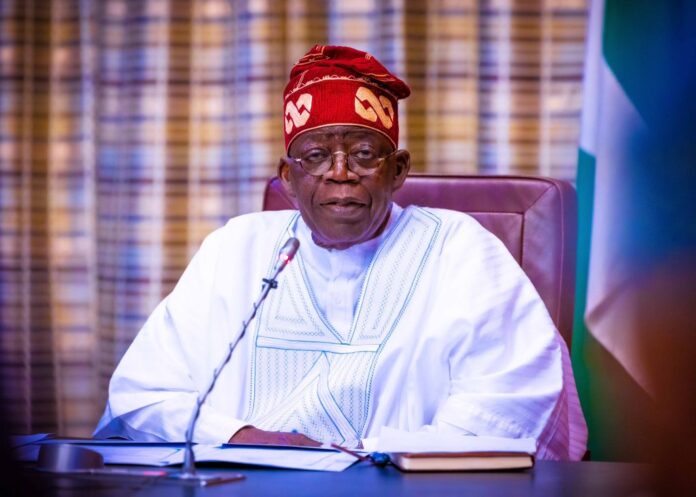
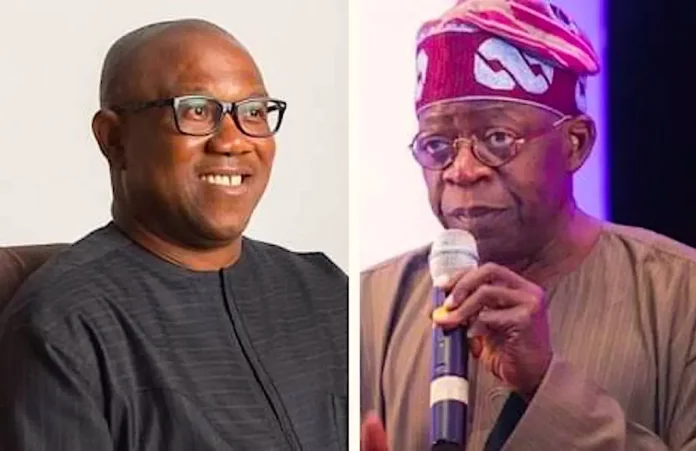
On Saturday, President Bola Tinubu congratulated the recently elected President of the Nigerian Guild of Editors, Eze Anaba, calling the electoral process an excellent representation of Nigerian politics.”By its peaceful and rancour-free conduct of elections to elect its new officers, the NGE has sent a resounding message to the larger Nigerian polity that elections for desired offices can be intensely competitive without degenerating into bitterness, acrimony, and unnecessary malice,” read a statement from Tinubu’s Special Adviser on Special Duties, Communications, and Strategy, Dele Alake, on Saturday evening. ⁣ ⁣
The Guild chose Anaba, the Editor of Vanguard Newspapers, at its 2023 Biennial Convention on Friday, June 16 in Imo State. Bolaji Adebiyi, a former employee of ThisDay Newspapers, was his lone opponent; he received 250 votes to defeat him.Anaba takes over for Mustapha Isah of the Silverbird Group, whose two-year term was up.Despite the ferocity of the competition for the various positions up for grabs, Tinubu said it is most satisfying that the result was successful and sour-free.⁣ ⁣
He asserted that it is crucial that the various newspaper industry unions, including the NGE, the Nigerian Union of Journalists, and the Newspapers Proprietors Association of Nigeria, adopt an internal democratic ethos in support of professional integrity for the country’s good governance, stability, and long-term development. “The NGE has, in this regard, made a strong statement for the Nigerian media as a worthy exemplar,” the President said. In this regard, Tinubu commended those who came up short in the elections on various levels, including Adebiyi, for embracing the results and pledging support for the victorious candidates. “This is a light that the NGE is showing that the rest of us may find the way to a mature, tolerant, stable and sustainable democratic culture,” he stated. The President did point out that the media faces greater obstacles than in the past when it comes to strengthening Nigeria’s democracy, maintaining constant check on the exercise of power, and promoting good, responsible, and accountable governance.

Read Also: Lagos police arrest dismissed corporal impersonating inspector⁣ ⁣
Going down memory lane, Tinubu emphasised the media’s historic contribution to the fight against colonial imperialism and how it had been closely tied to the fate of the Nigerian state and its citizens. It is impossible to write the history of the democratic benefits we have experienced since the start of this dispensation in 1999 without emblazoning the late Chief MKO Abiola’s victory in the June 12, 1993 presidential election. Beyond the emergence of new leaders, Tinubu argued that the bigger picture is to make sure that the Guild members put the profession in a strong position to consistently fulfil its constitutional obligation of acting as a watchdog of the people in policing government excesses and advancing the greatest good of the greatest number of our citizens. Therefore, he promised that his administration would work with the media and support him in achieving “these lofty objectives in the best interest of our country.” ⁣

Ideal legislature of a developing country, By Tonnie Iredia

0

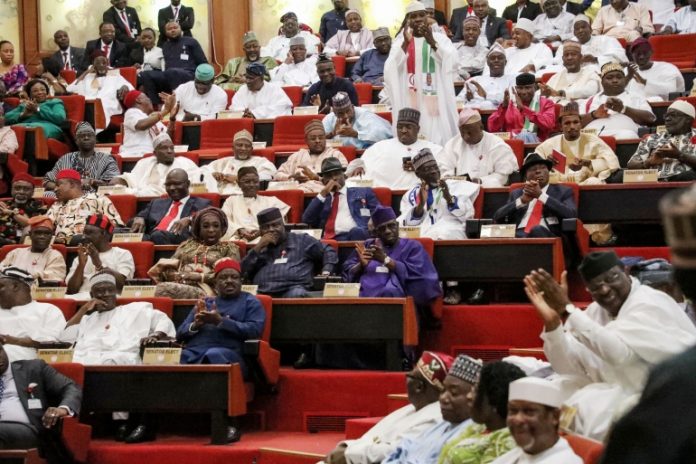
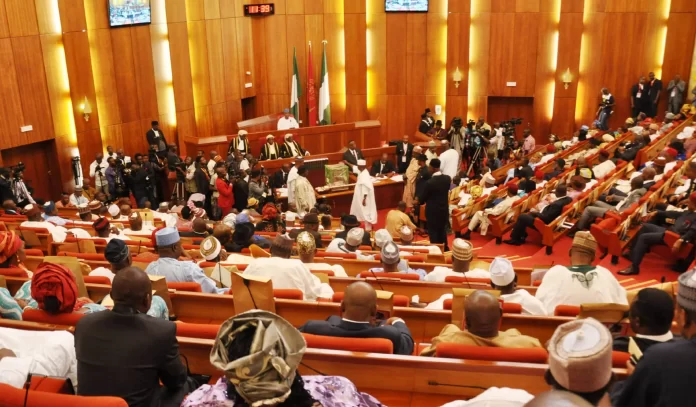
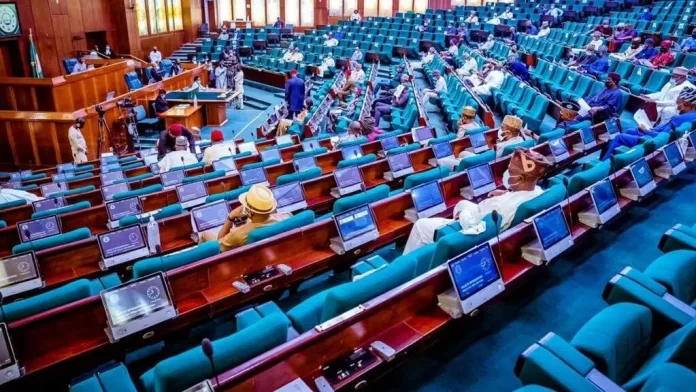
At any gathering, whether public or private, the average Nigerian legislator would take advantage of every chance to demand recognition and respect from the community. The claim made by the lawmaker is based on the justification that the legislature, out of all the branches of government, is the best representation of democracy because it is frequently the only one to perish when tyrants violently seize power. Because of this, it is claimed that lawmakers are the only true representatives of the people. But if the truth must be told, the majority of Nigerians are not happy with the way their purported real representatives have been acting in their official capacities or generally. At the state level, Nigeria does not have legislators; instead, state governors’ special assistants for lawmaking are present. This article, however, specifically refers to federal legislators.

Some might think it’s unfair to start the new legislative year with harsh criticisms of lawmakers who haven’t started working yet, given that the 10th National Assembly was only inaugurated five days ago. Many of the members aren’t really new, but it makes sense to give them time to adjust before analysts start shining any sort of spotlight on them. In fact, this is a good time to point out the subtle differences between legislators in developed democracies and those in developing societies, whose main concern should be how to support rapid national development so that the general standard of living can be raised.

Read Also: Lagos police arrest dismissed corporal impersonating inspector

The best time to ask those regarded as high-ranking Nigerian legislators is at this point so they won’t contaminate the minds of newcomers. This is due to the large number of harmful events that have occurred in our National Assembly in the past. Furthermore, what Nigerians have seen of their lawmakers over the past month indicates that things will likely continue as they have in the past. First off, the 10th Assembly may be a sharper rubber stamp than its immediate predecessor because, in violation of our constitution’s provisions, the legislators were unable to choose their own presiding officers. Instead, the executive branch of government personally selected those who eventually became presiding officers.

Why was it necessary to expand a leadership selection procedure that was explicitly intended by the constitution to be internal to the legislature to the rest of the world? Why did our legislators spend millions of naira on media placements and other forms of nationwide campaigning, even for those of us who were eligible to vote? What message did the nation receive from the commercialization of the procedure? Could those who engaged in such displays of wealth have hoped to provide assistance without recovering their enormous outlays? We are not about to see a different type of legislators, according to logical answers to these questions, especially in light of the fact that many members of minority parties reportedly negotiated to join “lucrative” committees before endorsing the executive’s chosen candidates.

According to the senator who was defeated for senate president by the executive candidate, both the winner and the loser of the election compromised the senators-elect. Maybe it would be simple to understand the executive’s motivations if they were trying to prevent the election of opposition presiding officers who might subvert the ruling party’s mandate through mischief. However, when all of the candidates were from the same ruling party, such interest became incomprehensible. Few people understood the executive’s desperation to install “friendly” presiding officers as a result. Irrational requests, such as those for large loans, are they approved without being scrutinised? Or, to put it another way, does the executive not intend to run a transparent and reliable system of governance and, as such, need the cooperation of the legislature?

Intriguingly, the eight years of events have demonstrated that the executive does not benefit from having a so-called friendly legislature. For instance, during the final four years of President Buhari’s administration, the president grew enraged by the legislature’s exploitative attitude to the point where he had to scream in protest over what he called the latter’s “worrisome changes” to annual budgets. There were as many as 6, 576 new insertions into the budget at one point, which were not included in the discussions between the relevant members of the executive and legislature. It was discovered that many of the inserted items were not covered by the federal budget. It was also found that 500 items, totaling at least N380 billion, were duplicated. Buhari must have abruptly realised how difficult it would be to battle a “friendly” legislature. Thus, the new story of reliable friends conflicts with historical precedent.

Additionally, it didn’t appear that the National Assembly was aware that Nigerians were not impressed. Legislators did little to nothing to assist Nigerians during the Covid 19 pandemic. Additionally, they did nothing about the legislators’ political class, which hoarded and kept palliatives out of the hands of the general public. Nobody helped the rural populace during the disastrous new naira policy by erecting temporary financial infrastructure to lessen suffering in areas devoid of banks. All bills in favour of women were also rejected by the male-dominated legislature. These are the unique characteristics of a developing society that those in high political positions should not ignore.

Sadly, our legislators continued to be self-serving like their elected predecessors. The legislature granted itself immunity and started to look into and confront officials of all other government institutions implicated by the auditor’s report when, for the first time, the Auditor-General of the Federation was able to muster the courage to expose irregularities and illegal spending in government. The financial scandals detailed in the National Assembly report went unnoticed until the end of its term. However, the House of Representatives was specifically charged with spending over N5.2 billion at various points on numerous unfinished projects and giving advances of N258 million to 59 employees who never retired. Will the new House be able to recover these funds to raise more money for development?

The public should be informed about the conditions and limitations of the current friendly alliance between the executive and the legislature. If it’s about cooperative federalism, the legislature needs to shed its constructivist timidity to be more attentive to its constitutional obligations. For example, before a nominee can be appointed to a position, the senate has the authority to confirm them. Maintaining a system in which some nominees are asked to “bow and go” is a dereliction of duty because everyone should be thoroughly vetted and found suitable before being approved. No known law exists in Nigeria today that gives senators the authority to exempt any nominee that the law specifies needs to be approved.

The project Nigeria, to which both parties should be committed, would remain a mirage if the legislature didn’t help its friend, the executive, appoint only fit and proper people into offices. Therefore, the Senate ought to insist that the nominees for the positions to be filled go along with them in order to perform their duties more diligently. This is neither unfavourable nor hard to come to terms with. If not, the hateful, outdated system of blind clearance will never succeed. We had a contentious general election earlier in the year due in large part to the number of unqualified people the executive sneakily added to the otherwise impartial INEC, which the senate defiantly cleared.


Could the 10th Assembly guarantee that it won’t do so in the interest of friendship with the


Anaba, Vanguard editor, elected NGE president

0

Eze Anaba, the editor of Vanguard Newspapers, was chosen as the Nigerian Guild of Editors’ new president on Friday for the ensuing two years.

He won an election held during the biennial NGE convention in Owerri, Imo State, in 2023.

Anaba received 250 votes, defeating Bolaji Adebiyi, his lone rival, who received 81 votes.

Husseina Bangshika, the Deputy President, Kabir Alabi Garba, the Vice President for the West, Gabriel Akinadewo Folajimi, the Assistant Secretary, Umoru Ibrahim, the Vice President for the North, Muhammad Sanusi and Paulyn Owhievbie Ugbodaga, both members of the Standing Committee from the North, Charles Kalu, the Social/Publicity Secretary, Sheddy Ozoene, the Vice President for the East, Chinedu Eger

Lagos police arrest dismissed corporal impersonating inspector

0

A dismissed corporal in Lagos State was arrested for impersonating an Inspector of Police.

The suspect was arrested on June 4 at Gaskiya College Road Junction, Ijora-Badiya, according to SP Benjamin Hundeyin, the police spokesman.

Hundeyin said a preliminary investigation showed that the suspect had been using the uniforms since his 2017 dismissal from the police.

The 35-year-old suspect from Sango Ota, Ogun, was arrested while riding an unregistered motorbike, he said.

He added that a police stop-and-search team questioned the suspect about riding a motorbike on a major road despite the order.

“The suspect identified himself as a Police Inspector and produced a police identification card with his name and photo.

Read Also: Kano to improve bilateral relations with French Republic

“During the investigation, police obtained a court order to search his Sango Ota home on June 8.

“In the process, a pair of uniforms with Sergeant rank, one operational jacket with inscription `SARS LAS SCORPION’, one pair of camouflage with Inspector rank, and one jacket with `Special Forces’ inscription were recovered.

“One police belt, a pair of police boots, one camouflage tee-shirt, one police beret with crest, and one pair of unsewn blue uniform were also recovered from the suspect,” he said.

He added that the suspect changed his rank whenever the police promoted his serving recruited mates.

After the investigation, Hundeyin told NAN that the suspect would be arraigned.

Kano to improve bilateral relations with French Republic

0

The administration of Kano State Governor, Engr. Abba Kabir Yusuf, has reiterated its commitment to strengthening the existing diplomatic ties between Kano State and the French Republic.

This promise was made by the governor during a Friday meeting with the French ambassador to Nigeria at the State Government House.

Sen. Rabiu Musa Kwankwaso, the former governor of Kano State, worked hard to build and maintain a positive relationship with the French government, and Yusuf, through his deputy Aminu Abdussalam Gwarzo, emphasised this.

Gwarzo was quoted as saying that Sen Kwankwaso established French-speaking secondary schools in Madobi Town and two other locations in the Republic of Niger in a statement by the Press Secretary to the Deputy Governor, Ibrahim Garba Shaibu.

Earlier in her remarks, the French ambassador to Nigeria, Emmanuelle Blatmann, stated that the delegation’s trip to Kano was intended to present the state government with a number of development projects in order to increase employment opportunities and the state’s economic standing.

Blatmann also mentioned that the French government has long promoted women’s apprenticeships and agricultural technical education while working with the private sector to cooperate in agriculture.

According to Blatmann, over the past 12 years, the French government has invested close to three billion euros through the French Agency for Development in a number of Nigerian citizens’ welfare projects, of which Kano State has benefited.

The Urban Water Supply Project, Urban Mobility Project, Energy Grid Project, Projects on Higher Education, Mass Transportation Project, Request for Rehabilitation/Revival of Kano French Culture Centre, Rural Access Project, Agricultural Marketing Project, and others are among these projects.

The Kano state government will carefully review all the proposed projects, Gwarzo assured the French ambassador on behalf of the governor.

Following that, the state government will invite France to a meeting to discuss how to carry out these projects, according to Gwarzo.

Kano gov reinstates revenue boss removed by Ganduje

Abba Yusuf, the governor of Kano State, has appointed Sani Sambo, the former executive chairman of the state Internal Revenue Service, back to his previous position.

The chief press secretary to the governor, Sanusi Tofa, made the announcement on Friday after overturning the suspension of the KIRS leader, who had earlier been fired by the state’s former governor, Abdullahi Ganduje, due to charges of corruption.

He has 20 years of expertise in tax administration and is currently a senior manager of tax audit at the Federal Inland Revenue Services in Abuja. He is also a fellow of the Nigeria Institute of Taxation.
The governor stressed the value of maintaining an open and responsible administration while expressing confidence in Dambo’s ability.

“We think Alhaji Sani Abdulkadir Dambo is the best choice to head the Kano Internal Revenue Service,” he continued. He will make a substantial contribution to our ongoing efforts to increase revenue generation and advance the state’s overall economic development thanks to his extensive experience and expertise in tax administration.

Court mandates DSS give Emefiele access to family, attorneys

0

Friday, the Department of State Services (DSS) was mandated by Justice Hamza Muazu of the Federal Capital Territory (FCT) High Court to allow suspended Central Bank of Nigeria (CBN) Governor Godwin Emefiele access to his family and attorneys.

Following an oral request from Joseph Daudu’s (SAN), counsel for the CBN governor, in a case with the filing number FCT/HC/CV/6450/23, the judge approved the order.

Respondents in the lawsuit included the Director-General of the DSS, the Attorney-General of the Federation (AGF), and the AGF.

Emefiele was detained by the agency shortly after President Bola Tinubu last week suspended him from his position.

In order to receive additional instructions from the CBN governor, Daudu told the court that he wrote letters to the DSS on June 14. However, the agency ignored the request.

However, I. Awo, the DSS’s attorney, rejected the allegation.

He declared that the organisation would abide by the court’s directive and permit access to Emefiele for his family and attorneys.

He also asked for a postponement of the deadline for the respondents to submit their individual replies to the initial motion.

The prayers were heard by the court.

After that, Justice Muazu put the matter on hold until June 20 so that the substantive lawsuit could be heard.

Former Reps member found guilty of N212m fraud

0

JUSTICE Sale Mansur Ali Mashi, a former member of the House of Representatives, was found guilty by Musa Shuaibu of the Federal High Court in Kaduna.

The conviction followed a drawn-out 12-year trial that involved accusations of conspiracy and obtaining through deception. In addition to Mashi, three bank employees—Abdulmumini Mustapha, Shehu Aliyu, and Muazu Abdu—were also found guilty.

The Economic and Financial Crimes Commission, which filed the charges against Mashi, claimed that he had obtained a loan facility worth N212,439,552 from Sterling Bank using fictitious companies. When Mashi later used the money for personal expenses, he was found guilty on eight counts of fraud.

All of the defendants entered not guilty pleas when they were called to the stand for arraignment. The case went forward to trial, but there were several setbacks as a result of the trial judges’ retirement or elevation. Despite these obstacles, the prosecution was still able to present a number of exhibits and call six witnesses to the stand.

Both parties delivered their final written addresses at the most recent adjourned date. In order for the judge to render a decision, the case was postponed until June 15 and 16, 2023.

The first and fourth defendants were not present when the court reconvened on June 15, 2023. Despite their absence, the judge found the first defendant guilty on counts 1 through 8; as a result, he was found guilty and sentenced to prison time. Additionally convicted and found guilty on all counts was the fourth defendant.

But until they could be apprehended and brought before the court, the sentences for both defendants were postponed.

Former Sterling Bank branch manager Abdulmumin Mustapha was found guilty on counts 1 through 15 and given a five-year prison sentence on each count, without the possibility of a fine. Additionally, the court mandated that Mustapha pay N40,000,00 back to Sterling Bank.

The third defendant, the former head of the bank’s operations, received a discharge on counts 1–8, but was found guilty on counts 9–15. Additionally, he was given a five-year prison term on each count without the possibility of a fine.

Read Also: Breaking: “Releasing Nnamdi Kanu is Rewarding Criminality” Asari Dokubo informs Tinubu

On June 16, 2023, the first defendant, Mansur Ali Mashi, will receive a ruling in a separate case of contempt of court. Mashi is charged with selling assets that the court had taken through an interim forfeiture order from him in this case.

Breaking: “Releasing Nnamdi Kanu is Rewarding Criminality” Asari Dokubo informs Tinubu

0

The release of Nnamdi Kanu, the head of the outlawed Indigenous People of Biafra (IPOB), has been fiercely opposed by renowned Niger Delta leader Asari Dokubo, who claims that doing so would amount to encouraging criminal behaviour.

Kanu has reportedly been in the custody of the Department of State Services (DSS) since his 2021 re-arrest, where he is currently charged with terrorism.

Kanu was granted bail back in 2017 by the Federal High Court of Abuja, but he wilfully disregarded the terms and left the country. President Muhammadu Buhari had resisted calls for Kanu’s release firmly in the face of mounting pressure. New demands for the IPOB leader’s release have however surfaced since a new administration took office.

Peter Mbah, the governor of Enugu State, joined other governors in calling for Nnamdi Kanu’s release during his meeting with President Bola Tinubu.

Asari Dokubo recently told reporters that he thought Kanu ought to be held accountable by the law after speaking with President Tinubu.

In light of Kanu’s alleged role in inflaming the EndSars demonstrations, Dokubo emphasised the potential risks of releasing him. Kanu had reportedly been running loose during the EndSars movement and had even made things worse, according to Dokubo.

Dokubo brought up the issue of the people who perished during the unrest and said that Kanu was a criminal who ought to pay for his actions in court.

“Since Nnamdi Kanu was unhindered during EndSars, his release would encourage impunity. He did what, then? On the EndSars fire, he poured petrol. He has now been discovered. What happened to the deceased? This is illegal. He needs to go to jail.

“Releasing Nnamdi Kanu rewards criminal behaviour and glorifies the gruesome killing of innocent people. He should stand trial for the deeds and instigations he committed, the man said.

This newspaper previously highlighted Dokubo’s claim to Tinubu that the military and powerful organisations were to blame for the widespread oil theft in the nation.

Dokubo offered the aid of his followers to engage in battle and put an end to it. He stated that he was prepared to use his band of devoted supporters, referred to as “his boys,” to take the necessary steps to put an end to these evil deeds.