Home Blog Page 1714

Finance minister reveals Tinubu’s plan to change economy of Nigeria

0

The President Bola Tinubu-led administration wants to leverage the agenda outlined by Wale Edun, Minister of Finance and Coordinating Minister of the Economy, to change the difficult economic situation.

When he presented Tinubu’s ambitions, goals, and economic plan at his first news conference on Friday in Abuja, he made this statement.

Mr. Edun claimed that the administration has identified a number of key areas, including food security, economic development, utilising human resources by emphasising inclusivity, women, and young people, as well as rule of law and anti-corruption.

ad
He stated that in order for Nigerians to see the accomplishments of the various Ministers, there would be regular performance evaluations.

In order to provide Nigerians a better economy and a better quality of life, Mr. Edun stated: “This is to give you aspects of Tinubu’s vision and his strategy for the economy.

“His objectives for the economy include economic growth, the creation of jobs, and access to finance, especially consumer credit that makes growth affordable for the typical Nigerian.

His top aims for Nigeria are to enhance the lives of its citizens by ensuring their food security and putting a stop to poverty.

According to the minister, the last time the nation saw significant economic growth, low inflation, a stable currency, and cheap interest rates was ten years ago.

We all understand that we are not where we ought to be; the economy is expanding just slightly faster than the rate of population growth, but this was not always the case.

According to Edun, the nation had enough foreign currency to protect the naira and satisfy its financial obligations during the administration of former President Goodluck Jonathan.

It “indicates that we have a situation where the government needs to assist and allow private finance and other sources of funding such as foreign direct investments and domestic investments by Nigerians in all areas if it doesn’t have the money,” he said.

In order for the government to have adequate cash to cover its expenses, Mr. Edun claimed that Tinubu’s strategy included boosting revenues.

“On the one hand is through increasing tax revenue, not by raising taxes, but by bringing about higher efficiency and to maximise the revenue.

“good debt management and efficiency in government spending will be prioritised so that borrowing is connected to good debt management.

The president would also “offer a better life for everybody by encouraging investments that boost productivity, grow the economy, and consequently create jobs and eliminate poverty,” the speaker added.
The chairman of the Presidential Fiscal Policy and Tax Reforms Committee hinted to intentions to reform the country’s tax system and reduce N20 trillion in yearly losses due to tax avoidance, evasion, and incentives.

According to him, tax incentives used by previous administrations that did not result in the expected benefits for the nation cause Nigeria to lose up to N6 trillion annually.

“If you don’t examine your incentive system, it may reach a point where it distorts economic growth because it favours some people over others who work in the same industry, making it impossible for them to compete.

“If you look at our tax expenditure statistics, over the last three to four years, we have paid out on average about N6 trillion year; this is considerable, but what we haven’t been quantifying enough is the benefit we are receiving from this.

When you neglect to examine your incentive system. It may reach a point where it distorts economic growth since certain people gain while others don’t and because they operate in the same industry, they are unable to compete.

“So I can reassure you that looking at Nigeria’s incentive system is part of the mandate the President gave us.

“We can construct what is right for us as a country in terms of what we want to drive, so those incentives will be targeted, based on data and evidence,” he said.

According to Mr. Oyedele, this administration is putting a lot of effort into fostering sound fiscal governance, diversifying sources of revenue beyond taxes, and maximising non-tax revenues.

According to him, the goal was to reduce the amount of taxes that Nigerians had to pay while achieving a tax to GDP ratio of 18% during the following three years.

“So that seems contradictory, how do you cut taxes and collect more, but it’s simple to explain because we know where the gaps are; the anticipated tax gap, which is what you should collect today if people paid the appropriate amount of taxes, is somewhere in the neighbourhood of N20 trillion.

“In order to close that gap, we will rely on automation and improved collection efficiency, which includes harmonising the way those taxes are collected.

“The second issue is, if you also take into account the incentive rationalisation, maybe what we should be giving away isn’t N6 trillion, maybe it’s N2 trillion, and it needs to be directed at the people who need it the most.

And the strategy to raise tax revenue via expanding the economy is even more intriguing, according to Mr Oyedele. If you enable people to develop and businesses to flourish, then you inevitably generate revenue, he added.

He claimed that initiatives were being made to remove significant barriers to doing business in Nigeria in order to promote economic growth and inclusive development.
Tinubu supports campaign to provide 5 million Nigerians glasses.

0

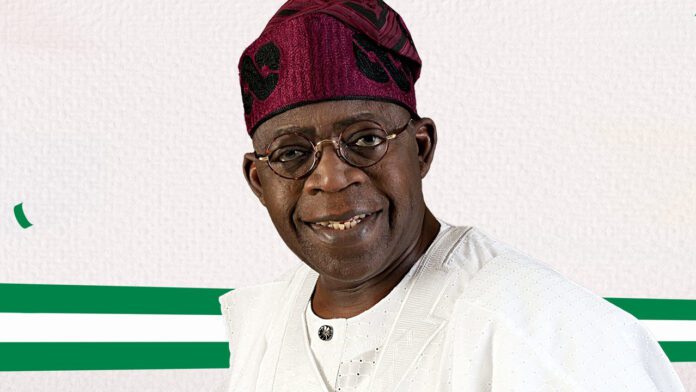
President Bola Tinubu supported a deal between the Peek Vision Foundation and the Federal Ministry of Health’s National Eye Health Programme to distribute more than 5 million pairs of eyeglasses to Nigerians who are affected by vision problems nationwide.

Following the visit of Prof. Andrew Bastawrous, founder and CEO of the Peak Vision Foundation, to the President at the Abuja State House, Special Adviser to the President on Media and Communication Ajuri Ngelale made the announcement in a press release.

The earlier eye campaign of President Tinubu
Speaking during the visit, the President described his experience with his mother’s eye issues and how it inspired him to take similar actions while serving as governor of Lagos state.

According to him, “I made a commitment to her that I would strongly pursue the mass distribution of eye care and that I would deliver free eye exams and procedures to everyone because of the question my mother asked me and because of her zeal to see others healed.
Prof. Andrew Bastawrous says, “We eventually had an influence on the eye health of millions of individuals in Lagos, and you could see their excitement over the immediate improvements in sight when they were given a pair of glasses.”

The Peak Vision Foundation’s founder and CEO talked about how having vision issues as a child hindered his academic achievement until they were fixed.

The following article is in the news.

Good vision, he asserted, “unlocks human potential. It enhances financial security, educational attainment, and health for people, communities, and nations.
more expressing his dedication to the programme, the President said, “I am in support of this initiative, and I will encourage the mobilisation of more commitment to carry this through and to reach needy people all around our country. Some parents might not be concerned about this, but I am touched, therefore I will.
Concerning Peak Vision Foundation
Peak Vision Foundation’s CEO praised President Tinubu’s health team, describing them as “an strong team that has showed leadership in the area.”

He went on to discuss the work his charity had done and the assistance they had gotten in nations like Kenya and Botswana.

To be more precise, he stated that the foundation had received almost 200 million pairs of glasses, with a sizable number going to Nigeria.

LP Candidate Puts Final End To Litigation Against Deputy Speaker

0


_…declares support for Kalu’s leadership style_

The candidate of the Labour Party for the Bende Federal Constituency election, Hon. Frank Chinasa, has put a final end to his case against the Deputy Speaker of the House of Representatives, Rt Hon. Benjamin Kalu.

Hon. Chinasa, who made this known at a press conference on Friday, said his decision is born out of “brotherly love and sheer understanding of our common root and patrimony-the Bende heritage.”

Recall that Rt Hon. Kalu of the All Progressives Congress (APC) was declared the winner of the February 25th poll after garnering 10, 020 out of the 22, 308 votes cast.

The Labour Party flagbearer subsequently approached the National Assembly Elections Petitions Tribunal sitting in Umuahia, the Abia State capital to challenge Kalu’s victory

But the tribunal in its ruling on August 22, 2023, delivered a judgment upholding the declaration of the Deputy Speaker as the winner.

And Chinasa says he has decided to end any further lawsuits and pledge allegiance to Rt Hon. Kalu.

He said: “I am here to inform the world that I am no longer interested in taking the matter any further beyond the tribunal. This simply means that I have decided to let go of the case.

“Kalu and I have a history that has run into decades which cannot be ruined by the transient political activities of today. First, we are brothers from Bende. Second, we are good friends and third, we intrinsically share the same objective of good representation of our people.

“At this juncture, it must be unequivocally stated that my decision to run for this election, ab initio, was to give our federal constituency the quality representation that it deserves, judging from the poor and under-representation that has bedeviled it over years.

“But here comes a young man who in his first term tried to elevate the fortunes of the constituency. And now is the Deputy Speaker of the House of Representatives. The number 6 citizen in the political hierarchy of this great country.

“I have come to reason that if highly revered people, elders from our State, the southeast region, and indeed, Nigeria will celebrate Ben and applaud President Bola Ahmed Tinubu and the entire members of the Green Chambers of the National Assembly for giving Ndigbo such a position, why then, should his immediate brothers from the same constituency be seen to be the ones pulling him down? This does not make any sense in any conceivable way!

“But then, let this not be misconstrued to mean that my going to the tribunal was wrong in the first place. No! I want to categorically submit that it was well within my democratic and constitutional rights and privileges. And even Ben should understand that. What now matters is that we have eventually allowed wisdom and brotherly love to win.

“Of course, I already know that many quarters will feel jolted and offended by this decision. I hereby appeal to all men of goodwill with saner democratic credentials to understand that if even I win the matter in court, I may not possibly become the deputy speaker. The import of this is that I would have wasted a golden opportunity for Ndi Bende, Ndi Abia, and Ndigbo as a whole. Besides, let’s not also forget that ultimately, God gives power.”

Edo 2024: Anxiety mounts as Esan elders await implementation committee report

0

Leaders of the pan-Esan socio-cultural organisation Esan Okpa Initiative (EOI) and other stakeholders are eagerly awaiting the Implementation Committee’s report, which will address the tricky problem of reducing the number of Esan-looking candidates for the Edo State Governorship election scheduled for 2024 and is chaired by renowned constitutional law professor Michael Ikhariale.

According to rumours, the Committee, which is finishing up its report this weekend, may suggest consensus building as a “winning strategy” to get the candidates to queue up.

The 11-member Implementation Committee met with governorship candidates from all political parties last weekend in Benin City, the capital of Edo State, in an effort to assess their suitability and make sure that Esan, which makes up Edo Central Senatorial Zone, puts its best foot forward in the race for a replacement for outgoing Governor Mr. Godwin Obaseki, whose term expires on November 12 of next year.

Undoubtedly, several of the candidates, including Prof. Oserheimen Aigberaodion Osunbor, who served for 18 months as governor, three other well-known professors, five former Edo State House of Assembly Speakers, and others, exhibit admirable and impressive credentials. However, Esan leaders are concerned that the number of candidates will hurt Edo Central’s chances if they all compete in party primaries against fewer candidates from the other two zones. “There is a legitimate expectation that the governor’s position in Edo State is now for Esan people to lose,” said Ikhariale, “and quite frankly, there is the real possibility that we might just lose it if we do not put our house in order by swiftly formulating a winning strategy.”

The engagement was undoubtedly an effort to separate the wheat from the chaff and make sure that only formidable individuals with clout and influential reach to the other two zones – Edo North and Edo South – are supported, despite Ikhariale’s recent conclusion of his term as a visiting professor at America’s Ivy League, Harvard University, who claimed that their assignment was not to “screen out” any aspirants because that is the forte of the political parties.

Please allow me to make this important explanation regarding today’s events before I continue. Neither do we have the intention nor the desire to “screen out” anyone while we are here. The various political parties are responsible for selecting candidates.

“We invited you to participate in an interactive session where we would assess each other’s respective strengths and shortcomings and then proceed to be completely honest with ourselves about our readiness for the governorship campaign in Esan.

“Moving forward, we anticipate this interaction to be open, detached, and based on a set of objective standards. The EOI leadership and other key stakeholders will be given the outcome of today’s dialogue for consideration and further action.

“We all understand that whenever brothers have a private conversation and emerge beaming, it is typically a sign that they have fooled themselves. Obviously, the EOI does not seek to harm itself in this situation or purposefully upset people.

“When examining the current political climate in Edo State, it is simple to see that Esanland has never had a better chance to produce a governor in recent election cycles. According to the State’s constitution, there are three senatorial districts: Edo North, Edo South, and Edo Central (Esanland). Only Edo Central has not yet produced a governor out of these three in nearly twenty years. When we previously had a governor of Esan descent, his term was regrettably cut short just a few months after it began.

“EOI’s primary objective in this situation is to objectively reason with all the candidates with a view to forging consensus around those candidates who have realistic chances within their respective parties and Esan people will support those candidates while allowing the good people of Edo State to make their choice,” he claims.

Prof. Philomena Ejele, a linguist at the University of Port Harcourt, and Prof. Oyaziwo Aluede, an education scholar at Ambrose Alli University, Ekpoma, are other members of the Implementation Committee, which is led by Prof. Ikhariale and has Chief Executive Officer Novelpotta, Dr. Celey Okogun, as secretary. A political development expert, Dr. Ono’ohomen Ebhohimhen, the acting director general of the Edo State Directorate of Quality Assurance, and Engr. Francis Oriakhi, president of the Esan Club 30 in Port Harcourt, are also members of the committee. While Mr. Prosper Iyere and Mr. Alex Orukpe are chosen from young organisations, Rev. Fr. (Dr.) Fidelis Arhedo and Mallam Abdulkadiri Mukhtar also represent faith-based organisations on the committee.

The interactions with the aspirants, who were primarily PDP, APC, and LP members, were generally characterised as “fruitful”. Along with Osunbor, other well-known candidates who attended the event included the former chairman of the APC in Edo State, Col. David Imuse, the former chairman of the Esan North East Local Government, Hon. John Yakubu, and the former chaplain of the Edo State Government House, Rev. Fr. Andrew Obinyan. Professors Sylvester Odion Akhaine, Amb Martins Uhomoibhi, and Osezua Ehiyamen are the others.

Former Edo State House of Assembly Speakers Rt Hon Francis Okiye, Rt Hon Friday Itula, Rt Hon Bright Omokhodion, and Former Deputy Speaker Rt Hon Festus Ebea were also in attendance. Although they expressed a readiness to attend, former House members Rt Hon Serguis Ogun and former Speaker Rt Hon Victor Edoro were unable to.

Only 17 of the 26 candidates who replied to the Implementation Committee’s invitation ultimately attended the engagement last weekend. Three candidates from the diaspora asked for a Zoom facility, but it couldn’t be set up right once. Four candidates who had first replied to the invitation letter with an apology were joined by two more candidates. As part of the effort to reduce the number of aspirants in the zone, leaders of the Esan Okpa Initiative, led by its president, Rt Hon Mathew Egbadon, and other Esan elders met with aspirants of Edo Central extraction early this year in Benin City.

Nigeria is responsible for half of Africa’s missing people: FG

0

According to the Federal Government, more than 23,000 people have vanished in Nigeria under various conditions, including insurgency and kidnapping, in less than ten years.

According to Betta Edu, the Minister of Humanitarian Affairs and Poverty Alleviation, this statistic reflects half of individuals who went missing in Africa during the same time period.

On August 30, Edu made this disclosure while addressing at a celebration of the International Day of the Disappeared at the National Human Rights Commission.

The minister made the observation while being represented by the Director of Humanitarian Affairs, Ali Grema, that a more effective framework was required to enhance the reporting and forensically trace cases of missing persons in the nation.

According to reports, the ICRC and the Nigerian Red Cross Society (NRCS) have recorded more than 25,000 people missing in Nigeria in less than ten years as a result of the insurgency in the North East. This is equivalent to half of all the missing people in Africa.

“Today, there are still over 23,000 people missing. To increase reporting and forensically locate cases of missing persons, a more effective method is required, therefore this is probably just the tip of the iceberg. The precise number of people going missing in the nation has not yet been calculated, according to Edu.

She asserted that the plan would boost the nation’s mechanism to address issues of missing persons effectively and efficiently and pledged to ensure domestication of international treaties and instruments utilising a whole society and government approach.

Read Also: Federal, states, LGs share N4.37trn FAAC allocations Jan-June 2023 – NEITI

The ministry official has previously lamented the absence of a reliable method for tracking the exact number of missing people in Nigeria. In January 2023, Sadiya Farouk, a former minister, said that there was no official missing persons database in the nation.

Farouk stated, “At the moment, Nigeria lacks a national structure or Standard Operating Procedure (SOP) to address the humanitarian consequences of disappearances,” who was speaking on behalf of the Permanent Secretary of the Ministry, Nasir Gwarzo.

“Since there is no official record, there is no credible national data on the number of missing persons in Nigeria.

She continued, “It is absolutely obvious why Nigeria as a nation and this ministry are very worried about this unfortunate and much ignored humanitarian and societal crisis.

NLC declares two-day strike over fuel subsidy removal

0

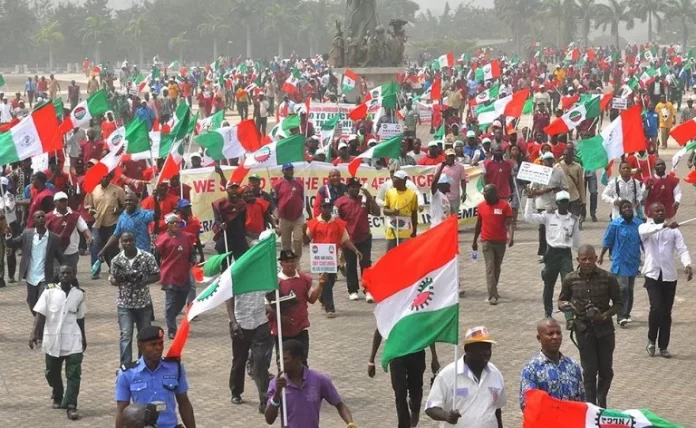
On Tuesday, September 5, 2023, the Nigeria Labour Congress (NLC) would start a two-day warning strike in protest of what it described the government’s failure to adequately offset the effects of the withdrawal of subsidies on Premium Motor Spirit, also known as fuel.

Speaking about resolutions from the NLC National Executive Committee (NEC) meeting the day before at a press conference at Labour House in Abuja, NLC President Joe Ajaero made the announcement on Friday.
Earlier in August, the labour centre planned a nationwide protest against actions it perceived as “anti-poor” by the Bola Tinubu administration against Nigerians.
President Tinubu withdrew the subsidy on May 29, 2023, during his inauguration speech, increasing the price of PMS to N610 per litre. The rise in fuel prices eventually led to an increase in cost of living.

Read Also: Federal, states, LGs share N4.37trn FAAC allocations Jan-June 2023 – NEITI

Although committees were established by the Tinubu administration to organise the distribution of palliatives to workers, the labour centre noticed that the committees had not yet developed any plans.

BUA Cement to drop cement price, offers shareholders N2.80kobo per share dividend

0

Abdul-Samad Rabiu, the chairman of the BUA Group, announced that the business would lower its cement pricing to stop the government from sanctioning the importation of cement into Nigeria.

Rabiu made this statement in response to criticism of the cost of locally produced cement in the nation, which compelled Dangote Cement to justify the pricing of its goods.
Since importing cement would be detrimental to the nation, BUA Cement’s founder said that the company will expand its manufacturing capacity in order to reduce the cost of its goods.

Before the year is up, BUA Cement intends to raise production capacity by at least 40% to 70 million tonnes, as stated by Rabiu during the company’s annual general meeting on Thursday.

By the end of the year, Rabius stated, “We plan to have two more production lines operational, increasing our production capacity by at least 40% to 70 million tonnes.

Read Also: Centre Commends Aviation Minister Keyamo Over Key Policy Decisions

In order to help the government’s efforts, “the idea of increasing production capacity is to see how we can be able to drop prices on our part. Importation will not be the best solution.”Cement costs N4,500 on average in Nigeria, which equals N90,000 ($100) a tonne. Therefore, if the government threatens to begin importing cement, it will cost them much more because the current high exchange rate makes it more expensive to transport via ports and requires paying taxes, trucking fees, and other charges.

In the meantime, BUA Cement has increased the dividend it would pay to shareholders for the year 2022 from N2.60 kobo to N2.80 kobo per share.

Federal, states, LGs share N4.37trn FAAC allocations Jan-June 2023 – NEITI

0

Between January and June 2023, the Federal, States, and Local Government Councils (LGs) divided N4.37 trillion in statutory revenue allocations from the Federation Account.

The most recent report from the Nigeria Extractive Industries Transparency Initiative (NEITI) on the allocations of revenue to the Federation Account for the first half of the year contains this information.

The report was released on Thursday in Abuja by Dr. Orji Ogbonnanya Orji, Executive Secretary of NEITI. He stated that the total distributable FAAC allocations to the three levels of government in the first and second quarters (Q2) of 2023 were N2.32 trillion and N2.04 trillion, respectively.

According to the NEITI quarterly assessment, inflows into the Federation Account fell by 23% in Q2 2023, which had an impact on the distributable revenue, which fell by 12% in comparison to the total revenue distributed in the first quarter.

Over the course of the six-month period, “each tier of government received more than N1 trillion,” he claimed.

According to the study, a breakdown of the revenue receipts revealed that the State governments collected N1.5 trillion, or 34.5%, while the federal government received approximately N1.78 trillion, or 40.7%.

The study states that N1.08 trillion, or 24.8% of the total distributable revenue for the time period, was given to local government councils.

It also stated that a comparison of the total allocations between the corresponding quarters in 2022 and 2023 revealed a 16.7% increase in distributable revenue, from around N4.05 trillion shared in 2022 to N4.366 trillion shared in 2023.

As a result, it was discovered that the federal government’s allocation for the time under review increased by 19.8% to N1.78 trillion in 2023 from N1.48 trillion during the same period in 2022.

Similarly, the research said that allocations to the LGs increased by 16.8% to N1.08 trillion in 2023 from N926 billion in 2022, while allocations to the State governments increased by around 11.2% to N1.42 trillion from N1.26 trillion in 2022.

The increase in half-yearly allocations in 2023 followed a positive rising trend from the preceding year, during which the distributable revenue for the first half of the year increased by 16.7%, from N3.47 trillion between January and June 2021 to N4.05 trillion in the same time the following year.

Additionally, allocations to the federal, states, and LGs all saw overall increases of 8.8%, 26.5%, and 14.2%, respectively.

However, it claimed that when compared to the same period in 2022, the study revealed a reduction in the absolute amount of FAAC distribution in Q2, with total distributable revenue of N2.02 trillion being 13% less than the approximately N2.16 trillion distributed in the second quarter of 2022.

Read Also: CSOs, anti-graft organisations ask Tinubu to establish a national council for public procurement.

Further examination of the payments made to the states, according to the report, revealed that Delta state received the largest allocation in the second quarter of 2023, totaling N102.79 billion. Akwa Ibom came in second with N70.01 billion, followed by Rivers with N69.73 billion, Lagos with N60.64 billion, and Bayelsa with N56.34 billion.

It stated that the entire allocations to the following 15 states (N349.3 billion) were surpassed by the total disbursements to these five states (N359.5 billion), or 35.9% of the overall FAAC allocations.

The worst 10 states earned 17.3% of the money split in the second quarter of 2023, it was stated, adding that the total allocation to the five states was also greater than the share of distribution to the remaining 19 states combined.

States with the lowest allocations, totaling N16.71 billion, N16.84 billion, N16.95 billion, N17.22 billion, and N17.45 billion, respectively, were Nasarawa, Ebonyi, Ekiti, Gombe, and Taraba.

It stated that, with the exception of Lagos, four of the top five states in terms of allocations each received a sizable portion of the 13% derivation money allotted to oil-producing states.

It stated that the cumulative allocation to the five states was higher than the share of allocation to 19 other states, and that the total disbursements to these five states (N359.5 billion), or 35.9% of the total FAAC allocations, were higher than the total allocations to the following 15 states (N349.3 billion).

Additionally, it stated that 17.3% of the revenue distribution for the second quarter of 2023 went to the worst 10 states.
It was said that the three primary revenue-generating organisations sent the majority of their remittances to the federation account.

They were identified as the Federal Inland Revenue Service (FIRS), the Nigeria Customs Service (NCS), and the Nigeria Upstream Petroleum Regulatory Commission.

It was revealed that these funds came from a variety of sources, including oil and gas royalties, petroleum profit tax, corporate income tax, value added tax, import charges, and excise taxes.

Additionally, N1.84 trillion in revenue remittances in the second quarter of 2023 came from both mineral and non-mineral sources, with N809 billion, or 44%, coming from mineral revenue (mostly from oil and gas), and N1.03 trillion, or 56%, coming from non-mineral sources.

The research also highlighted a significant discrepancy between revenue disbursements from the oil and gas and solid minerals sectors, highlighting how this was a result of the latter’s ongoing underperformance over time.

With a total deduction of N9.03 billion in the second quarter of 2023, Lagos came out on top among the 36 states, followed by Delta (N6.76 billion), Ogun (N6.10 billion), Kaduna (N5.63 billion), Osun (N5.60 billion), and Imo (N5.51 billion). This is due to debt service obligations and their effects on the net allocations of the states.

“The lowest deductions, totaling N1.16 billion, N1.29 billion, N1.45 billion, N1.51 billion, and N1.88 billion, were made by Jigawa, Anambra, Nassarawa, Kebbi, and Enugu States.

According to the report, “the nine oil-producing states, namely Abia, Akwa Ibom, Anambra, Bayelsa, Delta, Edo, Imo, Ondo and Rivers states received allocations relative to their share of the oil and gas as well as other minerals extracted from their domains,” it stated.

According to the forecast, Nigeria’s balance of payments would improve with effective management, smart use of savings from subsidy payments, and increased demand that was totally met by product imports in the first half of 2023.

It stated that the decline in demand would unintentionally result in a comparable decrease in the amount of money required to pay for premium motor spirit (PMS), which was the most valuable import overall, he claimed.

The recent unification and floating of the exchange rate policies undertaken to strengthen and stabilise the economy were warmly welcomed by the report with great expectations.

“With the average exchange rate of N713.69 to $1, which is nearly a 55% increase over the rate of N460.52 to $1 recorded during Q2, the value of export profits sent to the Federation Account will be greatly increased by more than 50%.

Read Also: Centre Commends Aviation Minister Keyamo Over Key Policy Decisions

It advised that the value of foreign capital inflows, such as investments, loans, and grants, would increase as a result of earnings from the new exchange rate through exports.

The study also encouraged the Central Bank of Nigeria to emphasise measures to control the currency rate in order to support the efficient execution of the deregulation strategy and stable inflows into the Federation Account that depend on foreign exchange.

FG can’t refund states for money spent on Federal Roads now – Works Minister

0

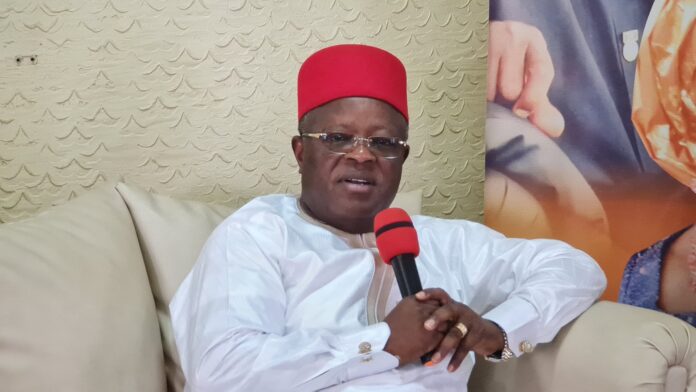
According to Works Minister David Umahi, the Federal government is not now able to reimburse State governments for money spent on Federal Roads.

During his Thursday visit to Oyo State Governor Seyi Makinde in Ibadan, Umahi made this clear.

According to the News Agency of Nigeria (NAN), the Minister is in Oyo State on a two-day working visit.

“The federal government will not be able to commit at this time due to the state of the economy.

“However, records of such road projects done by the states would be kept and could be revisited when the economy improves,” he said.

He praised Makinde for the administration’s involvement in road construction.

According to the minister, the intervention lessened people’s suffering.

“We are one government, whether it be for state or federal highways. The goal and duty of office is to put the interests of the people’s wellbeing ahead of all other considerations, he stated.

Umahi pressed Makinde to use concrete pavement technology in road building projects, claiming that it was more resilient and less expensive than asphalt roads.

He added that about 95% of the roads he developed as governor of Ebonyi were constructed with concrete pavement, saying that road projects using concrete pavement in Lagos State had been successful.

The Minister explained that he was inspecting South West federal government road projects when asked why he was in Oyo State.

In Abuja, according to Umahi, he met with every contractor in charge of the North West, North Central, and South West road projects.

“After the meeting, I decided to visit these projects to know the quality of the work done and other things on the ground,” he stated.

In order to successfully complete the federal government’s initiatives in the state, he further sought further collaboration from the Oyo state administration.

Makinde responded by thanking the minister for his visit.

He claimed that Umahi’s record as the leader of Ebonyi speaks for itself.

The governor claimed that his administration gave priority to road projects since they were crucial to the economy.

Whether they be state or federal roadways, we are dedicated to the rehabilitation and reconstruction of numerous road projects.

“For instance, it took us two years to obtain federal government approval for the 34 km Oyo-Iseyin road, which we immediately gave to a contractor after receiving it due of its significance to the state’s agribusiness.

The former president Olusegun Obasanjo will open the route on September 15. Although the documents are there and we will present them to the Minister, we are not asking for a reimbursement right away.

Makinde added that his administration would keep spending money on road projects to advance the state.

He informed the minister of his preparedness to work with the federal government to dualize the Ibadan-Abeokuta road’s Oyo state section.

The governor also let the minister know that he and his colleagues in the states of Lagos and Ogun had agreed to light the Lagos-Ibadan Road.

He said that because it was the busiest road in the nation, lighting the entire section of it would improve safety along the road.

Centre Commends Aviation Minister Keyamo Over Key Policy Decisions

0


…says transparency and safety are paramount in the sector_

The Centre for Social Justice, Equity, and Transparency (CESJET) has hailed the Minister of Aviation and Aerospace Development, Festus Keyamo, SAN, for hitting the ground running.

The Centre, in a statement signed by Executive Director, Isaac Ikpa, said the Senior Advocate of Nigeria is already punching above his weight after being written off by critics.

After barely two weeks on the job, Ikpa said Keyamo has taken giant steps to revamp the aviation sector that was bedeviled by controversies and uncertainties.

He noted that the reforms and policies introduced so far are evident that the minister came prepared with a clear blueprint to make the country’s aviation sector one of the best in the world.

Highlighting some of the giant steps taken, Ikpa welcomed the suspension of the national carrier and airport concession.

He said it was apparent even to the blind that the entire process was clouded in controversy and fraud; done without following due process.

Ikpa added that it was best for it to be reviewed to potentially eliminate all the bottlenecks along the way.

By doing these and reviewing complaints, he further said that Keyamo has restored transparency, accountability, and integrity to the aviation business while winning the trust of stakeholders and international partners.

“We have followed the 45 new ministers closely and have been amazed by Mr Festus Keyamo. His case is particularly interesting because he was written off even before his first day at work,” Ikpa said.

“Being a firm critic who stands up for what he believes, Keyamo is often misunderstood. Although sometimes cocky and condescending, the minister is someone who never shies away from a debate. However, over the years, he has earned a reputation for his integrity, honesty, and passion for humanity.

“While the naysayers continued in their stock in trade, Keyamo quietly settled into the job and announced himself with some groundbreaking reforms, policies, and innovations. Among many others, he has suspended the fraudulent national carrier and airport concession.

“It clearly shows that the minister came fully prepared for the job despite his late appointment. Keyamo already had a blueprint to sanitize, revamp, and revive the aviation sector to meet international best practices.

“By doing these, he has also restored transparency, accountability, and integrity to the system. We were a laughing stock before the global community. Now, he’s gradually winning the trust and support of stakeholders and investors”.

Ikpa, therefore, charged Keyamo to sustain the momentum until the sector is rid of every corrupt element, deal, and official.

He urged the minister not to be distracted, adding in the coming days those against the progress of the nation will come out for him.

The Centre, however, urged critical stakeholders and foreign partners to accord the SAN all the needed support as he means business.