Home Blog Page 164

University Rejects Rumours of Program Cuts and Department Shutdowns

0

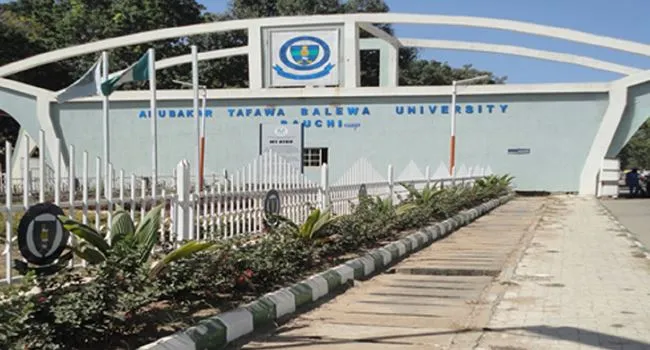
The current management of the Abubakar Tafawa Balewa University (ATBU), Bauchi is allegedly planning to cancel some courses and shut down some departments and faculties within the institution. The Tafawa Balewa University (ATBU), Bauchi, has denied the claim, calling it a purely irrational and unsupported rumor of the group’s members’ imaginations.

AtBU’s Director of Information and Public Relations, Zailani Bappa, told journalists at the Nigeria Union of Journalists’ (NUJ) Press Center that Vice Chancellor Prof. Ibrahim Hassan has no plans to eliminate any faculty or end any courses or programs.

The news release from the Bauchi State Concerned Citizens essentially addresses two topics. Since the VC did not engage in any such behavior, none of the accusations are accurate.

“The Federal Government has decided that all universities should return to the original mandate of their establishment,” stated Dr. Tunji Alausa, Minister of Education, who recently called a meeting of all vice chancellors and chairs of the governing councils of federal universities.

Since ATBU was founded as a technology-based university, as you are all aware, additional management education courses were added. Zalani stated, “The Federal Government now wants the status quo maintained.”

It was a direction that needed to be followed, he said, not a decision made by the VC or the Governing Council.

Regarding the lack of financing for the remote learning directorate, he clarified that due to recent developments, funding the Directorate would be a waste because the majority of the courses are management education. For this reason, the Directorate was put on hold.

Because the VC and the Governing Council are powerless to alter the narrative, Zailani Bappa emphasised that knowledge of the situation was necessary.

He urged the concerned citizens of Bauchi State and other interested parties to collaborate and back Shehu Buba Umar, the senator for the Bauchi South Senatorial District in the NASS, in his efforts to have the law that created the ATBU as a technology-based university changed to allow for additional courses.

Nothing can be done to stop the continuous reversion to the status quo ante, he said, unless the university’s law was changed to make it a normal university.

It’s yet unclear how the Federal Government and other pertinent agencies will address the issues brought up.
The future of ATBU, however, is viewed by many in Bauchi as being essential to the socioeconomic and intellectual advancement of the state.

Rivers State After Ibok-Ete Ibas: Challenges and Opportunities

0

People in Rivers State had great expectations because the six-month state of emergency that was imposed on March 18, 2025, would have ended on Thursday, September 18, 2025. Nyesom Wike, a former governor of Rivers State, minister of the Federal Capital Territory (FCT), and a key architect of the state’s crisis, raised hopes that this would be the case when he announced a few weeks ago that the state of emergency would end and that suspended Governor Simi Fubara would be reinstated.

It was unclear if Wike was speaking for the national assembly or the presidency of Nigeria, the two main institutions with a say in the issue under Section 305 of the 1999 Constitution, or if he was just acting on his own behalf, as is his custom. As Vice Admiral Ibok-Ete Ibas, the sole administrator appointed last week, announced his impending departure from what he calls “our government,” the people’s expectations were aroused.

In accordance with Section 305(6)(c) of the Constitution, the state of emergency will terminate on Thursday, but only if there are no unexpected events during the next two days. The possibility of the National Assembly considering an extension under the proviso in that clause is unimaginable. The National Assembly is in recess until September 23rd, nevertheless.

As he gets ready to leave and let the rightful, elected governor of Rivers State return, Vice Admiral Ibas has indulged in boasting that he has completed the task President Tinubu gave him on March 18: stabilizing Rivers State, restoring its institutions, and bringing the state back to full democratic governance. The successful conduct of the polls and the swearing-in of elected chairmen and council members throughout the 23 LGAs, he said, were proof. On August 30, the state did, in fact, hold elections for local governments. The majority of political parties and the general public boycotted it. It was poorly managed by the Independent Electoral Commission of Rivers State (RSIEC). Twenty seats were won by the All Progressives Congress (APC) and three by the People’s Democratic Party (PDP) in the 23 LGAs.

If a retired military general is now discussing democratic transition within a democracy to restore a democracy, isn’t that ironic and concerning? He claims to have carried out the directive that President Tinubu gave him. The Nigerian people, not the president, have the mandate in a democratic system. The President’s authority to impose a state of emergency in any region of the Federation has been largely rejected in the case of Rivers State as being completely unreasonable, making it unlawful and unconstitutional. In support of their claims, those who are quick to point to past events reference to Plateau State (2004) and Ekiti State (2006), where President Olusegun Obasanjo named General Chris Alli and General Tunji Olurin as the only administrators, respectively. These precedents were incorrect in that neither the National Assembly nor the President of Nigeria are authorized to unilaterally suspend a state’s democratic institutions under Section 305.

Furthermore, Rivers State was exempt from the severe conditions that lead to a breakdown of law and order, a military conflict, or the threat of war in a portion of the federation. The Jonathan administration did not remove the governor of the state house of assembly, which was the constitutionally correct thing to do in Borno and Plateau states in 2011 and in Borno, Yobe, and Adamawa states in 2013-2014.

The conflict in Rivers State was caused by Nyesom Wike, the previous governor, who refused to let Simi Fubara, his successor, take over as governor. As his godfather, he freely boasted that he appointed Fubara governor and had the right to rule over him and the state. At best, Fubara was a symbolic person. His commissioners were appointed on his behalf, with the possible exception of perhaps one. Wike’s sons were all the local government chairmen and members of the House of Assembly. The PDP platform was used to elect the state governor, but Wike, who had a leg in both parties, vowed to remain faithful to President Tinubu and the APC without leaving the PDP. This amphibious stance further complicated Rivers State politics. Instead, the President reportedly sided with Wike and assisted in degrading the people’s elected representatives. When Fubara attempted to assert himself, he was punished. With the APC controlling 20 of the LGAs and the assembly supporting Wike, President Tinubu and his goons in Rivers State have already accomplished their goal, and the people of Rivers State are clearly the ones who lose the most. A complaint (SC/CV/329/2025) challenging the validity of the state of emergency in Rivers was filed by 11 PDP governors in a rush to the Supreme Court two days after it was announced. There has been no update on the case or related cases involving Rivers State before the courts for six months. Democracy has suffered the worst setback.

He has brought peace back to Rivers State, according to Vice Admiral Ibok-Ete Ibas. He exalts himself too much. The only serenity that exists in Rivers State at the moment is the tranquility of the cemetery, along with fear and worry about what might occur next. An interdenominational Thanksgiving service was conducted by the single administrator on Sunday, September 14. His unpopularity with the residents of Rivers State was demonstrated by that Thanksgiving, if anything else. Well-known state figures boycotted the incident. Service commanders, local government chairmen, government representatives, and a group of hangers-on were present. Although traditional leaders avoided contact, the chairman of the Rivers State Council of Traditional Rulers was able to reveal his face in accordance with his moral obligations. Vice Admiral Ibas thanked God and cited texts from the Bible. He shouldn’t use God as a pawn. It was men’s avarice and soaring ambition that led to the crisis in Rivers State. The interdenominational service’s pastors also demonstrated how pastors contribute to Nigerian politics’ issues. Many leaders in the church no longer feel called to prophecy. The Pentecostal Federation of Nigeria (PFN) and Christian Association of Nigeria (CAN) leadership were among the first groups to visit and honor the lone administrator upon his arrival. No one should be shocked if Governor Fubara returns to Brick House and is greeted by the same group of pastors who are happy to officiate a Thanksgiving service!

Ibas said to the residents of Rivers State: “Let’s be able to forgive, make amends, and get better.” For six months, he controlled resources without any accountability; does he even know who they are? To what extent did he visit LGAs? To what extent did he host town hall meetings outside the government house? Which tasks did he finish? He said he would reconstruct the House of Assembly in Rivers State. Has he done it? It is likely that the members of the House of Assembly will have to start searching for space when they meet again, and they will carry with them memories of strife and division. Apparently, Sole Administrator Ibas has been sitting on his hands for the past six months. His triumph laps should be handled carefully. To avoid being met with jeers and boos from the irate residents of Rivers, he should leave the state in secret, possibly in a nocturnal manner.

The public wants his term to be investigated. “What has happened in Rivers is not gone,” says former Senator Lee Maeba (Rivers South East), expressing the fears. We will take action to demand all of the money that was transferred to the state and to stop the Administrator from just entering a state and spending funds under the guise of a fictitious emergency. The purpose of the declared state of emergency is to restore law and order or security breaches. In this instance, there was no instability, thus the man only came for political reasons. He arrived and began utilizing state resources without any legal or constitutional authorization. The Ijaw Youth Council, Movement for the Survival of Ogoni People (MOSOP), and South-South Youths Initiative all share these views. The public is curious about the use of “their money” because there was no oversight mechanism in place during the six months of the emergency. It’s a valid demand.

The next course of events would be determined by Governor Simi Fubara’s return and his decision. Over the last six months, he has maintained a low profile, avoiding any affiliation that would expose him to another accusation of disobedience by his political bosses. Reports said that he had multiple meetings with both Minister Nyesom Wike and President Tinubu. He and the Minister were spotted sitting side by side at Elder Temple Onuoha’s aunt’s burial in June. Additionally, he visited with his supporters and other interested parties to preach unity and peace. Additionally, he cautioned the women against protesting on his behalf and disbanded his support organizations. The majority of the messages on his Twitter (X) account (@SimFubaraKSC) have been “Happy Eid-ul-Mawld,” “Happy this, Happy that,” and “Welcome to the month of…” He has made a vain attempt to tell the truth. After being stripped of six months of his four-year term and being humiliated, Governor Fubara has learned some very important lessons about the game of power.

The wisest course of action for him upon his return is to stay out of any more conflict with his godfather and his local hitmen, who would be attentively observing him in order to restart their routine of racing to Abuja to report everything he does. His primary concern ought to be ensuring his political survival, with the fulfillment of his remaining term serving as the bare minimum. In addition to seeking peace, he ought to concentrate more on doing his best to serve the people of Rivers State. The commissioners and aides who encouraged him to take a position and fight should be avoided, as should the elderly and young people. Many of those figures came out on the other side or went underground once he was dismissed as governor. The pastors are better than them. In order to feel better upon his return, Fubara should declare his support for and loyalty to President Bola Ahmed Tinubu and the APC, and only stay in the PDP for as long as feasible. This is the grammar, the manual, and the way of Nigerian politics, which is regrettable. The fundamental reason this democracy has failed is because of it.

Let Nyesom Wike, the self-proclaimed godfather, not consider himself a conqueror, though. Nothing has been won by him. He needs to learn how to be less controlling. He should refrain from making any demands that would harm Rivers State in the future. He ought to counsel his storytellers to find more worthwhile activities to occupy their time. If they are at a loss for what to do, he can help them obtain employment as land agents in the federal capital territory! We have to let Fubara work. We have to keep him safe. The act of a minister acting like a co-president and trampling on any state must be discouraged by President Tinubu. The use of illicit means to solve a national issue of malice should never be repeated.

Court Confirms Final Forfeiture of $7m Found in Providus Bank Vault

0

The final forfeiture of $7 million that was hidden in the vault of a Providus Bank branch in the Ikoyi neighborhood of Lagos has been ordered by a federal high court in Abuja.

The funds were discovered in the account of the managing director of an oil and gas firm owned by a well-known woman in society, who is presently facing charges from the Economic and Financial Crimes Commission (EFCC).

The ruling was delivered Monday by presiding judge Emeka Nwite in response to a final forfeiture application filed by EFCC counsel Rotimi Oyedepo.

The anti-graft agency claims that on August 27, an interim order was granted for the confiscation of the money.

HISTORY

An interested party was invited to present when the matter was called last Friday by attorney Gbenga Akande.

Oyedepo and the court insisted that Akande provide his client’s name, but Akande refused.

Akande informed the court that the presiding judge directed Oyedepo to serve Akande with copies of the documents after he filed an affidavit explaining why the EFCC lawyer should be aware of the interested party’s name. The hearing was then postponed till September 15.

Akande did not appear in court on Monday when the hearing resumed.

But another attorney, Darlington Ozurumba, showed up in court on behalf of a party with an interest.

Since no party had expressed interest in the case, Oyedepo then forwarded the application for the money’s final forfeiture to the federal government.

“Gbenga Femi Akande, Esq., represented the party expressing interest at the most recent adjourned date,” he stated.

Ozurumba was invited to provide his thoughts on the final forfeiture application by the judge.

Ozurumba declared that he had no objection to the application.

Nwite later declared the EFCC application to be valid and ordered the money to be forfeited to the federal government.

THE AFFIDAVIT

Emmanuel Okeibunor, an EFCC investigator, deposed the affidavit supporting the ex-parte application.

According to Okeibunor, the agency got a reliable tip that claimed $7 million was transferred to and held in the Providus Bank branch under dubious circumstances.

According to the investigator, his team was tasked with analyzing the complaint and, if deemed believable, moving forward with the inquiry.

According to Okeibunor, the inquiry showed that the money was secretly stored in the bank’s vault rather than being credited to any known customers’ accounts.

According to the investigator, some of the bank employees who were interrogated claimed that the managing director of Oceangate Engineering Oil and Gas Limited had ordered the money to be brought to the bank.

Read Also: Nigeria Suffers $10bn in Post-Harvest Losses Each Year Due to Storage, Flooding – Ministe

“In regards to the seven million dollars, my team spoke with the managing director of Oceangate Engineering Oil and Gas Limited, who maintained that she did not transfer any funds to Providus Bank,” Okeibunor stated.

The managing director of Oceangate Engineering Oil and Gas Limited also told my team that she borrowed $7 million from Providus Bank Limited and has not yet returned the money.

Regarding this transaction, Providus Bank Limited failed to submit a suspicious transaction report (STR) to the Nigerian Financial Intelligence Unit (NFIU).

Since the money sought to be forfeited did not represent known, verifiable, and lawful income of Oceangate Engineering Oil and Gas Limited, the couriers, or Providus Bank Limited personnel, it is reasonable to assume that it is the proceeds of illegal activities.

Since no one came forward to claim the money from Providus Bank Limited or the commission that seized it, it is likewise reasonable to assume that the funds sought to be forfeited were abandoned.

Nigeria Suffers $10bn in Post-Harvest Losses Each Year Due to Storage, Flooding – Ministe

0

Nigeria loses $10 billion a year in post-harvest losses due to inadequate storage and flooding, according to Abubakar Kyari, minister of agriculture and food security.

At the Green Legacy Rural Community Agriculture and Infrastructure Network (G.R.A.I.N) pulse center’s opening in Kangire community on Monday, Kyari gave a speech.

According to the minister, the loss is also caused by poor infrastructure, insufficient processing, soil degradation, climate change, and unpredictable rainfall.

Kyari claims that 70 percent of the nation’s food is produced by smallholder farmers, and that empowering them will strengthen the economy.

He pointed out that smallholder farmers produce the majority of Nigeria’s food, with agriculture accounting for almost 24% of the country’s GDP.

“We can unlock the full wealth of our land and people by providing smallholder farmers with modern tools, technology, and markets,” Kyari stated.

The minister emphasized that projects led by the private sector will fortify Nigeria’s food systems and increase their ability to withstand losses that occur after harvest.

According to him, the pulse center will serve as a comprehensive hub for rural development, infrastructure, and agriculture that spans the whole agricultural value chain.

Kyari restated that the administration of President Bola Tinubu is putting agriculture first as the cornerstone of the country’s change, with real-world initiatives supporting its goals.

Speaking as well, Foreign Affairs Minister Yusuf Tuggar praised the creation of these centers in Jigawa’s rural areas and emphasized the value of public-private partnerships in development.

Read Also: Edo Government and JAMB Find Solution to AAU Admission Irregularities

“Nigeria will gain from this microeconomy due to its many benefits, especially the incorporation of contemporary facilities and technologies,” Tuggar stated.

Tuggar praised Tinubu and Jigawa State Governor Umar Namadi for making food security a top priority in their development plan.

Speaking as well, Namadi praised the Jigawa pulse center, stating that it will strengthen Kangire’s economy and show how agriculture-led development can improve rural areas.

He outlined the center’s salient characteristics, which include digitally connected hubs that support the full agricultural value chain and a solar-powered system.

According to the governor, his administration would keep making agriculture a top priority in order to improve livelihoods, build infrastructure, and generate jobs.

The chairman of the Birnin-Kudu local government area (LGA), where the center is located, Muhammad Uba, praised Namadi’s attempts to modernize Jigawa agriculture and voiced support for Tinubu’s renewed hope agenda.

Edo Government and JAMB Find Solution to AAU Admission Irregularities

0

Over 1,000 students from Ambrose Alli University, AAU, Ekpoma, whose admissions had been delayed for years due to irregular admissions, have found relief after the Edo State government’s intervention.

The students, the majority of whom have graduated, will be able to move on as the Edo State Ministry of Education worked with the Joint Admissions and Matriculation Board, or JAMB, management to resolve the issue.
Due to the inability to print their admissions letters, the students were at a standstill.
To mobilize graduates for the NYSC scheme, an admission letter is necessary.

Affected students who graduated in 2020 but were unable to continue with the NYSC scheme because of unresolved admission problems were involved in some of these cases, which stemmed back to the 2017 admission cycle.

These issues have now been effectively resolved by the state government, working closely with JAMB and represented by the Honorable Commissioner for Education, Dr. Paddy Iyamu, and the Vice-Chancellor of AAU, Prof. Olowo. There are currently no new complaints in this category, and all students whose JAMB profiles were previously blocked have had their accounts unlocked.

Similar to this, situations involving unreported admissions are currently being settled amicably, guaranteeing a flawless experience for all parties.

As of right now, there aren’t any unresolved complaints about admission problems associated to JAMB.

Speaking on the occasion, Dr. Iyamu congratulated all of the students who had been dropped over the years and reaffirmed the government’s determination to provide all Edo students with opportunities for success.

Read Also: Rising Insecurity Linked to Weakening Family Values – Remi Tinubu

He further noted that Governor Monday Okpebholo has approved the construction of two lecture halls with a combined capacity of 1,500 seats and a 600-bed dorm at the university.

We take this seriously, and His Excellency, Governor Monday Okpebholo, is committed to transforming Edo State’s educational system for the better.

The governor will not compromise on hiring teachers, building the required infrastructure, or putting laws into place that will benefit everyone.

The state government’s initiative and resolve to make our people happy are the reasons behind the resolution of the admissions issue at AAU, Ekpoma. One can imagine the experiences of the impacted students. Spending years in school and becoming stranded once you graduate.

They can now proceed with their lives, and the administration is reassuring everyone that we are here to bring about constructive improvements in every area. Simply keep helping and collaborating with us,” he urged.

Rising Insecurity Linked to Weakening Family Values – Remi Tinubu

0

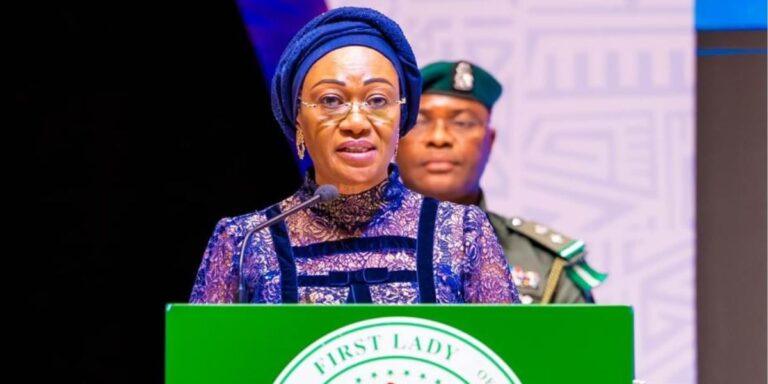
According to Senator Oluremi Tinubu, First Lady of Nigeria, the decline in family values is to blame for the rise in insecurity.
At the Armed Forces Command and Staff College in Jaji, Kaduna State, where Exercise Haske Biyu 2025 was inaugurated, Tinubu stated that families need to take back their position as the cornerstone of society.

According to the First Lady, who was represented by the vice president’s wife, Hajiya Nana Shettima, many parents have neglected their primary responsibility of raising children in their fight for survival, leaving them open to extreme ideologies, drug abuse, prostitution, and cultism.

When parents are absent, a space is created that is frequently filled by unwholesome company and destructive behavior. She cautioned that the result is harmful for national security in addition to being disastrous for families.

Read Also: Dangote Refinery Rejects Allegations of Offering Cheaper Petrol to Foreign Buyers

Nigerians of all tribes, religions, and traditions learn the principles of love, respect, sacrifice, and obligation in the family, which she says continues to be the cornerstone of society.

“A strong nation is built by a strong family,” she emphasized.

In addition to highlighting the importance of religion in fostering morals and unity, Tinubu, as Special Guest of Honor, urged religious and traditional leaders to step up their efforts to teach young people the proper religious beliefs and to reinforce positive values.

Making reference to the expanded Conditional Cash Transfer program, which will provide 15 million disadvantaged households with ₦25,000 in three installments, she reassured them that President Bola Tinubu’s Renewed Hope Agenda was dedicated to helping families.

Dangote Refinery Rejects Allegations of Offering Cheaper Petrol to Foreign Buyers

0

According to the Depot and Petroleum Products Marketers Association of Nigeria (DAPPMAN), the Dangote Group has denied claims that its refinery sells gasoline to foreign buyers at lower prices than to Nigerian retailers.
Olufemi Adewole, the Executive Secretary of DAPPMAN, claimed in an interview with Punch that the association’s members were able to purchase Dangote gasoline from foreign dealers in Lomé, Togo, for ₦65 less than what the refinery sells locally.

“Dangote is selling to foreign traders for ₦65 less than he is selling to us.” Adewole asserted, “In certain cases, we were able to purchase from those individuals and still deliver it to Nigeria.”

In response, the Dangote Group called the charges “misleading and inaccurate” in a statement released on Monday.

The corporation asked why oil prices in Togo are more than twice as high as those in Nigeria, where they are ₦865 per liter.

To say that petrol costs less in Togo than in Nigeria is untrue. “A simple check shows that the average pump price in Lomé is about 680 CFA francs per litre, which is ₦1,826,” the statement said.

The corporation emphasized that, even though it imports more than 60% of the crude oil it processes, its refinery has established Nigeria as the main supplier of reasonably priced gasoline feedstock for West Africa.

Dangote also charged several marketers with round-tripping, which involves purchasing gasoline in Nigeria, carrying it via Togo, and then reimporting it at exorbitant costs.

Read Also: Buba Galadima Blames INEC for Not Calling Political Players to Order

“DAPPMAN and some of its members are disproportionately focused on importing refined products, and they have even admitted to round-tripping,” it is becoming more and more clear. The corporation questioned, “What is the business rationale behind this practice, especially given the significant additional cost of transporting petroleum products from Lomé to Lagos?”

The refinery maintained that marketers that are dedicated to Nigeria’s home market ought to collaborate with it directly, pointing out that local partners already benefit from volume-based discounts, credit facilities, and logistics assistance.

Why not become one of the Dangote refinery’s expanding list of local partners if their real goal is to service the Nigerian home market? In addition to getting top-notch products, these partners also gain from incentives meant to improve local availability at a suggested price that has been decided upon by all parties, the statement continued.

Dangote further explained that price variations can occur based on whether marketers gantry-lift or hoist products from the Single Point Mooring (SPM) facility. It cautioned that for many operators, serving local customers has never been the main focus of the Nigerian petroleum industry.

In actuality, some businesses have never really focused on providing petroleum products to Nigerian customers. Rather, it centers on options for arbitrage, where they can simply triple the value of goods by rerouting them to more profitable markets inside the subregion,” the statement stated.

Buba Galadima Blames INEC for Not Calling Political Players to Order

0

New Nigerian Peoples Party (NNPP) head Buba Galadima has bemoaned the incapacity of the Independent National Electoral Commission (INEC) to summon political figures to account during the early campaign.
During an appearance on Arise Television’s “Prime Time” program, Galadima reportedly claimed that although INEC has the constitutional authority to impose order on political participants, it is unable to do so since the people who pay the piper set the rules.

Galadima emphasized that the early campaign was launched by the ruling All Progressives Congress.

In the past six months, I have repeatedly voiced my displeasure with INEC’s failure to hold political figures accountable, he added.

“They are unable to call them to order because the people who pay the piper set the rules,” I realized bitterly.

Read Also: Esther Ibeto Family writes AIG Zone 2, Lagos, challenges police’s involvement in administration of estate

Campaigning before INEC’s approval was a problem that the current government initiated.

In the current political climate, this implies that INEC is unable to serve as an umpire.

As for the 2027 general elections, the PDP has called for the full execution of the Electoral Act’s provisions regarding the electronic transmission of results and has threatened to oppose any attempt to sway the outcome or weaken Nigerians’ will.

The Independent National Electoral Commission (INEC)-approved Smart Card Reader (SCR) or any other electronic device must be used to capture and transmit election results straight from polling places in accordance with Section 64(4), (5), and (6) of the Electoral Act 2022.

When INEC acknowledged that there were “glitches” in the live broadcast of the 2023 presidential results, the nation was incensed.

PDP National Publicity Secretary Debo Ologunagba indicated during a press briefing in Abuja on Monday that the party was extremely alarmed by what he called “institutional manipulation” of previous elections.

Esther Ibeto Family writes AIG Zone 2, Lagos, challenges police’s involvement in administration of estate

0

The late Esther Ibeto Family has written the Assistant Inspector-General of Police, Zone 2, Lagos, over the involvement of the men of the Nigerian Police in the administration of the estate of the family.

In a petition to the AIG, dated September 11, 2025, the expressed their concern over the interference of the police in the property dispute.

He called on the AIG to call all the policement invited to order and allow peace to reign on the property.

“On behalf of the family and as Administrator of the Estate of the Late Mrs. Esther Ibeto, i wish to express our deep concern regarding the recent involvement of police officers in matters relating to the administration of the Estate.

“The police are neither beneficiaries nor parties to the Estate. We are therefore surprised and disturbed by the direct interference, including the removal of our staff and workers from the property, which has disrupted the lawful management of the Estate.

“In view of these developments, we respectfully call the attention of the Assistant Inspector General of Police (AIG) to this matter and urge that all officers involved be directed to refrain from further interference, while the family and Administrator complete the administration process in accordance with the law.

“The family maintains its firm position regarding the Estate and reiterates that any person or party wishing to challenge the administration should do so through the proper legal channels, namcly the courts, rather than through police intervention.

“Ms. Uche Ibeto is the third child of the Late Mrs Esther Ibcto. She is NOT the Administrator of the Estate and is NOT the owner of the property. She has absolutely no legal right, title, or authority to make unilateral claims over the Estate or to parade herself as the owner. Her actions amount to a deliberate usurpation of the powers of the Administrator and are unlawful.

“The property has been SOLD and the buyer took possession of the property as the rightful and lawful owner.

Governor Ododo Redefines Kogi Politics Through Reconciliation and Effective Governance

0

Nigerian politics has frequently been characterized as a zero-sum game dominated by vehement rivalries, ingrained interests, and ethnic divisions.

But in Kogi State, under the direction of Governor Ahmed Usman Ododo, a fresh story is taking shape.

Ododo has shown in his less than two years in government that politics can be about performance, inclusivity, and reconciliation.

He has blended vision with humility, political acumen with grassroots development, and tangible initiatives with symbolic reconciliation.

There was some upheaval in his ascent to power. In the fiercely contested governorship election held on November 11, 2023, many people feared Kogi would revert to the perilous course of political animosity and ethnic polarization. Ododo’s inauguration speech, however, established the framework for an alternative course that is based on harmony, equity, and progress. An Appeal for Unity Governor Ododo gave a progressive and accommodative address at his inauguration on January 27, 2024.

He said, “We are here today because we have chosen unity over disunity; greatness over petty grievances and peace over dangerous acts of recriminations and worn-out dogmas of ethnic jingoism, despite the election storm that threatened to set brothers and sisters against one another.” Since then, Kogi’s political discourse has used that remark as a point of reference. It was a departure from the past, when elections frequently widened rifts.

By promising his administration will be for all Kogites, regardless of political affiliation, tribe, or religion, Ododo reached out to opposition politicians. “Fellow Kogites,” he declared sharply, “I swear to you all that I will be the governor of Kogi State, not an ethnic governor.” Many now refer to this all-encompassing concept as the “Ododo Political Magic.” This approach places a high value on humility, shared accountability, and bridging gaps.

First Anniversary: A Reconciliation Symbol During his first anniversary in January 2025, Ododo’s reconciliatory politics were perhaps most evident. He organized a wide-ranging discussion that included Kogites from all walks of life, political figures, traditional leaders, youth organizations, women’s associations, civic society, the business world, and even opposition members, in place of self-congratulatory celebrations. The majority of people who ran against him and his predecessor were present.

They were persuaded to believe in a larger Kogi State by his dignity and humility. Regardless of political or ethnic divisions, the meeting was a symbolically sincere attempt to come up with ideas for the state’s future.

“The baton is passed from one administration to another, but the ultimate goal remains the same, which is progress,” Ododo said in his closing remarks, reminding the audience that governance is a relay race. Your role is essential to the realization of a larger Kogi State, regardless of whether you are a private investor, state official, traditional leader, or concerned citizen. His strong belief that Kogi’s diversity is a strength that can be used for progress rather than a weakness is shown in this emphasis on shared accountability. But the charm of a Governor of the Grassroots Ododo is not limited to words.

His government has started a people-centered development initiative that appeals to the general public. He has made a conscious investment in the fundamental areas that affect the lives of common people, in contrast to many presidents who prioritize metropolitan infrastructure. Enhancing Health Systems The Kogi State Health Insurance Scheme was strengthened as one of his first initiatives, increasing its accessibility for low-income households. More Kogites now have access to reasonably priced healthcare thanks to coverage expansion and premium subsidies for disadvantaged populations.

Furthermore, the Primary Healthcare Delivery System has drawn more attention than ever before. In rural areas, new centers have been built, and those that already existed have been restored. Villagers no longer have to travel great distances for medical care thanks to the recruitment of health personnel and the availability of necessary medications. Roads and Infrastructure in Rural Areas Accessibility in rural areas has also been a top concern. Ododo is aware that Kogi’s economy relies heavily on agriculture, which is dependent on well-maintained rural roads. His government has started a large-scale initiative to repair feeder roads that connect farming areas to marketplaces. In addition to enhancing trade, these highways are bringing once remote settlements into line with the state economy.

Youth Development and Education Renovating deteriorating school buildings, supplying educational resources, and constructing new buildings that align with his goal of building on the achievements of the recent past are all examples of Ododo’s dedication to education.

To prepare Kogi’s youth for a competitive future, his government has also started projects to incorporate digital learning into classrooms. Additionally, vocational training facilities have been set up to give young people real-world experience in ICT, agriculture, and entrepreneurship.

His premise is straightforward: the best remedy for unemployment and insecurity is an empowered young. Using Agriculture to Change the Game The core of Ododo’s development plan is agriculture. He has advanced and reinvigorated the agricultural platforms that his predecessor had established.

Kogi is establishing itself as an agro-industrial center with the proposed 245-hectare Agro-Industrial Processing Zone close to Ajaokuta.

$50 million worth of cashew was exported from the state without value addition in 2024 alone. To improve the value of farmers’ produce, Ododo has pledged to change that by establishing processing enterprises in Kogi. “This is extremely unfair to our farmers who work hard to step up production,” he stated at the anniversary discussion. We shall work together to create a more promising and prosperous future for Kogi State. Big-Ticket Projects for Economic Transformation Ododo is not afraid to take on ambitious projects that have the ability to change the economy.

The old market, whose site is no longer viable, is already being replaced by a new international market. He has stated that this market will “reshape Kogi State’s commercial landscape, establishing a center of economic activity that will be a model for other areas.” The work is proceeding steadily.

Similar to this, attempts are being made to fully utilize Kogi’s wealth of natural resources, which include steel, solid minerals, tourism, and the blue economy. While promising a secure and welcoming investment environment, his administration has strengthened ties with private investors.

Additionally, the governor has vigorously advocated for Kogi to play a significant role in Nigeria’s food security strategy. His vision of all-season farming is slowly coming to pass thanks to the abundance of water and arable land. In his inaugural address, he declared, “We must produce what we eat, eat what we produce, and produce what others eat.” Many agricultural interventions, like ACReSAL, have favorably altered Kogi State’s farmer demographic. A new generation of farmers, from Lokoja to Ibaji and from Odo Ere to Obangede, has emerged to transform the sector.

Humility as Political Capital: Ododo’s personal style and policy decisions are what make him unique. He frequently calls himself the “Chief Servant of Kogi State” and is affable and modest. Former enemies now find it easier to cooperate with him because of his humility, which has also improved the political atmosphere. He positions himself as a bridge-builder rather than a “strongman.”

He recognized the accomplishments of previous leaders in his inauguration speech, particularly former opposition party governors Alhaji Ibrahim Idris and Captain Idris Wada. As the founder of contemporary Kogi politics, he even honored the late Prince Abubakar Audu. He effectively conveyed the idea that leadership is a continuum rather than a war by doing this.

Politics Without Bitterness: Ododo has reinterpreted political participation in a system where the opposition is frequently viewed as an enemy. Frequently emphasizing that “this government is for all of you,” he urges detractors to share their thoughts.

It took our staff a few minutes to comprehend the Ododo Political Ideology in the lead-up to the Awards in the first quarter of 2025. To him, communication is more important than resentment. He thinks that communication can accomplish anything. Building on a Solid Foundation Ododo has stated time and again that it is difficult to succeed a “hugely successful administration” such as Yahaya Bello’s. He maintains, however, that Bello prepared the ground, cultivated it, and sowed the seeds, and that his job is to see those seeds grow.

This modesty in acknowledging his predecessor’s work stands in stark contrast to the widespread practice of disparaging previous governments. Ododo has spared Kogi valuable time and money by focusing on building rather than breaking, which has allowed the state to maintain its momentum in governance.

A Future of Joint Prosperity: Although Ododo’s tenure as leader is only in its early stages, the outlines of his legacy are already apparent. He is reinventing administration as service rather than entitlement and politics as reconciliation rather than retribution.

Even from unexpected places, he is receiving recognition for his emphasis on inclusive politics, economic transformation, and grassroots development. “Our success as a state will be measured by the actions we take, not by the promises we make,” he once said to Kogites. As of right now, his initiatives—such as healthcare reforms, rural infrastructure, educational revitalization, agro-industrial plans, investment drive, and reconciliatory politics—speak louder than words.

The political climate in Kogi has evolved. The “Ododo Political Magic” is a combination of performance, inclusivity, and humility; it is not an illusion. It is the tale of a man who made the decision to rule with justice, peacemaking, and a fear of God.

One thing is certain as the state continues on this path: Governor Ahmed Usman Ododo is not just leading Kogi; he is also changing the state’s political landscape.