Home Blog Page 1598

Google Africa boss wins Silverbird award

0

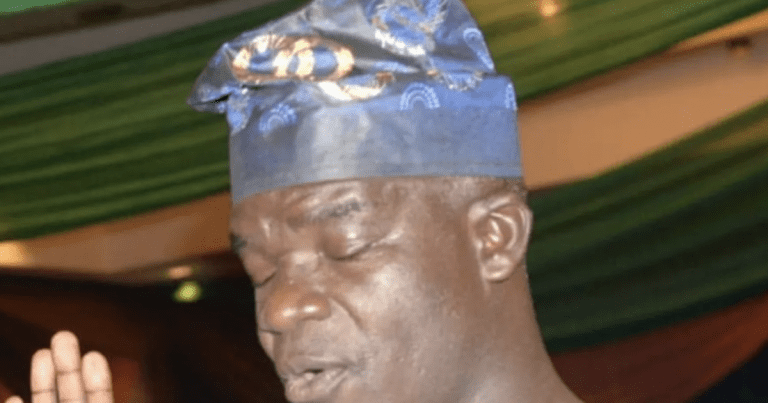
The Managing Director of Google Africa, Alex Okosi, has received the Iconic Pioneer Award at the 2023 Silverbird Man of The Year Awards.

 The award recognised his exceptional contributions and leadership in shaping the business and entertainment landscape in Africa.

The Silverbird Man of the Year Awards was held recently in Lagos.

A statement said that Okosi was commended for his achievements in helping to transform the entertainment and media industry on the continent through landmark businesses and programmes that supported talents, businesses, and economies.

The founder of Silverbird Group, Ben Murray-Bruce, said, “Great people do simple things that turn out great. To be great you must know how to dream. Alex dreams and he makes his dreams come true and the continent has over the decades benefited from it, hence the Iconic Pioneer Award. We’re excited to see everything else that Alex will achieve.”

While receiving the award, Okosi expressed his gratitude to the Silverbird team and acknowledged other award recipients and all the superb work they do to build a brighter future for youths in Nigeria and across Africa.

The ceremony also honoured other notable individuals, including Prince Dapo Abiodun (Silverbird Man of the Year), Funke Akindele and Linda Ikeji (Silverbird Special Achievement Awards), and Chief Innocent Chukwuma (Silverbird Manufacturer of the Year Award).

All rights reserved. This material, and other digital content on this website, may not be reproduced, published, broadcast, rewritten or redistributed in whole or in part without prior express written permission from According.

Contact: [email protected]

Kaftan TV appoints ex-Ogun commissioner CEO

0

The Board of Directors of KAFTAN Television has appointed the immediate past Commissioner for Information and Strategy in Ogun State, Abdulwaheed Odusile, as its new chief executive officer.

A statement signed by the company’s Human Resources Manager, Oluwajuwonlo Akinwale, noted that Odusile’s appointment would take effect from March 11.

It stated that the board had given the new CEO autonomy to set up a new management team and re-organise the TV station in a way that satisfied professional needs.

 The statement reads: “The Board of Directors of KAFTAN TV proudly announces the appointment of Mr Abdulwaheed Odusile as its new Chief Executive Officer.

 “With an impressive track record in strategic leadership and operational excellence, Odusile is poised to play a pivotal role in steering KAFTAN TV to new heights.

 “KAFTAN TV’s Board of Directors gives the new CEO full autonomy to set up a new management team and reorganise the company in a way that satisfies professional needs.

 “With a wealth of print and broadcast media experience spanning well over four decades, he brings a unique blend of vision and execution to the KAFTAN TV team.

 “As the CEO, Odusile will head the new management team and assume full responsibility for corporate performance, profitability strategy and company’s growth.”

According to the company, Odusile is an outstanding journalist, media executive, and good resource manager who would undoubtedly help KAFTAN TV take pride of place in the Nigerian media space.

 “We are confident of the significant contributions he will make in the new role,” it added.

Odusile served as the Ogun State Commissioner for Information and Strategy from September 2020 to May 2023.

 According to the statement, he was the president of the Nigerian Union of Journalists from 2015 to 2018 and the president of the Federation of African Journalists between 2016 and 2019.

It stated that a renowned journalist and accomplished manager, the new KAFTAN TV chief executive officer, had held various newsroom management positions, including being the pioneer editor of the National Life Newspaper and managing editor of the Nation Newspaper.

Odusile holds a master’s degree in legal studies and belongs to several professional associations, including the Nigerian Guild of Editors, the International Federation of Journalists, the Federation of African Journalists, the West African Journalists Association, and the Nigeria Union of Journalists.

Binance halts naira services and products amid regulatory issues

0

Crypto exchange, Binance, has announced that it will discontinue services supporting naira on its platform starting Tuesday.

In a notice on its website on Tuesday, Binance, which had been accused of manipulating the value of the Nigerian currency, said that starting this Friday, any remaining naira balances in user accounts will be automatically converted to Tether, a cryptocurrency stablecoin pegged to the US dollar.

“Binance will not support deposits of NGN after 2024-03-05 14:00 (UTC). Withdrawals of NGN will not be supported after 2024-03-08 06:00 (UTC). After 2024-03-08 08:00 (UTC), Binance will convert any remaining NGN balances in users’ Spot and Funding wallets into USDT on behalf of users at a ratio of 1 USDT = 1,515.13 NGN,” part of the statement read.

Last week, the Federal Government demanded almost $10bn in compensation from Binance, for manipulating foreign exchange rates via currency speculation and rate fixing on its platform.

It was also reported that the FG arrested and confiscated the passports of two executives of the exchange who had travelled to Nigeria to resolve issues with the authorities.

Despite the stance of the government, Nigeria remains one of the world’s biggest crypto markets.

A Chainalysis report in September 2023 revealed that Nigeria’s crypto transaction volume grew by nine per cent year-on-year, reaching $56.7bn between July 2022 and June 2023.

The naira has been struggling against the American dollar for months following the harmonisation of segments of the currency market in June.

All rights reserved. This material, and other digital content on this website, may not be reproduced, published, broadcast, rewritten or redistributed in whole or in part without prior express written permission from According.

Contact: [email protected]

NDDC restates dedication to stakeholders’ collaboration

0

The Niger Delta Development Commission has reaffirmed its commitment to the continuous engagement of stakeholders to build synergy for the sustainable development of the Niger Delta region.

In a statement by the Director of Corporate Affairs, Pius Ughakpoteni, on Monday, the NDDC Managing Director, Dr Samuel Ogbuku, stated this during the special ceremony organised by the Okrika Council of Chiefs and the people of Okrika to honour the Amanyanabo of Okochiri Kingdom, King Ateke Tom, in Okrika Local Government Area of Rivers State.

Ogbuku, represented by the NDDC Executive Director of Projects, Sir Victor Antai, stated that the commission was building strong collaborations and engaging with stakeholders, such as traditional rulers to form a strong coalition of development partners.

 “We are emphasising legacy projects, which would leave a lasting impact and transform our environment and the Niger Delta. We are moving away from transactional to transformational development because that is the only way we can renew hope in our people and ensure their sustainable development,” Ogbuku said.

The NDDC boss said that the commission had taken the bull by the horn in trying to change the narrative and fulfil the dreams of all who fought and continue to fight for a better Niger Delta region.

According to Ogbuku, NDDC would fulfil the expectations of Niger Delta stakeholders in seeing “a commission that works in their best interest, and, in doing so, we would drive the vision of all whose dreams of a better Niger Delta region made Niger Deltans warriors for change”.

Addressing the gathering, the Governor of Rivers State, Sir Siminalayi Fubara, announced the upgrade of the stool of the Amayanabo of Okochiri from second-class status to first-class.

 On his part, a former Federal Minister of Transport, Chief Abiye Sekibo, said in a welcome speech that the Wakirike nation had gathered to celebrate one of its own.

He declared that King Ateke Tom had contributed to the prevailing atmosphere of peace in various communities and the Niger Delta.

NDE trains 70 Gombe graduates to spice up financial actions

0

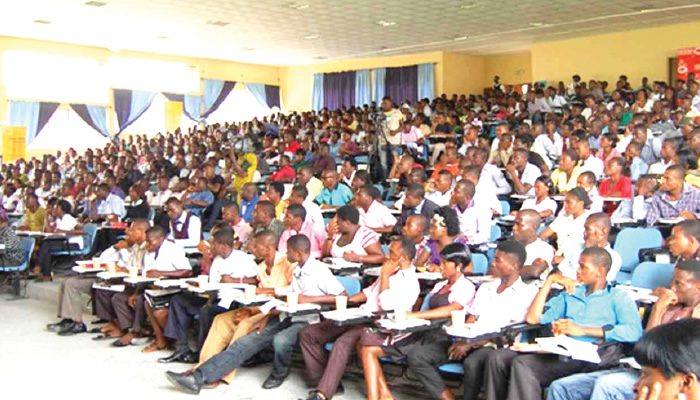
In a swift move to nip the growing hardship affecting the economy of the country, the National Directorate of Employment has commenced training for no fewer than 70 employed graduates in Gombe, under its Small Scale Enterprise department.

Arewa According reports that the workshop on ‘Starting Your Own Business’ was organised to equip participants with business management skills that will enable them succeed in their business endeavours.

Speaking at the  workshop, the Director-General of NDE, Abubakar Fikpo, noted that the workshop was expected to empower the beneficiaries to inculcate entrepreneurial spirit to bolster economic activities in Gombe State.

Fikpo, who was represented by the Gombe State acting coordinator, Mawa Asmau, disclosed to Arewa According that the state contributed about 70 participants out of the 840 trained across 12 states.

He said, “Management has approved the conduct of start your business training for 840 young graduates in 12 states of the Federation at 70 participants per state. The training is to equip unemployed graduates with business management skills that would enable them to succeed in their businesses.

“This workshop is expected to train participants to analyse their projects to identify the inherent risks and also provide mitigating factors to avert the identified risks.

“It will also help to train participants to manage their enterprises effectively and efficiently based on best practices.”

While commenting on the relevance of the training to the participants, especially in making them successful in their chosen business endeavours, Fikpo explained that, “The lectures include generating of business idea, financial planning, writing feasibility report. The array of lectures lined up for this exercise would have made it clear to you that at the end of the programme, you must have gotten the idea of how to run a successful business outfit as an entrepreneur and employer of labour,” he concluded.

Police arrest extra suspects, amend fees

0

The Inspector General of Police, Kayode Egbetokun, has amended the terrorism charges preferred against the suspected killers of the traditional ruler of Amanze Obowo Autonomous Community of Imo State, Eze Basil Njoku.

Two suspects, Jude Iheme and Chika Madukwe, are currently standing trial at the Federal High Court in Abuja for the crime.

The duo were accused of killing the traditional ruler on December 17, 2022 while coming from the Federal Medical Centre, Umuahia after kidnapping and collecting a ransom of N4m cash from his family.

In the charge marked FHC/ABJ/CR/575/2024, Iheme and Madukwe alongside others said to be at large were said to have conspired to commit felony to wit, acts of terrorism contrary to Section 26 of the Terrorism Prevention and Prohibition Act 2022.

They were also said to have allegedly armed themselves with guns and offensive weapons, attacked, kidnapped, and killed the monarch on December 17, 2022.

 “That you, Jude Iheme ‘M’ 56 years of Amagwu Amanze Obowo LGA of Imo State, Chika Madukwe ‘M’ 42 years of Ndi-Uche Etiti, Onuimo LGA of Imo State and others now at large on about December 17, 2022 at the 71/2 Junction Umumegwu-Amanze village, Obowo LGA of Imo State, within the jurisdiction of this court, while acting in concert and armed with guns and other offensive weapons attacked, kidnapped and killed HRH Eze Basil Njoku of Amanze Obowo Autonomous Community in Imo State on his way from the Federal Medical Centre, Umuahia, Abia State having collected a ransom of N4m from his family and thereby committed an offence contrary to Section 2(2) (f) of the Terrorism (Prevention and Prohibition) Act 2022,” the charge added.

The IGP also accused them of failing to volunteer information at their disposal to security agencies which could have led to the apprehension of other kidnappers contrary to Section 16 of the same Terrorism Act.

The defendants, however, pleaded not guilty to the offence.

 At the proceedings on Tuesday, counsel for the IG, Simon Lough (SAN), told the court that there was a need to amend the charges as more suspects had been arrested in connection with the case.

He requested a date for the other suspects to be brought to court to take a plea in the amended charges.

The trial judge, Justice Binta Nyako, granted the request and fixed March 12 for the fresh arraignment.

Nyako also ordered that the two defendants be remanded at the Kuje correctional centre in Abuja and be brought to court on the adjourned date.

Kogi varsity scholars lament robberies in host group

0

The students of Prince Abubakar Audu University, formerly Kogi State University, Anyigba Campus, have lamented the frequent operations of armed robbers terrorising the community in Dekina Local Government Area of the state.

The students told According Metro on Monday that some armed robbers burgled hostels off campus and carted students’ belongings, especially gadgets.  They said the robberies were rampant in the school area, and claimed that no solution had yet to be proffered.

Our correspondent learnt that the robbers operated at midnight with guns, machetes, and other dangerous weapons. In a recent video following last Tuesday’s robbery made available to our correspondent, the doors of the burgled apartment, despite being metallic, were broken into.

A student, who identified as Michael Benedict, said the disturbing activities of the robbers was a threat to the safety of students living in the host community. He also disclosed to our correspondent their atrocities and the plans to manage the situation.

“The robbery is getting too much. The last time they came to rob us, they came around 2am, they stole an occupant’s motorcycle, but today, they stole expensive gadgets. They made offers to some girls that they should choose between collecting their phones, and sleeping with them, or they should forfeit the gadgets.

“I saw their faces the first time they robbed my hostel, these ones are not students. None of them is below 40 years. They are matured men. I heard them say, “Axe men are here” and slangs like ‘Awua.’ Those thieves have robbed my friend’s hostel four times this year around this Stadium Road.

“Some students now patrol at odd hours for security purposes due to the activities of these perpetrators because we are tired. What we are planning in our hostel is for us to join other students to do this night patrol for our safety, so if we observe any suspicious movement, we will inform the vigilante man in this area. The police are not doing anything as regards this effect. They are only good at extorting people,” he lamented.

Another student who simply identified himself as Daniel said students were not safe as there was no provision for security for those residing outside the school campus.

“Students’ lives are not safe; the level of insecurity in the place is alarming. There is little the vigilante men can do, as they usually get to the scene after the deed had been done.

“Recently, about six robbers stormed my friend’s hostel, they wanted to shoot him for stopping them from entering his apartment, but he ran to the hotel to hide. So, they later broke in and carted away his gadgets including and those of his cousin. That was not the first time; they rob that particular lodge often.

“The police are not doing anything to stop the robberies. I suggest there should be police patrol at night so it can scare the armed robbers off the community,” he said.

When contacted, the spokesperson for the Kogi Police Command, William Ovye-Aya, instructed our correspondent to send a text, but he did not respond to our enquiries as of the time of filing this report.

NCDMB empowers youths with space wiring coaching

0

The Nigerian Content Development and Monitoring Board has announced the commencement of the sixth batch of the Electric House Wiring Training programme to strengthen Nigeria’s power infrastructure and foster economic growth through local capacity development.

According to the board in a release, the three-week training commenced at the Akangba Regional Training Centre of the National Power Training Institute of Nigeria recently in Lagos.

It said 50 trainees were selected nationwide, highlighting its dedication to capacity building and youth empowerment.

It noted that the Electric House Wiring Training programme represented a collaborative effort between NCDMB and NAPTIN to strengthen Nigeria’s power infrastructure and foster economic growth through local capacity development.

The board claimed that by equipping Nigerian youths with essential skills and certifications, the programme aimed to promote job creation, enhance safety standards, and contribute to the nation’s energy security objectives.

In his remarks, the General Manager of the Capacity Building Division of NCDMB, Mr Augustine Timbiri, represented by the Supervisor, CBD, Mr Tobin Spiff, reiterated the board’s commitment to developing local capacity in collaboration with NAPTIN.

Timbiri emphasised the importance of the Electric House Wiring Training programme in bridging skill gaps and reducing dependence on foreign expertise in the power sector.

He urged the trainees to exhibit commitment and dedication throughout the training period, stressing the importance of the right attitude in complementing technical skills.

Timbiri said, “The Electric House Wiring Training programme was tailored to equip Nigerian youths with essential skills in electrical installation. It holds significant promise for the nation’s economic development. With a focus on enhancing local content and empowering indigenous talent, the programme aims to create a pool of certified installers capable of meeting the growing demand for electrical services across various sectors.”

 He added that during the training programme, participants would receive comprehensive instruction and hands-on experience in electrical house wiring, culminating in the issuance of two certificates: a certificate of attendance from NAPTIN and a personal license to practice in the power sector.

Earlier in a welcome address, the Director General of NAPTIN, Mr Ahmed Nagode, represented by the Deputy Director of Training, Abdullahi Aliyu, highlighted the importance of the programme in addressing critical gaps in the power sector.

 Nagode mentioned the role of NAPTIN in providing essential training and capacity-building initiatives to support the nation’s power infrastructure development.

He underscored the significance of qualified installers in powering the country’s facilities and the need to reduce reliance on uncertified installers to enhance safety and efficiency.

Sanwo-Olu, construct on Purple Line legacy

0

NO doubt, the Lagos State Government has raised the bar for other states of the federation with the inauguration of the 37-kilometre Red Line rail scheme. Inaugurated by President Bola Tinubu on February 29, the Lagos Rail Mass Transit scheme is a testament to the cosmopolitan excellence, continuity in governance, and the political will of Governor Babajide Sanwo-Olu.

It is a new dawn for Lagos, and it continues to stand out in the country. Having completed 27km of the 37km scheme, the Red Line is expected to move 500,000 passengers daily when fully operational. In a megacity, this is a massive achievement. With eight stations, the Red Line traverses the Agbado-Ikeja, Mushin-Yaba-Oyingbo-Iddo corridor. This should drastically reduce traffic congestion and greenhouse gas emissions.

Earlier in January 2023, the 27km Blue Line was inaugurated by former President Muhammadu Buhari and was fully operational in September. It runs from Marina on Lagos Island to Mile 2 on the mainland and back.

Sanwo-Olu should not relent in the delivery of first-class infrastructure in the state. He should live up to the billing, as he affirmed during the event: “Mr President (Bola Tinubu), this is not the end of the story, but merely the beginning. As I said earlier, we are on a long and exciting journey. Much has been accomplished, and there is much ahead to be done.”

The vision is to construct six lines across Lagos and neighbouring Ogun State. The Green Line (71.49km) is to run from Marina to the Lekki Free Trade Zone, while the Purple Line (54.35km) will run from the Redemption Camp (Ogun) to Ojo, near the Lagos State University. The Orange and Yellow lines will complete the scheme.

The LMRT morphs from a chequered history. The first civilian governor of the state, Lateef Jakande (1979-1983), laid the groundwork for the Lagos metroline. Unfortunately, the agreement signed with a French consortium to develop it was scrapped by the Buhari-led military regime, after it toppled the Second Republic. The taxpayers repaid $78 million for the default.

In the Fourth Republic, Governor Tinubu (1999-2007) revived the metroline idea and has now taken more than two decades before coming to fruition.

Pegged backed by funding challenges, the delay in execution has been costly. In 2016, the World Bank stated that the Red Line would cost $135 million. Sanwo-Olu said the two lines would cost N100 billion.

Indeed, Lagos needs a robust metro rail system as part of its broad intra-modal transport infrastructure. The state’s estimated network of 9,100 roads hosts about 5.0 million vehicles. Traffic congestion is commonplace. With a population of 23 million, per LASG, mobility is a strenuous and hostile endeavour.

The World Economic Forum stated that commuters spent 30 hours per week commuting to-and-fro work, with air pollution costing the state 2.1 per cent of its GDP and leading to 60 per cent of deaths for children under-five. The Economist Intelligence Unit Liveability Index ranked the state the world’s fourth most unliveable city due to factors like infrastructural deficit, pollution, and gridlock.

Clearly, the metroline shows that the state government is attuned to the needs of its residents. To broaden the intra-modal system, it should invest in roads, and instigate the private sector to run efficient waterways, and air shuttle services.

The world’s major cities have reputable metro systems. African cities, Addis Ababa (Ethiopia), Tangiers and Casablanca (Morocco), Algiers (Algeria), Tunis (Tunisia), and Cairo (Egypt) per Far and Wide, an online resource, also boast efficient rail systems. States with urbanised capitals like Port Harcourt, Ibadan, Kaduna, Kano, Benin, Warri, Akure, Jos, and enterprising towns like Ilesa, Sagamu, Aba, and Onitsha should partner with international firms to build rail systems, boost their FDIs and improve the infrastructural and economic outlook of their states.
Olukoyede, blank the banking mess

0

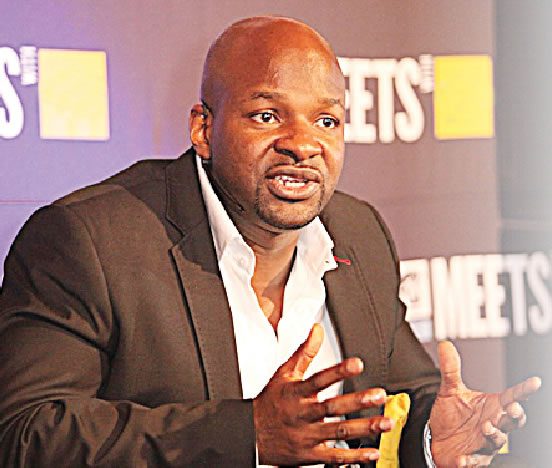
ACCUSATIONS by Nigeria’s anti-graft agency that the country’s banks are deeply involved in fraud and forgery underscore the entrenched financial decay in national life. In a brutally frank moment, Ola Olukoyede, the Chairman of the Economic and Financial Crimes Commission, blamed the high rate of financial crimes in the country on the banking sector. This resonates one way or the other: most citizens and corporate entities have been victims of the fraudulent activities of Nigerian banks. The ball is in Olukoyede’s court to clean up the sordid mess smearing the industry.

According to Olukoyede, an estimated 70 per cent of financial crimes in Nigeria are found in the banking industry. This is a staggering percentage, but it is not surprising. Delivering a speech at the 2024 retreat of audit executives of banks, the EFCC czar indicted the banks, explaining that the crimes are insider- and outsider-related. The deadliest is the collusion between the two parties, he said.

This is not the first time the banks are in the spotlight for abetting fraud. In 2019, the then EFCC acting chairman, Ibrahim Magu, alleged that 10 banks were engaged in money laundering. The Financial Institutions Training Centre, formed by the Central Bank of Nigeria and the banks, reported that the institutions lost N159 billion to fraud from 2020 till date. Between 2022 and 2024, the banks sacked 110 executives and junior staff for fraud.

“In Nigeria particularly, the banking sector is increasingly becoming a cesspool of fraudulent activities, and this is raising considerable challenge and concerns to the EFCC,” Olukoyede lamented.

Indeed, there is substantial evidence to back up the malfeasance in the banking system. This is disturbing because the industry plays a major role in the economy. The Nigerian Deposit Insurance Corporation said banking assets grew 2.01 per cent to N53.31 trillion as of quarter two in 2021. According to TheGlobalEconomy.com, banking contributed an all-time high of 20.36 per cent to Nigeria’s GDP in 2016 and 16.40 per cent in 2021. The fraudulent activities will constrict it from reaching its potential as the global average of banking-to-GDP was 71.17 per cent (2021).

The insider-related abuse includes the outright stealing of customers’ deposits, authorising loan facilities, and forgery. From the outside, hacking, ATM fraud, and conspiracy are prevalent. Bank customers lose their funds to failed transactions, especially at PoS terminals.

On Tuesday, the matter assumed an international dimension. The Bank of Ghana suspended the forex licences of two major Nigerian banks for one month for irregularities. In Nigeria, the regulators will talk tough initially and end up giving the banks a slap on the wrist.

This happened in 2015 when the CBN fined two of them N4.8 billion for not remitting NNPC’s N96.4 billion to the Treasury Single Account of the Federal Government. The fine is not weighty, as it is just 5.0 per cent of the withheld sum. A few months later, the CBN barred nine other banks from the foreign exchange market for not remitting $2.33 billion of NNPC/LNG funds to the TSA.

Therefore, the EFCC and the CBN must descend heavily on the banks for wrongdoing. This is the global practice to strengthen an industry sustained by trust. These government agencies must investigate the accusations by CBN Governor, Olayemi Cardoso, that the banks are partly responsible for the rapid depreciation of the naira through round-tripping of dollars for personal gain.

In Nigeria, bank charges are too high and send a wrong message to the public. The CBN should reinstate the customer-friendly regulations as done when Lamido Sanusi was the governor.

On their part, the banks must do more to disabuse the mind of the public by providing top-notch service and resolving declined and wrong debit notes without hassles.