Home Blog Page 1597

767 producers close down in 2023 – MAN

0

The Manufacturers Association of Nigeria has said that 767 manufacturers shut down operations while 335 became distressed in 2023.

This came against the backdrop of exchange rate volatility, rising inflation and other economic challenges that have worsened the investment climate.

MAN stated this in a statement in which it condemned the recently introduced Expatriate Employment Levy by the Federal Government.

The association said it was struck with disbelief, seeing that the levy runs contrary to President Bola Tinubu’s Renewed Hope Agenda and the kernel of his Fiscal Policy and Tax Reform initiative.

According to MAN, the unintended negative consequences on the manufacturing sector are humongous and cannot be accommodated at this time of evident downturn in our economy.

The statement read in part, “The imposition of EEL poses a potential impact on the manufacturing sector and the economy at large.

“This will in turn mark an unwarranted and unprecedented addition to the cost of doing business in Nigeria, especially to manufacturers. The manufacturing sector is already beset with multidimensional challenges. In the year 2023, 335 manufacturing companies became distressed and 767 shut down.”

The statement further noted that capacity utilisation in the sector has declined to 56 per cent amid rising interest rates and scarcity of forex needed to import raw materials and machinery.

It added, “Inventory of unsold finished products has increased to N350bn and the real growth has dropped to 2.4 per cent.”

MAN also said it was concerned that the EEL contradicts our international trade agreements and the obligations contained therein.

It argued that Nigeria is a signatory to the African Continental Free Trade Area agreement, which seeks to promote the free movement of skilled labour across the continent, which is complemented by non-discriminatory measures against fellow Africans.

The association expressed worry that the introduction of the levy could trigger retaliatory measures against Nigerians working across Africa and other nations of the world and may also frustrate regional integration efforts and portray Nigeria as a spoiler among her peers.

“We are equally worried that the imposition of such a levy could have far-reaching implications for our national economy and potentially exert pressure on our national currency could be introduced through a Handbook, rather than a law enacted by the National Assembly.

This levy, if not reversed, might expose the Federal Government to a plethora of lawsuits that would  distract Government from the task of salvaging the current dire situation of our economy,” the statement added.

In its recommendation, MAN urged the president to direct that the implementation of the Expatriate Employment Levy be discontinued.

The Expatriate Employment Levy, a new policy introduced by the Federal Government aims to address wage gaps between expatriates and the Nigerian Labor force while encouraging skills transfer and the employment of qualified Nigerians in foreign-owned companies.

The new levy is $10,000 for staff and $15,000 for directors. This represents a significant shift from the $2,000 paid by foreign nationals for the Combined Expatriate Residence Permit and Alien Card.

According to NBS, Nigerian nationals constitute only 59 per cent of total jobs in Nigeria, their wages account for less than 45 per cent of total wages, and the average basic salary of expatriates stands at more than 45 per cent above the basic salary.

However, the introduction of the EEL has been met with strong criticism from members of Nigeria’s Organised Private Sector, who argue that the policy may negatively affect Foreign Direct Investments in the country.

In a statement signed by its Director-General, Chinyere Almona the Lagos Chamber of Commerce and Industry said it is concerned about the likely perception by foreign investors that the Nigerian government is not accommodating to foreign workers.

The chamber expressed concern that this perception would be harmful to our drive for Foreign Direct Investments inflows.

The statement read in part, “The Expatriate Employment Levy may cause unintended consequences that may trigger the relocation of foreign companies to neighbouring countries that present a more conducive and less expensive environment for business.

“The imposition of this levy may likely spark retaliatory actions taken by other countries by imposing levies on foreigners and particularly targeting Nigerian workers. This will in turn affect diaspora remittances from Nigerian workers resident in other countries.”

In the same vein, the Centre for the Promotion of Private Enterprise, in a statement signed by its Chief Executive Officer, Muda Yusuf, criticised the new policy directive.

The Centre said that the policy could be a major setback for the continental economic integration vision.

The statement read, “There are serious implications for diaspora Nigerians. The policy may trigger reciprocal actions from other countries and this may affect Nigerians in the diaspora.

“There are currently over 17 million Nigerians in various countries around the world doing extremely well in the fields of education, medicine, health, sports, media & entertainment, leadership & politics, finance, science & ICT, transportation, tourism, industry and agribusiness.”

Citizens protest deficient state of Auchi-Benin street

0

Protesters under the aegis of Concerned Citizens of Edo State on Tuesday barricaded the Jattu axis on the Benin-Auchi Highway over the deplorable condition of the federal road.

The protesters drawn from the various communities in Auchi disrupted commercial activities and vehicular movements over the worsening condition of the highway.

Speaking to journalists, a protester, who simply identified himself as John said the protest is to register their displeasure over the deplorable state of federal roads in the state, most especially the Okene-Auchi-Ekpoma-Benin expressway.

He said, “We are expressing our anger and frustration at the poor conditions of the roads, which have made transportation difficult and dangerous for drivers and passengers.”

“We hope that the federal government will come to our aid and fix the road so that life can become better for us,” John added.

Addressing the protesters, Chairman of Etsako West Council, Marvelous Muhizu Zibiri decried the level of insincerity, lack of political will and lack of total commitment by the federal government to address the situation, which has led to untold hardship and loss of economic prosperity.

Zibiri called on the protesters to remain calm and law-abiding and to avoid taking actions that could lead to violence or the destruction of properties.

The Chairman equally called on the Federal Government, through the Federal Ministry of Works and Housing, to take urgent action to repair the federal roads in the state, which are in a state of disrepair and pose a serious threat to the safety and well-being of the people.

All rights reserved. This material, and other digital content on this website, may not be reproduced, published, broadcast, rewritten or redistributed in whole or in part without prior express written permission from According.

Contact: [email protected]

Finish killings, cleric urges Tinubu

0

The Chaplain, Chapel of The Resurrection, University of Ibadan, Venerable (Dr.) Victor Oladele, has called on President Bola Tinubu to take drastic steps to tackle the insecurity plaguing the country.

He gave the charge in a statement titled: ‘Reflection on the State of Nigerian State: Ominous Signs of Repeat of Failure’.

In the statement, Oladele condemned the killings and insecurity in Nigeria, especially the Kaduna bombing, the Plateau massacre, and the mindless killings of innocent Nigerians in the Middle Belt.

While warning the government against playing politics with people’s lives, the cleric harped on the need for the government to uphold justice in order to save the country from degeneration.

He said: “For the eight years of Buhari’s administration, Nigeria endured bloodbath, free reign of killings by Fulani militias, open beheading by religious extremists, and public executions in the name of God.

 ”The chapel is dismayed by the resurgence of brutality against defenseless Nigerians, the mindless slaughter of innocent women and children and the orgy of burning of communities in the Middle Belt by soulless entities devoid of human feelings.

“This evil bloodletting and human sacrifice must stop. The political class must stop playing politics with the lives of Nigerians. All lives matter, no matter their ethnicity, religion, gender and social class.”

He emphasised that the constitutional rights of Nigerians to safety, security and justice must be enforced without discrimination, adding that, “Those who see violence as business and the human person as merchandise must learn that no sin shall go unpunished.”

He noted that the mainstreaming of violent ideologies had been made possible by the political class, a section of the religious establishment, and the tolerance, if not identification of the Nigerian state over the years, with violent ideologies and extremism.

Miyetti Allah chief sues FG over detention

0

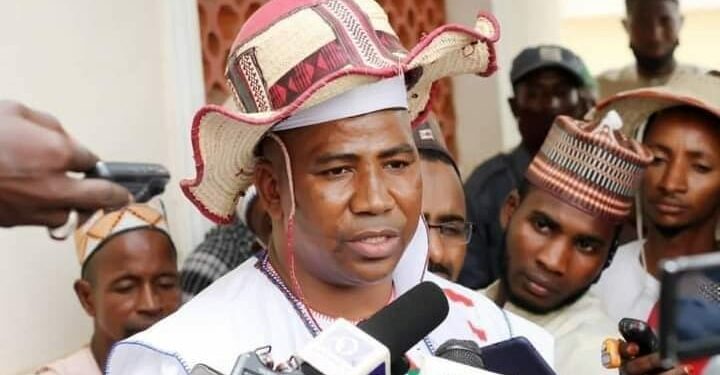
The Federal High Court in Abuja has fixed March 13 for the hearing of the motion filed by the detained President of Miyetti Allah Kautal Hore, Bello Bodejo,  seeking his unconditional release from the custody of the Defence Intelligence Agency.

Bodejo was arrested on January 23 at the Miyetti Allah’s office in Karu LGA of Nasarawa state, over the unveiling of a vigilante group.

The Attorney General of the Federation,  Lateef Fagbemi(SAN), had on February 5 filed a motion ex parte,  seeking to remand Bodejo pending the conclusion of the investigation and arraignment in court.

Justice Inyang Ekwo granted an order for Bodejo to be remanded for 15 days in the custody of the Defence Intelligence Agency.

At the proceedings on February 22, the judge gave the FG seven days to file a charge against Bodejo.

However,  When the matter was called on Tuesday, Bodejo was not in court.

Counsel for the AGF,  Y.A. Imana, told the court that the agency had yet to send Bodejo’s file to her office.

She said, “This matter is slated for arraignment. Unfortunately, up till now, due to some problems the investigating agencies are encountering, they have not been able to send the file to us. “

She explained that her office had written three letters to the investigating agency to send the duplicate case file to them but due to the complexity of the nature of the investigation, the agency had yet to furnish her with the file.

In his submission,  counsel for Bodejo, Mohammed Sheriff, told the court several efforts were made to have his client released to them pending his arraignment.

He said, “On February 6, when My Lord graciously granted the application to keep him (Bodejo), we filed a motion and My Lord said the motion would be heard on 22nd of February. “

Sheriff said when the matter was adjourned on February 22 and the prosecution was given seven days to produce his client for arraignment, they filed another motion on his behalf.

“Today, the defendant (Bodejo) has spent 43 days in detention and there is no charge filed before any court of competent jurisdiction,” he said

The lawyer argued that besides, the prosecution did not file any counter-affidavit against their motion on notice, even though they gave the impression that there were allegations against Bodejo.

He said their latest motion was dated February 23 and filed February 26, adding that the prosecution was served the same date.

Justice Ekwo, therefore, said the prosecution, despite being given a hearing date, was unprepared, adding that the defendant would likewise receive a hearing date.

He adjourned the matter until March 13 for Bodejo’s motion on notice to be taken.

 In the motion on notice filed by Sheriff, Bodejo is seeking an order directing the Federal Government to unconditionally release him pending his arraignment or trial before a court of competent jurisdiction.

IMF backs CBN on rate of interest hike

0

The International Monetary Fund has supported the decision of the Monetary Policy Committee of the Central Bank of Nigeria to increase the benchmark borrowing rates by 400 basis points to 22.75 per cent from 18.75 per cent.

The MPC at its February meeting said that the hike in the MPR was “centred on the current inflationary and exchange rate pressures, projected inflation, and rising inflation expectations”.

“Members were concerned about the persistent rise in the level of inflation and emphasised the committee’s commitment to reverse the trend as the balance of risk leaned towards rising inflation.

“The committee, however, acknowledged the trade-off between the pursuit of output growth and taming inflation but was convinced that an enduring output expansion is possible only in an environment of low and stable inflation,” the committee stated in its communiqué.

In a statement on Tuesday at the end of IMF staff visit to Nigeria, the fund said the decision by the MPC would help contain inflation and pressures on the naira.

“The team welcomed the Monetary Policy Committee’s decision to further tighten monetary policy. The MPC increased the policy rate by 400 basis points to 22.75 per cent for a total tightening of 1,025 basis points since May 2022. This decision should help contain inflation, which reached 29.9 per cent year-on-year in January 2024, and pressures on the naira,” part of the statement said.

The IMF team, which was led by the IMF mission chief for Nigeria, Axel Schimmelpfennig, visited Lagos and Abuja February 12–23, 2024, to hold discussions for the 2024 Article IV Consultations with Nigeria.

It was revealed that the team met with Minister of Finance, Wale Edun; Central Bank of Nigeria Governor, Olayemi Cardoso; senior government and central bank officials, the Ministries of Agriculture and Environment, as well as representatives from sub-nationals, the private sector and civil society.

Schimmelpfennig added, “Nigeria’s economic outlook is challenging. Economic growth strengthened in the fourth quarter, with GDP growth reaching 2.8 per cent in 2023. This falls slightly short of population growth dynamics.

“Improved oil production and an expected better harvest in the second half of the year are positive for 2024 GDP growth, which is projected to reach 3.2 per cent, although high inflation, naira weakness, and policy tightening will provide headwinds.”

He added that with about eight per cent of Nigerians food insecure, addressing rising food insecurity should be the immediate policy priority of the government.

“In this regard, staff welcomed the authorities’ approval of an effective and well-targeted social protection system. The team also welcomed the government’s release of grains, seeds, and fertilisers, as well as Nigeria’s introduction of dry-season farming.

“Recent improvements in revenue collection and oil production are encouraging. Nigeria’s low revenue mobilisation constrains the government’s ability to respond to shocks and promote long-term development. Non-oil revenue collection improved by 0.8 per cent of GDP in 2023, helped by naira depreciation. Oil production reached 1.65 million barrels per day in January as a result of enhanced security. The capping of fuel pump prices and electricity tariffs below cost recovery could have a fiscal cost of up to 3 per cent of GDP in 2024,” he asserted.

On the social intervention programme, Schimmelpfennig said that the recently approved targeted social safety net programme providing cash transfers to vulnerable households needed to be fully implemented “before the government can address costly, implicit fuel and electricity subsidies in a manner that will ensure low-income households are protected.”

The IMF reduced its forecast for Nigeria’s economic growth to three per cent in 2024, down from a 3.1 per cent projected in October 2023.

Stuck in naira redesign internet, pregnant ladies endure heavy burdens

0

In Nigeria, a quiet crisis was unfolding, hidden within the chaos caused by the banknote redesign. What was meant to combat counterfeiting and strengthen the economy had unforeseen consequences that left pregnant women in dire straits. In this report, ADETUTU SOBOWALE writes about the silent suffering and how the naira debacle pushed pregnant women to the brink

The shortage of cash in February 2023 truncated many businesses and livelihoods in Nigeria. This affected many and led millions of the nation’s residents to protest.

Pregnant women, just like every average Nigerian, experienced the naira scarcity. Bola Onibuore, a resident of Ajegunle, Sango-Ota in Ado-Odo/Ota Local Government Area of Ogun State was badly affected. The naira crunch posed a threat to Onibuore and her unborn child at that time. It became scarier for her it being her first pregnancy.

The lives of the mother and child depended on getting scarce new naira notes to eat, to drink, and to buy medicine. Onibuore became restless when she could not meet with her doctor for prenatal consultation service at the Health Centre, in the Sango-Ota area of the state, where she registered.

Contrary to medical laws that place lives above money, the lack of the new naira notes means no access to a medical doctor by pregnant women like Onibuore.

In the Physician Oath also known as the Geneva Declaration, doctors pledge to practise their profession with integrity and respect; they promise to prioritise the health of their patients above everything else and maintain a deep preference for human life, even in challenging circumstances; and they also commit to using their medical knowledge according to humanitarian laws and principle.

Every doctor worldwide solemnly swears this oath during the “Oath-taking Ceremony” when they become newly qualified physicians.

However, despite its apparent simplicity, many pregnant women were left to wallow in pain and hardship due to the unavailability of naira.

Onibuore was caught in the cash shortage fiasco causing distress and denial of healthcare services to many pregnant women across the country. She was turned down at the hospital after pleading with the health workers to accept old notes from her as she witnessed some other expectant mothers like her leave the centre unattended to and dejected.

The request of the 30-year-old was turned down not because her family had no funds, but, like millions of Nigerians, their monies were trapped in the bank. Many pregnant women like Onibuore were denied access to healthcare services for over two months because they could not get the scarce new redesigned notes from banks.

“It was a big mess. On my consecutive visits, the PHC became scanty as people stopped coming since they would not be attended to by the health workers. This decision of the health workers scares me a lot. I’m still battling with the fear of the effect of missing the antenatal care on my child and even labour,” Onibuore, the small-scale business owner said.

She narrated how expectant mothers were disrespected by a health provider during one of her visits, “When I went there next with the requested new naira notes, I saw a heavily pregnant woman being shouted at and denied access to healthcare service because she had no new notes. This was so unpleasant. Who knows what could have happened to the woman by now,” she added.

The ‘frustrated’ policy

Former Central Bank of Nigeria Governor, Godwin Emiefele

In October 2022, the Central Bank of Nigeria announced the resignation of the N200, N500, and N1,000 banknotes.

The action was in response to a request from the Federal Government through Godwin Emiefele the former apex bank Governor who stated that the new banknotes would begin circulation on December 15, 2022, alongside the old banknotes which would remain legal tender until January 31, 2023. According to Emefiele, the redesign will enhance control over the naira, manage inflation, combat counterfeiting, and address ransom payments.

However, Zainab Ahmed, who was the Minister of Finance then expressed concerns about the policy’s impact on the economy. Due to public outcry and lack of awareness, the CBN initiated a cash swap program to exchange old notes for redesigned ones. This made state governors call for a halt to the policy, citing its negative impact on Nigerians. The case was dragged to the Supreme Court and the judiciary arm nullified the ban on the use of the old N200, N500, and N1000 banknotes as legal tenders.

Health workers cared less

Unlike Onibuore, Mutiat Adeoye, a resident of Abule Oloni, Lantoro, was visiting the Sacred Heart hospital in Abeokuta, the state capital as she was due for delivery.

She was informed by health workers at the centre to get her delivery kits from home. However, the story changed when she returned to the facility as she was not attended to despite being in labour because she did not have the new notes. “I pleaded but it fell on the deaf ears of the attendant. She insisted on the new notes which I only had N5,000 of the over N100,000 payment I had to make. I was traumatised and scared of what could happen to me if I couldn’t get the child out of me any time soon. I was in severe pain but the health worker cared less,” she lamented.

An obstetrician, Dr. Aisha Abdulsalam, emphasised that antenatal care is crucial for both first-time mothers and those with previous pregnancies due to the unique difficulties and challenges each pregnancy presents. Abdulsalam added that to ensure comprehensive care, the World Health Organisation recommends a minimum of four antenatal visits for pregnant women. The effect of lack of access to antenatal care for pregnant women could affect the mental well-being of pregnant women according to Abdulsalam, “If a woman that understands the gravity of her care and understands why she needs that care cannot access it, it can lead to a lot of emotional stress, psychological stress that would be associated with that lack, and yet the woman can go into depression.”

In faraway Kaduna state, a pregnant woman reportedly lost her life due to the unavailability of the new naira notes as hospitals insisted patients pay with. She went into labour but was rejected, simply because her husband couldn’t make a payment due to naira scarcity. The woman bled to death and died at home after giving birth. James Auta, the deceased’s husband, explained his wife was turned away by the hospital because he could not make some payment due to his inability to get the new notes. The couple was faced with the unfortunate situation of not being able to access cash from their bank or Point of Sale channels.

Mortality at high rate

The United Nations Children’s Fund said Nigeria has an increase in maternal mortality rate, with 576 deaths recorded per 100,000 live births, and 262,000 newborns losing their lives annually. This placed the burden of over one-third of global maternal deaths on Nigeria’s shoulders.

According to UNICEF 40 million Nigerian women of reproductive age (between 15 and 49 years old) face a disproportionately high level of health challenges related to childbirth. Backing up the UNICEF statistic, Abdulsalam noted that inadequate access to antenatal care services and reliance on untrained birth attendants are critical factors contributing to the health risks faced by pregnant women in Nigeria.

As a result of lack of access to adequate maternal healthcare services, severe gestational diabetes, clamped disconnection in pregnancy, postpartum haemorrhage, and death can occur. She added that seeking care from non-trained birth attendants is unsafe for both mother and child.

“In situations where women seek care in facilities that cannot timely identify complications, it can result in severe consequences. These complications include conditions like severe gestational diabetes, clamp disconnection in pregnancy, postpartum haemorrhage, and even maternal death. Additionally, there is a risk of pregnancy loss, including miscarriages, abortion, and intrauterine fetal demise.

‘It is vital to provide appropriate care for women who develop these complications, as the ability to anticipate and manage them is of utmost importance. However, if women are unable to access the necessary care due to the new naira policy, the potential for adverse outcomes increases. There is room for easing the point of the failed machine with their card in (some) hospitals, they could do a transfer and that was quite the order of the day in the hospital then but I know some people will reject it.”

Over 4.5 million women and babies die every year during pregnancy and childbirth

In May 2023, the World Health Organisation (WHO) raised the alarm that a pregnant woman or newborn baby dies every seven seconds for eight years. WHO in a publication titled ‘Improving maternal and newborn health and survival and reducing stillbirth,’ identified decreasing investments in the health sector as the cause for the rise in maternal and newborn deaths. The report shows that progress in improving survival has stalled since 2015, with around 290,000 maternal deaths, 1.9 million stillbirths, and 2.3 million newborn deaths each year.

Countries with the largest numbers of deaths in 2020

The report further highlighted that over 4.5 million women and babies die every year during pregnancy, childbirth, or the first weeks after birth due to preventable or treatable causes. According to the apex health body, Nigeria accounts for the second highest number of maternal and child deaths globally accounting for 12 percent of global maternal and neonatal deaths and stillbirths while India ranks first. This figure would have shot up during the Naira crunch owing to the attitudes of health practitioners towards expectant mothers.

Human rights violation

WHO described the loss of life of any woman or young girl while they are pregnant or giving birth as a grave infringement upon their basic human rights. The body said the situation underscores the pressing requirement to expand the availability of high-quality sexual and reproductive health services as an integral part of comprehensive healthcare, particularly in areas where maternal mortality rates have remained stagnant or increased in recent times.

Affirming the WHO, the Director of the Technical Division at the United Nations Population Fund, Julitta Onabanjo, also stressed that the death of any woman or young girl during pregnancy or childbirth is a serious violation of their human rights. Onabanjo emphasised that these deaths underscore the pressing requirement to expand access to high-quality sexual and reproductive health services within the framework of universal health coverage and primary healthcare. This need is particularly critical in communities where maternal mortality rates have remained stagnant or even increased in recent years.

“We must take a human rights and gender transformative approach to address maternal and newborn mortality, and it is vital that we stamp out the underlying factors which give rise to poor maternal health outcomes like socio-economic inequalities, discrimination, poverty, and injustice,” she said.

Onabanjo added that women and babies must have quality and affordable healthcare before, during, and after childbirth as well as access to family planning services to increase survival rates.

The Universal Declaration of Human Rights acknowledges the right to life and the highest possible standard of physical and mental health. By denying pregnant women access to healthcare, their lives and well-being are put at risk. Adequate prenatal care is crucial to ensure the health of both the mother and the unborn child, reducing the chances of complications, disabilities, and even maternal and infant mortality.

Also, the International Covenant on Economic, Social, and Cultural Rights, ICESCR, recognises the right to social security including access to healthcare.

Enforce Universal Healthcare coverage – Health worker urges government

Abdusalam, while speaking with this reporter noted that universal healthcare coverage plays a significant role in preventing delays in seeking care and reducing the burden of out-of-pocket expenses, which often discourage women from seeking timely medical assistance. She urged the government at all levels to enforce Universal Healthcare coverage.

“One of the ways to make delivery easy for women in hospitals is to enforce Universal Healthcare coverage. That has helped women access care all over the world because out-of-pocket payment is currently quite expensive and it is still going to be more expensive, especially with the current financial regulations,” she said. To ensure that every woman, regardless of financial constraints, has access to quality healthcare, Abdusalam stressed the urgent need for the government to support subsidised maternal healthcare.

“It is something that requires support from the government to subsidise their care so that whether there is a cash crunch or not, every woman has this assurance that when they get to the healthcare centres, they can access care and they don’t have to be out of pocket,” she said.

When contacted, the state Commissioner for Health, Tomi Coker, said to cushion the effect of the economic downturn on pregnant women, the state launched an initiative called Ibidero ( childbirth has become easier) in the early months of 2023 but did not state the exact month it was initiated.

Coker said the initiative was to ensure safety and affordable care for pregnant women and reduce maternal mortality rate across the state, saying, “‘Ibidero,’ which translates to ‘childbirth has become easier’ in our local dialect, was conceived to address the critical healthcare needs of pregnant women from economically disadvantaged backgrounds. Ibidero is a program under the ‘Vulnerable Group Health Insurance Scheme’, implemented by the Ogun State Health Insurance Agency (OGSHIA). The program which was launched in the early months of this year, with approval to cater for 3,000 beneficiaries across all LGAs of Ogun State, has had a profoundly positive impact on the lives of indigent pregnant women within our communities.

“With the recent approval by His Excellency, the program is currently being scaled up to cover an additional 15,000 pregnant women (in its initial phase) across the state, serving as a palliative measure for pregnant women by the government during this hard financial time.

“This programmme is to ensure that pregnant women who face financial constraints receive the best possible care during their pregnancy and childbirth, thereby reducing maternal mortality rates, promoting safer deliveries, ensuring a healthier start for newborns and improving the well-being of our citizens.”

This report was produced with the support of the Women Radio Centre through the MacArthur Foundation.

LASG, ACCA teach civil servants in finance

0

Lagos State Government has partnered with the Association of Chartered Certified Accountants to build the capacity of civil servants in finance.

The three-day workshop with the theme “Increasing Capacity for Public Financial Management and Sustainability” started Monday in Lagos.

In his keynote address, the Head of Service of Lagos State, Mr Bode Agoro, said, the workshop was designed to provide a platform for extensive dialogue, knowledge sharing and continuous promotion of international best practices in both the public and private sectors in Lagos State.

He said the theme was very appropriate at this crucial time when the government’s efforts were geared towards revamping the economy.

He added that a government could only fulfil its mandate of service delivery to the public when its finances are properly managed.

He commended the efforts of the Lagos State Treasury Office in upholding international best practices in its operations and strategically managing the finances of the state in the face of a scarcity of resources.

Also, the Accountant General of Lagos State, Mr Abiodun Muritala, said, that over the last few years, the Lagos State Government and ACCA have been partnering to boost the capacity of civil servants in the state.

He added that the workshop was to upskill the state’s workforce through ACCA’s research-based insights.

According to Muritala, capacity-building programmes such as this are vital for this value-added profession.

On his part, ACCA’s Country Head, Mr Tom Isibor, said, ACCA’s purpose was to be a force for public good.

“What that means is that we support governments, ministries, and agencies to be able to deliver various services to citizens.

“For them to be able to do that, civil servants must be properly equipped, and we just wanted to support the government of Lagos State in its task of achieving its objectives.

“We want to increase our capacity for public financial management and sustainability because we have discovered that to access funds in the future and to be able to meet UN SDGs goals, we must be on the map for public financial management and sustainability,” he stated.

More so, a business leader and facilitator of the workshop, Mrs Alero Onosode, said, “At the end of the day, what the participants are hoping for in terms of capacity building is that they have the knowledge and the skills to be better than they were when they came in.”

She noted that the participants were expected to work as world-class professionals in the course of delivering their jobs.

Starvation pangs in Nigeria and the silent rebel

0

One cannot think well, love well, sleep well, if one has not dined well. — Virginia Woolf

Nigerians are angry with their government at all levels. According to the ace Nigerian novelist, Buchi Emecheta, “A hungry man is an angry one.” The Yoruba people will say hunger does not cohabit with any other thing (ebi kii wo’nu ki oro mi wo). In case you don’t know, the French Revolution, 1789 – 1790s, was precipitated by bread shortages. According to History.com, “The storming of the medieval fortress of Bastille on July 14, 1789, began as a hunt for arms—and grains to make bread.  The French Revolution was obviously caused by a multitude of grievances more complicated than the price of bread, but bread shortages played a role in stoking anger towards the monarchy.”

In the Holy Bible, Matthew 12 verses 1 – 4, “One Sabbath, Jesus was strolling with his disciples through a field of ripe grain. Hungry, the disciples were pulling off the heads of grain and munching on them. Some Pharisees reported them to Jesus: ‘Your disciples are breaking the Sabbath rules!’ Jesus said, ‘Really? Didn’t you ever read what David and his companions did when they were hungry, how they entered the sanctuary and ate fresh bread off the altar, bread that no one but priests were allowed to eat?’” This is to illustrate the importance of food to mankind. Hunger can make people to misbehave and, indeed, in Nigeria, people have started to steal and loot in the name of hunger.

This newspaper in yesterday, March 4, 2024, edition painted a gloomy and gory picture of the hunger situation in Nigeria. It chronicles an ugly development that has started to gain traction. The According reported that “Several trucks and warehouses, mostly owned by manufacturers and other members of the OPS (Organised Private Sector), have come under attacks from hoodlums as the food inflation and the cost-of-living crisis worsened across the country.”

The newspaper reported further that “Last week, some youths stole food items from trucks stuck in traffic along the Kaduna Road in the Suleja area of Niger State. On Sunday, hoodlums attacked a warehouse belonging to the Agricultural and Rural Development Secretariat of the Federal Capital Territory Administration located in the Dei-Dei area of the capital city where they looted rice, grains, and other relief items.” This is not the first time this has happened; a similar thing was witnessed in 2020 under the guise of #EndSARS protests.

Truth be told, life is very difficult for the majority of Nigerians. Food inflation has risen to 35.41 per cent, according to the National Bureau of Statistics. The number of unemployed Nigerians has risen with many government Ministries, Departments and Agencies not employing; retrenchment of staff looms as the Oronsaye report on mergers of the MDAs gets the Federal Government’s nod for implementation. Many nano, micro, small and medium enterprises are folding up due to high operational costs. Those factories and industries that manage to produce are recording low sales due to low disposal income.  A December 2023 World Bank report put the number of Nigerians below the poverty line at 104 million. With people lacking jobs and being poor, many are resorting to stealing, banditry and kidnapping for ransom.

In fairness to President Bola Tinubu, he has taken a number of positive steps to curb hunger and starvation in the country. The President in July 2023 declared a state of emergency on food insecurity. On Thursday, July 13, 2023, the Special Adviser to the President on Special Duties, Communications and Strategy, Mr Dele Alake, who is now Minister of Solid Minerals, held a media briefing to give details of the Presidential Intervention on Food Security, Food Pricing and Sustainability. Aside from the state of emergency, he said all matters pertaining to food and water availability and affordability, as essential livelihood items, be included within the purview of the National Security Council.

He listed some of the immediate intervention strategies as follows: Immediate release of fertilisers and grains to farmers and households to mitigate the effects of the subsidy removal; urgent synergy between the Ministry of Agriculture and the Ministry of Water Resources to ensure adequate irrigation of farmlands and to guarantee that food is produced all-year round; creation of the National Commodity Board that will review and continuously assess food prices as well as maintain a strategic food reserve that will be used as a price stabilisation mechanism for critical grains and other food items.

The stakeholders that have reportedly been brought on board include: The Nigeria Commodity Exchange, seed companies, National Seed Council and Research institutes, NIRSAL Microfinance Bank, food processing/agric processing associations, private sector holders and prime anchors, smallholder farmers, crop associations and fertiliser producers, blenders and suppliers associations, to mention a few. Alake said there are currently 500,000 hectares of already mapped land that would be used to increase the availability of arable land for farming which would immediately impact food output. He said the government would also collaborate with mechanisation companies to clear more forests and make them available for farming.

President Tinubu gave a further update on his food security initiative in his July 31, 2023, national broadcast when he said he had ordered the release of 200,000 metric tonnes of grains from strategic reserves to households across the 36 states and the FCT to moderate prices. He said his administration would also be providing 225,000 metric tonnes of fertiliser, seedlings and other inputs to farmers who are committed to its food security agenda. Tinubu said N200bn out of the N500bn approved by the National Assembly for subsidy relief packages would be disbursed as follows:  N50bn each would be used to cultivate 150,000 hectares of rice and maize. N50bn each would also be earmarked to cultivate 100,000 hectares of wheat and cassava. How far with these initiatives?

Noteworthy at curbing food insecurity is the initiative by the Lagos State Government to open Sunday Markets in at least 42 identified markets across the state where residents will be able to buy food items at discounted prices but not more than N25,000 per person. In a February 22, 2024 media parley, Lagos State governor, Babajide Sanwo-Olu, hinted at the state’s ambitious plan of feeding no fewer than 1,000 people daily across each local government area through meal vouchers that could be accessed at selected canteens. This is exemplary and commendable!

In order to also douse tension in the public, the Minister of Agriculture and Food Security, Abubakar Kyari, on Monday, March 4, 2024, declared that the free distribution of the 42,000 metric tonnes of grains approved by President Tinubu would be rolled out across the 36 states this week. He also revealed that 58,500 metric tonnes of rice would be released into the market. It is unfortunate that the good intention of the Nigerian Customs Service to sell 25kg rice at N10,000 per bag to individuals in Lagos turned tragic with about seven deaths reported as a result of stampede.

This hunger pang is unbearable and needs to be neutralised. According to a Japanese Proverb, “Happiness rarely keeps company with an empty stomach.” American theoretical physicist, Albert Einstein, opines that, “An empty stomach is not a good political advisor;” while former American President, John F. Kennedy, said prophetically that, “The war against hunger is truly mankind’s war of liberation.” I do hope our political officeholders will do the needful before it is too late!

STL Trustees, Asset Control spouse Lagos to empower girls

0

Ahead of the 2024 International Women’s Day 2024, STL Trustees and STL Asset Management have joined forces with the Lagos State Ministry of Women Affairs and Poverty Alleviation to empower women through skill acquisition.

A statement from the firm said that the skill acquisition programme, held in Surulere, witnessed the participation of 125 women.

The IWD 2024 celebration scheduled to be held on March 8 is themed #InspireInclusion

The program encompassed diverse training sessions, spanning cosmetology, makeup, Gele tying, photography, arts and crafts, Adire making, and catering.

The Managing Director of STL Trustees Limited, Funmi Ekundayo, noted it was essential to empower women in the nation as a means to mitigate poverty. She pointed out that the skills being offered represent rapidly evolving opportunities with significant potential for high patronage.

Speaking on the partnership with Lagos State, she said, “This year to commemorate International Women’s Day, STL Trustees decided to partner with the Lagos State Government, through the Lagos State Ministry of Women Affairs and Poverty Alleviation. When you look at what is going on right now in the nation there are a lot of economic struggles across the board and everyone is affected no matter the level of your income, hence the need to continually capacitate people for additional income capabilities.

 “So, we looked around and thought about what will be a very impactful project that we can support to commemorate International Women’s Day going by the theme of this year’s International Women’s Day, which is, ‘Inspiring Inclusion’, we decided to partner with the ministry.”

Generation converting promoting tendencies, says Dentsu Nigeria

0

The Group Chief Executive Officer of Dentsu Nigeria, Mr Emeka Okeke, has said that the marketing communications ecosystem globally will continue to evolve with technology, especially with Artificial Intelligence changing the dynamics and advertising trends.

Okeke said this at the Dentsu Africa Summit 2024, with the theme “NOW”, which was held recently in Lagos.

Okeke stated that the summit aimed to tackle the predominant trends and shifts within the advertising industry, focusing on how to adapt and synchronise with them.

“Dentsu’s robust consumer connection system has revolutionised access to market data, expanding from TV and radio diaries, covering four touchpoints to over 60. The conference sets the agenda for the next few years, shaping the future narrative.

“Before now, it is always the brands speaking to the consumers, making choices from the consumers but with technology that has empowered consumers so much, it is now the consumers’ space. Consumers can now decide what they consume. However, brands are enablers and simply must listen to the consumers to understand what next to do,” he explained.

He added that technology and content were also playing a lot of roles in that respect.

Also, General Manager/Chief Operating Officer of Dentsu Agyle Nigeria, Marian Ogaziechi, said, “The summit is about addressing the trends and the major changes that advertising has faced in the last five years after the COVID-19 outbreak. We have seen the evolution of Artificial Intelligence and have also seen the changes in media consumption going from linear to mobile.”

According to Ogaziechi, the summit is about what advertising is now, and how it can be aided by artificial intelligence.

She added that the firm was focusing on how operators would cope with the change.

“It is not just us as an agency leveraging technology or AI, it is all about creating the constant capacity to keep evolving as the changes come, to move past what we have done today and create more,” she noted.