Home Blog Page 158

Nigeria Raises Alarm as 2027 Election Campaigns Begin Too Early

0

Political activity in Nigeria is at an all-time high, about two years before the country’s next presidential election.

According to the Electoral Act, which clearly states that no sort of campaigning is permitted until 150 days before to the election, people and political parties are actively campaigning.

Many Nigerians fear that political leaders have turned their focus away from government and onto campaigning in preparation for the 2027 election.

The Independent National Electoral Commission, or INEC, the electoral authority tasked with carrying out its constitutional duty to control political party activity, is doing nothing to exacerbate the situation.

Similarly, the police, whose constitutional responsibility involves arresting and prosecuting individuals who violate the law, are ignoring impunity.

Last week, INEC chairman Prof. Mahmood Yakubu expressed concern that political parties had already begun running covert campaigns in spite of explicit rules limiting them to 150 days prior to the election.

Yakubu had brought attention to what he called a “disturbing trend” of political campaigning ahead of schedule during a one-day stakeholders’ roundtable on the difficulties of early political campaigns at the Electoral Institute in Abuja. This was particularly relevant in light of the 2027 general elections, the Federal Capital Territory Area Council elections, and the upcoming off-cycle governorship elections.

The Electoral Act 2022’s Section 94(1), which expressly forbids starting a campaign more than 150 days prior to election day and mandates that all campaign activities conclude 24 hours prior to the start of voting, was referenced by him.

He bemoaned, meanwhile, the fact that political actors frequently ignored this clause. “Even though the electoral commission has not yet released the schedule of polling operations, political parties, candidates, and their supporters appear to be in a permanent election mindset.

“We have witnessed rallies, media campaigns, and outdoor advertising promoting different political parties and candidates all over the nation,” he stated.

The commission’s ability to enforce campaign finance limits is seriously jeopardized by these premature activities, he warned, adding, “These actions and activities undermine the commission’s ability to track campaign finance limits as politicians, prospective candidates, and third-party agents expend large amount of money that cannot be effectively monitored before the official commencement of campaigns.”

Political circles have responded sharply to the development. Many Nigerians are concerned at the INEC chairman’s admission that the electoral umpire is powerless to stop the unattractive trend, especially those who have closely followed political events in Nigeria over the past two years.

Professor Yakubu noted that there is no penalty at all for campaigns conducted more than 150 days before to an election, despite the fact that Section 94(2) of the Electoral Act 2022 stipulates a maximum fine of N500,000 for campaigns conducted within 24 hours of an election.

“This presents a challenge for the Commission in handling early campaigns,” he said.

He said that although early campaigning is not a new problem, regulatory organizations’ inability to address it within the current legislative framework called for more careful consideration.

Some people, however, think that because the ruling All Progressives Congress, or APC, is heavily involved, INEC and the police are not doing much to stop the alarming trend.

The major opposition political parties are among the many people and organizations that have expressed worry over the nasty trend. They have warned that the 2027 election may already be deemed compromised unless immediate and drastic action is taken to halt the trend.

The African Democratic Congress (ADC) and the opposition Peoples Democratic Party (PDP) criticized the ruling APC as the greatest offender and demanded drastic measures to stop the practice.

The Socio-Economic Rights and Accountability Project (SERAP) has voiced its concerns and threatened to sue Yakubu’s INEC for failing to fulfill its constitutional obligations, in addition to urging INEC to punish early election campaigners.

The organization tasked Yakubu with identifying political figures and parties who are flagrantly breaking international norms, constitutional law, and statutes that forbid early election campaigns and guaranteeing their and their backers’ prosecution.

It also asked him to keep a close eye on political parties that are breaking this rule and to create explicit rules that will control how parties and politicians behave in relation to early election campaigns in Nigeria.

The Deputy Director, Kolawole Oluwadare, signed the letter from SERAP dated September 13 that contained this call.

When political parties, candidates, and other politicians violate the legally mandated election campaign period, INEC is not powerless, according to SERAP, which rejected the idea that INEC is powerless. Campaigns for early elections are unlawful and unconstitutional.

“INEC is tasked with punishing electoral offenses, such as early election campaigns, in accordance with its constitutional and legal duties.

Political parties, candidates, and other politicians should not be perceived by INEC as endorsing or legitimizing early election campaigns that take place outside of the constitutionally mandated campaign time.

SERAP cautioned that early election campaigns have a negative impact on the nation’s economic growth because of the protracted electioneering craze. The group bemoaned the fact that public funds are being wasted on such early campaigns at the expense of the populace by individuals in positions of authority, especially state governors.

Since INEC has not yet released the election schedule, early election campaigns are in conflict with the word and spirit of the Nigerian Constitution 1999 [as amended], the Electoral Act, and the nation’s commitments under international human rights law.

The windfall from fuel subsidies appears to be being used by a number of state governors for early election campaigns. Even though income has increased significantly since gasoline subsidies were eliminated, certain state governors are egregiously failing to provide their citizens with basic services and engage in social and economic growth.

It would be appropriate, justified, and proportionate to enforce the ban on early election campaigns since it would promote equality, freedom, and human dignity. It said, “INEC has extensive constitutional and legal responsibilities to advance, safeguard, and enforce the rule of law and protect the public interest.

The potential for creating a culture of impunity if the practice is permitted to continue was another issue raised by SERAP. It stated: “If INEC does not fairly enforce the country’s international human rights obligations and the constitutional and statutory prohibitions of early election campaigns, it will foster a culture of impunity for those who commit these crimes and their backers.”

The Nigerian Constitution, the Electoral Act, and the nation’s international human rights commitments are being violated, and INEC is tacitly endorsing these crimes by not taking action against or sanctioning political parties, candidates, and other politicians for running early election campaigns.

Therefore, we kindly request that the suggested actions be completed within seven days of this letter’s publication or receipt. SERAP will take all necessary legal steps to force you and INEC to abide by our request in the public interest if we don’t hear back from you by then.

Instead of focusing on providing their constituents with good government, state governors and other politicians are displaying campaign banners all across the nation in an attempt to win votes.

In order to direct political parties to immediately stop the practice, which is obviously against both the Nigerian Constitution and the Electoral Act, INEC may use section 83 of the Electoral Act to ask them for information or clarification on how they are adhering to the constitutional ban on early election campaigns.

According to section 83(4) of the Nigerian Constitution, INEC should punish candidates and political parties who disregard its directive.

Additionally, it ought to utilize section 225 of the Nigerian Constitution to require political parties to disclose the source or sources of finance used by their candidates and parties for early election campaigns.

Before the allotted 150 days under the Electoral Act, a number of political parties, candidates, and other politicians are advertising themselves and vying for votes. The law cannot be circumvented by political parties, candidates, or other politicians.

“The Nigerian Constitution’s chapters two and four, which address fundamental goals, guiding principles of state policy, and fundamental rights, are undermined by early election campaigns.”

In his contribution, Yusuf Shehu, a former Katsina State lawmaker, denounced the development and criticized the electoral board for doing nothing while politicians tamper with the nation’s electoral process.

“The Electoral Act and the Nigerian Constitution’s drafters never imagined that the political season would be an ongoing exercise,” he stated. The constitutional Code of Conduct for Public Officers should be followed by public officials, or else they risk legal repercussions.

In addition to acting for Nigeria’s development and well-being, as well as to uphold, defend, and defend the Nigerian Constitution, a number of candidates and other elected public officials have disregarded their constitutional oath of office.

Politicians, including a number of state governors, are putting election campaigns ahead of progress made in improving the socioeconomic standing of Nigerians, particularly the country’s underprivileged and marginalized populations.

Because early election campaigns unfairly favor incumbent or well-funded candidates, they erode transparency, fairness, and impartiality while also facilitating the diversion of public resources and interruption of public services, as well as people’ access to public goods and services.

The use of public resources for political reasons by elected officials would continue if political parties, candidates, and other politicians were not penalized for participating in early election campaigns. Additionally, it would generate conflicts of interest, contradict public service norms, and undermine the impartiality of public offices.

Human rights attorney Femi Falana has also requested in his plea that INEC arraign individuals who are breaking the laws prohibiting early election campaigns in court in order to serve as a warning to others.

During an appearance on Sunday Politics on Channels Television, Falana made the call.

He acknowledged that the constitution did not specify the proper sanction, but he disagreed with the INEC head, saying that “the law cannot cover all situations.” The legislators believed they were interacting with a civilized political elite. No.

The Constitution and the Electoral Act provide them the authority to enforce rules and regulations now that they are breaking the law.

It is necessary for INEC to bring charges against some of these individuals in court. Let them appear in court and apologize, saying, “There is no provision for punishment, my Lord.”

“If you disregard the court’s order, you have committed contempt and will be imprisoned.”

In order to address this gap, he added, the constitution gives INEC the authority to create rules and regulations, stating that “Section 95 empowers INEC to draft rules and regulations.” The Constitution’s Paragraph F, Part 1 gives INEC the authority to oversee campaigns in accordance with its established guidelines. In order to prevent this illegality, INEC should immediately implement rules and regulations, which it has not yet done.

The growing tendency of early election campaigns in Nigeria has also drawn criticism from former INEC chairman Prof. Attahiru Jega, who warned that if the issue is not handled immediately, it might seriously jeopardize the integrity of the 2027 polls.

Jega gave a keynote speech at an INEC-hosted stakeholders’ roundtable last week in Abuja to discuss the difficulties of early campaigns. Campaigns that were run outside of the legally mandated time frame gave some candidates undue advantages, weakened the rule of law, heightened political tensions, and solidified a climate of impunity among political players, he said in his keynote.

While pointing the finger at “matured Democrats” for early campaigns and election law infractions, he also pointed out that lawmakers benefited greatly from early campaigns and were thus unlikely to pass legislation that would penalize early campaigners more severely.

“Unwanted anomalies in democratic elections are early election campaigns. They violate the law, level the playing field unfairly, and could even lead to political unrest and conflict,” he said.

Charter Airlines Defrauding Nigeria Through Temporary Import Permits

0

Allegations of regulatory evasion, especially with regard to foreign-registered aircraft imported into Nigeria under Temporary Import Permit (TIP), have plagued the private charter aviation industry for years.

The Nigerian Civil Aviation Authority (NCAA), which is tasked with regulating air operations, and the Nigeria Customs Service (NCS), which is responsible for collecting import tariffs, are at odds and at the center of the controversy. Under the Customs and Excise Management Act (CEMA), Customs requires that tax payments be made strictly, but NCAA regulations have given operators some operational flexibility. In order to circumvent compliance, operators have turned the resulting gray area into a haven for abuse.

Law Concerning Temporary Importation

According to Section 12 of the Customs and Excise Management Act (CEMA) 2004, importers are permitted to enter Nigeria under “temporary admission” as long as the commodities are converted to “home use” or reexported within a certain time frame with the relevant duty paid. According to the legislation, import duties are due if the goods—in this case, an airplane—remain in Nigeria after the predetermined amount of time.

Customs procedures have generally permitted temporary admittance for aircraft for a maximum of 12 months, which can be extended in increments of 6 months but cannot be extended for more than 2 years. Once import duty has been paid, the aircraft must either be exported or regularized for “home use.”

Nonetheless, this legislation has been repeatedly broken in Nigeria’s aviation industry. Since 2008, some aircraft that should have been regularized or re-exported have stayed in the nation and continued to operate in the lucrative charter industry without paying customs duties.

The Position of the NCAA

Conversely, in certain circumstances, foreign-registered aircraft may operate under NCAA’s Civil Aviation Regulations (Nig.CARs 2015, Part 18, Section 18.3.4), as long as they are in compliance with NCAA’s operational control and possess valid certifications of airworthiness. This has provided operators with a legitimate excuse to fly foreign-registered aircraft inside Nigeria without having to deal with the customs issue.

The discrepancy between NCAA allowing foreign-registered operations and Customs requiring import duties has created an opening that is ready for abuse. According to operators, Customs’ demand is “double taxation” because they already pay NCAA fees for landing, parking, and air navigation.

The CEO of TopBrass Aviation, Captain Roland Iyayi, provides a viewpoint that compromises both viewpoints. “An operator or aircraft owner pays the NCAA or other agencies for services,” he clarified. Import duty is what Customs is requesting. Aircraft import duties are paid independently from roadworthiness or license payments, just like when you import a car. The law is on Customs’ side.

While some operators were first granted a respite when Customs sealed their aircraft, Iyayi disclosed that not all of them have fulfilled their commitments to regularize.

Temporary entry is permitted for a period of two years. The majority of them you are referring to have been in the nation since 2008. They are aware of the game they are playing. Some even filed a lawsuit to overrule Customs, arguing that they were exempt due to ICAO conventions. Commercial aviation, not private aviation, is the focus of ICAO. Those arguments were deemed unfounded by the courts.

AC. “If privately owned aircraft are imported on temporary admission, there is a stipulated period for them to remain in the country,” explained NCS National Public Relations Officer Abdullahi Maiwada, outlining the agency’s position. After that, duty must be paid for their conversion to domestic use or reexport. If you import your aircraft on temporary admission and then return it after ninety days, there won’t be any issues. You have to regularize, though, if you stay too long. The law is that.

Maiwada emphasized that investigations are still being conducted even though Customs does not maintain an accurate public count of planes that have been overstayed.

He explained that the problem was “a result of trying to find out how many aircraft have overstayed without regularization.”

A former commander of Murtala Muhammed Airport in Lagos, Group Captain John Ojikutu (rtd.), stated that the problem is indicative of Nigeria’s poor regulatory alignment.

“It’s like bringing in a foreign-registered vehicle you intend to keep here if you bring in a foreign-registered aircraft that is operating in Nigeria,” he said, pointing to obvious shortcomings. It needs to be exported or re-registered after a certain amount of time. The current situation, in which foreign-registered aircraft have been operating locally for years without re-registration, is unlawful and irregular.

Political influence, according to Ojikutu, is distorting the enforcement process: “These things were not happening before.” Why are they taking place now? It is against the law to bring in an aircraft that is registered abroad and is domiciled here without being re-registered. The NCAA needs to make a strong statement. In my opinion, it is illegal for foreign-registered aircraft to continue operating on local routes indefinitely.

Actions Taken by Customs Enforcement

Not all the time has Customs been passive. A timeline of enforcement actions highlights how serious the problem is:

NCS announced in June 2024 that it would ground roughly 60 foreign-registered aircraft due to unpaid charges. To confirm, operators were called to Abuja.

Demand notifications were sent out in July 2024, when the exercise was extended to more than 80 aircraft.

August 2024: Customs relaxed the grounding but maintained duty demands following high-level involvement.

According to Customs, 86 operators submitted documentation in June 2025; 57 were cleared, while 29 were liable for duty. A few others did not arrive.

Political meddling and drawn-out talks have slowed definitive action, resulting in spotty enforcement notwithstanding these efforts.

Customs and NCAA: An Uncomfortable Combination

An institutional conflict sits at the heart of this story. An airplane entering Nigeria is treated by Customs as merely an imported item, subject to the Customs and Excise Management Act’s regulations. When it is used for commercial purposes in Nigeria, it is no longer “temporary” in any significant sense and needs to be imported for domestic use with duty paid.

For the NCAA, the plane is essentially an operational issue. Only the NCAA has the authority to determine who is allowed to transport people for pay or employment, and it also grants air operator’s certificates, air transport licenses, and permits for non-commercial flights. According to this viewpoint, a foreign-registered aircraft may transport passengers on charter flights as long as it has the appropriate NCAA permits.

The difference is obvious. The NCAA maintains that it is the only entity that can control whether commercial operations are allowed, while Customs insists on charges for such activity. In between, operators have discovered a lot of room to maneuver.

One aviation specialist stated that safety and operational approval are not the only factors at play. “It concerns economic equity. You cannot have some local operators flying about permanently on temporary permits while others pay import duties in billions. There is no level playing field there.

Making Use of the Grey Areas

The gaps between these two regimes are now easily exploited by operators. Some repeatedly extend their TIPs, therefore converting a short-term measure into a multi-year authorization. Some declare aircraft for demonstration or private use while operating profitable charters in secret. Some rely on NCAA approvals to assert validity even in cases where their Customs documentation is questionable.

On the other hand, charter operators defend themselves. “It’s not that we don’t want to comply,” explained one operator from Lagos who wished to remain anonymous. However, we receive NCAA approvals, the duties are very steep, and the process for complete importation is uncertain. The NCAA and Customs must unify their stances. We are stuck in the midst right now.

The approach is both political and regulatory. In order to stall or slacken enforcement, wealthy owners frequently use attorneys and contacts. Sometimes, Customs has been compelled to negotiate or has had its seizures contested in court, allowing the aircraft to continue operating and making money. For local charter operators that have paid full tariffs, imported aircraft legally, and put up with the registration process, the arrangement appears to be unfair competition.

Keeping Track of the Price

The financial burden is substantial for the federal government. Customs determines charges and taxes at a rate of 12 to 15 percent of the Cost, Insurance, and Freight (CIF) value of aircraft, which are among the most valuable imports. At the present exchange rate, that might be more than $5 million, or almost N8 billion, on a $25 million plane. When you multiply that by dozens of jets, the total easily reaches tens of billions of naira.

Regulatory integrity is another concern that goes beyond revenue. A permit intended for temporary usage allows an airplane to remain on the tarmac in Lagos or Abuja for years, undermining public trust in law enforcement. Safety and redress are other concerns for passengers. Determining who is responsible for an event involving a jet operating on the edge of legality may be more difficult than for an aircraft registered in Niger.

More will be needed to close these gaps than intermittent crackdowns. Customs and the NCAA should work together more closely, according to experts. A memorandum of understanding might specify the exact moment that an aircraft’s use transitions from temporary to commercial, so establishing duty duties. A centralized TIP registry that is available to both agencies would increase openness and stop silent rollovers. Fair and efficient enforcement would be guaranteed via quicker dispute resolution and appropriate penalties.

Military Arrests Suspects, Seizes Petroleum Products in Niger Delta Crackdown

0

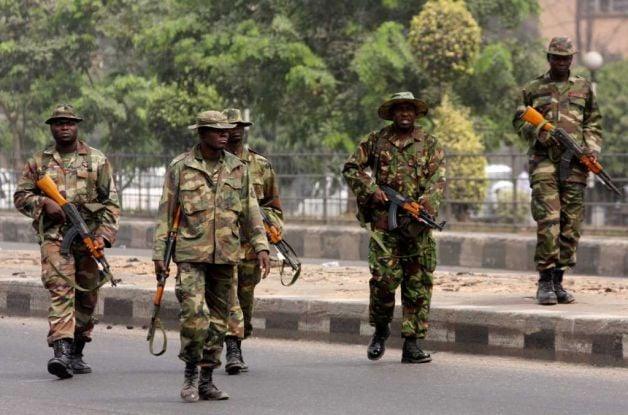
At least 17 alleged vandals have been taken into custody by Nigerian Army troops, who have also confiscated over 45,000 liters of stolen petroleum products.

Lieutenant Colonel Danjuma Jonah Danjuma, Acting Deputy Director, 6 Division, Army Public Relations, revealed this in a statement on Sunday.

A Toyota 4Runner SUV carrying more than 1,600 liters of suspected stolen diesel was stopped by troops on patrol in the Ahoada West Local Government Area of Rivers State, the statement said.

The driver reportedly ran after abandoning the car.

Twenty-three sacks of refined products were found in Ahoada West as well, and a wooden boat carrying petroleum products was found in Degema.

In the Ogba/Egbema/Ndoni Local Government Area, soldiers discovered a pipeline that had been vandalized and recovered condensate that had been taken in Obiafor.

“A 250-meter hose, three-inch metal pipes, and six sacks containing 300 liters of illegally refined AGO were among the items recovered,” the statement said in part.

Soldiers in Delta State stormed an illegal storage hub at Ogwu Community in the Warri South Local Government Area. They found a large storage facility with over 20,000 liters of Automotive Gas Oil (AGO) and pumping and metering machines, as well as a tanker truck loaded with suspected stolen diesel.

Read Also: Oyebanji Confident Ahead of APC Primary, Says He’s Not Afraid of Kayode Ojo

Additional items were two empty tanks and a 20,000-liter tanker truck registered BEN 223 ZW (Edo State) that was filled with more than 10,000 liters of illegally processed AGO, according to the statement.

In Bayelsa State, dugout pits and refinery sites were destroyed as a result of raids in Biseni, Yenagoa Local Government Area.

A Toyota Camry carrying AGO drums was intercepted in a different operation in Okordia.

According to the statement, “a Toyota Camry with registration number ASB 71 BG, loaded with over 600 liters of AGO, was intercepted at Okordia in Yenagoa LGA.”

Security patrols along oil theft routes in Akwa Ibom State increased, Lieutenant Danjuma reported, limiting saboteurs’ movement and cutting off their supply sources.

The Army insisted that the goals of its current operations were to protect national resources, stem the actions of economic saboteurs, and restore environmental integrity throughout the Niger Delta.

Oyebanji Confident Ahead of APC Primary, Says He’s Not Afraid of Kayode Ojo

0

Prior to the October 27 primary elections of the All Progressive Congress (APC), Bimbo Daramola, a former lawmaker who served in Ekiti North Federal Constituency 1, has stated that the state’s governor, Biodun Oyebanji, is not deterred by Kayode Ojo, a fellow candidate.

He dismissed the rumor that Oyebanji, claiming the governor was a Democrat, prohibited state cabinet officials and local government chairmen from hosting Kayode Ojo and other candidates in their communities.

Oyebanji only voiced his opinions, Daramola told reporters in Ado-Ekiti, adding that the governor has the right to contextualize his opinions on any matter.

Despite the persistent division within the party, Daramola insisted that the APC is not in crisis and that the current governor would win the primary without any problems.

When questioned about the primary election strategy that would work best for Oyebanji, he firmly stated that, regardless of the party’s choice between direct and indirect primary elections, the governor has all the tools necessary to defeat other candidates.

In addition, he denounced those who criticized the governor for bringing a big group of interested parties to the APC Secretariat in Abuja to turn in his nomination form, claiming that the state’s leader is an incumbent governor who is well-liked by everyone.

“Oyebanji is not nervous about anyone, he is not worried about everyone,” he stated. Kayode Ojo, my brother and buddy, is well-aware of himself if you’re referring to him in this manner. What has he expressed his desire to accomplish for the people of Ekiti?

I don’t want to discuss Kayode too much, though, because he’s a buddy of mine. I don’t speak as though I don’t know him because I have a great deal of respect for him and we have a friendly relationship.

“I’ll treat Kayode Ojo with the same respect that I gave Governor Biodun Oyebanji when he was merely an audience member, but I’ll talk about the facts here.

Is a man afraid that he said, “Bring the primary on? Who is scared? Nope! Let me tell you that decision-making ability varies in every community. People in our society are diverse and have varying degrees of comprehension. I am here at this level, and you cannot tell me that I will be given a little leeway.

I am aware of the reason for my lack of an appointment. That does not imply that I do not participate in that pool. Many people will say, “We recognize this name, we know this name,” when I enter the highest pool in this nation. They know when to use all humility when throwing my name into that pool. No question about that, and you expect me to think like someone who has never left Igirigiri.

Nigeria’s Marine and Blue Economy: Oyetola Seeks Global Investment at London International Shipping Week

0

Nigeria’s Marine and Blue Economy Minister Adegboyega Oyetola has urged foreign investors to take advantage of the country’s abundant potential, characterizing the industry as a springboard for Africa’s economic revolution.

Dr. Bolaji Akinola, Special Adviser, Media and Communications, signed the statement and gave it to the Minister.

The Minister made the call while attending London, United Kingdom, where he is taking part in one of the world’s most prestigious maritime events, London International Shipping Week (LISW) 2025, according to the statement.

Representing the Nigerian Maritime Administration and Safety Agency (NIMASA) Director General Dr. Dayo Mobereola, Oyetola spoke at the Africa Maritime and Shipping Assembly, which was part of the LISW and was held at the International Maritime Organization (IMO) headquarters. He urged investors to embrace the long-term advantages of investing in Nigeria’s rapidly changing maritime landscape rather than focusing only on short-term gains.

2027: Tinubu’s Second Term Unshaken by Rivers Emergency Rule – Senator Arise

0

According to Senator Ayodele Arise, a leader of the All Progressives Congress, or APC, in Ekiti State, President Bola Tinubu’s six-month emergency rule in Rivers State will not hurt his chances of winning reelection in 2027.

Speaking to media in Abuja on Sunday, Senator Arise, who served as the representative for the Ekiti North Senatorial District from 2007 to 2011, affirmed this belief, stating that the President’s action kept Rivers from devolving into anarchy.

Prior to the emergency rule, political tensions in the state had increased, resulting in violent episodes and threats to critical infrastructure, the former lawmaker said.

Overall, we must express our gratitude to the President for his choice. At the time, things were on the verge of becoming out of control in Rivers State. In order to restore order and protect vital national resources, the intervention was required,” he stated.

He asserted that the oil and gas industry depended on state peace and that Rivers continues to be strategically important to Nigeria’s economy.

Read Also: 10 Boys Sentenced to Two Years Imprisonment for Internet Fraud in Edo

When asked about the political ramifications of the decision, Senator Arise rejected claims that it would hurt President Tinubu’s standing in Rivers State.

The APC mainstay went on to say that the party has fortified its grassroots structures, pointing to the results of recent local government surveys and the 2024 presidential election.

He emphasized the importance that Governor Fubara and Nyesom Wike, the Minister of the Federal Capital Territory, have in maintaining peace and stability in the state, as well as their impact on grassroots politics in the run-up to 2027.

DAILY POST remembers that after a six-month state of emergency was declared, President Tinubu suspended Governor Siminalayi Fubara, Deputy Governor Ngozi Odu, and State Assembly members.

Vice Admiral Ibok-Ete Ibas (Rtd), a former Chief of Naval Staff, was designated as the state’s only administrator at that time.

The governor and lawmakers were among the elected authorities who were reinstated when the six-month period ended.

10 Boys Sentenced to Two Years Imprisonment for Internet Fraud in Edo

0

Ten internet scammers have each received sentences of two years in prison or a fine of N200,000.

According to reports, Justice Mary Itsueli of the Edo High Court in Benin City sentenced the prisoners to their jail terms.

The Benin office of the Economic and Financial Crimes Commission arraigned them on a separate one-count complaint that bordered on impersonation, acquiring by false pretense, advance fee fraud, retaining proceeds of crime, and possessing counterfeit papers.

The ten inmates are Amilegbe Saviour, Sunday Uanseoje, Sylvester Udu, Ani Chucks, Godspower Afolorunikon, Enoma Osasumwen, Samson Festus, Okoro Emmanuel, and Billwise Dikoru.

The prosecution attorney requested that the court condemn the defendants in accordance with their guilty pleas, according to the anti-graft agency’s X-page, which was originally Twitter.

The offenses violate Sections 6 and 8 of the Advance Fee Fraud and other Fraud Related Offences Act 2006, and they are penalized under Section 1(3) of the same Act, the prosecution’s attorneys, K. Y. Bello and Isa Agwai, had previously informed the court.

However, the defense attorney begged the court to balance justice with mercy, pointing out that the accused had expressed regret for what they had done.

The court’s ruling mandated that the convicted individuals give over their cell phones and laptops, which were used as instruments of their crime.

The court also mandated that they give the Federal Government the money that was discovered in each of their bank accounts as a result of their criminal activity.

PDP to Tinubu: Begin Handover Note, No Renewal of Mandate in 2027

0

Nigerians are not willing to offer President Bola Tinubu a second term in 2027, according to the Peoples Democratic Party (PDP), which has instructed him to begin writing his handover message.

The party’s organizing secretary for Adamawa State, Hamza Madagali, stated Friday at the PDP state secretariat in Yola that the people had grown weary of Tinubu’s government.

The ruling All Progressives Congress (APC) was blamed by Madagali for failing the nation and lacking direction.

The PDP was unified and prepared to regain power, he said, as evidenced by the recent ward congresses in Adamawa.

Madagali claimed that the National Convention committees’ makeup demonstrated that the APC’s tenure as president was drawing to a close.

Nigerians, he said, have learned from their errors and will not risk their children’s future.

Now that they understand the difference between authentic and counterfeit, Nigerians are more shrewd. Putting the PDP back in power is the only viable solution.

Minimum Wage Dispute: LAUTECH Nurses and Midwives Begin Indefinite Strike

0

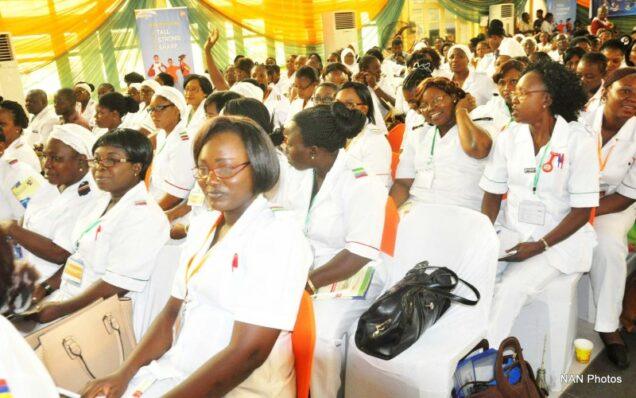
The non-implementation of the new National Minimum Wage and long-standing welfare difficulties have prompted nurses and midwives at the Ladoke Akintola University of Technology Teaching Hospital in Ogbomoso, Oyo State, to go on indefinite strike.

In Ibadan, the state capital, on Saturday, Ojewumi Olutayo, the Unit Chairman, and Adedokun Foluwake, the Secretary, issued statements that included this information.

According to reports, the National Association of Nigerian Nurses and Midwives, LAUTECH Teaching Hospital Unit, went on strike after the hospital’s management was given a 15-day ultimatum.

In spite of many discussions and reminders, the group, which clarified the start of the strike, claimed no significant action had been achieved to fulfill its requests on Friday.

After I left, my spouse made fun of me and insulted me.
As the sole state-owned tertiary healthcare facility in the state, they added, the teaching hospital serves as a vital referral hub for patients from Oyo, Osun, Kwara, and surrounding areas.

The organization further stated that a strike “could seriously disrupt services for thousands of patients, including pregnant women, children, accident victims, and emergency cases.”

It emphasized that maintaining high-quality healthcare service in the state depends on industrial peace and urged Governor Seyi Makinde to act quickly to guarantee justice and equity in worker welfare.

The nurses and midwives insisted that the strike would go on until their demands were completely satisfied, while reiterating their dedication to providing high-quality care and professional excellence.

The LAUTECH Teaching Hospital’s labor dispute is indicative of broader discontent in Nigeria’s healthcare system.

Even if their complaints about unpaid wage arrears, hazard allowances, residency training grants, and unfavorable working circumstances were not entirely addressed, residents in the Federal Capital Territory paused an indefinite strike after the Senate stepped in, according to a report released on Friday.

Ajayi, Ondo Guber Aspirant, Set to Defect from PDP to APC

0

As the election on November 16 approaches, Honorable Agboola Ajayi, a member of the Peoples Democratic Party (PDP), is very close to leaving the party and joining the All Progressives Congress (APC).

This comes after Ajayi withdrew his lawsuit against the results of the previous election that he had filed before the Supreme Court.

After extensive conversations with his family, friends, party members, and legal counsel, he stated, the decision was made to withdraw his appeal at the highest court.

In a letter to the Supreme Court’s Chief Registrar, the former deputy governor indicated that his dedication to good government and peace served as the basis for the decision.

Following thorough discussion, we have decided that the appeal should be dropped, and I therefore do so,” Ajayi stated. My top priorities as a former deputy governor and lawmaker are excellent government and peaceful coexistence in Nigeria and Ondo State.

Read Also: Farmers in Kogi Benefit as Lawmaker Shares N150m Worth of Agricultural Inputs

Ajayi had previously stated that he was willing to join the APC in favor of President Bola Tinubu’s reelection campaign, Governor Lucky Aiyedatiwa revealed in response.

Indeed, Hon. Agboola Ajayi has personally informed me that he intends to join the APC. Speaking on Channels Television, Aiyedatiwa stated, “I am waiting for him so that we can collaborate to build a greater Ondo State.”

“A final seal on the mandate freely given to me by the people of Ondo State,” the governor added, referring to the Supreme Court’s rejection of all opposition petitions challenging his election.

In the 2024 gubernatorial election, Ajayi, who ran alongside 14 other candidates, became Aiyedatiwa’s closest opponent with 117,845 votes to the APC candidate’s 366,781 votes.

After months of post-election litigation, the Supreme Court unanimously dismissed petitions submitted by the PDP, Social Democratic Party (SDP), and Allied People’s Movement (APM) on Tuesday.

If confirmed, Ajayi’s planned defection could drastically alter Ondo State’s political climate in advance of subsequent elections, according to political analysts.