Home Blog Page 1556

Excessive costs of supplies might ship sachet water producers out of enterprise– Affiliation president

0

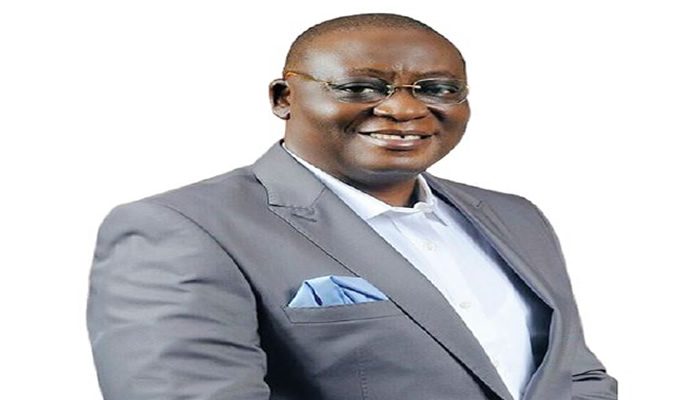
National President, Table Water and Beverage Producers Association of Nigeria, Prince Adeniyi Olukoya, talks to BANKOLE TAIWO on the continued fall in the value of the naira and its impact on the business

For how long have you been in this business?

I am the National President of the Table Water and Beverage Producers Association of Nigeria. This is a body that represents most water producers in the country. We process and package sachet and table water for the needs of the populace. We all know the importance of water, particularly very clean and germ-free water in our daily activities. I have been in the of processing and packaging water for about 22 years and we are still going strong despite the obvious odds of our nose-diving economy

How lucrative has the business been?

Well, in the past you could confidently say that at the end of the day that your labour had not been in vain, but that cannot be said to be the situation of things now because we are now subsidising what we produce and running at a loss.

What do you mean?

The forex crisis, which is hitting our economy so terribly, has affected our cost of production. We have some consumables like water filters and treatment plants and other things that we must use to enhance the quality of our products; quacks in the industry who are cutting corners may decide to do otherwise, but we can’t do that. Let me start with the least of them, the water filter that we use in our machines for filtration; the 11-inch type as of last year was N350, but it is now between N1,000 and N1,100, while the 22-inch type that was about N700 is now over N2,000.

A kilogram of printed rolls, which is the sachet that contains the water, as of last year was N1,400 but it is now N3,900. The bags that we normally use to pack the sachet water was N4,400, but today, it is as expensive as N17,000. The diesel we were buying at N600 per litre is now N1,600, while petrol that was N192 per litre is now N650, that is even if you are lucky to get it without having to queue. For the vehicles we use to distribute the water, the fairly used mini truck like Dyna 100 or 150, which was between N4m and N5m, is now between N9m and N11m; likewise the exorbitant prices of tyres and other spare parts. There is this mini bus called ‘Korope’, which we also found so useful and quite economical in distributing our products which as of last year was around N670,000, but it is now N3m.

The epileptic power supply is another problem entirely, so you are mostly running on generators using diesel or petrol for your production. The submersible pumping machine we were buying for N60,000 last year is now N240,000. Last year, the surface pump that will distribute the water around the compound was going for between N8,000 and N13,000 depending on the quality you’re buying, but today the least you can get is N150,000. So, how do you talk about making profit in this volatile situation? I won’t want to say we have been working at a loss, but rather say that we have somehow been subsidising the production just like the government was subsidising fuel, but we can’t continue to run the business this way.

So, where do you and your members go from here?

We are constrained to raise the prices of our products; the price hike is a child of necessity if we must remain in business. I forgot to inform you that the salaries of our workers too have to change considering how much they have to pay for transportation now as well as the continued rise in the prices of goods, most especially food. So, after a lot of deliberations, we have decided to increase the price of our bag of sachet water containing 20 sachets from N300 to N500, while our packs of water containing 12 bottles, which formerly was N1,300, now go for N1,500. It is painful but it is what we have to do to remain in business and make marginal profits to keep running the business and serve the people and of course not to throw out our workers.

The people should please bear with us and we are assuring them that once the prices of these things come crashing down, once this dollar galloping like a wild horse is tamed, it will definitely reflect in our pricing too. We are not shylocks and we can feel the pains of the people too in this hard time but if we must keep serving them and remain in business, we have to adjust the prices of our products.

Are you not worried about quacks taking advantage of the increase in price to further engage in sharp practices by offering untreated water even in bigger packages to unsuspecting members of the public?

Thank you for reminding me of this critical aspect of our discussion. Recently, in Ogun State, the Ministry of Environment announced the outbreak of cholera in a part of the state but when they went to do the analysis of the products of our members, we were not found culpable. Truly, there are many quacks out there who don’t care about water treatment to make it safe and germ-free. There are some that we have caught and reported to NAFDAC. These quacks will get the water from the borehole and just package it with no treatment; that is the water that comes in larger packages to attract people to buy.

NAFDAC approved that sachet water should come in a 50cl package, but you find these quacks packaging theirs in 60cl or 70cl. These people are indulging in these sharp practices because they want to sell at all cost, but we shall be on the lookout for them and report them to the appropriate quarters; our people too should be careful and wary about patronising these quacks. We may not be able to eliminate all the quacks, but their activities can be curtailed if we see something and say something.

Is there another association for sachet and table water producers in the country and do you compare notes?

Yes, we also have the Association of Table Water Producers, but we don’t compare notes; we are two independent associations with different constitutions and agendas.

How will you describe the contribution of members of your association to the country’s economy?

Our contributions are numerous; we are a major employer of labour by engaging the services of drivers, loaders, motor boys, packers, operators, and cleaners. We also contribute to the health sector by providing potable water; we contribute hugely to reducing communicable water borne diseases to the barest minimum, thereby saving the government huge sums of money; we employ so many vibrant youths and take off the streets those constituting nuisance to the public and law enforcement.

Is this the first time you have increased the prices of your products in the last year?

We had restrained our members from increasing prices all along, hoping that things would improve; the nylon producers have increased prices over 10 times, diesel prices have changed over eight times, and soft drink prices have gone from N100 to N350 over the same period.

In the face of the biting economy, what is your message to President Bola Tinubu?

The President should please be very aware that things are getting so tough for Nigerians; we are being driven towards the precipice; a lot of us are quite surprised with the way things are turning out. Yes, President Bola Ahmed Tinubu has some laudable programmes but the implementation of these initiatives calls a lot to question. My suggestion is this, let’s take a look at the food crisis in each of the 774 local government councils. We should create a market where people can register and get to buy food that has been subsidised by the government at cheaper prices. Now that the subsidy on fuel has been substantially removed, let the government begin to subsidise food. The President must as a matter of urgency help tackle this issue of hunger because a hungry man is an angry man.

Our governor, Dapo Abiodun, should help to bring succour to the people; the truth is that things are tough here. I heard the other time about two weeks ago when he said that his government had purchased 100 truckloads of rice to be sold at subsidised prices, but we have not heard anything about this laudable initiative again. Things like this should not be delayed because people are hungry; people need all the help that can be rendered now to douse the tension. After all, the report out there is that the Federal Government’s allocation to the state had jumped up since the fuel subsidy removal, so let the governor help the residents too with food palliatives.

But people are asking how long will the government distribute food palliatives, what about investment in agriculture?

I know that the Federal Government has deployed a lot of resources to boost food production but these are not what we can get on time. The fastest of these crops that we can get in three months is maize; yam is about seven months; cassava is within nine months to a year, so all of these food palliatives are just stop gap interventions pending when those being planted will be ready. This is the time to give serious thought to diversifying the economy; we have neglected agriculture for too long, and we need to go back to the basics. We must begin to encourage farming on a large scale; I am talking of mechanised farming to boost food production. We can no longer run away from this truth.

What other challenges are your members facing?

The issue of raw materials is quite critical because of the dollar that is now galloping away like a wild horse that needs to be tamed. A dollar now exchanges for between N1,600 and N1,700, and the effect is the skyrocketing prices of goods. The President and his team must rise up to the occasion; the rate at which the naira is suffering devastating devaluation is really a concern to everyone; something drastic should be done to make the naira bounce back.

How about power?

Another challenge is the epileptic power supply; it is sad what we are witnessing in this nation. I am even beginning to suspect that we might be dealing with some saboteurs as far as the issue of power is concerned because the generation that was around 7,000 megawatts has now come to below 1,000 megawatts; something is wrong somewhere. South Africa is generating over 40,000 megawatts, Egypt is generating around 70,000MW, even Libya with all the turmoil is generating sufficient megawatts, and so what is wrong here? We can’t lay everything at the doorstep of the government, we must be ready to be our brother’s keepers; when you see something, especially about those sabotaging the efforts, and we should blow the whistle.

I also want to suggest that we introduce the death penalty for economic saboteurs and let this be implemented diligently. I remember the days of the War Against Indiscipline during the military days of (Tunde) Idiagbon and (Muhammadu) Buhari; everyone adjusted because they were quite sure of getting punished if they flouted the decrees. When you got to the bank at that time, you knew that you had to join the queue to be attended to, not that you wanted to do things as you wished. We should just be ready to do the right thing and things will begin to fall in their right places.

If the naira fall continues with the attendant rise in the prices of things, will it not send small-scale business owners like those producing sachet and table water out of business?

With the current huge disparity between the value of the naira and actual economic activities, whatever little gains are recorded by small business owners are eroded, leaving us with no choice but to spend part of our capital to meet domestic obligations. With this development, most small business owners are at risk of losing their businesses to inflation. This is causing palpable fears among us.
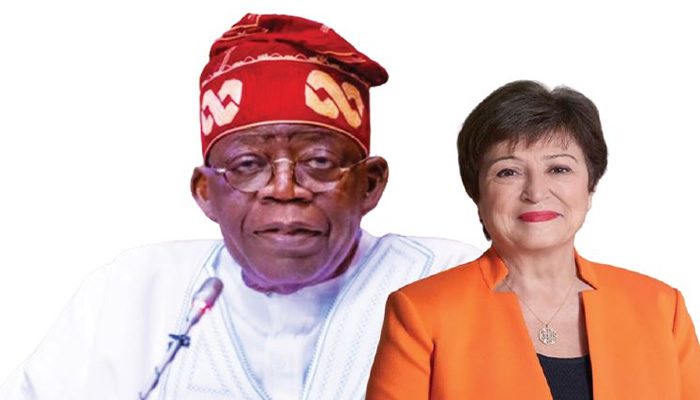
IMF unusual capsule to treatment worsening financial disaster

0

Daniel Adaji examines some of the suggestions of the International Monetary Fund to the Federal Government and their contributions to Nigeria’s economic woes

Nigeria’s economy has suffered severe stagnation since the 1980s. There are two schools of thought to Nigeria’s poor economic situation; while Eurocentric literature blames the civil war and poor leadership in the country, the Afrocentric literature dates Nigeria’s economic distress to the era of colonial suppression and economic exploitation.

However, none of these thought lines relates the policies of the International Monetary Fund to Nigeria’s failing economy.

There is a common saying that he who pays the piper calls the tune. The same can be said of the interference of the International Monetary Fund with Nigeria’s economy and policies. The IMF is the world’s focal organisation responsible for international monetary cooperation. It is otherwise seen as the United Nations autonomous and specialized agency saddled with the responsibility of fostering stability and economic growth globally.

Conceptualized in the UN-sponsored Monetary and Financial Conference in Breton Woods, New Hampshire, it was created in 1946 with 46 members. The IMF has incorporated 193 countries as of the last count.

It was birthed to prevent another strike of the great economic depression that occurred in the 1920s and 1930s.

Nigeria’s journey to agency

In March 1961, Nigeria joined the IMF train, a development that occurred just a few months after its independence.

IMF mandates

The IMF handbook declares it has six mandates geared towards the economic stability and prosperity of its member states.

One of the key roles of the IMF is the surveillance over members’ economic policies, financing temporary balance of payments, combating poverty in low-income countries, mobilising external financing, strengthening the international monetary system and increasing the global supply of international reserves, building capacity through technical assistance and training and dissemination of information and research.

Expectedly, the IMF is to lead economic reforms by promoting prudent macroeconomic policies, structural reforms in areas such as exchange rate and tax policy, and issues related to fiscal management, budget execution, fiscal transparency, tax and customs administration.

“The policy of the IMF is of two folds; policies mandatory for members, and assistance policies. Policies mandatory for members are those rules every country must observe as a member which include the IMF Articles of Agreement, quota subscriptions, refrain from restrictions on exchange of foreign currency, and openness in economic policies affecting other countries,” the handbook stated.

The assistant policies include loans or conditional lending and providing economic advice.

Some economists have argued that the content of the conditionality has been the most controversial output of any intergovernmental organisation.

A professor of Political Economy and Sociology, Alexandros Kentikelenis stated that “for the first four decades of its operations, IMF’s conditionality included a set of predictable reforms that focused almost exclusively on budget deficit reductions, restrictive monetary policy, and exchange rate devaluations.”

The IMF has embarked on several programmes and the most common among them are the Standby Arrangement, 1952, and the Extended Fund Facility, 1974, both of which were designed to provide short-term-balance of payment assistance to member countries.

Economists Robert Barro and Jong-Whan Lee stated, “The IMF replaced the SBA (Small Business Administration) and EFF with the Structural Adjustment Facility 1986 and the Enhanced Structural Adjustment Facility 1987 owing to the shortcomings of the former.

Agency’s programmes in Nigeria

In Nigeria, the IMF has adopted and implemented a policy and programme referred to as the Structural Adjustment Programme otherwise known as (Washington Consensus) with its consequent loan conditionality. Although Nigeria has been a member of the IMF since 1961, it is believed that it was only in 1986 that the IMF established a stronghold in the country and began the policies that have been hazardous to the country.

Nigeria, the chorused giant of Africa, was purely an agrarian economy until the discovery of oil in Oloibiri, the present Bayelsa State by the mid-1960s and fully dependent on crude oil by the 1970s. This new wealth led to the neglect of the other sectors like agriculture, which had hitherto sustained the economy.

By the 1980s, oil sales dominated the economy accounting for about 80 per cent of the Federal Government’s revenues and 95 per cent of foreign exchange earnings. However, the wide oil glut that occurred between 1980 and 1986 caused a sudden price fall that reduced forex in Nigeria.

An economist, Imimole Benedict said, “The fall in world oil price and the sharp decline in petrol output, the latter resulting from a lowering of Nigeria’s OPEC quota in the early 1980s also brought the country’s economy to the verge of collapse. Against this backdrop, the sudden oil price shock created a balance of payment deficit in Nigeria’s economy.”

He added, “Ranging from her inability to meet her domestic financial obligations to difficulties in servicing her foreign debt, the Nigerian economy shrank. It is this economic difficulty that led to the intervention of IMF in 1986 together with its Structural Adjustment Programme.”

SAP is a set of economic reforms that a country must adhere to in order to secure a loan from the IMF and/or the World Bank. Structural adjustments are often a set of economic policies, including reducing government spending, opening to free trade, and so on.

Prescriptions good on the surface

Experts have argued that the IMF policy recommendations to Nigeria look good on the surface but have dragged the country into deeper and more abject poverty.

An economic expert, Abdulrauf Aliyu, noted, “Accepting the IMF conditionalities implies economic difficulties; its rejection will as such lead to a parlous economic situation. Indeed, this was no easy choice.

“The IMF handbook stated that SAP is based on a policy of privatisation and commercialisation of public utilities, removal of subsidies, liberalisation, and self-reliance. It is an economic measure aimed at revamping the economy.

“SAP’s objectives in Nigeria, according to the IMF, are to restructure and diversify the economy by curtailing Nigeria’s over-reliance or dependence on the oil sector thus stimulating the development of non-oil sectors; to curtail inflationary growth to the economy by removing all barriers to effective and efficient trade; to attract foreign direct investment to Nigeria through the adoption and implementation of deregulation and privatisation policies; to create employment opportunities for Nigeria and to reduce public expenditure and entrench prudent financial management of the economy.

“The handbook noted that the IMF prescriptions required fiscal discipline which was lacking among its economic managers. In other words, the conditions became the necessary procedures that were to be adopted by the Nigerian government, and its implementation was supervised and monitored by IMF officials.

“The IMF prescriptions were attached with many stringent conditions which accompanied the SAP. These conditions include the rule of the market; cutting public expenditure for social services; deregulation, commercialisation, and privatisation; elimination of public goods; removal of petrol subsidies and the abolition of agricultural marketing boards; devaluation of the naira; staff rationalisation in government ministries, parastatals, and agency.

“It is also possible that the harsh conditions were intended by the IMF to make the military regime in Nigeria unpopular thereby forcing a regime change. Certainly, the loan was a devil’s alternative, and devaluation of the Nigerian currency, was an additional economic burden. Industries, exchange rate, currency devaluation, employment, banking and finance, and oil subsidy were the areas worst hit.”

Recall that the naira devaluation was not a one-time incidence, but rather had been on constant and precarious scales of devaluation. In 1985, the naira exchange rate to the dollar was 90 kobo to $1. However, by 1986 after SAP was introduced, the exchange rate of naira to dollars had increased to N2.02, and by 1999 it had reached N22 to $1.

The naira further depreciated to dollars, falling to N320 to $1 by 2016. The Nigerian economy further contracted in December 2017 when the naira was exchanged at N360 to $1 and recently in February 2024, the dollar was exchanged at N1600/$. This devaluation of the naira as one of IMF’s loan conditionalities led to high inflation rates and lowered purchasing power of many Nigerians.

Abdulrauf added, “The IMF policies escalated the balance of payment deficit which led to horrendous local currency costs of imported raw materials and intermediate capital goods that in turn orchestrated inflation and necessitated a decrease in living standards.

“The same aftermaths were also present owing to the removal of subsidy which further compounded the problem as subsidy removal increased import bills. This also worsened the position of manufacturing industries which were largely dependent on imported machinery, spare parts, and raw materials.

“Due to currency devaluation and subsidy removal, the Nigerian government had to ban the importation of agricultural goods like rice, maize, wheat, and vegetable oils. Although by obstructing import, there was a slight increase in local output production; significantly in rice, poultry, and fishery products, but these were less profitable because of high costs of imported inputs incurred due to subsidy removal and currency devaluation.

“This resulted in more economic hardship for the ordinary people. An inclusive economic system will in the long run benefit the country more than the previously held stand of extractive economic system. Additionally, deregulation, commercialisation, and privatisation initially compounded the unemployment crisis and enthroned mass poverty. Its socio-economic costs on people could be gleaned from the below.”

He added, “Also, through staff rationalisation of public institutions, many civil servants lost their jobs with an accompanying concomitant cataclysmic consequence of social dislocations: as many breadwinners in families lost their jobs without any social welfare scheme provided by the Nigerian government.

“It also led to civil unrest, riots, and a rise in crime rates. Apart from civil unrest, riots, and a rise in crime rates, privatisation lowered life expectancy and literacy rates among middle and low-income Nigerians.

“Privatisation is to be considered the hallmark of capitalism. This is a pointer to the fact that capitalism is indeed profit-inclined. Once privatised, schools, hotels, firms, and hospitals began to charge unaffordable fees. Due to the high costs of health care and education, many were discouraged from seeking health care in hospitals and furthering their education. This situation led to the proliferation of quack doctors and fake drugs as many could barely afford good hospitals and drugs.”

In its latest ‘Post Financing and Assessment Discussion and Staff Report’ for Nigeria, the fund suggested a series of measures to be implemented over the next six to 12 months aimed at stabilising the economy and fostering growth.

One of the primary recommendations is to raise the monetary policy rate at the upcoming Monetary Policy Committee meeting to achieve a positive real interest rate.

“Raise the monetary policy rate at the next Monetary Policy Committee meeting to make it positive in real terms over the next six-12 months. This will be a key signal of the direction of monetary policy despite limited transmission. The pace of tightening and the terminal rate can be calibrated from meeting to meeting considering incoming data,” the report stated.

An economist, Femi Oladele, said he believed that Nigeria’s economy would rebound if the country sought indigenous solutions to its economic challenges. He added that external communities couldn’t proffer solutions to problems endemic to the country.

“I believe Nigeria’s failing economy will rebound with ‘insights from the inside’. African solutions cannot be rightly proffered from the outside,” he said.

Lending his voice to the matter, a financial expert, Prof John Alabi, said while the IMF recommendations might appear good from the outside, it had sparked crises in nations of the world and must be thought of critically before embracing and implementing them.

“You’ll realise that because of the universal nature of the IMF prescriptions, it doesn’t consider the local economy. So, nations of the world would have to think twice before implementing their recommendations. While some countries of the world have accepted their recommendations, others have vehemently rejected them.

“Where policies are recommended, countries should look at the local conditions and see how best they can be implemented, otherwise the prescriptions are violent and can spark up crisis in nations of the world; it can even engender military coup where the military takes over the government,” he said.

He added, “Currently, what we have in Nigeria is an inflationary crisis. The IMF will ask for a free-fall economy, but no country in the world will just leave their economy to experience a free fall. Even in the United States and other developed nations of the world, there are unseen hands that control what happens in the economy.”

Alabi suggested guided deregulation like the introduction of the commodity board, saying, “We cannot just allow the naira to fall freely; the forces of demand and supply cannot just drive the economy. So, the policies of the IMF, as good as they are, must be studied and domesticated in line with the situations in Africa and other developing countries.”

In its latest but harsh recommendation to the government, the fund asked the Federal Government to completely phase out electricity subsidy in the country.

The IMF made the recommendation while advising Nigeria on pathways to restoring macroeconomic stability in its ‘Post Financing Assessment’ report.

Nigeria’s electricity has been subsidized; hence, the power sector is currently not allowed to charge a cost-reflective tariff due to a subsidy paid on electricity by the government.

Up till the third quarter of 2023, Nigeria has spent N204.59bn on electricity subsidy and plans to expend an additional N1.6tn in 2024 to enable citizens to access power at a low cost.

The IMF noted that fuel and electricity subsidies are costly, do not reach those that most need government support “and should be phased out completely.”

However, taking a look at the impact of the fuel subsidy removal, and the lack of preparedness on the part of the government to cushion the impact on citizens, experts have criticized the move and have said, Nigeria needs to properly study the recommendations of the IMF before implementation.

The Chancellor of the International Society for Social Justice and Human Rights, Jackson Omenazu, said the IMF policies were aimed at impoverishing Africa, adding that the call for electricity subsidy removal was to the advantage of the West than it would benefit Nigerians.

He called on the Nigerian government to resist the IMF and its policy recommendations and develop local solutions to the country’s problems.

“In the current world order and the last 40 years, IMF’s recommendations have not favoured Africa and Nigeria inclusive. It has rather helped in impoverishing the region and enriching Europe and America.

“We don’t need policies from the IMF to run our economy. The recent call on the government to remove electricity subsidy is uncalled for. It is the IMF’s way of making Nigerians import alternative energy should they not be able to afford the new bill. They (the IMF) are banking on the ignorance of the leadership of the nation to carry out the policies to their advantage,” he said.

Jonathan, Buhari not brave to implement Oronsaye report – Ex-minister

0

Former Minister of State for Works and National Coordinator of South-West Agenda for Asiwaju, Prince Dayo Adeyeye, shares his thoughts with AYOOLA OLASUPO on President Bola Tinubu’s adoption of the Stephen Oronsaye report, the current hardships faced by Nigerians, among other issues

Nigeria has been experiencing a continued rise in the prices of goods since the removal of the fuel subsidy and the floating of the naira in 2023. Do you think the economy can continue to carry the heavy burden of that subsidy removal in the face of competing national priorities like education and healthcare infrastructure?

Is subsidy removal important? When you have a subsidy that means you will have the burden and it is what led us to this. Lack of courage from successive governments is what led us to this dire strait. It is a huge burden to subsidise the price of fuel and that is a burden on the economy of Nigeria. It is the burden put by President Bola Tinubu, and of course, it has its consequences, which is the increase in prices of foodstuffs and some other items. In Nigeria, when prices go up, they never come down. Yes, but this is not a new experience. We have had it before. The thing is that it was practically impossible to begin to subsidise fuel.

Let’s face it. At the time we were buying fuel at N180, in our neighbouring countries a litre of petrol was selling for nothing less than about N950 and there was huge smuggling of petroleum products across borders. I travelled across West Africa last year with my wife, and we saw this practically. So, it was not sustainable; it was particularly impossible to continue like that because the NNPC and the Federal Government were broke. So, the thing is that the fuel subsidy has been removed and people are working around the issue to make sure that life is better for Nigerians.

Firstly, we have to make sure that the economy does not collapse completely. Like Governor Chukwuma Soludo of Anambra State said, by the time Tinubu took over, Nigeria’s economy was like a dead horse. It was already dead. It was just put there standing, and there was no economy. That was the truth. The money in Ways and Means, money you did not earn, is what is fueling inflation now. Nobody does that in the world. The price of the dollar has continued to go up even though the government has removed fuel subsidies. This is what is going on, but the economy will get better. However, the policies that the government is putting in place cannot have flexibility. It’s like when you plant a seed, it’s not immediately you get it to grow up, you need to give it time. That’s why I am saying Nigerians should give the presidency a little more time so that the effects of the policies that have been put in place will come to a full stop. I am optimistic that things will be better around the corner.

You mentioned price control while talking and you said that when the prices of things go up in Nigeria, It never comes down. How do you think the government can address the situation?

It is the present situation where the price is artificially up. It will still come down. Compressed Natural Gas is an alternative for powering vehicles, particularly for vehicles that move goods: trailers, and others. The cost of transportation will come down drastically. You find people coming to build the ground by way of local production of those items because for example, if you import toothpicks, which we are still importing, and it costs like N300 per toothpick, and I think that there are 60 per cent of chances in my place that I can produce this toothpick for less than N130. I will do that. So, as imports become more expensive, the locally produced food items become super.

Therefore, you have to increase production locally. These are common sense economics, and I wish we applied it in the case of Nigeria. When I said the price is going up, what I meant is that naturally when there is a normal increase in price, it doesn’t come down like that in Nigeria, but in this present situation that we are going through, these prices will come down because they are artificially induced.

There are insinuations that the interventions from the Federal Government were marred by the lack of accountability and poor feedback mechanism, which is not robust enough to send the right signals that the process adopted, is not delivering the maximum result. What is your thought about that?

I have said again and again that those interventions are short-term decisions, and you know the Nigerian family situation. Yes, the President eased the tension, and he has released a lot of money. Now, all the state’s and local governments’ allocations have doubled, but we have not seen the effects. To alleviate the suffering of the masses in the interim, please take some measures; pay the pensioners and the minimum wage. Some of them have not yet balanced the payment of salaries. Make sure that you have, in terms of transportation, found a way to subsidise the movement of goods, especially agricultural products to the cities.

Do that by calling the transporters and saying, ‘I’m going to give you this amount of money because we have more money now’. If you give them, then they can move these goods cheaply to the areas where they are needed. So, we need to hold the local governments and state governments more accountable because the Federal Government doesn’t have a particular territory by the law that it controls. It just sits up there and if it wants to do anything, it is through these local and state governments. When you pass this money to them and they are not carrying out what they are supposed to do with the money; of course, you will not see the development in society. So, they need to be held more accountable. There should be more pressure on them to do more for the masses.

You claimed that President Bola Tinubu’s administration has not favoured the South-West. Many Nigerians will not agree with you on this. Why did you say so?

How has he favoured the South-West? If you look at the statistics about the last government in the last eight years, then check all the power centres. President Bola Tinubu is only trying to balance things, and he is balancing it with all Nigerians. He was accused completely of favouring one side, then you will begin to see people complaining that he is favouring only his side. President Tinubu is favouring all Nigerians. The appointments are balanced in my view. In the South-East, we know how many they got in the past, but today, you have many of them who have been given important parastatals.

Even in terms of the ministries today, we have people in charge of science and technology compared to what they had in the past, and then we have the South-South too. Most Nigerians can feel a sense of belonging now under President Tinubu. He is not favouring any particular side of the country. I think the appointments are well-balanced, but Nigerians will just jump to a conclusion. He has a high sense of fairness. President Tinubu is more than just a person. The appointments are well-balanced if you do a thorough analysis. I know what I was saying when I said he didn’t favour the South-West. I didn’t even elaborate on this to this level in that study. Do they still want the South-East to get more appointments? They said President Tinubu is favouring the South-West. I said, ‘Give me the facts’; and they couldn’t give the facts.

Even if you look at all the ministries, Tinubu has been fair in sharing the appointments for all Nigerians. I was a national secretary of Afenifere; I had the authority to issue statements, which were authorised by our leaders. We had the reason to complain that former President Olusegun Obasanjo was not doing anything to revamp the situation because he didn’t want to be accused of favouring his area, and they did everything to ensure that the South-West did not get anything. You can remember that under the Obasanjo regime, the Lagos/Ibadan was in bad shape and was never touched. He didn’t even do anything to his place in Sango-Ota. He did nothing in the South-West because he didn’t want to be accused of favouring the South-West. Now, you want to blackmail President Bola Tinubu to do the same thing so that the South-West can suffer. We want him to be fair to all Nigerians and we don’t want him to subject the South-West to a bad situation.

Recently, the Senate asked the Federal Government to distribute food stamps, which can be exchanged for food to people on low income as part of its measures to cushion the current economic hardship. Do you think that is the best way to go at this moment?

It is good to say these things but what about the implementation? You are asking me that many ideas have been put forward, but they are not working and now you are talking about food stamps. It is nonsensical for the President to leave his seat and start distributing it to the markets. These are the issues, and I don’t think food stamp is the solution for us in Nigeria. Just by the level of wealth of America which is at least worth $1tn to that of Nigeria, people still suffer hunger and still have to rely on food stamps which until recently, I believe Nigerians didn’t need to have food stamps before they would eat.

As Nigerians, we must realise that the economic hardship here is so bad and it is not in Nigeria alone. I even saw a video where people are queuing for food, the same thing happens in other European countries, even in Japan too. So, it is not limited to Nigeria, there is worldwide inflation partly as a result of COVID-19, which people have not recovered from. I don’t want to support food stamps; I believe in local production, and better distribution of local food, which is the most important thing. I believe that the food stamp is not the solution to improve the local production of food. We produce enough food in this country. What we need is to put them into effective use. I do not eat any foreign-produced rice. I eat the rice produced in my state, Ekiti. That’s what I eat, and most people can testify to that. That has happened for more than 10 years now. I think people must realise that we need to eat our rice. Even when I go abroad to see my children, they will always say if it is possible, bring some rice for us, and that is Ekiti rice. I’m saying that the programmes put in place by President Tinubu are the right ones for the country and that means the policies can be effective.

As a former Minister of State for Works, what interventions should come from the government to stop the frequent national grid collapse across the country?

The first thing is that we need to rethink our power sector policy completely. We need to decentralise. There is too much concentration of things in Nigeria and that’s why I support restructuring and devolution of powers. I don’t believe that one authority should be responsible for supplying power to all Nigerians. I don’t believe in it, and I think that should be decentralization. That’s why I applaud what happened recently in Abia State, where they completed the power plant, the light-up project that they did, which is going to supply power to about nine local governments in Abia State. That should be the way forward. The way forward is for every state, local government, and university to begin to think of how they can generate their power.

Solar, wind, hydropower, and build gas supplies on their own, and supply their utility and be out of the grid. I’m surprised that a lot of people who are building estates in Nigeria today can’t think imaginatively to say, ‘These estates we are building will not be connected to the national grid because we’ll make everything solar’. We have an abundance of sunlight in Nigeria. When I went on a visit to Israel, I saw it there. Some estates in Israel are self-sufficient. They built their solar panels on the rooftops and generated their power. They don’t have to be on the national grid.

But the Federal Government has also planned to increase the power capacity to 20,000 megawatts from the 12,522 MW projected within the next three years. What impacts will this have on the economy?

It will have an impact, but I can still believe that even with that, there will be a lot of decentralised management of that power sector. That will be the solution. Allow organisations to generate their power, transmit and supply. I think the Constitution has to be amended now to allow that. I expect the private sector and the state governments to sit and see how they can generate their power and be self-sufficient in that sector. That’s the way forward because even if we generate more megawatts, we are still going to deal with bureaucracy, with the same set of situations. We must allow the private sector to come in. I believe that because of the nature of Nigeria, the Federal Government inherited this, and it is not in a position to manage this efficiently.

The nation is currently facing multiple challenges of insecurity, and it is believed by security experts that the national grid collapse helps criminals to perpetrate their activities under the cover of darkness. What is your thought about this?

The national grid collapse is more of sabotage. Maybe the tactics are even responsible for that. If the bandits know that they cannot put the whole nation in darkness and that it can only affect one or two areas, when you decentralise, they will rethink. You know under the cover of darkness; they can perpetrate more atrocities. Though they do perpetrate atrocities in broad daylight, the effort of the government, I will also say, is commendable in the area of security because people testify that the incidents of banditry are reducing. We still hear about it, but it is reducing. People can travel from Kaduna to Abuja more freely now, but we still have great challenges and I believe that with time, the government will be able to tackle these issues.

The NLC said it suspended the two-day national protest meant to fight against the high cost of living, inflation, insecurity, and hardship in the country. Do you think the protest and the minimum wage request of N1m by Labour are justified?

They are not justified. That guy is just playing politics with the Labour thing. Why is he using the NLC to nurture his political agenda? N1m minimum wage in this economy! So, for somebody on Level 8, the minimum wage will be N1m; are you saying some companies will be able to let go of N1m? You just want to ruin the economy because he is an unreasonable person, and he is doing politics with it. The same thing he did in Imo State the other time. A week before the election, he went to Imo State and said they had not implemented one thing or the other and he said he was going to lead a demonstration.

You saw the result there. People there attacked him; only God saved this guy. The guy should be reasonable and that’s why I want to commend the President and the leadership of the Trade Union Congress who are more reasonable. You have made your demands to the Federal Government and if they will be met, it is not in a day. All you need to do is give time. For some of these demands, there is no way they are going to mature after another one or two years but the ones that are implementable now, the government is making efforts to implement them, and then you are saying N1m minimum wage. Is it not the purchasing power that matters?

So, how much do you think should be the minimum wage considering the current economic realities?

I am not the one to determine what the minimum wage will be. People in charge of it will look at all the parameters, factors, and resources of the country, and everything will come out with a stable figure, but in Nigeria, you should not go and dream that if you have a minimum wage of N1m, then you are rich. People will die because of the N1m minimum wage because what they are buying today for N10,000 will increase. The inflation will spiral up. It’s not the amount of money that matters, it’s what the money can buy and not even about the N1m.

The NLC President, Joe Ajaero, said the protest was suspended due to intimidation and threats from the government. Do you think threats and intimidation against peaceful protests are necessary in a democracy?

When he went to the National Assembly, nobody threatened him there. Why is the man playing politics with the leadership of the Labour union? The man has a hidden agenda to force Peter Obi on Nigerians so that the Labour Party can have its way. Should everyone be following him like sheep? He carried out a protest and nobody was arrested even though I saw the video where policemen were helping them to distribute water and providing security for them. So, where is the harassment and intimidation? It is not true and there is no evidence of it.

How will you react to President Bola Tinubu’s directive that the Oronsaye Report should be fully implemented after its submission 12 years ago?

This is why I campaigned for President Bola Tinubu. I see that he is a man of great courage, who is not afraid to take the hard decisions that are necessary to put Nigeria on the right foundation and the path of development. That’s why I voted for him. This is what has been lacking, especially in Nigeria. The bureaucracy was too large. The recurrent expenditure was taking almost 80 per cent of the budget of Nigeria. So, former President Goodluck Jonathan came up with an idea on how to reduce our bureaucracy and be more efficient so that we can have more allocation of resources for capital development. Ninety per cent of the country’s development will remain only 10 per cent to do roads, build bridges, and some other infrastructure. There is no way you can develop with that. The report was submitted to former President Goodluck Jonathan, but he didn’t implement it. For eight years former President Muhammadu Buhari was here, he didn’t have the courage to implement it.

As a man of great courage, who is not afraid to make high decisions, and a man of great vision, he said he would do it. I just hope that he will carry out that vision. There were about 350 MDAs in Nigeria at that time, and it was said that we needed to free up more resources for capital development. Since our recurrent expenditure, which was just to run these agencies and pay salaries was mopping up almost 80 per cent of our budget, allowing new development to take less than 20 per cent of the budget. That was the situation and that was what Jonathan thought about to see how these agencies can be streamlined through this panel. Oronsaye submitted his report to President Jonathan. Buhari came into the office and the report was there as part of his handover notes. And for eight years, he did nothing about it.

At the time that Orosanye and his panel did their job, Nigeria had about 350 agencies, which they would now streamline to about 150 but the number of agencies is no longer critical. We now have about 1,300 agencies and departments. It’s no longer 350. So, I don’t know if this has been brought to the attention of President Tinubu. We can’t even begin to implement the Oronsaye report fully now because it is obsolete, it is outdated. What I think the President should do is ask Oronsaye to come back with his members on the panel and ask them to look at these 1,300 MDAs and see how they can be streamlined into something more manageable.

Every year, since Oronsaye submitted the report, we continue to create commissions and agencies and that is putting extreme pressure on our recurrent expenditure, which has now gone up to about 90 per cent of the total budget. So, I support the reaction of President Tinubu to this situation, but I think if we just go home now and dust off the report as he wants to implement it, we won’t be serving justice to ourselves. What we need is to review it to see how we can reduce these commissions and agencies drastically and to put a moratorium on the creation of commissions, agencies, and departments for quite some time.

The Oronsaye report recommended the merger of some Federal Government ministries, departments, and agencies, and the scrapping of others. While the Federal Government said there would be no job loss, Labour insisted that there would be massive job losses. What do you think about it?

The Labour people have to be reasonable. The Federal Government said there would be no job losses. All these agencies will keep on employing people every year if they remain independent but if they are merged now, for some time, at least there will be no unnecessary commitments to those agencies. I support the idea that there will be no job losses for agencies because of the economic situation.

Married celebrities face a number of stress – Teco Benson

0

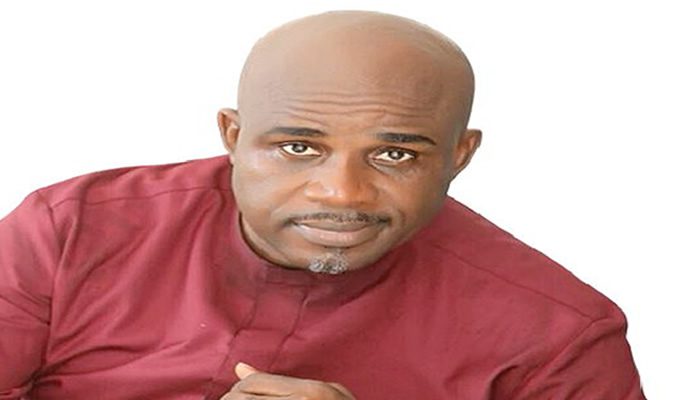
Veteran Nollywood filmmaker and actor, Teco Benson, speaks to VICTORIA EDEME on the controversies, divorce, and infidelity allegations that mar celebrity marriages

As a celebrity, how did you determine it was the right time to start a family when you did?

Right from my secondary school days, I gave myself a target that I wanted to get married at the age of 30. Before I got to 30, marriage was not on my list at all because I already had a plan to get that done at 30. The moment I got to 30, I activated the search button. During my search, I reflected and remembered that when I was younger, I encountered someone whom my spirit said I’d get married to. So I flashed back to those moments and remembered the person. She was in the East then, because I lived there before I came to Lagos. I then made a move, travelled to the East, and began the search. Searching and getting her was another journey. The summary is that we got to meet and the rest is history. We’ve been married for 23 years now.

How would you describe the 23 years of your marriage?

It’s been beautiful.

How many children do you have?

I have five boys and just last month, we welcomed our first daughter. I have six children now.

How long have you been in the Nollywood industry?

I’ve been in the industry for 30 years.

Did you at any point feel that your marriage would interfere with your career?

I planned my life from the beginning. When I was going into marriage, I did a lot of research and saw a lot of frustration and conflicts that people encounter in marriage. I went in consciously and carefully, with a decision to make mine work. There are ups and downs and misunderstandings, but people who are not strong-willed may fall by the way, give up, and start trying alternatives. After trying those alternatives, they may discover that the same situation may play out again. That’s why you see that some may divorce 10 times and remarry 10 times. With wisdom and information, you can make yours work. It is for better or worse. I was already in the industry and when I wanted to settle down, I didn’t marry someone in the industry. Everybody has the templates that work for them, but I didn’t want to marry someone in the industry.

Why didn’t you want to marry someone in the entertainment industry?

It was my choice. Being in the industry has a lot of distractions. I was a renowned producer and director at the time I got married and didn’t have time to rest. After filming, sometimes I would sleep in my office. I have a studio for shooting and editing. Because of timelines and deadlines, I keep late nights. Sometimes, I work all through the night. I had a policy of supervising my work during post-production. I went through my work even though I had an editor. So the work kept me away from home. Getting a wife who will also be away from home may have a negative impact on the family. Marriage is about creating an institution where the children are also part of the family.  When considering the interest of your wife, you have to also plan for the children that are going to come out of the union.

You need to take care of them and train them to become someone in society. These are some of the things I thought about and decided to go for someone who is not in the industry. I’m happy I made that decision. It’s not that I don’t encourage people to marry in the industry. Some are in it and are thriving. Some have found their way around it and it’s working for them. But for me, what made me happy was the fact that I found someone who wasn’t even interested in the industry at all. We got married at a time when almost every woman was crazy about acting and I got someone who was not interested. I’m so glad I got what I wanted. My wife is into business.

What are your thoughts on celebrities who marry fellow celebrities?

It’s their choice. It works for some while others may fail because of the clash of interests. Both the husband and the wife are in the field and the family suffers. There could also be mistrust and scandals when you’re in the public eye. As a celebrity, the media reports our activities. So one of the parties may make a wrong move and it becomes reported. As a popular person, people may walk through a path and go free but when you do, everybody knows that it’s you. Once you’re a celebrity, you must be careful with your life because society is looking at you as a role model. As human beings, nobody is infallible and people are bound to make mistakes. Any small mistake you make can easily be detected and reported to your partner and that may spell doom to that union.

I’m not saying that people should stay away from such unions. Some people are there and are happy. One of my mentees married an actress and they have a wonderful marriage. They have ups and downs but still rise together. The marriage is working for them and they are happy. So it depends on the individuals and their choices. As for me, I’ve made mine. Sometimes, it’s not wonderful to get married to someone from your industry. It’s always beautiful to have someone from another industry so that you respect each other for what you are.

How do you perceive the impact of the entertainment industry’s lifestyle on marriages?

Celebrity lifestyle puts the marriage in the eye of the public and the stakes become very high. As a celebrity, you can’t afford to take the back seat because everybody expects you to be high up there. So it puts you under pressure because they are trying to meet societal expectations. Your children or family are not safe. In school, once your children introduce themselves, their names stand out. Aside from the advantages, there are also disadvantages. It’s just for the person in the eye of the storm to be conscious of all these and live a very careful life. To some extent, it’s even good because it keeps them on their toes, knowing that people are watching.

A person who does not have the searchlight beamed on them might be very careless. Most people in the entertainment industry are very careful with their lives. They work hard because they can’t afford to live below the threshold. They have to send their children to befitting schools and make sure they maintain their vehicles. Their vehicles cannot be rickety, so they have to work hard to put up with their celebrity status. These are pressures that take a strong person to navigate.

What are your thoughts on divorce, infidelity, and controversies surrounding childbirth outside wedlock common among celebrities?

Fame has its negative sides. Celebrity status comes with a lot of things. The society also creates problems. A lot of male celebrities with multiple baby mamas are sometimes put in trouble by women and female fans, who are sometimes carried away when they see these male celebrities. Some of these women throw themselves at the male celebrities and some of the celebrities fall for them because they are humans. Some celebrities live the kind of lives they live not by choice, but by circumstances. I was in London in 2003 to receive an award with my co-celebrities. I remember that one of the stars went into the restroom to ease himself and one female fan rushed into the male toilet, hugged him there, and wanted to have a quickie.

For a man who cannot control himself, the pressure comes; the man may just fall and we may hear that the girl becomes pregnant. Later, it will be reported that the actor now has a child in London. It’s not always the celebrities going after these people. Some of them also used their celebrity status to take up everything that comes around them. These situations relate to men, so we can now imagine how it will be for female celebrities. The females are also faced with lots of pressure. Some men may come in and offer them duplexes, big cars, and millions of dollars to woo the ladies. So it takes a very strong person to stand and not fall into these traps. Sometimes, we may blame celebrities but when you look deeply, you see that fame comes with a lot of pressure and celebrities need to be very strong to survive in the entertainment sector.

Many believe it is difficult for celebrities to keep stable homes without drama. How true is this?

Celebrities can keep stable homes. We have a lot of responsible people in the industry. We have men and women who are faithful in the entertainment space. In nature, there are individual differences. Some people are weaker than the others. When faced with temptations, some people fall and others stand their ground. Celebrities can maintain stable homes. As a celebrity, you must have God, because without God, you cannot survive it. The lifestyle requires God for you to maintain a good family and decent living. It is not something you can do on your own because the pressure is too much that as a mere mortal, you may not survive it. So it’s possible to maintain a good home. It’s your choice. Understanding and godliness are important. Conscience guides you and makes a man or woman in the industry survive and keep a home. Any wrong move could be seen, reported, and become a scandal.

Aside from destroying your name, it could also destroy your children or affect them negatively. Nobody wants a broken home or goes into marriage with the intent of divorce, but we see marriages that crash after months. People should be prepared before they go into marriage. They shouldn’t just look at the aesthetics, beauty, and fun that come with the wedding. There is much more than that. If you want to get married, you must look at the intricacies. If you’re a man, you should know that women are the weaker vessels.

There may be misunderstandings and you may encounter some issues that may not be the way you want, but you should be able to bend and understand that you can’t get your way all the time. Marriage is give and take because it involves two people coming from different backgrounds. No matter how superior you think your own opinion is, you have to come down to the level of your partner so that you can reason together. Your partner may be wrong, but because you want peace, you may just let it slide.

What are your thoughts on celebrities who drag themselves on social media during divorce?

That’s the biggest mistake divorcees make. Negative news sells and once those things happen, the media will always come for them. Most divorces are due to irreconcilable differences and both parties claim to be right. Each party wants to rush out there to present their positions so that they can be seen as the good person and their spouse as the demon. That’s the reason for the rush to go to the media. Even if you catch the woman in infidelity, she will leave the infidelity and rush to escalate domestic violence online. Meanwhile, she was caught red-handed in infidelity. If she keeps quiet and the whole world hears the other side, it will affect her negatively and she may never even settle down with another person again as men may now feel that she is not the type that can be married.

In marriage, two people become lovers, but in divorce, they become enemies. When they become enemies at the inception of the divorce, they forget that they will still be relevant in each other’s lives because they will still have to meet each other if they have children. They will have to keep up that good image because of their children. Even if the children are in the custody of the woman, the law will still permit the father to have time with the children and vice versa. So the best thing for couples is to resist the initial temptation. Divorce should call for sober reflection and quietness. The couple should go back to their shell to reflect and think. They shouldn’t be in a hurry to destroy each other online because those words cannot be taken back, especially when they have been used in the paper or carried by the media. Those words will be there forever to haunt the children.

Sometimes, after exchanging those words, they may still resolve and remarry themselves, but those words still linger. Sometimes, some people may have the feeling to come back, but when they remember what they have said to each other, they stay back. The truth is that God likes marriage and he established the institution. But in the new world now, it seems like divorce is becoming more fashionable and there are broken homes and broken children all over the place. As civilisation is increasing, the rate of divorce is also increasing. In summary, couples during divorce should refrain from such negative comments against each other because those differences can be taken care of and you may want to come back to each other.

‘No contact’ with Klopp about Germany job, says DFB

0

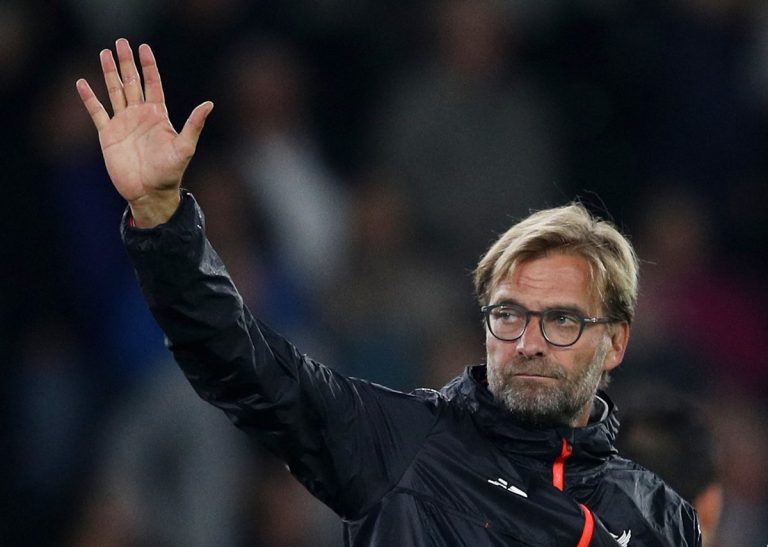
German FA (DFB) managing director Andreas Rettig said Saturday there has been “no contact” with Liverpool coach Jurgen Klopp about taking over the national team.

Speaking with German magazine Focus, Rettig said the DFB was trying to respect Klopp’s wishes to take a break once his tenure at Liverpool ends in the summer.

“There has been no contact. He has given himself a break. I don’t know whether we should be giving him travel tips on how to enjoy his free time.”

With current Germany coach Julian Nagelsmann’s contract running until the end of Euro 2024, to be held on German soil, the DFB has been looking for a long-term replacement – with Klopp at the top of the list.

“He wants a break and that’s why it is not an issue,” Rettig said.

Klopp stunned the football world in January when he announced he would step down as Liverpool boss at the end of the current season, citing exhaustion.

He has been linked with a number of jobs, including that of the German national team, but has said repeatedly he would take at least a year off before returning to coaching.

The hosts have struggled in the build-up to the Euros, leading to the sacking of Hansi Flick, the first Germany coach to be fired in the federation’s history.

Germany won just three of 11 matches in 2023, including just one of four under Nagelsmann.

Rettig said the DFB backed Nagelsmann’s side to perform strongly in the summer and hoped he would stay on after a successful tournament.

“You don’t send a successful coach away.”

Late January 2024, Liverpool announced that  Klopp would step down at the end of the season.

AFP

All rights reserved. This material, and other digital content on this website, may not be reproduced, published, broadcast, rewritten or redistributed in whole or in part without prior express written permission from According.

Contact: [email protected]

5 die in Ondo street crash

0

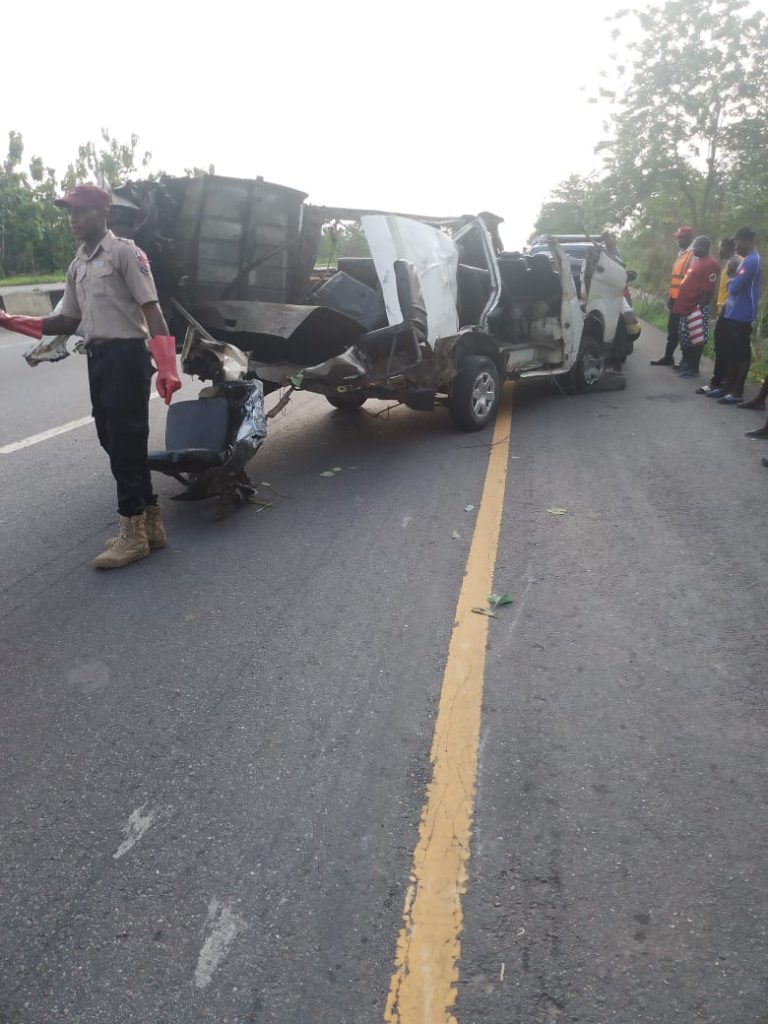
No fewer than five people lost their lives while several others were injured in a fatal road accident that occurred along the Benin-Ore-Shagamu Expressway in the Akinfosile area of Okitipupa Local Government Area of Ondo State on Saturday evening.

According to the state Police Public Relations Officer, Mrs Funmilayo Odunlami, the accident involved a Toyota Hiace bus with the number plate FKG 405 FX from Akure en route to Lagos.

The bus was said to have swerved off the expressway and somersaulted several times before landing in the bush.

The PPRO said, “The police have moved injured victims to the nearest hospital, while the dead have been moved to the mortuary of the same hospital.

“Investigation is ongoing to unravel the cause of the accident, while effort is on to contact the families of the passengers involved in the accident.

“She advised members of the public to reach out to their relatives who left for Lagos from Akure on Saturday to check on them to ascertain their status, and those in doubt of the whereabouts of their families should reach out to the police at Igbotako Division.”

Similarly, the state sector commander of the Federal Road Safety Corps, Mr Ezekiel Son’Allah, also confirmed the incident, confirming that 13 people were involved in the accident.

He stated, “The number of people involved is 13, six females, and seven males. Five of them died, while eight were injured. The accident was caused by a speed limit violation.

“The FRSC commander also advised the drivers to always be cautious of excessive spending and always.”

All rights reserved. This material, and other digital content on this website, may not be reproduced, published, broadcast, rewritten or redistributed in whole or in part without prior express written permission from According.

Contact: [email protected]

60,000 Ogun college students to get money award — Commissioner

0

About 60,000 students of Ogun State origin in all tertiary institutions of learning in the country would benefit from the ongoing N50,000 palliative from the state government.

The Commissioner for Education, Science and Technology, Prof. Abayomi Arigbabu, said in a statement on Saturday that “students in public and private tertiary institutions will benefit from the cash award.”

The Educational Cash Award for Student Help, also known as OgunEduCASH is an intervention programme for learners in all public primary and secondary schools, as well as public and private tertiary institutions across Nigeria, to cushion the effects of the current economic challenges on learners and their parents.

It was announced in February by Governor Dapo Abiodun as part of the state’s palliative measures.

Each student of Ogun State origin is entitled to N50,000 cash from the state government.

“The state government is targeting 10,000 indigent students in public primary and secondary schools in the three senatorial districts to also get N10,000 each too,” Arigbabu added.

“Some students have confirmed receiving the N50,000, even as they showered encomium on the governor for the gesture.

“Aminat Asaye, Tomiwa Iteoluwa (HND 2, Mass Communication), Ogunjobi and Olujomehin Ebudola (HND 2, Accountancy) and Rokeeb Ayinla (ND 2, Marketing), all of the Moshood Abiola Polytechnic, Abeokuta, appreciated Governor Abiodun for the gesture, saying the money will go a long way in their educational pursuits as beneficiaries.

“Also expressing their gratitude to the governor, Adebayo Farouq and Olatinuke Olajumoke (HND 2, Computer Science), and Liadi Israel (ND 2, Computer Science), of D.S Adegbenro ICT Polytechnic, submitted that the cash awards would cater for their projects and support the part payment of their tuition fees.

“Adewale Oyenekan, Rebecca Akinfenwa, Leduwe Ayomide, Toheeb Adesina, and David Dosunmu of the Federal College of Education, Osiele, described Governor Abiodun as compassionate, tender-hearted, generous, and student-loving father, saying the money received was an indication of his passion for individual prosperity for the citizens of the state,” the statement read.

Osun, APC bicker over new monarchs appointments

0

The main opposition party in Osun State, the All Progressives Congress and the state government on Saturday disagreed on the emergence of new monarchs for Iree and Igbajo communities.

The APC in a statement by its chairman, Tajudeen Lawal, accused the State Governor, Ademola Adeleke, of promoting a crisis in Igbajo and Iree by tinkering with the choice of the legally installed monarchs of the two towns.

A white paper released after a probe by the Ademola Adeleke administration, of the circumstances around the installation of monarchs appointed by the immediate past governor of the state, Adegboyega Oyetola, had declared vacant the stool of Aree of Iree and Owa of Igbajo and called for commencement of fresh selection process.

The party noted that when Adeleke’s administration met a stumbling block in rallying the support of the kingmakers of Igbajo to do the re-selection of another Owa of Igbajo, it resulted in the recruitment of five non-indigenes of the town on Friday who were instantly appointed warrant chiefs.

It further said those appointed posed as kingmakers at the Multi-purpose Conference Hall of the Local Government Service Commission, State Secretariat, Abere, Osun State, to elect a new Owa of Igbajo

The party said at the end of the re-selection exercise, Prince (Dr) Ademola Makinde, believed to be a crony of the Adelekes, was selected as the new Owa of Igbajo.

“One fact remains that Oba Phillips Adegboyega Famodun remains the Owa of Igbajoland as he was duly selected by the people through their kingmakers and ratified by the state government, legally installed and given a staff of office after he had completed the necessary traditional rites while the traditional stakeholders in the ancient town had stated that it is a taboo for them to perform another series of traditional rites for another person when the substantive monarch is very much alive.

“We are appealing to the peace-loving people of Igbajo not to take the laws into their hands but to continue to put their hope and expectation in the hand of God and supremacy of the rule of law which has been the pillar of strength of every reasonable and responsible community,” the APC chairman statement read.

On the controversies on Aree of Iree stool, the APC said, “The whole world must be alert to the fact that Governor Ademola Adeleke of Osun appears to be on the loose. But we want to caution him not to precipitate crises in Igbajo and Iree.”

Osun govt reacts

But reacting, Osun State Commissioner for Information and Public Enlightenment, Kolapo Alimi, declared that the appointments made by the Adeleke administration were in line with tradition and chieftaincy laws.

On the stool of Aree of Iree, Alimi said, the government discovered that the immediate past administration deliberately bypassed the town’s kingmakers and made use of warrant chiefs to select and approve Aree.

It further read, “The White Paper stated that a fresh selection process would take place in Igbajo to enable all eligible princes from the Owa Oke Odo Ruling House to participate in a free and fair selection in the interest of fair play, equity and in line with the custom and tradition of Igbajo.

“Consequently a fresh selection process began and all interested princes from the eligible ruling house participated in the selection process.

“When it became expedient for the Igbajo Kingmakers to hold their selection meeting to appoint an Owa-elect, five surviving Kingmakers out of the six recognised by the Owa of Igbajo Chieftaincy Declaration deliberately refused to do so.

“After refusing to attend several meetings to which they were invited by the Local Council, the government had no other option than to invoke the provisions of Section 17 of the Chiefs Law of Osun State which permitted the revocation of the performance of any delegated function by anyone and the appointment of other persons to perform such a delegated function.

“Thus, warrant kingmakers appointed according to law performed their duty and selected an Owa of Igbajo elect whose appointment is to be ratified by the State Executive Council.

“We therefore affirmed that as a government, we acted within the law and tradition as well as in the best interest of the people of the affected towns.”

Adeleke sacks monarchs

In November 2022, Adeleke directed security agents to take over the palaces of Owa of Igbajo, Aree of Iree, and Akinrun of Ikirun.

The directive was one of the executive orders signed by the governor.

This act was followed by a series of protests and controversies.

However, the state government in January 2024 ordered a fresh selection process to fill the stools of Aree of Iree and Owa of Igbajo, having nullified the initial processes.

No determination but on minimal wage

0

The Nigerian Labour Congress has distanced itself from the N500,000 being canvassed as the new minimum wage.

The NLC noted that it has yet to adopt a position on an amount to be presented to the tripartite committee on the National Minimum Wage charged with fixing a new minimum wage for workers.

President of NLC, Joe Ajaero, disclosed this in an exclusive interview with our correspondent in Yola on Saturday.

The NLC President, speaking in Yola on the sidelines of the North East Zonal Public Hearing by the Tripartite Committee on National Wages, where various stakeholders canvassed for a new minimum wage, said the N500,000 and N700,000 being proposed as the new minimum wage are unknown to the NLC.

According to him, all the figures flying around should be disregarded because the NLC as a body has yet to adopt a common presentation on the new minimum wage.

He said, “The N500K, N700K you are hearing are being collated at the level of the states. In Lagos and other places, I think they are about N700,000 while in other places they are talking about N500,000, which are inputs collated from geopolitical zones.

“But the NLC secretariat has not made any presentation, these minimum figures are what is coming from the states. When we collate them then we’ll do a central presentation based on these raw materials we are getting from states.”

He, however, explained that labour will be guided in adopting a new minimum wage based on economic parameters which takes into account the current cost of living at the states as well as the exchange rate of the naira to the dollar.

“It (minimum wage) has to be relative to cost of living in those states. You will agree with me that rent here is not as that in Abuja, and not the same thing as Lagos. So relatively speaking you won’t have a straight jacket like presentations by Labour in all the states, ” Ajaero added while noting a lot depended on the management of the economy.

He said the new minimum wage to be determined, if at all it will be of any tangible benefit, will depend on how well the managers of the economy will manage the economy by tackling all the underlying factors responsible for driving inflation so that the wage that workers would have at the end of the day would be stable.

Ajaero said, “I don’t see why paying $300 relatively speaking will now create inflation that will cripple the businesses.

“Our currencies should be pegged in such a way that it gains its value. Until you do such, you don’t keep holding only one factor of production- which is labour down.

“Those industrialists whatever they are producing the price has gone up by over 500%.

“The worker whatever he’s buying whether food stuff and transportation the price has equally gone up in the same vein.

“All the small scale business people that sell Garri, toothpaste and vegetable will get share of it. The wage is one way you circulate prosperity. So i don’t think it will worsen it.”

It was revealed at the North East Zonal Public Hearing on the National Minimum Wage, conducted by the tripartite committee on National Minimum wage where various stakeholders canvassed for a new minimum wage, that the existing minimum wage will be expiring on April 17 2024.

The NLC President has also made clear that workers will have to be paid the arrears if the country fails to get a New Minimum wage before the deadline date, because whatever increment results at the end of the day, labour will be asking for arrears.

Ajaero said, “The existing minimum wage will be expiring by 17th April, 2024. If they didn’t do what they are saying then we’ll be asking for arrears. The issue of renegotiation is critical because the minimum wage is a benchmark, that is the minimum any worker should earn.”

NMA chairman of Adamawa State, Dr. Solomon Bulus,  has warned of more untimely deaths resulting from hardship, adding that the prevalence of High Blood Pressure now stood at 30% for the population.

He said the Nigerian Medical and Dental Council, backed the implementation of N500,000 new minimum wage because it will drive down the hardship being experienced nationally.

Bulus who stated this in his presentation at the North East Zonal Public hearing on the national minimum, conducted by the tripartite committee on National Minimum wage said, ” The NMA wants to support the 500,000 new minimum wage in the country. The prevalence of HBP is 30% when we have that minimum wage it will not push us into the problem that we have today.

Consultations ongoing on reopening of borders — Customs CG

0

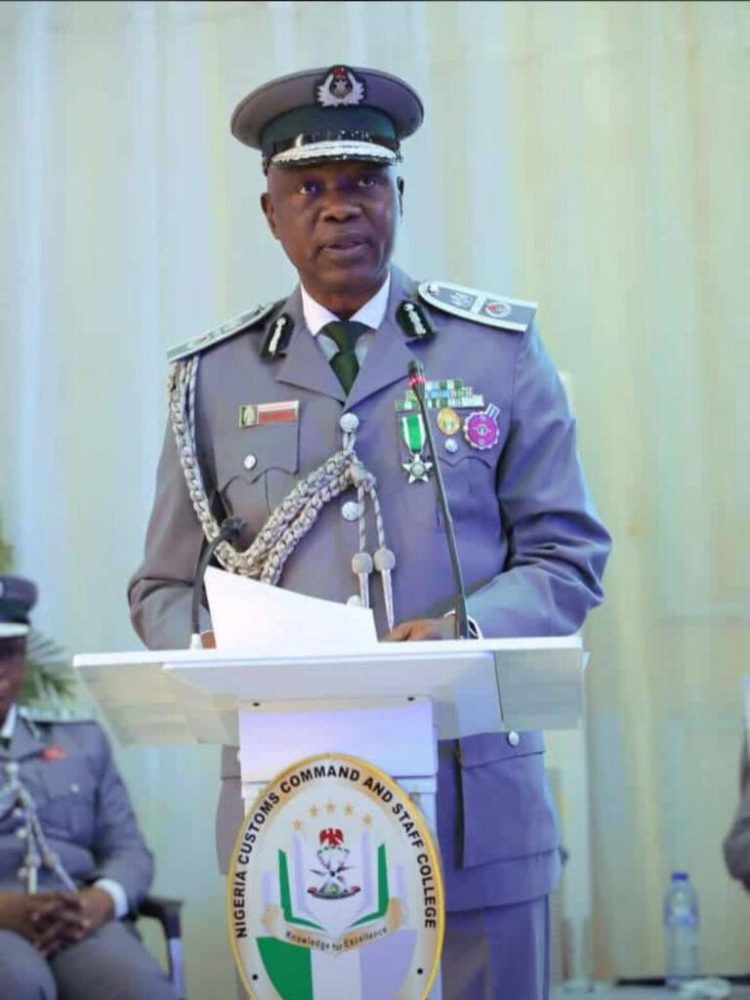
The Comptroller-General of Customs, Mr Adewale Adeniyi, on Saturday, said consultations are ongoing on the reopening of borders.

This is as he noted that only President Bola Tinubu has the prerogative to reopen borders in the country.

He stated this at an interaction session with members of the Kongolam border community in Mai’adua Local Government Area of Katsina State.

Adeniyi, who was reacting to agitation for the reopening of the borders, assured that engagements and consultations were being made regarding the issue.

“Once consultations are concluded, a decision will be taken on the matter,” he said.

Free trade, Border communities

According to Adeniyi, the Service will focus on removing obstacles militating against free trade in line with the present administration’s agenda of fostering economic prosperity.

He said that proactive measures had been employed to reduce the number of checkpoints along the border posts and promote synergy between the service personnel and traders.

“We are conscious of the concerns of the border communities, particularly with regard to the number of checkpoints and the closure of land borders

“I assure you that our operations are always guided by law and we only operate on delegated powers.

“We have communicated the concerns and complaints by residents of the border communities to the President.

“Because he has listening ears, and directed that we should release confiscated food items, on the condition that it only be sold in Nigerian markets,” he said.

Adeniyi said the Service was collaborating with the Police and other sister agencies to address obstacles militating against free trade in the border areas.

“We know that there are markets around our borders, and we know that not all of them are targeted at taking goods across the borders.

“We will continue to monitor and ensure that food that is produced in Nigeria remains and is consumed in Nigeria. This is because we are in a period of national emergency that has to do with food insufficiency.

“And that is why we must collectively work together to assist the government to enforce the various laws prohibiting exportation of food items at this time,” he said.

Export Prohibition Act

He said the Export Prohibition Act banned the exportation of maize, rice, beans, yam, millet, and sorghum.

While commending the synergy between the Service and other security agencies, Adeniyi thanked other stakeholders for their support.

The News Agency of Nigeria reports that Adeniyi also visited former President Muhammad Buhari and the Emir of Daura, Alhaji Umar Faruq-Umar.

Over a week after the resolution of the Economic Community of West African States for all land borders between its member countries and the Niger Republic to be open, residents of the Illela Local Government Area of Sokoto State, last week appealed to the Federal Government for immediate action and its opening.

(NAN)