Home Blog Page 150

Due Process Is Not Optional: Why the National Assembly’s Authentication of the Tax Reform Acts Upholds Law, Order, and Democratic Integrity

0

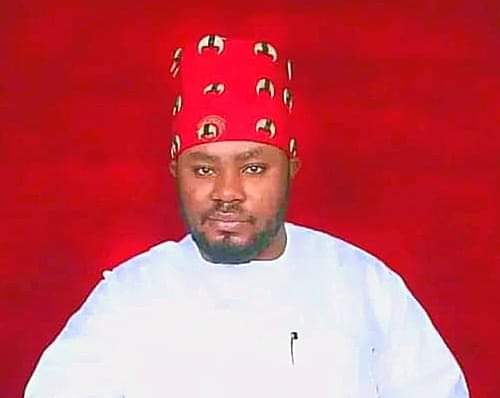
Written by Philip Agbese
Every constitutional democracy bases its legal legitimacy on procedure rather than sentiment or expediency. Laws get their power from strict obedience to the processes outlined by the Constitution and statute, not just from public consent or political will. In light of this, it is important to comprehend and appropriately place recent public discussion regarding the authentication, assent, and gazetting of important tax reform legislation within Nigeria’s constitutional framework.

As the guardian of legislative power, the National Assembly has reacted with institutional sobriety rather than defensiveness or obfuscation. The exact safeguards that give law its moral and legal force—verification, certification, and transparency—have been activated by the leadership of both Chambers. This is not a sign of weakness. It is the fundamental component of legislative power.
This argument is made rather clearly in the press statement that the National Assembly Management released. The legislature opted for constitutional due diligence over public polemics when faced with questions concerning the harmonization, assent, and gazetting of the Nigeria Tax Act, 2025; the Nigeria Tax Administration Act, 2025; the Joint Revenue Board of Nigeria (Establishment) Act, 2025; and the Nigeria Revenue Service (Establishment) Act, 2025. That decision is commendable.
The Acts Authentication Act, Cap. A4, Laws of the Federation of Nigeria 2004, is at the center of the issue. The purpose of this act is straightforward but profound: to guarantee that the language passed by the legislature, approved by the president, and published for public consumption is the same. Authentication is the link between legislative intent and legal certainty; it is not only a bureaucratic routine. The integrity of the statute book itself would be jeopardized without it.
Long-standing parliamentary practice is reflected in the actions performed by the National Assembly, as demonstrated by the documented authentication procedure. Every step of the process, from creating the certified true copy of the bill following its enactment to compiling and certifying the schedule of bills for assent to gazetting and official publication, has a specific constitutional function. Together, they create the legal chain of custody. Legal pandemonium ensues if that chain is broken.
Importantly, the leadership has taken care to make it clear that the continuing internal assessment does not compromise legislative authority or interfere with the duties of the Executive or Judiciary. Clarity, precision, and the integrity of the legislative record are the goals of this internal administrative activity. This is exactly how a mature legislature should act in terms of the constitution: making essential corrections to its own procedures without grandstanding or assigning blame.
It is also important to consider the moral aspect. Every individual, every enterprise, and the state’s financial health are impacted by tax policy. Such laws must be trustworthy. Public trust is strengthened when the legislature shows that it is prepared to wait, confirm, and certify before demanding finality. Due process is what makes reform genuine and long-lasting, not the opposite.
This strategy’s legal implications are similarly significant. Courts, regulators, investors, and people have access to an authoritative document that serves as a safe foundation for rights and duties thanks to official gazetting and the issuance of certified true copies. The demand on authentication is not pedantry in a time when disagreements frequently center on the exact wording of statutes. It’s caution.
Those who advocate for expediency over procedure ought to consider comparative experience. To preserve the integrity of the legal system, lawmakers in developed democracies frequently postpone commencement, fix clerical mistakes, and recertify statutes. Nigeria is acting orthodoxly rather than exceptionally.
In the end, the National Assembly’s actions reinforce a deeper fundamental principle: that procedure is the protector of content and that law is superior to politics. The leadership has demonstrated loyalty to both authority and accountability by operating within the bounds of the Constitution, the Acts Authentication Act, Standing Orders, and established parliamentary customs.
The National Assembly is upholding the rule of law by protecting due diligence. That goes beyond just being correct legally. It is a virtue of democracy.
Agbese The House of Representatives’ Deputy Spokesperson is LLB [UK], LLM [UK], and MBA [UK].*Why the National Assembly’s Verification of the Tax Reform Acts Preserves Law, Order, and Democratic Integrity: Due Process Is Not Optional
Written by Philip Agbese
Every constitutional democracy bases its legal legitimacy on procedure rather than sentiment or expediency. Laws get their power from strict obedience to the processes outlined by the Constitution and statute, not just from public consent or political will. In light of this, it is important to comprehend and appropriately place recent public discussion regarding the authentication, assent, and gazetting of important tax reform legislation within Nigeria’s constitutional framework.
As the guardian of legislative power, the National Assembly has reacted with institutional sobriety rather than defensiveness or obfuscation. The exact safeguards that give law its moral and legal force—verification, certification, and transparency—have been activated by the leadership of both Chambers. This is not a sign of weakness. It is the fundamental component of legislative power.
This argument is made rather clearly in the press statement that the National Assembly Management released. The legislature opted for constitutional due diligence over public polemics when faced with questions concerning the harmonization, assent, and gazetting of the Nigeria Tax Act, 2025; the Nigeria Tax Administration Act, 2025; the Joint Revenue Board of Nigeria (Establishment) Act, 2025; and the Nigeria Revenue Service (Establishment) Act, 2025. That decision is commendable.
The Acts Authentication Act, Cap. A4, Laws of the Federation of Nigeria 2004, is at the center of the issue. The purpose of this act is straightforward but profound: to guarantee that the language passed by the legislature, approved by the president, and published for public consumption is the same. Authentication is the link between legislative intent and legal certainty; it is not only a bureaucratic routine. The integrity of the statute book itself would be jeopardized without it.
Long-standing parliamentary practice is reflected in the actions performed by the National Assembly, as demonstrated by the documented authentication procedure. Every step of the process, from creating the certified true copy of the bill following its enactment to compiling and certifying the schedule of bills for assent to gazetting and official publication, has a specific constitutional function. Together, they create the legal chain of custody. Legal pandemonium ensues if that chain is broken.
Importantly, the leadership has taken care to make it clear that the continuing internal assessment does not compromise legislative authority or interfere with the duties of the Executive or Judiciary. Clarity, precision, and the integrity of the legislative record are the goals of this internal administrative activity. This is exactly how a mature legislature should act in terms of the constitution: making essential corrections to its own procedures without grandstanding or assigning blame.
It is also important to consider the moral aspect. Every individual, every enterprise, and the state’s financial health are impacted by tax policy. Such laws must be trustworthy. Public trust is strengthened when the legislature shows that it is prepared to wait, confirm, and certify before demanding finality. Due process is what makes reform genuine and long-lasting, not the opposite.
This strategy’s legal implications are similarly significant. Courts, regulators, investors, and people have access to an authoritative document that serves as a safe foundation for rights and duties thanks to official gazetting and the issuance of certified true copies. The demand on authentication is not pedantry in a time when disagreements frequently center on the exact wording of statutes. It’s caution.
Those who advocate for expediency over procedure ought to consider comparative experience. To preserve the integrity of the legal system, lawmakers in developed democracies frequently postpone commencement, fix clerical mistakes, and recertify statutes. Nigeria is acting orthodoxly rather than exceptionally.
In the end, the National Assembly’s actions reinforce a deeper fundamental principle: that procedure is the protector of content and that law is superior to politics. The leadership has demonstrated loyalty to both authority and accountability by operating within the bounds of the Constitution, the Acts Authentication Act, Standing Orders, and established parliamentary customs.
The National Assembly is upholding the rule of law by protecting due diligence. That goes beyond just being correct legally. It is a virtue of democracy.
The House of Representatives’ Deputy Spokesperson is Agbese LLB [UK], LLM [UK], and MBA [UK].

Defence Minister Musa Speaks on Conspiracy Against Him and God’s Intervention

0

Christopher Musa, the Minister of Defense, has revealed that while some forces plotted against him, his ascent to national leadership was largely due to his faith and divine assistance.

Musa disclosed that his position was raised as a result of God’s intervention during a trying time in his life.

This testimony was given by the former Chief of Defence Staff (CDS) at a recent worship session at Conquerors Global Assembly in Abuja.

Additionally, he reminded Christians that “because we serve a living God, He will never give up on us,” urging them to maintain their resolve.

He declared: “We give God the praise for this year’s events. The enemies had no idea that God would raise us up, even while they believed they were bringing us down.

“They plotted in their tiny brains and believed they had won. However, you will succeed as long as God is your cornerstone.

“You can never get better in life if you are never pushed. Nigerians are aware of our strength, but we are even more powerful when we unite with God Almighty. Nigerians are successful. We need to keep praying for our leaders and our nation.

Musa was nominated by President Bola Tinubu for the position of Minister of Defense on December 2 and his name was sent to the Senate.

Musa was chosen by the President to succeed Mohammed Badaru, who had resigned owing to health concerns.

NCAA Tells Nigerians Airfares Will Fall After January

0

The Nigeria Civil Aviation Authority (NCAA) has rejected allegations that government levies were the reason behind the notable spike in domestic airfares over the December holiday season.

According to the regulatory agency, market forces—specifically, higher passenger demand on busy routes over the Yuletide season—were the driving force behind the fare rise.

According to reports, Michael Achimugu, the NCAA’s Director of Public Affairs and Consumer Protection, provided the explanation in a Sunday post on his 𝕏 account.

Achimugu clarified that the increase in ticket costs was not specific to the aviation industry, but rather a yearly pattern linked to holiday tourism.

He claims that increasing demand around the holidays also drives up the cost of food, lodging, and transportation.

“Market factors are to blame. It’s Nigerians against Nigerians. The government is not this. “Taxes have nothing to do with airfares in December,” he stated.

He noted that there was no increase in aviation-related taxes in December, pointing out that following the holiday rush, fares were anticipated to return to normal.

“Airfares will probably decrease after the second week of January, and taxes did not increase in December,” Achimugu said.

The NCAA spokeswoman pointed out that the fare hikes did not apply consistently throughout the nation and were restricted to specific high-traffic routes.

He emphasized that these spikes happen every year during the busiest travel times and subside as demand declines.

Achimugu also refuted assertions made by several local airline carriers that the exorbitant ticket costs in December were caused by hefty taxes and fees.

He referred to claims that airlines pay up to eighteen separate taxes as untrue.

“Any domestic airline is lying if they claim to pay 18 taxes. He claimed, “I have addressed this on major news platforms, national television, and through my X handle.”

He revealed that all domestic airlines had been consulted by the Authority over the matter, and the airlines themselves acknowledged that they do not pay the amounts frequently mentioned in public.

Achimugu stated, “I invited all domestic airlines and asked them directly about these taxes, and they all admitted they do not pay the volume of taxes being bandied around.”

The NCAA’s stance comes after Allen Onyema, the CEO of Air Peace, asserted on Sunday that Nigerians pay the lowest domestic airfares in the world.

Onyema claimed that after taxes and fees, airlines only keep roughly ₦81,000 of a ₦350,000 ticket, putting operators under extreme financial strain.

Achimugu responded to the allegation by stating that the story was deceptive and did not accurately depict industry realities.

He remarked, “I don’t understand this 350k and 81k narrative.”

Achimugu also questioned how, in spite of no increase in taxes or jet fuel prices during that time, tickets for trips lasting less than an hour could fetch up to ₦500,000.

“Why did tickets sell for as much as ₦500,000 for a 45-minute trip when the said taxes did not increase if high taxes were the reason airfares were ₦150,000 to ₦200,000?” he questioned.

He stated that conversations with airline employees, travel agents, and pertinent NCAA departments refuted assertions that the December cost increase was caused by taxes.

The NCAA spokesperson also voiced alarm about what he called persistent attempts to place the responsibility on the government, even though he said that the current administration has provided unprecedented support for domestic airlines.

He mentioned that local airlines now have access to dry-leased aircraft thanks to recent regulatory changes, something they had not had for decades.

According to Achimugu, “the kind of support President Bola Ahmed Tinubu, Minister of Aviation and Aerospace Development Festus Keyamo, and Director General of Civil Aviation Capt. Chris Najomo have given to domestic carriers does not justify why the government keeps getting thrown under the bus.”

Achimugu came to the conclusion that the explanation provided for the fare increase in December was erratic and unsustainable.

He stated, “It is even ironic that, in the same statement, it is alleged that Nigerians pay the lowest domestic airfares in the world while also justifying the astronomical airfares that came into play in December, even though there was no hike in taxes or jet fuel.”

He continued by saying that none of the airline employees he recently spoke with agreed with the justifications that were making the rounds in traditional and social media.

NNPCL GCEO Ojulari Reveals Who Benefits Most from Fuel Price Reduction

0

According to Bayo Ojulari, Group Chief Executive Officer of Nigerian National Petroleum Company Limited (NNPCL), Nigerians stand to gain the most from the continuous fuel price reductions brought about by competition in the downstream oil industry.

After briefing President Bola Tinubu in Lagos, Ojulari made the comments on Sunday while addressing reporters.

He explained that Nigeria’s shift away from reliance on fuel imports is a natural result of the ongoing volatility in petrol prices.

He claims that more market competition eventually benefits consumers and that the current instability would eventually subside.

The purchasers are ultimately the winners when there is strong competition. Additionally, we should remember that the market will stabilize,” Ojulari stated. “Because we are going through a significant transition, there might be some tension along the way.”

His remarks coincide with the continuing battle over fuel prices, which has led to several price decreases at gas stations around the nation in recent weeks.

Dangote Refinery lowered the price of its gantry to roughly N699 per litre earlier in December 2025. After this action, pump rates in Abuja were lowered to between N739 and N901 per litre by MRS filling stations, NNPCL stores, and other marketers.

Seyi Makinde’s Frustration Causing Issues in PDP – Wike

0

The governor of Oyo State has been accused of cutting a disgruntled figure by Federal Capital Territory (FCT) Minister Nyesom Wike.

He claimed that Makinde’s frustration with political events stems from his ignorance of the distinction between politics and working as an oil company contractor.

According to reports, Wike made the jab at Governor Makinde on Monday during his year-end press conference.

The Minister asserted that they had given Makinde multiple recommendations regarding his next political move, but the Governor has continuously disregarded their counsel.

Additionally, Wike blamed Makinde for the Peoples Democratic Party’s (PDP) current predicament.

He claims that Makinde is creating issues inside the PDP because he want to be president but lacks the courage to discuss it.

Details will come later.

‘You Replaced Him Instead of Praying’ – Wike Criticizes Fubara

0

The Governor of Rivers State, Siminalayi Fubara, has come under fire from Federal Capital Territory (FCT) Minister Nyesom Wike for failing to reinstall His Royal Highness Eze Ohna Sergent Awuse, the Paramount Ruler of Emohua, as Chairman of the Rivers State Traditional Rulers Council.

Recall that in 2024, Fubara appointed Eze Chike Worlu Wodo as the Paramount Ruler of Apara Kingdom in Obio/Akpor Local Government Area, replacing Eze Ohna Awuse, a close supporter of Wike.

However, Wike criticized Fubara when addressing at the palace of His Royal Highness, Ohna Sergent Awuse, who is also the Chairman of the South-South Traditional Rulers Forum on Sundau, during a special Christmas visit to his supporters in Emohua Local Government Area.

Wike disclosed that Awuse had been unwell and entered a coma, at which point the state government withdrew him from the chairmanship and named a successor.

“Chief Awuse was the Chairman of Rivers State Traditional Rulers Council,” he stated.

“Chief Awuse became ill and entered a coma. Rather of asking God to help this guy, they dismissed him from his position as Chairman of the Rivers State Traditional Rulers Council.

“Go and reinstall Chief Awuse, please. It has been challenging thus far.

“You say I’m an idiot? Am I a fool?

“Well, wrestling is always an option. Do you get what I’m saying? You are aware of the beginning of wrestling. The major players don’t show up at that time.

Wike Says Makinde Lied About Supporting Tinubu Against PDP

0
xr:d:DAEzqVHY7xE:9077,j:46095945257,t:23042818

According to Federal Capital Territory (FCT) Minister Nyesom Wike, allegations made by Oyo State Governor Seyi Makinde that he pledged to keep President Bola Tinubu’s Peoples Democratic Party (PDP) from winning the 2027 election are a flagrant fraud.

Speaking during a press conference on Monday, Wike claimed that President Tinubu had never made such a pledge during a meeting.

Makinde reportedly made fun of Wike at a recent news conference in Ibadan, the capital of Oyo state, by saying that people should be free to select who they will support politically.

He clarified that Wike cannot force people to make political decisions.

Makinde claims that the former governor of Rivers State announced that he would hold the Peoples Democratic Party (PDP) for Tinubu in 2027 while he was at a meeting with Wike, President Tinubu, and a few other people.

Makinde, the governor of Oyo State, said he was astonished by Wike’s statement and that he would not be involved in any such schemes.

But Wike has refuted these assertions.

Makinde has never addressed him directly as Wike, the FCT Minister continued.

Tinubu Cancels Massive $1.42B anN5.57T NNPCL Debt to Nigeria’s Federation Account

0

A significant amount of the Nigerian National Petroleum Company Limited’s (NNPC Ltd.) debts have been written off to the Federation Account by President Bola Tinubu.

The Nigerian Upstream Petroleum Regulatory Commission (NUPRC) recently reported on this.

According to the report, President Tinubu eliminated around $1.42 billion and ₦5.57 trillion in NNPCL debts, respectively.

The NUPRC published documents titled “Report of October 2025 Revenue Collection Presented at the Federation Account Allocation Committee Meeting Held on 18th November 2025” that disclosed this information.

Debts owed by the NNPCL to the federation account up until December 31, 2024, have been written off with the President’s consent, although current obligations from 2025 activities are still being closely watched.

The commission attested to the implementation of all accounting entries in the Federation Account that reflected the debt cancellation.

The Stakeholder Alignment Committee on the Reconciliation of Indebtedness between NNPC Ltd and the Federation, which examined royalty and lifting-related liabilities to the end of 2024, made suggestions that the Presidential approval followed, according to the NUPRC.

The commission stated that the debts previously recorded at the October 2025 FAAC meeting were $1,480,610,652.58 and N6,332,884,316,237.13 for PSC, DSDP, RA & MCA Liftings and JV & PSC Royalty Receivables, respectively, under the section titled “Recovery from NNPC Ltd Outstanding Obligations.”

The statement stated, “However, the commission recently received a Presidential Approval to nil off the outstanding obligations of NNPC Ltd as at December 31st, 2024, as submitted by the Stakeholder Alignment Committee on the Reconciliation of Indebtedness between NNPC Ltd and the Federation.”

The NUPRC further stated that the affected outstanding obligations that have been zeroed out are $1,421,727,723.00 N5,573,895,769,388.45, out of $1,480,610,652.58 and N6,332,884,316,237.13. The relevant accounting entries have been approved by the commission.

ADC 2027: Peter Obi Says He Won’t Expect Anyone to Step Aside

0

According to Peter Obi, the 2023 presidential candidate of the Labour Party (LP), the Africa Democratic Congress (ADC) coalition has decided to cooperate, and no one is resigning for him.

This was reportedly revealed by Peter Obi at a Sunday night 𝕏 Space.

Additionally, the former governor of Anambra State stressed that he is not required to formally join the ADC.

Peter Obi claims that he has been a member of the ADC since its founding.

Obi also stated that Atiku Abubakar, the former vice president, will always have his respect.

“I will not be joining ADC,” he declared. I am unable to rejoin the group I am already a part of.

“I was a member of the coalition from the beginning.

“No one is leaving ADC to take my place.

“Atiku is still my respected leader, and we have all agreed to work together.”

Meanwhile, in an interview with Punch, a senior ADC official in Abuja revealed that loyalists and allies of Peter Obi have started making plans for his defection.

According to the source, Peter Obi met with David Mark, the National Chairman of the ADC, to reaffirm his commitment to the coalition after the party requested him three weeks ago to decide whether or not to join.

He claimed that the former governor of Anambra State may have ultimately decided to join the ADC as a result of the party’s stance.

He claims that on December 31, Peter will host a declaration rally in Enugu, the South-East’s political hub.

Buhari, Doyin Okupe, and Other Prominent Politicians Who Passed Away in 2025

0

For Nigerian politicians, 2025 began on a high note. It was undoubtedly an exciting year with many political debates, but it was also characterized by the untimely deaths of significant political figures, which sent the country into mourning.

in the conclusion of 2025, some well-known politicians joined their forefathers, while others passed away in the start of the year.

The top seven politicians whose deaths rocked the nation in 2025 are listed in this article.

1. Muhammadu Buhari: On July 13, 2025, the 82-year-old former president passed away in London, United Kingdom (UK).

On July 15, 2025, Buhari was buried in his hometown of Daura, Katsina State, following a brief illness in a London hospital.

The late President’s funeral was attended by a number of national and international politicians, including presidents and previous presidents.

APC Shuts National Secretariat To Honour Late Ex-President Buhari
2. Doyin Okupe: On March 7, 2025, Doyin Okupe, a 72-year-old former Director-General of Peter Obi’s 2023 presidential campaign, passed away in Lagos State.

On March 28, 2025, Okupe, a former presidential spokesperson for Olusegun Obasanjo and Goodluck Jonathan, passed away following a protracted illness and was buried in his birthplace of Iperu-Remo, Ikenne Local Government Area, Ogun State.

2023: 'You Will Weep When Peter Obi Wins' - Doyin Okupe Condemns Critics
3. Chief Edwin Clark: After a brief illness at a private hospital in the Federal Capital Territory (FCT), Abuja, former Federal Commissioner for Information Edwin Clark passed away on February 17, 2025, at the age of 98.

On February 16, Clark apparently had trouble breathing throughout the night, leading to his transfer to a private hospital in Abuja, where he passed away.

On May 13, the older statesman was laid to rest in Kiagbodo, Delta State.

Edwin Clark explains why Abia, Imo, and Ondo States ought to be kicked out of the NDDC.
Clark, Edwin

Why Abia, Imo, Ondo States Should Be Removed From NDDC - Edwin Clark

4. Pa Ayo Adebanjo: Chief Ayo Adebanjo, a prominent patriot and leader of the Pan-Yoruba sociocultural group Afenifere, passed away at the age of 96 on February 14, 2025, at his home in Lekki, Lagos State.

On May 3, 2025, Adebanjo was laid to rest in his hometown of Isanya Ogbo, which is close to Ijebu-Ode in Ogun State.

List of Dignitaries Present at the Funeral of Chief Ayo Adebanjo


List Of Dignitaries In Attendance At Pa Ayo Adebanjo's Funeral

5. Lawrence Ewhrudjakpo: After slumping while working in his office, Lawrence Ewhrudjakpo, the deputy governor of Bayelsa State, passed away on December 11.

Senator Douye Diri, the state governor, then ordered an autopsy to be performed on Ewhrudjakpo’s remains in order to ascertain the reason of his demise.

Diri, distressed by the unexpected death, ordered all flags to be flown at half-mast for three days of state mourning.

The PDP laments and confirms the passing of Lawrence Ewhrudjakpo, the deputy governor of Bayelsa.

PDP Mourns, Confirms Death Of Bayelsa Deputy Governor, Lawrence Ewhrudjakpo

6. Cornelius Olatunji Adebayo: On June 25, 2025, Cornelius Olatunji Adebayo, a former senator and Kwara state governor, passed dead.

Adebayo, who became Kwara State’s governor during the Second Republic, passed away at the age of 84.

The elder statesman was later buried in his hometown of Isin Local Government Area in Kwara State. He was the Minister of Communications and Transportation under former President Olusegun Obasanjo from 2003 to 2006.

Adebayo Cornelius Olatunji

Cornelius Olatunji Adebayo