Home Blog Page 145

UNN Faces Claims Of Manipulating Nnaji’s Academic Files Over Certificate Forgery

0

The University of Nigeria, Nsukka (UNN) has been charged by Robert Ngwu, the spokesperson for Uche Nnaji, Minister of Innovation, Science, and Technology, of altering and plagiarizing his principal’s academic records.

The accusation reportedly comes as Nnaji is being charged with forging certificates after being appointed as President Bola Tinubu’s minister.

On Monday, Nnaji, who is now involved in a legal battle over the issue, informed Federal High Court Justice Hauwa Yilwa that the school was retaining his grades.

When Nnaji received a second-class honors (lower division) BSc degree in Microbiology/Biochemistry in 1985, he maintained that the university had no right to keep his academic achievements a secret.

Nnaji’s assistant claimed that the UNN was manipulating his principal’s academic records in response to queries during an interview on Channels Television’s “The Morning Brief” on Tuesday.

A trustworthy source, according to Ngwu, has exposed persistent manipulation within the organization.

The aide went on to say that Nnaji had repeatedly asked the court for protection at Monday’s most recent court session.

He stated, “He didn’t request that the school not look at his academic records. According to him, they shouldn’t alter or tamper because we saw information on what was posted online, including items from a private student’s file. That implies someone is doing that on purpose.

Consequently, we learned that there were certain manipulations occurring from a reliable source. The transcript of the minister’s request for court protection ought to be made public.

“One of your acting vice chancellors is a PDP cardholder. Under normal conditions, he shouldn’t be a venture capitalist. This is in contrast to a venture capitalist who has been a politician for decades. As you are aware, legal politics are tense, which is why the minister was nervous.

Since they don’t like competition during elections, the PDP in Enugu has managed to hold onto power for the past 26 years. They target anyone who challenges them, discredits them, and finds a means to prevent them from having a party to run under.

Therefore, it was necessary for the school to cease altering and tampering with his academic records. Essentially, it’s to make his transcript available. He paid for his transcript in May after applying for it, but it was never made public.

Breaking: Prof. Yakubu Steps Down, INEC Receives Acting Chairman

0

May Agbamuche has been appointed the Independent National Electoral Commission’s (INEC) Acting National Chairman.

At a meeting with resident electoral commissioners at INEC headquarters on Tuesday in Abuja, Professor Mahmood Yakubu reportedly turned the reins over to Agbamuche.

In the electoral body, Agbamuche is acknowledged as the National Commissioner with the longest tenure.

Professor Mahmood called on the commission’s directors and commissioners to give Agbamuche their full support until a permanent chairman was chosen.

On October 21, 2015, Mahmood was chosen by then-President Muhammadu Buhari to replace Amina Zakari, who had been acting as chairperson.

Professor Yakubu will step down as INEC chairman in November 2025 after serving two 10-year terms.

More information later.

Federal Government Boosts Local Refiners, Launches New Regional Fuel Market

0

The Federal Government is dedicated to making sure that every barrel of crude oil produced in Nigeria adds genuine value to the country’s economy both domestically and internationally, according to Heineken Lokpobiri, Minister of State for Petroleum Resources (Oil).

Speaking at the 2025 CORAN Summit in Lagos on Tuesday, the minister stated that the government’s goal of energy self-sufficiency and sustainable economic growth included giving priority to domestic refining capacity.

Lokpobiri emphasized that enhancing local refining and guaranteeing energy security were essential to Nigeria’s long-term development objectives, as he was represented by his Technical Advisor, Ndah Adaba.

With the topic “Refinery Key to Energy Security in Africa,” the summit convened energy professionals, engineers, investors, and policymakers from all around the continent to talk about the continent’s progress toward refining independence.

According to Lokpobiri, the Domestic Crude Oil Supply Obligation (DSCO) of the Federal Government guarantees that all licensed domestic refineries have steady supply to feedstock for their operations.

In addition to licensing, he stated that the government is facilitating the delivery of crude oil to domestic refiners by implementing the Domestic Crude Oil delivery Obligation.

“Naira for Crude,” which was launched to stabilize the market, will continue to be essential in lowering the cost of producing fuel, minimizing exposure to fluctuations in currency rates, and assisting domestic refinery operations,” he said.

“If a country cannot refine its own crude, it cannot claim energy independence,” the minister said.

Lokpobiri emphasized recent changes, stating that the Nigerian Midstream and Downstream Petroleum Regulatory Authority (NMDPRA) had made the refinery licensing procedure simpler.

In order to remove bureaucratic obstacles and attract reliable investors, he claims that the procedure, which includes the Licence to Establish, Licence to Construct, and Licence to Operate, has been simplified.

Lokpobiri stated, “This administration supports real investors who can produce results, not those who thrive on red tape.”

“The Success of Indigenous Refineries”
Lokpobiri cited regional success stories propelling Nigeria’s refining revival, including the Waltersmith Petroman Refinery, the Dangote Refinery & Petrochemical Complex, and Aradel Holdings.

Indigenous success stories like Aradel Holdings, Waltersmith Petroman Refinery, and Dangote Refinery are among those we have seen today. He stated, “These show that Nigerians have the ability and the desire to refine our crude locally.”

Such initiatives, he claims, “symbolize confidence in government policy direction” and are consistent with President Bola Tinubu’s Renewed Hope Agenda, which highlights domestic refining as a major factor in the creation of jobs, energy independence, and industrial revival.

Nigeria Introduces the Fuel Market in West Africa
In an effort to improve regional collaboration, the minister announced that the Federal Government has established the West African Fuel Reference Market, a project that aims to establish Nigeria as West Africa’s center for petroleum distribution and refining.

“With more domestic refining capacity, Nigeria will be able to meet its own needs and establish itself as a trustworthy supplier to its neighbors,” Lokpobiri said.

He added the project is in line with the African Continental Free commerce Area (AfCFTA) framework, which aims to increase intra-African commerce and lessen reliance on foreign refineries, as well as the African Union’s energy integration initiatives.

In order to draw in both domestic and foreign investment, Lokpobiri stated that the Federal Government would prioritize feedstock security for all licensed refiners and increase fiscal incentives.

For the purpose of fighting crude oil theft, stopping pipeline vandalism, and promoting goodwill with host communities, he continued, cooperation between the Ministry of Petroleum Resources, NMDPRA, NUPRC, and security agencies was being improved.

“Our refineries and the institutions that support them are the keys to Africa’s energy security,” Lokpobiri stated.

As the continent strives for independence, he called on African countries to strengthen their collaboration in shared energy infrastructure, logistics, and product interchange.

As a result of government reforms and increased local refining capacity, Nigeria’s imports of Premium Motor Spirit (petrol) have decreased to their lowest level in eight years.

Nigeria got 116,000 barrels of gasoline per day (18.44 million liters) in September, compared to 154,000 barrels per day (24.49 million liters) in August, the lowest amount since 2017, according to a recent report by Argus Media.

Improved local output, policy changes, and ongoing maintenance at the 650,000 barrels per day Dangote Refinery, which has temporarily reduced operations, were cited in the study as the reasons for the reduction.

The Petroleum and Natural Gas Senior Staff Association of Nigeria (PENGASSAN) and the refinery’s management recently got into an industrial conflict, but observers believe the ongoing decline in imports shows that domestic refining is becoming more and more popular and that there is a slow but steady move toward energy independence.

‘Nigeria Should Be A Country Of Particular Concern’ — US Lawmaker Appeals To Trump

0

In the US House of Representatives, Representative Riley M. Moore, who represents West Virginia’s Second District, has pushed President Donald Trump to declare Nigeria a Country of Particular Concerns (CPC).

In the letter, which was sent to US Department of State Secretary of State Marco Rubio in Washington, DC, on October 6, 2025, the lawmaker begged the US government to immediately stop arms sales and all related technical assistance to Nigeria until the “Nigerian government demonstrates that it is sufficiently committed to ending the reign of persecution and slaughter.”

Moore asserted that at least 7,000 Christians had been brutally killed by “Muslim extremist groups” between January and September of 2025.

He said that since 2015, at least 250 Catholic priests had been attacked or killed nationwide, emphasizing that “between the Boko Haram uprising in 2009 and 2025, 19,100 churches in Nigeria have been attacked or destroyed.”

Nigeria was reportedly named a CPC by Trump during his first term, but former President Joe Biden undid that designation.

Nigeria is undergoing a “Christian genocide,” according to political journalist Van Jones, television host Bill Maher, and US Senator Ted Cruz.

Senator Cruz said in a recent podcast interview with American talk show host Bill Maher that Christians in Nigeria were being systematically persecuted and killed, calling the scenario “genocide.”

However, the story has subsequently been rejected by the Federal Government, which claims that no specific religion is targeted by the nation’s worsening security situation.

Oshiomhole Faces Backlash From NUPENG For Supposed Anti-Labour Comments

0

The recent remarks made by Senator Adams Oshiomhole on national television have angered the Nigeria Union of Petroleum and Natural Gas Workers (NUPENG), which has called them a heinous violation of established labor rules and a heinous attack on the fundamental rights of Nigerian workers.

The Nigerian oil and gas workers’ union, NUPENG, said that it has proclaimed Senator Adams Oshiomhole Persona Non Grata for his unwavering condemnation of the PENGASSAN strike against the unwarranted dismissal of 800 engineers for exercising their fundamental right to unionization.

The union stated that, in order to put this decision into practice, it will no longer support or endorse any event that involves Senator Oshiomhole.

The general secretary, Comrade Afolabi Olawale, and president of NUPENG, Comrade Williams Akporeha, jointly signed a statement accusing Oshiomhole of trying to justify the persecution of employees for exercising their basic rights to peaceful action and association.

“We see with great dismay how a former labor leader has changed into a strong supporter of corporate tyranny and is actively fighting for the very liberties he once defended.

Not only are his attempts to justify the retaliation against workers for exercising their fundamental rights to peaceful action and association disgusting, but they also blatantly violate Nigerian labor law and the conventions of the International Labor Organization (ILO).

The first irony is that we are forced to consider whether it is accurate to say that former President Olusegun Obasanjo described Senator Oshiomhole as “a Comrade in the morning and a politician by night” at a dinner hosted by the Nigeria Labor Congress during one of its Delegates Conferences.

NUPENG stated, “If the description of Senator Oshiomhole by former President Obasanjo is accurate, we must inquire as to whether such a person is qualified to give a lecture on strategy and/or morality.”

The union went on to say: “How can someone who once counseled accused corrupt politicians to join the APC in order to have their sins pardoned have the audacity to preach about morality?

It also says a lot about Senator Oshiomhole’s character because he falsely claimed to have resigned from his position as General Secretary of the National Union of Textile, Garment and Tailoring Workers of Nigeria (NUTGTWN) after being elected President of the NLC.

According to the statement, “it is undeniable that Mr. Adams Oshiomhole served as NUTGWN’s NLC President and General Secretary from 1999 to 2007 and that he did not resign the General Secretary role until 2008, a full year after he left the NLC Presidency.”

According to NUPENG, the senator has a “pathological tendency to rewrite history to suit his current reactionary advocacy for the unconscionable capitalists who are not prepared to accommodate trade unions, opting instead for slave labor.”

We reiterate the unambiguous legal provisions for clarity’s sake:

In reference to the unionization problem, NUPENG stated that Section 40 of the Federal Republic of Nigeria 1999 Constitution (as amended) provides the right to freedom of organization and assembly to all individuals in Nigeria, including foreigners.

Additionally, Section 9(6) of the Labour Act, Cap L1, LFN 2004 stated that contracts that attempt to bar employees from joining a trade union are expressly prohibited.

Furthermore, according to NUPENG, Nigeria has ratified both ILO Convention 87 (Freedom of Association) and Convention 98 (Right to Collective Bargaining), which both uphold employees’ freedom to organize and join any union they choose without hindrance for the purpose of engage in negotiations.

“By virtue of Section 254C (1) & (2) of the 1999 Constitution, these fundamental international standards have been made constitutional provisions, and the mass termination of workers for unionizing is a flagrant violation of them,” the statement stated.

APC Leader In Taraba Refutes Claims Linking Him To Gov Kefas’ Alleged Defection

0

Chief David Sani Kente, a leader of the All Progressives Congress (APC) in Taraba State, has vehemently refuted frequent allegations that he is responsible for attempts to recruit Governor Agbu Kefas of the Peoples Democratic Party (PDP) to join the APC.

In a phone conversation with reporters in Jalingo on Monday, Kente, the Social Democratic Party’s (SDP) 2015 candidate for governor of Taraba state, called the allegations baseless and detrimental to his political standing.

He affirmed that no such talks have taken place and underlined that he has not been contacted by Governor Kefas about any preparations for defection.

“As I speak to you, the governor has not expressed his desire to join the APC.

Kente claimed that during the previous two years, almost every member of the APC had shunned him and turned down offers from the federal government that were intended for him.

Some APC members have accused Kente of secretly negotiating the governor’s defection, which has negatively impacted his political status inside the party, Kente lamented.

He went on to say, “They have further harmed my political programs by claiming that I orchestrated the governor’s plans to join the APC.”

Being from the same local government council as Governor Kefas, the APC stalwart voiced dismay that he and other influential Southern Taraba politicians had not been contacted about any potential relocation.

In the same way that you perceive it as a rumor, so do his close APC colleagues.

Kente stated, “As of right now, the governor has not contacted any of us,” referring to an exchange with Senator Joel Danlami Ikenya, who likewise denied receiving any information.

Out of respect, Kente had previously declared that he would not run against Kefas, but he made a suggestion that the changing political climate might make him change his mind.

“Dynamics are changing, and decisions change when dynamics change,” he said.

Kente reflected on his previous political endeavors, recalling how he and Senator Ikenya collaborated to form the APC in Southern Taraba in 2016.

He asserts that mutual respect and consultation are essential to Jukun traditional traditions, particularly when it comes to delicate political decisions like defection.

According to our culture, our brother ought to have informed us if he intended to join our party. All we know at the moment, however, are rumors,” he stated.

Kente vehemently urged the members of the APC to reject the rumors and cease holding him responsible for something he maintains he has no knowledge of.

He made it clear that if the governor is thinking about visiting the APC, it is not with our knowledge or consent.

$10bn Deal: Northern Elders Attract Major Funding For Mining, Agriculture, Power Projects

0

In an effort to promote industrialization, draw in investment, and harmonize development policies throughout the northern region, the Northern Elders Forum (NEF) yesterday announced the creation of the Northern Nigeria Economic Development Council (NNEDC).

The announcement came after the Northern Nigeria Investment and Industrialization Summit (NNIIS) in Abuja concluded successfully, with attendees pledging more than $10 billion in new investments in the fields of power, mining, and agriculture.

The Forum stated that the NNEDC would function as the institutional framework for carrying out a Northern Nigeria Economic Development Masterplan, emphasizing security, policy coherence, and private capital as pillars for the region’s economic transformation. The statement was signed by Prof. Ango Abdullahi, the Chairman of the NEF Board of Trustees.

With the theme “Unlocking Strategic Opportunities in Mining, Agriculture, and Power (MAP 2025),” the two-day summit brought together a wide range of stakeholders, including representatives from the Federal Government, northern governors, the NNDC, the private sector, development partners, financiers, academics, and civil society organizations.

“Investment promotion agencies from the 19 Northern Nigerian States, corporate sponsors, and deal room/matchmaking (B2B, B2G) sessions also showcased investment opportunities at the summit,” he said. Over $10 billion in significant investments in mining, agriculture, and power were promised over the following five years.

In addition, representatives from Bangladesh, South Africa, India, Canada, Saudi Arabia, and Turkey were there and pledged to invest billions of dollars in the region’s developing industries.

Strategic presentations, high-level speeches, panel discussions, and masterclasses examining sectoral strengths, obstacles, and investment possibilities in mining, agriculture, and electricity were all part of the summit.

The federal government’s commitment to revitalizing Northern Nigeria’s economy through collaboration and institutional capital mobilization was reinforced by President Bola Tinubu, who opened the summit on behalf of Minister of Finance and Coordinating Minister of the Economy, Mr. Wale Edun.

In response, NEF conveyed gratitude for the President’s backing and promised to maintain accountability in fulfilling this national commitment.

Governors from the North West, North East, and North Central regions pledged their states to a single regional economic vision at the event by signing the Northern Nigeria Economic Development Charter.

The newly established NNEDC will coordinate the execution of the Northern Nigeria Economic Development Masterplan (NNEDM) while functioning under the joint supervision of NEF and the Northern Nigeria Governors’ Forum (NNGF).

Within 60 days, an operational roadmap will be published by the Joint Implementation and Monitoring Taskforce (JIMT), which will also supervise transitional measures. Quarterly scorecards will be issued by the NNEDC to monitor quantifiable results including investments mobilized, jobs produced, and energy capacity added.

The occasion represented “a decisive pivot from rhetoric to execution” in Northern Nigeria’s development trajectory, according to remarks made by Prof. D.D. Sheni, Director-General of NEF.

In his words, “Northern Nigeria can transform its endowments into sustainable growth with security as the bedrock, policy coherence as the framework, and private capital as the engine.”

NEF reaffirmed its dedication to openness, responsibility, and equitable prosperity as it guides the area into a new phase of concerted economic development.

“Significant deposits across states (such as gold, copper, lithium, tantalite, and granite),” he continued. Regional supplier ecosystems; potential for mineral-based industrialization and local processing.

Without effective ESG protections, there is a risk of illegal mining, environmental damage, and social unrest. inadequate mineral resource data.

Clear royalties, community involvement, conflict resolution, E&S compliance, and reliable, consistent permitting are all necessary. Reforming the governance of mining and natural resource development is necessary.

The participants placed a strong emphasis on using capital-market tools (project bonds, sukuk/green bonds, and infrastructure funds) to finance off-grid/mini-grid solutions, transmission, generation, and distribution.

“To expedite the delivery of infrastructure, use standardized PPP frameworks and model contracts with transparent procurement and risk allocation.

Establish Community Benefit Agreements, grievance procedures, and land administration reforms (digitized cadastre, explicit titling, and time-bound consent).

“Start a capital mobilization program in Northern Nigeria by utilizing DFIs, pension funds, sovereign and diaspora capital, and creating blended-finance vehicles and thematic instruments (project bonds, infrastructure, sukuk, and green).”

Nigeria’s House Examines Economic, Regulatory, Security Implications Of Crypto And PoS Systems

0

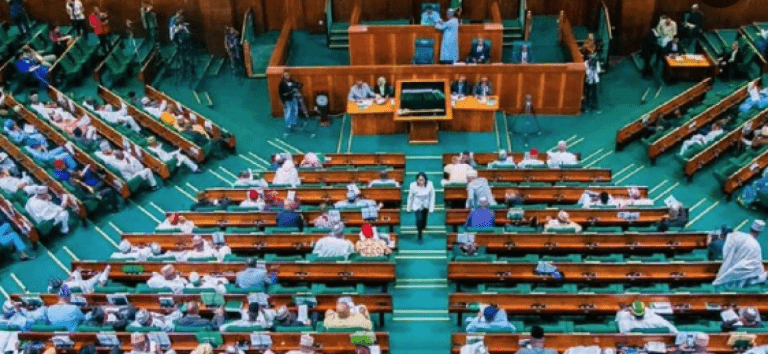
In order to examine the economic, regulatory, and security ramifications of cryptocurrency adoption and point-of-sale (PoS) operations in Nigeria, the House of Representatives has started the process.

The Speaker, Hon. Tajudeen Abbas, established an Adhoc Committee to accomplish this yesterday in Abuja.

Speaking during the committee’s inauguration, the Speaker was forced to do so because of the mounting worries about fraud, cybercrime, and consumer abuse in the digital banking sector.

Given its opaque character, questionable legal framework, ambiguous governance structure, and lack of accountability, he emphasized that there were legitimate worries about its vulnerability to money laundering and terrorism financing.

However, according to Abbas, it is important to recognize the inherent fragility of cryptocurrency activities.

He said: “The House of Representatives felt it was necessary to create regulations and consumer protection measures that will regulate the activities of Virtual Assets Service Providers, including cryptocurrencies and crypto assets, due to the lack of clear regulations and the volatility and complexity of the technology.”

This makes the Ad-Hoc Committee essential. In order to gather pertinent information from interested parties to help the House draft legislation for a regulatory framework for the currency’s adoption in our economy, it is primarily responsible for holding public hearings.

“Its work will also serve as a guide for the House in its oversight functions pertaining to Nigeria’s use of digital currency.”

Hon. Olufemi Bamisile, the committee’s chairman, had earlier stated that the task is important to the country and aims to balance national security and financial innovation.

He said that the committee’s work would be centered on creating a legal and regulatory framework that protects citizens and the integrity of the country’s financial system while promoting innovation.

The group will work closely with important security and regulatory organizations like the Securities and Exchange Commission (SEC) and the Central Bank of Nigeria (CBN), according to the chairman.

In addition, he emphasized, the committee would collaborate with the Nigeria Police Force, the Nigerian Deposit Insurance Corporation (NDIC), the Nigerian Financial Intelligence Unit (NFIU), the Economic and Financial Crimes Commission (EFCC), and the Independent Corrupt Practices and Other Related Offenses Commission (ICPC).

“A task of national significance has been entrusted to us: to review the economic, regulatory, and security implications of cryptocurrency adoption and Point-of-Sale operations in Nigeria,” stated Bamisike.

Globally, technology is changing the way financial systems are structured. The rapid growth of cryptocurrency and proof-of-stake (PoS) activities in Nigeria has opened up new avenues for innovation, financial inclusion, and trade.

However, there are also significant hazards of fraud, money laundering, cybercrime, financing terrorism, and regulatory ambiguity that come with these prospects.

‘Growth Hasn’t Fully Translated Into Jobs’ — Tinubu Acknowledges

0

/On Monday, President Bola Tinubu recognized that Nigerians still do not have enough jobs as a result of the economic progress and achievements of his administration.

This was stated by Tinubu in Abuja during the commencement of the 31st Nigerian Economic Summit (NES#31), which was organized by the Nigerian Economic Summit Group (NESG) in cooperation with the Federal Ministry of Budget and Economic Planning. Tinubu was represented by Vice President Kashim Shettima.

In order to boost employment and the economy, he promised that his administration was making every effort to close the gap in job creation. He also mentioned that the solid mineral and agricultural sectors had been given priority.

“I acknowledge that this expansion hasn’t yet resulted in enough jobs for our people, but we are bridging that gap,” he said.

“We are prioritizing two industries that have enormous potential to boost our economy and generate jobs: agriculture and solid minerals.

“In order to make progress more quickly, we have partnered with other nations to import cutting-edge farming equipment, provide training to our farmers, and increase extension services throughout the country.

Our economy is based primarily on agriculture, and in order to increase agricultural productivity, we must adopt technology. Better seed is vitally important.

Improved agricultural practices and a successful agricultural intervention both depend on extension services. And that is what we are about to witness.

In 2024, the industry generated $12.58 billion from mineral title applications and related keys, demonstrating a remarkable improvement, according to the president, who acknowledged the Ministry of Solid Minerals Development’s contribution to the Federation Account.

This indicates that the industry is waking up and is the outcome of thoughtful reforms meant to maximize its potential.

As a people-oriented government, he stated, “restoring hope to the poor, the unemployed, the excluded, and the vulnerable remains our top priority.”

According to Tinubu, Nigeria now produces 1.8 million barrels of oil per day on average. The administration is aiming to reach two million barrels per day by the end of the fiscal year 2025.

He emphasized the importance of safeguarding the interests of both domestic and international businesses, pointing to the recent dispute between the Petroleum and Natural Gas Senior Staff Association of Nigeria (PENGASSAN) and Dangote Refinery.

“Aliko Dangote is an institution and a prominent figure in Nigeria’s economic parliament; he is not an individual,” he stated.

We will be judged by outsiders based on how we treat this gentleman.

He might currently be valued between $70 and $80 billion if he had invested $10 billion in Google, Amazon, and Microsoft.

We owe it to future generations to enviously defend, advance, preserve, and safeguard the interests of this magnificent Nigeria, yet he chose to invest in his nation.

I would like to urge both the organized private sector and labor to exercise caution, reflection, and a stronger sense of patriotism when defining and enhancing the relationship between industry and labor in order to preserve our steadily improving economic fortunes. The goal is not to hold the entire country hostage over a small labor dispute.

“Nigeria is superior to PENGASAN.” Nigeria is more powerful than any of us. It’s not partisanship that brings me to you. As a patriot, I’m coming to you to find answers to our country’s problems.

The current administration has stabilized the macroeconomic climate, the president reaffirmed while listing the accomplishments of his administration’s measures.

“Everyone agrees that our reforms have stabilized our macroeconomic environment, and our economy has grown to $372.8 billion in 2024, up from $309.5 billion in 2023,” he said.

Additionally, from N19.9 trillion in 2023 to N25.2 trillion in 2024, we collected more income overall.

Additionally, it exceeded the N18.32 trillion revenue target as of August, reaching N27.8 trillion.

Our pledge to the country to increase Nigeria’s debt service to revenue ratio from 97% to a sustainable level serves as the foundation for these victories and initiatives.

“I am pleased to report that, in addition to the positive development that this ratio has now dropped to less than 50%, our performance during our first few months in office led Fitch to raise Nigeria’s sovereign rating to B with a stable outlook.

This figure is higher than what local think tanks and multilateral organizations had predicted.

Non-oil revenues rose 411% year over year in the same month, and the tax-to-GDP ratio, which was just 70% a few years ago, is now approaching 13.5%.

“Our debt-to-GDP ratio is currently 38.8%, well below the 60% threshold established by the Fiscal Responsibility Act and the 70% threshold set by the World Bank and ECOWAS.”

In order to work together toward a future in which every Nigerian can prosper, Tinubu urged states to support the Renewed Hope Agenda.

In addition to stabilizing prices and currency, we will industrialize through technology, logistics, and power. We will also humanize our economy.

According to him, “we’ll humanize governance so that every citizen feels respected and served.”

Prior to this, Mr. Olaniyi Yusuf, the Chairman of NESG, stated that the Federal Government has taken brave actions including tax reform, unifying foreign exchange markets, and eliminating fuel subsidies.

However, Yusuf noted that these reforms are weighing heavily on millions of Nigerians.

He disclosed that NESG has created a three-phase plan for economic transformation in its most recent two Macroeconomic Outlook Reports: acceleration, consolidation, and stabilization.

“We may state that the stabilization phase is coming to pass today, even though it is fragile and painful.

Even though stabilization is necessary, our journey cannot end because it is not the destination. If we halt here, we run the risk of undoing the hard-won progress.

In order to assure prosperity for all Nigerians, we must firmly enter the consolidation phase and implement reforms in ways that promote employment, growth, and inclusion while also setting the groundwork for long-term change.

Consolidation must give us direction if stabilization has given us breathing room, transforming a fragile recovery into robust, inclusive growth. We must be purposeful in order to consolidate,” he stated.

Yusuf emphasized further that the government must promote industrialization and business expansion, make investments in infrastructure to boost competitiveness, and release investments.

guarantee financial stability, promote inclusivity, fortify institutions, and tackle security as a catalyst for change.

He stated that in order to move the economy from consolidation to acceleration, “structural transformation is required, human capital is our catalyst, global competitiveness and resilience, and security is the foundation for transformation.”

Nigeria must be governed by industrialization, infrastructure, investments, inclusivity, and institutions as it contemplates both economic consolidation and acceleration, he said.
Retired AVM Dies During British Airways Journey While Battling Terminal Illness

0

According to reports, a former Nigerian Air Vice Marshal (AVM) passed away while British Airways’ crew fought to save his life on a flight to Abuja.

The jet transporting the deceased had to make an emergency stop at Barcelona’s El Prat Airport while they worked to revive the sick military officer.

According to reports, the deceased was terminally ill, and the occurrence was confirmed by Mrs. Tutu Otuyalo, the airline’s Regional Commercial Manager for Nigeria & Ghana.

After the incident, the flight, which had left London’s Heathrow Airport at 11 p.m. on Sunday, October 5, was supposed to land in Abuja at 5 a.m. on Monday. However, it took an unplanned detour to Barcelona instead.

Before his unexpected death, however, it was learned that the retired AVM who was terminally ill was being returned to Abuja for more medication.

British Airways had previously expressed regret to the affected customers and said that a fresh plane was scheduled to fly from Barcelona to Abuja yesterday.

In notes distributed to the passengers, the airline expressed regret for the inconvenience and promised that its Customer Care representatives will be on hand to help with any queries or issues.

“Passengers can use the airline’s Live Chat facility for assistance and are encouraged to anticipate receiving an email with more details.

British Airways sent out a general statement to the impacted customers saying, “British Airways acknowledges the inconvenience and thanks passengers for their patience and understanding.”

The New Book on Midlifers and Technology by Azu Ishiekwene

The author, columnist, and journalist Azu Ishiekwene has published a new book titled A Midlifer’s Guide to Content Creation and Profit.

Given the intricate and exciting advancements in generative artificial intelligence (AI), the book’s ten chapters concentrate on how older individuals can engage with and explore the new media landscape profitably.

Ishiekwene, often known as Azu, said in a statement that “it shares insights with midlifers on the possibilities for rewarding their mental exertions handsomely, whether literary, artistic or acoustic talent or the sheer capacity to curate and tell a good story from their experiences using new technologies.”

The book, which is a follow-up to “Writing for Media and Monetising It,” which was released in 2024, is published by Premium Times Books and is regarded as a useful and practical resource for young adults working in the literary and media industries.

African Studies historian and prominent teaching professor in the humanities, Toyin Falola, wrote in the foreword: “The book is a groundbreaking book that challenges the widespread belief, especially among the older generation (Gen X), that aspirations should diminish after the age of 50.”

“It’s another masterpiece from Azu, who is reaching new heights not only in the mastery of new media forms but also in his capacity to share his insights in meaningful ways,” Premier Times Publisher Dapo Olorunyomi remarked.

Azu has also co-authored a scholarly article with Prof. Farooq Kperogi titled “Light in a Digital Black Hole: Exploration of Emergent Artificial Intelligence Journalism in Nigeria” that was published in the Journal of Applied Journalism and Media Studies, delivered multiple lectures, and published a workbook on content monetization as part of his interest in new media.

A Midlifer’s Guide to Content Creation and Profit, his latest book, is available on www.azu.media and other international distribution channels, the statement stated.