Home Blog Page 1445

NDDC pledges legacy projects, sustained support for security agencies

0

The Niger Delta Development Commission has restated its commitment to support and collaboration with the Nigerian Navy and other security agencies operating in the Niger Delta region to ensure sustainable peace.

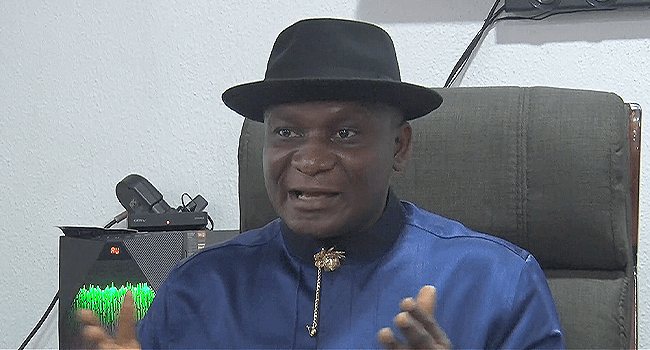
The NDDC Managing Director, Dr Samuel Ogbuku, stated this when the Flag Officer Commanding, Eastern Naval Command, Rear Admiral Sahid Akinwande, and the Commander of Nigerian Navy Ship, Pathfinder, Commodore Desmond Igbo, paid him a courtesy visit at the NDDC headquarters in Port Harcourt.

Ogbuku noted that development could only take place in an atmosphere of peace and security, even as he highlighted the contributions of the military to sustain peace in the Niger Delta region and appealed for more professionalism in tackling insecurity in the region.

He said, “President Bola Ahmed Tinubu is very committed to the peace and development of the Niger Delta region. He has given us a marching order to embark on legacy projects that will stand the test of time and impact lives in the region. We cannot achieve this if there is no peace.

“For us in NDDC, we are ready to collaborate with the security agencies to ensure that there is sustainable peace that will usher in development. The security forces have made so much sacrifice to ensure the safety of the region and we will complement their efforts by executing legacy projects.

“I appreciate the security agencies for the job they are doing in the Niger Delta region because the region is relatively peaceful compared to other regions in the country. I thank the Navy for doing a good job and making sacrifices for our collective well-being.”

Speaking earlier, Rear Admiral Akinwande expressed appreciation of the Nigerian Navy to the NDDC for the support given them over the years.

He said, “We appreciate the support given to the Nigerian Navy so far and we seek your continuous assistance and collaboration as we are ready to partner and cooperate with you in making our maritime environment safe and secure for our people.”

INEC tasks security on peaceful elections in Ondo, Edo

0

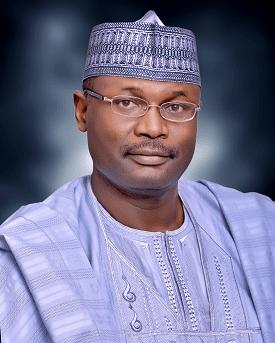
Ahead of the forthcoming Edo and Ondo governorship elections, the Chairman of the Independent National Electoral Commission, Prof Mahmood Yakubu, has urged security agencies to leverage the success of the previous election in both states.

The INEC chairman stated this at the meeting of the inter-agency consultative committee on election security in Abuja on Friday.

The Edo governorship poll is scheduled to place on September 21, 2024, and the Ondo governorship poll will be held on November 16, 2024.

Only 12 parties have uploaded the particulars of their candidates to the INEC portal with only two days left to the deadline ahead of the Edo poll.

Seventeen out of 19 parties have indicated interest in participating in the Ondo governorship election.

Yakubu said, “It is important to start security preparations very early. In particular, the number of personnel and other assets to be deployed to strategic locations should be determined and mobilised early enough.

“Let us replicate the successful conduct of the last governorship elections in Edo and Ondo states. In fact, working together, we should ensure that the 2024 governorship elections in Edo and Ondo states are an improvement on the success story of 2020.”

Yakubu stated that at the moment, Edo has 2,501,081 registered voters, 192 registration areas/wards, and 4,519 polling units while Ondo State has 1,991,344 registered voters, 203 registration areas/wards, and 3,933 polling units.

The representative of the National Security Adviser, Yahaya Hassan, promised a violence-free election in both states.

Dentists worry over rising oral health problems

0

Dentists have raised alarm over increasing oral health problems in the country amid a shortage of experts to take care of them.

They said the major and common oral health problems are dental caries (tooth decay), especially among the younger population; periodontal disease (gum disease) which is common among the older population; maligned teeth, dental plaque, and mobile teeth.

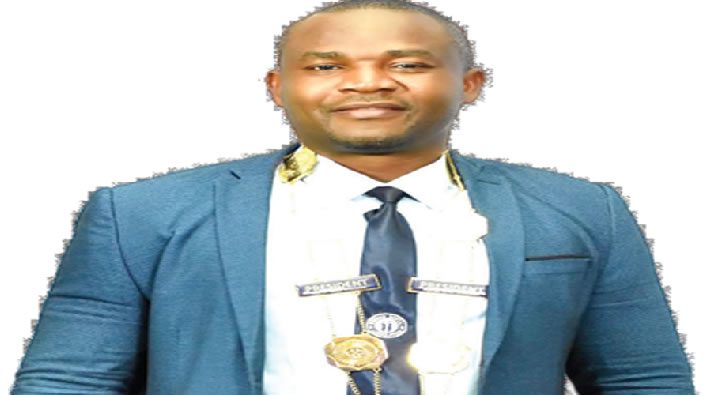
The President of the Nigerian Dental Association, Dr Tope Adeyemi, stated this on Friday.

He said, “Oral health issues are increasing daily among people, because of unhealthy habits such as taking refined carbohydrates, alcohol, and smoking; yet people do not visit dentists at least twice a year. But then some of the reasons are economic in nature.

“People do not have money for routine visits to the dentists and this makes it difficult to bring down the number. People don’t have money to secure the services of dentists because of the economic downturn that we have.

“Currently, we have 4,500 dentists in the country, So, we have one dentist to 54,000 Nigerians and this ratio is further worsened when you go to the rural areas. Meanwhile, the World Health Organisation recommended one dentist to 5,000 patients, and the maximum should be one dentist to 7,000 patients.”

Also, a consultant Prosthodontist/Implantologist, Dr Kolawole Obagbemiro, stated, “We hope that the government will ensure that the national oral health policy will be implemented at its lowest level. When that is implemented, people can visit the Primary Health Care centres where they can get basic oral health care services.

Why Anambra is not making progress under APGA – Ganduje

0

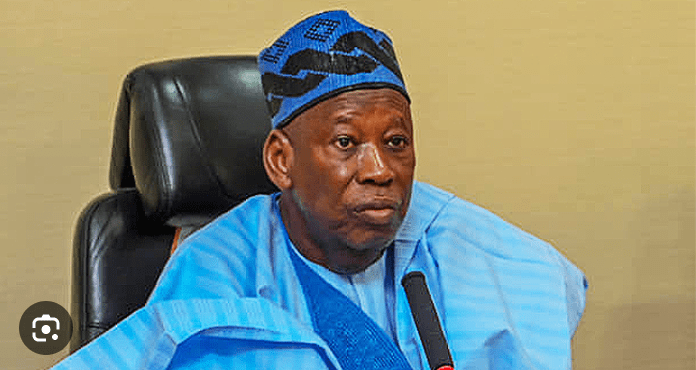
The Chairman of the All Progressives Congress, Alhaji Abdullahi Ganduje, the Imo State Governor, Chief Hope Uzodimma, and a host of APC stalwarts on Friday attended the APC South-East Colloquium taking place in Nnewi, Anambra State.

The colloquium themed, ‘De-marginalisation of South-East Zone and integration into national politics’, is hosted by the Senator, representing Anambra South Senatorial District, Senator Ifeanyi Ubah.

Speaking during the event, the Chairman of the APC, Ganduje, said Anambra State was not making the progress it was expected to make because it was not connected to the central government.

Ganduje said, “We are most grateful to participate in this dialogue that affects the South-East region. Ndigbo are an ingredient of national integration because they are mostly travelled across the country.

“Anambra is a strategic state in the South-East, but it is not making the progress that a state is expected to make because it is not connected to the central government, and that is the missing link. It is not benefiting the state.

“From former governors; Peter Obi, Willie Obiano and now, Prof Chukwuma Soludo; governors are now using their connection with the central government to better their state. Why should Anambra State continue to live in isolation? What is the benefit for this? Even those who governed Anambra State quickly abandoned the party (All Progressives Grand Alliance) after governing the state. This is the height of selfishness.

“Anambra’s refusal to connect with the centre has denied the people of benefit and great infrastructure. Anambra has failed to transit and it is trapped. If you are not at the table, nobody will speak for you and that is the situation with Anambra since 1999. Anambra is the only state being ruled by the All Progressives Grand Alliance and the party has refused to grow.

Also speaking, the Imo State Governor, Hope Uzodimma, advised the South-East region to key into the national integration of the APC.

Uzodimma explained that the colloquium was intended to stimulate the political party in the South-East and use it to better the region, adding that the time shall come when inventory would be taken.

“It is a thing of joy that the national leadership of the APC has acknowledged that the South-East is being marginalised. Having diagnosed this, the question is, who is this doctor that will prescribe the medicine to adopt? I think the national leader of the party is here to do that.

“We must identify national integration, national cohesion and national unity so that we can have a pan Nigerian project. The South-East is yearning for a united Nigeria where equity and justice is the yardstick and it means we must be in the room where decisions are taken.

“If we are committed to joining this programme and campaign for de-marginalisation, it means we must join the ruling political party. I think what we need is the process of precarious panacea to be part of the national consensus.

“Nigeria project today has no room for those who are in lamentation, it belongs to those who are pragmatic and they must adopt pragmatic approach, we must understand the political dynamism to navigate the terrain,” Uzodimma added.

When contacted for reactions on the development, Christian Aburime, the Press Secretary to Anambra State governor, Prof. Chukwuma Soludo, simply said, “What do you expect him to say as Chairman of APC?”

Also, the Deputy Publicity of APGA in Anambra, Obinna Okey, said, “He (Ganduje) is trying to market his party to Ndi Anambra. But the thing is that Ndi Anambra cannot be deceived by any political gimmicks.

“The APC chairman is not in tandem with the massive infrastructural development taking place in Anambra under Soludo and APGA.”

Follow Otti’s step, scrap ex-govs, deputies’ pensions, Obasanjo tells govs

0

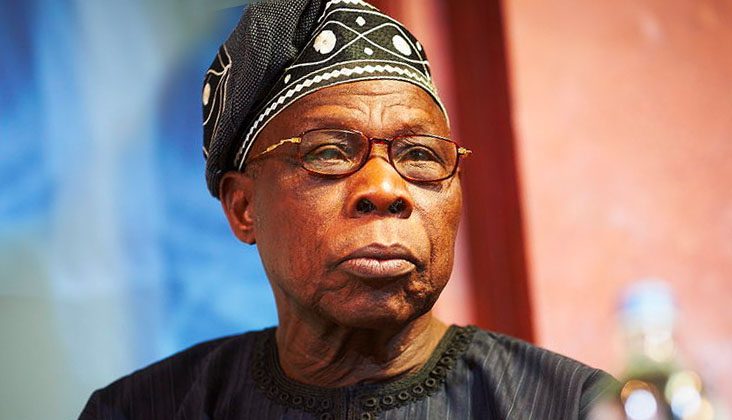
Former President Olusegun Obasanjo has described the payment of pension to former governors and their deputies as outrageous and a daylight robbery, just as he commended Governor Alex Otti of Abia State for repealing the law backing pension payment for ex-governors and their deputies.

Obasanjo spoke on Friday when he paid Otti a visit at his country home in Nvosi, Isiala Ngwa South Local Government Area.

While commending Otti for his courage in repealing the law, the former President expressed the hope that other governors would follow his footsteps.

He said, “I watched the television and I saw repealing of Abia pensions, and I asked you; what exactly is this? You said to me that the pension scheme for former governors here was too outrageous.

“It’s like trouble because it allowed them to have a house in Abuja and elsewhere, and it allowed them to cart away with whatever they can, yet the pensions of ordinary people from 2014 are unpaid.

“What sort of leadership? You came and said there will be an end to that rascality. I congratulate you, and I say to you, I hope that your colleagues will follow your footsteps.”

Obasanjo congratulated Governor Otti for his tenacity and for weathering the storm to become the state governor and reminded him that a lot of work needed to be done.

“This morning, I came in and I met you exercising, a sound mind and a sound body and I say to you, now I know your secret. I was glad when you said you do that every other day. It’s just like me playing squash on Mondays, Wednesdays and Fridays. I think a leader must keep himself or herself in a healthy condition.

“Don’t be discouraged; you will be abused, you will be called names but if we have one-third of our states doing what should be done, this country will be a different country,” he added.

He urged the governor to pay attention to infrastructural development of the State, explaining that with infrastructure and good leadership the state will attain greater heights.

Obasanjo described Abia and South-East people in general as industrious and enterprising, adding that what the people of the zone required to achieve greatness was good leadership that would give them encouragement and support.

“I will urge you to pay adequate attention to infrastructure, because if you give infrastructure and you give the type of leadership you are giving, the people of the state will have nothing to worry about. On their own, they are enterprising. All they need is the leadership that will give them all the encouragement.

“I have always maintained that if there is any zone in this country that can really give what I call regional development, it’s the South East geo-political zone, because you are almost monolithic in everything,” the foremost statesman admonished.

Receiving the former President, Governor Otti assured him that his administration was focused and single-minded on infrastructural development, especially in Aba.

“I want to also thank you for supporting our decision to repeal the pension law for former governors and former deputy governors. I had said yesterday as I signed the bill into law that I strongly believe that leadership is stewardship and if you’ve come to serve the people, you can’t at the same time be fleecing the people,” the governor declared.

Meanwhile, the Chairman of the Ondo State chapter of the Trade Union Congress, Mr Clement Fatuwase, commended Governor Otti for canceling the life pension for the past governors and deputies.

Fatuwase said, “What Otto did is good in the reality because these people are not supposed to be earning salaries after all they acquired while in office. How many years did they work that they are receiving pension while somebody works for 35 years without collecting pension as and when due.

“What the governors would get while they are going out is even enough to be their gratuity. These people who serve for eight years and collect life pension owe many workers 15, 20 years pension and gratuities.”

The TUC Chairman also called on other state governors across the federation to follow Otti’s example and stop payment of life pensions for former governors and deputies.

Saboteurs frustrating FG’s fight against insecurity, SOKAPU laments

0

The Southern Kaduna Peoples Union has said that saboteurs in the government were frustrating the efforts made by the federal and state governments towards tackling the security challenges in the country.

The group, while lamenting the spate of kidnapping and killings in the state, said the situation appeared as though the government lacked control or was no longer capable of dealing with the circumstances.

Speaking with Saturday According, SOKAPU President, Samuel Tabara, expressed the need for the government to consider a people-oriented constitution and the creation of state police, as solutions to the security problem.

He added that while the government was trying to restore normalcy and sanity, some people outside the government decided to sabotage it by sponsoring crimes.

Tabara said though the sponsors might represent an interest group, he described them as unpatriotic citizens, who meant “no well to anybody except for their own selfish reasons.”

He said, “My view on this is the fact that there are people outside government who are sponsoring these criminalities. While the government tries to see that they restore normalcy and bring about sanity, they (saboteurs) do everything to circumvent it.

“They may claim to be representing one interest group or the other, but in actual fact, these are all unpatriotic citizens who mean no well to anybody except for their selfish reasons.

“First and foremost, we need state police. The federal police have proven inadequate. We need state police, not just state police; we need police up to the local government level.”

All rights reserved. This material, and other digital content on this website, may not be reproduced, published, broadcast, rewritten or redistributed in whole or in part without prior express written permission from According.

Contact: [email protected]

People mocked me for being too serious – Osun Law graduate with double first-class

0

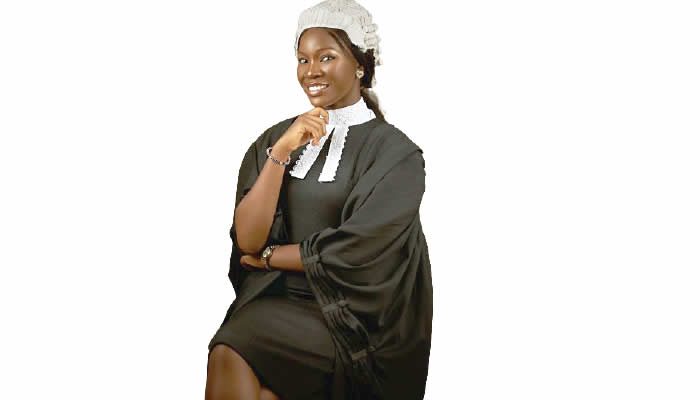
Osun State indigene, Omowumi Omoniyi, who bagged first-class at both Joseph Ayo Babalola University and the Nigerian Law School, tells ABDULLATEEF FOWEWE her motivation and how her parents’ storytelling inspired her to pursue a career in Law

 What does graduating with first-class mean to you?

I’m Omowumi Comfort Omoniyi; I’m 22 years old from the Boluwaduro Local Government Area of Osun State. I graduated from Joseph Ayo Babalola University, Osun State, in 2022 with first-class honours and was the Second Best Graduating Student in the College of Law. After completing my practical training at the Nigerian Law School in Port Harcourt, I passed my exams in November 2023 and was called to the Nigerian Bar in March 2024. I received the Director-General’s Prize for my academic achievements. This means I have double first-class honours, both at the university and in Law School. Additionally, I work as the Assistant Programme Director at The Vanguard Africa and have a passion for research.

However, graduating with first-class honours holds significant value for me as it represents the culmination of hard work and dedication. Despite the perception that achieving first-class from private universities is easier, I can attest to the challenges and efforts required to achieve this academic milestone. It is common for people to assume that it was a private school based on their reactions. I am proud to have achieved the same academic feat at the Nigerian Law School, which I believe is a result of my determination and hard work.

Would you say you achieved first-class in Law School to convince people who are underestimating the capacity of private universities to produce outstanding results?

Truly it was one of my motivations, but it wasn’t the major reason. I achieved first-class in Law School because it has always been a dream of mine. I also considered it a step towards securing several opportunities.

Can you share some of the key experiences and challenges you encountered during your academic journey?

I faced various challenges during my academic journey, including maintaining a high GPA from my first year to my fourth year at the university. Despite some setbacks, I am grateful for God’s guidance and my perseverance in achieving my goal of obtaining a first-class degree. Obtaining first-class from the Nigerian Law School holds great importance for me. It is known that the final grade is based on the lowest grade earned, making it necessary to achieve an ‘A’ in all five courses for first-class. Starting Law School two weeks after it others had resumed was overwhelming due to the heavy workload and intense coursework. Study hours were long, leaving little time for other activities and leading to moments of self-doubt.

Academic pressure and stress were also challenges, particularly close to bar finals. Law School is best experienced rather than explained; my sojourn there was filled with challenges that required dedication and consistent efforts. One of the most rewarding aspects was being part of a diverse and lively student community. However, interacting with individuals from diverse backgrounds and cultures enhanced my perspective and enriched my learning experience.

What motivated you to pursue a career in Law?

My motivation to study Law stemmed from a desire to positively impact society. My father often shared stories of influential figures like Chief Gani Fawehinmi and Mr Femi Falana, which inspired me. Learning about Dr Reginald Aziza’s academic achievements in 2017 further fuelled my ambition. This led me to pursue a degree in Law in 2018.

Since not all students in your class graduated with first-class degrees, what valuable lessons can you share with them?

I always credit my academic success to God, who generously provides wisdom to all. Therefore, my advice will be for anyone who wants to succeed academically to have faith in God; that is the starting point. Moving forward, my goal is to maintain a positive attitude and stay motivated. It is important to remind myself that I am responsible for my own motivation. Although there were times when I was tempted by distractions like movies and social media, I always made an effort to keep my goals in sight. I believed that having a strong work ethic and staying dedicated to my goals could greatly impact my academic journey.

Furthermore, I prioritise effective time management and organisation to stay on track with my assignments and responsibilities. Through experience, I have learned the importance of balance and the ability to handle multiple tasks without one negatively affecting the other. In addition, I made it a habit to start studying early. Many people tend to procrastinate and won’t begin studying until a few days to the commencement of examinations, but for me commencing preparations early afforded me the opportunity of superior comprehension of the subject matter as well as improved retention of the knowledge acquired.

How would you have reacted if you had not attained first-class honours upon graduation?

I would have been overcome with profound sadness. I don’t believe I would have accepted such an outcome with equanimity, because academic results serve as a tangible representation of the dedication and arduous effort one has expended on a particular pursuit. Consequently, not attaining the desired outcome to showcase one’s diligent undertakings and commendable work ethic can undoubtedly shatter one’s resolve.

Throughout your time as an undergraduate, were there any notable moments that still stand out in your memory?

One of the most memorable moments was when the results were released, and I achieved the expected performance. Announcing the delightful news to my parents made them to brim with unbridled elation and unrestrained bliss. A noteworthy highlight was when I had the privilege of attending the Annual Law Week organised by the Akure branch of the Nigerian Bar Association in 2019. My alma mater, in a stroke of benevolence, facilitated our attendance at this intellectually stimulating event. The theme for the occasion was, ‘National Interest and the Rule of Law’. This invaluable opportunity not only granted me access to an assemblage of erudite legal practitioners, but also enabled me to engage in meaningful interactions with them, fostering an unparalleled intellectual exchange.

In addition, during my tenure as the head of O. J. Jejelola Chamber at the College of Law, JABU, I spearheaded a series of memorable triumphs that reverberated throughout my tenure. Our unyielding perseverance, dedication, and tenacity propelled us to attain a string of victories, thereby etching an indelible mark on our institution. Lastly, I achieved an extraordinary feat in my final year when I clinched the coveted first position in the Sunday school exam, an accolade that carried a profound significance as it marked my maiden attempt in this intellectual pursuit.

Do you have any cherished aspirations or longings that became unattainable due to the compelling demands of your scholarly pursuits?

I must admit that there were none. As I previously alluded to, I was bestowed with the ability to harmoniously juggle a multitude of responsibilities and endeavours. With an unparalleled aptitude for multitasking, it was within my purview to effortlessly navigate disparate tasks without incurring any harmful consequences on the delicate balance of my scholarly pursuits.

I never found it necessary to delete my social media applications or to forsake my social engagements in favour of dedicating myself entirely to my academic pursuits. Alongside managing my studies, I was involved in a romantic relationship and made it a point to maintain regular communication with my family members.

For the benefit of current students, can you recall what a typical day looked like for you during your time in school?

Throughout my undergraduate years, my post-class routine typically consisted of heading for the library or participating in chapel activities when they were called for. Subsequently, I would grab something to eat, catch up with a few friends, and then get some rest. I usually woke up around 8pm or 9pm, depending on the time I went to bed, and then I would immerse myself in my studies, reading until around 4am.

However, when I attended the Nigerian Law School, I found it impossible to maintain this routine due to the differing schedules. My classes commenced at 9am, and we often concluded around 2.30pm to 3pm, with a brief break of about 30 minutes in between. During these intervals, I would consume a quick meal, indulge in a brief nap, or review the subjects and drafts I studied the previous day. After the day’s lectures, if I hadn’t managed to eat during the breaks, I would eat something and then rest a bit before heading for the reading room in the hostel to carry on with my studies. On particularly overwhelming days, I would take evening strolls or meet with friends to discuss the topics we had covered.

During your undergraduate days, were there ever moments when you felt bored, possibly as a result of the strict regulations and routine activities characteristic of some private universities?

I can’t recall ever feeling bored during my undergraduate days; the established rules and routines served to keep me disciplined. To be honest, the regulations were not excessively stringent. However, there were numerous occasions when I yearned to return home simply to enjoy home-cooked meals.

Did you prioritise socialising or studying during your time at the Nigerian Law School, or was it all academics?

I made sure to strike a balance between my academic responsibilities and my social life, with a focus on consistency in my daily routine. Taking time to relax and have fun with friends, going for walks, and engaging in non-academic conversations helped me maintain this balance. While I dedicated the majority of my time to studying, I also made an effort to enjoy my time with loved ones and activities I enjoyed. I made a conscious effort to be sociable and have a well-rounded experience throughout my academic journey.

Has anyone ever made jest of you because of your dedication to your academic endeavour?

Yes, some individuals used to make jest of me but sometimes I would just laugh it off. I have had a few people tell me that I am way too serious.

Did your parents reward you for good performance?

Yes, my parents always showed great pride in the academic achievements of my siblings and I. They would typically reward us with money, and prayers, or celebrate in a grand way with family members, friends and neighbours.

Of all the issues in Nigeria, which one concerns you the most?

Honestly, I will say insecurity. It is a major problem that impacts the safety and overall well-being of the population. Just two months ago, the escalating incidents of kidnapping and killings, even in people’s homes, were truly concerning. If citizens cannot feel safe in their own country, then there is still a long way to go. Although it might have reduced a bit, it is still very important for the government and society to work together to find a lasting and permanent solution and ensure the security of all Nigerians.

Do you share in the sentiments that the National Youth Service Corps programme should be scrapped?

I believe that the NYSC programme shouldn’t be scrapped entirely. However, given the current state of the country, including concerns about insecurity and the economy, it’s crucial to consider a complete overhaul of the system. With rising inflation and the need for better financial support, the government needs steps to increase pay and address these issues. By making necessary reforms, we can ensure that the programme remains relevant and beneficial to the youth.

What are your plans and aspirations for the future? to take

I aim to pursue my master’s in Law at an Ivy League school and eventually take the New York Bar Exams.

Do you think engaging in relationships is a hindrance for undergraduates?

I believe self-awareness is key in all endeavours. Despite being in a relationship during my time at the university and the Nigerian Law School, I was able to maintain daily communication because I could prioritise my goals without being easily distracted. Ultimately, staying focused on the end goal is crucial, and self-awareness can help determine if a relationship may interfere with achieving success.

What advice would you give to students who are looking up to you?

Here is my advice to all the students looking up to me: Keep believing in yourself. Believe that every dream of yours is achievable. Trust God too, for He is the giver of wisdom and knowledge. Work hard, eat, and sleep well. Take risks and step out of your comfort zone.

My marriage…With Great Omueyaki

0

 When did you get married? I got married on December 18, 2021. It has been nearly three years now. How did you meet your wife? We used to be coursemates back then in Auchi Polytechnic, Auchi, Edo State, between 2012 and 2017. Was it love at first sight? No, it wasn’t love at first sight.

Read More

Before Stardom With… E-Jay (Elijah Christopher)

0

Have you always wanted to be a musician? My interest in music like many kids growing up started with watching Michael Jackson and learning the lyrics of his songs in lyric books. It wasn’t about the singing at first but the dancing. I started dancing professionally at 11. My first dancing gig was actually at

Read More

Tinubu may announce new minimum wage on Workers’ Day

0

  • Committee’s target is for President to make announcement on May 1, says member
  • Labour spoils for war with govs, insists states have money from subsidy removal

Indications have emerged that President Bola Tinubu may announce the new minimum wage on May 1 in commemoration of the International Labour Day and backdate its implementation to April.

Saturday According gathered that the National Minimum Wage Committee was working to ensure that all negotiations regarding the new rate were finalised before then with the expectation that the President would announce the new minimum wage in his Workers’ Day address.

A member of the committee, who spoke to Saturday According on condition of anonymity because of the sensitive nature of the issue, said, “By next week, the minimum wage committee will meet again. It’s a continuous meeting. That is a meeting where all the reports from the zonal public hearings will be collated and reported, and then, you know, that will also give the committee the direction to work with.

“Our target is to ensure that Mr President announces the minimum wage by the 1st of May, which is the Workers’ Day, for it to take effect from April. So, we are working to meet the timeline.”

When reminded that the current minimum wage of N30,000 would cease to be valid on March 31, the committee member said it was unlikely that the new rate would be ready before then, adding that there was still a long way to go in arriving at an acceptable minimum wage for the country.

The source stated, “We have not got to the negotiation point yet. When you finish with the zones, it is the aggregate of what you collect from the zones that will determine the direction of the main committee. Now that we have finished with the zones, when the committee meets, it will collate all the positions of the zones and committee members.

“The positions of the NLC, TUC, NECA (the Nigeria Employers Consultative Association) and the government will be looked at. Then, we will look at the aggregate, find a percentage, and arrive at what will be agreeable.

“We are going to make some adjustments. I am sure the committee will also have a private meeting with Mr President; they will look at the ability to pay, and then with the state governors. NECA will also be involved and we will see how we marry those angles. It is not a one-stop affair.”

When contacted, the Minister of Information and National Orientation, Idris Mohammed, did not take his calls and he had yet to respond to text and WhatsApp messages sent to his mobile line as of the time of filing this report.

The Special Adviser to the President on Information and Strategy, Bayo Onanuga, said he was not so conversant with the internal deliberations of the committee, but affirmed that talks were ongoing among the committee members who, he noted, were cognizant of the urgency of their assignment.

However, a presidential aide, who spoke on condition of anonymity because he was not the official spokesperson for the President, said Tinubu might not wait for May 1 to announce the new minimum wage if the committee was able to complete its assignment as scheduled, noting that ordinarily, the new wage should come into effect on April 1.

The aide said, “I don’t think the government will be able to wait until May 1 before announcing the minimum wage. The law says it should be concluded by early April.

“If the parties agree, why do they have to wait to make the announcement? Because they are negotiating and the law says negotiations should be completed by April.”

 Labour warns govs

The Organised Labour has warned state governors that it will not accept anything less than full implementation whenever the new minimum wage becomes law as it is ready to go into battle with such governors.

Labour’s position is coming at a time when the governors are asking the National Minimum Wage Committee to consider each state’s peculiarities in arriving at an acceptable figure, even as the panel is compiling the reports of its public hearing in the different zones.

The two labour centres in the country – the Nigeria Labour Congress and the Trade Union Congress – are unanimous in rejecting the governors’ position, warning that it is a recipe for prolonged industrial unrest.

The Nigeria Governors’ Forum had urged the National Minimum Wage Committee to take into account the present circumstances, unique characteristics of individual states, and the effects on both the government and private sector employers’ ability to pay when determining the wage amount.

The NGF, in a communiqué issued after its virtual meeting, and signed by its Chairman and Kwara State Governor, AbdulRahman AbdulRasaq, made available to journalists on Thursday, stated, “Members reviewed the progress of the National Minimum Wage Committee and ongoing multi-stakeholder engagements towards agreeing on a fair minimum wage.

“Members urged the NMWC to consider the current realities, individual states’ peculiarities, and consequential impact on the capacity of the government as well as private sector employers to pay. Members also emphasized the need for proposals to be data-driven and evidence-based.”

Before now, the labour unions had said the existing national minimum wage of N30,000 was no longer realistic, citing the steep inflation rate of 31.7 per cent in February from 29.9 per cent reported by the National Bureau of Statistics in January.

In January, the Federal Government inaugurated the tripartite committee responsible for deliberating on the national minimum wage.

Vice President Kashim Shettima inaugurated the 37-member panel at the Council Chamber of the State House in Abuja.

Comprising representatives of the federal and state governments, the private sector, and organised labour, the committee’s mandate is to propose a revised national minimum wage for the nation.

During zonal public hearings in Lagos, Kano, Enugu, Akwa Ibom, Adamawa, and Abuja, workers in the North-West requested N485,000; North-East, N560,000; North-Central, N709,000 (NLC) and N447,000 (TUC); South-West, N794,000; South-South, N850,000; and South-East, N540,000 by the NLC and N447,000 by the TUC.

However, the Adamawa and Bauchi state governments suggested N45,000 as the new minimum wage.

The NLC on Friday said governors who fail to implement the new minimum wage when it becomes a law would be breaking the law.

The Congress also noted that it was working towards ensuring that tougher sanctions would be meted on such governors.

In an exclusive interview with Saturday According in Abuja, the spokesperson for the NLC, Benson Upah, noted that while the Federal Government had never defaulted in the payment of minimum wages, governors had never performed up to the task.

Upah said, “I want to tell you that any state that refuses to pay the new minimum wage will be breaking the law because it will be a national law. The present minimum wage of N30,000 was consensual, so the governors who have refused to pay are breaking the law.

“One of the things we are trying to do with the present negotiation is to ensure that enough sanctions are provided. We are going to ensure that sanctions are sufficiently tough to deter such criminally minded governors. When it comes to the minimum wage, the Federal Government has been adhering. We really can’t recall a situation of default in terms of payment of the minimum wage by the Federal Government.

“Where we had challenges in the past was about defiant governors and their number has been in the minority.”

Similarly, the TUC said it was unacceptable for the governors to undermine the payment of living wages to the workers with their divide-and-rule tactics, adding that state governments had no excuse to do whatever would be agreed on as the minimum wage since they now had more money available following the removal of fuel subsidy.

The Deputy President, TUC, Dr Tommy Etim, told one of our correspondents that the new minimum wage law being worked on would impose penalties on state governors and private sector employers who refused to pay the agreed sum.

He said, “Let me let you know that the Act will be amended to accommodate all those excesses, and then there will be those penalties. Definitely, the Act will be amended to take into cognizance the exclusion, the penalties, and the enforcement for any governor who decides to be recalcitrant; as well as employers of labour who decide to be recalcitrant in the implementation of the minimum wage.

“The bottom line is that once the President signs the Minimum Wage Act, automatically, what is expected is the implementation. We don’t need to tell anybody to do the needful; the employer who hires you knows that he is going to pay you. Telling employers to pay is like telling a Pope how to prepare the Holy Communion.

“Yes, some governors could not pay the N30,000 old minimum wage; that was then and not now. If they couldn’t pay the N30,000 minimum wage, it therefore means that the Act was weak.”

Etim added, “The quantum of money they (governors) are getting from the removal of fuel subsidy is enough for them to pay. I don’t want anybody to say some governors may not want to pay the new minimum wage when it is unveiled. The ability to pay is there because they have more money accruing to them (governors) as a result of the removal of fuel subsidy.

“You know that in 2019, the sum of N30,000 was in vogue, and things were relatively still at the comfort of the masses, but in this case, have you taken a look at how much fuel is sold per litre now, the price of cooking gas, the price of bread, transportation?  If anyone talks about the ability of the state governors to pay, it therefore means that we are preparing them to hide under that premise.”

The TUC deputy president added that there was no more room for excuses by the governors.

He said the process of getting a new minimum wage was still ongoing and that the TUC’s position on it had been well articulated and that it was tenable in all the zones.

Etim stated, “That is also what we are going to table because we will not give different figures as far as the national minimum wage is concerned. The TUC will come up with a common figure, except as we speak, (NLC president, Joe) Ajaero decides to drop his ego, and then walk in line.

“We are looking at many factors, including the ability to implement the minimum wage. It is not just for you to say N1m as minimum wage. You don’t make a caricature of a very serious matter. How do you arrive at N1m? You have to look at the ability to pay in line with the ILO (International Labour Organisation) minimum wage fixing conventions. You don’t have all those things on the ground and you are just announcing.

“That is why they (the NLC) couldn’t put their house in order. You find out that different zones came out with different minimum wages. It therefore means that the leadership did not show them the direction.

“When you look at TUC’s own, you will see that we have a direction and that is why our position on the minimum wage is in uniformity.

“However, as time goes on, we will get to the point of looking at our paper and then we will agree on our position.”

When asked if the NLC was in touch with the TUC to resolve their differences, Etim said, “I can tell you for free that nothing like that has happened. At my level in the TUC, a thing like that cannot take place without me being involved.

“Definitely, in the long run, we will come together. Let me also tell you that the mere fact that husbands and wives are quarreling does not prevent the children from eating.”

 State labour leaders

The Chairman of the TUC in Ogun State, Akeem Lasisi, said workers in the state would not accept any excuse that the state government might want to put forward to delay the implementation of the new minimum wage.

Lasisi said once the Federal Government announces the new minimum wage, the workers expect the state government to waste no time in implementing it.

He said, “Labour will refuse to accept the lame argument that workers must bear the brunt of the high-handedness of the government.

“The government must set a good example by cutting the cost of governance. Well-compensated and motivated workers are essential for the development of a nation.

“The increase in minimum wage will result in increased productivity and this will eventually increase in monetary value without causing inflation.

“The Organised Labour in the country will not tolerate any excuse from the state governors because workers dictate the development of a nation and must be treated with utmost concern and honour.

“Should workers perish for a nation to develop? It does not require rocket science for the state government to pay a new minimum wage. State governments should escape out of the doom and enter a boom to make workers happy.

“The minimum wage is backed by law; it is on the exclusive list. State governments’ failure to uphold their end of the bargain will be quite regrettable and unacceptable.”

Similarly, the Chairman of the TUC in Ekiti State, Sola Adigun, said there was no basis for the labour movement in the state to think that Governor Biodun Oyebanji would give excuses when the new minimum wage is unveiled.

Adigun said, “At every forum, we inform the governor that the implementation of the new minimum wage will not have any issue in Ekiti State; he has agreed to that, and by the grace of God, there is no going to be any issue.

“So, there will be no basis for us now to start crying or speaking about failure or non-implementation of what has not been agreed on.

“Labour in Ekiti State and the government will work out a meaningful minimum wage or living wage for Ekiti State workers. I don’t expect him (the governor) to do otherwise.”

The Osun State TUC Chairman, Abimbola Fasasi, said Governor Ademola Adeleke had been part of regional negotiations with labour on the new wage.

According to him, Adeleke’s involvement in the negotiations will make it easier for the labour movement to demand the payment of the new minimum wage in the state.

“Fortunately for us here, our governor is involved in the negotiations. It makes it so easier for us here in Osun,” Fasasi stated.

Additional reports by Bankole Taiwo, Abiodun Nejo and Bola Bamigbola