Home Blog Page 144

$10bn Deal: Northern Elders Attract Major Funding For Mining, Agriculture, Power Projects

0

In an effort to promote industrialization, draw in investment, and harmonize development policies throughout the northern region, the Northern Elders Forum (NEF) yesterday announced the creation of the Northern Nigeria Economic Development Council (NNEDC).

The announcement came after the Northern Nigeria Investment and Industrialization Summit (NNIIS) in Abuja concluded successfully, with attendees pledging more than $10 billion in new investments in the fields of power, mining, and agriculture.

The Forum stated that the NNEDC would function as the institutional framework for carrying out a Northern Nigeria Economic Development Masterplan, emphasizing security, policy coherence, and private capital as pillars for the region’s economic transformation. The statement was signed by Prof. Ango Abdullahi, the Chairman of the NEF Board of Trustees.

With the theme “Unlocking Strategic Opportunities in Mining, Agriculture, and Power (MAP 2025),” the two-day summit brought together a wide range of stakeholders, including representatives from the Federal Government, northern governors, the NNDC, the private sector, development partners, financiers, academics, and civil society organizations.

“Investment promotion agencies from the 19 Northern Nigerian States, corporate sponsors, and deal room/matchmaking (B2B, B2G) sessions also showcased investment opportunities at the summit,” he said. Over $10 billion in significant investments in mining, agriculture, and power were promised over the following five years.

In addition, representatives from Bangladesh, South Africa, India, Canada, Saudi Arabia, and Turkey were there and pledged to invest billions of dollars in the region’s developing industries.

Strategic presentations, high-level speeches, panel discussions, and masterclasses examining sectoral strengths, obstacles, and investment possibilities in mining, agriculture, and electricity were all part of the summit.

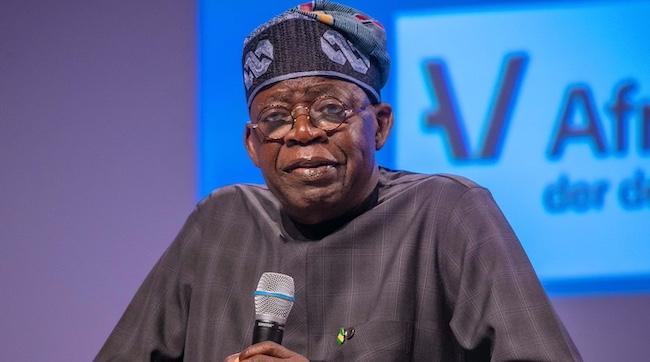
The federal government’s commitment to revitalizing Northern Nigeria’s economy through collaboration and institutional capital mobilization was reinforced by President Bola Tinubu, who opened the summit on behalf of Minister of Finance and Coordinating Minister of the Economy, Mr. Wale Edun.

In response, NEF conveyed gratitude for the President’s backing and promised to maintain accountability in fulfilling this national commitment.

Governors from the North West, North East, and North Central regions pledged their states to a single regional economic vision at the event by signing the Northern Nigeria Economic Development Charter.

The newly established NNEDC will coordinate the execution of the Northern Nigeria Economic Development Masterplan (NNEDM) while functioning under the joint supervision of NEF and the Northern Nigeria Governors’ Forum (NNGF).

Within 60 days, an operational roadmap will be published by the Joint Implementation and Monitoring Taskforce (JIMT), which will also supervise transitional measures. Quarterly scorecards will be issued by the NNEDC to monitor quantifiable results including investments mobilized, jobs produced, and energy capacity added.

The occasion represented “a decisive pivot from rhetoric to execution” in Northern Nigeria’s development trajectory, according to remarks made by Prof. D.D. Sheni, Director-General of NEF.

In his words, “Northern Nigeria can transform its endowments into sustainable growth with security as the bedrock, policy coherence as the framework, and private capital as the engine.”

NEF reaffirmed its dedication to openness, responsibility, and equitable prosperity as it guides the area into a new phase of concerted economic development.

“Significant deposits across states (such as gold, copper, lithium, tantalite, and granite),” he continued. Regional supplier ecosystems; potential for mineral-based industrialization and local processing.

Without effective ESG protections, there is a risk of illegal mining, environmental damage, and social unrest. inadequate mineral resource data.

Clear royalties, community involvement, conflict resolution, E&S compliance, and reliable, consistent permitting are all necessary. Reforming the governance of mining and natural resource development is necessary.

The participants placed a strong emphasis on using capital-market tools (project bonds, sukuk/green bonds, and infrastructure funds) to finance off-grid/mini-grid solutions, transmission, generation, and distribution.

“To expedite the delivery of infrastructure, use standardized PPP frameworks and model contracts with transparent procurement and risk allocation.

Establish Community Benefit Agreements, grievance procedures, and land administration reforms (digitized cadastre, explicit titling, and time-bound consent).

“Start a capital mobilization program in Northern Nigeria by utilizing DFIs, pension funds, sovereign and diaspora capital, and creating blended-finance vehicles and thematic instruments (project bonds, infrastructure, sukuk, and green).”
Nigeria’s House Examines Economic, Regulatory, Security Implications Of Crypto And PoS Systems

0

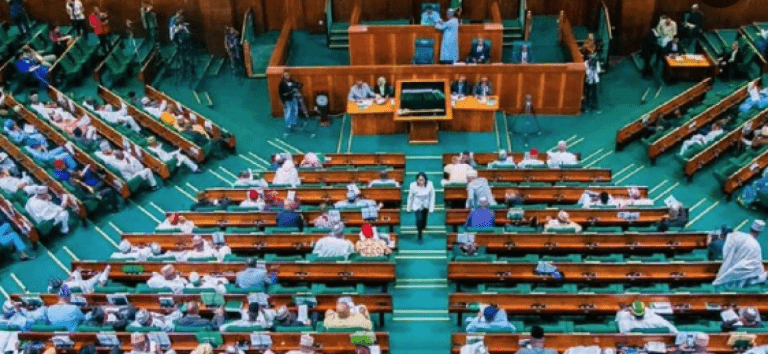
In order to examine the economic, regulatory, and security ramifications of cryptocurrency adoption and point-of-sale (PoS) operations in Nigeria, the House of Representatives has started the process.

The Speaker, Hon. Tajudeen Abbas, established an Adhoc Committee to accomplish this yesterday in Abuja.

Speaking during the committee’s inauguration, the Speaker was forced to do so because of the mounting worries about fraud, cybercrime, and consumer abuse in the digital banking sector.

Given its opaque character, questionable legal framework, ambiguous governance structure, and lack of accountability, he emphasized that there were legitimate worries about its vulnerability to money laundering and terrorism financing.

However, according to Abbas, it is important to recognize the inherent fragility of cryptocurrency activities.

He said: “The House of Representatives felt it was necessary to create regulations and consumer protection measures that will regulate the activities of Virtual Assets Service Providers, including cryptocurrencies and crypto assets, due to the lack of clear regulations and the volatility and complexity of the technology.”

This makes the Ad-Hoc Committee essential. In order to gather pertinent information from interested parties to help the House draft legislation for a regulatory framework for the currency’s adoption in our economy, it is primarily responsible for holding public hearings.

“Its work will also serve as a guide for the House in its oversight functions pertaining to Nigeria’s use of digital currency.”

Hon. Olufemi Bamisile, the committee’s chairman, had earlier stated that the task is important to the country and aims to balance national security and financial innovation.

He said that the committee’s work would be centered on creating a legal and regulatory framework that protects citizens and the integrity of the country’s financial system while promoting innovation.

The group will work closely with important security and regulatory organizations like the Securities and Exchange Commission (SEC) and the Central Bank of Nigeria (CBN), according to the chairman.

In addition, he emphasized, the committee would collaborate with the Nigeria Police Force, the Nigerian Deposit Insurance Corporation (NDIC), the Nigerian Financial Intelligence Unit (NFIU), the Economic and Financial Crimes Commission (EFCC), and the Independent Corrupt Practices and Other Related Offenses Commission (ICPC).

“A task of national significance has been entrusted to us: to review the economic, regulatory, and security implications of cryptocurrency adoption and Point-of-Sale operations in Nigeria,” stated Bamisike.

Globally, technology is changing the way financial systems are structured. The rapid growth of cryptocurrency and proof-of-stake (PoS) activities in Nigeria has opened up new avenues for innovation, financial inclusion, and trade.

However, there are also significant hazards of fraud, money laundering, cybercrime, financing terrorism, and regulatory ambiguity that come with these prospects.

‘Growth Hasn’t Fully Translated Into Jobs’ — Tinubu Acknowledges

0

/On Monday, President Bola Tinubu recognized that Nigerians still do not have enough jobs as a result of the economic progress and achievements of his administration.

This was stated by Tinubu in Abuja during the commencement of the 31st Nigerian Economic Summit (NES#31), which was organized by the Nigerian Economic Summit Group (NESG) in cooperation with the Federal Ministry of Budget and Economic Planning. Tinubu was represented by Vice President Kashim Shettima.

In order to boost employment and the economy, he promised that his administration was making every effort to close the gap in job creation. He also mentioned that the solid mineral and agricultural sectors had been given priority.

“I acknowledge that this expansion hasn’t yet resulted in enough jobs for our people, but we are bridging that gap,” he said.

“We are prioritizing two industries that have enormous potential to boost our economy and generate jobs: agriculture and solid minerals.

“In order to make progress more quickly, we have partnered with other nations to import cutting-edge farming equipment, provide training to our farmers, and increase extension services throughout the country.

Our economy is based primarily on agriculture, and in order to increase agricultural productivity, we must adopt technology. Better seed is vitally important.

Improved agricultural practices and a successful agricultural intervention both depend on extension services. And that is what we are about to witness.

In 2024, the industry generated $12.58 billion from mineral title applications and related keys, demonstrating a remarkable improvement, according to the president, who acknowledged the Ministry of Solid Minerals Development’s contribution to the Federation Account.

This indicates that the industry is waking up and is the outcome of thoughtful reforms meant to maximize its potential.

As a people-oriented government, he stated, “restoring hope to the poor, the unemployed, the excluded, and the vulnerable remains our top priority.”

According to Tinubu, Nigeria now produces 1.8 million barrels of oil per day on average. The administration is aiming to reach two million barrels per day by the end of the fiscal year 2025.

He emphasized the importance of safeguarding the interests of both domestic and international businesses, pointing to the recent dispute between the Petroleum and Natural Gas Senior Staff Association of Nigeria (PENGASSAN) and Dangote Refinery.

“Aliko Dangote is an institution and a prominent figure in Nigeria’s economic parliament; he is not an individual,” he stated.

We will be judged by outsiders based on how we treat this gentleman.

He might currently be valued between $70 and $80 billion if he had invested $10 billion in Google, Amazon, and Microsoft.

We owe it to future generations to enviously defend, advance, preserve, and safeguard the interests of this magnificent Nigeria, yet he chose to invest in his nation.

I would like to urge both the organized private sector and labor to exercise caution, reflection, and a stronger sense of patriotism when defining and enhancing the relationship between industry and labor in order to preserve our steadily improving economic fortunes. The goal is not to hold the entire country hostage over a small labor dispute.

“Nigeria is superior to PENGASAN.” Nigeria is more powerful than any of us. It’s not partisanship that brings me to you. As a patriot, I’m coming to you to find answers to our country’s problems.

The current administration has stabilized the macroeconomic climate, the president reaffirmed while listing the accomplishments of his administration’s measures.

“Everyone agrees that our reforms have stabilized our macroeconomic environment, and our economy has grown to $372.8 billion in 2024, up from $309.5 billion in 2023,” he said.

Additionally, from N19.9 trillion in 2023 to N25.2 trillion in 2024, we collected more income overall.

Additionally, it exceeded the N18.32 trillion revenue target as of August, reaching N27.8 trillion.

Our pledge to the country to increase Nigeria’s debt service to revenue ratio from 97% to a sustainable level serves as the foundation for these victories and initiatives.

“I am pleased to report that, in addition to the positive development that this ratio has now dropped to less than 50%, our performance during our first few months in office led Fitch to raise Nigeria’s sovereign rating to B with a stable outlook.

This figure is higher than what local think tanks and multilateral organizations had predicted.

Non-oil revenues rose 411% year over year in the same month, and the tax-to-GDP ratio, which was just 70% a few years ago, is now approaching 13.5%.

“Our debt-to-GDP ratio is currently 38.8%, well below the 60% threshold established by the Fiscal Responsibility Act and the 70% threshold set by the World Bank and ECOWAS.”

In order to work together toward a future in which every Nigerian can prosper, Tinubu urged states to support the Renewed Hope Agenda.

In addition to stabilizing prices and currency, we will industrialize through technology, logistics, and power. We will also humanize our economy.

According to him, “we’ll humanize governance so that every citizen feels respected and served.”

Prior to this, Mr. Olaniyi Yusuf, the Chairman of NESG, stated that the Federal Government has taken brave actions including tax reform, unifying foreign exchange markets, and eliminating fuel subsidies.

However, Yusuf noted that these reforms are weighing heavily on millions of Nigerians.

He disclosed that NESG has created a three-phase plan for economic transformation in its most recent two Macroeconomic Outlook Reports: acceleration, consolidation, and stabilization.

“We may state that the stabilization phase is coming to pass today, even though it is fragile and painful.

Even though stabilization is necessary, our journey cannot end because it is not the destination. If we halt here, we run the risk of undoing the hard-won progress.

In order to assure prosperity for all Nigerians, we must firmly enter the consolidation phase and implement reforms in ways that promote employment, growth, and inclusion while also setting the groundwork for long-term change.

Consolidation must give us direction if stabilization has given us breathing room, transforming a fragile recovery into robust, inclusive growth. We must be purposeful in order to consolidate,” he stated.

Yusuf emphasized further that the government must promote industrialization and business expansion, make investments in infrastructure to boost competitiveness, and release investments.

guarantee financial stability, promote inclusivity, fortify institutions, and tackle security as a catalyst for change.

He stated that in order to move the economy from consolidation to acceleration, “structural transformation is required, human capital is our catalyst, global competitiveness and resilience, and security is the foundation for transformation.”

Nigeria must be governed by industrialization, infrastructure, investments, inclusivity, and institutions as it contemplates both economic consolidation and acceleration, he said.

Retired AVM Dies During British Airways Journey While Battling Terminal Illness

0

According to reports, a former Nigerian Air Vice Marshal (AVM) passed away while British Airways’ crew fought to save his life on a flight to Abuja.

The jet transporting the deceased had to make an emergency stop at Barcelona’s El Prat Airport while they worked to revive the sick military officer.

According to reports, the deceased was terminally ill, and the occurrence was confirmed by Mrs. Tutu Otuyalo, the airline’s Regional Commercial Manager for Nigeria & Ghana.

After the incident, the flight, which had left London’s Heathrow Airport at 11 p.m. on Sunday, October 5, was supposed to land in Abuja at 5 a.m. on Monday. However, it took an unplanned detour to Barcelona instead.

Before his unexpected death, however, it was learned that the retired AVM who was terminally ill was being returned to Abuja for more medication.

British Airways had previously expressed regret to the affected customers and said that a fresh plane was scheduled to fly from Barcelona to Abuja yesterday.

In notes distributed to the passengers, the airline expressed regret for the inconvenience and promised that its Customer Care representatives will be on hand to help with any queries or issues.

“Passengers can use the airline’s Live Chat facility for assistance and are encouraged to anticipate receiving an email with more details.

British Airways sent out a general statement to the impacted customers saying, “British Airways acknowledges the inconvenience and thanks passengers for their patience and understanding.”

The New Book on Midlifers and Technology by Azu Ishiekwene

The author, columnist, and journalist Azu Ishiekwene has published a new book titled A Midlifer’s Guide to Content Creation and Profit.

Given the intricate and exciting advancements in generative artificial intelligence (AI), the book’s ten chapters concentrate on how older individuals can engage with and explore the new media landscape profitably.

Ishiekwene, often known as Azu, said in a statement that “it shares insights with midlifers on the possibilities for rewarding their mental exertions handsomely, whether literary, artistic or acoustic talent or the sheer capacity to curate and tell a good story from their experiences using new technologies.”

The book, which is a follow-up to “Writing for Media and Monetising It,” which was released in 2024, is published by Premium Times Books and is regarded as a useful and practical resource for young adults working in the literary and media industries.

African Studies historian and prominent teaching professor in the humanities, Toyin Falola, wrote in the foreword: “The book is a groundbreaking book that challenges the widespread belief, especially among the older generation (Gen X), that aspirations should diminish after the age of 50.”

“It’s another masterpiece from Azu, who is reaching new heights not only in the mastery of new media forms but also in his capacity to share his insights in meaningful ways,” Premier Times Publisher Dapo Olorunyomi remarked.

Azu has also co-authored a scholarly article with Prof. Farooq Kperogi titled “Light in a Digital Black Hole: Exploration of Emergent Artificial Intelligence Journalism in Nigeria” that was published in the Journal of Applied Journalism and Media Studies, delivered multiple lectures, and published a workbook on content monetization as part of his interest in new media.

A Midlifer’s Guide to Content Creation and Profit, his latest book, is available on www.azu.media and other international distribution channels, the statement stated.

‘No Sensible Person Will Support Tinubu’ — Ibrahim Little

0

Former African Democratic Congress (ADC) chairman and Kano governorship candidate Ibrahim Ali Amin, often known as Ibrahim Little, has bemoaned the unfavorable advancements Nigerians are enjoying under President Bola Tinubu’s rule.

In an interview with the Daily Post, he criticized the President’s assertion that the APC has improved Nigerians’ quality of life.

In Imo State, he was responding to the President’s comments at a book launch and project commissioning.

The term “change” can be either positive or negative, he explained.

Nigerians today, by which I mean regular Nigerians who are not associated with the APC-led administration or people in authority, will be honest with you.

No sane person will agree with our president’s remarks if they do not receive crumbs from the APC politicians’ table.

“He has just caused Nigerians to suffer more. We have actually gotten worse at whatever issue we had under Buhari.

The ADC leader criticized the APC-led administration for failing to engage with the average Nigerian, according to him.

It should be more about action than words when it comes to governing.

99% of governance is action, and only 1% is talk.

Sadly, he said, “all we see today is talk and no real impact on people’s lives.”

“The President has failed in his primary constitutional duty to protect lives and property,” he said, criticizing Tinubu’s handling of insecurity.

Regarding the country’s security, he asked whether any Nigerian could genuinely claim that things have gotten better.

Bandits, kidnappers, and Boko Haram are killing more people every day. It has become a national catastrophe and is no longer just a northern issue.

Bandits still rule a number of local administrations in Katsina, Sokoto, and Zamfara States, he claims.

“We have observed villages and local governments where the people now pay taxes to bandits rather than the government,” he stated.

He emphasized that protecting the nation’s sovereignty and territorial integrity, as well as ensuring the safety of citizens’ lives and property, are the president’s main responsibilities as outlined in the Nigerian Constitution.

Both obligations, he said, have been disregarded.

“The fact that criminals effectively rule parts of Nigeria has caused a significant setback to the country’s territorial integrity.”

He added that ensuring the welfare and well-being of citizens is the president’s second main responsibility.

Nigerians have become poorer under Tinubu’s leadership, with many finding it difficult to pay for necessities, Little bemoaned.

He also chastised Tinubu for failing to visit attack-affected regions, claiming the president appears more focused on going to social gatherings.

He has never traveled to a region where Boko Haram or banditry has taken hold since taking office. However, he was at a burial in Plateau and a senator’s wedding in Kaduna,” he continued.

Nigeria Records Oil Loss Of 600,000 Barrels Amid PENGASSAN’s Three-Day Strike — Ojulari

0

Nigeria lost 200,000 barrels of crude oil per day due to the recent strike by the country’s oil workers, which resulted in a three-day supply disruption of over 600,000 barrels, according to Bayo Ojulari, Group Chief Executive Officer of the Nigerian National Petroleum Company Limited (NNPC).

A confrontation with Dangote Refineries’ management over the alleged dismissal of 800 employees prompted the Petroleum and Natural Gas Senior Staff Association (PENGASSAN) to call for its members to go on strike last month.

Regarding the impact of the three-day strike on the oil sector, Ojulari said that the NNPC’s production capacity was significantly impacted by the industrial action.

Nigeria has just attained a 7 billion cubic feet (BCF) of gas, according to the GCEO, who told reporters after meeting with President Bola Tinubu in Lagos and calling the strike action regrettable.

The strike that resulted from the Dangote and PENGASSAN disagreement was regrettable, in my opinion. When there is a strike and crucial personnel are not available to service critical facilities, optimal output is nearly impossible. In this instance, the deferred output actually resulted in a considerable loss of nearly 200,000 barrels per day.

Additionally, he stated, “we have gas production that was postponed and power generation that was impacted by that strike by approximately 1.2 megawatts.”

He did, however, express satisfaction that the federal government’s prompt action, through the Office of the National Security Adviser (NSA) and the Federal Ministry of Labor, had ended the problem.

“I’m very pleased that the federal government, under the direction of the Minister of Labor and with the full support of the National Security Adviser, was able to bring everyone together for a dialogue and bring them to the table. Now, there has been a communiqué that has been agreed upon on the way forward,” Ojulari continued.

Since then, we have been able to restore output to the previous level, albeit there are still a few areas where we need to catch up. We are all extremely hopeful that everyone will follow the message. In general, we have progressively reverted to the deferment that we currently have and to recover lost productivity,” he continued.

Ojulari added that Nigeria has been able to increase its production of crude oil since last month, stating that in September 2025, 1.68 million barrels of crude oil were produced daily, along with 7 billion cubic feet of gas per day.

“We are progressing well. As you are aware, last month’s oil production of 1.68 mbpd was excellent. It had been roughly five years since the last one. We also achieved the largest gas production in recent history, surpassing 7 billion cubic feet per day, in terms of milestones.

“We also anticipate that by the end of the year, we should be clocking at least 1.8 mbpd, thanks to some turnaround maintenance we completed in August and September, all of which are scheduled to return this month,” the NNPC CEO said.

Although he expressed hope that the price will stabilize soon after the crisis is resolved, he attributed the recent increase in cooking gas prices to the artificial scarcity brought on by the PENGASSAN strike.

The increase you observed was comparatively artificial because, during the strike, loading and movement were delayed for two to three days. As a result, you might observe that some people who had resources in reserves had to pay a price, and it may take some time for distribution to fully resume once things return to normal.

Ojulari continued, “I anticipate that now that prices are normal, they should go back to where they were prior to the strike.”

When asked why he was visiting the president, Ojulari explained that it was a standard visit to inform him of any changes in the oil industry, particularly the assignment he had been given to draw in investors.

It’s a great chance to provide the president an update on NNPC’s progress, especially with regard to production performance and our efforts to draw in investment.

The President gave us a clear directive, as you may remember, to increase gas output and production to at least 2 million barrels per day by 2027 and up to 3 million barrels per day by 2030. So, how are we doing this year and how are we getting ready for next year to make sure we achieve this growth? Accordingly, that was among the changes I provided to the President,” the engineer wrote.

Due to the return of light lines after the PENGASSAN and Dangote incidents, the NNPC has raised the pump price of Premium Motor Spirit (PMS), also referred to as gasoline, at its retail locations once more.

It was discovered that NNPC stations in Abuja, particularly in the Wuse Zone 6 and Zone 4 districts, had raised the price of their pumps from N890 to N905 per liter. This represented a change of N15, or around 1.7%.

The latest price increase, according to Abubakar Maigandi, president of the Independent Petroleum Marketers Association of Nigeria (IPMAN), is the result of recent supply disruptions brought on by the conflict between PENGASSAN and the Dangote Refinery.

“The disruption caused by PENGASSAN’s strike is the reason,” he stated. Nonetheless, the IPMAN chief stated that “our members are still selling between N885 and N895 per litre.”

Amaka Obi Extends Generosity To Idemili-South Children With Educational Donations, Pledges Continued Support

0

The chairman of the Idemili-South Local Government, Dr. (Mrs.) Amaka Obi, has once again reaffirmed her dedication to the educational advancement of the local schoolchildren.

While primary and secondary school students performed ethnic dances, this reaffirmation served as the centerpiece of the 65th Independence Day celebration at the council headquarters in Ojoto.

Obi, who emphasized the ramifications of Governor Chukwuma Charles Soludo’s free education policy in the state’s government schools, pointed out that children from lower-income families can now afford education without crying because the governor thinks that children are the state’s and the nation’s best chance for the future.

A few of the schools that Obi supplied were Isu Primary School Oba, Ezike Central School Ahuda Nnobi, Community Central School Nnobi, Community Central School Awka-Etiti, Central School Ojoto-Uno, Community Primary School Ojoto-Uno, Umuene Primary School Ojoto, St. Joseph Seminary School Awka-Etiti, Triumphant Cross Secondary School Oba, St. Cordelia’s Nursery and Primary School Ojoto, and Idemili Primary School Nnokwa.

Although she promised the schools greater generosity, she emphasized that the government cares and that the supplies were provided to the students and schools at no cost because education is a primary focus in her development program.

According to her, her administration has remained dedicated to making sure that the benefits of democracy have reached every household, community, and individual in the Idemili-South Local Government Area. She also stated that her government has worked to improve the lives of the people by delivering health care, empowering youth, developing infrastructure, and providing educational support.

Amaka Obi’s administration has been praised by Dr. Tony Ezika, the emeritus chairman of the Idemili-North and Idemili-South Local Government Areas, who stated that the children adore her and that she is doing well.

Additionally, Amaka Obi’s transformative leadership is having an impact on every part of Idemili-South, particularly in the Nnokwa community, where she is changing lives through education and other economic sectors, according to Hon. Valentine Mbadiugha, the councilor representing Nnokwa ward and deputy leader of the Idemili-South Legislative Council.

The director of information at St. Joseph Seminary School Awka-Etiti Rev. Fr. Aloysius Okoye also praised Amaka Obi’s work, pointing out that she has done a lot to guarantee that high-quality education continues to be the standard in all of the schools in the Idemili-South Local Government Area.

According to Mrs. Ifeyinwa Agu, a teacher at Central School Nnokwa, Amaka Obi has significantly changed the way Idemili-South is governed and has ensured grassroots development through youth empowerment programs. She is also commended for giving schoolchildren in the council area free educational materials, highlighting how her administration has elevated Idemili-South to a global level.

Both Miss Chidiebube Ike and Master Chibuike Divine of Central School Nnokwa, who sang renditions in Igbo, stated that they adore Amaka Obi because she excels at caring for children and that her devotion to Idemili-South children cannot be overstated.

Kwara Govt To Peter Obi: No Local Government Area Has Been Taken Over By Bandits

0

There are sixteen local government areas in Kwara State, and the administration has refuted reports that bandits had taken over nine of them.

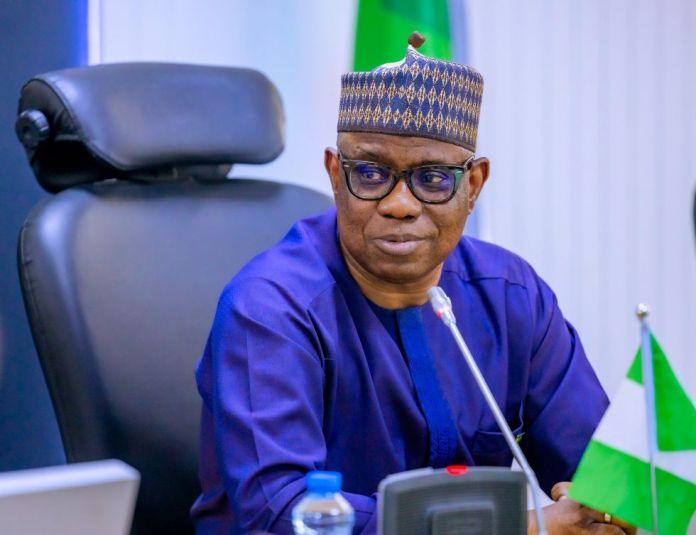
In a statement on Monday, Bolanle Olukoju, the Kwara State Commissioner for Communications, clarified the situation, pointing out that the accusations of bandit takeover are unfounded and careless.

“No local government area in the state is controlled by terrorists or bandits,” she continued, adding that opposition elements are promoting false reports about the security situation in Kwara.

The denial reportedly comes days after Peter Obi, the presidential candidate of the 2023 Labour Party, bemoaned the growing influx of insecurity in Nigeria in a statement posted on his 𝕏 account. Obi specifically claimed that bandits had taken over nine of Kwara State’s sixteen local government areas.

The Commissioner reacted to Obi’s statement by accusing the former governor of Anambra State of spreading false information on social media and asking him to take down the post because it is completely untrue.

“We want to warn the public about some rash claims that the bandits are besieging nine local government areas in Kwara State,” the statement says. That is just untrue. There are no sieges in the state’s local government areas.

“The wicked escalation and fake news being promoted by opposition elements in and outside the state are not justified by the unfortunate challenges we have faced in a few areas.

We have good evidence to believe that these individuals are bandit equivalency and online promoters, since they spread false information to incite terror among the public, such the erroneous report that nine LGAs are under siege and that there are gunmen moving through Asa LGA.

“We regret to inform you that Mr. Peter Obi has licensed his social media accounts to disseminate such false information. As a statesman, we don’t expect him to do this. Since the post is completely inappropriate and untrue, we kindly ask Mr. Peter Obi to remove it.

The public is also urged to refrain from disseminating unconfirmed information, as this could lead to psychological stress, uncertainty, and panicked reactions.

Because the security forces already have enough on their plates, this careless behavior is making things more difficult for them.

NiDCOM, FG Organize Virtual Dialogue To Clarify New Tax Policies For Nigerians In Diaspora

0

“Impact of the New Tax Reform Laws on Nigerians in the Diaspora” is the title of a virtual interactive session that the Nigerians in Diaspora Commission (NiDCOM) and the Presidential Fiscal Policy and Tax Reforms Committee are organizing.

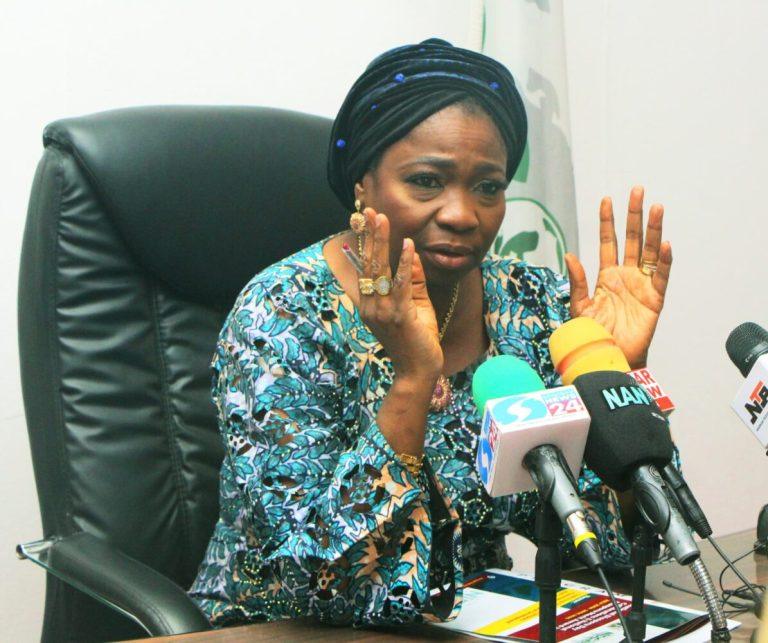
The conversation demonstrates the Federal Government’s dedication to inclusivity and openness in the execution of policies, according to Abike Dabiri-Erewa, Chairman/CEO of NiDCOM.

Friday, October 10, 2025, at 4:00 p.m. (Nigeria Time) is the date of the session, which intends to inform Nigerians in the diaspora on the effects of the recently passed tax laws.

Additionally, it will offer a transparent forum for resolving ambiguities and addressing compliance and obligation-related concerns.

Nigerians living abroad must be well-informed about the new tax structure and its possible effects on their economic endeavors, Dabiri-Erewa added, since they are important contributors to the country’s progress.

During the workshop, participants will receive practical insights and questions answered by professionals from the Presidential Committee and related agencies.

All attendees are urged to register ahead of time by scanning the event’s QR code or using *https://forms.gle/gnad3z5Wf7JjcamA8*.

Meanwhile, Nigerian-American Captain Kelechi Ndukwe has been congratulated by NIDCOM on his elevation to Commander of the U.S. Navy’s Rota, Spain-based Destroyer Squadron 60 and Task Force 65.

This was disclosed by the commission in a statement that Gabriel Odu, who works in the Media, Public Relations, and Protocols unit, signed.

According to reports, the Commission said that Ndukwe will now be in charge of U.S. Navy destroyer operations in Europe, Africa, and the Mediterranean. The announcement was made in Abuja on September 26, 2025.

His new position is a reflection of his leadership and years of service in global naval operations.

When Ndukwe became the first Nigerian-American to command the USS Halsey (DDG-97), a guided-missile destroyer in the U.S. Navy, in April 2021, he made history.

His ascent to the highest levels of the U.S. Navy has been characterized as a tale of greatness, discipline, and determination. He is the son of Nigerian immigrants.

His promotion is a source of pride for Nigeria, the international naval community, and Nigerians residing overseas, the Commission said, in addition to being a personal accomplishment.

Additionally, it guaranteed sustained assistance for Nigerians living abroad who use their work and principles to change the world.

Commander Ndukwe received another round of plaudits from NIDCOM, which described his career as an encouragement to Nigerians around the world.

NDLEA Chairman Encourages Stakeholders to Confront Rising Threats

0

With the National Drug Law Enforcement Agency (NDLEA) starting work on the National Drug Control Master Plan (NDCMP 2026-2030), Nigeria’s drug control initiatives are moving into a new phase.

NDLEA Chairman Brig Gen Mohamed Buba Marwa (Rtd) officially launched the program Monday in Niger State during a five-day workshop sponsored by the ECOWAS Commission and backed by the United Nations Office on Drugs and Crime (UNODC).

Femi Babafemi, Director, Media and Advocacy, NDLEA Headquarters, Abuja, issued a press statement on Monday, October 6, in which Marwa urged stakeholders to make sure the new plan addresses rapidly changing threats in the illegal drug trade, going beyond standard tactics.

The NDCMP 2026–2030 needs to be both ambitious and realistic, all-encompassing and focused, and owned by the country but also regionally and internationally, according to Marwa. “New and emerging threats, such as synthetic drugs, dark-web trafficking, poly-substance use, and the illicit financial flows that support the drug trade, must be boldly addressed.”

He emphasized that the workshop offers a singular chance to pinpoint what has succeeded, point out weaknesses, and map out creative avenues. “This is not just about creating another document; it’s about establishing a shared vision to protect Nigerians’ health, safety, and well-being,” Marwa continued.

As drug risks change around the world, UNODC Country Representative Cheikh Ousmane, represented by Dr. Akanidomo Ibanga, praised Nigeria’s efforts but called for flexibility.

Dr. Daniel Amankwaah on behalf of ECOWAS Commissioner for Human Development and Social Affairs Prof. Fatou Sow Sarr promised that regional support will continue, calling the project “a strategic step toward strengthening Nigeria’s drug control framework.”

It is anticipated that contributions from federal ministries, agencies, and civil society organizations would influence the new plan, which takes the place of the present NDCMP, which expires this year.