Home Blog Page 1404

PDP picks Obaseki’s SSG as Ighodalo’s running mate

0

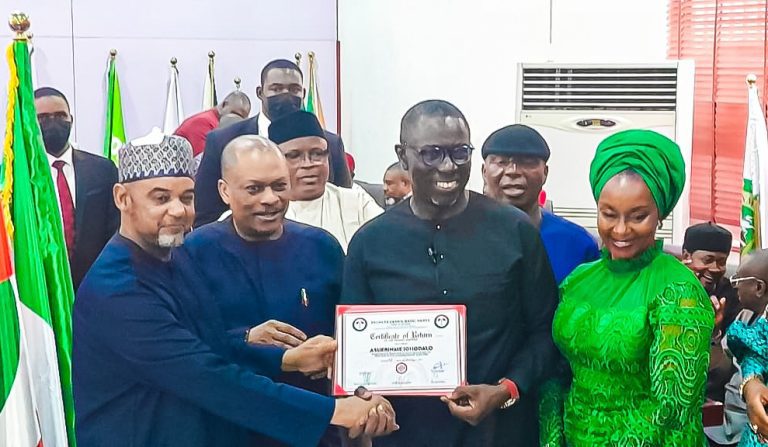
The Edo State Peoples Democratic Party has picked the current Secretary to the State Government, Osarodion Ogie, as the running mate to its governorship candidate, Asue Ighodalo.

Ogie is an appointee of Governor Godwin Obaseki, who is believed to be backing Ighodalo.

A top PDP chieftain, who confirmed Ogie’s choice to The According on Tuesday, said it was believed that the SSG would give the party a chance of winning the September 21 governorship election in the state.

He stated that the party consulted widely before settling for the SSG who has been a loyal party man and a grassroots mobiliser.

 “I can confirm to you that Ogie is Ighodalo’s running mate. He has filed the form in Abuja and he has the capacity to boost the party’s chances of winning the election.

“He is a grassroots mobiliser and he will bring his several years of experience in politics to bear. The party consulted widely and he was chosen to be the running mate,” the party chieftain said.

The development was also confirmed to The According in Abuja by the PDP National Publicity Secretary, Debo Ologunagba.

Ologunagba said, “Yes, we now have a running mate, that is the deputy governorship candidate to the PDP Edo State governorship candidate, Asue Ighodalo. He is the current Secretary to the State Government, Osarodion Ogie.

“And we are confident of victory with our candidate, Asue Ighodalo, and his running mate, Osarodion Ogie. Our deputy governorship candidate will be officially unveil at a later date.”

Last month, Ighodalo, a former Chairman of Sterling Bank, emerged as the PDP governorship candidate in Edo.

Meanwhile, The According learnt that the Edo State Reconciliation Committee, led by Bauchi State Governor, Bala Mohammed, has yet to convene any meeting with Edo State Governor, Obaseki, Deputy Governor, Philip Shaibu, aspirants, and other dissatisfied party members.

The party ran into a crisis during the governorship primary, with Shaibu declaring himself as a parallel governorship candidate.

As a result, the PDP appointed the Bauchi State Governor and a Senior Advocate of Nigeria, Emmanuel Enoidem, as Chairman and Secretary, respectively, of an 11-member committee tasked with reconciling all discontented members ahead of the September 21 Edo State governorship election.

A source, who is a member of the committee, disclosed to The According on Tuesday, that the committee had not yet held any physical meetings with the aggrieved party members in Edo.

The source, who requested anonymity, stated, “I am aware they have been contacted via phone conversations. But I can confirm to you that we have not met with any of the aspirants physically. We need to meet all stakeholders, aspirants, and others in person to resolve the crisis.”

NSCDC uncovers massive illegal refineries with 26 reservoirs

0

The Nigerian Security and Civil Defence Corps Commandant General’s Special Intelligence Squad has uncovered a massive illegal oil refining site in a forest in the Odagwa community of the Etche Local Government Area of Rivers State.

According to the NSCDC, the site has 10 illegal refineries with an estimated 500, 000 litres of crude oil contained in about 50 illegally constructed reservoirs.

The security agency said it arrested five suspects during a raid on the site.

The NSCDC spokesman, Rivers State Command, Olufemi Ayodele, disclosed this while parading the suspects before newsmen.

Ayodele said the site was uncovered based on credible intelligence gathered.

He stated, “The Commandant General of the NSCDC, Dr Ahmed Audi, has reiterated over time that all acts of economic sabotage would be fought to a standstill as suspects arrested would face the full wrath of the law, irrespective of their sponsors.

“In furtherance, the CG gave a marching order to the Special Intelligence Squad, charging them to be more thorough and results-oriented in their operations.

“Based on credible intelligence. the CG’s SIS swung into action and uncovered 10 illegal local refineries in a forest located at Odagwa Community in the Etche LGA of Rivers State where five suspects were caught in the act of illegally refining crude oil.

“While conducting an operational tour across the large thick forest about 10 different cooking pots of 50,000 litres capacity were seen with one big pumping machine, reservoir tanks, 25 rubber hoses used for pumping crude oil and many long galvanised pipes with unquantified litres of crude oil and illegally refined Automotive Gas Oil stored in six large reservoirs and other 20 smaller reservoirs dug in the ground.”

He gave the names of the arrested suspects and their ages as follows: Favour Chukwu, 29; Desmond Umeh, 25; Godwin Amos, 22’Bineace Galion, 38; and Goodnews David, 23.

The state NSCDC spokesman said the suspects would face prosecution at the end of investigations.

The Commandant of the NSCDC, Rivers State Command, Basil Igwebueze, condemned what he termed the ‘unrepentant’ act by ‘unscrupulous elements’ who tapped into the oil wellhead of ‘Heirs Energies Limited and the Nigerian National Petroleum Company Limited located around Imo River 2 Oil and Gas field at Odagwa in Etche.

Igwebueze said through different channels, the criminals inserted their galvanised pipes and siphoned crude oil while processing the same within the premises without recourse.

 Igwebueze said, “The uncovering of this massive illegal oil bunkering site is a landmark achievement and an indication that the NSCDC as the lead agency in the protection of all critical national assets and infrastructure will continue to combat crude oil theft with a renewed vigour even as we work in synergy with sisters security agencies to salvage the nation’s economy from saboteurs.”

My conversation with security agency on banditry productive – Gumi

0

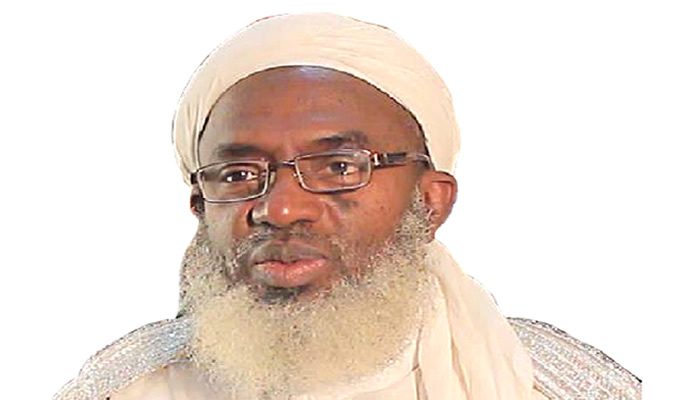
Following his invitation by the Federal Government over his comments on the activities of bandits, Kaduna Islamic cleric, Sheikh Gumi, said he had a “productive interaction”, with the agencies on how to curb banditry across the country.

The According reports that the Minister of Information, Mohammed Idris, on Monday, while addressing the State House journalists, had disclosed that the government deemed it fit to invite the cleric for questioning, adding that he (Gumi) was not above the law.

Recall that Gumi had offered to negotiate with bandits who abducted about 287 schoolchildren (137 as claimed by the Kaduna State Government) from Kuriga Government Secondary and LEA Primary Schools in the Chikun Local Government Area of the state.

In a post on his X (formerly Twitter) handle #Ahmad_Gumi, on Tuesday, Gumi assured his followers that there was no cause for alarm, adding that there was no animosity in the course of the meeting and called for unity and synergy to achieve everlasting peace.

“Last night I got many frantic calls from well-wishers and journalists about a news item that I was interviewed by security. There is absolutely no cause for alarm. Yes, we had a productive interaction on how to curb banditry as we are all trying — each in his own sphere — to tackle the monster bedevilling the nation.

“There was no animosity but courtesy and full of respect. We all need as a nation to unite and work in synergy to achieve an everlasting peace. I thank you for your concern. May Allah continue to protect us from all evil. Amin,” the post read.

All rights reserved. This material, and other digital content on this website, may not be reproduced, published, broadcast, rewritten or redistributed in whole or in part without prior express written permission from According.

Contact: [email protected]

NCC insists on SIM-NIN deadline, telcos bar lines Friday

0

Telecommunication companies will disconnect more Subscriber Identity Module (SIM) numbers not linked to National Identification Numbers (NIN) on Friday, March 29, 2024, the Nigeria Communications Commission has said.

The Director of Public Publicity at the NCC, Reuben Mouka, told The According on a telephone call that that there would be no changes to the deadline for the next phase of disconnection

The NCC’s directive for disconnection is being rolled out in stages, with the second phase set for March 29, 2024, continuing as previously announced.

The initial phase took place on February 28, 2024. Subsequently, whilethe third phase is slated to begin on April 15, 2024.

“We issued a publication that you can refer to. We specified certain deadlines and stipulated that subscribers who do not comply with the directive would be barred. And that has not changed.”

Mouka said at the last deadline on February 28, 2024, about 40 million lines that were not linked to NIN were barred.

MTN Nigeria reported that over 4.2 million lines were disconnected from its network after the February 28 deadline.

The NCC has reiterated its commitment to enforcing regulatory measures aimed at enhancing security and regulatory compliance within the telecommunications sector.

The SIM-NIN linkage initiative is a crucial step towards improving the integrity of subscriber data and enhancing security measures within the telecommunications industry.

The NIN-SIM linkage policy was initially introduced by the Nigerian government in December 2020. This directive requires all telephone line users in Nigeria to associate their SIM cards with their NIN.

In December of the previous year, the NCC issued a directive stipulating that all telecommunications operators in Nigeria, including major providers like MTN, Airtel, and Globacom, among others, must enforce complete network barring on all phone lines for which subscribers have not provided their NINs by February 28, 2024.

Barely two weeks ago, the Socio-Economic Rights and Accountability Project issued a warning to take legal action against the NCC if it did not revoke the directive instructing network providers to block the phone lines of individuals who have not linked their SIM cards to their NINs.

In an open letter addressed to the Chief Executive Officer of NCC, Aminu Maida, SERAP emphasised the necessity for further consultation and the establishment of an efficient process to enable Nigerians who have yet to link their SIM cards to their NINs to do so.

Dated March 9, 2024, and signed by the Deputy Director of SERAP, Kolawole Oluwadare, the letter condemned the directive to network providers, asserting that it constitutes a severe infringement on citizens’ rights to freedom of expression, information, and privacy.

Last week, the National Identity Management Commission and the NCC issued a joint statement unveiling a strategic partnership aimed at simplifying the NIN-SIM linkage procedures for telecommunications subscribers nationwide.

Both agencies reaffirmed their dedication to enhancing the processes involved and improving efficiency regarding the NIN and SIM card linkage initiative.

They acknowledge the importance of this initiative in bolstering security measures and enhancing service delivery across the country.

Last December, the Central Bank of Nigeria announced its intention to freeze accounts lacking a BVN, or NIN, starting April 2024.

It also mandated that all BVNs or NINs linked to accounts or wallets be electronically revalidated by January 31, 2024.

Since the issuance of this directive by the apex bank, deposit money banks have been actively utilizing their communication platforms to urge customers to update their NIN and BVN details.

In the circular by the CBN, it instructed banks to place a “Post no Debit” restriction – which prevents customers from making withdrawals, transfers, or any other debits “for all existing Tier-1 accounts/wallets without BVN or NIN.”.

‘Post No Debit’ is a term used to describe a restriction imposed by banks on specific accounts, preventing customers from making withdrawals, transfers, or any other debits from such accounts.

“Effective immediately, any unfunded account/wallet shall be placed on ‘Post No Debit or Credit’ until the new process is satisfied. Effective March 1, 2024, all funded accounts or wallets shall be placed on ‘Post No Debit or Credit’ and no further transactions permitted.”

Angry Uber drivers threaten boycott over data-sharing compliance extension

0

The drivers are dissatisfied with Uber’s delay in meeting the requirements for data sharing with the Lagos State Government, and are threatening to dump the e-hailing firm, Justice Okamgba writes

Uber, the e-hailing company operating in Nigeria, could face a potential driver boycott as it seeks a three-month extension to comply with the data-sharing agreement it signed with the Lagos State Government in 2001.

Reliable sources familiar with the matter told The According that Uber requested a three-month extension to fulfil its obligations during a closed-door meeting with the Commissioner for Transportation, Oluwaseun Osiyemi, and the Amalgamated Union of App-Based Transporters of Nigeria in Lagos on Monday.

One of the sources questioned why the company needed three months when other platforms had complied without such an extended timeframe.

“I don’t know what they are hiding; every other platform has compiled. They said the government should give them three months, but what the government is asking for is just real-time data sharing that does not require time; others are doing it,” the source said.

The agreement signed by e-hailing operators and the state government entails API integration for driver and passenger verification, background checks, and licensing compliance.

While all other e-hailing platforms operating within the state have complied with the agreement, Uber stands as the exception.

In 2020, during the state’s review of ride-hailing regulations, the former Lagos Transport Commissioner, Frederic Oladeinde, stated, “We are not asking the e-hailing companies to release detailed data.

“All we are asking from them is data on trip movement so that we can calculate the right charge and levy due to the government. This data is to be supplied every week,” he stated.

Bolt, another major e-hailing operator, confirmed to our correspondent in a note that it had complied with the state’s regulation on data sharing.

Responding to The According inquiry on the issue, the Country Manager, Nigeria, Uber, Tope Akinwumi, said, “We remain committed to honouring the terms of the data sharing agreement that we entered into with the Lagos State Government on January 23, 2024.

“The signed agreement includes a commitment to share aggregated trip data daily via a secure folder solution, which we have been doing consistently as we work towards API integration.

“Nigeria is an important market to us, and over the past 10 years, we have played our part in providing a platform for thousands of drivers to earn a flexible income while offering riders a convenient and safe mobility experience,” he stated.

In the past, the global company firm had argued that some of those data points exceeded what regulators needed to perform their duties.

Last week, the transport ministry started impounding vehicles belonging to e-hailing drivers operating on the Uber app.

As a result, app-based transporters in the state informed their members to boycott Uber until the firm complies with the data-sharing regulations with the government.

The Lagos Chairman of the Amalgamated Union of App-Based Transporters of Nigeria, Jayesimi Azeez, told The According that compliance from Uber was needed for safety reasons.

He said that despite repeated calls for transparency and adherence to local laws, Uber had refused to meet the established standards set forth by the government.

As a result, drivers have been left with no choice but to take a stand against the ride-hailing giant, he explained.

“We contribute 95 per cent to the business; you just gave us an app. We have written to them many times as a union. We are the ones feeling the brunt. They will comply; if not for the union, many of their vehicles would still be impounded.

“We don’t want to have any clashes with the government anymore. We told them at the meeting that if they don’t  sort themselves out, our members will not use their app.

“What the government is trying to do is protect the drivers. We are soft targets for criminals. They profiled us and shared the information. We told them that if they don’t do the right thing, we will continue to stop using them,” Azeez stated.

The Commissioner for Transportation, Oluwaseun Osiyemi, confirmed in a statement obtained by The According that Uber was non-compliant.

He noted that the state acknowledged global precedents for API integration and urged Uber to comply.

“The API integration will significantly reduce the risk of unauthorized or unqualified individuals operating as drivers, enhancing the overall safety and trustworthiness of the e-hailing platforms,” the commissioner added.

He emphasised that failure to comply would lead to stringent sanctions in alignment with state laws, adding that the decision’s necessity was for the welfare of all stakeholders.

In 2014, the Nigerian market welcomed the advent of e-hailing platforms, marking Uber’s debut in Lagos, followed by Bolt (formerly known as Taxify) in 2016. Uber expanded its services to the national capital, Abuja, within the same year.

Since then, Nigeria has continued to witness a surge in the popularity of ride-hailing platforms, with Uber and Bolt emerging as the frontrunners.

According to Statista, by 2024, the ride-hailing market in Nigeria is anticipated to generate a revenue of $252m.

The sector is expected to exhibit an annual growth rate of 10.74 per cent, leading to a projected market size of $380m by 2028

The Public Relations Officer of AUATON Lagos, Iwindoye Steven, told the According that they had requested the state stop arresting its members and deal with Uber directly.

The AUATON PRO lamented that Uber was withholding accurate information from the government.

He stated, “We also emphasised that if Uber is to face closure due to non-compliance with the MOT, innocent drivers must not be penalised.

“And we are advising all our members in Lagos to switch to an alternative app and avoid using Uber until they resolve their issues with the Lagos State government.”

According to Steven, the union believes that the government should direct its attention to the Uber office and its servers through the Nigeria Communications Commission instead of troubling its innocent members.

FG to review oil firm’s plans on gas flaring

0

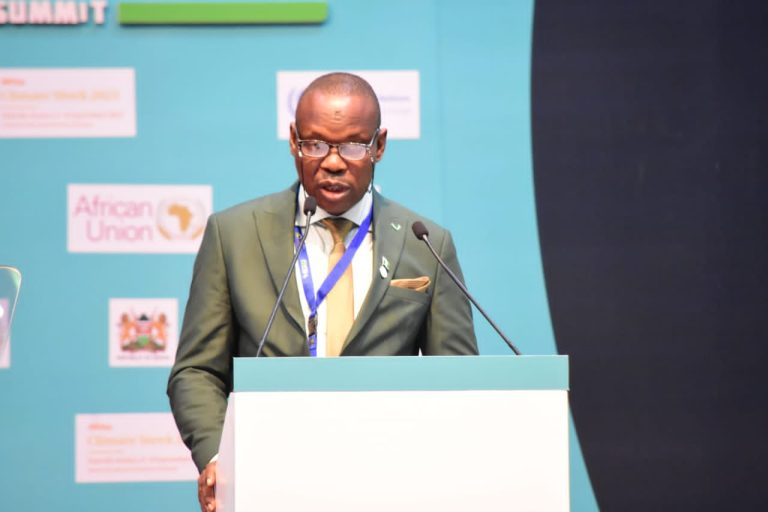
The Minister of State for Environment, Dr Iziaq Salako, has said the ministry through the National Oil Spill Detection and Response Agency will be commencing periodic review of the plans of international and indigenous oil companies to ensure they stay on course to end routine gas flaring by 2030.

Salako said this in Abuja on Tuesday at the national stakeholders engagement meeting on methane mitigation and reduction in Nigeria’s oil and gas sector.

Methane, a potent greenhouse gas with significant warning potential compared to carbon dioxide, poses a major threat to the health and well-being of current and future generations and climate protection goals.

Reducing methane emissions, especially in the oil and gas sector will strengthen climate action and unlock benefits for public health, food security, and economic development.

Salako said practical steps are being taken to address methane emissions in the country.

He noted that “Collaborative efforts of government institutions have led to the development of methane guidelines.  In addition, the Federal Ministry of Environment through the National Oil Spill Detection and Response Agency will  be commencing the periodic review of the plans of international and indigenous oil companies to ensure they stay on course to end routine gas flaring by latest 2030.

“Furthermore, Nigeria is poised to embark on methane reduction projects that will enable Nigeria’s commitment to methane reduction and meeting net zero emissions by 2060. It is therefore reassuring to see initiatives such as the project methane mitigation and reduction in Nigeria’s oil and gas sector, which is being initiated with today’s event.

“This national stakeholders engagement event is expected to serve as a platform to discuss the complexities of methane mitigation and reduction within Nigeria’s oil and gas industry. Presentations here today, will provide insights and overview on existing policies, implementation strategies, including key stakeholders involved in these efforts. Through rigorous research and collaborative efforts, we can identify gaps, challenges, and opportunities for effective national actions.”

The minister stated that President Bola Tinubu is committed to environmental sustainability and climate action in line with the multilateral environmental agreements that Nigeria is party to.

The Permanent Secretary of the ministry, Mahmud Kambari said it is necessary to address methane emissions in the oil and gas industry as the stakes and opportunities are high.

Kambari said, “Let’s harness our collective expertise, innovation, and resources to drive sustainable development, foster economic growth, and enhance energy security in Nigeria and beyond.

“As we engage in today’s discussions, let us be guided with openness, and inclusivity. challenge assumptions, and explore creative solutions that align with the principles of equity, justice, and environmental integrity.”

In his remarks, the Executive Director of the Africa Policy Research Institute, Dr Olumide Abimbola, noted that there is a need to address the pressing impacts of methane emissions on climate and environment.

Abimbola, who was represented by Mr Chibuikem Agbaegbu stated that methane, a potent greenhouse gas, poses a significant threat to both the health of our planet and the well-being of current and future generations.

“Recognizing this urgent need, APRI, in  close collaboration with the Department of Climate Change, Federal Ministry of Environment, has embarked on a crucial project focused on methane mitigation and reduction within Nigeria’s oil and gas sector.

“This project, funded by the Government of Canada through Environment and Climate Change Canada, underscores the strategic importance of taking proactive steps to reduce methane  emissions. Not only does it align with Nigeria’s climate action commitments, but it also offers opportunities to unlock co-benefits for public health, food security, and economic development, in line with Nigeria’s national and sustainable development goals.

“Today’s event marks a significant milestone in our collective efforts. It provides a platform for stakeholders from diverse sectors to come together, share insights, and chart a unified course towards sustainable methane mitigation and reduction in Nigeria. Through constructive dialogue and collaboration, we aim to identify challenges, explore opportunities, and pave the way for effective and sustained action,” he said.

Fubara receives Wike’s ally, says I won’t be a dictator

0

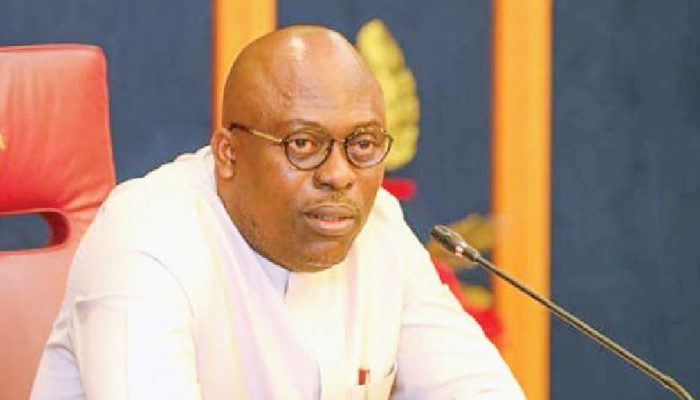
Rivers State Governor, Sir Siminalayi Fubara, on Tuesday, said his administration would collaborate and continue to consult widely in order to liberate the state and foster peace.

The governor said in doing so, he would not operate as a dictator, but as a member of a team that had the best interest of the state at heart.

Fubara’s declaration comes amid a political crisis between him and his estranged political godfather and predecessor, Nyesom Wike.

On Tuesday, one of Wike’s allies, Boniface Emerengwa, visited Fubara and declared his support for him.

Emerengwa is a member of the House of Representatives, representing the Ikwerre/Emohua Federal Constituency of Rivers State.

Emerengwa, who was accompanied to the Government House by three other House of Representatives members, said the Rivers people had made their choice through their votes and gave their mandate to Fubara.

He said having secured electoral victory on March 18, 2023, which had been affirmed by the Supreme Court, Fubara had become the number one citizen in Rivers State, hence his decision to support him.

“Only the blind will not see the giant strides Governor Fubara is already making in various sectors of the state,” the Rep said, insisting that the best way to assist the  Rivers people was to support Fubara in every way possible to achieve sustainable peace and accelerate inclusive development of the state.

Meanwhile, Fubara pledged not to rule like a dictorator, while speaking during the formal presentation of Certificate of Recognition and Staff of Office to the Amanyanabo (king) of Okochiri Kingdom, Ateke Michael Tom, as a first-class tradition ruler, at Government House in Port Harcourt on Tuesday.

The governor’s Chief Press Secretary, Nelson Chukwudi, disclosed this in a statement on Tuesday.

Fubara stated that during the Sixth State Executive Council meeting, N80.8bn was approved with 50 per cent contract value paid already as the government awarded the construction of the Elele-Egbeda-Omoku Road.

He said the project would be funded from the savings from Internally Generated Revenue to underscore his Administration’s prudence without also borrowing to complete the project.

Governor Fubara stated, “We are at a crossroads in our state where we all need to stand for what is right. It happens once in a lifetime. So, for now, be one of those people who will be in the cause to liberate and free our dear state.

“And I know strongly that having the support of a peace-loving Amanyanabo of Okochiri Kingdom, having the support of the wonderful Council of Chiefs, having the support of the great people of Rivers State, we will bring peace in our state.

“We will do those things that are right to develop our state. We will continue to consult. We will not act as dictators. We will act as people who know that one day, we will leave, and when we leave, the way we have acted will speak for us,” he said.

Fubara added that: “We will not force people to talk good about us. Our legacy will be a signature for how we led.”

Private sector foresees higher inflation, massive job cuts

0

The hike in Nigeria’s Monetary Policy Rate, also known as interest rate, from 22.75 per cent to 24.75 per cent by the Central Bank of Nigeria will further accelerate the country’s inflation and lead to massive job cuts across the country, private sector operators stated on Tuesday.

The Nigerian Association of Chambers of Commerce, Industry, Mines and Agriculture, and the Nigerian Association of Small Scale Industrialists explained that the increase in MPR would worsen he private sector’s ability to access affordable credit.

While they described the interest rate hike as a move that would come with unintended negative consequences, the Lagos Chamber of Commerce and Industry said the MPR hike was a price that businesses would have to pay, given the current state of the economy.

The CBN again increased the MPR to 24.75 per cent from 22.75 per cent despite concerns about economic hardship.

The CBN Governor, Yemi Cardoso, announced this after the second Monetary Policy Committee meeting for the year in Abuja on Tuesday.

He said the new rate was focused on reducing current inflationary pressures and ensuring sustained exchange rate stability.

“All 12 members of the committee decided to further tighten monetary policy by raising the MPR by 200 basis points to 24.75 per cent from 22.75 per cent. Adjust the asymmetric corridor around the MPR to +100 to -300 from plus 100 to -700 basis points,” he noted.

With inflation at 31.70 per cent, Cardoso declared that the new MPR was part of moves to tackle the country’s inflation.

The bank had, during its previous meeting, raised the MPR significantly by 400 basis points to 22.75 per cent from 18.75 per cent.

It also made changes to the asymmetric corridor around the MPR, setting it at +100/-700 basis points from +100/-300 basis points

The CBN increased the Cash Reserve Requirement to 45 per cent from 32.5 per cent, and maintained the Liquidity Ratio at 30 per cent.

Although the apex bank said it took the decision to fight inflation, the benchmark interest rate had been 22.75 per cent since the last MPC meeting that was held on February 26 and 27, 2024.

Briefing journalists on Tuesday, Cardoso, who chaired the MPC, also stated that the Cash Reserve Ratio of Deposit Money Banks was retained at 45 per cent, while the CRR of merchant banks was reviewed upward from 10 per cent to 14 per cent.

He disclosed that the liquidity ratio was left unchanged at 30 per cent.

Cardoso said the MPC noted the increase in food inflation from 35.41 per cent to 37.9 per cent as part of the consideration of the committee for revealing the interest rate.

“From our perspective, the key thing is to be fully focused on our core mandate to fight inflation and stablise the economy. The purchasing power of the average person should be restored to the level it should be,” he said.

The apex bank’s governor added that the economy would be stabilised by the end of the year.

“Things should moderate from May and the inflation rate should come down by the end of the year,” he stated.

Justifying the reasons for the hike, the former Lagos State Commissioner for Finance explained that the MPC was faced with the option of either progressing with its tightening cycle or holding to observe the impact of the previous rate hike and adjustment of the Cash Reserve Requirement.

He added that the MPC’s decision to tighten the economy was based on economic data and market analysis to fulfil its price stability mandate.

“With respect to growth, yes, there appears to be a trade-off of some sort. We expect the tightening to be short term, not long term. The right response to the policy will influence MPC’s decision to take growth into consideration

“Consequently, at this meeting, the MPC was faced with the option of either progressing with its tightening cycle or hold, to observe the impact of the  previous rate hike and adjustment of the Cash Reserve Requirement. After reviewing the balance of risks and the near-term inflation outlook, members were convinced of the need to progress with the tightening cycle,” he stated.

Cardoso, allaying fears of a continuous rate hike, assured that the current spate of monetary policy tightening measures by the CBN would not be long drawn and would be relaxed once there were substantial improvements in the economy in terms of inflation and exchange rate.

According to the CBN governor, the committee does not expect a long-drawn interest rate tightening and as the reforms being implemented take effect, there will be relaxation in MPR.

He said, “While the increase in interest rate may have tendencies toward strangulating the economy, with the foreign exchange rate coming down, that also helps to moderate it overall.

“And as I said earlier, you would expect that this would not be too long drawn; at least I would hope so. We are getting towards a situation where the exchange rate is moderating, and we are expecting it to moderate and then it finds a level that, quite frankly, is sustainable. This would involve huge collaboration with the fiscal side because a lot of that cannot just rely on the monetary side alone.”

The CBN boss stated that the considerations of the committee at the meeting focused on the current inflationary pressures and the need to anchor inflation expectations as well as ensure sustained exchange rate stability.

“These considerations underscore the importance of the CBN’s commitment to the price stability mandate and the need to urgently bring inflation under control to ensure that the purchasing power of ordinary Nigerians is restored in the short to medium term,” he said.

The apex bank governor mentioned that members of the MPC noted the continued rise in headline inflation, driven largely by food prices because of supply shortages and the high cost of logistics and distribution.

He added that they called for immediate action against insecurity in the country while commending the government for its resolve to address the increasing hunger level in Nigeria.

“The committee, therefore, was of the view that addressing food insecurity is key to containing current inflationary pressures. On this note, members commended the ongoing efforts of the Federal Government towards addressing food insecurity.

“Some of these measures include the provision of various palliatives, the release of grains from the strategic reserves, the distribution of seeds and fertilisers, as well as farm implements for dry season farming.

“The committee, therefore, called for the full implementation of the Federal Government’s agricultural policies and programmes to improve food supply and further advised for broader fiscal consolidation, particularly in the improvement of tax collection and tax-to-GDP ratio.

“The committee noted with satisfaction the level of stability achieved in the foreign exchange market in the last few weeks. This, in the view of members, reflects the impact of the bank’s recent policy actions and reforms, as well as increased transparency in the market.”

According to Cardoso, the committee noted the efforts of the bank in offsetting verified foreign currency obligations, an action that will greatly enhance investor confidence and attract foreign investments to Nigeria.

The MPC also reviewed developments in the banking system and noted that the industry remained safe, sound and stable.

The committee, thus, called on the bank to sustain its surveillance and ensure compliance of banks with existing regulatory and macroprudential guidelines.

It also enjoined the bank to expedite action on the recapitalisation of banks to strengthen the system against potential risks in an increasingly globalised world.

Cardoso noted that the key drivers of inflationary pressures remained the strong exchange rate pass-through to domestic prices; rising cost of transportation; high cost of energy and other production inputs; lingering insecurity, especially in food-producing areas; and legacy infrastructure deficits.

Data from the National Bureau of Statistics showed that real GDP grew by 3.46 per cent in the fourth quarter of 2023, compared with 2.54 per cent in the previous quarter.

The apex bank governor hinted that disruptions to the global supply chain, associated with pockets of geopolitical tensions, continued to pose a key concern to monetary policy.

“Global inflation has, however, continued to decelerate in 2024 but is expected to remain above the long-run objectives of major central banks. The interest rates of advanced economy central banks are, thus, expected to remain high in the short to medium term before commencing a descent.

“Consequently, global financial conditions may remain tight through 2024. Accordingly, the committee will continue to monitor developments in the global and domestic economies to ensure that inflationary expectations are anchored to restore and sustain macroeconomic stability,” Cardoso said.

The CBN stated that the next MPC meeting would be held on May 20-21, 2024.

NACCIMA raises concern

The  National President, Nigerian Association of Chambers of Commerce, Industry, Mines and Agriculture, Dele Oye, said the group was deeply concerned with the manner in which the apex bank had continued to raise interest rates.

“The NACCIMA, representing the collective voice of Nigerian businesses across commercial, industrial, and agricultural sectors, is deeply concerned by the central bank’s approach to curbing inflation and managing excess liquidity through broad-based policy tools that inadvertently impose constraints on the private sector’s ability to access affordable credit.

“Our position, as detailed in our previous communication (Ref: NACC/NP22/23/1249 dated March 13, 2024), remains that the focus of the CBN’s policies should be recalibrated towards addressing the excess liquidity primarily stemming from the public sector’s borrowing habits and expenditure.

“The private sector, which has been effectively sidelined in the bank lending market due to the crowding-out effect, now faces even more severe repercussions,” he stated.

Oye noted that the recent rate hikes, while aimed at controlling inflation, were likely to have many negative consequences.

He outlined them to include an increase in the cost of borrowing, adding that “existing loans will incur higher interest rates, raising the cost of capital for businesses. This scenario discourages entrepreneurial activities and expansion plans, which are vital for economic growth and job creation”.

Oye averred, “Restricted credit availability: With the increase in the CRR, banks’ ability to lend is further curtailed. This exacerbates the challenges faced by the private sector, which is already grappling with limited access to finance.

“Pass-through effects on inflation: As businesses incur higher interest costs, they are left with no option but to pass these costs on to consumers through increased prices for goods and services, which can contribute to inflation rather than curb it.

“Stifling economic growth: Tightened monetary conditions may lead to a reduction in investment and consumption, which are essential drivers of economic growth. This could potentially stifle the economic recovery and dampen the prospects for prosperity.”

He recommended that the CBN should pursue a more nuanced and targeted approach, focusing on mechanisms that specifically address liquidity issues in the public sector without placing undue burden on the private sector.

“Additionally, policy directions should be clear and communicated on a quarterly basis, with a robust stakeholder engagement strategy to ensure that the views and concerns of the private sector are considered in policy formulation.

“In summary, while NACCIMA acknowledges the CBN’s mandate to maintain price stability, we urge a re-evaluation of the current policy measures to foster a more conducive environment for private sector-led economic growth.

“We remain committed to engaging with the CBN and the Ministry of Finance to find sustainable solutions that will ensure the economic well-being and prosperity of all Nigerians,” he noted.

Also speaking, the Director-General of NACCIMA, Sola Obadimu, remarked that the hike in MPR had put a strain on the inventory of businesses.

“Goods can no longer go out because people are buying less. Inventories are building up and there is nothing anybody can do. A distributor can’t take stock from you when the ones he has taken have not been bought.

“This move would naturally increase the cost of doing business and if the cost of doing business is increased because you can’t sell below your production cost, your stock would move slower and then your inventory will grow. Consumers are overwhelmed; they don’t have money to buy things anymore.

“Their wages are declining daily because there are other charges like the cost of utility and others. So, it is going to have an adverse effect on the real sector,” Obadimu stated.

LCCI reacts

Speaking with The According, the President of the Lagos Chamber of Commerce and Industry, Gabriel Idahosa, described the rate hike as a price that businesses would have to pay, given the current state of the economy.

He described the economy as ‘a house on fire’ owing to several policy missteps on the part of erstwhile CBN Governor, Godwin Emefiele.

Asked if the increase in interest rate would have a negative effect on the borrowing capacity of organised businesses, Idahosa said, “It is a no-brainer. Of course, it will. But this is a CBN that has been trying to put out fires caused by Emefiele and the rest.

“So, they have to first of all reduce the rate of the burning. It is a high price to pay. Once it is raining, either you have a lot of umbrellas or you take an aircraft and fly above the clouds, but if you don’t have a jet, then your option is limited to using an umbrella.”

Negative consequences

On his part, the National Vice Chairman of the Nigerian Association of Small Scale Industrialists, Segun Kuti-George, worried that the interest rate hike would come with unintended negative consequences.

According to Kuti-George, when businesses are forced to borrow at higher rates, the cost of production will consequently increase. This, he said, will inevitably trigger an increase in the price of products.

Kuti-George said, “This is why it is said in economics—other things being equal, because things are usually not equal. As you are trying to solve a problem, you are creating another. So, what you are left to do is consider the cause and effect and see which one is more tolerable.

“As the CBN is raising interest rates, what they have at the back of their mind is to stimulate investments and draw more money from circulation into the investment net. But, as they are trying to solve that, the interest rate at which people borrow money will also go up.

“This will be unattractive for businesses. That means the cost of funds will go up on the part of the entrepreneurs. It means the cost of production is going higher, and so will the price of goods and services. Already, inflation is over 30 per cent. It is bound to go higher.”

The Chief Economist of SPM Professionals, Paul Alaje, explained that the implication of the raised benchmark interest rate from 22.75 per cent to 24.75 per cent was that the money supply would further reduce and the lending rate was expected to go up.

He said, “The central bank is hoping that with these policies, inflation would nose dive; however, I do not think these policies would have an effect on inflation in the short run because the real driver of inflation is food inflation, as reported by the Nigerian Bureau of Statistics.

“So, if inflation does not reduce in the short run, what are the other factors that can make it come down? The rebound of the naira in the parallel and official markets is what will account for the immediate reversal of inflation from where it is to where we want it to be.

“So, I am expecting inflation to come down by June to about 25 per cent. We could manage to take the naira back to about N1,100 and stabilise between April and the end of June, coming down from 31 per cent to about 25 to 26 per cent, which would be an improvement.”

Alaje noted that due to the increase in monetary policy, more businesses would find it very challenging to borrow money.

He added, “If this increase is not properly managed, it is going to have a negative impact on investment, and if investment is bad, businesses won’t be able to borrow money from banks to stabilise or to create new jobs or render services.

“So, by implication, unemployment is expected to increase. If unemployment increases and the fiscal side is not able to respond, this is another kettle to fish.”

In the same vein, the Managing Director of Cowry Asset Management Limited, Johnson Chukwu, said that with the interest rate increase, the lending rate would further increase.

He stated, “This increase also means that liquidity in the private sector will be constrained and tightened. The tightening of liquidity, inasmuch as it has a positive impact on the exchange rate, is likely going to have an adverse effect on productive activities.”

On his part, a professor of capital markets at Nasarawa State University, Uche Uwaleke, said, “Much as tightening is necessary at this time given elevated inflation, MPC should tighten policy incrementally and in a measured manner that optimises the CBN’s policy toolkit without undue reliance on the monetary policy rate.

“The decision by the MPC to increase the MPR by 200 bps makes it a total of 600 bps in just one month if one adds the 400 bps delivered in February. This is in addition to a very high CRR of 45 per cent representing sterilised bank deposits.

“This development is now driving undue pressure by banks on the CBN’s standing lending facility and increasing the cost of funds generally. The CBN should recognise that the challenge currently facing the Nigerian economy is not just inflation but stagflation and to this end, it should equally have regard to growth concerns in future meetings of the MPC.”

‘MPR hike ineffective’

Speaking with The According, an economist at the Nigerian Economic Summit Group, Faith Iyoha, described the frequent rate hikes by the MPC as an ineffective tool to combat the country’s inflation.

She said the increase in MPR would have a negative impact on productivity, a development that would consequently cause a decline in Nigeria’s gross domestic product.

She reasoned, “They have not rejiggered the Monetary Policy Rate to be effective in curbing inflation or signaling direction. Inflation will continue to go up. They are only putting pressure on the market because interest rates will increase.

“It means productivity will become difficult. GDP growth will be constrained because the interest rate will be high. That will further put pressure on the market. It means productivity will be low. Prices will go up. It’s like going around in circles.

“It may lead to overheating of the economy. That is to say, the tightening may be too much for productivity and it will lead to a decline in GDP. There is always a relationship between prices and productivity. You cannot say you are tackling inflation without leaning on the side of productivity. You will definitely lose because you are disincentivising business people from producing.”
Underwriter empowers 200 female-owned SMEs with digital skills

0

AXA Mansard, a member of AXA, the global leader in insurance and asset management, has empowered 200 female-managed Small and Medium Enterprises with financial literacy and digital business skills.

In a statement, it disclosed that, in collaboration with SME 100 Africa, a two-day training was held recently in Lagos as part of AXA’s lined-up programmes to commemorate this year’s International Women’s Day.

The Head of Marketing of AXA Mansard, Olusesan Ogunyooye, said, “The training aims to empower female SME owners with skills to improve business output and position them for the increasing economic opportunities available in an increasingly digital marketplace.”

Ogunyooye noted that the move was in line with AXA Mansard’s sustainability agenda, explaining that the company was convinced that support for women through its inclusive protection programmes was pivotal to its purpose of acting for human progress by protecting what matters and its mission of moving from being a payer to a partner.

He furthered that focusing on digital skills is important because the company realises the importance of digital skills to the growth of the SME sector in Nigeria and wants to ensure that women are empowered enough to be a consequential part of that growth.

“It is almost trite to say that SMEs are the engine for economic growth, especially in developing countries like Nigeria, where over 45 million adults are business owners. What needs to be continually discussed is how Nigeria is going to unlock that potential for economic development and how much of that potential will be unlocked by women and for women.

“For us at AXA Mansard, we are aware that digital will play a major role in unlocking these current opportunities and Nigeria’s economic future. So, to ensure that women are equally represented in unlocking these future potentials, that is why we have collaborated with SME 100 Africa to support them in developing the required skills,” he enunciated.

According to Ogunyooye, the firm’s choice of digital and financial literacy skills is deliberate.

“We understand the power of the duo. We understand that helping these SMEs with the skills to attract more customers will be a faster means to empower them.

“We see that they have amazing products and services, but they need to understand how to attract value for themselves by attracting the right customers, and you will agree with me that virtually all customer segments are online in one way or another today,” he added.

 He added that with the empowerment, the firm was helping SMEs to find and attract customers.

Community mourns as gunmen kill six Nasarawa farmers over land dispute

0

A total of six farmers of the Tiv extraction have been reportedly killed by yet to be identified gunmen in the Kadarko Community of Keana Local Government Area of Nasarawa State.

Arewa According recalls that thousands of Tiv farmers in the southern part of the state had been displaced following persistent attacks on their houses and farmlands by suspected herdsmen in the area.

Investigations by Arewa According reveal that three of the victims were first hacked to death on Saturday afternoon while they were working on a farmland in the area, while the other three farmers were shot by the gunmen on Sunday morning.

A resident of Keana LGA who confirmed the incident told our correspondent that the Sunday attack occurred around the Railway axis of the community.

According to a source, who pleaded anonymity, “A group of armed men invaded a disputed farmland where the three persons were working and killed them. They killed the farmers and fled before the arrival of security operatives.

“This is a clear case of oppression. Issues like this has been ongoing for some time now but because we are peaceful-loving people, we decided to allow most of the oppression that we have been facing to go unnoticed especially those that do not involve the loss of lives.

“But the oppression is getting too much by the day. The gunmen who are suspected herdsmen come here (Kadarko) almost on a regular basis to take over our lands and do whatever they like with us.’’

“The government has been quiet about the matter for some time now. I want to appeal that Governor Abdullahi Sule should collaborate with the security agencies to launch a detailed investigation into the issues of land grabbing and other threats from the gunmen, especially in the southern part of the state, so that we can be able to carryout our daily activities without being scared of any form of attack from the gunmen.”

Also confirming the incident to our correspondent, the Chairman, United Farmers Association in Kadarko, Denis Utsa, said the gunmen had invaded Tse-Abir Azer area of Kadarko during the weekend and unleashed mayhem on the people of the area.

He explained that apart from the six farmers killed by the bandits, many survivors of the attack had escaped into nearby bushes in the community with bullet wounds.

“At the moment, the gunmen have invaded the IDPs rebuilt settlements in Kadarko, and dozens of the IDPs there have fled to nearby communities, including Giza for refuge.

“We are appealing to the state government to urgently look into the matter so that we can have adequate security in the area,” he pleaded.

On his part, the President of Tiv Development Association in the state, Solomon Chunku, decried the situation and called for the urgent intervention of the state government to restore normalcy in the area.

Chunku, who went emotional while speaking with Arewa According on the matter, lamented that his kinsmen had faced numerous challenges due to the operations of gunmen in the Tiv communities across the state.

While commiserating with the families of those who lost their lives in the attack, the TIDA President urged his kinsmen to continue to live in peace and harmony with other residents of the state.

However, he commended the efforts of Governor Abdullahi Sule in ensuring that most of the displaced Tiv farmers return to their ancestral homes after many years of seeking refuge in other communities.

“I would like to say that despite the Governor’s efforts at ensuring that the Tiv Internally Displaced Persons return to their communities, most of them are still taking refuge in IDP camps across the state for fear of being attacked by the bandits.

“Therefore, i appeal to the Governor to urgently look into the matter, and assist in ensuring that the remaining Tiv people in IDP camps return to their ancestral homes so that they can contribute meaningfully to the growth of the state and Nigeria at large,” he added.

Chunku further appealed for the creation of Tiv chiefdoms by the Nasarawa State government in order to give them a  complete sense of belonging and for the peace and development of the state.

“We wish to also inform the governor that we do not have a traditional stool despite our number and political participation. We shall be most grateful if he (Gov Sule) will liberate us from these decades of neglect, and consider the creation of chiefdom(s) headed by Tiv extractions so that the Tiv people can feel a complete sense of belonging,” the TIDA President said.

As of the time of filing this report, efforts made by our correspondent to get the reaction of the Nasarawa State Police Command proved abortive as the Police Public Relations Officer, DSP Ramhan Nansel did not respond to phone calls nor replied text messages put across to his mobile lines.