Home Blog Page 14

September 3 Trial Date Set For Ogoni Activist Facing Terrorism Charges

0

A Federal High Court sitting in Port Harcourt, Rivers State has adjourned to September 3, 2026, for hearing of the bail application and possible commencement of trial of the Leader and Spokesman of the Conscience of Ogoni People, Chief Gani Topba, over alleged terrorism, cybercrime and other offenses.

The DSS had filed a four-count charge against Topba, including allegations of terrorism, unlawful seizure and detention of oil wells in Ogoniland and cybercrime.

The charges stated that Topba allegedly insisted on the seizure and detention of all oil wells in Ogoniland in a bid to compel the federal government to exclude the Shell Petroleum Development Company of Nigeria Limited, now Renaissance Africa Energy Company Limited, and its affiliates from oil-related contracts in the area.

Topba is also accused of knowingly or indirectly supporting the commission of an act of terrorism by making and publishing a video which allegedly maligned the leadership of KAGOTE.

The charge said the video was allegedly made with the intention of seriously destabilizing or destroying the fundamental political, economic and social structure of Ogoniland, Rivers State and Nigeria and to cause a recurrence of the crisis that engulfed Ogoniland in 1994. Read Political News

In addition, Topba was charged with willfully creating and disseminating a video via a computer system or network with the intent to bully or harass Lesi Maoi, President-General of KAGOTE, and other leaders of the organization.

The prosecution argued that the communication caused the recipients to fear death or bodily harm, and therefore constituted an offense under Section 24(2)(a) of the Cybercrimes (Prohibition, Prevention, etc.) Act, 2015.

Topba is also a member of the Ogoni dialog with the federal government on the proposed resumption of oil exploration in Ogoniland. Topba pled not guilty to all the charges.

The DSS counsel, A.A. Emefiana, made an oral application to the court for an adjournment to enable the prosecution respond to the bail application made earlier by Topba’s counsel, Golden Awi.

Awi did not oppose the application but told the court of difficulties in gaining access to his client.

Justice Muhammed Turaki ordered the DSS counsel to work out the issues of access with the defense before adjourning the matter until September 3 for the hearing of the bail application and possible trial.

After the proceedings, Awi told journalists that the charges against his client were frivolous and explained the circumstances of the case.

Awi said “Gani Tuba is charged for things relating to terrorism, that he made some comments against the president of KAGOTE which to the eyes of the DSS, those acts were capable of inciting, leading to societal breakdown and he felt it was terrorist act. And that charge came up first on 28th of August where the court took plea and was adjourned for today to for trial.

The state security services could not proceed with trial today because they said they were not ready, having been served with an application for bail.

That application of bail also was not taken and both the application for bail and trial are adjourned to Thursday September 3, 2026. “We maintain that no crime was committed. That’s the fact of the defense,” Awi explained.

The counsel for the DSS declined to comment.
Fuel Subsidy: Donald Duke Says Petrol Should Be Sold At N200 Per Litre

0

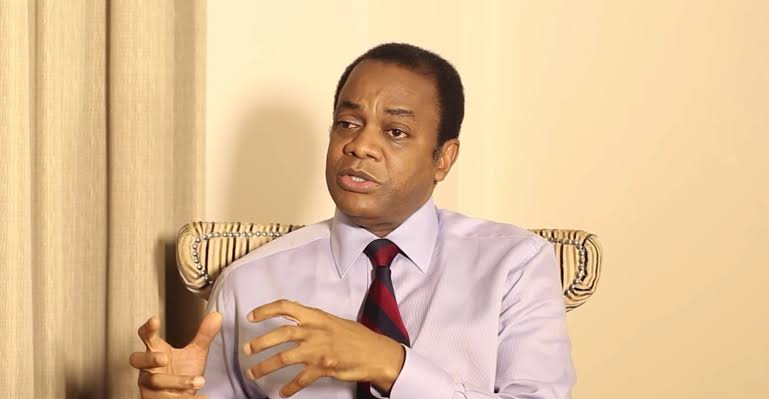
Peoples Redemption Party (PRP) presidential candidate, Donald Duke, has lambasted the ongoing debate between President Bola Tinubu, former Vise President Atiku Abubakar and former Anambra State Governor, Peter Obi, over petrol subsidy. Duke said petrol could sell for about N200 per liter in Nigeria if it could properly tap into other products from crude oil. Applying For Government Grants

Duke, who called the fuel subsidy debate a “scam”, said the country’s crude oil resources and the variety of products derived from crude should make petrol much cheaper for Nigerians.

He said, “Look, I don’t think there is any subsidy on fuel. For every barrel of crude oil, there are roughly seven by-products. The consequential ones are diesel and petrol. PMS and AGO. And kerosene, aviation fuel and all those things.

“All right, you sell them at commercial rates, okay? You figure it out. You can sell petrol today at N200 per liter, almost, not N1,000-plus. “So that subsidy thing I think is the biggest scam that has been perpetrated, maybe globally.”

He took his position against the backdrop of divergent proposals by Tinubu, Atiku and Obi on how to address the rising cost of petrol and its impact on Nigerians.

In May 2023, Tinubu removed the petrol subsidy, stating the policy was unsustainable and that funds previously spent on subsidy could be diverted to development.

Atiku has called for a targeted subsidy to cushion the impact of high living costs while Obi has backed the removal of subsidy but called for greater transparency in the use of the savings.

But the former governor of Cross River State said the debate was not taking cognizance of the huge energy resources in Nigeria and the need to exploit them for the good of the citizens.

“You are an energy-rich country. You have all the known forms of energy that exist in Nigeria from the crudest which is human labor to hydrocarbons, solar, hydro, uranium and now lithium.

Read Also: Tupac Case: Keffe D Davis Convicted Nearly 30 Years After Rapper’s Death

“You’ve got all those things. Why are we still energy poor? Because the political will is lacking. “But even beyond the political will, we are not thinking this through,” he said. Subscribing to Political News Sources

The ex-governor also criticized Nigeria’s continued flaring of natural gas, despite the continued energy shortages and high costs of electricity.

“We burn off two billion cubic feet of gas a day easily. That’s equivalent to 20 million liters of diesel. You wouldn’t be using 20 million liters of diesel a day to run a turbine to power all of Africa. “So, it’s like there is water in abundance but the fish is thirsty,” he added.

Duke also dismissed the comparisons of Nigeria’s fuel prices with those of other countries, saying governments should exploit their various natural resources.

Every country has its endowments, and when I hear excuses like, ‘Oh, it’s cheaper in America,’ or, ‘It is cheaper than it is in America,’ I think, ‘No, it’s not.

“You’ve got to use what you’ve got to get what you want. Blessed country we are. “The people should feel their blessings,” Duke said.

He also asked why Nigeria was exporting gas to other West African countries when it was unable to meet its own domestic energy needs.

“You have a West African Gas Pipeline, but you don’t have any self-sufficiency in gas in your country,” he said. Something’s wrong somewhere. ‘We aren’t thinking straight.”

Duke said the country’s energy crisis could be solved if the government had the political will to develop the nation’s abundant resources properly.

“Why are we still energy poor? There’s no political will. We don’t think about our problems,” he said.

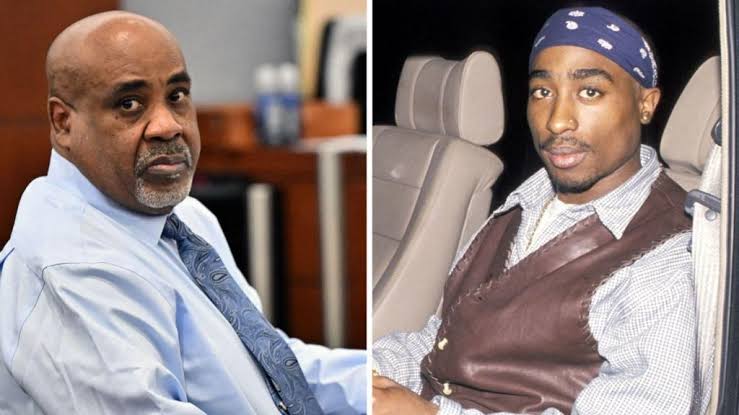
Tupac Case: Keffe D Davis Convicted Nearly 30 Years After Rapper’s Death

0

Duane “Keffe D” Davis, former head of the Compton gang South Side Crips, has been convicted in the 1996 murder of Tupac Shakur, one of hip-hop’s most notorious killings, finally putting an end to nearly three decades of mystery.

After less than three hours of deliberations, a 12-member Las Vegas jury convicted Davis, 63, of first-degree murder with a deadly weapon.

The conviction is the first guilty verdict in the decades-old case and exposes Davis to a potential life sentence without parole.

Davis, who pled not guilty, said after the verdict that he “intends to appeal this matter” to the judge.

The courtroom was filled with an emotional reaction to the verdict. Tupac’s sister Sekyiwa “Set” Shakur cried as the decision was read, and Davis’ son covered his face with one hand. Several people in the gallery wiped away tears and hugged members of the prosecution team.

Much of the case against Davis came from statements he made over the years, including stories in his 2019 memoir and recordings of conversations with investigators.

In those accounts, Davis acknowledged being in the white Cadillac that fired the shots and said he provided the weapon used in the attack.

The prosecution said Davis’ stories had changed over the years, but one thing had stayed the same — his presence in the vehicle involved in the shooting.

“If you believe the statements of Davis, you don’t need any other independent evidence to prove his participation,” said Chief Deputy District Attorney Binu Palal.

However, the defense argued Davis’ claims were exaggerated and amounted to “bravado” designed to sell his memoir and boost his public profile. The defense also argued that his statements were not corroborated enough by other evidence.

Ultimately, that claim was shot down by the jury.

Prosecutors said the killing was in retaliation for a confrontation that nite between Tupac’s entourage and Davis’ nephew, Orlando “Baby Lane” Anderson.

Evidence presented during the trial showed Tupac and entourage members had beaten Anderson at a Las Vegas casino.

Davis later said he was furious over the confrontation and got into a white Cadillac with three other men to find Tupac and Death Row Records executive Marion “Suge” Knight.

Before they found Tupac and Knight, investigators said he handed a firearm off to the back seat of the vehicle.

One of the men in the back seat then opened fire, the prosecution said.

On September 7, 1996, Tupac was stopped at a red light when a white Cadillac pulled up alongside his vehicle and gunfire erupted.

The rapper was shot several times and succumbed to his injuries six days later at the age of 25.

Prosecutors said Davis was the mastermind of the attack, but they did not say who actually did the shooting. The three other men in the Cadillac have since died.

Nevada law didn’t require prosecutors to prove Davis pulled the trigger to convict him of murder.

Tupac’s stepbrother Mopreme Shakur had expressed cautious optimism before the trial, but also acknowledged the pain of decades of unanswered questions.

Mopreme remembers the nite Tupac was shot: rushing to Las Vegas, sitting in the hospital bed with his brother as the family waited in hope for Tupac to pull through.

But he said no court ruling could ever bring the justice his family sought.

I’ll never get the justice I want. “I want my little brother back,” Mopreme said.

That sentiment demonstrated the emotional significance of the verdict for Tupac’s family, almost 30 years after his death.

Tupac Shakur’s killing was one of the defining moments of 1990s hip-hop, coming at the height of tensions between rival factions associated with the West Coast and East Coast rap scenes.

Shakur was one of the most commercially successful and influential rappers of his generation, and was closely associated with Death Row Records and the Mob Piru street gang. Davis was a leader of the rival South Side Compton Crips gang.

His killing has led to years of speculation, conspiracy theories and competing narratives about what happened that nite.

For decades, no one was charged.

This changed in 2023 when Davis was arrested and charged with murder after years of making public statements about his alleged involvement. The prosecution then used those statements, his memoir and recordings of his conversations with investigators as key parts of its case.

The trial, which opened Aug. 17, featured dozens of witnesses and included hours of recorded conversations.

With the jury’s verdict, the nearly 30-year-old mystery surrounding Tupac’s death entered a new chapter.

But with Davis vowing to appeal, and the identity of the actual gunman still officially unresolved, the legal story surrounding one of music history’s most famous murders is not necessarily over.

Tinubu Govt Restricts Civil Servants’ Deployment Amid Fake Agency Concerns

0

The Bola Ahmed Tinubu led Federal Government has clamped down on the movement and redeployment of civil servants directing the Ministries, Departments and Agencies to stop the movement of officers belonging to recognized professional pools without the approval from the authorities responsible for their postings.

The directive is coming as the administration of President Tinubu intensifies efforts to tackle concerns over fake government agencies, ghost workers, and weakness in the personnel and institutional control system.

The directive was given in a circular dated August 24, 2026 with reference number HCSF/3065/V.I/275, by the Office of the Head of the Civil Service of the Federation.

The directive cautioned that officers posted to MDAs from recognized professional pools must remain in their approved offices, departments, divisions, units or sections unless their deployment is reviewed and approved by the relevant authority.

The circular, which was addressed to the Chief of Staff to the President, ministers, the Secretary to the Government of the Federation, permanent secretaries, service chiefs, the Inspector-General of Police and heads of relevant Federal Government institutions and agencies, was reported by the PUNCH.

The Head of Service said it has noticed that some MDAs still moved officers posted to them from professional pools without approval from the relevant posting authority.

It read: “The Office of the Head of the Civil Service of the Federation has noticed that some Ministries, Extra-Ministerial Departments and Agencies have continued to redeploy officers posted to them from the professional pools of the OHCSF and other recognized pool offices without approval of the relevant posting authorities.”

Read Also: EFCC Unveils New Strategy To Tackle Looting And Financial Crimes

The circular said this is against the earlier Circular Ref. No. HCSF/3065/VI/218 of January 2, 2025, on the prohibition of internal redeployment of pool officers within MDAs.

The OHCSF circular is intended to clarify the chain of authority over who can deploy, move and supervise professional officers within the Federal Civil Service.

It directed that permanent secretaries may only deploy or redeploy officers on the local staff establishment of their various MDAs to areas where their services are required for effective and efficient service delivery.

However, officers seconded to an MDA by the OHCSF or another recognized professional pool are governed by a different rule.

“Officers posted to Ministries, Extra-Ministerial Departments and Agencies by the OHCSF or any other recognized professional pool shall remain in the offices, departments, divisions, units or sections to which they were specifically posted in accordance with their posting instructions,” the circular said.

“The concerned posting authority will have to approve prior to any internal redeployment of such officers.

However, the OHCSF conducted a qualification of officers on Grade Level 07 to 14 who were posted to fill vacancies in departments.

However, such officers could be deployed internally in divisions, units and sections where there are vacancies as long as it is within the scope of their respective pools or cadres, the circular said.

The circular said, “Where operational exigencies require any review of such postings, the matter shall be referred to the appropriate posting authority for review and necessary approval.”

The circular stated that, under the Office of the Head of the Civil Service of the Federation, recognized cadres include Administrative Officers, Executive Officers (General), Store Officers, Stock Verifier Officers, Confidential Secretaries, System/Programme Analysts, Statistical/Data Processing Officers and Library Officers. The Permanent Secretary, Career Management Office, OHCSF, provides supervision for these officers.

At the Federal Ministry of Justice, the recognized pool consists of the State Counsels, with the Solicitor-General/Permanent Secretary as the managing authority.

The professional pool of Procurement Officers is managed by the Bureau of Public Procurement under the authority of the Director-General of the Bureau.

The Federal Ministry of Information and National Orientation runs the pool of Information, Press and Public Relations Officers, under its Permanent Secretary.

The Office of the Accountant-General of the Federation has two recognized cadres namely Account Officers and Executive Officers (Accounts). The managing authority is the Accountant-General of the Federation.

The pool of Resident Auditors is under the Auditor-General for the Federation and is handled by the Office of the Auditor-General for the Federation.

The circular also recognized any other duly recognized professional pool office with the applicable cadre and managing authority.

The detailed listing indicates that professional officers posted to MDAs are subject to certain administrative structures and cannot simply be transferred from one establishment to another at the discretion of individual officials.

EFCC Unveils New Strategy To Tackle Looting And Financial Crimes

0

The Economic and Financial Crimes Commission, EFCC, has formally changed its strategy in the war against financial crimes from tracing stolen funds after the event to blocking suspicious transactions just before the money disappears.

This was disclosed by the Chairman of the anti-graft agency, Ola Olukoyede, on Monday in Abuja during an interactive session with newsmen to mark his third year at the helm of the commission.

Rather than allow complex criminal cases to take years to resolve while assets disappear, the EFCC boss said the agency has set up a special unit, called the Fraud Risk Assessment and Control Department (FRAC), to track, flag and freeze suspicious accounts within 72 hours.

Olukoyede, explaining the reason for the sudden change in approach, asked why it is always the public purse that is emptied before action is taken.

“Why do we have to be waiting for money to be stolen? We intervene and freeze when we see suspicious money flows. He asked: “We ask where is this money going, pending 72 hours?”

He pointed to examples of public funds being rapidly wired from local government accounts to corporate accounts, only to land in cryptocurrency wallets within 24 hours.

Olukoyede regretted that corrupt public officials in the country now recruit young tech-savvy persons to convert the looted public funds into virtual assets, making recovery difficult.

“With the push of a button, you can collapse the entire banking industry in Nigeria. “The problem with most of the data that we are looking at now is that there are no physical assets that you can trace to it,” he said.

In a bid to stem the rising trend of virtual asset laundering, Olukoyede disclosed that approximately 40 digital asset platforms have been licensed in Nigeria and that the EFCC now possesses the technical ability to trace registered wallets.

Additionally, the commission, with presidential consent, worked with security agencies to create a national confiscation wallet for all seized cryptocurrencies.

“One of the issues we used to have was where do you put the confiscated virtual assets? We have a national wallet that we put them into today,” Olukoyede added.

On legal tactics, the EFCC boss said the agency is focusing on civil asset forfeiture under Section 17 of the Advance Fee Fraud Act, rather than getting itself entangled in endless criminal litigation.

“This is swifter and quicker than a criminal trial. “We don’t have to wait 10, 15 years when witnesses die and assets are dissipated,” he said.

Read Also: Troops Rescue Abducted NYSC Members And Six Others In Kogi

Under the civil forfeiture process, the commission files a direct suit against the suspicious asset itself, shifting the burden of proof to anyone claiming ownership to explain the genuine source of the money used to acquire it. “This strategy has already delivered huge results in a number of high-profile cases involving former public officeholders,” he added.

To clear the air on the handling of seized items, Olukoyede stressed that the commission no longer directly manages forfeited properties, strictly adhering to the Proceeds of Crime Act (POCA) 2022.

Instead, a dedicated Process and Proceeds Management (PCM) directorate now assigns experts, estate managers for real estate, stock market professionals for financial assets and broadcast experts for media outfits, to run the properties efficiently.

He also said that properties that are rapidly depreciating and are caught up in court litigation are being auctioned off and the proceeds are being deposited into secure escrow accounts pending final judicial determination.

The EFCC boss confirmed that new management teams have taken over high-profile hotels recently forfeited in Lagos and that commercial banks have been directed to remit all operational income directly to the commission.

Olukoyede ended with an appeal to the media and civil society organizations to return to their role as active watchdogs, emphasizing that institutional reforms and systemic leak-blocking are far more effective than law enforcement alone.

“Law enforcement is not the most effective system. “It is the policy regime, institutional reforms that plug leakages,” the EFCC Chairman said.

Troops Rescue Abducted NYSC Members And Six Others In Kogi

0

In Kogi State, the Nigerian military rescued 21 kidnaped victims, including 15 National Youth Service Corps (NYSC) members.

The Director, Defense Media Operations, Maj. Gen. Michael Onoja, disclosed this, it was learnt.

“Twenty-one victims, eight males and 13 females, were rescued from the Egume-Ochaja forest,” Onoja said.

He added that the military will continue to rescue the residents abducted in Borgu Local Government Area of Niger State.

“The Armed Forces of Nigeria is also pleased to inform the general public that a total of 21 victims comprising of eight males and 13 females, 15 of whom are members of the National Youth Service Corps have just been rescued within the Egume and Ochaja forest stretch in 2 Division area of operation,” he added.

The spokesperson added that military formations had continued to work with other security agencies and state government institutions through intelligence sharing and identification of areas in need of security intervention.

He said: “The recent rescue of 308 abducted persons, mostly women and children, from Kainji Lake National Park on August 5 and subsequent operations to deny terrorists freedom of movement within Borgu axis show commitment and capability of security forces to locate, rescue and safely return affected citizens.

Troops will continue to put pressure on terrorists operating within and around the Kainji Lake National Park and other identified corridors, he said.

He said this was being done to prevent further incursions and to create conditions for the return of displaced residents to their communities.

“the Armed Forces, therefore, assures the people of Borgu and their communities that military operations against terrorists and criminals will be sustained in the local government area and its environs to ensure the safety of the community,” Onoja said.

He called on the families of abducted persons to remain calm and not take any action that could jeopardize rescue operations, pointing out that credible information was critical to the efforts of the military.

“We recognize the anxiety, pain and uncertainty that accompany the loss or affliction of family members and friends to the families of the victims and all persons affected by the heinous activities of terrorists and criminals.

“We would like to encourage everyone to remain calm and to have faith in the ongoing efforts of the military and other security agencies to resolve the situation, and to refrain from any action that could jeopardize rescue or recovery efforts,” he said.

African Union Calls For Urgent Action On Conflict Resolution

0

The Luanda Declaration, read by African Union Chairperson Évariste Ndayishimiye, said governments must move beyond rhetoric and take concrete action to prevent and resolve conflicts.

The Luanda summit reaffirmed that sustainable peace must be supported by African resources and that cooperation with international partners should respect sovereignty and African-led solutions.

The African Peace Fund will mobilize resources for African-led peace and security efforts through a more predictable, member-funded, financing.

The AU Peace Fund, which was established in 1993, is the Union’s main financing instrument for peace operations, mediation and institutional capacity.

The fund has long suffered from a lack of financing and has depended on external donors, resulting in repeated calls for greater African ownership.

The extraordinary summit identified terrorism, violent extremism, unconstitutional changes of government, political crises, cyber dangers and geopolitical rivalries as the key challenges to stability on the continent.

The declaration underscored accountability across AU mechanisms, including the Peace and Security Council, and the need for political will to ensure that decisions by heads of state lead to results.

It also highlighted the value of involving women and youth in peace processes and called for enhanced protection of children affected by conflicts.

Tinubu: It’s Shameful For President To Try To Hide Records Of His Past – Obi

0

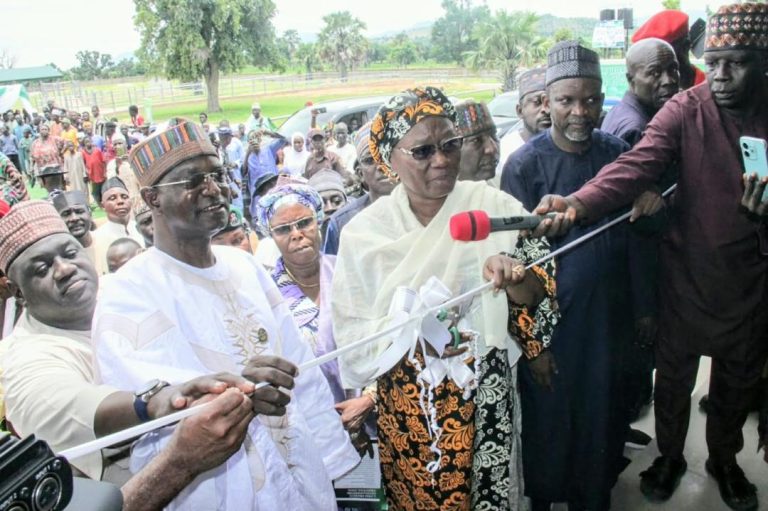
The Nigerian Government, through the Livestock Productivity and Resilience Support Project (L-PRES), has commissioned a Strategic Animal Resting Facility at Jaba-Jaba in Maiha Local Government Area of Adamawa State to enhance quarantine services, animal health surveillance and safe movement of livestock along Nigeria’s border with Cameroon.

The facility was commissioned by the Minister for Livestock Development, Idi Mukhtar Maiha and the Deputy Governor of Adamawa State, Kaletapwa Farauta, during the Minister’s working visit to L-PRES intervention sites in the state.

The facility is strategically located along the Nigeria-Cameroon border corridor and serves as an organized point for the temporary holding, inspection and submission of livestock in transit to appropriate animal health and quarantine procedures before onward movement.

The intervention is particularly important in improving Nigeria’s capacity to prevent and control transboundary animal diseases, and improve disease surveillance, biosecurity and monitoring of livestock movement across the international border.

Speaking at the commissioning, the Minister said, “the facility is another key investment by the Federal Government in building a modern and resilient livestock sector, particularly through stronger animal health and quarantine systems.

Read Also: FG Launches Livestock Facility To Strengthen Animal Health Services

“Effective surveillance along border livestock corridors is critical to protect Nigeria’s livestock population, safeguarding public health and facilitating safer livestock trade between Nigeria and neighboring countries,” said Maiha.

The Deputy Governor of Adamawa State, Kaletapwa Farauta, praised the Federal Ministry of Livestock Development, the World Bank and L-PRES for the investment, saying it was “an important contribution to the development of the livestock sector in Adamawa State.”

The government remains committed to interventions in productivity, animal health, food security and the livelihoods of livestock producers throughout the state.

“The Jaba-Jaba facility is part of the strategic investments of the Project in strengthening the livestock health infrastructure and improving the management of animal movement along the major border corridors,” he said. Sanusi Abubakar, National Project Coordinator of L-PRES.

He said the facility should be effectively utilized and managed in a sustainable manner to ensure that livestock producers, traders, veterinary authorities and border communities derive maximum benefits from the investment.

The Jaba-Jaba Strategic Animal Resting Facility is one of the wider L-PRES interventions to modernize Nigeria’s livestock sector through improved animal health services, improved disease surveillance, improved biosecurity and investments that support safer and more productive livestock value chains.

This is the latest in a series of recent commissioning of new facilities, following the inauguration of a similar L-PRES Strategic Animal Holding Facility at the Etung-Ikom border corridor in Cross River State, another key international livestock corridor between Nigeria and Cameroon.

The two facilities are part of L-PRES investments to better quarantine operations, disease surveillance, biosecurity and safer cross-border livestock movement at strategic entry points across the country.

FG Launches Livestock Facility To Strengthen Animal Health Services

0

The Nigerian Government has commissioned a Strategic Animal Resting Facility at Jaba-Jaba in Maiha Local Government Area of Adamawa State, through the Livestock Productivity and Resilience Support Project (L-PRES), to strengthen quarantine services, animal health surveillance and the safe movement of livestock along Nigeria’s border with Cameroon.

The facility was commissioned by the Minister of Livestock Development, Idi Mukhtar Maiha, and the Deputy Governor of Adamawa State, Kaletapwa Farauta, during the Minister’s working visit to L-PRES intervention sites in the state.

It is strategically located along the Nigeria-Cameroon border corridor, providing an organized point where livestock in transit can be temporarily held, inspected and subjected to appropriate animal health and quarantine procedures before onward movement.

The intervention is very critical in enhancing Nigeria’s capacity to prevent and control transboundary animal diseases, enhancing disease surveillance, biosecurity and monitoring of livestock movement across the international border.

Speaking at the commissioning, the Minister said; “the facility is another significant investment by the Federal Government in building a modern and resilient livestock sector, especially through improved animal health and quarantine systems.”

“Effective surveillance along border livestock corridors is critical to protecting Nigeria’s livestock population, safeguarding public health and facilitating safer livestock trade between Nigeria and neighboring countries,” Maiha said.

Kaletapwa Farauta, the Deputy Governor of Adamawa State commended the Federal Ministry of Livestock Development, the World Bank and L-PRES for the investment, calling it “an important contribution to the development of the livestock sector in Adamawa State.”

She reiterated the government’s commitment to interventions in productivity, animal health, food security and the livelihoods of livestock producers across the state.

The National Project Coordinator of L-PRES, Sanusi Abubakar, said; “the Jaba-Jaba facility is part of the Project’s strategic investments to strengthen livestock health infrastructure and improve the management of animal movement along the major border corridors.”

He highlighted the need for the facility to be fully utilized and managed sustainably to ensure maximum benefit for livestock producers, traders, veterinary authorities and border communities from the investment.

The Jaba-Jaba Strategic Animal Resting Facility is one of the wider L-PRES interventions aimed at modernizing Nigeria’s livestock sector through improved animal health services, stronger disease surveillance, enhanced biosecurity and investments that support safer and more productive livestock value chains.

This Jaba-Jaba facility comes after the recent commissioning of a comparable L-PRES Strategic Animal Holding Facility at the Etung-Ikom border corridor in Cross River State, another key international livestock route between Nigeria and Cameroon.

The two facilities make part of L-PRES investments to beef up quarantine operations, disease surveillance, biosecurity and safer cross-border livestock movement at strategic entry points across the country.

Minister Explains Why Tinubu’s Reforms Are Necessary For Nigeria’s Stability

0

The Minister of Information and National Orientation, Mohammed Idris, has defended President Bola Ahmed Tinubu’s reform agenda as necessary to secure Nigeria’s long-term stability.

He said the government must ensure that the gains from the reforms translate into improved infrastructure, stronger public services and better living conditions for Nigerians.

Speaking at the maiden Bashir Adamu Chedi Annual Memorial Lecture and the Annual General Meeting of the Nigerian Institute of Public Relations, Kaduna State Chapter, Idris described the removal of petrol subsidy as a “difficult but necessary” decision to end an unsustainable regime that had drained public resources for decades.

“The responsibility of government is therefore to ensure that the gains from reform translate increasingly into better infrastructure, stronger public services, greater economic opportunity and improved living conditions,” he said.

The lecture, themed “Bridging Generations: Strengthening Public Relations Through Mentorship,” was instituted in honour of the late Mallam Bashir Adamu Chedi, a former Secretary and Chairman of the Kaduna Chapter, Governing Council member, and Fellow of the Institute.

Idris called on public relations practitioners to bridge generational gaps through mentorship and to uphold truth and integrity amid the rise of artificial intelligence and misinformation.

“His greatest legacy was not the positions he occupied. It was the people he influenced, the younger practitioners he encouraged and the professional values he represented,” Idris said.

The Minister warned that technology is reshaping communication, with social media turning everyone into a publisher and AI enabling the rapid creation of fabricated images, cloned voices, and manipulated videos.

“In this environment, public relations cannot simply be about publicity. Our real business is trust.

“Technology will change. Platforms will come and go. Artificial Intelligence will become more sophisticated.

“But the foundations of our profession must remain: truth, credibility, integrity, responsibility and respect for the public,” Idris said.

He urged senior practitioners to guide younger professionals, and younger practitioners to value experience while introducing new ideas.

“Young practitioners must not dismiss experience as outdated, and senior practitioners must not regard innovation as a threat.

“Bridging generations means bringing these strengths together,” Idris stated.

The Minister of Information linked restoring public trust in government communication to the Tinubu administration’s policy direction.

He highlighted the federal government’s push for Compressed Natural Gas as a cheaper, cleaner transport alternative, and ongoing efforts to strengthen security agencies against terrorism, banditry and kidnapping.

Idris also spoke on the national conversation around state policing.

“Nigeria’s security architecture must evolve with its realities.

Read Also: Tinubu To Remain Fully Engaged During Europe Holiday

“Bringing policing closer to communities can strengthen intelligence and improve response to local threats,” he said.

With another electoral cycle approaching, the Minister cautioned PR professionals against spreading falsehoods for political convenience.

“We must verify before we communicate and defend professional ethics regardless of who employs us.

“We must explain without deceiving, persuade without manipulating, correct misinformation without suppressing legitimate disagreement,” he elaborated.

Idris described Chedi as a friend and colleague whose professional values should guide the Institute.

He prayed for the repose of Chedi’s soul and commended the Kaduna Chapter for establishing the annual lecture.

“May it grow into a national platform for mentorship, professional reflection and the advancement of ethical public relations practice.

“May the life of Mallam Bashir Adamu Chedi continue to remind us that our most enduring legacy is often not what we achieve for ourselves, but what we deposit in others,” Idris said.

The AGM brought together senior and junior members of NIPR to review the chapter’s activities and chart a new course for the profession in the state.