Home Blog Page 1386

13 killed, 2 injured in auto-crash in Kogi – FRSC

0

The Federal Road Safety Corps ( FRSC) said on Monday that 13 persons died while two were injured in an auto crash in Kogi.

Mr Samuel Oyedeji, Kogi FRSC Sector Commander, told the News agency of Nigeria (NAN) that the sad incident occurred around 7: 30 p.m. on Sunday.

He disclosed that the accident involving a commercial Sharon Bus and an articulated Cement Truck, occurred by Obajana Market along Obajana -Lokoja Road in Lokoja Local  Government Area of Kogi.

The sector commander said that the Sharon bus had packed behind a truck around the market for passengers to buy some things, when the cement truck lost brake and rammed into it from behind.

National growth LS

“And that as soon as the truck rammed into the bus, it immediately went into flame and burnt virtually all the passengers inside it.

“Also burnt were the bus, two trucks and a motorcycle.

The bus was reportedly heading to Abuja from the southern part of the country.

“Our personnel, who were on rescue operations with Red Cross Nigeria and Police officers, couldn’t save the situation due the fierceness of the fire

“But the charred remains of the affected persons were collected while the two injured persons have been taken to Fisayo Hospital, Obajana for medical attention.

Oyedeji expressed worry that no hospital in Kogi agreed to take the charred bodies for keep, which might force the authorities to give them a massive burial if no relation came around.

The sector commander, who described the incident as “very sad and unfortunate”, cautioned motorists against speeding and poor maintenance of their vehicles.

According to him, motorists should always check their vehicles to ensure everything in order before embarking on a journey to avoid road crash. (NAN)

By Thompson Yamput

Prove Matawalle gave palliatives to bandits or face prosecution

0

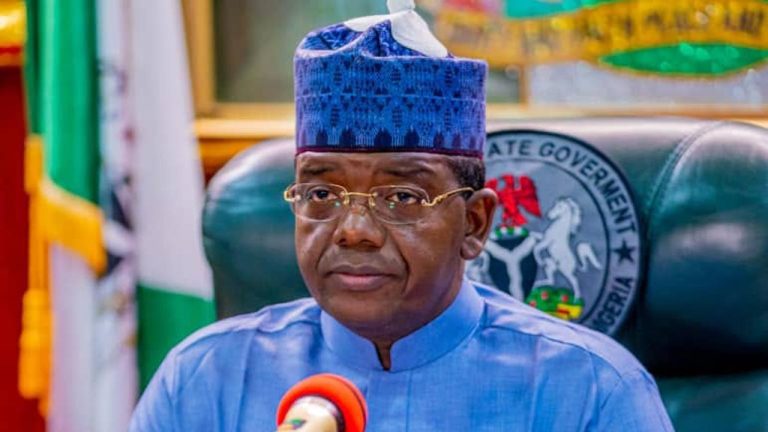
The All Progressives Congress (APC), North-West Zone, has asked the members of the opposition party in Zamfara, accusing the Minister of State, Defence, Bello Matawalle of giving palliatives to bandits, to come forward with their evidences or risk prosecution.

Musa Mada, Zonal Publicity Secretary of the party, disclosed this while addressing a press briefing in Kaduna on Sunday.

Mada said that the party welcomed positive criticisms from the oppositions, but such criticisms should not violate the provisions of the freedom of speech.

He accused the Peoples Democratic Party (PDP), opposition government in Zamfara of persistent slandering of the immediate past Governor of the State, Matawalle.

National growth LS

Mada stated that the grievous allegation against Matawalle can never be overlooked.

He said that the sponsors of the fake news against the minister must provide proof of the alleged foodstuffs’ distribution.

In the alternative, they must tender an apology to the minister on the pages of at least two national dailies within two weeks from Sunday.

Mada said, “if no action is taken from the side of the sponsors of this fake news on expiration of the ultimatum, on 14th April 2024, a legal action will be instituted against them.

“It has come to our notice that some unscrupulous elements in this geopolitical zone, particularly Zamfara, made it their daily habit of using instruments of mainstream and the new media in tarnishing the image of our party leaders.

“Similarly, it is well known fact that the PDP opposition government in Zamfara made name for itself in slandering Matawalle

” As a party, we concede that slandering any of our members with ulterior motives is as good as attacking the structural foundation of our great party.

”Which is intolerable, let alone defaming the character and questioning the integrity of our leaders who earned their reputation through selfless service to the greater good of the entire nation.’

According to Mada, APC welcomes positive criticism from the oppositions that do not violate the provisions of freedom of speech,adding, ”we will not condone any form of vituperation that overstepped boundaries of the provisions of the laws of the land.’. (NAN) 

By Moses Kolo

NILDS D-G tasks Nigerians on inclusivity, dialogue, cooperation @ Easter Newsdiaryonline

0

Prof. Abubakar Sulaiman, the Director-General of National Institute for Legislative and Democratic Studies (NILDS) has urged Nigerians to use the spirit of Easter to foster inclusivity, dialogue, and cooperation among all segments of the society.

Sulaiman said this in his Easter message on Sunday in Abuja and urged all Nigerians to recommit themselves to the values of accountability, transparency, and service to humanity.

He said that Easter was a time of reflection, renewal, and hope.

“We are reminded of the importance of unity and collaboration. As we work towards our common goal of promoting democratic ideals and effective governance, let us harness the spirit of Easter to foster inclusivity, dialogue, and cooperation across all sectors of society.

National growth LS

“In this season of hope and possibility, let us recommit ourselves to the values of accountability, transparency, and service to humanity.

“Together, let us build a Nigeria where the principles of democracy thrive and the aspirations of our citizens are realised,” he said.

The DG said that at NILDS, there was a resonance between the essence of Easter and the institute’s mandate of fostering legislative excellence, democratic governance, and sustainable development.

He said that just as the period representd a time of rebirth and renewal and the institute was committed to continuously revitalising efforts toward advancing legislative research, capacity building, and policy advocacy.

“Through our programs and initiatives, we strive to empower lawmakers, policymakers, and stakeholders with the knowledge and skills necessary to navigate the complexities of governance and contribute meaningfully to national development,” he said. (NAN)

By EricJames Ochigbo

Senate Leader urges emulation of sacrificial spirit

0

 The Senate Leader,  Opeyemi Bamidele has urged  Christians to imbibe the sacrifice and pains the saviour of mankind, Jesus Christ,went through on the cross.
Bamidele said this in a statement  by his Directorate of Media and Public Affairs on Sunday in Abuja.

He said that Easter was a day celebrated in remembrance of the death and resurrection of the Lord Jesus Christ.

He said the price paid by Jesus Christ which eventually saved humanity from eternal damnation,  could be likened to the economic hardship currently being experienced by Nigerians, a situation he assured would pay off in due course.

“It is pertinent for us as  individuals and citizens of Federal Republic of Nigeria to pick one or two lessons from the sacrifice of Jesus Christ on the cross, though it was a painful sacrifice but the sacrifice paved the way for our external redemption.

National growth LS

“It is in the interest of nation building for both the leaders and followers to learn the importance of sacrifice as panacea to lay foundation for the future of any nation.

“The sacrifice we are undergoing today may be painful just as it was for Jesus Christ over 2000 years ago, yet I call on the citizenry to remain hopeful and undistracted as there’s light at the end of the tunnel.

“We should not allow pessimists to paint a picture of a failed nation before us, without recourse to the relentless efforts of the current administration of President Bola Tinubu,” he said.

Bamidele expressed optimism that whatever sacrifice Nigerians might be going through,  should not be in vain; adding that the Federal Government was on top of the situation and laying the foundation for a prosperous Nigeria.

He said the current economic indices could attest to the fact that there were unprecedented rapid reforms taking place across key sectors of the life of the nation.

Bamidele gave the instance of the Foreign Exchange that had hit the roof top few weeks ago but has drastically dropping by 32.6 per cent as a result of pragmatic steps taken by Tinubu and his economic team.

He assured that investors were trooping to the country with job creating opportunities, while the National Assembly was prepared to give the President all the needed legislative backing to ensure the sacrifices of Nigerians were soon rewarded.

The senate leader,  therefore,  urged Nigerians, as they continued to celebrate the 2024   Easter to remember the country’s leadership in their prayers for divine wisdom and direction to pilot our affairs to a safe location.(NAN)

By Naomi Sharang

NITDA urges Nigerians to ensure

0

The National Information Technology Development Agency (NITDA) has advised Nigerians to prioritise data backup to avoid loss of information in commemoration of the World Backup Day.

Mrs Hadiza Umar, Head, Corporate Affairs and External Relations of the agency, gave this advice on Sunday in an advisory to celebrate the day.

Umar said data backup was the practice of

copying an information from a primary to a

National growth LS

secondary location, to protect it in case of a disaster, accident, or malicious action.

‘

“The act of data backup is when you create a copy of your important information, store it in a secure and separate location, and recognise the backup as a restoration method.

“Your data is more valuable than your device. Remember a backup strategy isn’t

something to focus on just one day of the

year.

“It should be part of your cyber hygiene and by backing up your data, you are already

one step ahead of any cyber threat that

might cause data loss,” she said.

According to Umar, the rules of backup include keeping at least three copies of your data, maintaining the copies on two different storage

media and storing one copy offsite or in the cloud.

The News Agency of Nigeria (NAN) reports that World Backup Day is celebrated annually  on March 31 by the backup and tech industry worldwide.

The day highlights the importance of protecting data, keeping systems and computers secure.(NAN) 

By Ijeoma Olorunfemi

Troops raid notorious IPOB/ESN camp in Imo, recover IEDs

0

The Joint Task Force Operation UDO KA, has raided a  notorious camp of elements of the Indigenous People of Biafra (IPOB) and its armed wing, the Eastern Security Network (ESN), in Imo.

This is contained in a statement issued on Sunday by the spokesperson of the operation, Lt.-Col. Jonah Unuakhalu.

He said that the B44 Camp of Monday Oluchi-Ogu, located around Njaba River on the border between Awo-Omama community in Oru East LGA and Ezoiha community in Mbaitoli LGA of Imo, was destroyed.

He added that three Improvised Explosive Devices (IEDs), one RPG bomb, a motorcycle, seven Baofeng radio, local jewelries, a foreign ATM card, two SIM cards, two voter cards, plate numbers of stolen vehicles and a toolbox were recovered.

National growth LS

Unuakhalu said that the raid was conducted on Thursday and Friday to clear the notorious camp.

He said that during the clearance operation, the troops came in contact with the criminals and forced them to flee with various degrees of gunshot wounds.

“Troops further encountered and detonated some of the planted IEDs meant to hinder troops movements.”

The spokesman further said that the troops discovered shallow graves at the camp of those kidnapped and killed by the gang.

“As part of the Nigerian Army’s Civil-Military Relations, forensic analysis of some of the exhumed corpses will be done for a befitting burial,” he added.

Unuakhalu said that the Force Commander, Operation UDO KA, Maj.-Gen. Hassan Dada, had assured all citizens of the South-East of Nigerian Army’s commitments to ensure peace and stability in the region.

He urged the general public to provide timely, reliable and credible information through toll free line 193. (NAN) 

By Stanley Nwanosike

Army will ensure total defeat of insurgents, others – Lagbaja

0

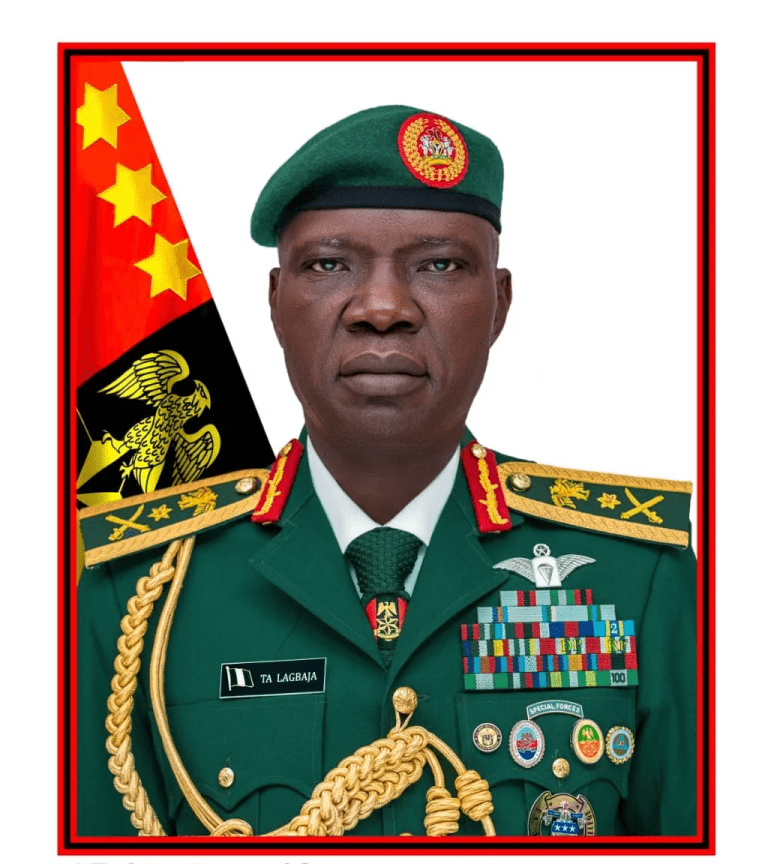
 The Chief of Army Staff (COAS), Lt.-Gen. Taoreed Lagbaja, has reiterated the commitment and determination of the Nigerian Army to ensure the total defeat of insurgents, marauding bandits, and all other forms of external and internal aggression disturbing the peace of the country.

Lagbaja gave the assurance in his Easter Message to troops and families of personnel of the Nigerian Army on Sunday in Abuja.

He urged all officers and soldiers to use the season to pray for continued operational successes and continue to espouse the values and virtues of love, peace, and sacrifice in the discharge of their constitutional responsibilities.

The COAS said he had ensured the implementation of quality training and equipping towards combating the myriads of security threats confronting the nation.

National growth LS

He said the Nigerian army under his leadership had continued to record tremendous successes in various operations at home and abroad, especially in the ongoing Operation Hadin Kai in the North East and other internal security operations nationwide.

“As we continue to push towards the final onslaught on the adversaries troubling our nation, I assure you that the welfare of officers and soldiers, including training and provision of the needed equipment, will always be prioritised to enable us to discharge our constitutional responsibilities effectively.

“Let me use this opportunity to acknowledge and thank you, my officers and soldiers, for your doggedness in tackling the numerous security challenges bedeviling us as a nation.

“You have displayed much commitment, courage, resilience, and professionalism. For this, I say well done and charge you not to rest on your oars until we have eliminated all forms of threat to our country.

“While still grieving the recent unwarranted and gruesome murder of our colleagues in Okuama Community of Delta, which occurred on March 14, I urge you all to remain steadfast, diligent, and committed to the discharge of our constitutional responsibilities.

“I encourage you to continue to pray for the repose of the souls of our departed colleagues who paid the supreme price for the noble cause of keeping our beloved country safe.

“I will continue to prioritise the welfare of our officers, soldiers, and families, including those of our departed colleagues,” he said.

Lagbaja also charged personnel to use the Easter celebration to offer prayers against all forms of negative forces militating against the peace and progress of the nation.

He also expressed hope that the spiritual exercise of the Lenten Season and the lessons learnt would imbue them with greater zeal and dedication to their constitutional duties.

The Army chief commended President Bola Tinubu for his continuous support to the Nigerian army and the confidence reposed in him to lead the nation’s army at this period in its history.

“I wish to reaffirm our unalloyed loyalty in the defence of the Constitution of the Federal Republic of Nigeria and our fatherland,” he added. (NAN)

By Sumaila Ogbaje

Obi celebrates Easter with inmates in Onitsha, urges them

0

 Labour Party Presidential Candidate in the 2023 general elections, Mr Peter Obi, has urged correctional centre inmates not to feel isolated and finished but to seek the face of God for freedom and redemption.

Obi stated this while celebrating the Easter Mass with the inmates at the Correctional Centre in Onitsha, the commercial city of Anambra. on Sunday.
He told the inmates that Mary Magdalene, who was the first to discover the resurrected Christ, was once unholy but became reformed and privileged to discover the rising of Christ, even before the apostles.

According to him, being in prison is not the end of life, as they can get corrected and enjoy salvation, even before the free people.
In a homily inside the correctional centre, the Archbishop of Onitsha Catholic Archdiocese, Valerie Okeke, thanked Obi for being one of the charity pillars for the centre.

Okeke said that if Mary Magdalene could be transformed to be among the early beneficiaries of Christ’s resurrection, those in the centre too could turn out to be great in the society and before God. (NAN) 

National growth LS

By Monday Ajogun

The Parliamentary System Debate, By Dakuku Peterside

0

The debate over which system of government is most appropriate for a multi-ethnic and geographically diverse Nigeria has suddenly resurfaced. This time, it is pushing the fundamental issues of good governance, bread and butter, security, and inclusiveness that Nigeria is grappling with to the back burner. At the centre of the debate is the agitation for a return to the parliamentary system of government as the structural panacea to Nigeria’s myriads of problems, although Nigeria has long consigned this system of government to history. Agitating the minds of critical observers of Nigerian politics is whether this renewed debate is political or systemic or is just a symptom of frustration with poor governance outcomes. Will a change from a presidential system of government to a parliamentary system put Nigeria on a trajectory of growth and development? Is there solid evidence that our many woes come from the practice of the presidential system of government, that a change to parliamentary will help us overcome? 

The first to fire the salvo was a group of 60 members of the National Assembly that proposed a bill to take the country back to the parliamentary system. Support came from diverse and far-flung quarters in rapid succession, including Afenifere, the pan-Yoruba political platform. We are not alone here. In late March this year, our neighbour, Togo, adopted a new constitution introduced by members of the ruling party, which transitions the West African nation from a presidential to a parliamentary system. Senegal also witnessed a significant generational shift in electing a new president. Developments in Togo and Senegal would increase the intensity of debate and agitations in Nigeria.

In retrospect, we have tried both the parliamentary and presidential systems at different times. Between 1960 and 1966, referred to as the first republic, Nigeria, like most African countries that just got independence from their British colonial masters, adopted a parliamentary system of government. It had its challenges and strengths. At the breakdown of the first republic, the popular verdict was that the system was not the most appropriate for us or that the Nigerian political elite could not operate it. The military government of 1976-1978 led by General Olusegun Obasanjo, and the growing political elites considered the pros and cons of the parliamentary system, which was still fresh in Nigeria’s minds, and decided that the cons outweighed the pros. Just before the 1979 military-civilian transition, they chose the presidential system for us. The justifications for this choice were to improve issues of management of geographical diversity, representation of various groups, repudiating strong ethnic sentiments against national sentiment, and eliminating corruption.

However, like the parliamentary system, the presidential system has merits and demerits.

National growth LS

 The  most significant challenges of the presidential system as practised in Nigeria are fourfold. The first is the tendency of the executive arm to pocket the legislative arm, which has made nonsense of the principle of separation of power, and checks and balances. The US-type presidential system is predicated upon a system of checks and balances. This vital principle does not allow for the rascality of any arm of government that may jeopardise the system. Since the return of democracy in 1999, and it is particularly evident at the sub-national level, this principle has been rendered impotent. Second, the enormous powers exercised by the president and governors tend to be abused and often breed dictatorship. Third, the winner-takes-all-mentality, which leads to the abuse of power of patronage that fuels corruption and exclusion of the majority from mainstream government activities, saps the government’s access to quality leadership potentials within the country. Fourth, the high cost of governance and low accountability have created a government system that is corrupt and overbearing. Our common patrimony is bastardised by a few privileged to be part of the government.

The attempt to revisit the parliamentary system is not unconnected to our current economic challenges, ethnic tensions or separatist agitations, and corruption that has defied solution and gross incompetence of a good number of our political leaders. As a participant-observer, I believe Nigeria’s current governance crisis is less a problem of the system of government and more of political culture, incompetence of operatives and political actors,lack of leadership capacity and moral depravity. Each system has its pros and cons. Any system can be designed,considering local peculiarities and made to work if run by competent persons who subscribe to a common vision and shared core values and are ready to respect the rule of law. Nigeria’s problems of disunity, lack of patriotism, stunted growth, corruption, and leadership incompetence are neither a product of the parliamentary nor presidential system. It is simply a lack of commitment by the elite to democracy, democratic tenets and the common good. Democracy is not just about representative election, which we practice, though with a massive caveat regarding its credibility. It is more about practising its principles , such as the rule of law, upholding fundamental freedoms of the people, accountability of government to the people, security of life and property, and responsible governance that gives dividends of democracy to the people.  

Whether Nigeria should transition to a parliamentary system of government is a complex question that involves weighing various factors, including the country’s political culture,  multi ethnic setting , historical context, governance challenges, and aspirations for democratic development. Proponents of a parliamentary system argue that it can promote political stability by ensuring a closer alignment between the executive and legislative branches of government. In a parliamentary system, the government is typically formed by the majority party or coalition in the legislature, leading to smoother governance than the potential for gridlock in a presidential system. Also, they argue that parliamentary systems often feature a more transparent chain of accountability, as the executive is directly accountable to the legislature. This can enhance transparency and responsiveness to the electorate’s needs. They further argue that parliamentary systems are more flexible in responding to crises or changing circumstances. If the government loses the legislature’s confidence, it can be replaced swiftly through a vote of no confidence or early elections, allowing quicker course corrections. Lastly, a parliamentary system could better accommodate the representation of various groups by fostering coalition-building and power-sharing among different factions.

Achieving this transition to a parliamentary system requires significant constitutional reforms, which can be lengthy and contentious. It would also necessitate changes to the electoral system and the functioning of government institutions. Nigeria has a long history of presidential governance since gaining independence in 1960. Transitioning to a parliamentary system would represent a departure from this tradition and may encounter resistance from those vested in the current system. Implementing a parliamentary system would require building institutional capacity, training legislators and administrators, and fostering a political culture conducive to coalition-building and consensus-driven decision-making.

A marked difference between the two systems is the cost of governance versus development, which weighs heavily in favour of the parliamentary system. This may be an attraction for proponents of a parliamentary system. However, it would help if you juxtaposed this with which system is more appropriate for governing a diverse multi-ethnic federation and what system has worked best for the most successful federations in the world. Opponents of a transition to a Westminster-style parliamentary system have also argued that switching could aggravate the challenges of governability because of our political parties’ high level of indiscipline, poor political culture, ethnic cleavages, and the multi-ethnic nature of our society.

Ultimately, the decision to transition to a parliamentary system should be guided by careful consideration of the preceding factors and a broad-based consultation and consensus-building among stakeholders. It is essential to assess whether such a change would address Nigeria’s governance’s underlying challenges and contribute to its long-term political stability and development. The inference to draw is that the current agitation is a demand for a new political culture,  protest against the high cost of governance, incompetence of the political leadership, bloated bureaucracy, and poor governance outcomes. There is no definite study to show a relationship between a system of government, thriving democracy, and a high standard of living. Nigeria’s problem is not necessarily the system of government we practice but the leadership deficit among the political operatives and actors. No matter which system is in place, we will have the same results as we are seeing now if the same morally jaundiced and intellectually bankrupt political actors hijack power and rule in their narrow, selfish interests. That is our bane. That is what we must change to survive.  

Ododo urges unity, resilience at Easter

0

Kogi State Governor, Alhaji Ahmed Usman Ododo has felicitated with Christians in the state on the occasion of this year’s Easter celebration urging the people to remain united and resilient in the face of economic challenges.

Governor Ododo in his message to the people of the state noted that the promises of renewal and hope that is associated with Easter will usher in greater prosperity for the people of the state.

The Governor assured the people that their sacrifices and prayers for the success of the leadership of the state will ensure a brighter future for all citizens of the state.

“As we gather in families and communities across the state to celebrate Easter, let us dwell on the values of renewal, hope, and unity that define us as citizens of one state.

National growth LS

“Just as the resurrection of Jesus Christ symbolizes new beginnings and the triumph of light over darkness, let us embrace the opportunity to renew our commitment to building a brighter future for our beloved state as exemplified by the Renewed Hope Agenda of President Bola Ahmed Tinubu (GCFR).” Governor Ododo stated.

The Governor acknowledged the impact of the prevailing economic situation in the state and noted that government has been ramping up efforts to ameliorate the situation.

Recounting his efforts so far, Governor Ododo said:

“It is evident that the rise in the prices of essential commodities and insecurity have brought new set of challenges, but through it all, our team has shown remarkable resilience and dedication to serve our people to the best of our abilities.

On the 20th of February this year, we flagged off the first quarterly distribution of food palliatives across the 239 wards of the 21 local government areas in the state.

A few days ago, we started receiving consignments from the federal government grains intervention to cushion the effect of the economic hardship being experienced by our people.

We shall soon commence the distribution of the grains throughout the state ahead of the farming season as we did with the first quarterly food palliative which will also continue in the second quarter in a few weeks from now and until we get over the shocks of the current economic downturn.”

Governor Ododo urged the people to remain resilient in the face of trials, stressing that the state is set to witness further consolidation of the progressive path to greater prosperity despite the current economic situation.

“As we navigate the challenges of this time, let us remember the power of unity in overcoming our adversity. Let us stand together as one people, irrespective of our differences, and work hand in hand towards a shared vision of progress and prosperity for the people of our dear state.

“There is need for us to embrace compassion, forgiveness, and new beginnings that underpin the celebration of Easter which is a powerful reminder of the strength of the human spirit. Hence, as Kogites, we must learn to be resilient and persevere even in the face difficulties. Together, we shall prevail.” Governor Ododo assured.

The Governor therefore prayed that the Easter celebration will bring about joy and renewal for every Kogite as he encouraged the people to extend friendship and compassion to those in need in the spirit of Easter, stressing that everyone has a part to play in the collective efforts to achieve a more peaceful and prosperous Kogi State.