Home Blog Page 1360

SERAP sues Akpabio ‘over failure to recall Ningi

0

Socio-Economic Rights and Accountability Project (SERAP) has filed a lawsuit against the Senate President, Mr Godswill Akpabio over “the failure to refer the alleged N3.7 trillion budget padding to appropriate anti-corruption agencies for investigation and prosecution, and to recall Senator Abdul Ningi who blew the whistle on the allegations.”

Mr Akpabio is sued for himself and on behalf of all members of Nigeria’s Senate.

It would be recalled that whistleblower Ningi last month was suspended for three months over his allegations that the 2024 budget was padded by over N3 trillion and that the country is operating two budgets.

In the suit number FHC/ABJ/CS/452/2024 filed last Friday at the Federal High Court, Abuja, SERAP is seeking: “an order of mandamus to direct and compel Mr Akpabio to refer the alleged N3.7 trillion budget padding to appropriate anti-corruption agencies for investigation and prosecution of suspected perpetrators.”

National growth LS

SERAP is also seeking: “an order of mandamus to direct and compel Mr Akpabio to immediately take steps to ensure the reinstatement of whistleblower Abdul Ningi who was suspended from the Senate over his allegations that the lawmakers padded the 2024 budget by irregularly inserting projects worth N3.7 trillion.”

SERAP is also seeking: “an order of mandamus to direct and compel Mr Akpabio to put in place transparency and accountability mechanisms to ensure that the trillions of Naira budgeted for constituency projects are not embezzled, misappropriated or diverted into private pockets.”

In the suit, SERAP is arguing that: “Granting this application would serve the public interest, encourage whistleblowers to speak up, improve public services, and ensure transparency and accountability in the management of public resources.”

SERAP is arguing that, “Directing Mr Akpabio to refer these allegations to appropriate anticorruption agencies and to reinstate whistleblower Abdul Ningi would be entirely consistent and compatible with the letter and spirit of the Nigerian Constitution 1999 [as amended] and the country’s international obligations.”

SERAP is also arguing that, “The allegations by Senator Ningi amount to public interest disclosures and can contribute to strengthening transparency and democratic accountability in the Senate in particular and the country as a whole.”

According to SERAP, “Suspension of Senator Ningi by the Senate followed a seriously flawed process and it amounts to retaliation.”

SERAP is also arguing that, “Senator Ningi’s status as a whistleblower is not diminished even if the perceived threat to the public interest has not materialised, since he would seem to have reasonable grounds to believe in the accuracy of the allegations of budget padding and corruption in the Senate.”

The suit filed on behalf of SERAP by its lawyers, Kolawole Oluwadare and Mrs Adelanke Aremo, read in part: “It is in the public interest and the interest of justice to grant this application. No whistleblower should ever be penalised simply for making a public interest disclosure.”

“Directing Mr Akpabio to refer the allegations to appropriate anticorruption agencies would help to address the lingering problem of budget padding and corruption in the implementation of constituency projects.”

“Directing Mr Akpabio to refer the allegations to the Independent Corrupt Practices and Other Related Offences Commission (ICPC) and Economic and Financial Crimes Commission (EFCC) would also ensure probity and accountability in the budget process.”

“Investigating and prosecuting the allegations of budget padding and corruption would end the impunity of perpetrators. It would build trust in democratic institutions with the ultimate aim of strengthening the rule of law.”

“Years of allegations of budget padding and corruption in the implementation of constituency projects have contributed to widespread poverty, underdevelopment and lack of access to public goods and services.”

“Allegations of budget padding and corruption in the implementation of constituency projects have also continued to have negative impacts on the fundamental interests of the citizens in several communities and the public interest.”

“Combating budget padding would improve access of Nigerians to basic public goods and services, and enhance the ability of ministries, departments and agencies to effectively and efficiently discharge their constitutional and statutory responsibilities.”

“Section 15(5) of the Nigerian Constitution requires public institutions to abolish all corrupt practices and abuse of power.”

“Section 16(2) of the Nigerian Constitution further provides that, ‘the material resources of the nation are harnessed and distributed as best as possible to serve the common good.’”

“Section 13 of the Nigerian Constitution imposes clear responsibility on the National Assembly including the Senate to conform to, observe and apply the provisions of Chapter 2 of the constitution.”

“Section 81 of the Nigerian Constitution and sections 13 and 18 of the Fiscal Responsibility Act constrain the ability of the National Assembly to unilaterally insert its own allocations in the budget without following the due process of law.”

“Nigeria has made legally binding commitments under the UN Convention against Corruption to ensure accountability in the management of public resources.”

“Articles 5 and 9 of the UN Convention against Corruption also impose legal obligations on the National Assembly including the Senate to ensure proper management of public affairs and public funds.”

“Article 33 of the Convention requires government institutions including the Senate to ensure the protection of whistleblowers against any unjustified treatment. Granting this application would ensure that these commitments are fully upheld and respected.”

“Senator Ningi is a whistleblower, who is protected under article 33 of the UN Convention against Corruption to which Nigeria is a state party. Senator Ningi is a whistleblower because of his public interest disclosures on alleged budget padding and corruption in the Senate in the context of carrying out his work as Senator.”

“According to our information, Senator Abdul Ningi, the former Chairperson of the Northern Senators Forum (NSF), recently told BBC Hausa that the lawmakers sought the service of a private auditor and discovered irregularities in the budget.”

“Senator Ningi reportedly said, ‘For example, we had a budget of N28 trillion but after our thorough checks, we found out that it was a budget of N25 trillion. How and where did we get the additional N3 trillion from, what are we spending it for?.’”

“According to BudgIT, a total of 7,447 projects culminating in N2.24tn were indiscriminately inserted in the 2024 budget by the National Assembly. 281 projects worth N491bn, and 3,706 projects within the range of N100–500m, worth 759bn were inserted in the budget.”

No date has been fixed for the hearing of the suit.

When DISCOs dance on the graves of poor Nigerians, By Tajudeen..

0

As Nigerians grapple with the latest hike in electricity tariffs, soaring from N66 to N225 per kilowatt, concerns arise regarding its implications on the effective delivery of essential public services. 

How will the Nigerian Electricity Regulatory Commission, NERC, classify public health and educational institutions providing social services to communities across the country but are unable to charge economic rates? 

Health sector, categorized as a social service, stands as a cornerstone of human capital development. It holds a central role in the economic progress of a nation. The axiom “a healthy nation is a wealthy nation” encapsulates the belief in the symbiotic relationship between health and prosperity.

Given this context, any country aspiring for progress must deliberately allocate resources to enhance its healthcare sector. The Federal Government, realizing this need and in demonstration of its promise to prioritize health care for Nigerians voted more than N1.2 trillion for the sector in the 2024 Budget.

National growth LS

Recently, the Ministry of Health and Social Welfare and the Nigeria Sovereign Investment Authority, NSIA, signed a Memorandum of Understanding to enhance oncology care in the country. The Minister, Prof. Muhammad Ali Pate and the Managing Director of NSIA, Mr Aminu Umar-Sadiq put pen to paper in Abuja in a collaboration to procure oncology equipment for the management of cancer.

Under the agreement, NSIA will spend N37.4 billion to refurbish and equip six federal teaching hospitals with state-of-the-art medical equipment such as Linear Accelerators, CT Simulators, Brachytherapy Machines, Chemotherapy Suites, PET Scan, Cyclotron and Radio-Pharmacy.

This lofty idea of equipping the teaching hospitals with modern medical equipment may however be jeopardized with the epileptic supply of electricity which experts say are inimical to the optimal functionality of these equipment.

In most federal health institutions, from Lagos University Teaching Hospital, LUTH, to University College Hospital, UCH, Ibadan, the narrative is almost the same; the cost of providing electricity has become burdensome and unbearable, no thanks to Electricity Distribution companies charging them commercial rates!

The Chief Medical Director of LUTH, Prof Wasiu Adeyemo recently lamented that the hospital spends up to N150 million just on electricity bills monthly, while receiving just N14m for subvention on power from government. Energy cost is thus a significant burden, considering the hospital has to pay for laundry, feeding, security, cleaning and gardening as outsourced services.   

Lending credence to this, the immediate past CMD of LUTH, Prof. Chris Bode asserted that for almost 60 years, the hospital and the College of Medicine, University of Lagos, had a common power source and equitably shared the cost. However, the College eventually discontinued its subscription to the IPP as it could not sustain the monthly cost of paying power bills upfront from its resources.

This has necessitated the need for the facility to look into other options to create a hybrid system, incorporating renewable and clean energy into its electric power menu.

The power situation at UCH Ibadan is nothing different as the nation’s premier tertiary health institution was recently thrown into pitch darkness for days when the Ibadan Electric Distribution Company, IBEDC, disconnected its power supply owing to unsettled bills.

The DISCO has disconnected UCH three times this year owing to the backlog of electricity bills it owed the company estimated at N495m.This has put the facility in incessant darkness, exposing patients, their relatives and medical staff to hardship and health hazards.

Although the management of UCH is trying to pick the bills, it has cried out to the Federal Government for a bail out, seeking the intervention of the Minister of Finance and the Coordinating Minister of Economy, Mr Wale Edun to offset its outstanding electricity bill to the DISCO.

In a letter to the Minister, the UCH Chief Medical Director, Prof. Jesse Otegbayo lamented that the hospital has not been able to fulfil its duties of providing quality healthcare delivery to its patients due to the incessant disconnection of electricity from the hospital.

The CMD thinks that the monthly government subvention is rather too low to service various expenditures including electricity bills in a federal health facility operating more as a charity than a commercial entity.

While appreciating the minister for the assistance received in the past, the CMD pleaded for an immediate intervention as the hospital is permanently under threat of disconnection by the DISCO.

To address the aforementioned issue, the NERC must strategically implement customized support measures, including subsidies or lowered tariffs, for these crucial service providers. This is necessary to ensure that government institutions providing essential service, like health facilities are able to fulfil their mandate of safeguarding lives.

 *Kareem is a public policy analyst in Abuja.

Sultan directs Muslims to look for new Moon of Shawwal, Monday

0

Alhaji Sa’ad Abubakar, Sultan of Sokoto and President General, National Supreme Council for Islamic Affairs (NSCIA), has instructed the Muslim Ummah to observe the crescent of Shawwal 1445AH starting from Monday.

Prof. Sambo Janaidu, Chairman of the Advisory Committee on Religious Affairs, Sultanate Council Sokoto, conveyed the directive in a statement issued to Newsmen in Sokoto on Sunday.

The statement reads: ”This is to inform the Muslim Ummah that Monday, April 8, equivalent to the 29th day of Ramadan 1445AH, will be the day to look for the new moon of Shawwal 1445AH.

“Muslim are therefore, requested to start looking for the new moon of Shawwal 1445AH on Monday and report its sighting to the nearest District or Village Head for onward communication to the Sultan.

National growth LS

“Furthermore, the public can report sightings of the new moon through the following telephone numbers: 08037157100, 07067416900, 08066303077, 08036149757, 08035965322, and 08099945903,” it stated.

The Sultan prayed for Allah’s continued assistance to Muslims in fulfilling their religious duties.

The News Agency of Nigeria (NAN) reports that Shawwal, the 10th month of the Islamic calendar, immediately follows Ramadan, marking the commencement of Eid-el-Fitr celebration.

The month symbolises new beginning and spiritual rejuvenation after a month of purification, offering ample opportunities to sustain the positive habits cultivated during Ramadan. (NAN)

By Muhammad Nasir

NGO begins empowerment scheme to arrest poverty, hunger

0

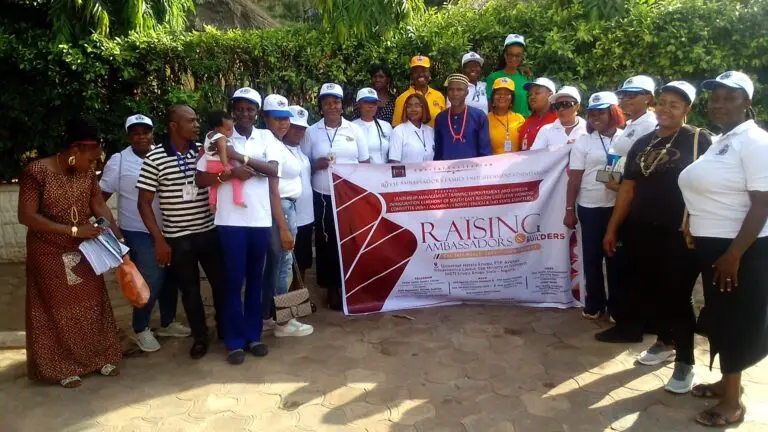
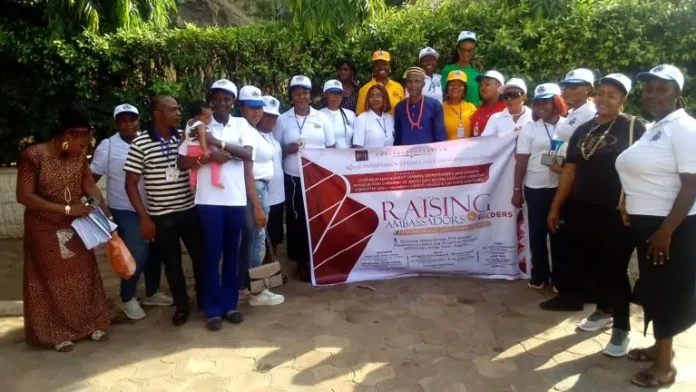
The Royal Ambassadors Family Enlightenment Foundation (RAFEF), an NGO, has started an empowerment programme to arrest poverty and hunger in women and youths across the country.

Its Director-General, Amb Jonathan Okwudiri, made the declaration on Sunday in Enugu at the inauguration of the Southeast Region Executive Working Committee of the NGO.

Okwudiri added that the NGO had kicked off its correctional service advocacy nationwide by visiting Afikpo Custodial Centre in Ebonyi.

It effected the release of inmates who committed minor offences and required payment of little fines and those requiring legal representation.

National growth LS

“We shall do same in Enugu and Anambra states and empower those released with gainful skills to support societal growth,’’ he said.

Okwudiri explained that the NGO would be partnering with the 36 states of the federation, the Federal Capital Territory and the 774 council areas in the country to execute the empowerment.

He added that the NGO was poised to become the voice of millions of voiceless women and youths who needed to be heard and given hope of a better tomorrow and a prosperous life.

“It is unfortunate and very alarming that women and youths are mostly neglected in the workspace in Nigeria today.

“Our statistics showed that Nigerian women and youths were being used and dumped and mostly not carried along for positive impact on society.

“This has made many women and youths to lose their focus, talents, skills and potentials, ending up on the streets as touts and hooligans.

“RAFEF has come to serve humanity as a sign of hope; a new beginning; transformation; power; importance and a transmitter of wisdom and authority to women and youths,’’ he said.

Okwudiri stressed that the NGO would train youths in modern digital skills, create entrepreneurship opportunities and ensure their skills and educational development.

In a goodwill message, Controller of Corrections in Enugu State, Mr Nicholas Obiako, said the correctional service would partner with RAFEF since the mandates of both organisations were similar and complementary.

Obiako was represented by an official of the correctional service, Mr Hilary Chukwu.

He called on the NGO to partner with the correctional service in providing training materials and equipment in skills workshops and help with starter-packs for inmates trained, rehabilitated and released.

In an address of welcome earlier, Mrs Ngozi Chukwudimma, Zonal Director of RAFEF Southeast, said that repositioning youths and women through skills and other forms of empowerment would go a long way to reduce crime. (NAN)

By Stanley Nwanosike

NDLEA arrests India-bound passenger who excreted 80 wraps of cocaine

0

The National Drug Law Enforcement Agency (NDLEA) arrested a Delhi, India-bound passenger at the Murtala Muhammed International Airport, Ikeja on March 31 for ingesting 80 wraps of cocaine.

Its spokesman, Mr Femi Babafemi stated on Sunday in Abuja that the passenger was to board a Doha-bound flight en-route Delhi using a Liberian passport with the name: Carr Bismark, when he was arrested.

A body scan on the suspect revealed the ingestion of the illicit drugs, he explained.

Babafemi added that preliminary checks showed the passenger’s real name to be Freeman Ogbonna.

National growth LS

The NDLEA placed the passenger under observation and in a short while he started to manifest signs of discomfort.

“Obviously choked by the volume of illicit drugs in his stomach and another substance taken to hold back excretion, the suspect soon began to retch, vomited and excreted wraps of cocaine simultaneously.

“The suspect who claimed he was recruited into drug trafficking by one of his relatives, eventually passed out a total of 80 wraps of cocaine.

“He vomited or excreted the drugs, weighing 889gms over a period of four days.

“The great risk almost took his life.

“Ogbonna said he was given the drugs to swallow at a hotel in Ikeja with a promise of N300,000 reward if he successfully delivers the consignment in India,’’ Babafemi stated.

Also on April 3, the NDLEA arrested a drug mule at the airport on his way to Oman.

Its operatives discovered a false bottom in his backpack and on the sides concealing illicit drugs and also swiftly moved in on a man who accompanied the suspect to the airport.

The second man was later discovered to have been the one who recruited the passenger to traffic the drugs.

“The suspect said he returned from Dubai some years ago, but still had a valid residence permit on his passport.

“He claimed he was promised N1.5 million if he successfully delivered the consignment in Oman, while his recruiter, was to be paid N200,000.

“A charm was found in one of the passenger’s bags when they were searched and another was found on his person.

“The drug mule confessed that he travelled to Ibadan earlier where a cleric made the charms for him to evade arrest during the trip.

“Another charm was found on the recruiter who claimed the charms were procured at a cost of N70,000,’’ Babafemi added. (NAN)

By Ibironke Ariyo

Experts task FG on access to affordable, quality foods

0
Senate approves FG’s 2022-2024 external borrowing plan

Some medical experts have called on the Federal Government to intensify efforts to address the hunger in the country and ensure access to affordable and quality foods for healthy living of the citizens.

The medical experts made the call in interview with the News Agency of Nigeria (NAN) in commemoration of the 2024 World Health Day ( WHD) on Sunday in Lagos.

NAN reports the WHD is celebrated annually on April 7 to commemorate the anniversary of the founding of the World Health Organisation (WHO) in 1948.

The theme for 2024 WHD is: “My Health, My Right”.

National growth LS

This year’s theme was chosen to champion the right of everyone, everywhere to have access to health services, education, and information, as well as safe drinking water, clean air, good nutrition, quality housing, decent working and environmental conditions, and freedom from discrimination.

Speaking, a Consultant Cardiologist, Dr Ramon Moronkola, said to ensure a healthy living, food should be taken in a right proportion of both quality and quantity.

Moronkola, who works with the Lagos State University Teaching Hospital (LASUTH), said there was amount of food that the body needed to sustain growth and development both in children and adults.

According to him, access to good quality balanced diet is key to health of the citizens, saying that the government should endeavour to increase the purchasing power to enable people afford good quality foods as well as balanced diet at all times.

“The WHO has mentioned access to good nutrition as part of the key components of WHD celebration.

“The quantity and quality of food effect brain development as a child grows; a child that is deprived of protein, can develop different kinds of malnutrition disease like kwashiorkor.

“Even for adults, the quantity and quality of food to be taken are very important. If an individual takes a balanced diet with more intake of fruits and vegetables in right proportion, it helps to prevent diabetes, hypertension and even development of cardiovascular diseases.

“And it is very important to talk about this because the economic hardship we are seeing recently is really making it difficult for people to have access to good nutrition. People don’t have access to food because food is expensive.

“Is it someone that has not been able to afford the basic food, that will now be talking about ensuring consumption of fruits and vegetables?.

“So, the government should be bordered about the low purchasing power of the people and seek for ways to increase it so that people can afford good quality meals.

Moronkola, therefore, urged the government to ensure that all supports given to the farmers were properly utilised.

According to him, the government should ensure that farmers have access to good seeds and products that will yield abundant harvest in terms of quality and quantity of the produce.

“Government has a role to play in ensuring that food is available.

“Government will do this by ensuring that wherever the food is coming from, be it from the farm, it should be able to intervene.

“Because the health implication is that when people develop infections and diseases from abnormal food intake, the country will end up having diseased population; which will invariably overwhelm our health system,” Moronkola said.

Speaking, a Medical Imaging Scientist, Dr Livinus Abonyi, said that terrorism and poor regulated economy were the threatening factors to achieving food security in the country.

Abonyi, a Lecturer at the Lagos State College of Medicine, said the economy has been poorly regulated, which he said, has resulted to ineffective management of the Nigerian financial system.

This, Abonyi said, has led to the free fall and near worthless value of the naira which has led to uncontrollable inflation.

Abonyi said: “To ensure food security in a vast and endowed country like Nigeria requires addressing two key factors ravaging the system.

“Major factors are terrorism and armed banditry. This particular factors are responsible for sacking most farmers from their farmlands, while others were killed and could not tell the story by themselves.

“Another crucial factor is the ineffective management of the Nigeria financial system.

“The cost of transportation is currently a factor in the movement of goods and services in Nigeria.

“It, therefore, implies that movement of farm produce where farmers have weathered the storm to farm, against the threat of terrorists, kidnappers and bandits, has become a debilitating challenge”.

He decried that high cost of transportation was responsible for the hike in the prices of food commodities across the country.

He emphasised that the solution to the hunger and other challenges in the land depended on restoring security of the country.

According to him, there is no justification for government’s intervention in form of loan, fertilizer provision or inputs of any kind into agriculture when security of life and properties of those that would work on the farms cannot be assured.

“Security has to be ensured for the economy to thrive.

“Food production is a key component of the economy. If Nigeria is to depend more on importation of food products in order to feed the citizens, then, anarchy is considered inevitable,” Abonyi said.(NAN)

By Lillian Okoro

Minister urges swift investigation of Kogi massacre, resolution of communal disputes

0

Minister of Steel Development, Prince Shuaibu Audu, has called for swift investigation of Thursday’s banditry at Abejukolo and Agojeju Odo communities in Omala Local Government Area of Kogi.

Twenty-five persons killed in the attack, including two women and four children, were buried on Saturday.

Audu, a Kogi indigene also commiserated with the families of the deceased in a statement issued on Sunday in Abuja by his Special Assistant on Media, Mrs Lizzy Okoli.

The minister condemned the attack and enjoined the Inspector-General of Police, Mr Kayode Egbetokun and the governor of Kogi, Alhaji Usman Ododo, to take necessary actions to enhance security in Kogi communities.

National growth LS

He charged relevant agencies to intervene in disputes in communities to avoid a recurrence and to ensure that perpetrators of the Abejukolo and Agojeju Odo attacks were brought to justice.

“I appeal to the Inspector-General of Police to take swift action in investigating this crime to bring the perpetrators to book to serve as a deterrent to others.

“It is very important to resolve all issues that led to the unfortunate incident so that peace and normalcy can return to the communities.

“I also urge everyone to remain vigilant; be security-conscious, and to collaborate with security agencies and personnel.

“Report any suspicious moves you see around as this might help to prevent such atrocities,’’ he said.

Thursday’s attack was the second in the year in the community sending serious fears into residents.

A community member had alleged on Thursday that a running battle between militia groups in parts of Benue and some bandits led to the onslaught on the sleepy towns of Agojeju-Odo, Ajokpachi-Odo, Bagaji and environs.

“They destroyed farm produce with ease in an attempt to draw the communities into the conflict,’’ he said.

Retired Commodore Jerry Omodara, Special Adviser on Security to Gov. Usman Ododo said on Friday that the governor had ordered a thorough investigation into the incident.

“The killing of innocent and harmless residents of the community by alleged hired militiamen is very callous, unacceptable and condemnable,’’ he said.

Omodara said property; especially houses, vehicles, and crops were destroyed in the attack.

He called on people of Agojeju-Odo and neighbouring communities to remain calm as government and security agencies were on top of the situation.

Other accounts said the attacks were reprisals of alleged killing of six herdsmen in the Kogi communities. (NAN)

By Martha Agas

Government mobilises farmers nationwide for wet season farming—NAN survey

0

Government at all levels have started equipping farmers with agricultural inputs in order to facilitate this year’s wet season farming and improve yields, a News Agency of Nigeria(NAN) survey indicates.

Respondents who spoke with NAN across the country, said that such farm inputs would go a long a way in boosting food security and addressing food inflation.

Some of the stakeholders also expressed concerns on the rising cost of livestock feed and the urgent need to address the trend.

At the federal level, the Minister of Agriculture and Food Security, Sen. Abubakar Kyari, said the ministry was taking the lead.

National growth LS

Kyari said that the ministry would distribute 2.15 million bags of assorted fertilisers donated by the Central Bank of Nigeria (CBN) to Nigeria farmers.

He said that the fertilisers donated by CBN comprised UREA, NPK and SSP valued at over N100 billion.

“Well, we have been donated 2.15 million bags of assorted fertilisers from the CBN.

“We are in the process of taking possession of those (fertilisers).

“Hopefully, by this April, we will start the distribution of these fertilisers especially in those areas that wet season farming has begun,” he said.

Kyari also revealed that the ministry was set to receive 500 tractors assembled by the John Deere Group to improve mechanised farming, increase production, and achieve food and nutrition security.

He said that the initiative was aimed at catalysing farming activities and fortify food and nutrition security in line with President Bola Tinubu’s emergency declaration on food security.

Kyari reaffirmed the Federal Government’s commitment to improving food and nutrition security through mechanisation.

He said that the tractors would be accessible, available and affordable for small, large-scale, and cooperative farmers across the country.

In Edo, Dr Samuel Owoicho, the State Coordinator of the Federal Ministry of Agriculture and Food Security, said the ministry had concluded plans to distribute inputs to farmers ahead of the farming season.

Owoicho also disclosed that seeds and irrigation equipment were part of the inputs to be distributed to the farmers.

According to him, 11 local government areas of Edo have been selected to benefit from the support.

“The Federal ministry of Agriculture and Food Security will be unveiling the distribution of inputs to farmers first week of April.

“Farmers from 11 local government areas of the state have been selected already.

“Each selected farmer is to be given three bags of fertilisers at 50 per cent subsidised rate,” he said.

In Bayelsa, Mr Ebiye Kalaku, a senior official in the Ministry of Agriculture and Rural Development, said that the state government would soon provide farmers with inputs as support to cushion the effects of the current economic hardship in the country.

He listed the items to be distributed to farmers to include, cartons of agro chemicals, plantain suckers, bundles of cassava stem, and cartons of day old chicks.

Others were bags of poultry feeds, bags of fish feeds of different ranges, assorted edible tree crops, bags of NPK Fertilizer, packs assorted vegetable seedlings and economic trees.

In Delta, the All Farmers Association of Nigeria (AFAN) said it needed government to subsidise cost of fertilisers to boost food production in the state.

The State AFAN Chairman, Mr Richard Asenime, said that farmers were also in need of services of tractors for ease of cultivating their farmlands.

“It is no longer news that prices of fertilisers and other inputs have been impacted by inflation and as such, both federal and state governments need to support farmers to produce food this year,” he said.

According to him, farmers in the state have always enjoyed government support every year.

From the North-East, the Governments of Borno, Adamawa and Yobe states have reiterated their commitment to using agriculture to tackle poverty as their citizens recover from the insurgency.

In Borno, Gov. Babagana Zulum, said he had inaugurated 312 tractors and assured farmers of subsidised fertiliser.

In Adamawa, the Commissioner for Agriculture, Prof. David Jatau, said Gov. Ahmadu  Fintiri administration had approved N456m for the purchase of farm inputs to support small scale farmers for the 2024 farming season.

Jatau said that so far about 20,000 farmers had been registered for the intervention.

According to him, the support package included fertiliser, herbicides and improved seeds among others.

“A lot of changes and strategies have been put in place to support our small scale farmers this year.

“The government is introducing climate smart agriculture, which will boost production and revenue for the farmers.

“The improved seeds when planted would mature early and won’t be affected by drought or inadequate rainfall before harvest,” he said.

In Yobe, the Commissioner for Agriculture, Alhaji Ali Goneri, said the government would support 2,600 small scale farmers in the 17 local government areas of the state in the cropping season.

“We want to empower 15 farmers in each of the 178 wards in the state by providing them with a comprehensive set of agricultural inputs for crop development,’’ he said.

Still more, from Benue, Mr Thomas Unongo, the Director of Agricultural Services, State Ministry of Agriculture, said the ministry had made requisition on procurement of fertilisers and other farm inputs to the state’s executive council and was waiting for approval.

The director stated that procurement of fertilisers and other farm inputs involved processes that had already been initiated with the submission of memos to the council for approval.

He expressed optimism that the approvals would be out by next month.

According to him, Gov. Hyacinth Alia has a lot of interest in agriculture, and that is why he subsidised all farm inputs in 2023.

“The state government subsidised each input by 50 per cent; that is farmers paid 50 per cent while the state government paid 50 per cent,’’ he said.

In Plateau, Gov. Caleb Mutfwang promised to tackle insecurity to enable farmers go to their farms at all times.

He said that the current hardship in the country would only be addressed via farming.

“Let me encourage our people to go back to agriculture and as a government we will support this move.

“But there must be peace for people to farm, that is why we revived the Plateau Peace Building Agency and taken other measures that will guarantee the security of our farmers,” he said.

He said that in addition to the fertilisers, government had constructed 25 access roads from farms to markets across the 17 local government areas of the state to boost ease of movement of farm produce from the farms to the markets.

In Nasarawa, Mr Umar Dan’ Akano, Commissioner for Agriculture, said the government had  approved the clearing of 10,000 hectares of farm land at Jangwa and Agwatashi areas of Lafia and Obi Local Government Areas  for wet season farming to boost food production.

He said plan was on top gear to distribute farming inputs– fertilisers, herbicides, insecticides, seeds and seedlings to wet season farmers at subsidised rate to ensure food sufficiency.

According to the Agric Commissioner, the state government had earlier distributed 13 trucks of fertilisers alongside herbicides, insecticides, seeds, seedlings, knapsack sprayers among others at subsidised rate for dry season farmers.

On the high cost of animal feed, Aishatu Onuku, Director Animal Husbandry Services, Nasarawa State Ministry of Agriculture, said that farmers were being sensitised through extension services on the use of alternative feeds to reduce the cost.

In Kogi, the State Government said that all was set for the 2024 wet season farming toward boosting food production and security.

Mr Timothy Ojoma, the Commissioner for Agriculture, described Kogi as agrarian State feeding Nigerians with good food.

Ojoma said that Gov. Usman Ododo was a farmer friendly governor, who was very much interested in food production and security.

“We have concluded training for our enumerators for the forthcoming biometric capturing of all farmers across the state for useful data.

“We have mapped out for immediate intervention for 1, 200 hectare of land just for cassava production this year; we have done same for Palm trees and Cashew,’’ he said.

In Oyo State, the Commissioner for Agriculture and Rural Development, Mr Olasunkanmi Olaleye, said the state government had in the last three months, distributed maize and fish feeds to poultry and fish farmers.

Olaleye said that about 2,500 poultry and 1,000 fish farmers had so far benefited from the distribution.

The commissioner said that the government had procured assorted fertilisers, herbicides, maize, Soya beans and other farm inputs that would be distributed to crop farmers in early April.

He said that the beneficiaries of the government gesture did not need to be registered AFAN members but must be farmers.

The commissioner said that the state government had also earmarked lots of measures to assist farmers in order to bring down the cost of food and support farmers in the state.

“Recently the state government exonerated farmers from paying tax on farm produce in the next six months among others incentives given to farmers,” he said.

On its part, the Ogun government said it had a well-planned out programme of support for farmers in the state ahead of the 2024 planting season.

Mr Bolu Owotomo, the state Commissioner for Agriculture and Food Security, said the state government recently sold various inputs like fertilisers,  maize  and hybicides to farmers in the Ogun Central Senatorial District at subsidised rate.

He said farmers in the Senatorial District were made to pay only 50 per cent of the prices of the inputs that they bought at the Ogun state Agro-Economic Transformation programme.

“This programme will be replicated in the other two Senatorial Districts immediately after the Easter celebration because we have plans to empower no fewer than 2000 farmers,” he said.

In Bauchi, Mr Mohammed Salihu, Director of Agriculture, Ministry of Agriculture, said the state initiated viable agriculture transformation programmes to boost productivity through comprehensive farmer support services.

Salihu said the programmes were designed to accelerate crop and livestock production, encourage farmer enterprising skills, and value addition to create market for the produce.

He said the programmes were part of strategies adopted to enhance food security, address hunger and poverty among citizens of the state.

The director said the state government constituted a committee to gather inputs and make recommendations towards addressing food insecurity in the state.

In Jagawa,  Mr Hamisu Gumel, the media aide to Gov. Umar Namadi, said the state planned to expand the scope of wheat/rice cultivation programme from 150,000 to 300,000 hectres next cropping season.

He said the programme was designed to encourage agriculture productivity, uplift livelihoods and boost state revenue base.

Namadi said the programme was being implemented in collaboration between the state, Federal Government and the African Development Bank (AfDB).

“We also prepared to go for massive cultivation of rice, currently about 105,000 farmers indicated interest this coming farming season.

“The state is expecting between 150,000 and 200,000 hectares of rice cultivation alone,” he said.

He said that the bank would support rice farmers in the state.

According to Gumel, the state government will provide inputs to the farmers at 40 per cent subsidy in the 2024 cropping season.

In Gombe, Malam Inuwa Salisu, a maize farmer, said that early distribution of fertilisers and inputs would encourage farmers to produce more and mitigate post-harvest losses.

“It is important for the state government or any stakeholders to always provide inputs in good time.

“This will help us plan because inputs are expensive and many farmers now cultivate based on available inputs not the number of hectares you have.

“If you plan to cultivate five hectares and because of funds, you were only able to cultivate three in spite of having up to eight hectares of farmlands.

“When the government distributes inputs in July, many farmers may have concluded their arrangement and may have planted their crops,” he said.

In Ebonyi, Dr Ignatius Unah, the Chairman of All Farmers Association of Nigeria (AFAN), Ebonyi chapter, urged the federal and state governments to step up plans to provide farm inputs for farmers in the state.

Unah noted that provision of agro inputs for farmers would go a long way to avert impending food crisis.

“Well, we are yet to have the farm inputs from the federal and state governments.’’

He said that the Commissioner for Agriculture and Natural Resources, Mrs Nkechinyere Iyioku, had x-rayed the good plans to assist farmers with fertiliser and other inputs.

“We believe the government of Ebonyi has the plans to boost agriculture in the state.’’

On accessibility to farm inputs and fertilisers in the state, Unah said that the cost of the commodities in the market had made it difficult for them.

“We believe the government have plans to subsidise these inputs in order to overcome food security and poorest of the farmers will have the opportunity to put crops in the farm as well as access to agro chemical inputs like fertiliser among others,” he said.

In Enugu, the Commissioner for Agriculture and Agro Industrialisation, Mr Patrick Ubru, said the state would procure farm inputs and subsidise it for registered farmers in the state.

He said the office was open for farmers to register, which they did on daily basis.

According to him, the state is preparing for a pre-farming training for farmers to launch the state into new farming season and at the end of it, inputs like seedlings, fertilisers, sprayers and others will be distributed to the registered farmers.

He explained that the essence of the registration was to identify real farmers from political farmers.

“This is why we are doing validation of farmers after registration to ensure that the farm they said they have, belong to them; and during distribution, we go back to our database.

“In Enugu State, one of our major crops is cassava and we cultivated over 500 hectares of cassava for bioetheanol value chain development which Enugu State is a pilot for the project,’’ he said.

Ubru said there was need to encourage private individuals to establish feed mills to help push down prices.

In Lagos State, Mr Adewale Alade, Director, Agricultural Development Authority (ADA), said that the state government would unveil various aspects of urban farming to encourage residents to grow food during the raining season.

Alade said that urban farming was one the measures government was adopting during the planting season.

He said that government wanted every household to be able to cultivate one thing or the other.

He said a lot of preparation was ongoing for the raining season farming in the state.

“We are launching various aspects of urban farming where every household will be able to cultivate one thing or the other.

“The government is getting farmers prepared for the season by embarking on pre-season at the Institute of Agricultural Research and Training, Ibadan.

“We are preparing our farmers through various training on how to approach the season.’’

On distribution of inputs and grains to farmers, Alade said that Lagos was working with the Federal Government to ensure the inputs got to the right beneficiaries.

“We are working with the Federal Government; we have farmers already listed to benefit from various kinds of inputs like fertilisers, seeds, pesticides and others.”

“All these are on ground while the state government is also working on its part to support farmers in various aspects too,” he said.

On the rising cost of livestock feed, an agriculture consultant and co-founder of Corporate Farmers International, Mr Akin Alabi, said that to ease the cost of livestock feed, the government needed to prioritise the subsidisation of agro-inputs.

In Akwa Ibom, Dr Offiong Offor, the Commissioner for Agriculture and Rural Development, said that the state government had scaled up the quantity of farm inputs for distribution to farmers.

She added that more farmers would get farm inputs, depending on the crops of interest.

Offor said that the government had assisted farmers in land preparation by leasing out farm equipment at a reduced rate.

“Taking off the cost of land preparation and inputs from the farmers is a big relief, which will maximally increase production and profit margins,” she said.

Equally, in Rivers, the Agricultural Development Programme (ADP) reaffirmed the Federal Government’s commitment to food security through the National Poverty Reduction with Growth Strategy (NPRGS) programme.

The State Programme Manager,  Mr Vitalis Gbule, said that the strategy would guarantee bumper harvest in 2024 and beyond.

He said that as part of implementation of the poverty reduction strategy, the Federal Government recently distributed farm inputs to 250 verified farmers drawn from the 23 local government areas of the state.

‘’The input included seedlings, fertilisers, agro chemicals, fish feeds, poultry feeds and some hybrid poultry birds,’’ he said.

Meanwhile, the National Agricultural Land Development Authority (NALDA) said it had distributed agricultural inputs to farmers in Abia, Kebbi and Yobe.

NALDA’s Executive Secretary, Mr Paul Ikonne, said the inputs were aimed at assisting farmers to maximise crop cultivation for improved yields and increased food production.

He said that the beneficiaries in Abia and Yobe received NALDA-branded bags containing high grade fertiliser, herbicides and improved maize seeds.(NAN)

By Reporters
Experts urge FG to review 300% tariff increase

0

A power expert, Mr Chinedu Bosah, has urged the Federal Government to review the 300 per cent increase in electricity tarifflp recently introduced by the Nigerian Electricity Regulatory Commission.

Bosah, National Coordinator, Coalition for Affordable and Regular Electricity (CARE), made the appeal in an interview with the News Agency of Nigeria (NAN) on Sunday in Lagos.

According to him, a comprehensive review of energy policies will ensure affordability and sustainability for all Nigerians.

He, however, said that the 300 per cent tariff hike was not consumer friendly and therefore urged labour unions to open discussion on it with the government.

National growth LS

He also urged the government to reconsider its decision to raise gas prices, saying it would ultimately increase the cost of electricity for consumers.

Bosah emphasised the burden placed on Nigerian working-class families by successive policy decisions, noting that the hike could add to the economic challenges in the country.

According to him, private power companies and the government should find ways  to address challenges in electricity generation, transmission, and distribution.

Also, Dr Akinrolabu Olukayode, Chairman of the Customer Consultative Forum of Festac/Satellite Town, described the tariff hike as detrimental to consumers’ living standards.

Olukayode said that there was a need for proactive government investment in the power sector to improve infrastructure and service delivery.

He highlighted the challenges faced by consumers due to frequent power grid collapses and the reliance on expensive fuel for backup power generation.

Olukayode also condemned the increase in gas prices, arguing that it would further burden consumers already struggling with rising costs.

He suggested alternative policies, such as selling gas in local currency to boost revenue and alleviate pressure on consumers.

Olukayode called for a restructuring of the energy sector to allow regions/states more control over their resources.

The expert warned of the dire consequences of continued tariff hikes and called for measures to protect consumers from further economic hardship.

NAN reports that on April 3, Mr Musiliu Oseni, the Vice Chairman of NERC, Musiliu Oseni, announced the increase of 300 per cent electricity tariff for Band A consumers in the country

Oseni said the increase would only affect 15 per cent of the electricity customers in the country.

Accordingly, power distribution companies (DisCos) will be allowed to raise electricity prices to N225 ($0.15) per kilowatt-hour from N68 for urban consumers this month effectively from April 1. (NAN)

By Yunus Yusuf

Vice President arrives in Maiduguri for Eid-El-Fitr

0

Vice-President Kashim Shettima on Sunday arrived in Maiduguri ahead of the Eid-El-Fitr celebration, the News Agency of Nigeria (NAN) reports.

On arrival at the Muhammadu Buhari International Airport, Maiduguri, Shettima was received by the Borno Deputy Governor, Alhaji Umar Kadafur, members of the State Executive Council and party chieftains.

Meanwhile, security has been beefed up in Maiduguri and environs as usual during such festive periods.

The Eid-El-Fitr celebration marking the end of Ramadan fasting is expected to hold either Tuesday or Wednesday depending on the Lunar calendar heralding the new Islamic month of Shawwal. (NAN)

National growth LS

By Hamza Suleiman