Home Blog Page 1359

The Limits of Shock, By Dakuku Peterside  

0

In Nigeria, many policies that are supposed to catalyse economic growth end up making things worse and complicate matters for the citizen for whom these policies are designed to enhance their quality of life. Recently, two significant policies typify this: The Petroleum Subsidy Removal Policy and the floating of the Naira. Both policies are good and well-intentioned and would bring about substantial progress for people in the medium to long term. However, the reality is that the policies ended up having a devastating effect on the populace. Removing the subsidy brought untold hardship due to sequencing and implementation issues rather than the principle of doing it. Somehow, we are still battling to survive the impact of the Naira forex rate merger.

The problem was not the nobility of the intention, but something was wrong with these policies’ conception, delivery, and implementation. This is against the absence of a planned execution that appreciated the impact assessment of a singular action on the economic dynamics such that by solving one problem, we created a bigger one.

 The most recent 231% hike in the price of electricity units for Band A customers is another presumed good policy that might have an unintended adverse impact on the citizens. The main argument for a  cost reflective tariff must be distinct from that of subsidy removal, especially when the economics of the subsidy is yet to be proven, and the utilisation transition mechanism is not established or communicated. This policy may unleash hardship on the people, which is not the intention of the policymakers. To be clear, I  am an advocate  of cost reflective  electricity tariff because of the big picture, and I will give reasons for this, but I am afraid I have to disagree with the current government approach.

Based on the evidence of the roll-out of the policy and the realities of this new electricity regime, it is unclear how the determination of the bands works because the criteria of customers enjoying the constant 20-hour power supply threshold are unsubstantiated and bogus. Moreso  for a largely illiterate population . This makes the case for tariff increase somewhat confusing and not transparent as there is no measurable way for the average consumer to track supply relative to billing. The result is that people may end up paying for darkness. 

National growth LS

A gradual, sequential step to the ultimate destination of appropriate electricity pricing would  have delivered   a different result and minimise the adverse effect on the citizens.  I have gone through the website of the regulator ,If  what the  Nigeria Electricity Regulatory Commission (NERC) has released  is the master plan for implementing appropriate electricity pricing, it  lacks  details of the progression path to total transition to cost effective tariff regime and fall short of expectations in every respect. The result of this hurried announcement of a price hike, whether for band A, B, or even C clients, may lead to endless inflation and economic stress on the citizens. If we add the electricity price hike to the impact of petrol subsidy removal and spiralling food inflation, the average citizen faces existential shock. 

However, I support the appropriate electricity pricing because it is critical for ensuring the sustainability, reliability, and affordability of electricity supply in Nigeria and promoting investment, innovation, and economic growth in the energy sector and beyond. Appropriate pricing ensures that utilities can generate sufficient revenue to invest in the maintenance, upgrade, and expansion of electricity infrastructure to enhance the reliability and quality of electricity supply. It incentivises consumers to use electricity more efficiently, thereby reducing energy consumption. It attracts private investment and, most importantly, helps reduce the financial burden on the government of subsidising electricity prices, freeing up resources for other priority areas such as health care, education, and infrastructural development. For the above reasons, I advocate appropriate pricing and support any policy that will open our electricity regime for growth and development. I understand the importance of electricity in Nigeria’s emerging economic structure.

Nonetheless, I do not support the current policy approach because it is counterintuitive and counterproductive. It will produce a counter-effect to the intended goal. The reasons for my position are evident: first, between 1999 and 2015, Nigerian Senate documents show that Nigeria spent N2.74 trillion on electricity, yet there was no significant improvement in the generation or power delivered to homes and businesses. From 2018 to 2020, we spent N1.7 trillion on electricity, yet 43% of our population, according to the World Bank, needs to be connected to the national grid. The inference to draw is that the electricity power challenge is beyond money. 

There are obviously systemic inefficiencies and corruption that no one has bothered to address. Asking consumers to pay more will transfer the inefficiencies to the populace. Second, NERC says only 15% or 1.8m out of 12million  meterable customers  are under band A, which enjoys 20 hours of electricity per day, although  this may seem unrealistic. This band A must include factories, banks, telecom companies, hospitals, schools,  malls, commercial centres, and residential areas of high-net-worth individuals. This increase in tariffs will mean an increase in the cost of doing business by 231%.  Cost of school fees for private institutions will also go up by  a factor of 231%. The implication is that the businesses will transfer the cost to final consumers, mostly people experiencing poverty who are already undergoing a cost-of-living crisis. Third, this may dampen the real sector, and many businesses may close. Besides, demands for goods and services may drop. The competitiveness and profitability of Nigerian firms may be in jeopardy.

The current approach will create inflationary pressures, reduce the competitiveness of businesses both locally and internationally, impact the household budget that is already battered by harsh economic realities, lead to business closures and resultant unemployment, negatively impact economic growth by constraining production and consumption, and ultimately may exacerbate already tensed social and civil unrest. Policymakers should consider implementing measures to improve electricity generation, transmission, and distribution efficiency and address issues related to tariff structures, affordability, and subsidy mechanisms.

Nigeria has a vast informal sector – micro, small, and medium-sized businesses – that is our economy’s backbone. These businesses account for over 40% of our GDP and 70% of employment. These businesses include vibrant youth-led innovation hubs in informal urban settlements across the country, small service and creative firms scattered across our commercial centres, and burgeoning small industrial production businesses dotted in areas where access to electricity is better and stable. A draconian hike in electricity without appropriate time to plan and adjust may spell doom for these businesses, already spending a chunk of their merger revenue on private power generation.

What could  NERC have been done differently  to implement a better pricing system? NERC could have delivered a well-thought-through transition plan over a 6-to-9-month period with a model allowing everyone to see what an increased tariff and electricity supply would mean. This way, citizens can adjust, make alternative arrangements and plan accordingly. Transparent communication and stakeholder engagement are essential for building  trust and effectively managing potential social and economic impacts. The necessity of public sensitisation on matters that affect the livelihood of the majority must be balanced. There is a need to prepare the public before implementing any new policy that has a significant impact on livelihoods. Socio-economic reform must never be an ambush shock therapy; otherwise, the populace will react like an injured collective. NERC ought to match an electricity tariff adjustment plan with a post-reform plan to show how the government and stakeholders intend to mitigate the adverse impact of a hike in price and other critical reforms.    

Conceptualising and adopting sound economic policies is necessary for increased output in the electricity sector, but more is needed: any policy is only as good as its implementation and impact. Policy implementation can fail for three reasons: the absence of complementary measures necessary to make the policy effective, nonalignment with reality, and the inadequate capability of prevailing institutions and administrative systems to respond to changes. This electricity tariff hike, especially given our current socio-economic realities, is one policy that may hurt the people because of poor conception and disoriented implementation. Though a great idea, the timing, implementation approach and lack of complementarity of favourable institutional and economic capacity to mitigate the unintended effect of the hike in price may end up creating more significant problems than we already have. Inadvertently, we may be biting more than we can chew.
Afenifere and the progressive camp (1), By Abiodun Komolafe 

0

When sometime in 2008, the late Yinka Odumakin invited me to his 23, Sylvia Crescent, Anthony Village-office in Lagos, little did I know that a big surprise was waiting for me. A fine gentleman with a consistent commitment to the progressive bent, Odumakin had offered to pay me a visit but since it was unYoruba for leaders and elders to initiate the kind of visit he was envisaging, I opted for the opposite. And there I was, face-to-face, with the inimitable Odumakin and the irresistible Jimi Agbaje, aka JK. One thing led to another and I eventually became the pioneer Administrative Secretary of the Afenifere Renewal Group (ARG), under the national chairmanship of Olawale Oshun. 

Notable members of the prestigious Group included Ayo Afolabi, former Governor Kayode Fayemi of Ekiti State, Babafemi Ojudu, Bisi Adegbuyi, Oye Oyewumi, Lai Oyeduntan, Olutola Mobolurin, Ademola Oyinlola, Tokunbo Ajasin, Jumoke Anifowose, Biodun Oyebanji, Zacch Adedeji and Agbaje. Among others were Kunle Famoriyo, Ropo Sekoni, Charles Akinola, Adedamola Dada and the now-deceased former Deputy Governor Funmilayo Olayinka of Ekiti State (1960 – 2013), Dipo Famakinwa (1967 – 2017), Bayonile Ademodi (1952 – 2020) and, of course, Odumakin (1966 – 2021).

On March 26, 2024, Oshun clocked 74 years on the Planet Earth and a group of intellectuals in the Southwest under the leadership of Professor Lai Olurode converged on his Ijebu-Imushin country house in Ogun State to honour this man of many parts with a Roundtable Discussion on the Governance Crisis in Nigeria.  

Oshun has done well and he deserves to be celebrated. He has paid his dues but then, only an ungrateful heart would also say that God has not been good to this delightful ideologue of the All Progressives Congress (APC) bent. So, he has no reason to complain! Author, journalist and farmer, he’s a former Chief Whip of the Federal House of Representatives and prominent member of the defunct National Democratic Coalition (NADECO). He was also a close ally of the late MKO Abiola, the winner of the June 12, 1993 presidential election. As a matter of fact, Oshun was reportedly one of the few, prominent faces at the historic Epetedo Declaration on June 11, 1994. ARG under Oshun’s leadership produced the Development Agenda for Western Nigeria (DAWN) Strategy Roadmap which led to the formal inauguration of DAWN Commission by the Southwest governors in July 2013.

National growth LS

It is important to note that ARG was formed “with the stated intent of reuniting the feuding factions” in Afenifere and as “a necessary body to preserve the ethnic identity of the Yorubas.” If one may therefore ask, how smooth has the journey of hope which the Group brought to the Yoruba race with its formation been and how many of its founding philosophical objectives have been realized? Looking around today, the mainstream Afenifere has become more of a wrong noise than communal togetherness. While one faction, led by Reuben Fasoranti, is obviously looking in the direction of ‘E lo f’okan bale’, the other, headed by Ayo Adebanjo, is excruciatingly Obidient-compliant. Since the guardians of society are either dead or deep in slumber, Yoruba people have become deeply divided and that’s to our collective hurt! 

Beyond its sequined glint, Yorubaland had expected Afenifere to serve as a very powerful research institution like the Chatham House in London. Though ARG has done one or two things along this line, it is unfortunate that what we now have is more of interest-leaders and self-servers who have developed an unsatisfying urge for political slots for their children and concubines thereby leaving the children of the poor with no future! And they have succeeded in doing that! And nobody, except the Stone of Israel, can put an end to it!

In the days of Obafemi Awolowo, Adekunle Ajasin and Abraham Adesanya, the fear of Afenifere was the beginning of wisdom for any governor who wanted to access relevance in the zone, even beyond. How come that has faded away so soon? Where did the rain start beating the Yorubas and who are the giants and strongholds who want Yorubaland to not remain even stagnant but speedily moving backward? Has the Yoruba race arrived at the desired shore and what’s the opium keeping the actors in deep sleep? Is the Yoruba progressive corporate world the way it should be? What efforts has Afenifere made to reverse the pains of the grinding penury in the midst of stupendous plenty that has now sadly become the lot of Western Nigeria? In the sincerity of his heart, would Awolowo have abandoned his people to their fate without proffering urgent, comprehensive and soul-saving solutions at a time like this?

Agbonmagbe, now Wema Bank (1945)! Western Nigeria Development Corporation, WNDC (1949)! The Nigerian Plastic Company Limited (1954)! Western House (1958)! Western Nigerian Government Broadcasting Corporation, WNTV (1959)! Liberty Stadium (1960)! University of Ife (1961)! Cooperative Bank (1961)! Cocoa House (1964)! Lapal House (1978)! And many others! Whereas some leaders have been in charge of the destiny of Yorubaland for more than two decades with next-to-nothing to show for it, what Awolowo and his colleagues did with a shorter reign is what the children of Oduduwa have got as their inheritance till date. It is therefore unfortunate that successive leaders have only been feeding fat on the labour of these heroes past!

Also, time was when the media space was controlled by the Southwest. Now, the zone is almost nowhere to be found on the media map. In the Banking sector, not much is happening! In the political space, the North has not lost its grip; and, in Agriculture, it has lost touch. But for Amotekun, the security situation in the Southwest would have been worse! So, what’s happening?

If we want to talk about Afenifere, we have to go back to the treaty that ended the Kiriji War and the formation of the West African Students Union (WASU). The foundation of Egbe Omo Oduduwa by Awolowo was a spinoff of WASU and it put together a level of work which led to the manifesto of the Action Group, ‘Life more abundant’; and it made a difference because we’re not just talking about ‘Free Education’ which was the centerpiece but also the formation of the development financing institutions such as the WNDC, Western Nigeria Finance Corporation and Western Nigeria Housing Corporation, established in 1958. Yoruba leaders at the time followed the paths already embarked upon by the Brazilians. Of course, that’s why Brazil is not looking for foreign investments. Brazil established the Brazilian Bank for Sustainable Development (BNDES) in 1952 and it’s now about the most powerful financing agent for development in the world. Every year, Brazil recapitalizes BNDES with about 1% of her foreign earnings. That’s why the Bank, according to the Financial Times of London, can give loans with up to 50 years tenor. Impliedly, a capitalized WNDC or Cooperative Bank would have made Olokola Deep Seaport in Ondo State the best outside of Freetown.

Again, that a Yorubaman is Nigeria’s president does not mean the race should go to bed and start snoring! Already, the noise in town is that too many appointments are in the hands of the Yorubas and that it is because the president is of the Southwest extraction. So, let Afenifere visit Awolowo’s grave with a view to atoning for its sins before it’s too late. There and then, it should tie up with institutions like the Pension Fund to embark on serious capital projects that can give loans of up to 30 years tenor. But, wait a minute: what have been the roles of the Ministries of Regional Integration in the six states that make up the Southwest? If they have an agenda for DAWN, why can’t they go back to it?

*To be continued.

Osimhen inspires Napoli’s goal blitz in stunning comeback

0

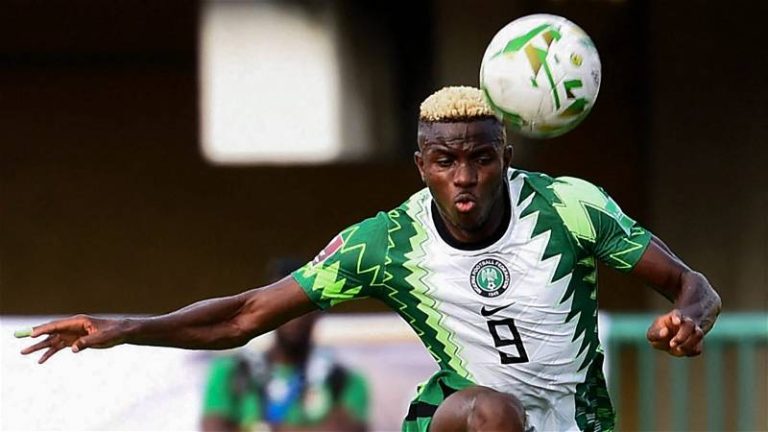
 Nigeria’s Victor Osimhen on Sunday inspired a stunning comeback win for Napoli as the visitors scored three goals within six second-half minutes to clinch a 4-2 victory at Monza.

The result kept alive Napoli’s slim hopes of a top-four finish in Serie A.

Milan Duric nodded in the opening goal for Monza nine minutes into the match, out-manoeuvring Napoli’s Juan Jesus to connect with a cross.

While Napoli focused on achieving an equaliser, Monza goalkeeper Michele Di Gregorio performed admirably to maintain his side’s advantage going into the break.

National growth LS

The second half was frenzied, with five goals coming in 13 minutes at the sunny Stadio Brianteo.

Napoli began their comeback 10 minutes into the second half, when Osimhen rose so high to nod in the equaliser that he landed on his face, requiring a brief moment of treatment before

continuing.

Two minutes later, Matteo Politano unleashed a perfectly executed left-footed volley from outside the box, finding the far right corner and leaving the stadium stunned by the display.

With Monza in disarray, Napoli secured their third goal in the 61st minute, when Piotr Zielinski unleashed a shot from distance that struck the underside of the bar and found the net.

Andrea Colpani demonstrated that Monza could also produce impressive goals by curling a shot into the corner a minute later to keep alive the home fans’ hopes.

Giacomo Raspadori scored Napoli’s fourth goal after 68 minutes, less than a minute after being substituted, by sending in the rebound from a save by Di Gregorio.

“They were spectacular goals but I like to underline Raspadori’s goal because he believed to the end.

“Strikers must have that instinct to attack the goal even when it seems unlikely that the ball will come to him,” Calzona said.

The defending champions are seventh on the table with 48 points, 10 points behind fourth-placed Bologna, who played out a goalless draw at Frosinone earlier on Sunday. Monza are 11th with 42 points.

Napoli still find themselves in a challenging position on the table, trailing both AS Roma and Atalanta who sit in fifth and sixth place with 55 and 50 points respectively.

Atalanta have two matches in hand before their clash at Cagliari later on Sunday.

Coach Francesco Calzona preferred not to discuss how the season could end for Napoli.

“We are forced to take it one game at a time because it doesn’t only depend on us.

“We have to keep winning and maintain some hope of finishing in the top spots.

“If we play like the second half, we can have hope but not if we play like we did in the first half,” he said.

Calzona said he had had a serious talk with the players during the break.

“During halftime we talked, we discussed the problems, tried to resolve them. The lads got the message but it’s not just today, I’ve been saying this for a long time,” said the coach. (Reuters/NAN

NDLEA arrests 319 suspects, seizes 4.7 tonnes of illicit drugs

0

The National Drug Law Enforcement Agency (NDLEA) in Kano State arrested 319 suspects and seized 4.7 tonnes of illicit drugs between January and March 2024 in the State.

The NDLEA Commander in Kano state, Mr Abubakar Idris-Ahmad, made this known in an interview with the News Agency of Nigeria(NAN) on Monday in Kano.

He said the suspects comprised of 14 females and 305 males.

Idris-Ahmad said the total drugs seized within the period under review is over four tonnes of illicit drugs which is made up of 2.3kg of marijuana, 2.4kg of Psychotropic Substances.

National growth LS

He said that opeartives also seized over five million pills of tramadol and 1.9kg of other dangerous substances.

According to him, in the three months, the command secured 33 convictions of individuals involved in drug trafficking and other drug related offences.

“We rehabilitated 26 drug addicts, processed 38 visa clearance and conducted 30 drug intergrity test for individuals and members of the state Emirate Council”

The commander added that during the period under review the command dislodged 39 illicit drug joints that were serving as hubs for drug activities in the state.

Idris-Ahmad assured residents of Kano of adequate measures to ensure peaceful and drug-free holiday during the forthcoming Eid-El-Fitr celebration.

“The command is committed to maintaining law and order during this festive period and to prevent the spread of illicit drugs in the community” Idris-Ahmad said

The commander reiterated the command’s commitment to create a drug-free society and ensuring the safety and well-being of the citizens of Kano.

“We will continue to work to dismantle drug trafficking networks, arrest perpetrators and prevent the spread of drug abuse in the state” Idris-Ahmad said (NAN)

By Ramatu Garba

Troops kill 6 terrorists as Lieutenant dies in ambush – DHQ

0

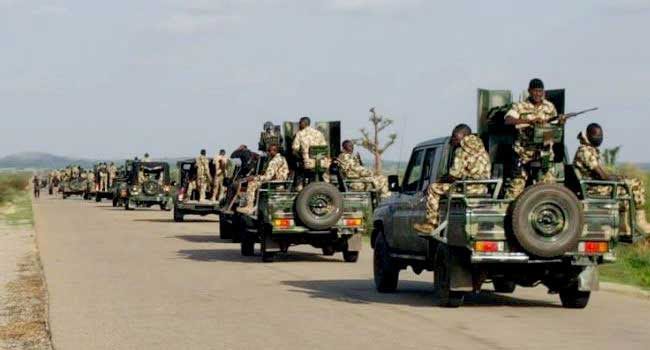
The Defence Headquarters has said that the Troops of  Operation Hadin Kai, on Friday, killed six terrorists, after an ambush, along  Buratai-Buni Gari road, Borno.

The Director of Defence Media Operations, Maj.-Gen. Edward Buba, made this known in a statement on Sunday in Abuja.

Buba said that while an army Lieutenant  died in the ambush, four other personnel,  who sustained injuries in action, were receiving treatment.

He, however, said the troops’ reinforcement pursued the terrorist to their hideout within the  Timbuktu Triangle and neutralised six of them.

National growth LS

According to him, troops recovered five AK 47 rifles and 103 rounds of the 7.62mm special ammunition.

“The remaining terrorist ran in disarray and the troops are in hunt of the remnant terrorist that fled the firefigt,” he said. (NAN

By Sumaila Ogbaje

Governor Ododo mourns death Of Prof. Yusuf Aliyu

0

Kogi State Governor, Ahmed Usman Ododo has mourned the death of Professor Yusuf Otaru Aliyu, Emeritus Professor of Veterinary Medicine and the Ohinoyi of Anebira in Zaria who died last Friday.

In a condolence message signed by the Special Adviser on Media to the Governor, Governor Ododo commiserated with the Ohinoyi of Ebira land, His Royal Majesty, Alhaji Muhammed Ahmed Tijani Anaje, the Ebira nation and his immediate family over the colossal loss.

The Governor called on the family of the late Professor Yusuf Otaru Aliyu to be consoled by the indelible footprint left by the late academician through the many lives he touched as a teacher and a community leader of note.

Born on the 14th of January, 1943 in Okene, Kogi state, Professor Yusuf Otaru Aliyu was a Professor of Veterinary Medicine at the Ahmadu Bello University, Zaira where he taught for several years before his retirement.

National growth LS

Governor Ododo prayed for the peaceful repose of the soul of the late Professor Yusuf Otaru Aliyu and for God to grant his immediate family the fortitude to bear the loss.

Professor Yusuf Otaru Aliyu died in Zaria at the age of 81 and has since been buried according to Islamic rites.

I am not quitting Labour Party

0

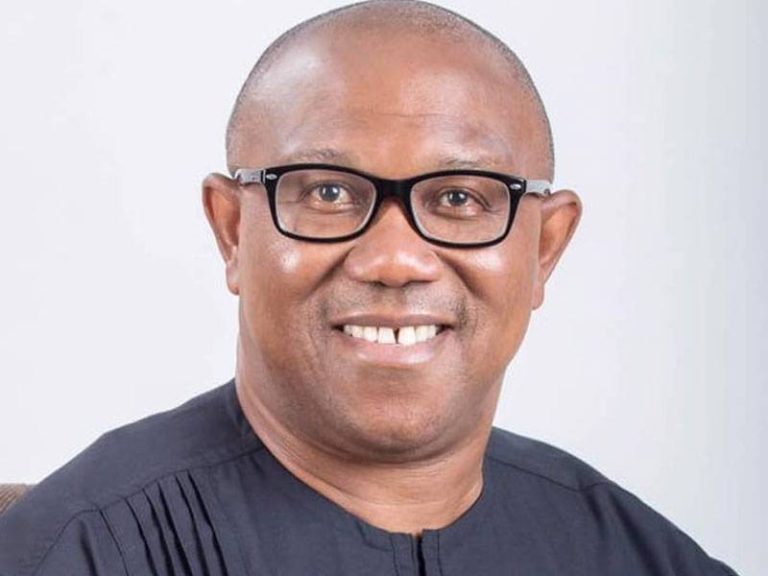
Mr Peter Obi, the 2023 presidential candidate of the Labour Party (LP), on Sunday, said he would rather work to ensure peace for the party

By Peter Uwumarogie

Mr Peter Obi, the 2023 presidential candidate of the Labour Party (LP), on Sunday, said he would rather work to ensure peace for the party to overcome its present challenges than leave it.

Obi stated this in Gombe in an interview with journalists after inaugurating a borehole he donated to Tike Ram Market in Pantami, Gombe State.

National growth LS

He said the rumour that he would leave was not true as he was more committed to the peace of the party.

He expressed optimism that the LP would resolve its challenges and forge ahead as one family.

“No, there is no such thing as leaving the Labour Party. I am for peace; I like peace. I believe we are one people.

“Our concentration should be on peace and I believe that we will resolve all situations,” he said.

On recent speculations of him running for the 2027 presidency with  former Kaduna State governor, Nasir El-Rufai, Obi said:  “Well, I’m more interested now in Nigeria’s success today than tomorrow.

“We are always concentrating on the election rather than what Nigerians are going through.

“My commitment is about Nigerians living in a better society, given a better life and that’s my concern,” he said.

On why he donated the borehole, the former governor of Anambra said he had been going round in the spirit of the Ramadan to support Nigerians, especially the poor to help cushion the impact of the current challenges.

“I’m here in Gombe and I came to Pantami market to help them in area of water supply that is the borehole I just inaugurated.

“You can  see the business here, all the rams and everything here but they don’t have water.

“We will support some individuals which we will do remotely and send them some little money.  About 100, that will be done.”

The News Agency of Nigeria (NAN) recalls that there  were  speculations that Obi might have started shopping for another political platform,  in spite of being guaranteed the LP 2027 presidential ticket  at its convention.

Recall that the NLC spokesman, Benson Upah on Sunday , said the NLC would not  stand in the way of Obi, should he decide to defect to another political platform.

Upah said: “The right of choice is available to Mr Obi. If he chooses to leave the party, that is his preference. We can’t sit in judgment over him on that.

“But if he chooses to remain, of course, Peter Obi is an asset any day. I rest my case on that,” he said. (NAN)

FG declares Tuesday, Wednesday public holidays

0
Senate approves FG’s 2022-2024 external borrowing plan

The Federal Government has declared Tuesday, April 9 and Wednesday, April 10, as public holidays to mark the Eid-el-Fitr celebration.

By Yahaya Isah

The Federal Government has declared Tuesday, April 9 and Wednesday, April 10, as public holidays to mark the Eid-el-Fitr celebration.

This is contained in a statement by the Permanent Secretary of the Ministry of Interior, Dr Aishetu Ndayako, on Sunday in Abuja.

National growth LS

According to her, the Minister of Interior, Dr Olubunmi Tunji-Ojo, who made the declaration on behalf of the Federal Government, congratulated all Muslim Ummah for the successful completion of the fasting.

Tunji-Ojo called on Muslim Ummmah to imbibe and practice the
virtues that entailed kindness, love, tolerance, peace, good
neighbourliness, compassion as exemplified by the Holy Prophet Muhammad (Peace be upon Him).

He urged Nigerians to continue in the spirit of unity to improve
and achieve peace and oneness in the country.

The minister wished all Muslim Ummah a happy Eid-el-Fitr celebration and prayed that the peace, blessings and favour of Allah be with everyone and the country. (NAN)

Family unveils burial plans for former Education Minister, Osuji

0

Professor Fabian Osuji, former Minister of Education from 2003 to 2005, will be buried in his home town, Umuoda Nguru, in Aboh Mbaise Local Government Area of Imo State, on Saturday, April 27, 2024.

Information about burial of the education icon, a Catholic Knight of the Order of Saint John, who holds the revered title of Dike Eji Ejemba of Mbaise, is contained in a statement released during the weekend by the family.
The family announced a series of activities ahead of the former Minister’s interment, beginning on Tuesday, April 23rd with a Requiem Mass at 5 pm at Holy Cross Catholic Church in Gwarimpa, Abuja.

The Mass will be followed by a Service of Songs/Night of Tributes at Evelyn’s Event Centre, Gwarimpa by 6.15pm.
The Funeral Mass will take place on Saturday, April 27th at 11am at St. Theresa’s Catholic Church Eziala na Umuoda, Nguru Nweorie, in Aboh Mbaise Local Government Area of Imo State.

Interment will take place immediately after Mass at Professor Osuji’s compound, while the funeral reception will be held at Central School Nguru Nweorie field.
The former Minister of Education died in Abuja on February 28, 2024, aged 82 years.

National growth LS

He was appointed Minister of Education in July 2003. In appreciation of his outstanding performance as a Minister, the Federal Executive Council (FEC) officially announced his death at the FEC meeting, a day after his death was made public. Osuji was also honoured with a minute of silence at the FEC meeting.

The Secretary to the Government of the Federation (SGF), Senator George Akume, later issued a Statement on behalf of the FEC, mourning Osuji, the former Minister.
Akume formally acknowledged, in the statement which he personally signed, that the late Professor Osuji played a key role in initiating policies that positively impacted the education sector of the country.

He described the late former Minister as a thorough-bred politician and an experienced scholar. ‘’His love for humanity and passion for the development of university education in Nigeria, through policy making, research and publications have made an indelible mark in the education sector,’’ Akume said.

Late Professor Osuji also served as Pro-Chancellor and Chairman of the Governing Council of the University of Nigeria, Nsukka (UNN), 2000-2003, Imo state Commissioner for Information and Social Development, 1994-1996, and Deputy Vice Chancellor of Imo State University 1987-1990.

Memories of a power writer, By Abiodun Adeniyi

0

Akpo Esajere (1954-2024) exited not in the bloom of youth at 70, but his influence outdid his final deadline. His legacy grips memories and imaginations, binding hearts and minds, and making his transition at 70 premature. Esajere was not arrayed in the trappings of wealth or swathed in the cloak of widespread fame, but he was a curator of values, a pen luminary, a classicist of the political reporting genre, puritanical about scintillating prose, and a beacon of professional honour.

“Check the library”, he would say to the young reporter at inception, just so a fact can be double-checked. The Guardian newspaper library was reputed as a quintessential repository of all contemporary knowledge, especially around fleeting matters. “Go and check again, so that we can have all the angles”, he would instruct time and again, not only to validate cues but to boost a piece. “You are a reporter with calibre” he would hail, if it appears you have been checking and checking and getting weary “I believe in your ability to get it right and complete” .

Then watch him draft an introduction to a story. I mean that spellbinding or compelling initial few words to welcome the reader in advance of details. Akpo could devour tens of offcuts (the loose sheets for drafting stories in days gone by), trying to get it right. Head immersed in the paper, he could do a first, with just two words and ignore it. He will try again and discard if still underpar. Then he would try another and then another until it jelled. This time, he will read it to himself, but to the hearing of an adjunct, just to be sure. Then he will proceed to the remaining paragraphs.

When the story reaches the next processing line, the famed The Guardian sub desk, a hub of literary excellence, where celebrated copy conjurers, maestros, that included, at different times, Rasaq Adedigba, Banji Adisa, Kayode Idowu, Eziuche Ubani, Julius Omokioja Eto, etc, were in wait, Akpo Esajere’s “crafts” (as he used to call such drafts), were often assured of an easier pass. To be sure, this sub-desk then hallmarked The Guardian’s strength. It was a springboard around which the paper’s prose prowess rotated. Smart reporters could hone their skills by comparing their drafts, with what the desk eventually makes of it the day after.

National growth LS

Often the transformations were awesome. The difference was always clear. The doctoring was regularly impressive. While your byline sat beneath the headline, a chunk of the prose was not likely to be yours-just the facts, therein. The men at that desk were sacrificial writers, committed to the preservation of a glorious paper’s house style, a clearing house of a sort, but raising some subtle classroom questions on intellectual property, about content and ownership. In academia, the original writer will ideally have to submit, re-submit and re-submit again until s/he gets it right if to compare. In the newsroom, however, there is no luxury of time. A back-and-forth is not thoughtful. The newsroom is a rapid room. There is a frantic race to keep apace, and then the thankless job of the subeditors, even though the enthusiastic reporter is thankful.

But back to Akpo Esajere. “I am going to interview Lagbaja Tamodu tomorrow. So, I will be in the library if anyone is looking for me”. He will announce: “I now have enough on him. He has some explanations to give” he would say afterwards, with a wry smile. Then read the interview when published and you will behold rounds of penetrating questions, some epistemic peppering, sometimes theatrical, but able to force out as many facts as possible from the interviewee, for readers’ benefit as Esajere’s priority. “Be concerned about your reader. Don’t leave them in doubt. Provide as much verifiable information as possible and let them make up their mind”.

That’s Akpo, the essential interviewer, easily one of the best in the newspaper industry in his heydays. Then compare his pre-interview session library research to present times. He would have had all the details he needed about you beforehand. He is now simply approaching you for an update. These times, reporters begin the interview session by asking “May we meet (know) you?” Goodness! Excuse me! It should not even be the case in the 21st-century world of information and smart technology deluge, where you could check for details on the go, via the phone before the interview if the physical library is at a distance. But see!

I remember a presidential candidate strolling into The Guardian newsroom, asking to meet Akpo. “You have been interviewing everyone, but me. Why have you not looked for me?” It turned into a prickly scene. “Me! Interview you?” Akpo retorted between an exclamation and a question. The aspirant was yet to know what was ahead of him, so he dug in, unfortunately. “Yes, why not? Am I not a human being? Am I not contesting to be president? Do you think I don’t have money?” “Who told you we interview people because of money? And my friend, aspirants do not come to us for interviews, like you have done. We will find out if we think you are qualified. The Guardian is not cheap”, Akpo explained, but becoming impatient. “Are you saying I am cheap, or not worth your pages? I am better than many of those you have interviewed!” “Can you leave, please? You can see I am busy” “Leave for what? Interview me, I said!” The man responded.

Akpo sprang up and raced to the security section to call for the ejection of the interview-seeking obvious political tenderfoot. Somehow, inimitable title Editor, Eluem Emeka Izeze emerged from his office, and resolved the performance, permitting a subsequent post-mortem. “You see what I have been saying” Akpo began. “Some of these people just take us for granted. Interview just like that? On the pages of The Guardian? We cannot do that. Let him go elsewhere” Akpo was an epitome of the paper’s philosophy. He was integrity personified, elegant in deliveries and robust in portrayals. He never suffered fools gladly, and neither did he fail to nurture. He was respectful, respectable, and never owamberish in appearances at events. He chose events carefully, believing that not all materials were fit for the pages of the newspaper.
“Ensure you read new things, to vary your language” he will counsel again, just so your word power can be spicily pied. He was not just a journalist and writer, but a teacher, a motivator and an exemplar in a writhing of writers. “Biodun, I see you are now a professor,” he said in what turned out to be our last telephone conversation until we met at the bosom of the Lord. “Keep it up”, he added, further to his guiding spirit.

The edge death has over humanity shall forever remain mystifying. You know when you arrive, but not when you will depart and how. Looks unfair, but you are still helpless, regardless. You cannot change it. What sometimes matters is what you do between arrival and departure. But because you do not know the time of departure, man is better off putting in a best, every day, just in case. Akpo did his best, by being one of the best political journalists the nation has ever produced. The reason he will repeatedly be remembered as a first-rate writer, a sculptor of words, weaved into meanings, worthy enough to tickle, to tip-off the intellect, in the manner in which the mind will ever be appreciative. Akpo was a rock around political journalism literati. He will be missed. Bye-bye, Editor.

  • Adeniyi, Professor of Communication, and Dean of the School of PostGraduate Studies, Baze University, Abuja, was a former The Guardian Political Correspondent.