Here are the top 10 stories making headlines across the country.
1. NLC insists on N250K minimum wage
The Nigeria Labour Congress (NLC) on Wednesday vowed to continue with the push for N250,000 minimum wage in the country.Read more
2. Rivers AG clarifies court judgment, says Amaewhule not declared Speaker
Rivers State Attorney-General and Commissioner for Justice, Dagogo Iboroma, has set the record straight on a recent court judgment, stating that the court did not declare Martin Amaewhule as the Speaker of the House of Assembly nor affirmed him and 26 others as members of the Peoples Democratic Party (PDP).Read more
3. ‘He is not a superhuman,’ Presidency reacts to Tinubu’s slip at Democracy Day parade
The presidency has reacted to an incident involving President Bola Tinubu during the Democracy Day event in Abuja.Read more
4. ‘Ongoing reforms will fix economy, not intended to hurt Nigerians’- Tinubu
In his second democracy day address to Nigerians on Wednesday, June 12, 2024, President Bola Tinubu has assured that the ongoing national reforms were not intended to inflict pain, but to “fix” the economy.Read more
5. Obi urges Nigerians to defend democracy
The Labour Party’s presidential candidate in the 2023 election, Peter Obi, on Wednesday, urged the country’s political leaders and the citizens to protect democracy jealously and uphold its tenets.Read more
READ ALSO:Top 10 stories from across Nigerian Newspapers, Wednesday, June 12, 2024
6. Labour Party charges Tinubu to make public offices unattractive
The Labour Party on Wednesday urged President Bola Tinubu to make public offices unattractive to promote the delivery of democratic dividends in the country.Read more
7. Fidelity Bank leads trading as Nigeria’s equities market gains N324b
Fidelity Bank was the most active stock on the Nigeria capital market on Monday as a strong positive sentiment led the bourse to gain N324 billion in the week’s first trading session.Read more
8. Four dead, 10 injured in Enugu auto crash
At least four persons died in a ghastly auto accident along the Enugu-Onitsha Federal Highway on Tuesday.Read more
9. Police kills two suspected IPOB members in Enugu
Police operatives in Enugu on Wednesday killed two suspected members of the Indigenous Peoples of Biafra (IPOB) during a raid on the group’s alleged camp in a forest in Igbo-Etiti local government area of the state.Read more
10. Messi to end career at Inter Miami but not retiring yet
Argentina superstar Lionel Messi has again expressed his profound love for the game of football, saying he is not retiring just yet.Read more
The post Top 10 stories from across Nigerian Newspapers, Thursday, June 13, 2024 appeared first on Latest Nigeria News | Top Stories from TVN.
Top 10 stories from across Nigerian Newspapers, Thursday, June 13, 2024
Concerns over unresolved corruption probes in Nigeria, millions spent without convictions
Unresolved corruption probes in Nigeria have remained a significant concern, begging the question of why millions of public funds are allocated to probes when there are no plans to convict offenders.
In Nigeria, probes come with a lot of theatrics: first the announcement of investigative panels, then the media rounds, photo ops, and press outings, with long-winding sessions running into months and years but never ending in indictments or prosecutions.
Not forgetting the huge sitting allowances often allocated to such probe panels, another avenue for graft and appeasing political allies—a case of “the more you look, the less you see.”
Some of the high-profile corruption cases involving top politicians and government officials, mostly initiated at the National Assembly, remain unresolved, leading to public frustration and distrust in the government.
Social critics believe that corruption probes are merely a means of appeasing aggrieved citizens. However, for many Nigerians, justice would mean seeing corrupt officials sent to jail.
A report recently released by the Centre for Fiscal Transparency and Public Integrity (CFTPI) through its Probes Monitor Portal showed that a total of 614 grand corruption probes were initiated by various administrations between 1999 and 2023. However, only three of these have been brought to a logical conclusion.
This huge gap, according to the centre, highlights the lack of accountability and transparency by successive governments, much to the detriment of the public good.
For instance, in the Petroleum Subsidy Scandal of 2012, billions of dollars were allegedly embezzled through fraudulent fuel subsidy claims. Investigations and arrests were initiated, but many did not lead to convictions.
In the Dasuki Gate scandal of 2020, former National Security Adviser Sambo Dasuki was prosecuted by the Economic and Financial Crimes Commission (EFCC) over a $2 billion arms fraud. The conclusion of this probe is yet to be seen.
Also, recall the probe of over N1.8 trillion in federal government interventions in the power sector since its privatization from 2012 to date by the Senate, the probe of the Nigeria Social Insurance Trust Fund (NSITF) over the spending of N17.16 billion ($40 million) in 2013, the investigation of the alleged diversion of N525 billion by a former Abia State Governor by the EFCC, and the probe of former minister Stella Oduah over the N255 million armored car scandal by the House of Representatives, among many others.
The challenge, according to Umar Yakubu, the Executive Director of CFTPI, is not only that these probes are never completed, but also that Nigerians are never informed of their status even when decisions are made.
Yakubu worries that by abandoning these probes and leaving the public in the dark, the government gives the impression that these actions are mere political theatre designed to placate the masses temporarily. He asserts that transparency and accountability are the cornerstones of any democratic society.
Without these principles, the very foundation of democracy is at risk. The lack of transparency in publishing the findings of these probes allows corruption to continue unchecked, as those who engage in corrupt practices feel emboldened by the lack of consequences.
Currently, Nigeria is gravely paying the price for corruption with a persistent economic downturn, unemployment, social injustice, poverty, and underdevelopment.
This is because funds that would have been utilized for the general good have found their way into private pockets.
Dr Otive Igbuzor of the African Centre for Leadership, Strategy and Development, insisted that corruption may never be overcome unless proactive steps are taken to entrench sanctions, sincere probes, sentences, and convictions.
He said, “The media has a great role to play in holding the government to account and promoting social justice, transparency, and accountability in society.”
“The challenge before us is what should be done to ensure that the probes are completed and acted upon and ultimately reduce corruption in Nigeria. I suggest citizen engagement and advocacy, media activism, developmentalist coalitions, participation in politics, and movements for change.”
He advocated sincere legislative oversights to ensure allocated funds are properly utilized, systems that expose corruption, and internal checks for every organization handling government money.
Although analysts attribute unresolved probes to judicial inefficiencies, political interference, lack of political will, or failure of anti-graft institutions, Prof Okey Ikechukwu of the Development Spec Academy warns that they are also forms of corruption.
He noted that the government must also begin to check the misapplication of public funds and the wrong prioritization of projects where funds are deployed to areas that do not address the immediate needs of society.
“For example, spending public money to deploy computers in a school where no teacher is computer literate or building a bridge in a community where only three people have motorcycles,” he said.
He described such situations as procurement corruption involving political allies.
Prof Ikechukwu also cautioned against the glamorization of corruption and ill-gotten wealth, warning that young people would always emulate what society prioritizes.
While Nigerians demand that agencies fighting corruption in the country wake up to their responsibilities, they await a time when probes will be completed and sanctions meted out to offenders.
Concerns over unresolved corruption probes in Nigeria, millions spent without convictions
June 12: Experts call for urgent reforms in Nigerian democracy, decry neo-liberal economic policies
After 25 years of civilian rule in Nigeria (since 1999), the entrenchment of the ethos of democracy in governance is still a far cry.
This is not unconnected with unfavourable policies and actions or inactions of some unpatriotic politicians, which have not only brought the economy to its knees but have adversely affected every average Nigerian, especially in recent times.
As the Nigerian government sets aside June 12 for the commemoration of Democracy Day, some economic experts have identified factors militating against democracy vis-a-vis the ideals of June 12 and called for immediate and intentional action from both the government and the people to tackle the menace.
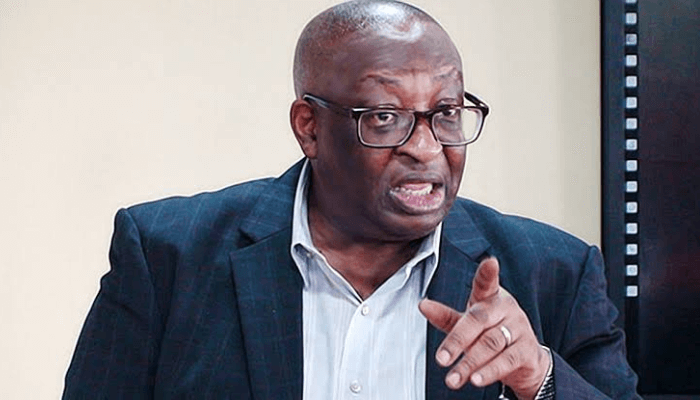
In the 15th Open Forum Town Hall meeting/National Dialogue on the practice of democracy in Nigeria in commemoration of Nigeria’s 2024 Democracy Day, the former Vice-Chancellor of the University of Uyo, Prof Akpan Ekpo, explained that democracy can never be deepened when the Federal Government engages in what he termed “palliative and neoliberal economic policies.”
Ekpo, who is a professor of economics, noted that the humongous amount the Nigerian government expended on palliative rice could have been used to lessen the burden of transportation, education, health, or any other social amenity that would positively affect everyone in society.
Presenting a paper on the theme: “Deepening Democracy In Nigeria: The Struggle Between Politics And Governance,” Ekpo said the struggle between politics and governance has, over the years, brought untold hardship to the vast majority of Nigerian citizens.
He regretted that the ruling class seemed not to know when politics ends and good governance begins, insisting that the country cannot deepen democracy and grow economically when it does not respect the rule of law, which produces better economic outcomes.
He explained that 133 million Nigerians are multi-dimensionally poor, 85 percent of the citizens have no access to the basic necessities of life, and the unemployment rate is at 38 percent, whereas only 10 percent of the citizens are benefiting from the vast resources of the country.
Prof. Ekpo further explained that there is nothing wrong with the government subsidizing any product or chosen natural resource, as bigger democracies do the same. He noted that the problem with the fuel subsidy in Nigeria was the fraudulent manner in which it was managed.
He, therefore, called for restructuring so that states would have more economic power.
His words: “What we need is federalism, give the state more powers. You cannot deepen democracy when you are building a palliative economy. In all the states they distributed rice to, how are we sure rice was their problem? The money the government is wasting on those things could provide cheaper transportation and education.
“You cannot deepen democracy by what I call neoliberal economic policies. Let me tell you, there is nothing wrong with subsidies if they are well managed. In bigger democracies, there is a subsidy; you go to their canteens and eat food at a subsidized rate. If a country, for example, makes a resource from petroleum, why can’t the people enjoy it? Just that the subsidy they were having in Nigeria was a scam, it wasn’t well managed.
“The elites in power do not feel what ordinary people, the poor masses, are feeling.”
In the same vein, another Professor of Economics and former Commissioner for Economic Development in Akwa Ibom, Emmanuel Onwiduokit, noted that if Nigeria is not restructured, the problems bedeviling it would not be resolved even in the next 100 years.
He attributed the economic crises in Nigeria to bad leadership, urging the people to be wary of recruiting leaders whose character and antecedents are in doubt. He emphasized that any Nigerian who seeks to occupy a public office must be educated and have a good track record.
“When we have people who didn’t go to school properly, who lack knowledge and competence, superintending over those who went to school, the result will be what we are having in Nigeria. If we don’t restructure Nigeria, the problem we have cannot be solved in the next 100 years,” he asserted.
Speaking on the volatility of the Nigerian economy, Prof. Onwiduokit said it was wrong for Nigeria to float its exchange rate when the currency is not convertible.
“When your currency is not convertible, you cannot trade with the currency in other countries; you cannot float your exchange rate. And when the industrial sector is weak, you cannot do much. If we don’t restructure Nigeria, the problem we have cannot be solved in the next 100 years.”
Prof Ekpo, for his part, noted that once a country whose currency is not convertible floats it, the currency will be devalued or depreciated, bringing unnecessary hardship to the people, as seen in Nigeria.
On subsidy, Prof Onwiduokit said there is nothing wrong with it as every country in the world subsidizes one product or another, noting that some countries even subsidize tobacco.
“The problem with the subsidy is its management, but you don’t throw away the baby with the bathwater. You can’t say because people were making money from it, and as a government, you didn’t do anything to tackle it. There is a difference between incompetence and corruption. When you are incompetent in office, you will not make optimal decisions; you don’t know what decision to take. We also have people that are so brilliant and competent but make certain decisions because of their inordinate ambitions—that’s corruption. But at the end of the day, the society suffers.
“That is why the recruitment process is very important. Any person that did not go to school properly, any person that is not trained or has a track record should not be allowed to occupy any government position at any level. Development is what will bring about improvement in the quality of life of the people.
“The people are also the problem because they celebrate mediocrity. Somebody steals money, and they give him a chieftaincy title and elect him into office. How do we grow as a country?”
He noted that what will save Nigeria at this point is an intellectual revolution that would make the people mentally alert, conscious, and able to ask questions and ensure that the right people are elected into public offices.
“I said what will save Nigeria is revolution, not necessarily holding guns, but having the knowledge to ask questions—an intellectual revolution that will make the people focused and resist all forms of bad governance,” he said.
On his part, Prof. Amaziah Umanah noted that democracy in Nigeria is undermined, and political parties are seen as individual belongings.
“It’s only in Nigeria that you see governors appointing chairmen of councils, councillors, paramount rulers, chiefs, among others. Is that democracy? Is that governance?” he queried.
Senator Emmanuel Ibok Essien, the Chairman on the Occasion, observed that though politics and governance are interwoven, the two should be separated for the overall good of the citizens.
Ibok Essien, who is the Chairman of the Pan Niger Delta Forum (PANDeF), said the essence of governance is for the public good. Irrespective of the offices that the political class occupy, they should aim to satisfy the interests of the people.
A journalist and public affairs analyst, Emem Nkereuwem, said for democracy to be fully entrenched in Nigeria, citizens should be intentional in having a government that will have the capacity to look beyond the present to future development. He added that the recruitment process is paramount in the deepening of democracy.
On his part, Donald Ekere said Nigeria needs a ‘deliverer’ who has four basic qualities: strength of character, integrity, compassion, and intellectual sophistication to “think outside the box and be able to give us a political system that would solve our problems.”
“Look at Rwanda, Mali, Argentina, etc. The inflation in what they have achieved in three months, the current democracy in Nigeria has not achieved in one year. In three months, the inflation rate, which was thirty percent, is now down to fifteen percent,” he added.
The founder of the Open Forum Initiative and Convener of the event, Citizen Matthew Kofi Okono (MKO), said leaders should understand that politics is over and it’s time for governance, urging them to replace the ‘Nigerian factor’ eating deep with the ‘Nigerian dream.’
June 12: Experts call for urgent reforms in Nigerian democracy, decry neo-liberal economic policies
Edo to pay workers’ salaries June 14
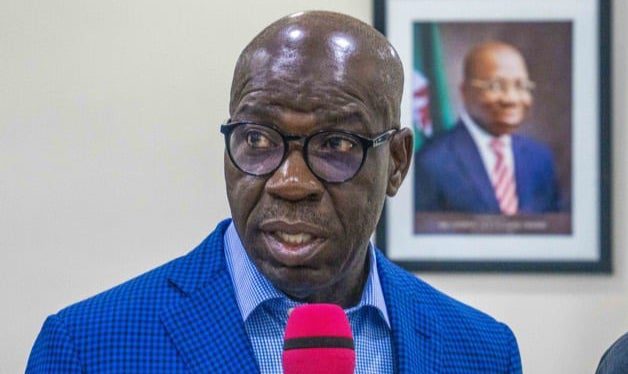

The Edo State Governor, Godwin Obaseki, has said that the state government will pay government workers salaries on June 14 ahead of the Sallah celebrations.
The governor said this during the inauguration of the state secretariat complex on Wednesday, in Benin City, the state capital.
The governor, who recently raised the minimum wage in the state from N30,000 to N70,000, said, “I have heard all the accolades about the minimum wage. I assure the workers that it is not a fluke. We are a very deliberate government that sits back to do our work. You know that for the seven and a half years since we came into office, we have paid salaries on the 26th of every month.
“In cases where we have holidays, we pay our workers before the holidays so they have money to celebrate. In that same guise, we will be paying the salaries for June on Friday, 14th of June, ahead of the sallah celebration to enable you to have a good sallah.”
All rights reserved. This material, and other digital content on this website, may not be reproduced, published, broadcast, rewritten or redistributed in whole or in part without prior express written permission from According.
Contact: [email protected]
FCTA to reduce maternal, infant mortality
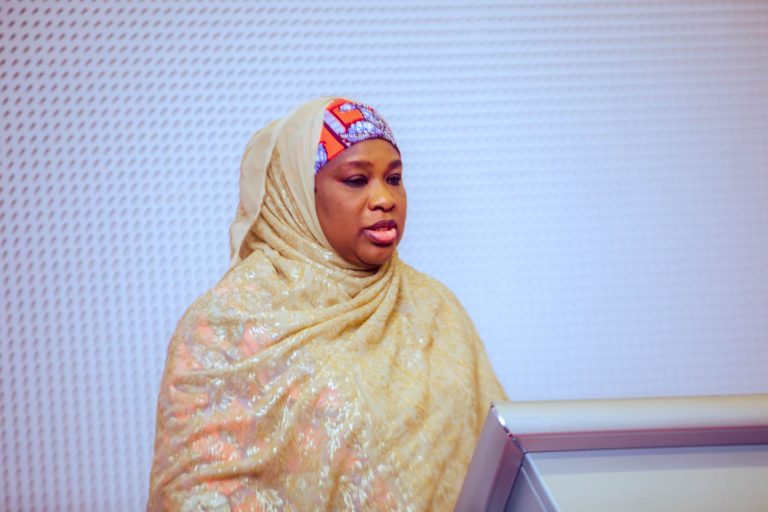

The Federal Capital Territory Administration has declared zero tolerance for infant and maternal mortality.
The FCT Minister of State for Health, Dr Mariya Mahmud, who was represented by the Mandate Secretary, FCT Health Services and Environment, Dr Adedolapo Fasawe, emphasised this at a medical outreach with the theme: “Renewed Hope Medical Mission,” held in Kuje Area Council of the Abuja on Wednesday.
The United Nations Children’s Fund’s latest data showed that Nigeria records 107.2 infant deaths per 1,000 live births.
Fasawe stated “The truth is health care is essential to life. If we build all the roads and we don’t have good health care, we can’t enjoy the roads. We are thinking of the human development index, the social determinant of health, and the physical determinant of health and saying health is not just the absence of disease, it is your total well-being, that’s why today, we have six departments. We have the department for antenatal care for pregnant women, general outpatient care, paediatrics, we have dental care, and we also have health insurance that will guarantee that even after today, you continue to have access to everything you’re seeing here.
“The thrust of this government is to renew hope and when we see programmes like this, it is to renew hope. We also want to thank the people of Kuje for their cooperation.”
Fasawe said the government was leaving no one behind in the campaign for improved health care.
“We don’t care about your party or religious affiliation. I want to reiterate that the government of President Bola Tinubu is committed to improving health indices. It is not acceptable for a pregnant woman to die because of complications. It is also not acceptable to us for a child to die at birth. That’s why there are over 360 healthcare centres in the FCT to give healthcare.
“We also have a food and nutrition session where when we see patients, we can identify malnourished children. We don’t only teach but we demonstrate, we have free HIV testing centres and a follow-up centre as well. Despite what Nigeria is going through, with programmes like this, there is hope for the country,” she added.
Also speaking at the event, the Permanent Secretary. FCTA HSE, who represented the mandated secretary, Dr. Babagana Adams, assured of the HSE’s commitment to ensure a good health service delivery for the residents of the FCT.
I want to fight Joshua, says Mike Tyson
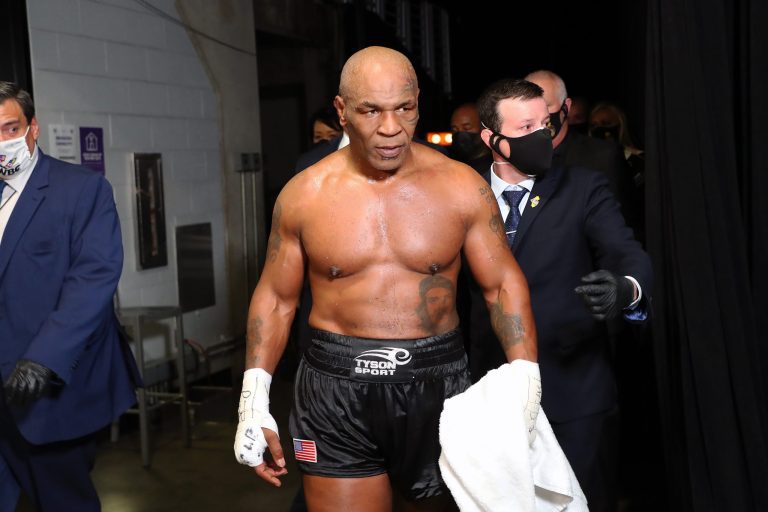

BOXING legend Mike Tyson is eyeing a shock showdown with Anthony Joshua.
The former undisputed heavyweight champion is set to return to the ring in November for a controversial crossover clash with Jake Paul.
Iron Mike has got himself in tip-top shape for his first foray to the ring since his Covid clash with Roy Jones Jr in November 2020.
And the International Boxing Hall of Famer, 57, has grand plans to share the ring with Joshua – albeit in a charity bout.
When asked about the prospect of sharing the ring with AJ for a good cause, he told TMZ, “I’m very interested.
“If doing that means we can have a bigger charity exponent, well so be it, I’m down to do that, too.
“I would love to (fight Joshua). That would be mind-blowing.”
Before he can think of a charity clash with Joshua, Tyson must first get through YouTuber-turned-boxer Paul – who will be 31 years his junior on fight night.
And former two-time unified heavyweight champion Joshua admits he has concerns for Tyson’s health.
During an appearance on The Jonathan Ross Show, the 34-year-old said, “He’s (Mike Tyson) older now.
“I pray that he comes out healthy. I think Jake Paul because of youth – that’s the only thing.”
The booking of Tyson vs Paul sparked outrage in the boxing community, with fans publicly venting their disgust at the latter.
But Joshua, surprisingly, is a fan of Paul’s gimmick-driven fights.
He said, “I personally think it’s really good.
“I think the boxing hardcores, they don’t like it because they think, ‘Why are they disrespecting our sport?’
“But I think that person brings all these people into boxing which benefits everyone else. Everyone viewing helps.”
IBEDC disconnects Ogun industrial estate, others over debts
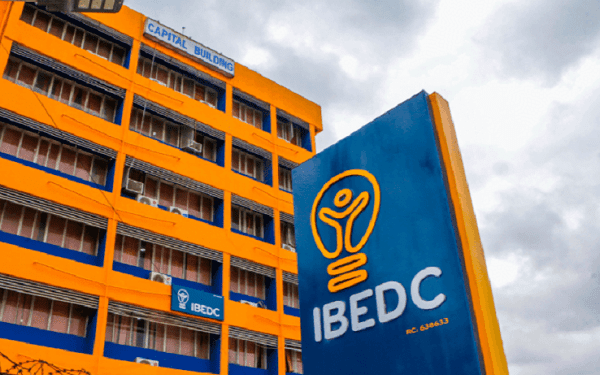
Ibadan Electricity Distribution Company has disconnected the Ogun Industrial Estate in Ota, Ado-Odo/Ota Local Government Area of Ogun State due to unpaid electricity debt.
The IBEDC also disconnected the Jebba Paper Mill in Ilorin, Kwara State and the Liberty Stadium in Ibadan, Oyo State, for failing to pay for the electricity consumed.
The power company disclosed that in a notice on its social media handles, revealing why the Band A feeders were without energy supply in the past week.
IBEDC spokesperson, Mrs Busolami Tunwase, confirmed the development to our correspondent, but she declined comments when she was asked to state the amount owed by the disconnected customers.
The According recalled that members of the Manufacturers Association of Nigeria had lamented that they were disconnected by the distribution companies due to their inability to pay the new Band A tariff of N206 per kilowatt-hour.
The manufacturers said they would not be able to afford the new tariff, which they consider too high.
While still having a pending appeal before the Nigerian Electricity Regulatory Commission, MAN cried out that the Discos did not hesitate to cut them off.
The Director-General of MAN, Segun Ajayi-Kadir, said over 100 industries had closed shops over their inability to pay the new rate.
He explained the situation as a case of an industrialist, who formerly paid between N8m and N9m for electricity and was compelled to pay N32m for power usage despite the prevailing economic challenges facing the Nigerian industries.
“More than a hundred manufacturers have been disconnected and this means that effectively, their productions have been disrupted.
“Sometimes our members will have to go and borrow money to be able to pay for electricity. We don’t have the cash flow and profitability,” the MAN DG said.
Recall that the IBEDC recently disconnected the popular University College Hospital in Ibadan, Oyo State, over N400m debt.
How to fix iPhone stuck


Experiencing an iPhone stuck at startup can be incredibly frustrating, leaving you cut off from your essential apps and contacts. JUSTICE OKAMGBA writes on the practical solutions to fix this issue
When Duke Kaka (not his real name), a 25-year-old footballer from Lagos Island, found his iPhone 12 Pro Max stuck in a seemingly endless loop of the Apple logo turning on and off, he was nearly caught off guard.
“The Apple logo comes up and goes off continually for almost 15 hours. The phone never switches on. I was restless,” he explained to The According.
The iPhone 12 Pro Max is indeed an expensive phone in Nigeria, with prices ranging from N425,000 to N600,000, depending on the storage capacity and condition.
This makes it unaffordable to many people due to its high cost, and Kaka just got him in February 2024.
Despite seeking advice from friends and watching countless troubleshooting videos, Kaka couldn’t bring his iPhone back to life.
“I needed to switch to my Android phone to perform my work duties,” he added, emphasising the disruption caused by his iPhone’s malfunction.
The trouble began when Kaka’s iPhone was at three per cent battery life. He made some calls before it powered off, then plugged it in to charge.
However, the next morning, his phone still would not turn on. “I woke up in the morning only to realize that the phone couldn’t switch on,” Kaka explained.
After attempting various fixes himself, Kaka took his phone to a technician.
“It was just a case of trial and error; he could not fix it.” As a last resort, Kaka considered restarting his phone using a laptop, but he had left his laptop at work. With no immediate solution in sight, he decided to wait until Monday to try his final option.
In a surprising turn of events, after leaving his phone unplugged for several hours, Kaka returned to find his iPhone miraculously back on.
“It was a crazy moment for me; I could not contain my happiness,” he stated.
Software engineer Emmanuel Ojukwu said in a chat with The According that when iPhone batteries are down for a long time, it can be challenging to get them back to full capacity.
This is because prolonged battery drain can cause the battery to degrade and lose its ability to hold a full charge, the full stack developer said.
Another iPhone user, who had experienced a similar situation, suggested trying a few troubleshooting steps first to see which would work.
He advised pressing the Volume Up button and releasing it quickly, then pressing the Volume Down button and releasing it quickly, and finally pressing and holding the Power button until the Apple logo appeared.
The user also mentioned trying to charge the phone, noting that if the battery charging logo showed up, it might indicate the need for a new charger.
If those steps did not work, he recommended another method: performing a reboot using a laptop.
Further, other factors can lead to this problem, including software glitches, failed updates, or hardware malfunctions.
Software glitches occur due to bugs in the operating system, conflicts between apps, or corrupted files.
Sometimes, a sudden power loss during a crucial operation or an unexpected system error can result in software issues that prevent the iPhone from booting up properly.
A phone technician, Adeniyi Salau, said installing updates is crucial for maintaining your iPhone’s performance and security. However, if an update process is interrupted—whether due to a low battery, insufficient storage, or a network issue—the installation can fail.
“If an update fails, it can mess up the system, causing the iPhone to get stuck on the startup screen. This often happens when updating to a new major iOS version,” Salau stated.
Hardware problems can also cause an iPhone to get stuck at startup. This might include issues with the battery, internal storage, or other important parts.
Physical damage, like dropping the phone or getting it wet, can affect how well the hardware works. Even normal wear and tear over time can cause startup problems.
If you find yourself in a similar situation with your iPhone stuck during startup, here are some steps you can follow to try and resolve the issue:
Reboot using a laptop
Connect your iPhone to a computer using a USB cable.
Select your iPhone on the computer.
Press and quickly release the Volume Up button.
Press and quickly release the Volume Down button.
Press and hold the side button until the recovery mode screen appears.
Keep holding the buttons until you see the recovery mode screen
A screen showing a cable and the iTunes or Finder logo will indicate that your iPhone is in recovery mode.
Choose to restore or update
When prompted, choose the “Update” option. This will attempt to reinstall iOS without erasing your data. If the update process takes more than 15 minutes, your iPhone will exit recovery mode. In this case, repeat the steps above.
Use a professional tool
Tools like iMyFone Fixppo and UltFone System Repair can help fix iOS-related problems, including the iPhone not turning on after an update.
Ondo man nabbed with eight skulls, human parts
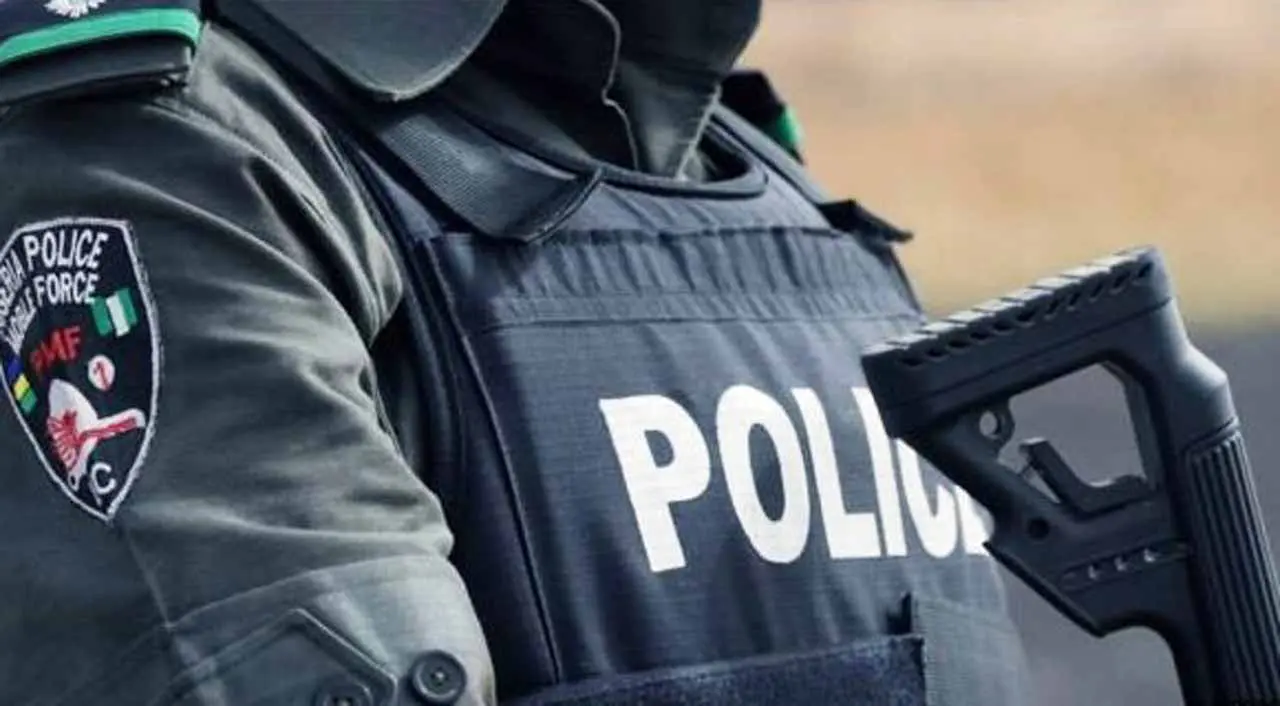

The Ondo State Police Command has arrested a man, Yusuf Adenoyin, for being in possession of eight human skulls in Isua, the headquarters of the Akoko South-East Local Government.
The state Police Public Relations Officer, Mrs Funmilayo Odunlami, on Wednesday, explained that the police personnel attached to the Police Safer Highway Patrol at the Isua/Epinmi checkpoint arrested the suspect while performing their lawful duty.
Odunlami said, “On June 10, 2024, at about 0800hrs, personnel attached to the Police Safer Highway Patrol at Isua/Epinmi checkpoint while performing their lawful duty flagged down a Nissan Salon car en route Akure. While the vehicle was being searched, one of the passengers took to his heels and the police pursued and arrested him.
“His load was searched and eight dry human skulls, fresh human flesh, and charms were found in a wrapped polythene bag concealed in a garri sack he was travelling with.
“The suspect, Yusuf Adenoyin, 31 years old, stated that he was going to supply the items to herbalists. He also confessed to having supplied seven human skulls before he was arrested.”
The police spokesperson also said an investigation was ongoing to apprehend other accomplices.
The PPRO also said it arrested another three persons for involving in robbery activities in Akure, the state capital.
According to her, the suspects are Uche Onu, Ekene Okorie and Celestine Eze who were arrested through intelligence. She noted that the suspects had confessed to the commission of the crime.
The PPRO said, “They (suspects) confessed to have participated in the robbery, one Scania truck with reg no: JJJ 701 YE valued at N12,000 and 61 50kg empty gas cylinders were stolen. A police constable was injured at the scene of the crime.
“Ekene Okorie who drove the stolen truck led detectives to one Emmanuel Okike who bought the stolen gas cylinders at the rate of N36,000 each totalling N2,256,000 which he paid into the account of Tochukwu Obi and Desmond Orjiakor respectively. The stolen Scania truck has been recovered from Benin City, Edo State while all 61 50kg empty gas cylinders were recovered from the receiver, Emmanuel Okike, at Lagos State.
“Francis Okafor is presently in detention at the SCID, Benin City in connection with another armed robbery case while efforts are ongoing to apprehend Ezeego who is at large.”
Odunlami said the three suspects would be charged in court at the end of an investigation.
Russia denies recruiting Nigerian students for Ukranian war
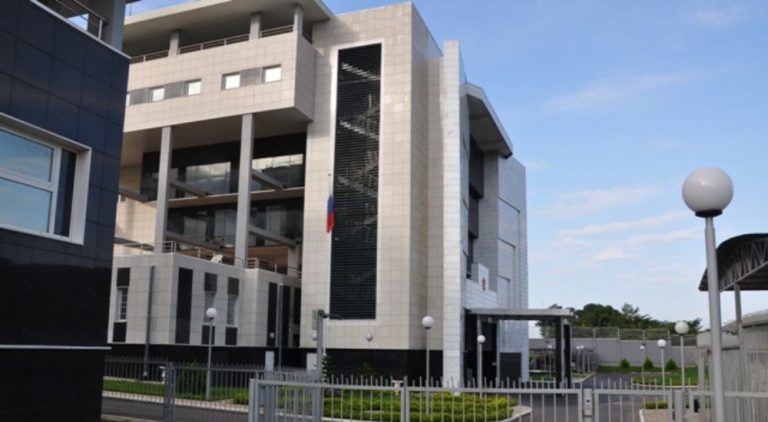

The Russian Embassy in Nigeria on Wednesday vehemently denied claims of coercing African students, particularly Nigerians, to participate in the ongoing war in Ukraine in exchange for visa extensions.
According to Bloomberg’s Monday report, Russia purportedly sought to enlist thousands of migrants and foreign students to reinforce its troops in the war against Ukraine, adopting tactics similar to those employed by the Wagner mercenary group.
European officials reportedly assessed this situation, claiming that the Kremlin was threatening not to extend visas for African students and young workers unless they agreed to join the military.
Yevgeny Primakov, Head of Rossotrudnichestvo, an organisation focused on spreading knowledge about Russia abroad, estimated that there are currently 35,000-37,000 African students in Russia.
But labelling the reports as fake news and entirely unfounded, the embassy emphasised the potential damage such misinformation could inflict on the educational cooperation between Russia and Nigeria.
According to the embassy’s statement, no association of Nigerian students in Russia has confirmed the allegations. Nigerian students reportedly face no difficulties in extending their visas while pursuing their studies in Russia.
The embassy commended the efforts of the Nigerian Ministry of Foreign Affairs and the Association of Nigerian Students in Moscow for debunking the false claims and reaffirmed its commitment to fostering friendship and cooperation between Russia and Nigeria.
The statement read, “The Embassy of the Russian Federation is compelled to emphasise that such news is not only false but also damages Russian-Nigerian educational cooperation by misleading numerous scholarship and grant applicants as well as their partners, who could be extremely concerned by such fakes.
“The Embassy states that Nigerian students face no difficulties in extending their visas while continuing their studies in Russia. Numerous associations of Nigerian students in Russia have not reported any issues in obtaining the necessary documentation to continue their stay in the country.
“The Embassy welcomes the official press release of the Nigerian Ministry of Foreign Affairs on this matter and expresses gratitude to the Ministry and the Association of Nigerian Students in Moscow for their efforts in debunking the fake news aimed at undermining the friendship and cooperation between Russia and Nigeria.”