Family and friends wept profusely as they gathered to pay their final respects to a 31-year-old bachelor who was reportedly killed by herdsmen in Ogbomoso.
Our correspondent gathered that the remains of Solomon Adigun, the 31-year-old bachelor stabbed to death by Fulani herdsmen in Ogbomoso recently, were laid to rest on Wednesday.
It was learned that Adigun was allegedly killed on his farm at Elemuye in the Surulere Local Government Area.
Sources disclosed that Adigun had earlier complained about the destruction of his father’s farm by the suspects, during which a cow reportedly died. He was thereafter killed on his farm.
TVN reports that the burial of the 31-year-old was held at the Ogbomoso Baptist Conference Cemetery at Aroje along the old Ilorin road on Wednesday.
The burial was attended by family members and sympathizers.
Family, friends, and sympathisers who were at the burial wept profusely as the remains of the deceased were committed to the earth.
One of the sympathisers, who asked not to be named, described the deceased as an easy-going person.
He urged governments at all levels and security operatives to assist the people of the area to curb future occurrences.
“His death is devastating not only because we were close but also because he was a hardworking, nice person dedicated to the service of God. I am still in grief.
“It is getting out of hand. This year alone, I have heard about three deaths caused by these herdsmen in Ogbomoso. The government should protect us.
“It is critical; the herdsmen now snatch okadas (motorcycles), destroy people’s farms with impunity, and attack people in their homes. Fulanis are killing a lot of people. Nigerians must rise before people resort to self-help,” he said.
Tears as 31-year-old man allegedly killed by herdsmen in Ogbomoso is buried [PHOTOS]
Tears as 31-year-old man allegedly killed by herdsmen in Ogbomoso is buried [PHOTOS]
![Tears as 31-year-old man allegedly killed by herdsmen in Ogbomoso is buried [PHOTOS]](https://tvn.ng/wp-content/uploads/2024/06/IMG-20240613-WA0002-768x384.jpg "Tears as 31-year-old man allegedly killed by herdsmen in Ogbomoso is buried [PHOTOS]")
Rotary renovates Ogun school building


Rotary Club of Agbara (District 9110 of Nigeria) has renovated a school building at the Agbara Grammar School in Ogun State as part of its effort to enhance educational opportunities for underprivileged communities.
The president of the club, Joshua Cole, said the renovation of one of the school buildings which cost over N30m, was to amplify educational access and quality for students from disadvantaged backgrounds.
Speaking at the inauguration of the three-block of classrooms at the Agbara Grammar school and a renovated primary health centre at Igbesa on Wednesday, Cole said the deteriorating and abandoned state of the school’s building prompted the club to embark on the renovation.
He added that the club mobilised resources and expertise to undertake comprehensive repairs, including changing the roof, replacing doors and windows, and installing a ceiling.
He explained, “Three years ago as director of projects, I was moving around the communities looking for projects we could do in that rotary year. Somehow fate brought me to this school. When I got here, I saw this building behind me in a very deplorable state. It was close to having just a carcass building and students were learning there.
“So, what we did was to discuss with the school management if they wanted our support to renovate it. And of course, they said yes, we had to do the writing by going to the commissioner for education who gave us approval to go ahead and do the renovation works. I went back to the club, and told them my intentions alongside my board, and they approved it.
“When we came in here, we had a budget of about N9.5 million. We were thinking it was going to be just a small one, but not knowing that there were no pillars, no beams, you know, the roof was in a very terrible state, so we had to take off the roof. We reinforced the building by bringing more and introducing more pillars. We brought in beams. And that cost us over 30 million.
“When we started, the economy was good. When we started, cement was still about five thousand naira. But halfway into the project, the cost of cement went high to about ten thousand naira. The cost of granite went so high. So if you have to put all that together, of course, manpower, and labour, it was a very strong one for us to manage, but we’re able to get it done.”
Cole, however, said the renovation of the school building was to provide a conducive environment for learning and growth.
He said the club also renovated the primary health centre in Igbesa to be able to provide qualitative healthcare to the people.
He reaffirmed the club’s commitment to empowering future generations and fostering positive change at the local level.
On her part, the District Governor of Rotary District 9110, Ifeyinwa Ejezie said the club remains steadfast in its mission to address pressing societal challenges.
She stressed Rotary’s dedication to the eight areas of focus, including basic education and literacy, health, and environmental sustainability.
She added that the club created a Rotary Community corp to look after projects and ensure they are well sustained and maintained.
“We are here to commission this large three block of classrooms and also commission the Igbesa health centre. All these we are doing is because we appreciate the fact that the government cannot do it alone and that Nigeria is a large country with over 200 million population.
“Government cannot do it alone. That’s why we join hands with the government in doing good around the world and touching our communities.
“Our theme for this rotary year is to create hope in the world. And how better to create hope in the world than what we are witnessing here today?
“This is what rotary is known for. We create hope all over the world, not just in Nigeria. Because Rotary is the largest and the biggest NGO you have in the whole world. And we have a presence in over 200 countries in the world. So in these 200 countries in the world, all we do is do good in the world. And that is why we are here today,” she stated.
Earlier in her remarks, the Deputy Governor of Ogun State, Engr. Noimot Salako-Oyedele commended the club for assisting the government in the area of education and health.
Represented by the vice chairman of Ado-Odo Ota Local Government Area Council, Sadat Animashaun, the Deputy Governor promised that the government would ensure the renovated facilities are well managed and put to use.
June 12: Why you can’t fail – Shehu Sani tells Tinubu
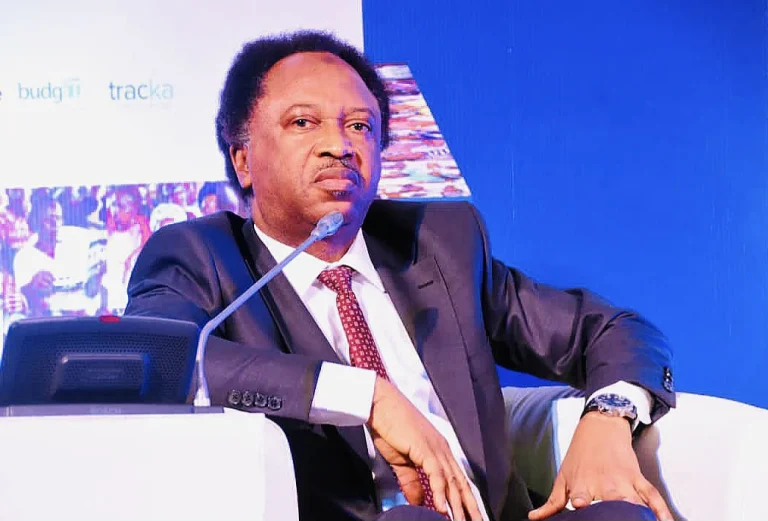
Former Kaduna Central Senator, Shehu Sani, has said President Bola Tinubu has a duty to succeed.
Sani said Tinubu’s failure means those who fought for democracy have nothing new to offer Nigeria.
He made this statement while speaking at a special dinner organised to mark Democracy Day at the State House Conference Centre in Abuja on Wednesday.
The former lawmaker also noted that national anthem alone cannot unite a nation.
Sani said only the ideals of freedom, justice, and equity can truly unite Nigeria.
According to Shehu: “Mr President, I will like to draw your attention to this fact and this truth, a national anthem cannot unite a nation, a national pledge cannot unite a nation, a constitution cannot unite a nation.
“A nation is united by the ideals of freedom, a nation is united by equity and by justice.
“This democracy was not a gift given to us by the military, it was not a lottery that we won, it was a product of struggle and sacrifice.
“Mr President, you have a duty to succeed. If you succeed, we will share your glory because you came from the trenches, you came from that struggle, you came from that period of struggle.
“Mr President, if you fail, they will say that those of you who fought for democracy have nothing new to offer Nigeria.”
June 12: Why you can’t fail – Shehu Sani tells Tinubu
Group backs Tinubu over moves to ensure LG autonomy
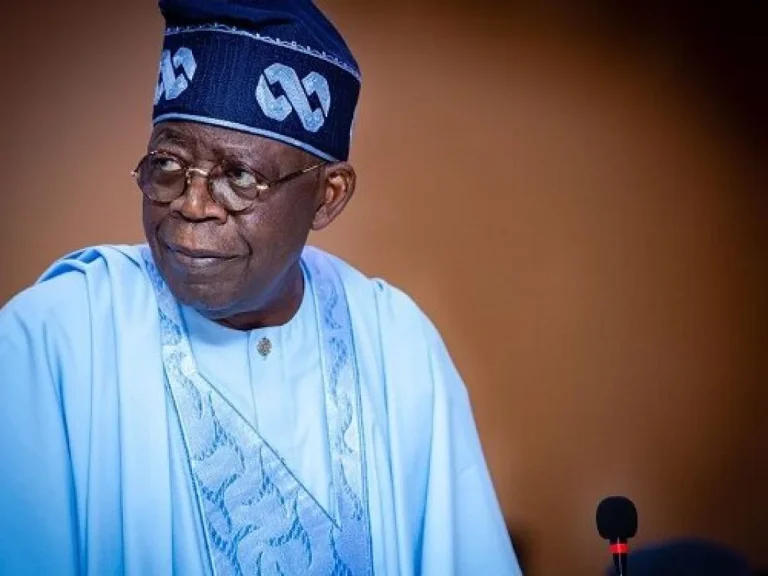
A northern Nigeria group, Arewa Think Tank (ATTK), has thrown its weight behind President Bola Ahmed Tinubu’s moves to ensure local governments enjoy financial autonomy in his administration.
President Tinubu recently criticised state governors for what he termed an overbearing influence on the administration of local government councils in the country.
Muhammad Alhaji Yakubu, the Chief Convener of ATTK, noted in a statement that issues of accountability and ineffectiveness hinder the growth of local council authorities.
He stressed that state governors must be held accountable for the lack of adequate development at the grassroots.
He said, “Arewa Think Tank is in line with President Tinubu for criticizing the governors who, during elections, rely on local governments to garner votes but, after the polls, focus solely on the state level.”
He added that they believe Tinubu is doing his very best to enhance the revenue base of the country, stressing that the governors must also be sympathetic and urgently consider the needs of the local people.
The group expressed their delight and support for the federal government’s suit against the 36 state governors before the Supreme Court, seeking the enforcement of full autonomy for local governments.
The group also criticised what it termed deliberate efforts to undermine the best brains in President Tinubu’s administration, starting with the Comptroller General of Customs.
Group backs Tinubu over moves to ensure LG autonomy
June 12: Governor Uba Sani orders release of 110 inmates
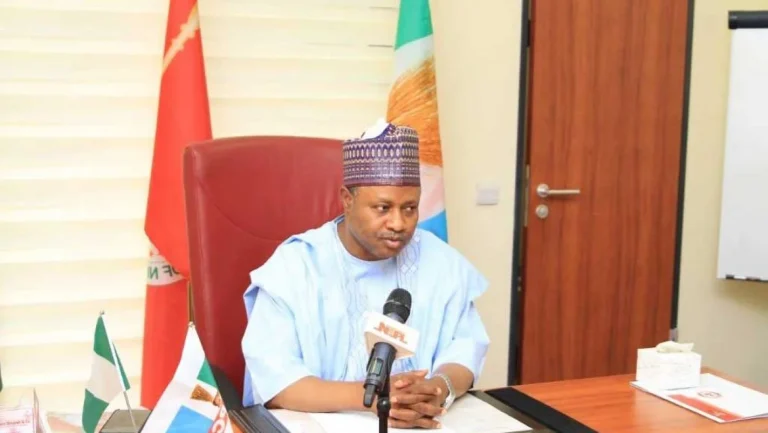
Governor Uba Sani has ordered the release of 110 convicts as part of his administrative powers and to mark the 2024 June 12 Democracy Day.
Senator Uba Sani, Governor of Kaduna State, in a statement paying tribute to the late Chief Gani Fawehinmi, SAN, GCON (of blessed memory), who devoted his boundless energy and legal skills to advocating for reform of the penal system, further expressed concern about overcrowding in correctional facilities and the fact that many citizens are languishing in such facilities due to their social and economic conditions.
“There are many citizens in such centers due to their inability to pay small fines. Some were also convicted because they could not afford a lawyer. We live in a society where the underprivileged do not have the financial wherewithal to vigorously pursue justice.
“Our administration is anchored on justice and fairness. We are committed to bringing succor to the poor, vulnerable, and underserved in Kaduna State. We have zero tolerance for discrimination. We strongly believe in the inherent goodness of every person. Everyone deserves a second chance. Persons in custodial centers can turn over a new leaf and contribute to the growth and development of our state,” he said.
Governor Uba Sani urged released inmates to reciprocate the government’s gesture by displaying good character.
“I encourage them to acquire one or two skills. Our administration is eager and willing to assist them in acquiring skills. It is not too late for them to be useful to themselves, their families, and society.
“As part of our interventions to support the operations of the Kaduna Custodial Centre, I have directed the installation of solar-powered streetlights and provision of operational vehicles. I have also instructed the Attorney General and Commissioner of Justice to collaborate with the Controller on other areas of need,” he added.
June 12: Governor Uba Sani orders release of 110 inmates
June 12: Stakeholders canvas strengthening of LGs, citizen participation

As Nigeria marks Democracy Day on Wednesday, stakeholders have called for the strengthening of local government administration to promote good governance and ensure effective and accountable democracy.
The call was made during a virtual event with the theme “June 12 Democracy Dialogue,” organized by The Office of the Citizen (OOTC), an initiative stemming from Pillar One of the #FixPolitics Initiative.
Speakers at the event included Obiageli Ezekwesili, former minister Frank Nweke II, Convener of Chess in Slums Africa Tunde Onakoya, founder of BudgIT Seun Onigbinde and founder of Community Life Project, Ngozi Iwere.
Other participants were Nigerian spoken word and performance poetry artist and author, Dike Chukwumerije, Sam Amadi of the Centre for Public Policy and Research, Sesugh Akume of Advocate for Good Governance, Anthony Ubani, the founder of Talkademy Joyce Daniels, and the Executive Chairman of Igbogbo-Baiyeku Local Council Development Area, Lagos, Olusesan Daini.
In his speech, the Chairman of the #FixPolitics Initiative, Mr Frank Nweke Junior, said Nigerians have the collective responsibility to understand how they are governed and to help those who don’t understand the system.
Nweke emphasized the need to increase funding to local governments and hold the system accountable.
Speaking at the event, former Minister of Education Obiageli Ezekwesili noted that Nigeria is facing structural challenges in its democracy and governance.
According to her, Nigeria’s democracy will not bring development unless structural solutions are found for its dysfunctional system.
“We have to correct the structure. We have to make sure that the local government is at the center of the structural reform in Nigeria,” she said.
One of the panelists, Aisha Yesufu, suggested that it is important for people to understand that the office of the citizen is the highest office in the land, calling for citizenship enlightenment and empowerment.
Yesufu maintained that people, especially at the grassroots, have the right to make demands and ask questions about governance in their local areas.
She also stressed the need to grant financial autonomy to local governments.
“There should be full autonomy. Funds should be sent directly to the Local Governments, and not tampered with.”
Answering questions during one of the sessions, Olusesan Daini highlighted some of the functions and responsibilities of local governments, including the preservation of natural resources, provisions of primary health care, education, infrastructure, and roads.
Daini highlighted the problems of local governments, including poor funding and limited administrative capacity, among others.
He noted that citizenship participation at the grassroots is key, lamenting that people at the local government level were not engaging but rather patronizing their leaders.
Also speaking in one of the sessions, Ngozi Iwere suggested that local governments should be allowed to conduct their own elections.
She, however, stressed that elections for local governments must still be transparent, even if managed by a centralized body.
“It is not much about if it’s a centralized body. It still has to be transparent and have integrity,” Iwere said.
She also noted that citizens should demand that their votes count in every situation.
Oluseun Onigbinde also spoke, highlighting the need for data at the grassroots, while Sesugh Akume discussed best practices for local governments.
Akume emphasised the rule of law, decentralization, and autonomy for local governments.
He noted that local governments weren’t allowed to function effectively due to too much control.
June 12: Stakeholders canvas strengthening of LGs, citizen participation
Nigerian Army declares four suspected bandits wanted in Taraba
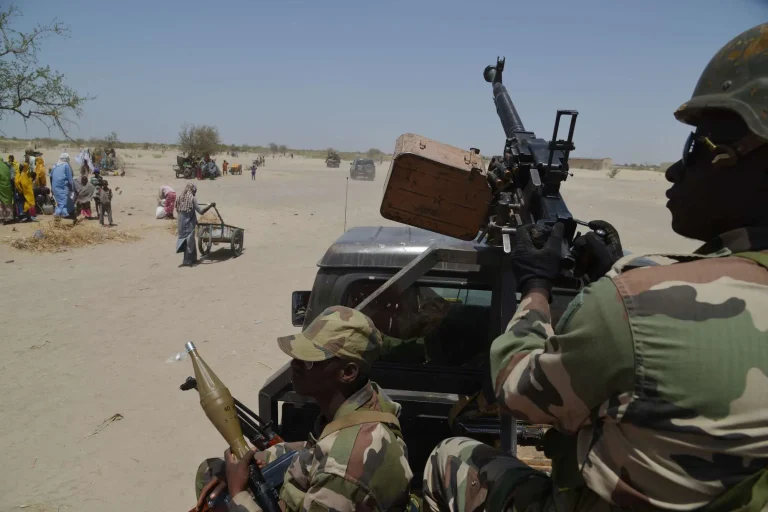
Troops of the 6 Brigade Nigerian Army/Sector 3 Operation WHIRL STROKE (OPWS) have declared four suspected bandits wanted in Taraba State.
The suspects, identified by the troops on the army’s X handle, are Isah, Shagari, Dogo and Teller.
The army also announced a recent successful operation in the state, which led to the dismantling of a bandit camp located in the Chinkai Forest of Wukari Local Government Area of Taraba.
Valuable items, including 12 mobile phones, 3 international passports, and various mystical charms utilized by the criminals, were recovered from the bandit camp.
The operation, which took place on Tuesday, was successful due to actionable information provided by some good Samaritans.
“Acting on actionable intelligence reports detailing the continuous criminal activities by terrorist groups sheltering in the Chinkai Forest, troops of the 93 Battalion Sub-Sector 3B OPWS launched the clearance operation.
The troops meticulously combed through the dense forest areas notorious for harboring kidnappers’ camps, prompting the terrorists to flee upon sighting the advancing troops.
The operation led to the destruction of several makeshift structures linked to wanted kidnapping kingpins such as Isah, Shagari, Dogo, and Teller,” the communication reads.
The successful clearance operation, according to the army, demonstrates the unwavering commitment of the 6 Brigade Nigerian Army/Sector 3 OPWS to confront insecurity head-on in Taraba State.
They urged the public to remain vigilant and cooperate with security agencies by promptly reporting any suspicious activities within their communities.
“The Nigerian Army continues to prioritize the safety and security of all citizens, and operations such as this reaffirm our dedication to eradicating criminal elements that threaten the peace and stability of Taraba State and its environs,” it added.
Nigerian Army declares four suspected bandits wanted in Taraba
N80bn fraud: Shame us – EFCC accuses ministers, colleagues, others of shielding Yahaya Bello
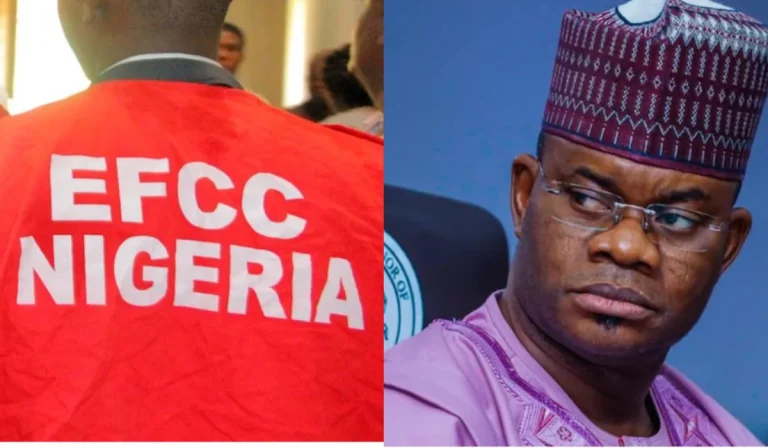
The Economic and Financial Crimes Commission (EFCC) on Wednesday alleged that some powerful Nigerian politicians are shielding the former governor of Kogi State, Yahaya Bello, who was accused of N80.2bn fraud.
TVN recalls that the anti-graft agency had declared Yahaya Bello wanted following his inability to honor its invitation.
He was declared wanted after a failed attempt to arrest him and his repeated absence from court for arraignment.
The Nigerian Immigration Service also placed the former governor on a watchlist.
When asked why the EFCC had yet to arrest Bello weeks after he was declared wanted, an EFCC official claimed that the ex-governor was being shielded by the system.
“That politically-exposed Yahaya Bello, whose crime has been traced to him by allegation and has been invited by the EFCC to come and explain, and for months he is acting drama and we are all here wanting to ask questions! The shame is our own shame!
“Can’t we catch him? We can, but do we go all out to catch him? Do we need to do that when he has his masters? Can’t they call him and tell him, ‘You are disgracing Nigeria’? What are you telling the world? Tell him to go and explain himself like others have done.
“Where are the ministers? Where are Yahaya Bello’s colleagues, even in his hiding? So, Nigerians can’t tell him ‘This is not fair, go and report; they are not going to kill you’? But people are still eating and dining with him.”
Bello is, however, expected to submit himself to the court today.
N80bn fraud: Shame us – EFCC accuses ministers, colleagues, others of shielding Yahaya Bello
Democracy Day: Review of Nigeria’s constitution long overdue – Rights group
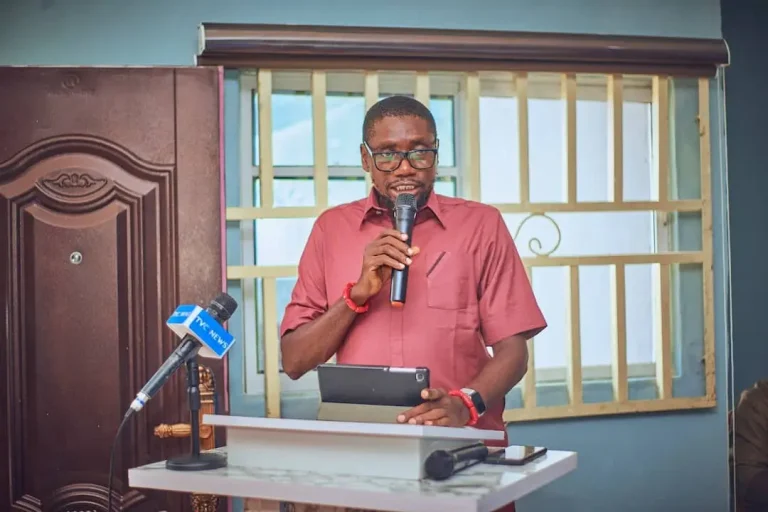
A human rights organisation, Centre for Human Rights and Accountability Network (CHRAN), said the review or overhaul of the 1999 constitution to accommodate the current realities in Nigeria is long overdue.
The Director of CHRAN, Otuekong Franklyn Isong, speaking in Uyo on Wednesday during a symposium to mark the 2024 Democracy Day in Nigeria with the theme “Civil Society as the Pivot of Good Governance in a Democratic Setting,” stated that the current Nigerian democracy “is founded on a constitution that the General Abdulsalami Abubakar-led military junta hurriedly packaged and imposed on Nigerians using Decree No. 24 of 1999.”
He observed that the constitution, which is now twenty-five years in existence, has not effectively addressed Nigeria’s multifarious problems and challenges, saying, “There is no doubt that the extant constitution requires a fundamental review, if not a complete overhaul.”
Enumerating the lapses of the 1999 constitution, the director noted, “Section 2(2) of the Constitution of the Federal Republic of Nigeria, 1999 (as amended), states that Nigeria shall be a federation consisting of states and a Federal Capital Territory. It excludes the local government areas as part of the federation, thus impeding grassroots development in Nigeria.
“In Section 7(1) of the Nigerian Constitution, the system of local government by democratically elected local government councils is guaranteed. But the funding of the local government areas is tied to the apron strings and control of the state governments in Section 162(6) of the Constitution, which states that each state shall maintain a special account to be called ‘State Joint Local Government Account’ into which shall be paid all allocations to the local government councils of the state from the Federation Account and from the government of the state.
“Again, the State Independent Electoral Commissions (SIECs) are provided for in Section 197(1)(b) of the Constitution while their funding is in the hands of state governments, making the SIECs an appendage of the state governors.”
He, however, commended Governor Umo Eno for allowing the funds of the local government councils to get to them, saying, “This information was verified during the just concluded tour of the 31 local government councils by the Akwa Ibom State House of Assembly Committee on Local Government and Chieftaincy Affairs, with the CHRAN as a part of the team.”
Isong also noted that for the 25 years of uninterrupted democracy in Nigeria, the country is still searching for capable leaders and true democrats at the helm of affairs, stressing, “leaders who would enact the aspirations of the presumed winner of the June 12, 1993 Presidential Election, Chief Moshood Abiola.”
While wishing President Bola Tinubu success in his administration, the director urged him, as one of the frontline June 12 activists, to implement the ethos of democracy and make his government people-centric.
He urged him to revisit the policy on the fuel subsidy and reverse it in line with the popular opinion of Nigerians, as the policy has failed to achieve its desired intention.
“I believe that Mr. President has good intentions for this country. He has demonstrated the capacity to provide good governance to Nigerians. I wish he listened to the plea of Nigerians by reversing the fuel subsidy removal. The strength of character of a good leader is when the leader listens to his followers and makes amends. Surely, Nigeria shall be great again!” he stated.
Democracy Day: Review of Nigeria’s constitution long overdue – Rights group
Zamfara Govt moves to tackle adverse effects of climate change
The Zamfara State Government has procured six thousand tree seeds for planting as part of its efforts to mitigate the adverse effects of climate change.
This was contained in a statement issued by the spokesman for the State Ministry of Environment and Natural Resources, Mallam Abubakar Aliyu, and made available to newsmen in Gusau, the state capital.
The statement explained that the Commissioner of the Ministry, Muhammad Dantawasa, who spoke through his Permanent Secretary, Alhaji Garba Altine, disclosed this during the 2024 World Environment Day celebration held in Gusau.
“Dantawasa emphasized the importance of tree planting in combating desertification, erosion, and other environmental challenges facing the state, and also highlighted the need for collective action and community involvement in environmental conservation efforts,” the statement added.
“Various species of tree seedlings provided by the state government were Neem, Gum, and Mahogany, which are known for their environmental benefits and ability to adapt to the local climate and soil conditions.”
The commissioner called on residents of the state to take advantage of the opportunity to plant trees in their communities, schools, and public spaces to enhance the beauty and sustainability of the environment.
He further appealed to relevant stakeholders, including non-governmental organizations (NGOs), community groups and development partners, to support the state government’s tree planting initiative and contribute to the overall goal of a healthier environment for all.
Also speaking at the occasion, the Emir of Gusau, Ibrahim Bello, who was represented by the Senior District Head of Gusau, Alhaji Bashir Kabir Dan Baba, commended the state government on its efforts in promoting environmental conservation and sustainable development in the state.
“It is hoped that the seedlings provided will be well cared for and contribute to a more resilient and prosperous environment for future generations,” he said.
In his speech, the Project Coordinator of the ACRESAL Project, Malan Nasirudden Bello Gusau, said the project specifically focused on land restoration, desertification, and drought resilience in the state.
He also highlighted the urgent need to address these environmental challenges in the state.
“Desertification, land degradation, and drought are serious threats to agricultural productivity, food security, and livelihoods in arid and semi-arid regions like Zamfara State, but by promoting land restoration practices, building resilience to drought, and combating desertification,” he added.
Zamfara Govt moves to tackle adverse effects of climate change