Home Blog Page 1243

120 million people displaced by war, violence globally — UN

0

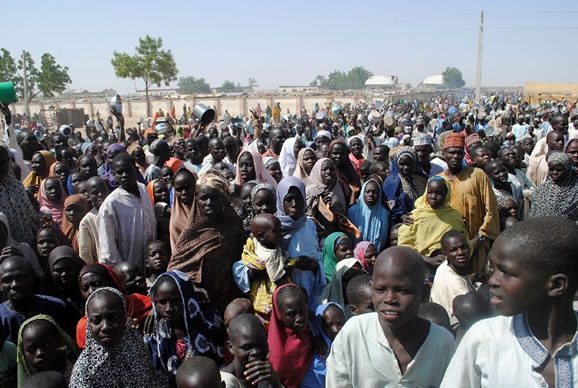
A staggering total of 120 million people are living forcibly displaced by war, violence, and persecution, the UN said Thursday, branding the ever-increasing number a “terrible indictment on the state of the world”.

The United Nations refugee agency UNHCR said forced displacement globally had once again smashed records, with conflicts in places like Gaza, Sudan, and Myanmar forcing even more people to flee their homes.

The global displaced population is now equivalent to that of Japan, it pointed out in a statement.

“Conflict remains a very, very big driver of mass displacement,” UN refugee chief Filippo Grandi told reporters.

At the end of last year, 117.3 million people were displaced, UNHCR said in a report.

And by the end of April, the number had swelled further, with an estimated 120 million people around the world living in displacement.

The number is up from 110 million a year ago, and has been rising for 12 consecutive years — nearly tripling since 2012 amid a combination of new and mutating crises and a failure to resolve long-standing ones, UNHCR said.

Grandi told AFP he had been shocked at the high displacement figure when he took the job eight years ago.

Since then it has “more than doubled”, he said, describing this as “a terrible indictment on the state of the world”.

– Figures will keep rising –

Grandi pointed to a palpable increase in crises and also highlighted how climate change is impacting population movement and driving conflicts.

UNHCR last year declared 43 emergencies across 29 countries — more than four times what was common just a few years ago, he told reporters.

In particular, Grandi noted, “the way conflicts are conducted … in complete disregard” of international law, and “often with the specific purpose of terrorising people”.

“This of course is a powerful contributor to more displacement.”

Grandi acknowledged there currently seemed to be little hope of bucking the trend.

“Unless there is a shift in international geopolitics, unfortunately, I actually see the figure continuing to go up,” he said.

Of the 117.3 million displaced at the end of 2023, 68.3 million people were internally displaced within their own country, Thursday’s report showed.

The number of refugees and others in need of international protection meanwhile climbed to 43.4 million, it said.

UNHCR countered the perception that all refugees and other migrants go to wealthy countries.

“The vast majority of refugees are hosted in countries neighbouring their own, with 75 percent residing in low- and middle-income countries that together produce less than 20 percent of the world’s income,” it said.

– ‘Human tragedies’ –

Sudan’s civil war has been a key factor driving up the numbers.

Since the war broke out in April 2023 between rival generals, it has displaced more than nine million more people, leaving nearly 11 million Sudanese uprooted at the end of 2023, UNHCR said.

The numbers were still rising.

Grandi pointed to the many still fleeing to neighbouring Chad, which has received some 600,000 Sudanese in the past 14 months.

“Hundreds and hundreds every day are crossing from one devastated country to one of the poorest countries in the world,” he told AFP.

In the Democratic Republic of Congo and Myanmar, millions more people were also internally displaced last year by vicious fighting.

In the Gaza Strip, the UN estimates 1.7 million people — 75 percent of the population — have been displaced by the war sparked eight months ago by Hamas’s October 7 attack inside Israel.

As for the war raging in Ukraine since Russia’s full-scale invasion in February 2022, the UN estimated that around 750,000 people became newly displaced inside the country last year, with a total of 3.7 million internally displaced people registered by the end of 2023.

The number of Ukrainian refugees and asylum-seekers increased by over 275,000 to six million, it said.

Syria remains the world’s largest displacement crisis, with 13.8 million people forcibly displaced inside and outside the country, UNHCR said.

AFP

NDIC lists Heritage Bank’s head office, other assets for sale

0

The Nigeria Deposit Insurance Corporation has listed the head office in Lagos and branches of failed Heritage Bank across the country for sale in its role as liquidator of the bank.

NDIC announced the sale of the bank properties numbering 48 and its chattel including vehicles, office equipment, plant, and machinery in another 62 locations across the country in an advertorial published in The According on Thursday.

“The Nigeria Deposit Insurance Corporation in the exercise of its right as Liquidator of failed Deposit Money Banks hereby invites interested members of the general public to buy the assets (landed property and chattels) of defunct Heritage Banks through public competitive bidding,” part of the advertorial read. 

The head office of the bank and its annex located at 143 Ahmadu Bello Way and 130 Ahmadu Bello Way, Victoria Island, Lagos was listed for sale (buildings, chattels, generator, and motor vehicle). Also listed for sale were six other branches in Lagos, four branches in Abuja, four in Rivers States, and the others spread across the country. 

Interested parties are invited to come for an inspection and subsequently put in bids on the assets to be submitted to the NDIC office in Lagos. 

Bids are expected to come in with 10 per cent of the bid amount in Certified Bank Draft. Successful bidders will be required to pay the balance of the bid price within two weeks of notification.

Earlier, the corporation announced the commencement of the verification and payment of the depositors of the bank with N5m or less in their accounts. This category of customers makes up about 99 per cent of the bank customers. 

The Managing Director of the NDIC, Bello Hassan, at a media briefing on the liquidation of Heritage Bank in Abuja last Wednesday, put the total depositors at Heritage Bank at 2.3 million.

Hassan noted that the total bank deposits at Heritage Bank stood at N650bn  while its loan portfolio was about N700bn

In announcing the revocation of the licence of Heritage Bank, the apex bank in a statement signed by the Acting Director of Corporate Communication, Sidi Ali, said, “This action has become necessary due to the bank’s breach of Section 12 (1) of BOFIA, 2020. The board and management of the bank have not been able to improve the bank’s financial performance, a situation which constitutes a threat to financial stability.

“This follows a period during which the CBN engaged with the bank and prescribed various supervisory steps intended to stem the decline. Regrettably, the bank has continued to suffer and has no reasonable prospects of recovery, thereby, making the revocation of the licence the next necessary step.”

Stakeholders in the sector have gone on to express confidence in the decision of the CBN in the overall interest of the sector.

The chairman of the Bank Directors Association of Nigeria, Mustapha Chike-Obi, in a chat with The According said,“BDAN accepts and respects the unique position of the CBN in making this kind of decision in the interest of the banking sector. BDAN is confident that CBN analysed all the pros and cons of this decision and took the best decision in the interest of the banking sector.”

Also, the House of Representatives has passed a resolution mandating the CBN to investigate the leadership and management of Heritage Bank to “Identify any possible issues of mismanagement or wrongdoing that may have contributed to the bank’s failure.”

This followed the adoption of a motion of urgent public importance during plenary on Tuesday, filed by the member representing Idemili North/Idemili South Federal Constituency of Anambra State, Uchenna Okonkwo.

It also urged the NDIC “to conduct a comprehensive review of its operations and the effectiveness of its mandate to ensure that it is adequately equipped and resourced to fulfill its role as deposit insurer and investor of failed banks.”

DOGE and BOME Left In The Shadows, While AI Token Raboo Surges 60%

0

As top assets in the crypto world continue to fluctuate in price value, Investors are looking to invest in new promising assets. A recent report released by the cryptocurrency exchange bit showed that institutional investment in meme coins have significantly increased this year.

The investment figures have increased from $63 million to $300 million since the year began. Meme coins now seem to be the most lucrative projects in the blockchain world.

BOME and Doge are two of the most bought meme coins in the market today. But, their recent price trends have made investors open to other projects. Raboo seems to be the name on everyone’s mouth. The new AI-themed meme project is crushing its presale stage, as it experiences a 60% surge in token price. Experts predict Raboo to hit 100x when it launches into the market.

Dogecoin Whale Activity Increases, Amidst Price Drop

Whale activity on Doge increases but its price value drops 11.41% to $0.1437 in the last 7 days. This project has recorded more than 150 transactions, and each has exceeded $1million. With a market cap of $20 billion, experts believe Doge is still one to look out for.

Despite Doge’s price value reduction, it is still showing bullish momentum. It is displaying an inverse head and shoulders formation, indicating a potential increase in price. Whale accumulations also show investors are confident in the future of Dogecoin.

BOME’s Fluctuation Raises Concerns Amongst Investors

BOME is a new meme coin built on the Solana block chain to give investors a lot of profitable opportunities. Binance announced the project for the first time some months ago. This announcement saw the price increase by 220%, despite market instability.

But BOME’s price trend is now unpredictable. Investors can now buy at $0.01067 per token and take advantage of the 2.39% increase in the past 24 hours.

The fluctuations in BOME’s price is linked to the general market. The price could decrease in value in the coming days. This is why BOME investors are looking to invest in Raboo’s presale.

Raboo’s Presale Price Continues to Increase Amidst Market Fluctuations

Raboo is the next top tier meme coin to hit the market. The project aims to promote a strong community of meme lovers by combining social-fi and artificial intelligence features. These two elements help token holders compete in exciting meme creating activities and earn prizes. Every reward earned on Raboo is converted to real-world value.

The project is created from high-end technology, AI expertise and meme-hunting prowess. Token holders can use the social-fi models to get more tokens and participate in weekly challenges.  With Raboo being tipped to be the largest meme coin 2024, investors can expect significant profits in the coming future.

Raboo is on its fourth presale Stage, with each token going for $0.0048. Experts predict its price to grow by 233% during its presale and 100x on launch day. Raboo now has over 2,500 token holders and 8,000 registered users. Its price value has also increased by 60% since Stage 1.

Doge and BOME Investors are rallying to Raboo’s presale to be a part of 2024’s most promising meme coin. It is one of the best coins to invest in right now.

Conclusion

Doge and BOME are two memecoins that have struggled to maintain a steady value trend. Investors from these projects are now getting on Raboo tokens, because it shows great potentials. Analysts believe now is the time to invest on Raboo, to get significant profits in the future.

You can participate in the Raboo presale here:

Telegram:

Twitter:


Land seizure: Tiv communities protest, seek intervention from NASS, AGF

0

Tiv communities in Nasarawa State have raised the alarm over the alleged forceful acquisition of 10,000 hectares of their ancestral land by the state government.
They described the development as violations of their fundamental rights and threats to their security and socioeconomic well-being.
The communities have appealed to the Attorney General of the Federation and Minister of Justice, the Executive Secretary of the National Human Rights Commission, the Office of the Senate President, and the Office of the Speaker for intervention.
The Tiv communities stated that they rely heavily on their ancestral lands for farming and survival.
They expressed their grievances through their lawyer, Jerry Aondo, in a statement issued Wednesday in Abuja.
The affected communities include Akaha, Utsuwa, Usula, Udugh, China, Shankodi, Ikyorchiha, and Ayarkeke in the Obi/Awe Local Government Area of the state.
They claim the state’s decision to deprive them of their land without offering alternatives is unjust and illegal, violating principles of natural justice.
In a petition to Nasarawa State Governor Abdullahi Sule, Aondo pointed out that the land acquisition process is a clear violation of their rights as Nigerian citizens.
The communities alleged that the government, aided by traditional rulers and village heads, is coercively acquiring their land.
The petition, dated April 10, noted that the communities’ hardships would be exacerbated by previous forced land acquisitions in Awe/Doma Local Government Area, which lacked a clear plan for balanced economic development and did not benefit the Tiv indigenes of the state.
“Already the atmosphere in the area is tense, with the frequent unannounced deployments of security personnel leading to alleged assaults, arrests, and harassment of the people all under the guise of government actions, thereby instilling fear among the residents.
“Last Friday a group of armed security operatives attacked the community leading to injuries and loss of properties to the people.
“We call on Governor Sule to intervene urgently as we are confident of his administration’s ability to deliver justice.” The lawyer stated.
The communities, however, expressed confidence in Sule’s administration’s ability to deliver justice, acknowledging the governor’s past efforts to restore peace and security to the Tiv people, who have suffered from communal crises resulting in loss of lives, property, and severe economic hardship due to displacement.
Land seizure: Tiv communities protest, seek intervention from NASS, AGF

Should Nigerian politicians earn N62,000?

0

Each time a country goes through minimum wage negotiation, you can take it for granted that the argument to put politicians on that same salary scale will come up. It is a common argument, one that the Victorian Socialists Party in Australia included in their campaign promises. Granted, they were an upcoming party—the equivalent of the many political parties in Nigeria that exist through their press releases until elections are around the corner—and were unlikely to win anyway. Still, asking politicians to feel what they dish out is a universally resonant sentiment. In 1816, when the United States Congressmen voted to increase their salaries to $1500 a year (from the cumulative $900), a significant number of them were promptly voted out! Such reactions show how much people have always resented their delegates living above the majority of the people they are supposed to represent.

In Nigeria, we have repeatedly heard versions of the argument as the Nigeria Labour Congress slugs it out with the Federal Government on calibrating the pay scale. The NLC started out with N615,000, a rather outrageous sum even for a negotiation starting point. They revised their offer to 495,000 and are now down to N250,000. The Federal Government, meanwhile, is offering them N62,000. In bargaining, the union leaders justify their figures by comparing the sum with politicians’ income. To enhance the moral legitimacy of their stance, the breakdown of lawmakers’ income has been circulated in the media along with the payslip of a prominent media aide. If they could earn that much, the workers too should be able to up their demands. While we know it is highly improbable that our politicians would ever legalise such a proposal, it is a discussion still worth having. The Nigerian political class earns a high income. If placed on a minimum wage, will it make a difference?

Arguments in favour of the proposal assert that politicians are public representatives and their realities should not be distant from the society they purportedly administer. Besides, politics is not a profession one should embark on for the salaries but for the prospect of making a social impact. This line of argument is not entirely without provenance. Until the 20th century, lawmakers in Britain (the country that colonised/modernised half of the world) were unpaid. In those times, it was not a full-time job but a partial vocation for propertied men who could afford to take some time off to deliberate for society.

Several analysts suggest a correlation between the income we pay politicians and the quality of governance. They argue that better salaries induce better people into politics, which is good for the system. The standard reference point for those who take this position is Singapore. Their lawmakers are officially the highest paid in the world earning about $900,000 per year (for comparison, US congressmen earn about $178,000). Singaporean ministers earn around $1.1m, while their president earns about $1.7m (the US president earns $400,000). Other countries, especially in the Middle East (like Saudi Arabia, UAE, and Kuwait) and Europe (Monaco, Norway, and Sweden), also have leaders earning humongous salaries. What do these countries have in common? Good governance, high quality of life, minimal corruption, and leaders who demonstrate public accountability.

Now, as even an elementary analyst knows, correlation is not causation. The fact that higher salaries have something to do with better governance elsewhere does not necessarily make it the defining reason those countries enjoy good leadership. Nigeria is a fantastic example of higher salaries not making any difference in leadership quality. In fact, all the arguments advanced for paying politicians higher salaries fall apart in Nigeria. They say politics is an elite enterprise and if you want to draw the best minds in your society, you must pay them well above—or at least the equivalent of—what they would have earned if they worked for wealthy private corporations. People who get into power should enjoy a high quality of life to free them from pursuing other enterprises that will expectedly bring them money. That idea does not quite hold up here because the meritocracy that selects people in those societies is still largely alien to us. People frequently get into power in spite of—not because of—merit.

That explains why, except for a handful, Nigerian politics is mostly populated by a category that does not even represent the quality of minds that freely litter its landscape. Looking at those who represent us in power, you would never quite know that Nigerians are brilliant people who excel in parts of the world where they are allowed to thrive. Our politics is skewed in such a way that the worst of us mostly tends to represent the best of us. Ironically, some analysts use African countries such as Nigeria as an exemplar of the low-quality governance you get when you underpay your public administrators.

Nigerian lawmakers earn as much as their US counterparts, but they do not compare favourably. Listen to our lawmakers debate an issue, and you will understand that they themselves are a problem that higher salaries simply cannot fix. For instance, the quality of their “debate” over the re-introduced national anthem was beneath the level of what you will get at a newspaper stand where the Free Readers Association members converge to argue everything from world politics to sports. The discussants did not come across as if they did any homework on the subject; their contributions were mostly extempore and hardly insightful. I have witnessed agboolé meetings where the old men who mediate conflicts demonstrate far better rhetorical and oratorical skills. So where exactly is the elitism that is supposed to distinguish them from the rest of us and justify their pay?

They also confound the idea that if politicians earned enough, they would look away from bribes. Nigeria serially defies abstract postulations in this respect. Someone like Orji Uzor Kalu was not a pauper before he got into politics, yet he once went to jail on allegations of corruption. His story is not even unique. Governors steal and steal while they are in office, and when they are leaving, they will still get the lawmakers to sign them unconscionably fat pensions. Then they will go to the Senate where they will continue to steal. Nothing is ever enough for them, no matter how much they manage to amass.

To be fair to them, the nature of public office in Nigeria induces stealing, especially if you already lack a strong moral core. The average politician is always hustled by the mass of beggars who throng their abode in search of kobo tokens of survival. Such demands on public leaders push them to steal to augment their earnings. Still, that does not change the argument that in our society, our politicians are the same breed of hustlers whether rich or poor. There are hardly any distinctions between them when it comes to corruption. Paying people who have no such self-awareness higher salaries will not raise their standards. It will only widen their already wide mouths.

If more money has not allowed them to create the space necessary to develop themselves intellectually and ideologically, paying them less (by putting them on a minimum wage) will not make much difference either. No reasonable person thinks there is any path to that proposal ever getting actualised, but we bring it up because it is a good argument that at least reminds our out-of-touch politicians to stay level-headed. In the ongoing context of wage negotiation in Nigeria, it is funny seeing people pointlessly arguing against the idea. There is no path to ever paying politicians minimum wage, but bringing it up is also not an entirely futile exercise. Leaders who determine our lives need such occasional reminders to be—hopefully—empathic.

Pepe Receives $8 Million From Crypto Whales Setting The Precedent, Will Angry Pepe Fork Be Next On The List?

0

The meme coin market is currently experiencing a frenzy of activity with smart buyers looking to get in on the action. Just recently, the popular meme coin Pepe (PEPE) received an outstanding $8 million from crypto whales amidst a price correction. This highlights the investor confidence and interest in the token. Amidst this, questions have been raised regarding the new meme coin Angry Pepe Fork’s (APORK) ability to be the next meme coin giant. With its impressive features and unique roadmap, does Angry Pepe Fork (APORK) possess enough potential to be next on the list?

Pepe (PEPE) Receives $8 Million Injection From Crypto Whales Amidst Price Correction

In a recent turn of events, crypto whales have spent over $8M acquiring Pepe (PEPE) tokens. Over the last week, a wallet associated with a popular crypto firm acquired over 447 billion units of PEPE coin, worth about $5.5 million from popular exchange Binance. Alongside this acquisition, an unidentified wallet bought around 232 billion Pepe tokens worth over $2.8 million.

This significant move demonstrates an increased interest and investor confidence in the token and comes amidst a price correction after Pepe’s previous decline. Although Pepe price has seen a recent decline, with a 14% downward movement in the last 7 days, this recent acquisition might ignite a surge in its value.

Meanwhile, this is already evident in Pepe’s trading volume with the token witnessing a notable rise of over 50%. Furthermore, with a surge of over 24% in the last month, analysts are highly optimistic, projecting the meme coin to mirror its previous highs and make a complete comeback.

Angry Pepe Fork (APORK) Set To Surpass Expectations, Demonstrates Potential With Impressive Features

Having recently begun its presale journey, Angry Pepe Fork (APORK) is already making headlines for its outstanding prospect in the meme coin market. While traders and crypto enthusiasts wonder about its potential to be the next meme coin giant, Angry Pepe Fork particularly features a unique “Conquer-to-Earn ” mechanism that could mark a shift in the meme coin market. Notably, this innovative approach promotes collaboration aimed at knocking out stale meme coins from the market.

However, there is more to this project than its incentivized Conquer-to-Earn mechanism. Among its numerous attributes, Angry Pepe Fork’s emphasis on security stands out. Featuring a smart contract audit, the meme coin project ensures that security on its platform is not exposed to any vulnerability, thereby providing a secure space for users to trade and hold assets. This move has increased its appeal in the meme coin market, making it one of the top meme coins to watch.

Furthermore, Angry Pepe Fork boasts a staking dApp on its platform where users can choose to lock their $APORK tokens for an extended period ranging from 30, 60, or 90 days. This particularly promotes the long-term holding of the native token as the longer you hold, the more returns you get. For investors searching for a meme coin with huge profit potential and scaling possibilities, Angry Pepe Fork presents a perfect opportunity.

While the native APORK token is currently selling for $0.014 in the initial presale phase, now presents an opportune moment to buy as its current trajectory indicates a coming surge in price. Besides, experts are predicting the token to grow by 200% before the end of the presale, and possibly 300% plus once it completes its presale and subsequent listing on several top-tier exchanges.

Like Pepe Coin, Does Angry Pepe Fork Possess Enough Potential To Soar?

Currently, in its first presale stage, Angry Pepe Fork is showing promise as its impressive features have drawn the attention of traders and crypto enthusiasts in the meme coin market. As it continues its current trajectory, experts have remained optimistic, projecting the token to soar to incredible heights in the coming weeks and months.

Visit Angry Pepe Fork Presale


Tears as 31-year-old man allegedly killed by herdsmen in Ogbomoso is buried [PHOTOS]

0

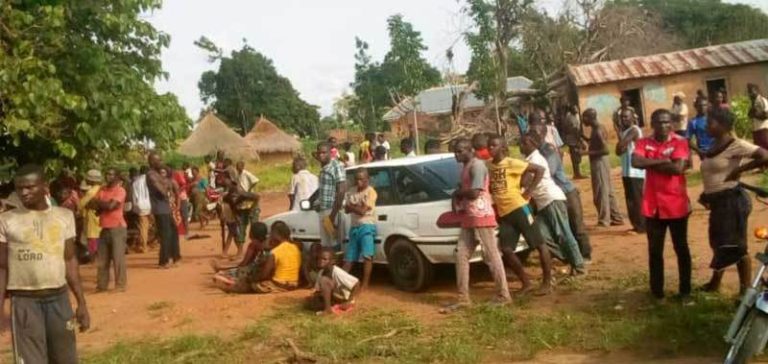
Family and friends wept profusely as they gathered to pay their final respects to a 31-year-old bachelor who was reportedly killed by herdsmen in Ogbomoso.
Our correspondent gathered that the remains of Solomon Adigun, the 31-year-old bachelor stabbed to death by Fulani herdsmen in Ogbomoso recently, were laid to rest on Wednesday.
It was learned that Adigun was allegedly killed on his farm at Elemuye in the Surulere Local Government Area.
Sources disclosed that Adigun had earlier complained about the destruction of his father’s farm by the suspects, during which a cow reportedly died. He was thereafter killed on his farm.
TVN reports that the burial of the 31-year-old was held at the Ogbomoso Baptist Conference Cemetery at Aroje along the old Ilorin road on Wednesday.
The burial was attended by family members and sympathizers.
Family, friends, and sympathisers who were at the burial wept profusely as the remains of the deceased were committed to the earth.
One of the sympathisers, who asked not to be named, described the deceased as an easy-going person.
He urged governments at all levels and security operatives to assist the people of the area to curb future occurrences.
“His death is devastating not only because we were close but also because he was a hardworking, nice person dedicated to the service of God. I am still in grief.
“It is getting out of hand. This year alone, I have heard about three deaths caused by these herdsmen in Ogbomoso. The government should protect us.
“It is critical; the herdsmen now snatch okadas (motorcycles), destroy people’s farms with impunity, and attack people in their homes. Fulanis are killing a lot of people. Nigerians must rise before people resort to self-help,” he said.
Tears as 31-year-old man allegedly killed by herdsmen in Ogbomoso is buried [PHOTOS]

Rotary renovates Ogun school building

0

Rotary Club of Agbara (District 9110 of Nigeria) has renovated a school building at the Agbara Grammar School in Ogun State as part of its effort to enhance educational opportunities for underprivileged communities.

The president of the club, Joshua Cole, said the renovation of one of the school buildings which cost over N30m, was to amplify educational access and quality for students from disadvantaged backgrounds.

Speaking at the inauguration of the three-block of classrooms at the Agbara Grammar school and a renovated primary health centre at Igbesa on Wednesday, Cole said the deteriorating and abandoned state of the school’s building prompted the club to embark on the renovation.

He added that the club mobilised resources and expertise to undertake comprehensive repairs, including changing the roof, replacing doors and windows, and installing a ceiling.

He explained, “Three years ago as director of projects, I was moving around the communities looking for projects we could do in that rotary year. Somehow fate brought me to this school. When I got here, I saw this building behind me in a very deplorable state. It was close to having just a carcass building and students were learning there.

“So, what we did was to discuss with the school management if they wanted our support to renovate it. And of course, they said yes, we had to do the writing by going to the commissioner for education who gave us approval to go ahead and do the renovation works. I went back to the club, and told them my intentions alongside my board, and they approved it.

“When we came in here, we had a budget of about N9.5 million. We were thinking it was going to be just a small one, but not knowing that there were no pillars, no beams, you know, the roof was in a very terrible state, so we had to take off the roof. We reinforced the building by bringing more and introducing more pillars. We brought in beams. And that cost us over 30 million.

“When we started, the economy was good. When we started, cement was still about five thousand naira. But halfway into the project, the cost of cement went high to about ten thousand naira. The cost of granite went so high. So if you have to put all that together, of course, manpower, and labour, it was a very strong one for us to manage, but we’re able to get it done.”

Cole, however, said the renovation of the school building was to provide a conducive environment for learning and growth.

He said the club also renovated the primary health centre in Igbesa to be able to provide qualitative healthcare to the people.

He reaffirmed the club’s commitment to empowering future generations and fostering positive change at the local level.

On her part, the District Governor of Rotary District 9110, Ifeyinwa Ejezie said the club remains steadfast in its mission to address pressing societal challenges.

She stressed Rotary’s dedication to the eight areas of focus, including basic education and literacy, health, and environmental sustainability.

She added that the club created a Rotary Community corp to look after projects and ensure they are well sustained and maintained.

“We are here to commission this large three block of classrooms and also commission the Igbesa health centre. All these we are doing is because we appreciate the fact that the government cannot do it alone and that Nigeria is a large country with over 200 million population.

“Government cannot do it alone. That’s why we join hands with the government in doing good around the world and touching our communities.

“Our theme for this rotary year is to create hope in the world. And how better to create hope in the world than what we are witnessing here today?

“This is what rotary is known for. We create hope all over the world, not just in Nigeria. Because Rotary is the largest and the biggest NGO you have in the whole world. And we have a presence in over 200 countries in the world. So in these 200 countries in the world, all we do is do good in the world. And that is why we are here today,” she stated.

Earlier in her remarks, the Deputy Governor of Ogun State, Engr. Noimot Salako-Oyedele commended the club for assisting the government in the area of education and health.

Represented by the vice chairman of Ado-Odo Ota Local Government Area Council, Sadat Animashaun, the Deputy Governor promised that the government would ensure the renovated facilities are well managed and put to use.

June 12: Why you can’t fail – Shehu Sani tells Tinubu

0

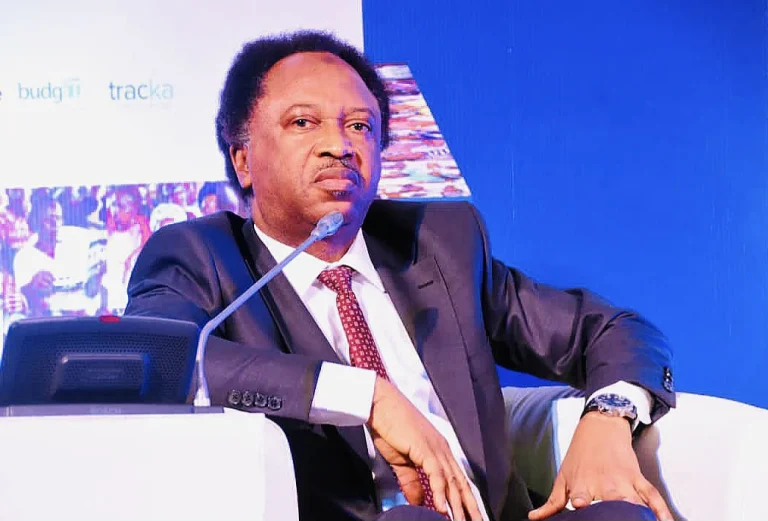
Former Kaduna Central Senator, Shehu Sani, has said President Bola Tinubu has a duty to succeed.
Sani said Tinubu’s failure means those who fought for democracy have nothing new to offer Nigeria.
He made this statement while speaking at a special dinner organised to mark Democracy Day at the State House Conference Centre in Abuja on Wednesday.
The former lawmaker also noted that national anthem alone cannot unite a nation.
Sani said only the ideals of freedom, justice, and equity can truly unite Nigeria.
According to Shehu: “Mr President, I will like to draw your attention to this fact and this truth, a national anthem cannot unite a nation, a national pledge cannot unite a nation, a constitution cannot unite a nation.
“A nation is united by the ideals of freedom, a nation is united by equity and by justice.
“This democracy was not a gift given to us by the military, it was not a lottery that we won, it was a product of struggle and sacrifice.
“Mr President, you have a duty to succeed. If you succeed, we will share your glory because you came from the trenches, you came from that struggle, you came from that period of struggle.
“Mr President, if you fail, they will say that those of you who fought for democracy have nothing new to offer Nigeria.”
June 12: Why you can’t fail – Shehu Sani tells Tinubu

Group backs Tinubu over moves to ensure LG autonomy

0

A northern Nigeria group, Arewa Think Tank (ATTK), has thrown its weight behind President Bola Ahmed Tinubu’s moves to ensure local governments enjoy financial autonomy in his administration.
President Tinubu recently criticised state governors for what he termed an overbearing influence on the administration of local government councils in the country.
Muhammad Alhaji Yakubu, the Chief Convener of ATTK, noted in a statement that issues of accountability and ineffectiveness hinder the growth of local council authorities.
He stressed that state governors must be held accountable for the lack of adequate development at the grassroots.
He said, “Arewa Think Tank is in line with President Tinubu for criticizing the governors who, during elections, rely on local governments to garner votes but, after the polls, focus solely on the state level.”
He added that they believe Tinubu is doing his very best to enhance the revenue base of the country, stressing that the governors must also be sympathetic and urgently consider the needs of the local people.
The group expressed their delight and support for the federal government’s suit against the 36 state governors before the Supreme Court, seeking the enforcement of full autonomy for local governments.
The group also criticised what it termed deliberate efforts to undermine the best brains in President Tinubu’s administration, starting with the Comptroller General of Customs.
Group backs Tinubu over moves to ensure LG autonomy