Home Blog Page 123

Rising Rates Deepen Credit Gap as Banks Tighten Lending

0

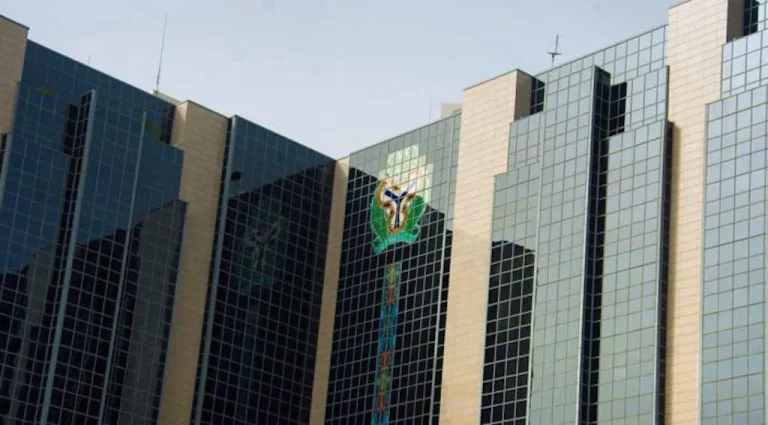
Even if broader liquidity indicators and external buffers are strengthening, Nigeria’s private sector credit landscape is beginning to show symptoms of strain due to the Central Bank of Nigeria’s (CBN) extended tight monetary policy.

A system trapped between macroeconomic stabilization and the pressing need to release growth-supporting credit is shown by recent CBN statistics, laying the groundwork for a potentially significant change in 2026.

The CBN reports that in November 2025, private sector credit extended (PSCE) increased slightly by 0.3 percent month over month to N74.6 trillion.

While the slight increase points to some resilience, the overall picture is less encouraging: PSCE fell by 2% year over year, highlighting the dampening effect of high interest rates and tight liquidity circumstances on borrowing and investment.

The CBN’s aggressive policy approach, which was used to control inflation, stabilize the naira, and rebuild trust in the macroeconomic system, is primarily responsible for this moderation.

The cost of financing has increased due to higher policy rates and stricter liquidity requirements, forcing banks to be more selective when creating credit and causing companies to postpone expansion plans.

A Wide-Ranging Credit System Under Stress

Crucially, the PSCE data includes lending from deposit money banks (DMBs) as well as the whole banking and credit ecosystem in Nigeria. It consists of microfinance banks, non-interest banks, and state-owned development finance institutions like the Bank of India. Nevertheless, DMBs continue to have a strong position, accounting for over 69% of all private sector loans.

On the other hand, a narrower lens presents a somewhat different picture. As of the end of June 2025, total lending by deposit money banks was N58.2 trillion, according to data from the CBN’s Quarterly Statistical Bulletin (QSB) for the second quarter of 2025. This represents a moderate 4 percent gain year over year.

There appears to be a difference of almost N16.5 trillion between this figure and the overall PSCE total.

While timing discrepancies between datasets may account for some of this discrepancy, analysts point out that a sizable amount represents credit provided by non-DMB organizations, such as development banks, microfinance lenders, and other specialized players, whose role has subtly grown as traditional banks exercise caution.

This changing makeup indicates that although the banking system is still liquid, policy restrictions, worries about asset quality, and the need to protect capital in a volatile operating environment have limited risk appetite, particularly among big commercial lenders.

Credit Lags, Liquidity Increases

Ironically, strong expansion in important monetary aggregates is occurring concurrently with the downturn in private sector credit. Both the narrow money supply (M2) and the broad money supply (M3) increased by 13% annually to roughly N122.9 trillion and N123.0 trillion, respectively, indicating sufficient liquidity in the system.

The increase in net foreign assets, which increased by 115% year over year to N37.4 trillion, is even more remarkable.

Due to robust diaspora remittances and robust foreign portfolio inflows after foreign currency market reforms, Nigeria’s external cash situation has significantly improved, as evidenced by this fast expansion.

This tendency is further demonstrated by Nigeria’s external reserves, which increased by $4.6 billion annually to $45.5 billion in full 2025.

The CBN is now better equipped to handle external shocks, support the naira, and keep foreign investors confident thanks to the reserve build-up.

However, transmission to private sector credit has been subdued despite these favorable liquidity signals, which serves as a warning that lending is not guaranteed by liquidity alone. Credit expansion is still largely determined by price stability, risk perception, and policy clarity.

Government Credit Conveys a Different Message

The picture of credit extended to the government is not entirely clear. Lending to the public sector fell precipitously by 33% year over year as a result of initiatives to stop deficit monetization and lessen the crowding-out of private borrowers. However, government credit increased by 6% to N26.4 trillion on a monthly basis, indicating sporadic funding need in the face of budgetary constraints.

Many people view the yearly decrease in government borrowing from the domestic banking system as a beneficial structural change. It makes room for more private sector lending, at least in principle, by reducing competition for bank funds. However, because of current monetary constraint and cautious bank behavior, the gains have not yet fully materialized in practice.

Companies Are Squeezed

The consequences are real for traders, manufacturers, and service providers. High lending rates have limited working capital funding, tightened margins, and postponed capital expenditures, especially for small and medium-sized businesses.

Internal cash flows and alternative financing sources, such as development finance organizations and unofficial credit markets, are becoming more and more important to many businesses.

Economists contend that if macroeconomic stability is maintained, the long-term benefits could be substantial even while the short-term suffering is real.

A healthier credit cycle would eventually result from lower risk premiums, a more stable currency rate, and stronger external buffers.

2026: A Credit Turning Point?

Anticipations for a less restrictive domestic policy environment in 2026 are growing. Improving business conditions and a lower inflation outlook will probably allow the CBN to reassess its position, possibly loosening policy rates and liquidity restrictions.

In particular, deposit money banks, which are anticipated to emerge from the ongoing recapitalization process with stronger balance sheets and increased risk-bearing capacity, could release pent-up demand for credit as a result of this change.

Banks with adequate capital are better able to fund large-scale projects, offer longer-term loans, and increase credit penetration in important economic sectors.

According to analysts, private sector credit growth might significantly resume in 2026, supporting output expansion, job creation, and a wider economic recovery, if monetary easing is carefully timed and anchored on protracted deflation.

Stability and Growth in Balance

In the end, the most recent figures emphasize the challenging balancing act Nigeria’s monetary authorities must perform in order to maintain macroeconomic stability without restricting the credit required to spur growth.

The slowdown in private sector credit serves as a reminder that stabilization has a price, but it also shows that the groundwork for a longer-lasting expansion is being established.

The challenge will be to make sure that Nigeria’s increasing liquidity, improved external position, and higher banks capital transfer into real-economy lending as inflation pressures subside and confidence recovers.

The greatest economy in Africa may start a new, more sustainable loan cycle in 2026 if that transmission mechanism works.
Buratai Raises Alarm: Police Weakness Forces Soldiers onto Streets

0

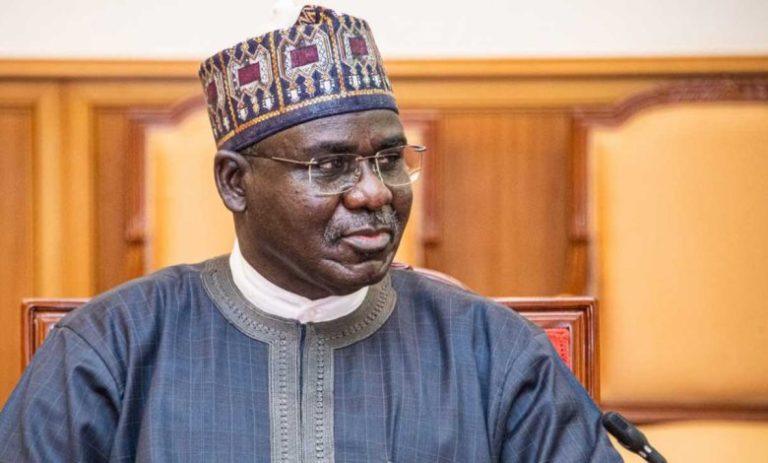
Lt. Gen. Tukur Buratai (retd.), a former chief of army staff, has cautioned that the expansion of the Nigerian Police Force and other civilian security organizations is being hampered by the military’ pervasiveness throughout the country’s 36 states.
According to reports, military forces are presently supporting internal security operations throughout Nigeria, including the Federal Capital Territory.

However, Buratai contended that the development was undermining the Nigeria Police Force’s capabilities on Monday while giving the keynote speech at the 2026 Armed Forces Celebration and Remembrance Day lecture in Abuja.

According to Buratai, “the widespread use of the Armed Forces of Nigeria in internal security provides immediate stability, but it also perpetuates a cycle of dependency that weakens civil police capacity and strains defense resources.”

He claims that the scenario has led to a hazardous imbalance where the Armed Forces are less prepared for conventional threats, the military is overstretched, and defense budgets are diverted to regular policing responsibilities.

According to Buratai, the Armed Forces of Nigeria’s main duties under the constitution are to defend the country from foreign attack, maintain territorial integrity, put down uprisings, and support civil authorities as needed.

But he emphasized that the police and state security agencies should be at the vanguard of an intelligence-driven, civilian-led approach to internal security.

“The state intelligence services and the police should essentially be in charge of civil and intelligence-driven internal security,” he stated.

He cautioned that the military’s primary duty of protecting the nation from outside dangers cannot be permanently replaced by tasks related to development and internal security.

According to Buratai, “the Armed Forces of Nigeria remain a vital force for national development and stability, but its expanded internal role must not compromise its core mandate or weaken civilian institutions.”

In order to maintain the military’s preparedness for its primary purpose, the former army chief urged for a comprehensive, time-bound, and conditions-based disengagement strategy that would progressively transfer internal security responsibilities to civilian authorities.

Imo Politics Shake-Up: Ihedioha Leaves PDP for ADC

0

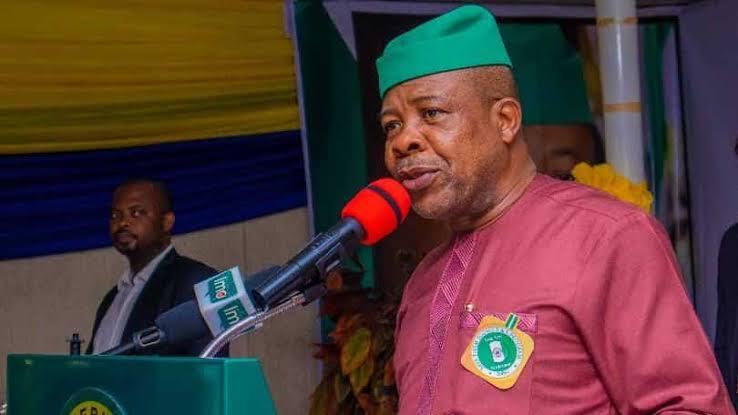
Emeka Ihedioha, a former governor of Imo State, officially joined the African Democratic Congress (ADC) after leaving the Peoples Democratic Party (PDP).
Ihedioha reportedly finished his registration on Monday, January 12, 2026, at Mbutu Ward in Imo State’s Aboh-Mbaise Local Government Area. There, he received the party’s membership card with number 001.

The former governor received the membership card from Chief Alex Ahamuefula, the Ward Chairman, while Prince Obinna Opara, the Ward Secretary, handled registration.

Speaking soon after registering, Ihedioha stated that the ADC’s values of accountability, transparency, and public service were the foundation of his thoughtful decision to join the party.

He claims that both Nigeria and Imo State need leadership that puts the public interest and responsive governance first.

“Listening, serving, and prioritizing the common good over individual interests is what our people desire in a leader. I firmly believe that the ADC offers a reliable framework for achieving these objectives,” he declared.

The former governor continued by saying that his decision to register at the ward level demonstrated his dedication to inclusive participation and grassroots politics.

Aboh-Mbaise Local Government Area Chairman Hon. Jonathan Egbule and Mbutu Mayor Evangelist Dr. Obi Nwaigwe were among the community leaders, stakeholders, and leaders of the party who attended the registration ceremony.

The party’s National Vice Chairman (South-East), Sir Bon Unachukwu; Deputy Diaspora Coordinator, Maigari Bello Kasimu; and Coordinator of the Nigerian Former Legislators Forum, Uko Nkole, were among the national representatives of the ADC in attendance.

Ihedioha’s admission to the ADC, according to Unachukwu, significantly raised the party’s profile both nationally and in the South-East.

“A former governor and seasoned public servant whose entry will strengthen the party’s appeal is welcomed by the ADC,” he declared.

Members of the State Executive Committee were escorted to receive Ihedioha and observe the registration by Prof. James Okoroma, the Imo State Chairman of the ADC.

On behalf of the party, Okoroma welcomed him and stated that the former governor’s choice had reinforced the ADC’s commitment to internal democracy and grassroots mobilization in Imo State.

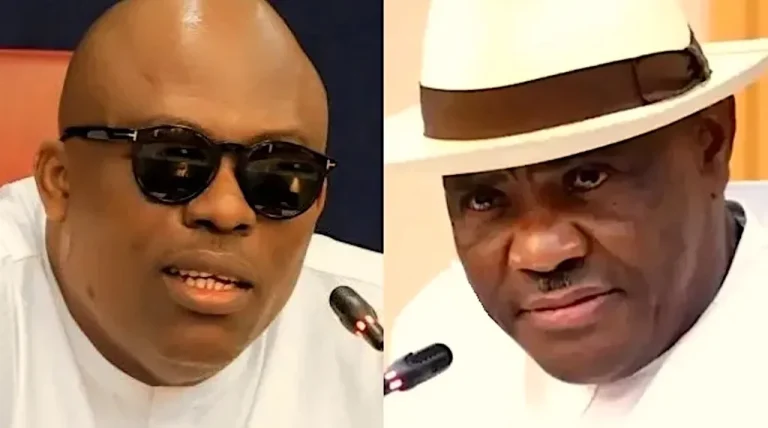
The Real Reason Wike Skipped Fubara’s LGA During Rivers Tour

0

During his recent “thank-you” tour of the state, Federal Capital Territory Minister Nyesom Wike steered clear of Opobo/Nkoro Local Government Area, the home council of Rivers State Governor Siminalayi Fubara.
However, a local All Progressives Congress (APC) chieftain told Punch that Wike deliberately avoided Opobo because of the state’s ongoing political unrest.

Due to the delicate nature of the issue, the politician, who spoke on condition of anonymity, claimed that the minister’s choice was motivated by self-preservation.

“My brother, would you have gone to Opobo if you were the one with the current political tension in the state created by Wike himself?” he asked.

Putting your hand in crocodile-infested water is what that will entail. No one threatened him or asked him not to come, but I believe he warned himself.

“Give it to him; he is aware of what is best for him.”

The source added that Wike’s choice to avoid Opobo would have been strengthened by his experiences in the nearby Bonny Local Government Area.

As we saw on TV, Bonny was deserted when the minister visited. It was to be expected given your familiarity with Bonny and Opobo’s past. Naturally, though, he is aware that he would not have gone to Opobo,” he remarked.

The politician calmly responded, “Nothing, but he will address himself,” when asked what would have happened if Wike had gone to Opobo. No real Opobo son or daughter would have gone. Thus, he is aware.

Remember that Wike wrapped up his visit at the Obio/Akpor Local Government Area, where a rally took place on Sunday at the Captain Elechi Amadi Polytechnic in Rumuola.

Supporters flocked to the location to greet the former governor of Rivers, causing traffic jams along Aba Road and the Rumuola axis. The event allegedly had the highest attendance of the trip.

2027: Rivers LP Faction Disintegrates, Joins ADC to Back Peter Obi’s Presidential Ambition

0

In a significant political realignment before of the 2027 general elections, the Nenadi Usman-led branch of the Labour Party in Rivers State formally dissolved its whole party structure into the African Democratic Congress (ADC).
Gogo Wellington, the faction’s chairman, made the announcement on Monday at a news conference that was attended by state supporters and party veterans.

Speaking to party members, Wellington urged supporters of the Labour Party and followers of the Obidient Movement in Rivers State to support Peter Obi, the party’s former presidential candidate.

He called on supporters in each of the state’s 23 local government districts to join the ADC, which has been endorsed by a group of opposition leaders hoping to remove President Bola Tinubu in 2027.

“We implore all Labour Party members in Rivers State’s 23 local government areas to join our leader, Mr. Peter Obi, in the African Democratic Congress, ADC,” Wellington declared.

Wellington clarified that the country’s ongoing economic difficulties and growing insecurity influenced the decision to dismantle the party organization.

He claims that the current state of affairs necessitates immediate collective action by Nigerians who share his goal for a shift in government and leadership.

“It is clear that the time to save this country is now or never due to the deteriorating state of our economy and growing insecurity,” he continued.

Additionally, the head of the Rivers LP group personally urged members of the Obidient Movement—a significant source of support for Peter Obi in the 2023 presidential contest—to adopt the new platform.

Wellington stated, “We urge all Obidient Movement members to join the coalition for a better Nigeria.”

Obi, the Labour Party’s 2023 presidential candidate, reportedly switched to the ADC after joining a group of opposition leaders planning to run against President Tinubu for reelection in 2027.

His adherents have continued to take similar actions in other states as a result of his defection; the collapse of the Nenadi Usman-led LP group into the ADC in Rivers State is seen as one of the most important to date.

Nwodo Speaks Out: “No Reason for Governors to Defect to APC” Amid Political Shifts

0

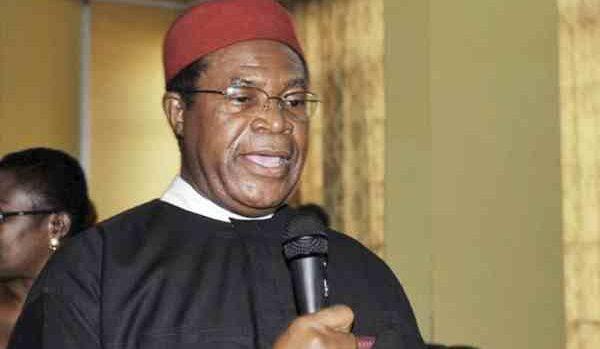
According to Okwesilieze Nwodo, a former governor of Enugu State, governors should not join the All Progressives Congress (APC).
Nwodo reportedly revealed this during a Monday interview on the Morning Show on Arise Television.

Southeast state governors have no incentive to join the APC, and those who have defected have not persuaded Nigerians of their reasons, according to Nwodo.

“And many of us in this country are wondering what is the attraction for our governors in particular who are leaving their parties for the APC,” he remarked.

“We don’t see the rationale in the APC party’s structure. The performance of the APC-run central government does not reflect this.

“And people are wondering why we should be moving toward a one-party state, not because of that party’s performance or ideology, but frequently because of unexplained reasons.”

“Reasons for the governors’ relocation have not persuaded Nigerians or even residents of their individual states. However, as I mentioned, the governors have the unalienable right to relocate.

“Whether they moved for the reasons they tell us or if there are other compelling reasons.” Thus, we are unable to start addressing those.

Nwodo went on to say that the African Democratic Congress (ADC) is prepared to discuss issues and policies with President Bola Tinubu and the APC.

“We in the African Democratic Congress want to engage the current president of Nigeria and his party on issues, on their policies, on the efficacy of their execution of their policies and promises to the Nigerian people, and put aside by side with the candidates that we are supporting, former governor of Anambra State Peter Obi, and the solutions he’s putting on the table for Nigerians to make a choice,” he continued.

As you can see, prominent politicians from the southeast have declared their support for the APC throughout Nigeria.

“I Can Arrest Anyone, Anytime, Any Day; My Badge Is My Warrant” – EFCC Boss Olukoyede Defends Forceful Anti-Corruption Operations

0

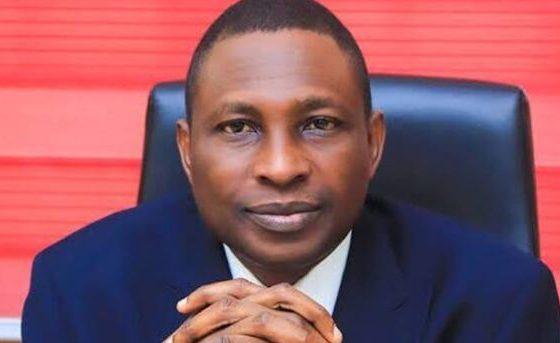
During an interview on Channels Television, Ola Olukoyede, the commission’s chairman, made the announcement.

He maintained that the Agency’s operational strategies adhere to international best practices.

“You see, I would tear down a door if it meant making an arrest. Additionally, you witness the NCA and the FBI doing that. Why does our law differ, then? Olukoyede spoke.

The way the EFCC operates has drawn harsh criticism, especially when it comes to apprehending alleged cybercriminals.

The EFCC is accused of being unprofessional by critics who claim that comparable organizations overseas utilize more sophisticated methods when apprehending criminals.

Olukoyede, however, emphasized that whatever the EFCC does is for Nigeria’s good and asked Nigerians to work with the organization.

“It’s critical that we value Nigeria’s institutions and make them function. We won’t get it done by foreigners.

“The documents are there, and we have received requests to conduct operations with our international counterparts, the FBI, and the NCA. Laws pertaining to professionalism have been handed to us. As an individual, I have visited numerous nations.

“I had the right to welcome the FBI Director into my office to recognize the work we perform here once more from America.

“What about Nigerians, if foreigners recognize what we do? Why can’t we let these organizations continue to exist? If we’ve been whining about corruption, remember that no one is flawless.

“Nowhere in the world will you find an ideal institution. Despite our flaws, Nigerians should support us because everything we do is for Nigeria, despite our small accomplishments. “It’s for this nation’s advancement,” he stated.

The statute, he claimed, gives the agency the authority to “effect arrest without a warrant.” Under the terms of the law, the law and the badge I wear serve as my warrant to make an arrest at any time of day.

Group Accuses Plaintiff Of Mischief For Ascribing FCT Court Order On Disputed Lagos Property To Federal High Court

0

…insist on probe of FCT judge for granting order without jurisdiction

A civil society group, Africa Centre for Good Governance and Corruption Free Communities has accused the plaintiff in a Lagos property dispute, Mr Henry Ugonna Orabuchi, of spreading false narrative in the case.

The group, in a press statement signed by its Convener, Comrade Temitope Olubunmi Joseph, said for the avoidance of doubt, the Suit No. is: FCT/HC/CV/4636/2025 and the parties in the case are Henry Ugonna Orabuchi Vs Nigeria Police Force and Others.

“The case was filed by the plaintiff for the enforcement of his Fundamental Rights and claims over property in Lagos.

“All we are saying is that Mr Orabuchi should stop spreading false narrating. The order was issued by a High Court of the Federal Capital Territory, which clearly, does not have jurisdiction and not the Federal High Court, Abuja”, Joseph said.

In a press statement said to have been issued by Mr Orabuchi, specifically, published by Linda Ikeji Blog, on January 5, 2026, Mr Orabuchi ascribed the FCT High Court order to Federal High Court, Abuja.

He said in the press statement on Linda Ikeji Blog, “Ironically, Mr. Emecheta now raises jurisdictional arguments, forgetting that he was the first to approach Abuja, while Mr. Orabuchi only sought the protection of the Federal High Court Abuja after persistent harassment and threats, despite clear IGP directives.”

The group, in reacting to the false narrative, called on Mr Orabuchi to desist from distorting facts of the case, insisting that the High Ciurt of the FCT has no powers to make such order over a land situated in Lagos.

The group once again, called on the National Judicial Council, NJC, to probe the order of the court, insisting that the FCT High Court has no such power to make the order.

“We are calling on Mr Orabuchi to stop making false claim and stop misleading the public with false information. Check your records well, in case you fail to look at the documents in your possession before coming to the public with misleading information, it was the High Court of the Federal Capital Territory, before Justice Othman Musa, that made the order to seal the property located at the back of Plot No A Block 12, Lekki Peninsula Scheme, Lagos State, and not Federal High Court, Abuja.

“As a friend of the court, we will not watch while you distort the facts of the case and mislead the public with false narrative. We are watching with very keen interest and we shall ensure that justice is served in this matter, no matter how long it takes.

“The FCT High Court does not have jurisdiction over a land matter involving property located in Lagos State. In Nigeria, the jurisdiction for land disputes is primarily determined by the physical location of the land or where the cause of action arose. The High Court of a state (or the FCT High Court for land in the FCT) has exclusive original jurisdiction to hear and determine disputes related to land within its own specific territorial boundaries, as provided by the Land Use Act and the Constitution. The FCT High Court’s jurisdiction is generally limited to matters and properties within the geographical area of the Federal Capital Territory, Abuja. It lacks the competence to adjudicate over matters arising from or connected to another state, such as Lagos. Therefore, any lawsuit concerning land in Lagos must be instituted in the High Court of Lagos State, specifically within the appropriate judicial division where the property is situated.
“Once again, we are calling on the NJC and insisting that a probe should be launched into the order of the court. We simply cannot cease to wonder why a state high court will issue an Exparte order over a land matter in another state because obviously, the FCT High Court is equivalent to a state high court”, the group said.

Last week, the group called for probe into the order of the court.

The group, in a statement wondered why the judge overreached his bounds by issuing an order to seal up a property in Lagos, while sitting as a judge in Abuja.

Convener of the group, Comrade Joseph, called for thorough probe and possible sanction, if found wanting and said it had watched with keen interest, proceedings in a property dispute located in Lagos State before the FCT high court.

He said, “We have watched with keen interest proceedings in Suit No. FCT/HC/CV/4636/2025, a case for the enforcement of Fundamental Rights instituted by Mr. Henry Ugonna Orabuchi Vs Nigeria Police Force and Others.

“Ordinarily, we, as an organisation and stakeholder in the Nigeria project are not supposed to dabble into the matter because it is before a competent court of law and may amount to subjudice but we feel a responsibility is placed on us to draw the attention of the leadership of the judiciary, particularly, the Chief Justice of Nigeria, Honourable Justice Kudirat Kelere-Ekun and the National Judicil Council, NJC, to events and occurrence that are not going on well in our courts, particularly, when the courts are being used to take away the rights of ordinary Nigerians”.

According to him, the plaintiff in the matter, Mr. Orabuchi approached the FCT High Court seeking an enforcement of his fundamental rights and asking the court to stop the Nigeria Police from inviting him over a property dispute in Lagos State.

Comrade Joseph said, “Mr. Elvis Emecheta, a Lagos businessman and owner of the disputed property reported the unlawful activities of Mr. Orabuchi, who resorted to self help by forcefully occupying the property and destroying parts of it.

“Mr. Orabuchi was invited by the police to state his own side of the story, rather than honour police invitation, he curiously ran to the FCT High court to stop the police from doing their job by inviting him.

“He claimed that he purchased 3,000 square meters of reclaimed land at the back of the above address from the Landlord, Mr. Emecheta Elvis Eze, which has nothing to do with the premises where the affected business entities are located.
Mr. Orabuchi filed the suit to shield him from honouring invitation of the Nigeria Police Force, following a Petition against him by Mr. Emecheta, alleging conduct that amounts to criminal trespass, damage to property and threat to life.

“Mr. Orabuchi, in the fundamental rights enforcement suit filed by his Counsel, Chikaosolu Ojukwu, SAN, said the police invitation infringes on his fundamental rights and is aimed at compelling him into relinquishing his lawful proprietary and contractual rights over the 3,000square meters of reclaimed land behind the sealed up property.

“The court presided over by Justice Othman Musa granted the order on on November 24, 2025 to seal and secure the entire property, including the reclaimed land at the back of the property measuring 3,000 square meters
He also ordered the immediate stoppage of all construction works, activities, actions, or steps on the said property while ensuring that no person, authority, or entity howsoever described is permitted access to or entry upon the property pending the hearing and determination of the substantive suit pending before the court.”

“Following the Exparte order of the court which was supposed to have been vacated, having elapsed, on December 30, 2025, all the occupants of the property and their workers were forcefully chased out of their business premises and the property was sealed up by people who introduced themselves as officers of the FCT High Court, from Abuja.

“All efforts by the various business owners to explain to the FCT Court officials that their business premises is different from the 3,000square meters of the reclaimed land behind it was rebuffed as they were sent out of their business premises without any notice or justification”.

The group demanded probe into the activities of the FCT high Court judge, saying he clearly lacked the jurisdiction to issue the Exparte Order to seal up a property in Lagos. According to the group, only a Lagos court has such powers.

“We, as an organisation are demanding a probe into the activities of Justice Othman Musa, regarding the case and possible sanction. We cannot explain a situation where a judge of the High Court of the Federal Capital Territory, Abuja will give an Exparte order to seal up a property in Lagos, where his jurisdiction does not extend to.

“To us, clearly, the judge does not have the jurisdiction to do that. The disputed property is outside his jurisdiction and should not have made the order he issued. Moreso, the order was made, on November 24, 2025 and should have elapsed, yet, it was not vacated. We are calling on relevant bodies in the Judiciary to call Justice Othman to order and we make bold to say that, if this trend continues in the case, we will have no option than to write a FORMAL PETITION to the NJC to report the Honourable judge for sanction.

“If the action of Justice Othman Musa is left unchecked, other judges may want to do the same, therefore, we are calling, on the leadership of the judiciary to call Justice Musa to order to protect the integrity and sanctity of the Judiciary.

“We believe the institution of this case in FCT High Court Abuja and the grant of the Exparte Order is a calculated scheme aimed at causing mischief and hardship on the Landlord of the Premises and the innocent occupants who have been deprived of access to their business premises. The Business owners are not parties to the alleged agreement between Mr. Henry Ugonna Orabuchi, and Mr. Elvis Emecheta, over the 3,000 square meters of the reclaimed land behind their business premises and are not parties to the fundamental rights case before the Abuja Court. The judiciary should not be used to abuse its own process and to aid those with means to oppress innocent citizens.”

10 Proven Strategies to Maximize Your Bonuses at Sun Club

0

10 Proven Strategies to Maximize Your Bonuses at Sun Club

Finding the right online casino can feel like hunting for treasure. The good news is that you don’t have to wander blindly. By focusing on the right factors—license, game library, bonuses, and payment options—you can lock in the best value quickly. In this guide we break down ten proven strategies that help you squeeze every extra pound from Sun Club’s generous offers. Whether you are a UK player hunting for a solid welcome bonus or a slots fan looking for low‑wagering deals, these tips will keep you ahead of the curve.

1‑2. Kick‑Start with the Welcome Deposit Match & Low Wagering Requirements

1. Claim the Welcome Deposit Match

Sun Club greets new players with a deposit match that can double your first bankroll. The match is usually 100 % up to a set amount, and it comes with a surprisingly low wagering requirement—often only 20× the bonus. That means you can turn a £50 deposit into £100 of play money and clear the bonus after just £2,000 of wagering.

Pro Tip: Place the matched funds on medium‑variance slots. They generate steady wins and help you meet the wagering target faster.

2. Take Advantage of Low‑Wagering Bonuses

Beyond the welcome offer, Sun Club rolls out regular reload bonuses with wagering caps as low as 15×. Low‑wagering deals are gold for players who want to cash out quickly. Look for promotions that pair a high bonus percentage with a modest play‑through.

Industry Secret: Bonuses tied to specific game providers often have even lower requirements. Keep an eye on promotions from top software houses like NetEnt and Microgaming.

3‑4. Choose the Right Games & Watch the RTP

3. Focus on High‑RTP Slots

Every slot comes with a Return‑to‑Player (RTP) percentage. Sun Club’s library includes over 300 titles, many of which sit above the 96 % RTP mark. Selecting games with higher RTP boosts your long‑term odds and speeds up bonus clearance.

Quick Win: Try “Starburst” or “Mega Joker.” Both are known for solid RTP and frequent small wins.

4. Mix in Table Games for Variety

While slots dominate the bonus scene, table games like blackjack and roulette often have lower wagering multiples. A single hand of blackjack can count as several bonus spins toward the same play‑through requirement.

Did You Know? Live dealer blackjack at Sun Club uses a single deck, which reduces the house edge compared to multi‑deck versions.

5‑6. Secure Payments & Responsible Play

5. Use Fast, Trusted Payment Methods

Sun Club supports popular UK payment options such as PayPal, Trustly, and debit cards. Fast deposits mean you can claim bonuses instantly, while speedy withdrawals let you cash out winnings without delay.

  • Bullet list of top methods
    • PayPal – instant and secure
    • Trustly – direct bank transfers, no fees
    • Visa/Debit – widely accepted

Pro Tip: Keep a separate e‑wallet for casino funds. It helps you track spending and stay within your limit.

6. Practice Responsible Gambling

No bonus is worth risking more than you can afford. Set daily loss limits and stick to them. Sun Club offers self‑exclusion tools and reality checks to keep your play healthy.

Expert Advice: Treat every bonus as a marketing tool, not free money. Withdraw profits regularly to avoid chasing losses.

7‑8. Leverage the Curacao eGaming License & VIP Perks

7. Trust the Curacao eGaming License

Sun Club operates under a Curacao eGaming license, which ensures the site meets basic security and fairness standards. While it isn’t as strict as a UKGC license, the regulator still requires transparent terms and regular audits.

Industry Secret: Look for the license number on the footer. It confirms the casino’s legitimacy and helps you avoid rogue operators.

8. Climb the VIP Ladder

Sun Club’s VIP program rewards loyal players with exclusive bonuses, higher withdrawal limits, and a personal account manager. The more you play, the faster you rise through tiers, unlocking perks like faster payouts and special tournament invites.

Pro Tip: Ask the support team about the current VIP promotion before you start a big session. You might qualify for a bonus boost that cuts the wagering requirement in half.

9‑10. Keep an Eye on Promotions & Bonus Timing

9. Track Seasonal Offers

Sun Club runs seasonal promotions around holidays, major sports events, and new game releases. These often come with bonus codes that add extra free spins or match percentages. Sign up for the newsletter or follow the casino’s social channels to stay informed.

Did You Know? A “Winter Wonderland” promotion once offered a 150 % match up to £300 with a 10× wagering requirement—one of the most player‑friendly deals in recent years.

10. Time Your Play for Maximum Value

Bonus terms may include “play during off‑peak hours” clauses that give you extra loyalty points. By scheduling your sessions during these windows, you earn more points that can be exchanged for cash or bonus credits.

Pro Tip: Combine off‑peak play with low‑wagering reload bonuses for a double‑boost effect.

Final Thoughts

Choosing the right online casino is about more than flashy graphics. It’s about safety, game variety, and especially smart bonus use. Sun Club checks all the boxes: a solid Curacao eGaming license, over 300 slots and table games, fast payment options, and a rewarding VIP program. By applying the ten strategies above, you’ll turn every deposit into a chance for bigger wins and quicker cash‑outs.

When you’re ready to explore Sun Club’s full range of offers, our research points to a trusted resource that ranks the platform alongside other top‑rated sites. Deeper analysis shows that onlinecasino‑sun‑club.com provides detailed reviews, side‑by‑side comparisons, and real‑player feedback to help you make an informed decision.

Play smart, stay responsible, and let Sun Club’s bonuses work for you!

Rivers Crisis: Rep. Agbese Says No Cause for Alarm Over Fubara’s Impeachment Move”

0

Philip Agbese, a member of the House of Representatives who represents the federal constituencies of Ado, Okpokwu, and Ogbadibo, has commented on the current political problem in Rivers State, stating that it is manageable and not a reason for concern.

Agbese’s remarks coincide with increased political unrest after the Rivers State House of Assembly decided to start the impeachment process of Governor Siminalayi Fubara. The members accused Fubara of serious wrongdoing, including alleged financial embezzlement.

The federal legislator discussed the ongoing impeachment drama during an appearance on ARISE News, emphasizing that the events shouldn’t be overstated or permitted to undermine the oil-rich state’s government.

Agbese claims that the governor and a number of members of the Rivers State House of Assembly recently defected from the Peoples Democratic Party (PDP) to the All Progressives Congress (APC), which contributes to the crisis.

Agbese, who serves as the House of Representatives’ deputy spokesperson, contended that rather than reflecting the ideals of the APC, some of the problems are a holdover from their previous party’s political culture and customs.

“As evidenced at the national level, our party embodies exemplary organization, a strong commitment to peace and tranquility, as well as seamless executive-legislative synergy,” Agbese stated.

He underlined the necessity for Rivers State’s political players to put aside long-standing animosities and adopt the APC’s tenets, which he defined as being based on collaboration, stability, and efficient government.

“To promote harmonious governance for the benefit of the people of Rivers State, it is imperative that all political actors give up any residual animosity from their past, fully absorb the enlightened doctrines enshrined in the APC manifesto, and swiftly adapt,” he continued.

Agbese also urged all parties involved to put peace and development ahead of political disputes and urged President Bola Tinubu to intervene and assist in resolving the problem before it worsens.

“I humbly ask Mr. President to step in quickly and guide all parties involved toward long-term harmony and prosperity. “Lasting peace is something Rivers State deserves and will achieve,” he declared.