Home Blog Page 122

Supreme Court Rules Against Lamido’s Son in $40,000 Undeclared Funds Case

0

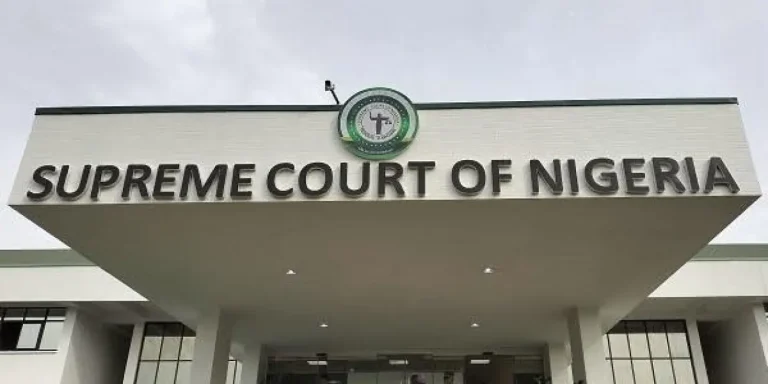
The appeal filed by Aminu Sule Lamido, the son of former Jigawa State Governor Sule Lamido, contesting his conviction for failing to disclose $40,000 at the airport, was rejected by the Supreme Court of Nigeria.

In a five-member panel’s unanimous ruling on Friday, the Supreme Court decided all three of the arguments put out for decision against the appellant and declared the appeal to be without merit.

The Supreme Court rejected the appeal and sustained the previous ruling of the Court of Appeal, Kaduna Division, which had maintained Aminu Lamido’s conviction by the Federal High Court, Kano, in the lead judgment written by Justice Adamu Jauro and read by Justice Abubakar Umar.

The prosecution had adequately proven the accusations made against him by the Economic and Financial Crimes Commission (EFCC), and the supreme court concurred with the lower courts.

The EFCC charged Aminu Lamido with violating applicable financial regulations by failing to report foreign currency and making fraudulent disclosures at the airport.

The Federal High Court, Kano, found him guilty and mandated that 25% of the unreported foreign currency be forfeited to the Federal Government in its ruling on July 12, 2015.

Aminu Lamido went to the Supreme Court after the Court of Appeal had previously supported the trial court’s ruling. Nevertheless, the Supreme Court decided that there was no reason to overturn the two lower courts’ concurrent rulings.

Rivers Politics: Orji Says Fubara’s Impeachment Attempt Will Not Succeed

0

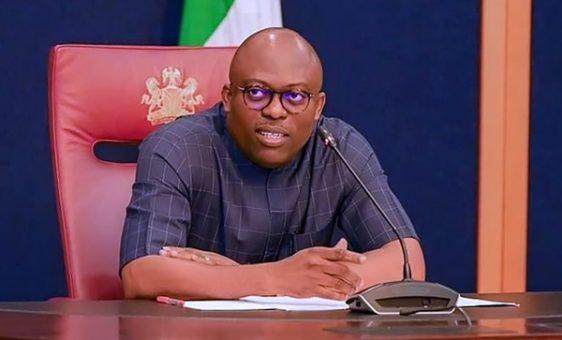
Governor Sim Fubara of Rivers State’s assistant, Darlington Orji, has stated that his principal will not be impeached.

Orji clarified that the State House of Assembly’s accusations against Fubara are false, hence the impeachment will not succeed.

Orji stated that only the Assembly can provide an explanation for Fubara’s wrongdoing and the purported cash embezzlement during an appearance on Arise Television’s Morning Show.

“I can tell you for free that this process will not scale through because there is no truth in it,” he declared. Additionally, as you mentioned, only they are able to determine when there has been egregious wrongdoing or misappropriation.

“Yes, since you will concur with me that numerous courts across the nation have disregarded numerous impeachment procedures due to procedural irregularities.

Therefore, even though I’m not a member of the House, I can tell you about us because I’m on the ground and we reached out to a lot of people. We have always collaborated in the past, and many of them are my pals.

They are unhappy with what they are doing in this process. And I have no doubt that this process will be finished by the end of the day and during the upper week.

Dangote Rewards Cement Distributors with N15 Billion in Gifts

0

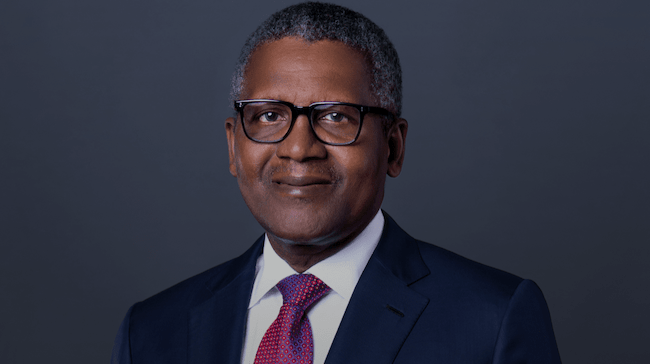
The top distributors and clients of Dangote Cement Plc have been rewarded with ₦15 billion by billionaire industrialist Aliko Dangote for their unwavering devotion, tenacity, and exceptional performance.

At the company’s 2026 Distributors’ Awards Night in Lagos, the announcement was made.

A total of ₦15 billion worth of gifts, including cash awards, cement containers, luxury SUVs, and CNG-powered trucks, were given to the beneficiaries.

Speaking at the award event, Dangote complimented the distributors’ commitment to making sure Dangote products reach communities across the country and referred to them as the organization’s lifeblood.

“What transforms our vision and objectives into real outcomes is your relentless labor in the field, your enticing dedication to our products, and your direct interaction with our clients. Our growth path for 2026 has already started, as evidenced by today’s celebration with the theme “Partner for Growth,” he said.

During the event, Dangote reaffirmed its Vision 2030 strategy, which seeks to make the Dangote Group a $100 billion business by 2030. He clarified that the strategy is centered on industrial growth, international investments, and increasing Africa’s self-sufficiency in industries like infrastructure, manufacturing, and energy.

The Dangote Cement Group is aiming to increase its cement manufacturing capacity to almost 90 million tons by 2030, according to the African industrial giant. He emphasized that the company’s goals extend well beyond constructing plants. Building Africa’s ability to feed itself, fuel its economy, develop its people, and promote sustainable industrialization is the main goal, he clarified.

“Under this vision, we have announced the expansion of our petroleum refinery from 650,000 bpd to 1.4 million bpd, the fertilizer plant to 12 million metric tonnes per year, and an increase in production at the polypropylene plant,” he stated. By 2030, our cement company hopes to have a production capacity of about 90 million tonnes. By 2030, we will have produced 90 million tons, which is 50% more than Saudi Arabia’s total output.

“I firmly believe that Africans who refuse to accept limitations, who dream big, work hard, and never stop believing in what is possible, will build Africa’s future.” Vision 2030 is a key component of our Africa First mission.

Nigerians Still Await Proof — Abati Challenges Official 15% Inflation Figure

0

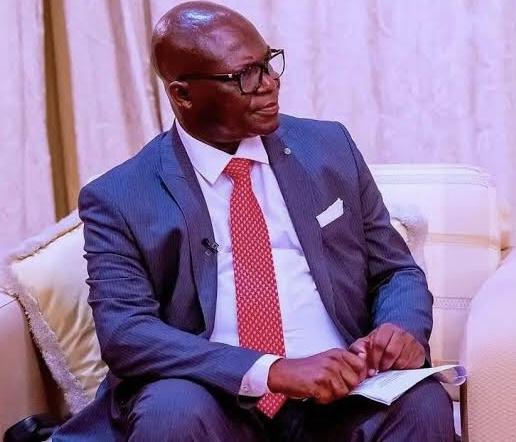
Dr. Reuben Abati, a seasoned journalist and former presidential assistant, has voiced doubts about Nigeria’s reported inflation decline, arguing that it hasn’t yet resulted in a significant reduction in the cost of living for Nigerians.

Speaking on Friday’s Morning Show on Arise Television, Abati questioned the validity of the National Bureau of Statistics’ (NBS) December inflation rate of 15.15 percent, speculating that it was impacted by modifications to the rebasing technique.

He claims that although authorities and foreign partners like the International Monetary Fund (IMF) have claimed that the new inflation measurement would provide Nigerians with real benefits, such results have not yet been observed.

Even though the NBS has reported successive drops in inflation, Abati pointed out that everyday costs, especially food prices, have not been affected.

The delay has been too long, he said, adding that a meaningful indication of change would be a discernible decrease in food prices. He noted that economists frequently contend that inflation data takes time to alter living conditions.

“This inflation thing, which they say is now 15.15% as of December, is based on some sort of, you know, creativity,” Abati stated. The rebasing mechanism has allegedly been modified.

“Now, this rebasing, this new methodology, will translate into tangible benefits in terms of the cost of living for Nigerians,” the IMF resident representative said.

The Bureau of Statistics reports that inflation has been declining steadily. The evidence’s impact on living expenses has not yet been observed.

The experts in the field, the economists, say, “Okay, it takes time. It’s taking much too long for us to notice the impact. We think this CPI is having an impact when food inflation decreases. I believe the Manufacturers Association is also rather worried about this.

Atiku’s Son Joins APC: Party Calls Move a Generational Statement

0

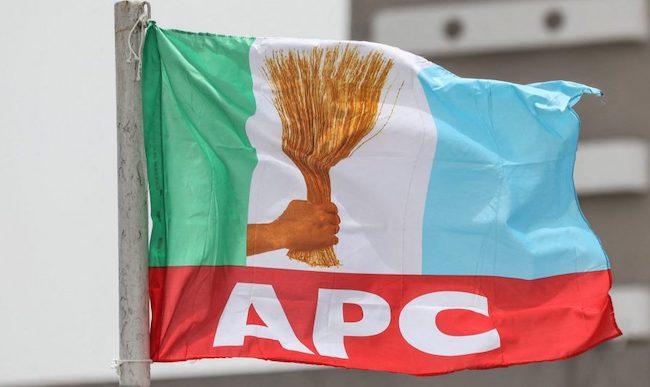
The choice of Abubakar Atiku Abubakar, son of former Vice President Atiku Abubakar, to join the All Progressives Congress (APC) has been described as a “generational statement” by the APC’s Lagos State Chapter.

The party said that the decision to reject the African Democratic Congress (ADC) speaks louder than any political retort or news conference in a statement released by its spokesperson, Seye Oladejo.

The APC claims that Atiku’s son’s decision highlights more serious issues with leadership, conviction, and trust.

According to the Lagos APC, Atiku Abubakar’s lengthy history of switching parties—from the Peoples Democratic Party (PDP) to the Action Congress (AC), back to the PDP, and now the ADC—has increased popular skepticism regarding his political orientation and ideological coherence.

The APC went on to characterize the defection as an endorsement of its governance record and President Bola Ahmed Tinubu’s Renewed Hope Agenda, adding that the action shows increased trust in the leadership and policy direction of the ruling party.

The Lagos APC welcomed Abubakar Atiku Abubakar into its ranks and declared that the period of “political tourism and ambition without ideology” is gradually coming to an end, urging Nigerians to interpret the move as a sign of shifting political trends.

The party came to the conclusion that in order for leadership to be credible on a national level, it must first inspire confidence at home. It maintains that Nigerians are increasingly using this test wisely.

Alaafin Breaks Silence: Refutes Makinde’s Statement on Obas’ Council Leadership

0

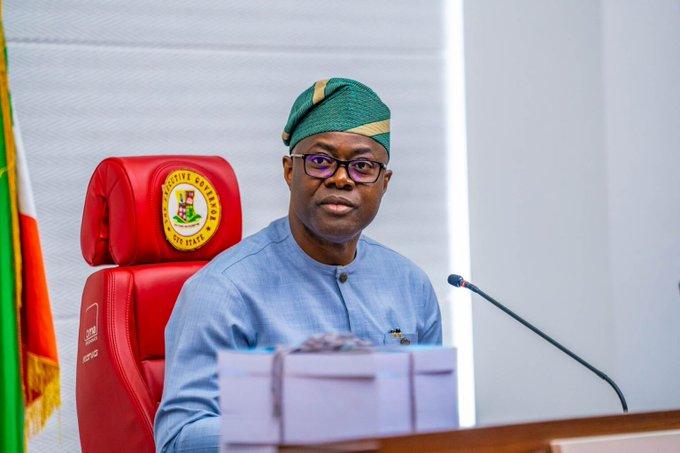
The allegations made by Oyo State Governor Seyi Makinde that he conferred with the Alaafin, the Olubadan of Ibadanland, and the Soun of Ogbomoso over the rotation of the chairperson of the Oyo State Council of Obas and Chiefs have been refuted by the Alaafin of Oyo’s Palace.

The palace insisted that no such meeting ever took place in a statement dated January 15, 2026, calling the governor’s assertion false.

Bode Durojaiye, the Director of Media and Publicity of the Alaafin, signed the statement.

The palace claims that the Alaafin, Oba Engineer Abimbola Akeem Owoade I, never discussed the issue with the governor or the other traditional leaders.

Additionally, it denied rumors that the Alaafin was in favor of a rotating chairmanship.

“The Alaafin did not meet with the governor and did not support the council’s rotational leadership,” the statement stated.

The palace went on to say that the Oyo Council of Elders’ document, which represents the viewpoint of all Oyo stakeholders, had previously formally informed the state government of the Alaafin’s position.

It stressed that the document continues to represent the Alaafin and Oyo community’s official stance on the State Council of Obas and Chiefs’ leadership structure.

Defence Minister Reveals Why Bodies of Terrorists Killed by Trump’s Airstrikes Were Never Found

0

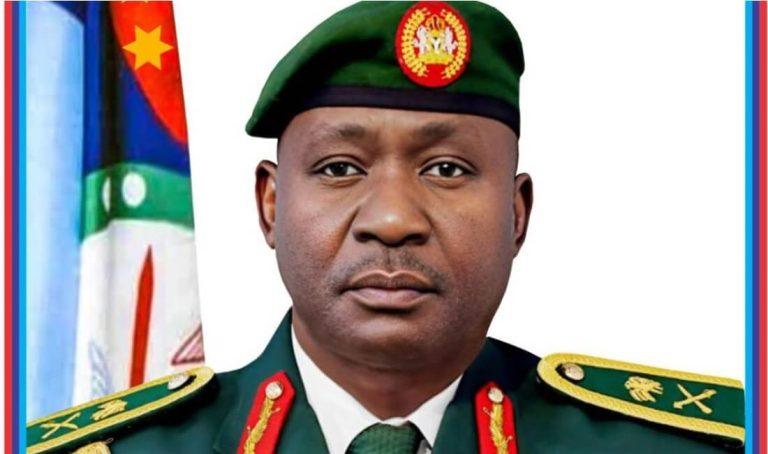
The nature of the weapons used in the recent US airstrikes in Nigeria, according to Minister of Defense Gen. Christopher Musa (Rtd), made it impossible to recover the physical remains of terrorists who had been neutralized.

According to reports, Musa said that the terrorists were eliminated using cutting-edge weapons, such as Tomahawk missiles, which left no trace in an interview on Arise Television’s Prime Time show on Thursday.

“They wouldn’t know, because the way they were neutralized, you wouldn’t see anything,” he stated. The Tomahawks are a new type of weapon.

The defense chief said that such results were a part of military strategy when questioned about allegations that some Tomahawk missiles failed to explode.

“That is all part of the tactics,” he said. You trick your adversary in a conflict attack. They are all a part of it.

Musa claims that Nigerian security forces were simultaneously launching coordinated attacks on other locations while the US operation was in progress.

He told Nigerians that more successes would come, adding that the activities have produced results.

“At least Nigerians are seeing the results, and they will see more things coming up,” he stated.

As we speak, numerous other places were being neutralized by the Nigerian Army, Navy, and Air Force. In actuality, a lot has been accomplished since January.

World Bank Projects Nigeria’s Economy to Grow by 4.4% Between 2026 and 2027

0

Nigeria’s economic growth prediction for 2027 has been kept at 4.4% by the World Bank, indicating continued optimism about the medium-term prospects of the nation despite persistent structural issues.

According to the World Bank’s most recent Global Economic Prospects, this is consistent with the forecast that was previously released in its Nigeria Development Update (NDU) in October 2025.

Remember that, according to the most recent report from the National Bureau of Statistics (NBS), Nigeria’s GDP increased by 3.46% year over year in real terms during the third quarter of 2024.

Nigeria’s growth prediction for 2026 was also raised by the Bretton Woods Institution to 4.4% from 3.7% in its June 2025 Global Economic Prospects report, indicating better macroeconomic conditions.

Nigeria’s GDP is predicted by the World Bank to grow at a rate of 4.4% in 2026 and 2027, which is the fastest growth rate in more than ten years.

The report states that a recovery in agricultural production, steady development in the services sector, and a slight acceleration of non-oil industrial activities will be the main drivers of this increase.

“Nigeria’s growth is expected to accelerate to 4.4% in both 2026 and 2027—the fastest pace in over a decade,” the bank stated.

The Bank further stated that throughout the predicted period, enhanced agricultural productivity and ongoing service expansion will continue to be the fundamental pillars sustaining economic performance.

According to the World Bank, continued economic reforms—especially in the tax system—along with cautious monetary policy are anticipated to boost macroeconomic stability and stimulate economic development.

“It is anticipated that prudent monetary policy and economic reforms, including those pertaining to the tax system, will continue to support activity.”

The Bank stated that these policy actions should “improve investor sentiment and reduce inflation further.” The World Bank stated that increased oil production is anticipated to counteract declining global oil prices this year, boosting fiscal income and bolstering the external balance.

The ongoing focus on non-oil growth emphasizes how Nigeria’s efforts to diversify its economy and lessen its reliance on crude oil exports are gradually having an impact.

Over time, increased agricultural productivity and a more robust services sector might help stabilize prices, increase employment, and expand the government’s tax base.

The World Bank’s forecast gives investors and policymakers some assurance that, despite the nation’s ongoing economic weaknesses, recent reforms may start to produce noticeable dividends.

Additionally, the World Bank predicted that Sub-Saharan Africa’s GDP will accelerate to 4.3% in 2026 because to regional economic reforms, robust domestic investment, and declining inflation.

The Bank anticipates that the global economy will continue to be robust, with growth moderating somewhat to 2.6% in 2026 before increasing to 2.7% in 2027—an increase from its June prediction.

Even while geopolitical and climate-related risks are still high, the improving global picture is a result of declining inflation, stabilizing financial conditions, and stronger-than-expected performance in a number of emerging and developing economies.

Dele Momodu Warns: Nigeria Must Be Rescued from Dictatorship Ahead of 2027

0

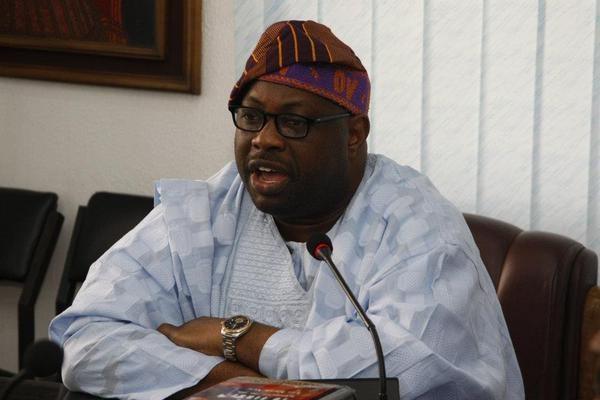
Dele Momodu, a prominent member of the African Democratic Congress (ADC), has emphasized the importance of saving Nigeria from a one-man dictatorship.

Momodu made this request on Thursday while participating as a guest in an interview on Channels Television’s “The Morning Brief.”

He was talking about Nigeria’s upcoming general elections in 2027.

“I’m glad there are some morally upright people in our country who don’t care about making quick money in politics.

“I would support President Bola Tinubu if I wanted to make money in politics. I’ll be leading the way, but that’s not the problem.

“We must prevent a one-man dictatorship in Nigeria.” It’s like bringing a patient to the hospital, so Nigeria has to get better.

“The physicians ensure that the patient is saved.” Once you’re well, they can reset whatever went wrong, and you can start discussing developmental projects. Politics is like that, he said.

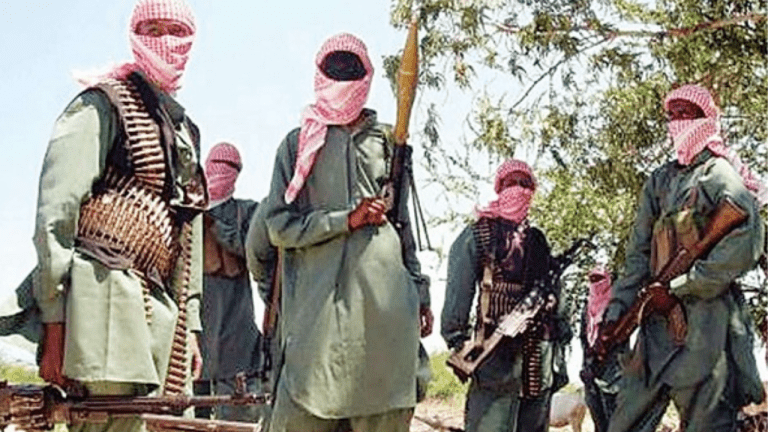
Dangerous Precedent’: Katsina Under Fire for Releasing 70 Suspected Bandits

0

The Katsina State Government’s proposal to ease the release of seventy defendants who are on trial for alleged banditry has been widely criticized nationwide.

The administration allegedly asked the Administration of Criminal Justice Monitoring Committee, or ACJMC, to assist in the suspects’ release in an official letter dated January 2 and stamped “SECRET.”

Citing Section 371(2) of the Administration of Criminal Justice Law of Katsina, 2021, the document, purportedly written to the state’s Chief Judge, described the action as a requirement for maintaining peace agreements made between armed groups and frontline local government units.

Legal professionals, civil society organizations, victims’ families, and members of the public have expressed concern over the instruction, claiming that releasing people suspected of major crimes compromises the rule of law and deprives victims of justice.

Opponents caution that rather than discouraging criminal networks, such measures may strengthen them.

The Network for Justice’s Abdullahi Kofar Sauri called the idea “a dangerous precedent” and urged the government to think about justice and compensation for the families of the victims rather than releasing suspects.

Yahuza Getso, a security specialist, warned that the action “lacks sincerity” and would erode public confidence in government security tactics.

Nasir Muazu, the state Commissioner for Internal Security and Home Affairs, defended the program by telling DCL Hausa that the release was a component of attempts to combine community-driven peace deals with “repentant bandits” in a number of local government districts.

In places like Safana, Kurfi, Sabuwa, Faskari, Danmusa, Bakori, Musawa, Matazu, and Dutsinma, where kidnapped people were set free, he claimed the deals had already brought about a fair amount of peace.

According to Muazu, the action is in line with international best practices for dispute resolution.

Similar choices made by the Nigerian government were reportedly unsuccessful since terrorists and bandits who had previously enjoyed liberties quickly returned to the trenches.

Bakatsine, a crisis journalist and security analyst, said via his X handle that releasing jailed bandits without holding them accountable could strengthen criminal networks.

He penned,

Numerous settlements in the LGAs of Malumfashi, Faskari, Kafur, Dandume, Funtua, Matazu, Dutsin-Ma, Musawa, and Kankara have been repeatedly attacked since December 2025.

“Entire communities have been robbed for cattle and valuables, farmers have been shot in their fields, villages have been made to pay millions in levies, and civilians have been slaughtered.

The misleading impression that banditry has ended is created by the fact that many of these incidents receive little to no national attention. Not at all. The violence has just taken on a new shape.

Peace deals frequently show desperation rather than true assent, according to locals and experts.

They caution that a “peace” that permits kidnappings, murders, and unlawful levies is essentially a criminal law passed off as reconciliation.

Legal experts predict that the issue may soon be subject to court review as the debate heats up in traditional and social media. Stakeholders want to know whether due process was followed and whether public safety is being jeopardized in the name of peace.