Home Blog Page 1222

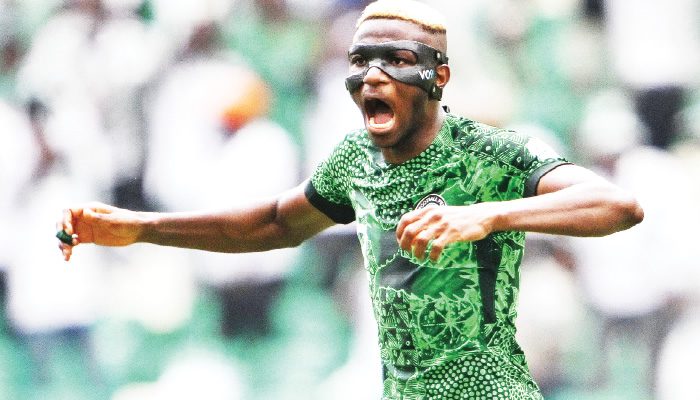
NFF should ban Osimhen for Finidi outburst – Peterside

0

Former Nigerian goalkeeper Idah Peterside has said that Nigerian footballer Victor Osimhen should be banned from the national team if he fails to apologise to embattled coach Finidi Goege for his outburst on social media on Friday.

In a viral video on X (formerly Twitter), Peterside criticized Osimhen’s behavior, deeming it disrespectful and unacceptable.

“I think action should be taken, or he should be banned from playing for the national team. If we allow this kind of thing to continue, it would not augur well for Nigeria. The men who have served and given everything to our great country. So sanity must be brought to our football. He (Osimhen) needs to come outside and apologize for the things he said to Finidi,” Peterside said on social media.

“Finidi George is a legend, You don’t just widen your mouth and say things that are unpalatable. If you have issues with the man, pick up your phone and call him. That’s what responsible people do. Osimhen has just shown a bit of irresponsibility, and that’s unexpected. I think the NFF should call Osimhen and ask him to apologize. He has to apologize for saying things.

“Our national team is sacred; days when we wore the jersey, we respected it, and people that went before us. He’s not the first, and neither would he be the last. He should come out openly and apologize openly to former footballers, NFF, Finidi, and Nigerians.”

The controversy began after Finidi expressed frustration over the lack of support from the NFF during a meeting with Sports Minister John Enoh in Abuja. Finidi alleged that certain players, supported by influential individuals, were untouchable and undisciplined and it was rumoured that he specifically called Osimhen out.

In response, Osimhen took to Instagram live to express his anger and disappointment, declaring that he has lost respect for Finidi, asserting that respect should be mutual, and vowed to share evidence of their conversation to clarify the situation.

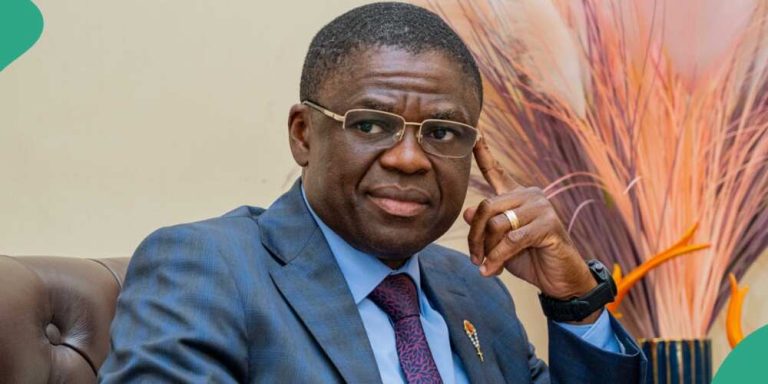
Shaibu backs APC candidate, labels Ighodalo outsider

0

A former deputy governor of Edo State, Philip Shaibu, on Sunday, said he would be supporting the candidate of the All Progressives Congress, Senator Monday Okpebholo for the September 21 governorship election.

Shaibu was impeached by the state House of Assembly on April 8 after a protracted battle with Governor Godwin Obaseki over his succession bid.

He said Okpebholo had the characteristics of the ‘homeboy’ needed to take over governance in Edo State.

Shaibu spoke to journalists on the sidelines of the Fathers’ Day celebration at the St Paul Catholic Church in Benin City.

He described the candidate of the Peoples Democratic Party, Asue Ighodalo, as a product of godfatherism, which, he said, had been eradicated from the political history of Edo State.

He said a former governor of the state, Adams Oshiomhole, preached against godfatherism and he joined Obaseki to fight against godfatherism during the 2020 election, adding that he had also learnt new political strategies from the governor.

Shaibu said, “I am a very good learner and learning is what is most important in our lives and we must continue to learn till we die. Governor Obaseki says he has the right to support whoever he wants to support but he also forgot that he doesn’t have the right to stop anybody from supporting whoever they wants to support. So, it is my right to also decide who I want to support.

“I will support a homeboy. I came into the contest to be governor of Edo State because I needed governance to return to a homeboy, somebody who understands our plight and somebody who understands what the people are feeling.

“We don’t want an outsider. We have experimented with an outsider and it is not working, so this time, we want a homeboy. We have only two home boys in the major political parties; one is in the Labour Party and one is in the All Progressives Congress.

“I chose to follow the homeboy in the APC. The man they are parading in the PDP is an outsider and we have also agreed that no more godfatherism in Edo. The man the PDP is parading is the godson of Obaseki and there is no way a godson can be governor of Edo State again.”

On whether he would not be accused of anti-party activity since he is still a member of the PDP, Shiabu said, “No, it is not anti-party because I know that in the last election, the governor was one leg in the Labour Party and one leg in the PDP, so it can’t be anti-party now.”

On the capacity of Okpebholo, he said, “Enough of English that takes us nowhere. We are talking about governance, the man who understands the plight of the people. He wears the shoes and knows where it pinches.

“A man that has never voted, how can he be seeking our vote? And we are comparing him to a man that is a sitting senator who is really a homeboy!”

Purpose and practice of National Anthem

0

A National Anthem is one of the instruments of modern government. The lyrics are typically approved by the government and people as correctly expressing their history and national aspirations. It normally serves as an embellishment of the national personality to create national pride and endear the nation to the citizens. It is sung at important national, sub-national, sports and school events. It lends importance, credence and solemnity to such events. Citizens sing it standing reverently and respectfully usually with their right palm on their left breast as a sign of meditative communion with the nation. A National Anthem amounts to the music of a national secular faith. The lyrics and music are therefore at the very heart of the nation. Ideally, a National Anthem is a patriotic song aimed at galvanising national patriotism by socialising the citizenry, thus producing patriotic citizens. National Anthems are therefore not mere symbolic national cosmetics, but essential national spiritual instruments for national edification. Even the monarchy-centred British National Anthem which was adopted in September 1745 aimed at the edification of the nation using the monarchy as the rallying point.

National Anthems became very prominent in the 18th century. Claude Joseph Rouget de Lisle wrote the poem of the French National Anthem in 1792. He also composed its music, which was adopted as the French National Anthem on July 14, 1795. It was a war song during the French Revolution. It is no surprise, therefore, that Anne-Marie described it as “bold, catchy and revolutionary.” It is a celebration of French chivalry and the popularisation of the French revolutionary triad of ‘liberty, equality and brotherhood.’ Similarly, the American National Anthem was inspired by the victory over the British at Fort McHenry during the war of 1812. The anthem, “The Star-Spangled Banner” is a song based on the poem “The Defence of Fort McHenry.” No wonder it celebrates what is often described as elements of American character, namely: independence, bravery and heroism in such phrases as ‘land of the free’ and ‘home of the brave.’ It was also Scott Key, the lyricist, who supplied the tune of a popular British song for his poem, which was officially adopted as the American National Anthem in 1931.

The British acquired different parts of Nigeria either as colony or protectorate, by conquest or by treaty and coalesced them into the Colony and Protectorate of Southern Nigeria and Protectorate of Northern Nigeria. In 1914, the two were amalgamated into one country called Nigeria. The name Nigeria was coined by Flora Shaw, the girlfriend of Lieutenant General Frederick Lugard, a boisterous officer, who was deployed to colonial service. After a stint in Uganda in which he introduced indirect rule, he was posted to Nigeria where he effected the amalgamation that was aimed at a colonial-balanced budget rather than the integration of the two halves of Nigeria. He then assumed the title of Governor-General although there were no Governors. In 1959, a year to the date set for Nigeria’s independence from colonial rule, an advert was posted for contestants to produce the National Anthem. Over 500 Nigerians submitted entries but paradoxically the lyric submitted by a British expatriate, Lilian Jean Williams, was selected as the winning entry while the music competition was won by a British ballet musician, Frances Brenda. As one would expect, Ezekiel Mphahlele recorded the criticism of Nigerians that the winners of the National Anthem were both Britons rather than Nigerians. It is contradictory, some people argued, that a very significant document for the independence of Nigeria from Britain was British-brewed. It was therefore not an autochthonous document, which is a serious charge in independence matters as it would appear to detract from the independence of those who claim preparedness and readiness for independence if they could not prepare their own National Anthem. By that date (1959), Nigeria had produced such literary giants like Chinua Achebe who had published the globally successful “Things Fall Apart” and Wole Soyinka who had published and staged many plays including, in fact, the Independence Play, “A Dance of the Forests.” It could not have been that Nigeria which went ahead to produce a Nobel Laureate in Literature and more than 200 entries annually for the Nigerian Prize in Literature could not have produced a winning entry for the National Anthem. As it were, they were Britons who made the statement, “Nigeria We Hail Thee.”

The Anthem was in use from Independence in 1960 till 1978 when the military administration of General Olusegun Obasanjo replaced it with “Arise O Compatriots” which was written by four Nigerians – John A. Ilechukwu, Eme Etim Akpan, Babatunde A. Ogunnaike, O Sola Omoigui, and P. O. Aderibigbe. The music was written by a Nigerian, B. E. Odiase. The second anthem lasted 46 years.

President Ebele Jonathan convened the 2014 National Conference which approved the recommendation of its Committee on Political Restructuring and Forms of Government that Nigeria should revert to the old National Anthem or what some people term the ‘Original National Anthem.’ The conference based its submission on two main grounds. First, it was of the opinion that the old anthem is a better symbol of unity, peace and prosperity without substantiating how it does. Second, the conference argued that the change would assist Nigeria to achieve its goal of building a fully integrated nation. The two grounds sounded good to the ear but are hardly plausible. At best, they are general political platitudes. They also, more or less, form the basis of the adoption of what the Senate President, Godswill Akpabio, termed the “updated National Anthem.” The protagonists argued that “Nigeria We Hail Thee” connects “more to our core with a deeper meaning.” This is still in the realm of generalisations. Candidate Bola Tinubu had promised to revert to the old anthem during his presidential campaign, claiming that it “describes us much better” because “it is about service, commitment and nation-building.”

There is no prescribed amendatory process for a National Anthem because it is not specifically written into the constitution. The change is therefore technically not an amendment to the constitution. It could therefore be handled as a bill which is what was done in this case. Democracy demands a participatory process which normally involves a public hearing. At the public hearing, the Attorney General of the Federation and Minister of Justice, Mr Lateef Fagbemi (SAN) argued that public hearing is necessary but not sufficient for the proposed amendment. For him, “it should be subjected to a wider consultation” to reflect the general wish of Nigerians. The Senate Majority Leader, Opeyemi Bamidele, is quoted to have said, on the same subject, that “if considered necessary, further consultation would be had on the matter.” It turned out that no further consultation was had on the matter. The ‘original anthem’ was therefore brought back without subjecting it to any editing.  This is the point of departure for the next section.

The term “updated National Anthem” by Senator Akpabio is not borne out by even the minutest editing of the anthem. It was reproduced completely with the most offensive derogatory line of the lyric which states, “Though tribe and tongue may differ; in brotherhood, we stand.” The derogation is proved by the fact that the term ‘tribe’ is reserved for Africans, Indians and Native Americans and not for peoples in similar circumstances in Europe and the United States. Chinua Achebe in his “Things Fall Apart” had referred to the penchant of colonial officers and European anthropologists for denigrating colonial peoples as tribesmen. We rely on the definitions of two eminent Dictionaries of the English Language to demonstrate discriminatory attribution of the term to Africans and in this particular instance to Nigerians.

The Oxford English Dictionary defines tribe as “an aggregate of people in a primitive and barbarous condition” just as the Century Dictionary defines it as “a division of a barbarous race of people.” To retain this in the National Anthem will be the worst and most unfortunate intentional self-denigration in the twenty-first century. Even worse than that is the fact that the colonial metropolis deliberately applied the word ‘tribe’ as a justificatory phraseology for colonialism and its attendant atrocities. It inflicts a double jeopardy on colonial peoples and neutralises the right of independence. To retain it in the National Anthem is to accept that self-determination is a concession for which Nigerians should show gratitude. Self-determination is a right.

The conjunction ‘Though’ that begins the third line of the anthem suggests that the differences caused by ‘tribe and tongue’ are major obstacles to unity but moderated by brotherhood as a solvent. The role of brotherhood as solvent for the differences between tribe and tongue is counter-intuitive because differences would not have been noticeable and/or worrying if brotherhood is an efficacious solvent in the first place. Even if brotherhood were efficacious, the word brotherhood has become suspect as sexist in matters of this nature. It is better avoided in critical matters like the National Anthem.

In conclusion, we want to put on record the speed with which the ‘original’ anthem was brought back to life. It shows that the National Assembly can speedily attend to issues. In this same spirit, we implore the National Assembly to set in motion the process of expunging the offensive words so as to relieve all Nigerians of the memories of colonialism in our National Anthem. We also want to use this occasion and medium to remind Nigerians that colonialism is alive and well. It comes now in the form of loans, grants, establishment of military posts. In the words of the arch colonialist, Cecil Rhodes, ‘colonialism is philanthropy with 10 per cent.’ It is not only the Greeks that give Greek gifts.


  • Izevbaye, Emeritus Professor of English; Adeniran, Professor of Linguistics; and Ayoade, Emeritus Professor of Political Science, write from the University of Ibadan, Nigeria

Police probe death of US-based businessman in Lagos hotel

0

The Lagos State Police Command has begun an investigation to unravel the circumstances surrounding the death of a businessman, Onyejekwe Izuchukwu, whose remains were found in a hotel room in the Ikoyi area of the state.

According Metro gathered that Izuchukwu, who was based in Texas, USA, returned to Nigeria for some business dealings when the tragedy that claimed his life struck on June 9, 2024.

The 62-year-old businessman was said to have lodged in the hotel in Ikoyi while engaging in the business activities that brought him back to the country.

Speaking anonymously to our correspondent on Sunday, a source, who didn’t disclose his name over fear of victimisation, said Izuchukwu started lodging in the hotel on Thursday, June 6, until one of the cleaners, while attempting to clean his room, found him lying motionless on the floor of the room.

According to the source, the cleaner, after suspecting that the businessman had died, informed the management of the hotel and the hotel, through its Chief Security Officer, reported the case to the police.

The source said, “He (Izuchukwu) was a customer, who lodged in the hotel on June 6, 2024, and was found dead in his hotel room on June 9, 2024, around 7 pm by a cleaner in the hotel.

“It was the Assistant Chief Security Officer of the hotel located in Ikoyi who reported that Onyejekwe Izuchukwu, 62, was found dead on the floor of the room he lodged to the police.

“Despite discovering him in that state, a doctor was also invited to assess him and it was the doctor who confirmed him dead.”

Until Izuchukwu’s death, an online platform, okay.ng, hinted that he had served as the President of Bits and Drilling Tools, a division of Schlumberger, where he led the development of innovative drilling technologies designed to reduce costs and improve efficiency in the oil and gas industry.

The state Police Public Relations Officer, Benjamin Hundeyin, when contacted, said the command had commenced an investigation into the case.

He said, “Izuchukwu was found lifeless on the floor of the hotel room. A doctor confirmed him dead and his (Izuchukwu) corpse has been deposited in a morgue in Ikeja for autopsy. The command has commenced an investigation into the case.”

GTBank drags 60 bank chiefs to court

0

Guaranty Trust Bank has dragged no fewer than 60 top executives of 13 commercial banks to court as a pending suit between GTBank and Afex Commodity Exchange over N17bn Anchor Borrowers Programme loan lingers.

The 60 executives including the chairmen, chief executive officers, directors, and company secretaries of the 13 banks are facing contempt proceedings for allegedly failing to implement a No-Debit-Order reportedly placed on the accounts of Afex Commodity Exchange with the banks.

In suit no FHC/L/CS/911/2024 involving Guaranty Trust Bank Limited and AFEX Commodities Exchange Limited, the Federal High Court, Lagos division presided by Justice CJ Aneke signed an order for the bank chairmen, MDs, directors, company secretaries and the liquidator of Heritage Bank (Nigeria Deposit Insurance Corporation) to be committed to jail for failing to obey its May 27, 2024 ruling.

A legal notice titled ‘Order to serve notice of disobedience to order of court vide newspaper publication’ published in some national dailies including The According on Thursday, partly read, “An order granting leave to the Plaintiff Applicant to serve Form 48 (Notice of Consequences of Disobedience to Order of Court) dated 11th June, 2024 and all other forms and processes that may be issued in this contempt proceedings inclusive of Form 49 on the 1st-60st parties cited for contempt

The matter was adjourned to next Thursday.

Parties cited for contempt include  Access Bank, Citibank, Jaiz Bank, Union Bank, Fidelity Bank, First Bank of Nigeria Plc, First City Monument Bank, NDIC (liquidator for Heritage Bank), Polaris Bank, Stanbic IBTC Bank, Standard Chartered Bank, Taj Bank, United Bank for Africa and Zenith Bank alongside its principal officers.

In the court ruling dated May 27, 2024, twenty banks were directed to transfer monies standing to the credit of the respondent into the AFEX’s account with GTB until the N17.81bn is repaid.

The N17.81bn loans comprise N15.77bn; the amount outstanding and unpaid, as of April 17, 2024, and the cost of recovery and incidental expenses in the sum of N2.04bn.

The court also granted an injunction allowing GTB to take over AFEX 16 warehouses located across seven states and sell the commodities stored in them, which it said were procured with the Central Bank of Nigeria Anchor Borrowers’ loan facility.

Earlier in the month, the court had served contempt proceedings against AFEX and some of its principal officers including Ayodele Balogun, Jendayi Fraaser, Justin Topilow, Mobolaji Adeoye and Koonal Ghandi.

According to court papers, AFEX had sourced the Anchor Borrowers Programme Loan facility from GTB to provide finance for smallholder farmers registered under the CBN Anchor Borrower’s programme.

The loan was expected to be repaid from the sale of commodities. However, AFEX failed to uphold its end of the deal even after an extension.

In a statement following the interim court order, AFEX claimed that it had repaid about 90 per cent of the loan facility.

“However, a portion of the loan remains outstanding with the farmers and while we have paid out a portion out of our own purse, we remain in discussions with CBN over the outstanding amounts of the said facility,” the exchange said.

It also said the full value of the loan was utilised to provide input to farmers in three consecutive seasons, starting in 2020.

The exchange added that it had remained consistent with repaying the loans until economic headwinds impacted the operations of the farmers that they had disbursed the money to.

“Over 800,000 hectares of farmland were financed through the course of the programme’s operationalisation; however, significant macro and policy headwinds, including the cash crunch on the back of the Naira redesign policy, severely impacted the productive capacity and market participation of the smallholder farmers in the 2022/2023 season.

“This resulted in less than 40 cent repayment from farmers on their input loan bundles, down from our 90per cent repayment rates in the previous eight years of providing input financing for farmers. The low repayment rate ultimately impacted on our ability to refund the full value of the loan at the end of Q1 2023 and following a 6-month extension period,” AFEX added.

The commodities exchange also stated that the lingering effects of the cash crunch have continued to impact farmers, who sold at below market value to get immediate cash inflows to sustain their families in the period and remain unable to pay back.

Meanwhile, AFEX has called on the Central Bank of Nigeria to activate the collateral guarantee of up to 70 per cent clause included in the Anchor Borrowers programme.

“Evidenced in the attached letters, our engagements with Guaranty Trust Bank Limited, a Participating Financial Institution in the program, as well as the apex bank have seen us highlight these limitations on the part of the defaulting farmers with suggestions being made to the CBN to activate the risk-sharing structure put in place for the program and release funds accordingly to sustain activities and allow for needed recovery efforts in our agriculture sector.

“In light of these engagements, we consider the recent steps by Guaranty Trust Bank Limited to be premature, coming in the midst of open conversations that are being had with all parties to find a path to resolution that does not unduly punish farmers, who have been the biggest hit by macroeconomic conditions that they had no control over,” AFEX concluded.

CBN at the inception of the programme in 2015 said the broad objective was to create economic linkages between smallholder farmers and processors to increase agricultural output and ensure food price stability.

The  Anchor Borrowers’ Programme guidelines stipulate that upon harvest, benefiting farmers are to repay their loans with produce (which must cover the loan principal and interest) to an anchor, who pays the cash equivalent to the farmer’s account.

By 2022, at least 4.8 million people had benefitted from the Anchor Borrowers Programme and the  CBN in a 2023 statement said it released N1.079tn  under the programme, out of which over N500bn is due for repayment.

The programme has since been discontinued by the CBN as it pivots from development financing interventions to its core duty of price and monetary stability.

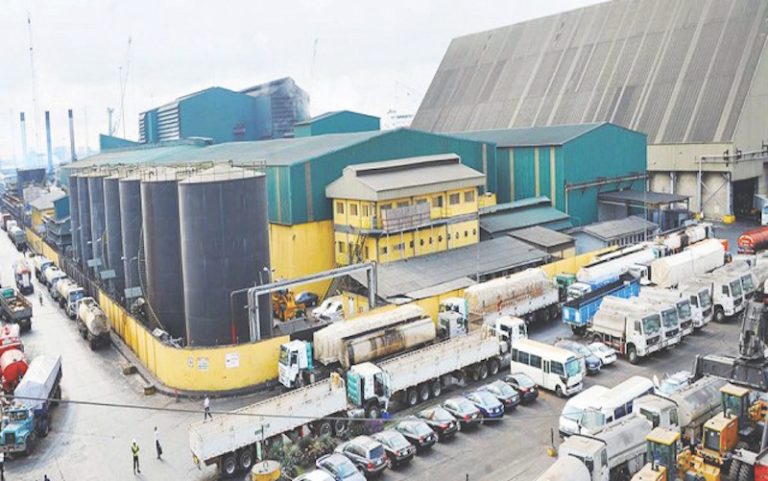
Dangote Sugar Refinery issues N42.79bn commercial notes

0

Dangote Sugar Refinery has announced that it has issued Series 4 and 5 Commercial Paper notes to raise N42.79bn.

According to a release filed with the Nigerian Exchange Limited and signed by the Company Secretary, Temitope Hassan, the latest commercial notes were issued under its N150bn Commercial Paper Issuance Programme.

“Dangote Sugar Refinery PLC hereby notifies the Nigerian Exchange and the investing public of its successful issuance of N42.79bn Series 4 and 5 Commercial Paper notes (the “Notes”)” he said.

Hassan stated that the issuance, comprising N12.93bn 181-day Series 4 notes and N29.86bn 265-day Series 5 notes, was met with strong investor interest, attracting participation from pension and non-pension asset managers as well as other institutional and individual investors.

He added that the Series 4 notes were priced at a 23.00 per cent yield, while the Series 5 notes were priced at a 25.00 per cent yield.

“The notes, which were issued under the company’s N150bn Commercial Paper Issuance Programme, comprised N12.93bn 181-day Series 4 and N29.86bn 265-day Series 5 notes.

“The Series 4 notes are priced at a 23.00 per cent yield, while the Series 5 notes are priced at a 25.00 per cent yield, with participation from several investor groups, including pension and non-pension asset managers, as well as other institutional and individual investors,” he elucidated.

He added that the successful issuance was a strategic move to diversify its funding sources.

He maintained that the funds raised through the commercial paper notes would be utilised to support the firm’s short-term working capital and funding requirements.

He expressed gratitude for the robust investor participation, noting that it underscored the trust and confidence investors have in the company’s business model and growth prospects.

“The successful issuance of the notes is in furtherance of the company’s strategy to diversify its funding sources, with the funds raised being deployed to support its short-term working capital and funding requirements,” he stated.

Kaduna spends N4bn on 25,000 schoolchildren feeding – Govt

0

The Kaduna State Government said it spends N4bn annually to feed schoolchildren in the state.

Governor Uba Sani’s Special Assistant on School Feeding, Dr. Fauziya Buhari-Ado, who said this, explained it was to curb the growing number of out-of-school children in the state.

Buhari-Ado, in a press statement on Sunday, said, “No fewer than 25,000 students in 51 boarding schools across the 23 local government areas benefit from the programme since the feeding cost was improved from N540 per child per day to N700 naira per child per day, translating to about N4bn annual spending.”

She said the initiative had significantly boosted school enrollment and daily attendance rates and had also stimulated the local economy.

Reiterating her resolve to ensure compliance with menu guidelines, food quality, quantity, hygiene standards, and timely service delivery, she remarked that the state government had saved millions of naira due to the verification of the beneficiaries of the programme in an open and transparent manner.

“In these challenging times, our schools have become beacons of hope and safety for our children. The school feeding programme has relieved parents of the burden of providing for their children’s basic needs, ensuring that no child goes hungry.

“This act alone sends a powerful signal that Kaduna State stands as one, united people. Our children come from diverse cultural and religious backgrounds, yet they thrive as one, sleeping together, eating together, and studying together with no differences.

“This unity is the cornerstone of our strength as a state, and it is exemplified through initiatives like the school feeding program.

“Furthermore, the economic impact of the school feeding programme cannot be overlooked. It has not only created opportunities for local food vendors and suppliers but has also stimulated growth in our local economies.

“Kaduna State stands tall amongst all states, as we proudly boast of providing free meals to our future leaders. This translates to about 20 million  free meals served yearly.”

Bizman drags police to court for being declared wanted

0

A businessman, Musa Saliu, has dragged the Inspector General of Police, Olukayode Egbetokun, before a Federal High Court in Abuja, over his false declaration as a wanted person in a land dispute.

In the suit filed Friday, June 14, 2024, and a copy of the documents obtained by our correspondent on Sunday, the applicant through his lawyer, Femi Motojesi Esq, wants the court to declare that a police publication of his picture and name in the Special Police Gazette bulletin as a wanted person with Ref No: CB: 3510/LX/FHQ/SEB/ABJ/T.7/Vo. 1/20 amounted to the violation of his fundamental rights.

Listed in the suit marked CV/2839/24, are the Inspector-General of Police, Deputy Inspector General of Police, Force Criminal Intelligence and Investigation Department and Funmilola Olorunfemi, as first to third respondents respectively.

Saliu, in the suit, contended that the police lacked the powers “to engage in the act of debt recovery for the third respondent (Olorunfemi) who is a subscriber to the applicant’s (Saliu’s) estate under construction.”

Saliu, who is also a politician and former New Nigeria Peoples Party governorship candidate in the 2023 election in Kogi State, narrated that the dispute arose after Olorunfemi paid N25m to subscribe to one of his houses being built but work paused after the FCT Department of Development Control demolished the estate.

He said afterwards, Olorunfemi invited the police to recover her money even after he had notified all the subscribers to the estate that he was making efforts to resolve the issue and return to the site.

The aggrieved estate developer faulted the police for their actions in a fundamental rights enforcement suit brought pursuant under Sections 34, 35, 41 and 46; Articles 5 and 6 of the African Charter on Human and People’s Rights Cap 10 Laws of the Federation of Nigeria, 2004.

He asked the court to order the police to issue an apology to him which should be published in the Special Police Gazette bulletin and two national dailies.

He argued that the dispute between him and Olorunfemi is civil and has no criminal connotation to warrant the police involving themselves in it and inviting him for questioning, blocking his bank account and publishing his picture and details as a wanted person in the Police Gazette bulletin.

On this note, he demanded the sum of N500m in damages for the violation of his constitutionally guaranteed rights to privacy and dignity of the human person, personal liberty, and freedom of movement when the police declared him wanted.

Saliu also urged the court to order the police to unfreeze the account number 1000129689 with Globus Bank belonging to Emperor City Integrated Limited where he is the alter ego and signatory for being a violation of his fundamental rights.

No date has been assigned for the hearing.

As of the filing this report, the Force Public Relations Officer, Muyiwa Adejobi, had not yet responded to our correspondent’s test messsge seeking clarification on the matter nor did he pick his calls.

Seven stars of Nigerian descent at Euro 2024

0

The 2024 UEFA European Championship in Germany will have a strong Nigerian presence, not through the Super Eagles, but via players of Nigerian descent representing various European nations. Nigeria, renowned for producing top football talents, continues to see its diaspora making significant impacts on the global stage. According Sports Extra’s PETER AKINBO highlights seven players with Nigerian roots who are set to shine at Euro 2024

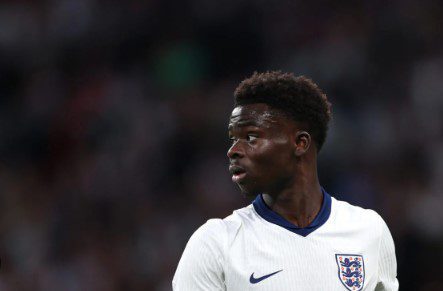
Bukayo Saka – England

Arsenal’s star winger Bukayo Saka, born to Nigerian parents, has been a crucial member of the England national team since the last Euros.

Saka, who maintains strong ties to Nigeria, has been a revelation for both club and country. He has consistently performed at a high level, and just had an outstanding season with Arsenal scoring 20 goals and providing 13 assists.

Saka’s versatility allows him to operate effectively on either wing, providing England with tactical flexibility. His direct running, precise crossing, and clinical finishing have made him a fan favorite and a crucial part of Gareth Southgate’s plans.

Jamal Musiala – Germany

Jamal Musiala, a key player for Bayern Munich, has been included in Germany’s 26-man squad for the Euros. The 21-year-old midfielder, born to a Nigerian father and a German mother in Germany, chose to represent Die Mannschaft internationally.

Musiala had a stellar season with 12 goals and seven assists, solidifying his place as one of the brightest young talents in European football.

Musiala’s creativity, dribbling skills, and eye for goal make him a pivotal figure in Germany’s quest for European glory. His influence in the midfield will be critical as Germany aims to reclaim their status among Europe’s elite teams.

Manuel Akanji – Switzerland

Manchester City’s stalwart defender, Manuel Akanji, will be representing Switzerland. Born in Switzerland to a Nigerian father, Akanji has been a mainstay in the Swiss national team, earning over 50 caps.

His robust defending and ability to play out from the back have been vital for both club and country. Last season, Akanji played a significant role in Manchester City’s Premier League title-winning campaign, contributing four goals. His experience and leadership at the back will be invaluable as Switzerland looks to advance deep into the tournament.

Noah Okafor – Switzerland

Another player of Nigerian descent in the Swiss squad is Noah Okafor. The AC Milan forward was born in Binningen, Switzerland, to a Nigerian father and Swiss mother. Okafor’s football journey began at FC Basel, where his performances caught the eye of top European clubs. His move to AC Milan in 2023 marked a significant step in his career.

In the 2023/24 season, Okafor scored six goals and provided three assists, demonstrating his growing influence. Although he has only two goals in 22 appearances for Switzerland, Okafor’s pace, dribbling, and finishing make him a player to watch at Euro 2024.

Michael Folorunsho – Italy

Michael Folorunsho’s inclusion in Italy’s Euro 2024 squad is a significant milestone in his career. Born in Rome to Nigerian parents, Folorunsho has been a late bloomer in professional football.

Initially playing in the lower leagues, his impressive performances for Verona in Serie A caught the attention of Italy’s national team coach, Luciano Spalletti.

In the 2023/24 season, Folorunsho scored five goals and registered one assist, showcasing his potential as a box-to-box midfielder. His selection for the Euros marks his first major international tournament, and he could be cap-tied to Italy if he features in any of their matches.

Eberechi Eze – England

Crystal Palace’s Eberechi Eze is set to make his major tournament debut with England at Euro 2024. Born in Greenwich, London, to Nigerian parents, Eze has always been a subject of international tug-of-war between Nigeria and England. Despite being called up by the Super Eagles in the past, Eze has consistently expressed his desire to play for the Three Lions.

The 2023/24 season was a breakthrough year for him, as he scored 11 goals and provided six assists. Eze’s creativity, dribbling, and flair have made him a fan favorite, and he is expected to add a new dimension to England’s midfield in Germany.

Joshua Zirkzee – Netherlands

Joshua Zirkzee’s path to Euro 2024 has been a winding one. Born in Schiedam, Netherlands, to a Dutch father and Nigerian mother, Zirkzee began his career at Feyenoord before moving to Bayern Munich’s youth setup.

After a few loan spells, he settled at Bologna, where he had a standout 2023/24 season, scoring 12 goals and providing four assists, helping his team secure a fifth-place finish in Serie A and a Champions League spot.

His performances earned him a late call-up to the Netherlands squad for the Euros, replacing the injured Teun Koopmeiners. Zirkzee’s physical presence, combined with his technical skills, make him a valuable asset for the Dutch team.

Presidency counters New York Times, says Tinubu inherited dead economy

0

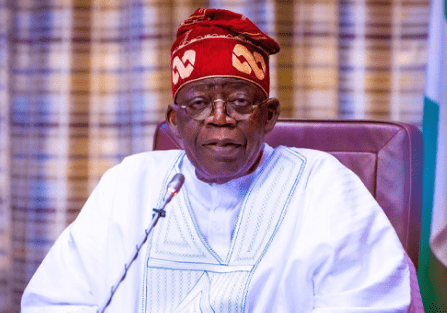
The Presidency stated, on Sunday, that President Bola Tinubu inherited a dead economy but was determined to resolve the nation’s economic crisis.

It was reacting to a New York Times feature story titled “Nigeria Confronts Its Worst Economic Crisis in a Generation,” published on June 11.

The feature,authoured by Ruth Maclean and Ismail Auwal, highlighted the severe economic challenges facing Nigeria.

It noted that soaring inflation and the plummeting national currency contribute to the economic crisis, with millions struggling to feed.

 “The pain is widespread. Unions strike to protest salaries of around $20 a month. People die in stampedes, desperate for free sacks of rice. Hospitals are overrun with women wracked by spasms from calcium deficiencies.

 “The crisis is largely believed to be rooted in two major changes implemented by a president elected 15 months ago: the partial removal of fuel subsidies and the floating of the currency, which together have caused major price rises,” the New York Times article said.

But in a statement on Sunday, the Special Adviser to the President on Information and Strategy, Bayo Onanuga,  said the feature reflected “the typical predetermined, reductionist, derogatory, and denigrating way foreign media establishments have reported on African countries for several decades.”

“Most significant about the report was that it painted the dire experiences of some Nigerians amid the inflationary spiral of the last year and blamed it all on the policies of the new administration. The report, based on several interviews, is at best jaundiced, all gloom and doom, as it never mentioned the positive aspects in the same economy as well as the amelioration policies being implemented by the central and state governments.

“To be sure, President Tinubu did not create the economic problems Nigeria faces today. He inherited them. As a respected economist in our country once put it, Tinubu inherited a dead economy. The economy was bleeding and needed quick surgery to avoid being plunged into the abyss, as happened in Zimbabwe and Venezuela,” Onanuga argued.

The presidential aide said the situation that Tinubu met on the ground necessitated his policy decisions in May/June 2023, which included ending the fuel subsidy regime and unifying the multiple exchange rates.

Onanuga said for decades, Nigeria had sustained a fuel subsidy system that consumed $84.39bn from public funds between 2005 and 2022, despite the country’s significant infrastructural deficits and the urgent need for improved social services for its citizens.

 He said, “The state oil firm, NNPC, the sole importer, had amassed trillions of naira in debts for absorbing the unsustainable subsidy payments in its books. By the time President Tinubu took over the leadership of the country, there was no provision made for fuel subsidy payments in the national budget beyond June 2023.

“The budget itself had a striking feature: it planned to spend 97 per cent of revenue servicing debt, with little left for recurrent or capital expenditure. The previous government had resorted to massive borrowing to cover such costs. Like oil, the exchange rate was also being subsidised by the government, with an estimated $1.5bn spent monthly by the CBN to ‘defend’ the currency against the unquenchable demand for the dollar by the country’s import-dependent economy.

“By keeping the rate low, arbitrage grew as a gulf existed between the official rate and the rate being used by over 5,000 BDCs that were previously licensed by the Central Bank. What was more, the country was failing to fulfil its remittance obligations to airlines and other foreign businesses, such that FDIs and investment in the oil sector dried up, and notably Emirate Airlines cut off the Nigerian route.”

Onanuga said it was only necessary for Tinubu to address the critical issues in public finance from day one by eliminating the subsidy regime and curbing the benefits that extended to neighboring countries.

 “After some months of the storm, with the naira sliding as low as N1,900 to the US dollar, some stability is being restored, though there remain some challenges.

“The exchange rate is now below N1,500 to the dollar, and there are prospects that the naira could regain its muscle and appreciate to between N1,000 and N1,200 before the end of the year. The economy recorded a trade surplus of N6.52tn in Q1, as against a deficit of N1.4tn in Q4 of 2023. Portfolio investors have streamed in as long-term investors. When Diageo wanted to sell its stake in Guinness Nigeria, it had the Singaporean conglomerate, Tolaram, ready for the uptake.

“With the World Bank extending a $2.25bn loan and other loans by the AfDB and Afreximbank coming in, Nigeria has become bankable again. This is all because the reforms being implemented have restored some confidence.

“The inflationary rate is slowing down, as shown in the figures released by the National Bureau of Statistics for April. Food inflation remains the biggest challenge, and the government is working very hard to rein it in with increased agricultural production,” Onanuga said.

He added that the Tinubu administration, along with the 36 states, was diligently working to increase food production to lower costs.

According to him, certain state governments, including Lagos and Akwa Ibom, have established retail shops to sell raw food items to residents at prices lower than those in the market.

He added, “The Tinubu government, in November last year, in consonance with its food emergency declaration, invested heavily in dry-season farming, giving farmers incentives to produce wheat, maize, and rice. The CBN has donated N100bn worth of fertiliser to farmers, and numerous incentives are being implemented. In the western part of Nigeria, the six governors have announced plans to invest massively in agriculture.

“With all the plans being executed, inflation, especially food inflation, will soon be tamed.

“Nigeria is not the only country in the world facing a rising cost of living crisis. The USA, too, is contending with a similar crisis, with families finding it hard to make ends meet. US Treasury Secretary Janet Yellen raised this concern recently. Europe is similarly in the throes of a cost-of-living crisis. As those countries are trying to confront the problem, the Tinubu administration is also working hard to overturn the economic problems in Nigeria.”