Home Blog Page 1221

Six killed, scores abducted in Sokoto Sallah day attack

0

No fewer than six persons have been reportedly killed with more than 100 persons also abducted as suspected gunmen attacked a community in Sokoto State in the early hours of Sunday.

The police in Sokoto, through their spokesman, Ahmed Rufai, confirmed the killing of over six persons and abduction of scores of residents at Tudun Doki,  Gwadabawa Local Government Area of Sokoto.

Rufai said though information about the attack was still sketchy, six people were confirmed killed.

According to him,  the Divisional Police Officer attached to Gwadabawa led a team of policemen to the community to assess the situation and restore normalcy.

“Six dead bodies were recovered by a search team and effort is still ongoing to recover other missing persons,” the police spokesman said.

According to villagers, the assailants, numbering about seven, attacked the community around 1.30 am armed with sophisticated firearms. They shot at anybody on sight and abducted many members of the community.

Gwadabawa, one of the local governments in the Eastern Senatorial District of Sokoto State, had been peaceful until the Sunday morning attack.

Meanwhile, troops of Operation Whirl Punch continued the raid and clearance patrols in Kaduna State as they killed three bandits on the Gonna Rogo-Eka axis of Kajuru Local Government Area of Kaduna State.

The Commissioner for Internal Security and Home Affairs, Samuel Aruwan, disclosed this in a statement on Sunday.

The According reports that the troops, on June 14, killed 36 bandits, including Buhari Alhaji Halidu, otherwise known as “Buharin Yadi,” one of the deadliest bandit leaders terrorising the North.

Following the killings, residents of Kaduna-Katsina border communities went into wild jubilation.

In the latest raid, the commissioner said, “Troops conducting clearance patrols neutralised three bandits along the Gonna Rogo-Eka axis of Kajuru LGA.”

He added that two AK-47 rifles, four AK-47 magazines and 81 rounds of 7.62mm ammunition were recovered after a fierce battle with the bandits.

“According to operational feedback to the Kaduna State Government, the troops conducted special clearance patrols in the area and made contact with bandits. After an exchange of fire, three of the criminals were summarily neutralised.

“The troops scoured the immediate vicinity and recovered two AK-47 rifles, four AK-47 magazines and 81 rounds of 7.62mm ammunition.”

Governor Uba Sani, speaking on the development, thanked the security forces and commended the troops, under the command of the General Officer Commanding, 1 Division, Nigerian Army, Maj. Gen. M.L.D Saraso, for intensifying efforts to ensure a peaceful Eid celebration for citizens.

“The troops will continue special fighting patrols within the general area and other locations of interest,” the statement added.

NCAA warns airlines against illegal flights

0

The Nigeria Civil Aviation Authority has threatened to wield the big stick against airlines flying into restricted areas in the country.

The aviation authority said this after it received a letter from the Office of the National Security Adviser, reporting a sighting of an unknown aircraft flying over the presidential villa.

As a result, the NCAA warned Airlines Operators in Nigeria through a letter sent to them.

The letter read partly, “The Nigeria Civil Aviation Authority wishes to refer to Part 8.8.1.21 of Nig.CARs which states that ‘No person must operate an aircraft in a prohibited area or in a restricted area, the particulars of which have been duly published, except in accordance to the condition of the restriction or by permission of the State over whose territory the areas are established.”

The letter further stated that such violations shall be liable to sanction, persecution or both by the authority.

The NCAA further stated that the intruding aircraft might risk being met with dire consequences.

The authority in the letter stated that all aircraft owners and operators should advise their crew to obtain thorough weather before the flight and adhere strictly to air traffic control instructions to avoid flying into restricted or prohibited areas.

All rights reserved. This material, and other digital content on this website, may not be reproduced, published, broadcast, rewritten or redistributed in whole or in part without prior express written permission from According.

Contact: [email protected]

Ilechukwu leads Enugu Rangers to eighth NPFL title

0

Enugu Rangers have won the 2023/24 Nigeria Premier Football League with one game to spare after beating Bendel Insurance 2-0 in their final home game of the season at the Nnamdi Azikiwe Stadium, Enugu, on Sunday, The According reports.

The Flying Antelopes’ eighth league title and first since 2016 was sealed thanks to the losses of their challengers Remo Stars and Enyimba in other match-day 37 fixtures against Sunshine Stars and Sporting Lagos respectively.

Remo Stars were beaten 2-1 in Akure by Sunshine Stars while a late goal Enyimba also fell 2-1 to relegation-threatened Sporting Lagos at the Mobolaji Johnson Arena.

Going into the match-day 37 game with a two-point lead, Fidelis Ilechukwu’s men took control of their destiny against Insurance as quickly as possible with Kenechukwu Agu opening the scoring in the 33rd minute.

Chidiebere Nwobodo doubled their advantage in the 65th minute but their confirmation as winners was almost being dragged to the final day as Remo and Enyimba, who had gone down by a goal each in their respective games both equalised.

A draw for either Remo or would have left them in contention for the title, but their chances were blown by two late goals.

In Akure, after Ahmed Akinyele had cancelled out Chinedu Nwosu’s opener for Sunshine, the 17-year-old turned up again in the 80th minute to dash the Ikenne side’s hope and get Sunshine their first win over them in six matches.

At the Mobolaji Johnson arena, Enyimba needed all three points and despite Chijioke Mbaoma scoring from the spot to cancel out Godwin Odibo’s opener for the hosts, Jonathan Alukwu was the hero, scoring a much-needed winner for Sporting which also left their survival chances hanging in the balance.

Thanks to their win over Bendel Insurance and their challengers’ defeats, Ilechukwu guided Rangers to an unassailable five-point lead with 67 points, going into their last game of the season against Gombe United at the Pantami Stadium next week.

‘The Working One’ as Ilechukwu is fondly called had previously worked with the defunct MFM FC, Heartland and Plateau United before joining Rangers at the start of the season.

After missing out on the title, Remo Stars, Enyimba and fourth-placed Shooting Stars are still in a thrilling race for the two other continental tickets via the league.

While the battle for that on match-day 38, Rangers will have a dead-rubber date against relegated Gombe United before their coronation at the Pantami Stadium.

Founded in 1970, Rangers have previously won the NPFL title seven times; 1974, 1975, 1977, 1981, 1982, 1984 and 2016.

Only Enyimba, who won the league for a record ninth time last season have more titles than the Flying Antelopes.

United hold talks with wonderkid Adejenughure

0

Manchester United have reportedly held talks with the representatives of Nigerian-Austrian youngster Oghenetejiri Adejenughure to discuss a move to Old Trafford this summer.

The 17-year-old is contracted to Red Bull Salzburg, although he is yet to make a first-team appearance for the Austrian outfit.

Adejenughure scored 16 times in 20 appearances at Under-18s level last term, though, and he has also managed eight goals in 12 outings for Austria Under-17s.

A host of clubs, including AC Milan and Borussia Dortmund, are said to be tracking the forward, but according to The Express, there is also firm interest from Man United.

The report claims that the Red Devils have held talks with the teenager’s representatives to discuss the possibility of moving to the 20-time English champions.

Austria head coach Ralf Rangnick, who was previously in charge of Man United on an interim basis, has allegedly earmarked the teenager as a future star.

Adejenughure is likely to turn out for Salzburg’s reverse team in Austria’s second division if he does stay this summer, but a number of clubs are seemingly hoping to put a deal in place.

A senior call-up for Austria is also allegedly not far away for the youngster who is also eligible to represent Nigeria, and the 2024/24 campaign is set to be a breakthrough season for the in-demand forward.

Man United’s new minority shareholder Sir Jim Ratcliffe is targeting youngsters as part of his strategy at Old Trafford, with the club no longer expected to play out large fees for ageing players.

Rasmus Hojlund, 21, was the top scorer for the club in his first campaign at the club, finding the back of the net on 16 occasions in all competitions last season.

Alejandro Garnacho, 19, managed 10 goals and five assists in 50 appearances in 2023-24, while 19-year-old Kobbie Mainoo scored five goals and provided one assist in 32 outings.

Hojlund, Garnacho, and Mainoo are allegedly three of six unsellable players at Old Trafford, while Harry Amass, 17, and Ethan Wheatley, 18, were involved with the first team towards the end of last season.

NPFL quartet in fierce relegation battles

0

Enugu Rangers have won the 2023/24 Nigeria Premier Football League but the fate of four clubs; Sporting Lagos, Akwa United, Bayelsa United and Doma United are still hanging in the balance as the relegation battles go down the wire in the last round of matches next week, According Sports Extra reports.

Despite a hard-fought 2-1 win over Enyimba at the Mobolaji Johnson Arena on Sunday, Sporting, the darling team of Lagos still find themselves deep in the relegation waters in 17th position with 46 points and they face a tough battle in their last game against continental ticket-chasing 3SC at the Lekan Salami Stadium in Ibadan.

Jonathan Alukwu scored a late winner for them in the win over Enyimba, but their midweek loss at home to Plateau United might be the ultimate finisher of their fate if they go down.

Former champions Akwa United are on the same points as Sporting (46), but above the drop zone on goal difference.

To be sure of safety, the Promise Keepers need to beat Rivers United in their last game of the season at home and hope for favourable results in the matches involving other strugglers.

Bayelsa United have been irrepressible in their last four matches which had seen them pick a crucial draw at Enyimba in midweek before coming from a goal down to beat 3SC 2-1 in Yenagoa on Sunday.

They sit two places above the relegation zone with just one point more than Sporting and Akwa United but their last hurdle against Bendel Insurance in Benin might pull them down if other strugglers get maximum points in their games.

Despite being in the top three at the end of the first half of the season, Doma United now find themselves rooted 18th with 43 points. If the Savannah Tigers want to stay up for their third season in the NPFL, they must beat Abia Warriors by as many goals as possible and see if they have done enough to survive as their destiny is not totally in their hands.

Former champions Heartland and Gombe United have already been relegated and two more teams will join them in the Nigeria National League next season.

All rights reserved. This material, and other digital content on this website, may not be reproduced, published, broadcast, rewritten or redistributed in whole or in part without prior express written permission from According.

Contact: [email protected]

Food inflation soars by 61% in one year-NBS report

0

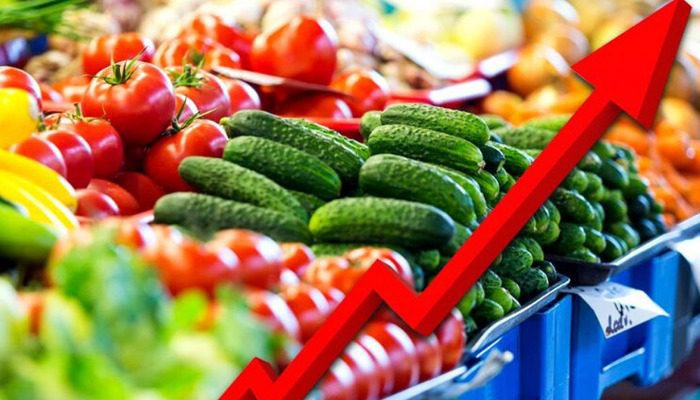
Nigerians are finding it more difficult to feed themselves, as food inflation rose to 40.66 per cent in May, The According reports.

This was as the cost of food rose by 61 per cent from 25.25 per cent in June 2023 to 40.66 per cent in May 2024, highlighting a steady rise in the cost of living.

This is according to an analysis of the latest Consumer Price Index and Inflation report released by the National Bureau of Statistics.

The CPI measures the average change over time in the prices of goods and services consumed by people for day-to-day living.

On Saturday, the NBS disclosed that headline inflation moved by 0.26 per cent to 33.95 per cent from 33.69 per cent recorded in April.

The report noted that the inflation rate climbed to a 28-year high since March 1996 on higher food and transport prices.

It said, “In May 2024, the headline inflation rate increased to 33.95 per cent relative to the April 2024 headline inflation rate which was 33.69 per cent.”

The statistics agency also reported major contributing items to headline inflation in May 2024 including food & non-alcoholic beverages (contributing 17.59 per cent), housing, water, and electricity, gas & other fuel (contributing 5.68 per cent), and clothing & footwear (contributing 2.60 per cent).

A breakdown of the data showed that the price of food commodities increased steadily from 25.25 per cent in June, to 26.98 per cent in July, 29.34 per cent, 30.64 per cent in August, 31.52 per cent in September, 31.52 per cent October, 32.84 per cent in November and 33.93 per cent as the end of December 2023.

The rate further increased to 35.41 per cent in January, 37.92 per cent in February, crossed the 40 per cent mark in March, 40.53 per cent in April and 40.66 per cent in May.

NBS said the rate rose to 40.66 per cent in May, compared to the 24.82 per cent reported in the same month last year — indicating an increase of 15.84 per cent points.

The bureau said semovita, oatflake, yam flour prepackage, garri, bean, etc (which are under bread and cereals class), Irish potatoes, yam, water yam, etc (under potatoes, yam and other tubers class), contributed to the year-on-year increase in the food inflation rate.

Other contributors are palm oil, vegetable oil, etc (under oil and fat), stockfish, mudfish, crayfish, etc (under fish class), beef head, chicken-live, pork head, and bush meat (under meat class).

“The food inflation rate in May 2024 was 40.66 per cent on a year-on-year basis, which was 15.84 per cent points higher compared to the rate recorded in May 2023 (24.82 per cent).

“The average annual rate of Food inflation for the twelve months ending May 2024 over the previous twelve-month average was 34.06 per cent, which was 10.41 per cent points increase from the average annual rate of change recorded in May 2023 (23.65 per cent),” the report said.

Similarly, Bauchi, Kogi, and Oyo are Nigeria’s three most expensive states on a year-on-year basis after recording the highest All-Items Inflation in May 2024.

The report said in May 2024, the All-Items inflation rate on a Year-on-Year basis was highest in Bauchi 42.30 per cent, Kogi (39.38 per cent Oyo (37.73 per cent).

On the flip side, Borno (25.97 per cent), Benue (27.74 per cent) and Delta (28.67 per cent) recorded the slowest rise in Headline inflation on a Year-on-Year basis.

In recent years, food prices have been on the rise across Nigeria. The situation deteriorated due to the impact of government policies such as the removal of subsidies on petrol, among others.

The upward trend in the prices of these staples and other products has weakened the purchasing power of many citizens, making it difficult for many households in the country to afford daily meals.

At the March Monetary Policy Committee meeting, the Governor of the Central Bank of Nigeria, Olayemi Cardoso, said that the huge purchase of foodstuffs by the government as palliatives is contributing to the galloping food inflation in the country.

The CBN governor noted that inflationary pressure had failed to abate despite the hike in the interest rate in February.

He said, “Staff reports show that the principal drivers of acceleration in inflation are hikes in food and energy prices which are associated with structural factors. Further, new dimensions of inflationary pressure are emerging. First, ‘seller inflation’ arising from the oligopolistic structure of commodity markets such as noticed in the prices of local commodities is gaining significance. In addition, huge purchases by the government for distribution as palliatives to vulnerable citizenry is adding another dimension to the food price inflation, with seasonal factors of food price increases during religious fasting and festive periods, adding price cyclicality.”

Commenting, an economist with Lotus Beta Analytics, Shadrach Israel, expressed concern about the alarming rise in inflation rates, stating, “The surge in annual inflation rate from 21 per cent to over 30 per cent in just a year, and the persistent 60 per cent food inflation rate, are clear indicators of underlying structural issues in the economy.”

Israel urged the government to take immediate action, implementing a multi-pronged approach, including monetary policy tightening, supply-side reforms, social protection programmes, and structural reforms to address the underlying issues driving inflation.

“The government must take immediate action to restore the purchasing power of its citizens and promote economic growth and stability.

“The fact that food prices have increased by 50 per cent compared to last year is particularly concerning, as food is a significant component of household expenditure in Nigeria,” Israel added.

“The government must address the underlying structural issues, such as the heavy reliance on oil exports, and promote economic diversification.”

A development economist Jonathan Thomas, also stated, “The impact of inflation on the Sallah celebration is a clear example of how economic instability can affect the welfare of citizens.

“The significant decrease in purchasing power has made it challenging for Nigerians to afford necessities, dampening the spirit of the celebration.”

Thomas described the high insecurity which has displaced many farmers from the farm belts in the country is a significant structural issue that needs to be addressed.

“Nigeria must fight insecurity to a standstill to help farmers return to their farms that way, food inflation can be tackled while the government should also diversify its economy to reduce its vulnerability to external shocks and promote sustainable economic growth.

“The government must prioritise economic reforms and diversification including tackling insecurity to ensure a more prosperous and stable future for Nigerians,” he said.

Modular refineries back Dangote, seek Tinubu’s intervention

0

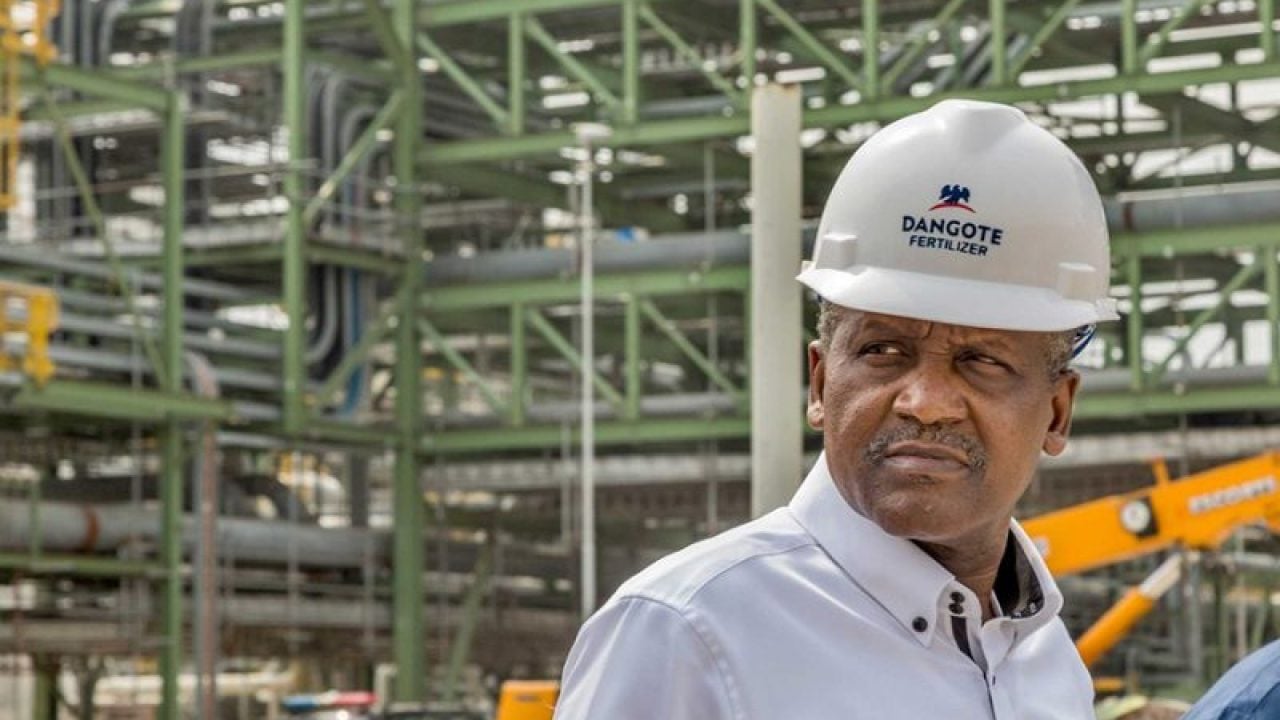
Modular refineries, on Sunday, confirmed the concerns raised by Africa’s richest man, Aliko Dangote, on the fact that some mafias in the oil sector were bent at stopping in-country refining of crude oil for the production of Premium Motor Spirit, popularly called petrol, and other refined petroleum products.

Operators of modular refineries stated that they had raised this concern severally in the past but received no positive feedback, stressing that the Chairman of Dangote Petroleum Refinery just re-echoed it last week.

They spoke to our correspondent through their umbrella association, Crude Oil Refinery Owners Association of Nigeria, while reacting to Dangote’s recent revelation on the matter.

CORAN is a registered association of modular and conventional refinery companies in Nigeria. Modular refineries are simplified refineries that require significantly less capital investment than traditional full-scale refineries.

The Publicity Secretary, CORAN, Eche Idoko, said, “You can see that Dangote has raised similar concerns just as we’ve been saying all along about the mafias in the oil sector. These merchants have held the country hostage, especially in the area of our domestic petroleum products’ supply and it is crippling the whole economy.”

 Last week, Dangote revealed that both local and international cartels, which he described as “mafia”, made repeated attempts to sabotage the $19bn Dangote Petroleum Refinery project located in Lagos.

“Well, I knew that there would be a fight. But I didn’t know that the mafia in oil, they are stronger than the mafia in drugs. I can tell you that. Yes, it’s a fact,” he said.

Dangote, who described himself as a fighter, said they tried all sorts to stop him. Dangote spoke at the Afreximbank Annual Meetings and AfriCaribbean Trade & Investment Forum in Nassau, The Bahamas.

“As a matter of fact during the COVID period, some of the international banks were looking forward to making sure that they push us into default of our loans so that the project will just be dead. And that didn’t happen with the help of banks like Afreximbank,” the oil firm’s boss had stated.

CORAN explained that the rise in food inflation in Nigeria could also be attributed to the hike in the pump prices of petroleum products, especially PMS, stressing that in-country refining would have helped in tackling these costs.

“The reason why this government hasn’t been able to tackle inflation, especially food inflation in the country is because of the prices of petroleum products. And you can’t keep playing the ostrich,” Idoko stated.

He added, “Yes we understand that if you are in OPEC you can decide to peg the price of your crude to OPEC standard, but in all OPEC-member countries, including Saudi Arabia, Russia, etc, they all have special arrangements internally for their people.

“They have special arrangements for domestic use of crude. Even South Africa has crude oil reserves, but where is Nigeria’s reserves? And I don’t mean oil reserves in the ground that are yet explored, but reserves that are stored somewhere.”

On June 3, 2024, The According reported that the Minister of State for Petroleum Resources (Oil), Heineken Lokpobiri, declared that Nigeria would continue to comply with crude oil production adjustments approved by the Organisation of Petroleum Exporting Countries.

Lokpobiri, who spoke at the 37th OPEC and OPEC+ meeting, had explained that the oil production adjustments by the global oil cartel were meant to stabilise the market.

“Nigeria remains unwavering in its commitment to the agreements made under the Declaration of Cooperation. Our adherence to these production adjustments is crucial for maintaining market balance and supporting global efforts toward sustainable oil market stability,” the minister had stated in a statement.

But CORAN argued that the mafias in the oil sector were fighting Nigeria from attaining self-sufficiency in the domestic refining of crude oil because these persons were profiting from petroleum products’ importation into the country.

“Who is this present government talking with on issues that has to do with supply, energy efficiency and others? Who are they talking with, who are the stakeholders? We have made efforts to meet with the President severally, but every attempt was blocked. Who are those benefitting from the current situation in the country?” the association’s spokesperson stated.

Idoko added, “And if they don’t believe us because we are an association of smaller refineries, at least they have heard Dangote say it now. Who are these people fighting the self-sufficiency in the refining of petroleum products in Nigeria? The Minister of Petroleum, who is actually the President, should speak about this.

“He should tell us what is his principle. Is he looking at creating self-sufficiency in domestic refining of petroleum products or that he wants to continue the regime of petroleum importation? If it means the presidency speaking to Nigerians directly, telling us what their policy thrust is on this matter, then fine.”

Dangote had also during his speech revealed that international oil companies denied him access to their crude because they did not think he could succeed with the 650,000 barrels per day capacity refinery.

“In a system where, for 35 years, people are used to counting good money, and all of a sudden, they see that the days of counting that money have come to an end, you don’t expect them to pray for you. Of course, you expect them to fight back.

“And I think that is the process that we’re now really going through. But the truth is that, yes, the country, the sub-region, and also the continent, of sub-Saharan Africa, need this refinery. So, you expect them to fight through non-supply of crude, non-purchase of the product, but I think it’s all temporary. We’ll get there,” he added.

Dangote has been importing crude oil from the United States to get feedstock for the refinery.

Also recall that The According exclusively reported earlier this month that international financiers that were meant to fund the construction of about 20 modular refineries in Nigeria had withheld their funds due to the challenge of getting guarantees for crude oil supply to the facilities when they are completed.

Producers of crude oil in Nigeria, who are largely international oil companies, have not been able to provide guarantees to assure the financiers that crude would be supplied to the modular refineries when the plants are set to produce refined petroleum products.

Based on this, funders of the facilities have held onto their funds pending when the Federal Government would be able to impress it on IOCs to provide the guarantees required for crude oil supply to modular refiners.

Although Nigeria prides itself as the largest crude oil producer in Africa, it exports bulk of its crude to earn foreign exchange, starving domestic refiners who find it tough to source the United States dollar required for the purchase crude.

Nigeria currently has 25 licensed modular refineries. Five of them are operating and producing diesel, kerosene, black oil and naphtha. About 10 are under various stages of completion, while the others have received licences to establish.

Operators of modular refineries had told our correspondent that aside from the five that were in operation currently, the remaining plants were embattled due to the major challenge of crude oil unavailability, a development that has stalled funding from financiers.

“Only about five of our members have completed their refineries. The others are having a major challenge. This challenge is that the people who are supposed to finance them have not disbursed financing for construction because they want some level of guarantee.

“A guarantee that if they finish the refinery, they are going to get feedstock, which, of course, is crude oil,” Idoko had stated.

Efforts to get the Nigerian Upstream Petroleum Regulatory Commission, on Sunday, to speak on the concerns raised by the refinery operators were not successful.

The spokesperson of the commission, Olaide Shonola, could not be reached, as her number was not connecting, while she had yet to respond to a text message sent to her on the subject up till when this report was filed.

However, while responding to the demand for a Conditional Term Sheet by the financiers of modular refiners earlier, the commission stated that it received figures on the production capacities of indigenous refineries and had presented them to crude oil producers to make the commodity available.

NUPRC’s Chief Executive Officer, Gbenga Komolafe, while reacting to a question by our correspondent on the matter, however, stated that the commission would not guarantee supply to refineries that had yet to come into existence.

“This still borders on the implementation of the domestic crude oil obligation. First of all let me make it clear that establishing a refinery of whatever capacity, whether it is a modular refinery or the bigger sized refinery, is a commercial engagement. So the commission can’t come in to give any form of guarantee. I need to make that clear.

“However, the regulator will only implement the provisions of the PIA given that all the regulatory activities of the commission are expected to be in compliance with the provisions of the law. So as it relates to guaranteeing feedstock to refiners, that is enshrined under section 109 of the PIA.

“And what we have just done in furtherance of that provision is that we have put in place a regulation that has to do with domestic crude oil obligation. So in the implementation of that provision, what we do is that we receive the figures on the domestic refining capacity from the Nigerian Midstream and Downstream Petroleum Regulatory Authority.

“And once we receive that, our development and production department factors the numbers against the capacities of the various producers within the upstream sector and makes it obligatory for them (crude producers) to meet those numbers, thereby guaranteeing that volume of supply to existing licensed and operating refineries, not refineries that have not come into existence,” Komolafe had explained.

The NUPRC boss had stressed that “we do not guarantee crude for financing of refineries that have not come into existence.”

Recall that the commission recently promised to ensure that crude oil was supplied to domestic refiners

It stated that in compliance with the provisions of Section 109(2) of the Petroleum Industry Act 2021, the NUPRC in a landmark move, had developed a template guiding the activities for Domestic Crude Oil Supply Obligation.

“The commission in conjunction with relevant stakeholders from NNPC Upstream Investment Management Services, representatives of Crude Oil/Condensate Producers, Crude Oil Refinery-Owners Association of Nigeria, and Dangote Petroleum Refinery came up with the template for the buy-in of all.

“This is in a bid to foster a seamless implementation of the DCSO and ensure consistent supply of crude oil to domestic refineries,” Komolafe had stated.

Joshua moves ahead Fury in new WBC rankings

0

Former world heavyweight champion Anthony Joshua has jumped above Tyson Fury into first place in the latest WBC heavyweight rankings with the ‘Gypsy King’ now ranked second, According Sports Extra reports.

Fury lost his WBC heavyweight title when Oleksandr Usyk beat him in May’s undisputed clash in Saudi Arabia.

Having been previously ranked as champion, Fury has now fallen into the challenger pecking order and has been placed as the second-ranked heavyweight contender by the WBC.

The organisation has placed him below long-term British-Nigerian rival Joshua, who sits behind Usyk, whom he has lost to twice.

Joshua has back-to-back impressive wins over Francis Ngannou and Otto Wallin under his belt, and may well compete for the vacant IBF title against Daniel Dubois in September.

Agit Kabayel rounds out the top three after his impressive underdog win over Frank Sanchez on the Fury vs Usyk bill in May.

Zhilei Zhang sits in fourth after his huge KO win over Deontay Wilder, while Nigerian heavyweight boxer Efe Ajagba makes up the top five holding the WBC ‘silver’ trinket belt.

Jared Anderson is in sixth with Martin Bakole and Kabayel’s rival Sanchez ranked at no.7 and no.8. Joe Joyce keeps a place in the top ten in ninth, while rising star Bakhodir Jalolov completes the list.

It is another damaging blow for the ‘Gypsy King’ who had held the belt since beating Wilder in 2020. He had since made some big defences against the likes of Derek Chisora, Dillian Whyte and Francis Ngannou on his march to the undisputed clash.

Luckily for the Briton, he will get a shot at immediate redemption on December 21 when he is signed to face Usyk in a sequel. It will be a chance to earn back his precious WBC belt, and hand Usyk his first career defeat, just as the Ukrainian inflicted on him in their previous encounter.

Fury is now back in the gym six months out from the clash and has vowed to rewrite his name in the history books.

Power outage hits Ghana, others as Nigeria’s gas disruption lingers

0

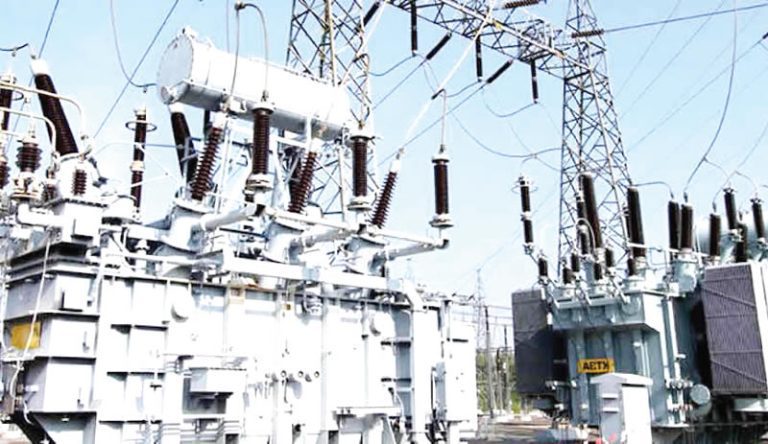
Some parts of Ghana and other West African countries are currently experiencing blackouts due to a lingering disruption in gas supply from Nigeria.

According to findings by our correspondent, there have been blackouts in several cities in Ghana, Republic of Benin and Togo, following the development.

The West African Gas Pipeline Company Limited in Accra, Ghana, had on Wednesday announced it was experiencing a drop in gas volumes available for transportation.

In a statement, WAPCO said one of its gas producers in Nigeria was carrying out some maintenance works. As a result, the gas producer was said to have shut its facility for a three-week maintenance work.

This, it said, resulted in a decrease in gas available for WAPCo to transport to customers in Togo, Benin and Ghana.

“The West African Gas Pipeline Company Limited regrets to announce that it is experiencing a drop in gas volumes available for transportation due to ongoing maintenance works by one of its gas producers in Nigeria.

“One of the producers of the natural gas WAPCo transports from Nigeria has shut down its facility for a three-week maintenance, resulting in a decrease of gas available for WAPCo to transport to customers in Togo, Benin and Ghana. The current situation is entirely out of WAPCo’s control.

“WAPCo continues to transport gas from the Westen Region of Ghana to Tema, also in Ghana, and we expect normalcy to return after the maintenance activities,” the statement read.

Consequently, the affected countries are now currently experiencing power challenges due to the development, according to findings.

Already, the Ghana Grid Company Limited and the Electricity Company of Ghana have informed electricity consumers in the country that some areas have been plunged into the darkness.

In a jointly signed statement, Ghana Grid Company Limited and the Electricity Company of Ghana said they “wish to inform the public that due to a reduction in gas supply from Nigeria since Wednesday 12th June 2024 some areas across the country have experienced interruption in power supply.”

The statement read further, “The West Africa Gas Pipeline Company, in a statement, has explained that the reduction in gas supply was due to maintenance works being undertaken by a gas supplier in Nigeria and is projected to last three weeks.

“The maintenance has caused a reduction in overall power generation capacity in Ghana which could result in load management over the period of the work.”

While apologising to its customers, GRIDCo and ECG assured the public that they were collaborating with other stakeholders in the power value chain to optimise available resources to ensure minimal impact of the reduction in gas supply on consumers.

“GRIDCo and ECG sincerely apologise for the inconvenience caused,” the statement concluded.

The West African Gas Pipeline Company Limited owns and operates the West African Gas Pipeline, a regional infrastructure linking natural gas resources to customers within the West Africa sub-region especially in Ghana.

The WAGP is a bi-directional pipeline system with gas supply from both the east (Nigeria) and the west (Ghana) of the pipeline system.

Iheanacho nears Saudi switch

0

Super Eagles forward Kelechi Iheanacho is at the center of transfer speculations as a prominent Saudi Arabian club (yet unnamed) has expressed strong interest in securing his services. The club’s president has declared their intent to go all out to sign the 27-year-old former Leicester City forward.

Iheanacho, who spent seven years with Leicester City, made over 100 appearances for the club and won the FA Cup, Community Shield and EFL Championship titles.

During the last season, he scored six goals in 26 matches across all competitions, contributing significantly to Leicester’s EFL Championship triumph and their promotion back to the Premier League.

However, on June 7, 2024, Leicester City announced that Iheanacho would be departing the club at the end of the season.

The Nigerian forward’s potential move to Saudi Arabia would see him join a growing list of international stars, including Cristiano Ronaldo, Neymar, and Karim Benzema, who have recently moved to the Saudi Pro League.

With his departure from Leicester confirmed, Iheanacho is reportedly close to finalizing a deal, where he would bring his experience and goal-scoring prowess to the ambitious Saudi side.

The transfer, if completed, would mark a new chapter in Iheanacho’s career, providing him an opportunity to showcase his talents on a new stage while contributing to the rising profile of football in Saudi Arabia.

All rights reserved. This material, and other digital content on this website, may not be reproduced, published, broadcast, rewritten or redistributed in whole or in part without prior express written permission from According.

Contact: [email protected]