Home Blog Page 1062

Rivers coalition warns against Fubara’s impeachment

0

A group, the Coalition of Rivers State Leaders of Thought, has called on the Martin Amaewhule-led House of Assembly to drop its plan to impeach Governor Siminalayi Fubara to avoid anarchy in the state.

The coalition said the recent actions of the 27 lawmakers loyal to the Minister of the Federal Capital Territory, Nyesom Wike, were capable of plunging the state into an unimaginable crisis.

The Appeal Court, on July 4, ruled that Amaewhule and 24 other lawmakers in his faction remained members of the state House of Assembly, voiding the earlier High Court order which restrained the lawmakers.

Following the judgment, Amaewhule, while presiding over plenary on Monday, gave Fubara a seven-day ultimatum to re-present the 2024 Appropriation Bill before the House.

Responding on Wednesday, Fubara, while receiving on a solidarity visit, the leadership structure, critical stakeholders, opinion leaders, women and youths of Etche and Omuma Local Government Areas, said Amaewhule and others were no longer members of the state Assembly.

He told his visitors that he would not present the 2024 budget again, adding that he had already initiated the 2025 budget which would focus on healthcare, education and agriculture.

The Convener of the Coalition, High Chief Sunnie Chukumele, however, warned the Amaewhule-led Assembly on Thursday, against inviting anarchy to the state.

While addressing a press conference in Port Harcourt on Thursday, Chukumele expressed worry that the political crisis in the state, rather than improving, had nose-dived to what it was before the intervention of President Bola Tinubu.

“We call on Martin Amaewhule and his colleagues to jettison the idea of impeaching the governor of the state.

“We advise them that the impacts of the consequences of their threats should only be imagined. Let Amaewhule and his colleagues not ignite a fire that they can never have the capacity to contain. They are inviting anarchy,” the group said.

He called on Tinubu to prevail on Wike, whom the leaders alleged was contributing to the tension in the state.

“Our son, the FCT Minister, can be said to be sufficiently linked to the unabating political crisis in his home state, Rivers State. The situation created in our dear state is unacceptable, and regrettable and has consequences of throwing the state into an irredeemable crisis of unimaginable proportions.

“We call on our son, the FCT Minister, once more to rein in his henchmen and foot soldiers in the political crisis in the state, particularly the recalcitrant wing of the state legislature loyal to him, and as well the immediate-past local government chairmen whose activities in the state are becoming felonious.

“On behalf of the entire people of Rivers State, home and abroad, we sternly call on the President, who our son, Nyesom Wike, is serving under in Abuja, to call him to order henceforth, and that we say enough is enough,” Chukumele said.

The coalition also called on the judiciary to apply wisdom on matters concerning Rivers brought before them, noting that public opinions on their management of matters emanating from the state were negative.

“We also once again call out the judiciary to employ and apply extreme wisdom on matters concerning Rivers State brought before them. The public opinion on their management of matters emanating from Rivers State is negative.

“The National Judicial Council should, as a matter of urgency, save the image of the judiciary by also taking cognisance of impact assessment on matters the courts are handling concerning burning issues in Rivers State,” Chukumele said.

The coalition reiterated its support for the Fubara-led administration and urged the governor not to lose focus in the discharge of his constitutional mandate of delivering good governance for Rivers people.

Ex-power minister collapses before trial, remanded in prison

0

A former Minister of Power, Saleh Mamman, collapsed on Thursday at the Federal High Court in Abuja where he was arraigned for alleged N33bn fraud.

Mamman, who served as a N33bn fraud: Ex-power minister collapses before trial, remanded in prisonminister under ex-President Muhammadu Buhari, was led into the dock in drenched clothes, prompting his lawyer to explain to Justice James Omotosho that he collapsed on the court premises and had to be revived by medical personnel just before the case was called for hearing.

The defence lawyer, Femi Ate (SAN), said his client was only served with the charges by the Economic and Financial Crimes Commission after he was resuscitated.

Ate prayed the judge to adjourn the arraignment till Monday, given the ex-minister’s condition.

Justice Omotoso, however, declined the adjournment prayer, noting that his docket was already full for Monday.

Instead of an adjournment, Justice Omotoso granted a one-hour stand-down of the case for Mamman to feel better, though the ex-minister maintained that he was fine enough for the case to proceed.

He was later arraigned on 12 counts, in which he was accused of money laundering to the tune of N22bn.

After Mamman pleaded not guilty to the charges, the EFCC prosecutor, Adeyinka Olumide-Fusika (SAN), asked the judge to fix a date for trial.

But the defence counsel said he had filed an application for his client’s bail.

The judge, however, said the application was not before the court, holding that the bail application would be adjourned till today (Friday) for hearing.

Meanwhile, he ordered that Mamman be sent to the Kuje Correctional Centre pending the hearing of his bail application today. for an hour.

Mamman, who served as minister under Buhari between 2019 and 2021, was accused of conspiring with staff of the ministry in charge of the accounts of the Zungeru and Mambilla Hydro Electric Power projects to divert about N33bn.

Police probe Yobe cleric for allegedly impregnating friend’s wife

0

The Yobe State Police Command has begun the probe into the case of a self-proclaimed marabout, Auwalu Haruna, arrested for allegedly abducting and impregnating his wife’s friend.

According Metro gathered that the 20-year-old girl, after days of disappearance, was found pregnant at Haruna’s custody in Anguwan Arewa, in the Gaya Local Government Area of Kano State.

In a telephone interview with According Metro on Thursday, Dungus Abdulkarim, the spokesperson for the state police command, revealed to our correspondent that Haruna was accused of hypnotising the victim with a concoction that rendered her unconscious.

Abdulkarim said the case was transferred to the state Criminal Investigation Department, and a discreet investigation was ongoing.

“The suspect is just like a marabout, he does rituals for people. So, he allegedly forced her to drink a certain medical concoction that made her fall in love with him, then he eloped with her to Anguwan at Kano.

“The abduction case was reported to the Tarmuwa Divisional Police Headquarters by her father, who alleged it was Mallam Haruna who perpetrated it. After thorough research, the command operatives arrested him in Kano with the girl, whom he had already impregnated. It was medically confirmed that she was two months pregnant.

“The case is still under investigation at the Yobe SCID, and you know there are processes. After we are done, we still have to transfer his file to the Yobe State Ministry of Justice. The ministry, which is our counterpart, will now go through the file and vet it.”

If satisfied with the investigation, they can now provide legal assistance to the police, and he will be arraigned in court,” Abdulkarim concluded.

According Metro reported in June that a 71-year-old landlord, identified simply as Adesina, for allegedly defiling and impregnating his tenant’s 14-year-old girl at Akegbeyale Street in Ifesowapo Akute, Ifo Local Government Area of the state.

Our correspondent gathered that the residents and other tenants were thrown into a state of shock when the septuagenarian suspect was found on Tuesday, April 9, 2024, having sexual intercourse with the minor at about 10:15 pm in the bathroom.

Reps plan public hearing on bill seeking new S’East state

0

A bill seeking the creation of Etiti State in the South-East passed the second reading on Thursday in the House of Representatives.

The House at this stage is set to hold a public hearing on the bill, before returning it for a third and final reading ahead of passage and concurrence of the Senate.

The proposed legislation titled “A bill for an Act to alter the constitution of the Federal Republic of Nigeria, 1999 to provide for the creation of Etiti State out of Abia, Anambra, Ebonyi, Enugu, Enugu and Imo States and for Related Matters” was sponsored by the member representing Isuikwato/Umunneochi Federal Constituency, Abia State, Amobi Ogah, and four others.

Introducing the bill, a member of the Labour Party said it was aimed at addressing a longstanding issue of regional parity and administrative efficiency within the South-East geo-political zone of Nigeria.

 “It proposes an alteration to the Constitution of the Federal Republic of Nigeria, 1999, to accommodate the creation of Etiti State, thereby increasing the number of states in the South-East geo-political zone to six,” Ogah said.

 He said the proposed establishment of Etiti State was not just a matter of administrative convenience but a step towards ensuring balanced regional development and effective governance.

“It responds to the aspirations of the people of a very important region in this country and aligns with the principles of equity and inclusivity enshrined in our democratic ideals,” he said.

Justifying the creation of another state in the South-East region, Amobi said, “It is not news that the current structure of the South-East region with just five states—Abia, Anambra, Ebonyi, Enugu, and Imo—as against other regions of the country which have no fewer than six states, has been a subject of debate and advocacy for reconfiguration.

 “The creation of Etiti State is a proactive step towards aligning the region with the structural realities of its other five sister regions in the country.  Suffice it to say that is a long overdue step in the right direction to foster equitable representation, enhance governance efficiency, and promote socio-economic development within the region.

Let us bear in mind that the South-East, with its rich cultural heritage and strategic economic potential, deserves a governance framework that optimally serves its diverse communities.

 “The creation of Etiti State will facilitate more targeted development initiatives, better resource allocation, and improved service delivery to the people.”

 The bill is seeking an amendment to Section 3(1) of the 1999 Constitution to increase the number of states from thirty-six to thirty-seven by inserting “Etiti” immediately after “Enugu”.

Consequential alterations in the First Schedule, Part I, include “Carving out Isuikwuato and Umunneochi LGAs from Abia; Orumba North and Orumba South LGAs from Anambra; Ivo and Ohaozara LGAs from Ebonyi; Aninri, Awgu and Oji River LGAs from Enugu; and Okigwe and Onuimo LGAs from Imo States to form the new Etiti State; and designation of Lokpanta as the capital city of Etiti State.”

 Lobbying for support from his colleagues, the lawmaker urged them to be guided by the imperative of fairness, efficiency, and progress, stressing that “The creation of Etiti State represents a unique opportunity to strengthen our federal structure, empower our communities, and foster national unity.  I urge all honourable members to support this bill, which promises to reshape the socio-political landscape of the Southeast for the betterment of all.

“I therefore urge us all to thoughtfully consider and swiftly pass this important constitution alteration bill.  Let us seize this moment to make history and fulfil our mandate to serve the best interests of the Nigerian people.”

Currently, there are two other bills at the National Assembly seeking the creation of more states in the South-East.

Edun’s ‘ways and means’ audit

0

Recently, the finance minister, Mr Wale Edun, appeared before the Senate and commented on Ways and Means, a temporary loan the Central Bank of Nigeria gave governments. He said the current administration was “interrogating the N22.7 trillion that we met on the ground. We had instituted forensic audit to see the impact.” For anyone who has followed closely matters relating to Ways and Means as reported in a section of the media in the past few months, the minister’s comment cannot but draw attention. One reason is that there’s now an expectation that by the time the forensic audit is concluded, there’ll be closure to some of the issues public discussions regarding Ways and Means have raised.  

For any Nigerian who has high expectations of the current government to bring some changes to public administration, one benefit this audit will have is that a link between public expenditure and outcomes will be established. In other words, and if this is what the minister has in mind, a trail of how the fund is expended and how it has impacted the targets will be established.  One then expects that subsequently a culture of such assessments will be institutionalised and continued. If the current government has a clear view of the impact of Ways and Means taken before it, this will give it an idea of the impact of its own expenditure in a certain direction. Why is this important?

This is a nation where it’s well documented that there’s hardly a good official understanding of the impact of every naira expended on services, people, civil servants, or other entities. Proper assessment before spending is lacking so we often say, “Governments throw money at problems.” No one checks the exact amount needed or the results achieved. In the event, there’s a lot of room for the kind of graft cases that anti-graft agencies have established and prosecuted of late. One reason is that there’s hardly a pre-spending assessment, and definitely little thorough post-spending assessment or what is generally referred to as Expenditure Assessment. Wastage is inevitable in this situation, and it indirectly contributes to the financial crunch that has compelled, since 2014, different administrations to resort to taking CBN loans in order to finance basic activities.

Now, an expenditure assessment is a process of estimating how much a specific programme will cost and how much it will produce in terms of benefits. There are different types of expenditure assessments. One is the financial aspects of a particular activity, and the others are on the environmental or social impacts of the activity. I focus on the first. An expenditure assessment is basically used by governments, businesses, and other organisations to make informed decisions about how to spend money. As FasterCapital, a financial expert entity explains, there are several steps involved in undertaking an expenditure assessment. The first is to develop a budget which is a detailed estimate of how much money is available to be spent on a programme, as well as an estimate of the costs associated with the programme. The budget should be based on information about the programme such as its objectives and desired outcomes. Is this always empirically done using all necessary details in Nigeria’s public administration? It hardly happens to even the national Appropriation Bill, as it is alleged that what is mostly done is an estimate and approximate cost year after year.

After developing a budget, the second step is to develop estimates of how much money will be spent on a programme and how many benefits will be generated. This is an expenditure profile, and it includes information about the costs of goods and services purchased, wages paid, and other expenses incurred by participants in the programme. The third step in undertaking an expenditure assessment is to compare the costs and benefits of the programme against each other. This helps make informed decisions about which programmes to invest in and which to discontinue. In Nigeria’s public administration the last, especially, hardly happens. So, one is inclined to hope the current administration will establish it starting with the outcome of its forensic audit into the utilisation of Ways and Means.

Meanwhile, the finance minister cited Ways and Means taken by the immediate-past administration for audit. But public records showed that taking Ways and Means began with the President Goodluck Jonathan administration (which was of a different political party, and now in the opposition). In fact, the reason for taking the CBN loans was announced by the then Minister of Finance, Dr Ngozi Okonjo-Iweala, now the Director-General of the World Trade Organisation. One would think this forensic audit should cover that pre-2015 administration too in order to have a holistic outcome that puts all doubts to rest regarding the utilisation of Ways and Means. Yet there is another doubt the audit can help clear. In utilising Ways and Means, was a single naira looted? This is an important question to find answers to for two reasons.

One, there is a general situation among Nigerians that whenever an official audit is embarked upon regarding the utilisation of public funds, it is believed funds have been looted. This happens because the nation’s public service is such that hardly does anyone see what doesn’t belong to them and fail to loot. Scandal after scandal has lent credence to this. So, it is difficult for citizens to believe that a Nigerian can be in an office, or have access to funds and yet be transparent and honest, adhering to best global practices. Nonetheless, this nation has such individuals who are unsung for their probity.

These are people who know they have a reputation to protect, people known to have left behind a record of transparency wherever they have served. Under the Goodluck Jonathan and Muhammadu Buhari administrations, did the CBN loan find its way into private pockets? The audit Edun mentions will help answer this question and many Nigerians are eager to know the outcome. The second point regarding the need for this audit was the impression created after a report of the special investigator appointed by the current government was said to have been leaked. There were new reports online (not by any serious media platforms in Nigeria) making insinuations about government officials which the so-called leaked report itself didn’t make in any way. With the outcome of the forensic audit such insinuations too will either be established or dismissed.

It’s interesting to hear another observation the minister made in the course of his interaction with lawmakers. He said the government was also interrogating the revenues due to it from everybody in view of the fact “that Ways and Means is going down rather than up” and that the government “is servicing all the debts.” What stands out here is that the current government is servicing all debts, including the Ways and Means taken under the Buhari administration and for which a forensic audit is being conducted. The inference can thus be drawn that the current government, because it has all the records of what was done under previous administrations, has a fair idea of where the CBN loans ended up since it has decided to service all debts. Those debts include the CBN loans the current administration also has taken, and one therefore wants to believe that it has an impression of what financial pressures previous administrations too were under which made them take the loans.

I stated it on this page in the past (which is what the finance minister is now saying) what we should focus on as a nation, even as efforts were being made to ascertain how Ways and Means was utilised. Now that the CBN loans have been taken, how to stop taking more by growing our revenue should be the focus. That Ways and Means is going down is therefore good news. As this happens, the point that the government strives to bring in every revenue due to it is also important. The humongous amount retained in bank accounts by MDAs is staggering. The amount looted is shocking going by what the head of an anti-graft agency publicly said lately. So bringing all revenues in is one way to get us off loans as well as reduce the financial pressure. And following the outcome of the audit, one expects the minister to bring closure to every controversy Ways and Means has generated. Official silence shouldn’t end it.

Tinubu, Labour talks adjourned till next week

0

Thursday’s talks between President Bola Tinubu and the Organised Labour on minimum wage were adjourned until next week to allow for wider consultation with all stakeholders.

The leadership of the Organised Labour led by the Presidents of the Nigeria Labour Congress, Joe Ajaero, and the Trade Union Congress, Festus Osifo, had arrived at the State House about 2:00 pm and were ushered into the into Tinubu’s office.

The Tripartite Committee on the new national minimum wage had recently submitted two figures to the President as the organised private sector and the government team offered to pay N62,000, while the Organised Labour demanded N250,000.

Following the disagreement over the figure, the President had delayed sending any figure to the National Assembly through the Executive Bill to consult with all the relevant stakeholders in order to resolve all the contentious issues.

Ajaero, who addressed State House Correspondents after the meeting, said there were no negotiations at the one-hour meeting.

Rather, it was a discussion on the current economic realities in the country, he stated.

“In a real sense, it wasn’t a negotiation but a discussion and we have had that discussion. We agreed to look at the real terms, probably and reconvene in the next one week.

“So, that’s where we are because we didn’t go down there to talk naira and kobo. At least there were some basic issues that we agreed on.”

Asked whether the Organised Labour insisted on the N250,000 demand at the meeting, the NLC helmsman said, “I remember mentioning that we didn’t go into naira and kobo discussion.

“Now the status quo in terms of the amount N250,000 and N62,000 remains until we finish this conversation.”

Also speaking was the President of TUC, Osifo, who said the Organised Labour put all the economic indices on the table and how it was biting on Nigerians.

Fielding questions on the points of agreement, Osifo said, “In the meeting, we tried to put the issues on the table. Issues that are bordering and biting Nigerians today, the economic difficulties and the value of naira, how it has also eroded, how these have affected the prices of commodities and goods in the market.

“So, we tried to put these before Mr President because he is the President of the country and the bulk stops at his table.

“We have had all the conversations with all his agents, but today (Thursday) we said let us meet with the father of the country and have this conversation and make the argument that Labour always makes.

“We made all the arguments, the economic analysis, macro, micro, fiscal and monetary issues. So we put everything forward and at the end. The President made his remark as the President and we all agreed. Let’s go back to internalise it, have some conversations and by one week’s time, we will come back and we will continue the meeting.”

Despite the deadlock, the Minister of State for Labour and Employment, Nkeiruka Onyejeocha, told reporters that the meeting was “fruitful.”

“It is a fruitful meeting; father, children meeting. I think we are hopeful that very soon everything will be resolved.

“Of course, when father and children talk you know what it is?

“That’s just exactly what has happened. It took us almost about an hour. I believe that it’s all for good,” she argued.

On his part, the Minister of Information and National Orientation, Mohammed Idris, said he remained hopeful of a positive result after next week’s talks.

Idris explained, “Recall that already there is 62,000 naira that has been put out there from the government side and the organized private sector but the Organised Labour is still not accepting that but we know that they will come to the table, we know that this is something that is going to be workable for Nigerians.

“The Organised ;abour and the government will reach an agreement. We have adjourned now for a week. The labour union has asked the government allows them to at least a week to discuss further and we have allowed them.

“We’re going to reconvene in the next one week and we hope and we believe by the end of the day, we’ll have something that is good for all Nigerians. We do hope that by the time we come together again next week, we’ll have something that we can put out for Nigerians to see and to agree with,” he said.

In the meantime, a source privy to the meeting told our correspondent that President Tinubu urged the Organised Labour to consider the N62,000 offer proposed by the FG and the organised private sector made.

The source insisted on remaining anonymous as he was not authorised to brief the press.

“President Tinubu suggested that instead of waiting for five years to review the minimum wage, we can continue to have a dialogue and see the possibility of reviewing it every two years.

“He also said that the Organised Labour should consider the N62,000 offer because it is double the N30,000 we were paying,” said the source.

According to another source, who spoke on condition of anonymity, the President simply laughed when the NLC President reminded him that it would lead to reduced wages if the Organised Labour accepts N62,000 because the least paid worker currently takes home N72,000 (including wage award and 40 per cent increase).

Meanwhile, President  Tinubu has suggested the review of Nigeria’s minimum wage every two years as opposed to five as stipulated in the law.

He premised this suggestion on the argument that Nigerian workers deserve improved welfare, better wages, as well as safe and enhanced working conditions as the driving force of the nation.

The Special Adviser to the President on Media and Publicity, Ajuri Ngelale, revealed this in a statement he signed Thursday titled ‘President Tinubu to Labour leaders: I am concerned about Nigerian workers and committed to a just, realistic minimum wage.’

President Tinubu said he was concerned about the welfare of Nigerian workers and that his administration was prioritising their concerns.

“I pay attention to everything around me. A happy worker is a productive worker and society depends on the productivity of the happy worker,” the President said.

However, he called for realistic expectations as regards the minimum wage question, stating: “You have to cut your coat according to available cloth. Before we can finalise on the minimum wage process, we have to look at the structure.

“Why must we adjust wages every five years? Why not two? Why not three years? What is a problem today, can be eased up tomorrow.

“There is much dynamism to this process if we are not myopic in our approaches. We can take a surgical approach that is based on pragmatism and a deep understanding of all factors.”

In his remarks, the NLC President, Ajaero, emphasised the need for an upward adjustment to the minimum wage, noting: “Between living wage and minimum wage, we need to find a balance. Things are difficult for the Nigerian worker.”

He congratulated the President on the judgment of the Supreme Court affirming the constitutional rights of local governments as regards financial autonomy and other salient principles.

“I have to congratulate you on the issue of local government autonomy. We have been in the streets protesting for local government autonomy.

“Now that there is light at the end of the tunnel. It will amount to ungratefulness if we fail to commend you,” the NLC President said.

The TUC President, Osifo, said inflation had adversely affected the value of the naira and that the measures initiated by the government to address the rising cost of food and transportation needed to kick in to give citizens relief.

He said the rollout of Compressed Natural Gas-powered buses would help in checking the high cost of transportation, while the recent directive on the suspension of duty on certain food imports will bring down the prices of food items, if properly implemented.

“We commend you on the landmark judgment of the Supreme Court. History will not forget what has happened today. With this judgment, we believe Nigeria will make progress,” the TUC President also said.
Cultists shoot vigilante dead in Rivers

0

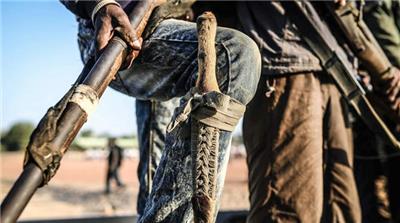
Gunmen suspected to be cultists have shot dead a member of a local security outfit simply identified as Prince in Igwuruta community in the Ikwerre Local Government Area of Rivers State on Wednesday night.

According Metro gathered that members of the vigilante group, the Onelga Security Planning Advisory Committee codenamed OSPAC, had responded to a distress call about a kidnapping in the area when they were ambushed by the gunmen who opened fire on them.

The bullet was said to have hit Prince, who is one of the vigilantes, resulting in his death, while the assailants fled with the speed of light.

A source who pleaded anonymity told our correspondent that the incident caused panic in the area as residents scampered for safety to avoid being hit by stray bullets.

“From what we heard, the OSPAC people rushed to where they said there was a kidnapping going on. Immediately they arrived at the place, some gunmen opened fire on them and one of their men was shot dead. That is all I can say,” he said.

Our correspondent gathered that the body of the deceased had been evacuated and taken to an undisclosed mortuary.

When contacted, the spokesperson for the state police command, Grace Iringe-Koko, confirmed the incident, saying, “An investigation is ongoing to ascertain what happened and to ensure the culprits are apprehended and prosecuted.”

All rights reserved. This material, and other digital content on this website, may not be reproduced, published, broadcast, rewritten or redistributed in whole or in part without prior express written permission from According.

Contact: [email protected]

Sokoto gets law stripping Sultan of power to make appointments

0

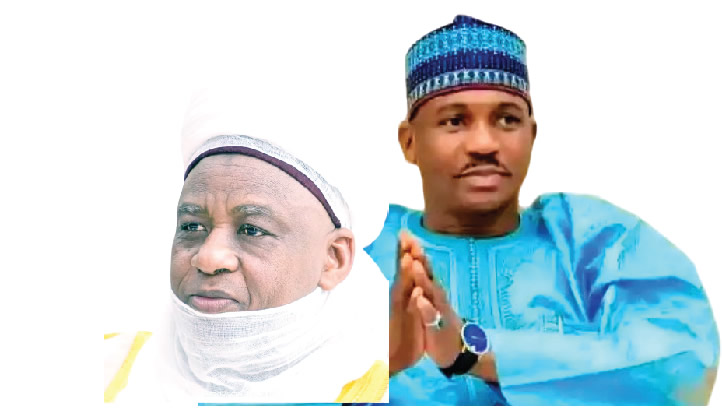
Governor Ahmed Aliyu of Sokoto State, on Thursday, assented to six new laws, including the amended Sokoto Local Government and Chieftaincy Law, which generated controversy across the country.

The new law stripped the Sultan of Sokoto, Alhaji Sa’ad Abubakar, of the power to appoint district and village heads in the state.

Speaking at the signing ceremony, the governor insisted that the new laws were not for witch-hunt of any individual or group but to strengthen good governance in the state.

“We note with concern the unnecessary tension created by our proposal to amend some of these laws. Some of the reactions were politically motivated, while others were done ignorantly without care to inquire from the right quarters on the details and intention of the amendment.

“It is a known fact that in every society laws are enacted and amended to suit the needs of time and interest of the governed in line with circumstances at hand.

“Previous administration had amended one law or the other in the state with a view to giving the state laws the needed touch that would fast-track peace and development.

“Let me make it clear that the just amended laws are not meant for the witch-hunt of any individual or group but rather to promote good governance and to remove the ambiguity and inconsistency with the nation’s constitution.”

The governor advised Muslim clerics against allowing “lazy politicians” to use them in scoring their political goals.

Aliyi said his administration would continue to listen to the yearnings and aspirations of the Sokoto people.

“Whenever we come across any law that does not suit the interests of our people we will not hesitate to replace it,” he vowed.

The other laws signed by the governor included the Sokoto State Tenancy Law; Zakkat and Waqf Law, Discrimination Against People Living with Disability Law.

The Muslim Rights Concern had in June raised concerns about an alleged plan by the Sokoto State governorment to depose the Sultan of Sokoto.

Reacting to the alarm, Vice President Kashim Shettima, at a North-West Security Forum, warned that the Sultan of Sokoto represented an idea that must be jealously guarded and projected for the nation’s growth.

The Sokoto State government, however, denied the allegation.

The state flayed MURIC for what it described as a false alarm and also advised Shettima to always cross-check his facts before commenting on sensitive national matters.

At a public hearing organised by the state Assembly, the Sokoto State Attorney General and Commissioner for Justice, Nasir Muhammad Binji, justified the move to amend the law, saying the appointment of district heads by the Sultan was an usurpation of the power of the governor.

He said, “Section 5(2) of the Constitution stipulates that the executive power to appoint in the state is vested in the governor directly or through his deputy, commissioners or any government agent assigned by the governor.

“So, there is no power given to the Sultanate council to appoint. Section 76(2) of the Sokoto Local Government and Chieftaincy Law gives the Sultanate Council the power to appoint district and village heads in the state but with the approval of the sitting governor.

“So, the section is inconsistent with the 1999 constitution as amended and therefore it cannot stand. Because the power to appoint is the executive power and who exercises the power? Is it not the governor? This is the reason for the amendment. To correct the mistake of the past.”

However, in a statement on Sunday, the Council of Imams and Ulama in Kaduna State expressed displeasure with the move to strip the Sultan of the power of appointment.

“We stand in solidarity with His Eminence, the Sultan of Sokoto and criticise any attempt to degrade or undermine the esteemed office.

“The Sultanate represents the collective identity and heritage of Nigerian Muslims, transcending state boundaries.

“We view any assault on the Sultanate as an attack on our collective dignity and faith.

“We urge all parties involved to sheath their swords and embrace peace, recognising the Sultanate’s pivotal role in promoting unity, understanding, and harmony among Muslims and Nigerians.

“We call on the authorities to respect the Sultanate’s sanctity and historical significance, ensuring its continued role as a beacon of guidance and wisdom,” the council said.

SEC harps on investor education to drive growth

0

The Director General of the Securities and Exchange Commission, Emomotimi Agama, has urged capital market operators to embrace investor education to foster the growth and development of Nigeria’s capital market.

In a statement made available to our correspondent on Thursday, Agama

stated this during a meeting with the management of the Investments and Securities Tribunal in Abuja.

He underscored the knowledge-based nature of the capital market, stating, “We need to continue constant education in the capital market. The market is knowledge-based and we are committed to ensuring that information is made available to the investing public.”

The newly confirmed SEC DG also harped on the commission’s commitment to collaborating with stakeholders, saying, “The commission will continue to partner with relevant stakeholders to create more learning opportunities. We will do more training and sensitisation because we must continue to learn.”

Agama said that decisions on cases contribute to the market’s confidence and overall growth.

Agama stated, “The SEC is committed to partnering with the IST on the dispensation of justice and growth of the capital market.”

The Chairman of IST, Amos Azi, echoed the sentiments on investor confidence, stating, “This one initiative has set the pace for similar regulatory climbs all over the world. There is no gainsaying, the tribunal is the bedrock of dispute resolution in the Nigerian Capital market.”

He highlighted the tribunal’s impact, noting, “Established under S.274 of the ISA 2007, the Tribunal has given judgments on over 480 cases with a monetary value of over N868bn.

“The creation of the Tribunal gave a boost to the international recognition of the Nigerian capital market. You will recall that the existence of the Tribunal was part of the factors considered by the International Organisation of Securities Commission in admitting Nigeria’s SEC as ‘Appendix A’ signatory to its multilateral memorandum of understanding in 2006.”

PDP alleges contempt as Aiyedatiwa appoints council caretakers

0

The Ondo State Governor, Mr Lucky Aiyedatiwa, on Thursday, constituted transition committees for the 18 Local Government Areas and 33 Local Council Development Areas in the state.

The constitution of the committees for the LCDAs, however, generated controversy, as it violated the Ondo High Court order which nullified the 33 LCDAs created by the administration of the late Governor Rotimi Akeredolu.

On Thursday, the candidate of the Peoples Democratic Party for the November 16 governorship election, Mr Agboola Ajayi, condemned the action of the government in the creation of the transition committees, saying it was a violation of the court order.

The development came as the Supreme Court, on Thursday, granted autonomy to Local Government administration in the country and ruled that the allocation to states with undemocratically elected LG officials be withheld.

A statement issued by the Chief Press Secretary to the Governor, Mr Ebenezer Adeniyan, on Thursday, announced that the transition committees would be in charge of affairs of the LGs and LCDAs until the conduct of the election.

“The transition committees are to oversee the affairs of the LGs and LCDAs in the state until the local government election is held by the electoral body.

“Meanwhile, the state government is currently examining the concerns raised by some communities over the delineations carried out during the creation of the LCDAs, to make the necessary amendments. The appointment takes immediate effect.”

Condemning the development, Agbola said, “In law, as it is today, Ondo State has 18 local government areas, even though we felt that it’s illegal for any democratic institutions to appoint caretaker committee members.

“You will remember that the PDP went to court to say that we cannot appoint a caretaker committee, but you have to conduct an election so that the government can be very close to the grassroots.

“We expect them to conduct the election, but the next we saw was the notification of LCDAs and that was part of their inefficiency and leadership failure.

This morning (Thursday), we heard that they have appointed members of the caretaker committee to all the nullified 33 LCDAs and the 18 LG structures of Ondo State and we felt that we should call the attention of the good people of the state to it, maybe they don’t know that the Supreme Court has nullified the process.”

Agboola said with the Supreme Court judgment, governors should allow local government administration to be run by the people at the grassroots.

He said the government’s decision contradicted the ruling of the Supreme Court and amounted to contempt of court.