Home Blog Page 1061

Policemen accused of phone theft arrested in Anambra

0

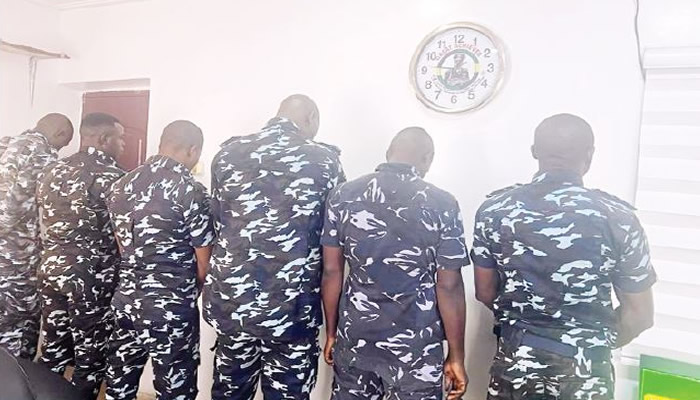
The Anambra State Police Command said it has identified the officers allegedly fingered in a viral video of telephone theft in a community in Otuocha Local Government Area of the state.

In a video that circulated on social media on Wednesday, a resident of the area narrated how police officers from the Otuocha Police Division invaded their houses and forcefully took away mobile phone sets that people were charging.

The voice, who identified himself as a resident of the community, said the heavily armed police officers invaded the locations in a commando-like style, unplugged the telephones from the sockets, one by one, and carted them away for no reason.

According to the voice in the three-minute video, the police officers invaded their community late on Tuesday and carted an undisclosed number of telephones.

He, therefore begged the police authorities in the state to look into the situation and returned the telephones to the owners.

In the video, the residents blocked a major road in the community and used it to protest the action.

The development generated reactions from different quarters with residents calling for a probe of the police officers’ action.

But while reacting to the development in a statement on Thursday, the Anambra State Police spokesman, SP Tochukwu Ikenga, said the command had identified the officers involved in the act.

Ikenga called on the victims whose telephones were forcefully taken to come forward to help facilitate the necessary action involved in the investigation.

He said, “The Anambra State Police Command has intercepted a video of a protest against police action and wishes to state that the police team and the officers mentioned in the video have been identified.

“The command also invites the victims to come forward to help facilitate the necessary action involved in the investigation.

“To this end, the Commissioner of Police, CP Nnaghe Obono Itam, calls for calm and urges citizens to utilise the channels of the complaint against police officers rather than being unruly as seen in the video blocking the express road, thereby infringing on the fundamental rights of others which is the very course citizens want to protect.

“We seek for a police that is civil and professional in discharging their duties. Aggrieved residents should make use of police complaint channels to express any grievances.

“These channels include the CP Monitoring Unit of Command, the Police X-Squad under the State Criminal Investigation Department Police Complaints Bureau or the newly resuscitated Complaint Response Unit under the Police Public Relations Department Awka.

“You can call the Command Control Room at 07039194332 or the Police Public Relations Officer at 08039334002 in the event of any distress. Also download the ‘NPF Rescue Me App’, usable on Android and Apple iOS phones, to make reports. Further details shall be communicated, please.”

50 killed, 223 rescued in 1,085 emergencies – Fire service

0

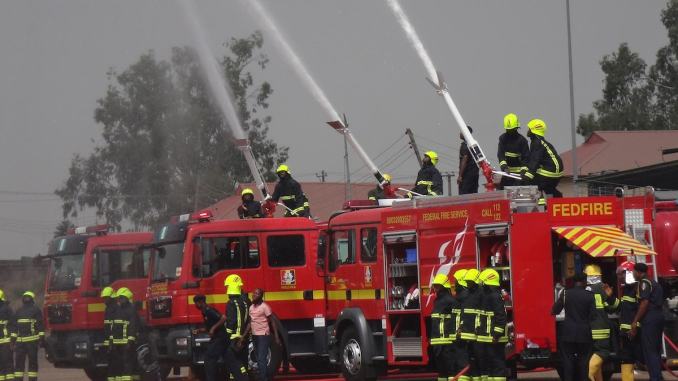
The Lagos State Fire and Rescue Service, in its Midyear Activity Report, revealed that 50 persons were suspected dead and 223 rescued in emergency incidents responded to by the agency in the last six months.

The Fire Service Director, Margaret Adeseye, highlighted the key statistics and trends from January to June, 2024.

“The service responded to a total of 1,085 incidents, including 884 fire calls and 191 rescue operations. Notably, fire calls peaked in January and February with 186 each, then declined to 97 in June. Rescue calls were highest in May at 40,” the director said in the Thursday report.

The service also addressed 10 collapsed building incidents, with a significant spike of five in May. Additionally, there were 331 false calls, which it said underscored the need for public education on proper emergency call usage.

“A total of 223 victims were rescued alive, with March and April seeing the highest numbers at 50 and 49, respectively. Tragically, 50 victims were recovered suspected dead, with May accounting for 23 of these cases,” Adeseye added.

These figures, according to the agency, emphasised the importance of continuous improvement in emergency response and building safety measures.

In June, fire gutted Christ Embassy church headquarters in Lagos and a building collapsed after a downpour in the Mushin area of Lagos in early July where seven persons were rescued.

The General Manager of the Lagos State Building Control Agency, Gbolahan Oki, blamed the collapse of the two-storey building on the use of substandard materials.

Oki said the owner of the building would be prosecuted for violating an earlier stop-work order issued by the government and for breaking the seal put on the building.

LASG orders removal of shanties on canal setbacks

0

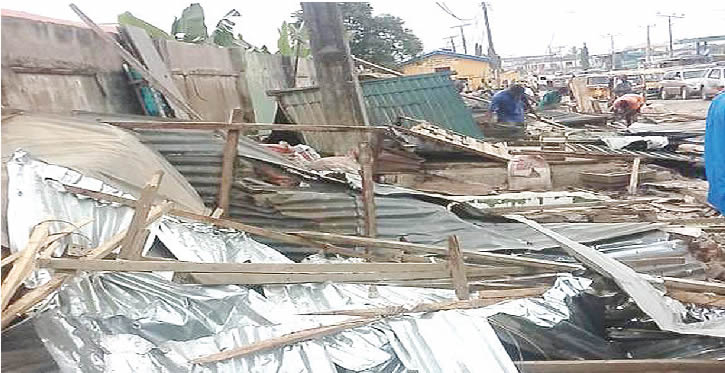
The Lagos State Task Force has served removal notices to squatters and illegal occupants dwelling in shanties built on canal setbacks in various parts of the state.

The spokesperson for the agency, Gbadeyan Abdulraheem, in a Thursday statement, said the move was to curb the incessant flooding experienced during downpours in the metropolis.

“The notices, which were served to settlers today (Thursday) by the chairman of the agency, CSP Adetayo Akerele, were carried out at strategic locations where it had been observed that squatters built shanties and makeshift buildings too close to the drainage system which contravenes the laid down physical planning laws of at least 15 feet from the canal setback,” the statement said.

Akerele described the activities of the squatters as a ticking time bomb due to unpredictable climate change experienced across various parts of the world.

Akerele further said that shanties across various canals at Soluyi Gbaada, Gbagada Bus Stop (Beside Atunrashe Estate), Charlie Boy Bus Stop and Bajulaiye canal were all visited to notify the occupants of the intention of the state to clear the areas.

According to him, reports have also been received by residents and artisans around Gbagada “of the illegal activities of miscreants who also make use of the shanties as their hideout from which they set out to perpetrate crimes, such as bag snatching and car vandalism, around the area.”

He assured the residents that clearing out of the canal setbacks would serve a second purpose of reducing crime in the area.

“Shanties have no place in a mega city such as Lagos due to their lack of environmental decorum, habitation of criminals and dephasing of areas where they have been erected,” he added.

The state government has consistently warned against building on drainage setbacks and equally cleared such structures violating physical planning laws.

Following persistent downpour that led to flooding in many parts the state in early July, the Commissioner for Environment and Water Resources, Tokunbo Wahab, noted that the flood was only able to recede following efforts made by the government in clearing drainages and structures built on drainage setbacks, among others.

Obaseki inaugurates transition panel four months to handover

0

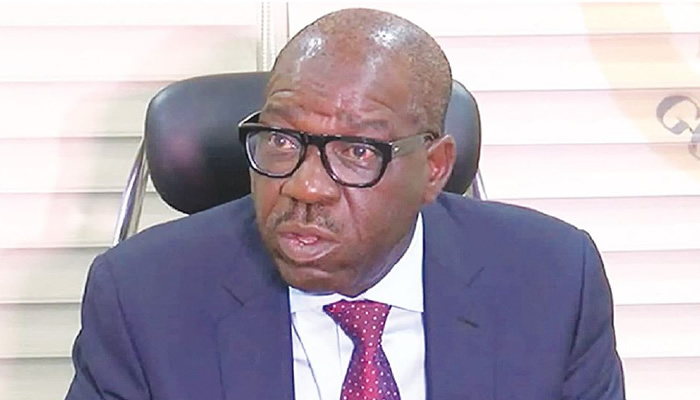
The Edo State Governor, Godwin Obaseki, on Thursday, inaugurated a 20-member transition committee to pilot the smooth transition of power and knowledge to the next administration, four months to the end of his administration.

The committee is chaired by a former Commissioner for Finance in the state, Joseph Eboigbe.

Obaseki inaugurated the committee at the EXCO Chambers, in Government House, Benin City, with some members of the committee joining virtually.

The governor said, “Today is the 11th of July, 2024 and it will mark exactly four months to the day I will hand over government to the next elected governor of Edo State. As it’s global best practice, I am putting together a transition team that would have the responsibility to document the achievement of this administration in the last eight years.

“The team will look and retrieve all documents and all other materials relating to policy decisions that have been taken by this administration in every area of government and governance over the last seven years and put the same in a structured order in a data room. I believe that most of these materials have almost been digitised.

“A proper digital and regular data room would be created where all documents related to every activity, contract, EXCO decision, presentation, and policy paper in every area will be retrieved, documented, and chronicled as it will serve as institutional memory for the next and subsequent administrations.”

He explained further that the transition committee would put together reports on each area and aspect of government his administration had intervened, adding that recommendations would be made for the next administration.

“This document and resources should serve to smoothly transfer power and knowledge from this administration to the next. We would have both the physical and digital repository of all the information and decisions taken during the life of this administration as these documents will be relevant both for internal and external consumption and research and possibly policy development.

“This report will also give a detailed account of the strategic vision and outlook of the administrative structure, policy impact, and completed programmes and initiatives as well as uncompleted programmes and initiatives to enable the incoming administration to know where to take off from.

“This report should be completed before the 30th of October 2024, as this document will form parts of what will be handed over during the transition period on November 11th, 2024,” Obaseki said.

In his response, the Chairman of the Committee, Eboigbe promised that the committee would diligently discharge their duties, pledging to deliver the report within the timeline given by the governor.

Joshua on verge of breaking Fury record

0

Anthony Joshua is on track to break Tyson Fury’s British attendance record with his upcoming world title fight against Daniel Dubois.

Joshua will challenge Dubois for the IBF belt on September 21 at Wembley Stadium, with promoters expecting over 100,000 fans to attend.

Fury set the British attendance record in April 2023 when 94,000 spectators packed into Wembley to see him knock out Dillian Whyte. Promoter Frank Warren, speaking on talkSPORT, expressed confidence that the upcoming bout will surpass that figure.

“Oh, it’s massive. I mean, we will be applying to increase the capacity like we did last time when Tyson Fury fought against Dillian Whyte. And I think we’ve got it, I think we will probably break that record. So, it’s really looking good,” he said.

Joshua, 34, is no stranger to huge sell-out stadium shows, having drawn over 90,000 fans at Wembley in 2017 when he defeated Wladimir Klitschko. He has also attracted 75,000 at Cardiff’s Principality Stadium and another 62,000 at Tottenham’s football ground.

However, his last two bouts took place in Saudi Arabia, where he secured knockout wins over Otto Wallin and ex-UFC champion Francis Ngannou.

Warren acknowledged the challenge Joshua posed but remained optimistic about Dubois’ chances.

“A lot of people are making Joshua a favourite, and they’re saying AJ is a big puncher and so forth and I hope he comes out and comes to fight because if he lets those big punches go I know that will leave him exposed. If Daniel clips him, it will knock him out. I think Daniel is the bigger puncher,” Warren said.

“I genuinely think that Daniel can win this, he’s a young man, he’s fought better opposition in his last three fights than AJ has. And by the way, AJ has looked good in his last few fights but not against as good opposition as what Daniel has been in with.”

Ekiti disburses N35m to fire disaster victims

0

The Ekiti State Government has disbursed N35m to over 50 victims of fire accidents in the state to provide respite for them and restore their losses.

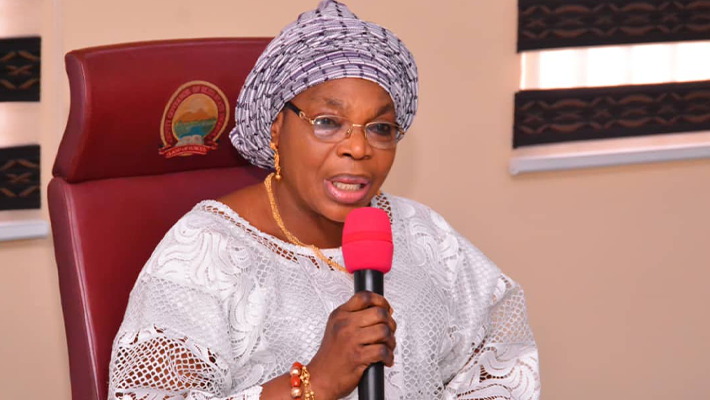
The Deputy Governor, Mrs Monisade Afuye, on Thursday, supervised the disbursement to victims of fire incidents between September 2023 and March 2024.

This was disclosed in a statement by her Special Assistant on Media, Victor Ogunje.

The Deputy Governor urged the beneficiaries not to despair despite their situations, saying, “The government decided to offer you emotional and financial support to stabilise you to regain their losses.”

Afuye said, “Governor Biodun Oyebanji has approved N47m for victims of the rainstorm, while N12.3m will soon be disbursed to another round of victims of fire disaster across the state. These show how committed the government is to liberate the distressed.”

She said the government would organise training across the state to enlighten the people on how to curb fire incidences, to mitigate the alarming increase in fire accidents in the state.

She said that though the funds disbursed might not be enough to rebuild their property engulfed by the inferno, it would, however, offer succour.

The Deputy Governor warned those in the habit of blocking the waterways with debris and refuse, asking them to desist from the acts.

“We must take precautions at all times. While going out, we must switch off our electrical appliances and avoid bush burning during the dry season and storage of petrol in residential buildings during scarcity,” she advised.

The deputy governor lauded the National Emergency Management Agency for collaborating to boost emergency management in the state.

The General Manager of the State Emergency Management Agency, Oludare Asaolu, advised residents to always take precautionary measures such as putting off all electrical appliances and gas cylinders before leaving their residences for their respective offices or farms.

The Head of Operations, Ekiti and Ondo States, NEMA, Mr Kofoworola Soleye, saluted the state government for collaborating with NEMA to give succour to victims of emergency in the state.

One of the beneficiaries, Elder Michael Ajayi, who spoke on behalf of other victims, said the gesture would help in boosting their morale and help regain their losses.

Senate rejects bill seeking to review forex market regulations

0

The Senate on Thursday rejected a bill seeking to review foreign exchange market regulations in the country.

The piece of legislation sponsored by the Chairman, Senate Committee on Finance, Senator Sani Musa, (APC Niger East), also seeks to make provisions for the control, monitoring and supervision of transactions conducted in the foreign exchange market.

The proposed law is titled, “The Foreign Exchange (Control And Monitoring) Bill, 2024 (SB. 353)”. It was read for the first time on Tuesday, February 20, 2024.

In his Lead debate, Musa described the bill as an important legislation that seeks to repeal the Foreign Exchange (Monitoring and Miscellaneous Provision) Act, Cap. F34, Laws of the Federation of Nigeria, 2004.

Musa said the proposed law would provide for the regulation, monitoring, and supervision of the transactions conducted in the market and for related matters.

He said it would also contribute to the sound development of the National economy by striving to facilitate foreign transactions and maintain an equilibrium of balance of International payments

He said, “The Bill seeks to stabilize the value of the currency by ensuring the liberalization of foreign exchange transactions to maintain an equilibrium of balance of International payments.

“It will also stabilise the value of the currency by ensuring the liberalization of foreign exchange transactions and of other foreign transactions by revitalizing market functionality.

“The Bill attempts to expand Section (1) of the existing Act to incorporate three new provisions to clarify and to empower the Central Bank of Nigeria to administer, control and manage all dealings and transactions in relation to foreign exchange matters.”

He added, “The newly introduced clauses will enable the CBN to determine the basic exchange rate of purchase and sale of foreign exchange.

“Clause 6 of the Bill introduces New Sub-clauses (2), (4) and (5) which require authorised dealers to render returns to the CBN on sources of foreign exchange over $10,000 and utilisation of same.

“It also requires authorised dealers to obtain prior approval of the CBN when seeking to import foreign currency notes.”

He further stated, “Part Ill of the Bill makes elaborate provisions for the grant of a licence to carry on business dealings in foreign exchange. In this part, provisions were made for refusal of licence, suspension or revocation of licence, review and appeal.

“Clause 18 (1) (a) and (b) were added to expand the scope of dealers in the market and where funds are purchased from the Bank. The market rate may be subject to rules and regulations prescribed by the Bank.”

Musa added that with the bill, the operation of domiciliary accounts shall be as prescribed by the bank and that the powers of the CBN have been widened to prescribe how foreign exchange may be accepted for the payment of goods and services in Nigeria.

The bill when passed into law, according to Musa, will contribute to the sound development of the national economy, facilitate foreign transactions, and most importantly, and stabilize the value of the currency by ensuring the liberalization of foreign transactions and revitalizing market functionality.

Most senators in their various contributions expressed the fears that a fresh legislation seeking to monitor or control the activities of the foreign exchange market apart from what the CBN was doing, could be counter-productive.

Some of the senators, who expressed serious reservations over the proposed law, are Solomon Adeola (Appropriation Committee Chairman); Tokunbo Abiru (Chairman, Banking, Insurance and other Financial Institutions panel; and Aliyu Wadada (Chairman, Senate Public Account Committee), among other.

For instance, a former Accountant General of the Federation who is now the senator representing Gombe North, Ibrahim Dankwambo, noted that the law, if passed would confuse Nigerians.

He was of the opinion that any further law aimed at regulating the foreign exchange market should come from the executive arm of government to avoid crisis in the sector.

Also contributing, the Senator Adams Oshiomhole, said, “We have to be careful because we cannot speculate. Nigerians will take anything done in the house very seriously, because we have the power to make laws.

“The senators, who have spoken, have summarised and amplified meticulously, the contradictions and negative implications of passing the law.

“I believe that the bill should not attract further hearing because we are trying to take over the monetary policy regulations of the CBN of we go ahead with it.

“If the executive arm of government likes, let them bring a Bill to further strengthen the regulatory powers of the CBN. It is not our work.”

The Senate President, Godswill Akpabio, who presided over the session, urged Musa to withdraw the proposed law for further consultations but the senator refused to do so.

Akpabio subsequently called for a voice vote to determine whether it should be approved or rejected for second reading. However, the majority of the federal lawmakers voted against it.

Stakeholders urge Livestock Development Ministry to address food insecurity

0

Agribusiness stakeholders, including the Lagos Chamber of Commerce and Industry and the Commercial Dairy Ranchers Association of Nigeria, have demanded that the newly created Ministry of Livestock Development address food insecurity.

President Bola Tinubu approved the creation of the Livestock Development Ministry on July 9, 2024, as he inaugurated the Presidential Committee on Livestock Reforms at the State House, Abuja.

The Chairman of the Agro-allied group, LCCI, Kola Aderibigbe told The According that creating a Ministry of Livestock Development by President Bola Tinubu was a welcome idea, however, farmers wanted to see a plan of how the ministry would address the food insecurity in the country.

Aderibigbe said, “It is a welcome development. It will add to the dairy farm industry and create more opportunities. But we need to see what is in the pipeline for the ministry.”

He noted that farmers still suffered from insecurity and that their desire was for the ministry’s creation to provide a means to allow farmers to go back to their farms and begin to produce food.

However, the LCCI Agro-allied group chairman expressed concern about the heightened cost of dealing with the Livestock Development Ministry and the Ministry of Agriculture by integrated farmers.

“What about integrated farming? Some people integrate their crop farms with livestock. That means you will have to deal with two agencies, which will cause confusion and certifications will become costly,” he said.

Aderibigbe was worried about the specifics of the solution the Ministry of Livestock Development would bring to the farmer-herders clashes that have prevented many farmers from optimally using their farmlands.

The farmer noted his disappointment with how no headway was made with the ranching option for the open-grazing debate.

He hoped the new government initiative would not be politicised or lead to the conversion of private land property for grazing.

He stated that the country’s multi-billion dollar dairy farming industry could be properly harnessed with modern ranching practices.

Aderibigbe told The According that the LCCI agro-allied group would want to work with the presidential committee as private sector stakeholders.

The President of CODARAN, Alhaji Muhammadu Abubakar, who is also the CEO of L&Z Integrated Farms, said it would take more than a department in the Ministry of Agriculture to realise the potential of dairy farming alongside other outputs of livestock farming.

He stated that the vision of the Dairy Ranchers Association was to meet national demand for dairy products, thus cutting down on the country’s reliance on imports, which in 2023, amounted to $1.5bn annually, according to the National Biotechnology Development Agency.

He said, “Meeting the national demand (for dairy products) and stopping imports would take years before the excess would be imported. There is a real need for a ministry to drive this.”

Abubakar, a member of the Presidential Committee on Livestock Reforms, assured that the interests of poultry farmers were represented in the deliberations that led to the Livestock Development Ministry.

Earlier, the Poultry Association of Nigeria said over 30 per cent of poultry farms in Nigeria shut down in the last six months due to a high cost of operation that had contributed to the sharp increase in prices of eggs in the market.

Public officials received N721bn bribe in 2023 – NBS report

0

No fewer than N721bn was received as bribe by Nigerian public officials in 2023, a new report by the National Bureau of Statistics has stated.

The report released on Thursday titled, “Corruption in Nigeria: Patterns and Trends”, said the N721bn paid in bribes amounts to about 0.35 per cent of Nigeria’s Gross Domestic Product.

The result was based on a survey conducted with the United Nations Office on Drugs and Crime.

According to the survey, the average cash bribe was N8,284, an increase from an average of N5,754 in 2019.

The report read in part, “According to the 2023 survey, the average cash bribe paid was 8,284 Nigerian Naira. While the nominal average cash bribe size increased since 2019 (from NGN 5,754), this does not account for inflation. The inflation-adjusted average cash bribe in 2023 was 29 per cent smaller than in 2019 in terms of what could be bought with the money.

“Overall, it is estimated that a total of roughly NGN 721 billion (US$1.26 billion) was paid in cash bribes to public officials in Nigeria in 2023, corresponding to 0.35 per cent of the entire Gross Domestic Product of Nigeria.”

The report stated that corruption was ranked fourth among the most important problems affecting the country in 2023, after the cost of living, insecurity and unemployment.

It added, “This suggests relatively stable and high levels of concerns about corruption over time and compared to other concerns such as education or housing.

“Nigerians confidence in the government’s anti-corruption effort has been declining over time and across regions. While in 2019, more than half of all citizens thought that the government was effective in fighting corruption, in 2023, the share declined to lessons than a third of all citizens. The downward trend in the citizen’s confidence is observable across the entire country, with all six zones recording reductions of more than 10 percentage points between 2019 and 2023 in terms of the share of citizens who thought the government was effective in fighting corruption.”

The report indicates that 56 per cent of Nigerians interacted with a public official in 2023, down from 63 per cent in 2019.

Despite this reduction, bribery remains widespread, with an average of 5.1 bribes paid per bribe payer, totalling approximately 87 million bribes nationwide. This is a decrease from the 117 million bribes estimated in 2019.

It was also disclosed that bribery is more common in rural areas, with rural residents paying an average of 5.8 bribes compared to 4.5 bribes in urban areas.
On payment mode, the report noted that over 95 per cent of bribes were paid in monetary form (cash or money transfer) in 2023.

It said public officials were more likely to demand bribes while private sector actors included doctors in private hospitals, which increased from 6 per cent in 2019 to 14 per cent in 2023.

Despite this rise, bribery in the public sector remains about twice as high, with public sector contact rates also being twice as high as those in the private sector.

In 2023, 27 per cent of Nigerians who interacted with a public official paid a bribe, a slight decrease from 29 per cent in 2019. Including instances where bribes were requested but refused, over one-third of interactions between citizens and public officials involved bribery.

Similarly, the report shows a growing trend of Nigerians refusing to pay bribes. In 2023, 70 per cent of those asked to pay a bribe refused at least once, with the highest refusal rates in the North-West zone at 76 per cent. All regions recorded refusal rates above 60 per cent. This indicates that Nigerians are increasingly standing against corruption.

According to the report, bribery is becoming less accepted in Nigeria. The percentage of citizens who view bribery requests as acceptable to expedite administrative procedures decreased from 29 per cent in 2019 to 23 per cent in 2023.

Fewer citizens reported suffering negative consequences after refusing bribe requests in 2023 compared to 2019. This suggests a growing empowerment among Nigerians to confront corrupt officials without fear of repercussions.

In 2023, 21 per cent of bribe refusers indicated they refused because they had other options. Normative concerns (42 per cent) and cost of living pressures (23 per cent) also played significant roles in their refusal to pay bribes.

Furthermore, not less than 60 per cent of public sector workers were hired due to nepotism, bribery or both between 2020 and 2023.

The report noted that six out of 10 successful candidates admitted to using either nepotism, bribery, or both to improve their chances of being recruited.

 Specifically, 27 per cent of these candidates admitted to using only bribery, 13 per cent to only nepotism, and 19 per cent to both bribery and nepotism. On the other hand, 40 per cent of the candidates claimed to have secured their positions without resorting to any such means, based on data collected between November 2020 and October 2023.

The report read, “The selection process used to recruit public officials plays a crucial role in shaping the culture of integrity that should drive the civil service as well as ensure that recruits have the highest standards of professionalism and merit.

However, the 2023 survey findings indicate that the public sector recruitment process requires closer monitoring, as almost half (46 per cent) of people who secured a job in the public sector in the last three years before the survey admitted that they paid a bribe to facilitate their recruitment – about 1.5 times the share found in the 2019 survey (31 per cent).

“The 2023 survey also found evidence that a considerable number of people recruited into the public sector secured their posts with the help of a friend or relative, many in addition to paying a bribe: of all successful applicants in the last three years before the 2023 survey, 32 per cent were helped by friends or relatives. Overall, in the three years before the 2023 survey, around 60 per cent of public sector applicants in Nigeria were hired as a result of nepotism, bribery or both – about 1.2 times the share found in the 2019 survey.”

The report also noted that the use of bribery is notably lower when the recruitment process includes formal assessments.

Specifically, 51 per cent of candidates were not formally assessed, and of these, a significant 53 per cent admitted to using bribery or nepotism to secure their positions.

Conversely, among the 49 per cent of candidates who underwent a written test or oral interview, the use of unethical means such as bribery or nepotism dropped to 41 per cent.

The report read: “The 2023 survey data show that approximately half (49 per cent) of those who secured a position in the public sector in the three years before the survey passed a written test and/or oral interview during the recruitment selection process. Importantly, the data suggest that the means of selection had a role in facilitating or preventing the use of illegal practices during recruitment. Among those who underwent an assessment procedure (written test / oral interview), 41 per cent made use of bribery, while the share was as much as 53 per cent among those who were not formally assessed.”

It was also disclosed that bribery is more common in rural areas, with rural residents paying an average of 5.8 bribes compared to 4.5 bribes in urban areas.
FG, IOCs agree on crude supply to Dangote, local refineries

0

The Federal Government and crude oil producers in Nigeria have committed to working towards a sustainable supply of crude oil to local refineries under a market-determined pricing system.

Both parties said the aim of the commitment was to ensure that while the operators (crude oil producers) do business optimally, the refineries are not starved of feedstock.

Accordingly, the industry regulator, the Nigeria Upstream Petroleum Regulatory Commission has directed oil refiners in the country to provide monthly price quote on crude supply.

This came as the $20bn Dangote Petroleum Refinery is reportedly ramping up the importation of crude from the United States, Bloomberg reported on Thursday.

In a statement issued in Abuja on Thursday, Nigeria’s upstream regulator stated that oil producers under the umbrella of the Oil Producers Trade Section of the Lagos Chamber of Commerce and Industry, at a meeting called by NUPRC, agreed to concede to a framework that would be mutually beneficial with the aim of ensuring that local refineries are not strangulated due to off-the-curve prices.

“The focus of the meeting held at the instance of the Commission Chief Executive, Gbenga Komolafe, was on the status review of the Framework for Seamless Operationalisation of Domestic Crude Oil Supply Obligation Template.

“It was part of efforts to effectively implement key sections of the Petroleum Industry Act (PIA) 2021, especially the issue of pricing and crude supply to the domestic refineries,” the commission stated.

In the statement, Komolafe said President Bola Tinubu is fully committed to providing a level playing ground for producers and refiners to do business in the industry.

He expressed the need for a rule of engagement to ensure that the pricing model from the oil producers does not hinder the domestic refineries.

He directed producers and refiners to provide the NUPRC with cargo price quotes on crude supply and delivery for effective monitoring and regulation of transactions among parties. “We need to have the price quotes monthly,” he directed.

The NUPRC boss pointed out a convergence between the Domestic Crude Oil Supply Obligation and the nation’s energy security, indicating that his team is re-engineering its regulatory processes to address the challenges.

“We allow all our processes to be transparent. While the Federal Government targets the implementation of the regulation, all parties must submit to the rules of engagement as a guide for operation,” Komolafe stated.

He said NUPRC is committed to driving the willing buyer/willing seller provision.

“We have to discuss pricing, especially as parties have committed to respecting their domestic crude oil obligation. As the regulator, we don’t want the upstream sector to be operated sub-optimally through cost under-recovery.

“So, the regulator is very alive to that. In crude pricing we will never allow price strangulation to disincentivise our domestic refining capacity optimisation. The regulator does not support cost under-recovery in the upstream sector, and we will continue to work to ensure that crude supply profiteering as a negative factor that can strangulate our domestic refining capacity optimisation is disallowed,” Komolafe declared.

Dangote raises alarm

Last month, the Vice President of Oil and Gas at Dangote Industries Limited, Devakumar Edwin, had accused International Oil Companies in Nigeria of plans to frustrate the survival of the new Dangote Petroleum Refinery.

Edwin had said the IOCs were deliberately and willfully frustrating the refinery’s efforts to buy local crude by hiking the cost above the market price, thereby forcing the refinery to import crude from countries as far as the United States, with its attendant high costs.

“Recall that the NUPRC recently met with crude oil producers as well as refineries’ owners in Nigeria, in a bid to ensure full adherence to Domestic Crude Oil Supply Obligations as enunciated under section 109(2) of the Petroleum Industry Act. It seems that the IOCs’ objective is to ensure that our petroleum refinery fails. It is either they are deliberately asking for a ridiculous/humongous premium or they simply state that crude is not available.

“At some point, we paid $6 over and above the market price. This has forced us to reduce our output as well as import crude from countries as far as the US, increasing our cost of production. It appears that the objective of the IOCs is to ensure that Nigeria remains a country which exports crude oil and imports refined petroleum products.

“They (IOCs) are keen on exporting the raw materials to their home countries, creating employment and wealth for their countries, adding to their Gross Domestic Product, and dumping the expensive refined products into Nigeria – thus making us to be dependent on imported products. It is the same strategy the multinationals have been adopting in every commodity, making Nigeria and Sub-Saharan Africa to be facing unemployment and poverty, while they create wealth for themselves at our expense,” Edwin had stated.

But on Thursday NUPRC emphasised the imperative for appropriate pricing to drive willing buyer willing seller referencing guided Fiscal Oil Price published by the commission in line with the provisions of the PIA.

“NUPRC is committed to attracting the needed investments to boost upstream development and optimisation of our hydrocarbon resources just as we want sustainability of domestic energy supply in the midstream and downstream sector.”

Crude importation

Also on Thursday Bloomberg reported that Nigeria’s Dangote mega-refinery was ramping up the importation of crude oil from the United States, stating that the Lagos-based refinery had created a new flow of long-haul crude from the US, as inflows of American feedstock could be about to rise further.

The report stated that the Dangote mega-refinery was lapping up ever more US crude, bringing the barrels thousands of miles across the Atlantic ocean.

It stated that Dangote bought more than 16 million barrels of West Texas Intermediate crude oil so far this year, according to data compiled by Bloomberg.

In August and September, the proportion it will take from the US — as opposed to Nigerian barrels — may be set to rise, based on tenders for new supply seen by Bloomberg.