Home Blog Page 1025

Govs see local govts as personal property – Gen Garba (retd)

0

The Director General of the Nigerian Army Resource Centre, Maj. Gen. Garba Wahab (retd.) shares his thoughts with SOLOMON ODENIYI on the unending terrorist attacks in the North-East, the resurgence of suicide bombings, and the pivotal role the judiciary plays in ending the scourge

We have been fighting terrorism for over a decade, leading to the loss of lives and properties. Is there an end in sight?

Terrorism does not go. You people are making a mistake. You see, everybody thinks terrorism is something you can just switch on and off.  It’s not.  To start with, those who are into it have an ideology. An ideology is something in the mind and the brain. The man believes in it and he joins up. Are you going to clean the brain? Terrorism or insurgency is not something you end overnight. We need to learn from Colombia. Colombia has been facing its case for more than 30 to 40 years now; theirs is about drugs.

They believe there is so much money to be made from drugs. Initially, they were allowed. By the time the Americans saw the effect of cocaine on their streets with their young ones, they turned against it and said, ‘No, you must stop this.’ But the fact is that those who are the rebels in Colombia are doing so because of cocaine. Up till today, they are still there even though the situation has mellowed down a little bit.

So, it doesn’t just go away like that.  A lot of effort is required, and the military alone cannot stop it. The military can provide an enabling environment where the government will be able to correct those things that created the opportunity for them to be terrorists. It is not the military that will create jobs. It is not the military that will talk to people and say, don’t do this again. We are leaving a lot of things undone. We expect the military to do them all. It is not a war between two countries.

Even during a war between two countries, somebody must be ready to say, ‘Okay, let us stop it’, and the other party must agree. The military alone can’t solve it. In the past, we used five factors in the military for security.  We call it the DIMES construct. The first one is Diplomatic or politics. It is the most important. Good governance is politics. ‘I’ is for information and that is why the media is being called in. There is the ‘M’, which stands for the military; the next is the Economy, and the ‘S’ is for Social. We are only making use of the ‘M’.

That’s why the army pays an allowance to those in these areas to spend and improve the economic situation in their regions. People shout and accuse them of encouraging terrorism financing. If you don’t do some economic activities in that place, things will become worse. This is because people will become poorer. When they are poor, you can’t tell them not to go into terrorism.

What is your view about state governors’ interference with local government funds?

People are advocating that local governments must be allowed to perform. If local governments are performing, a lot of things that will be done at the local government level will engage a lot of people. But no, the state governors are not allowing them (the local governments).

Governors look at local government as their property. Will the military create local governments? Will they force local governments to function? It is not possible. So, it is not the military that can solve the issue of terrorism.

They are only expected to provide an enabling environment for people to discuss, and for the government to solve the problems that have created all these issues.

When the people of Gwoza had forgotten that terrorism was still in the country, and deadly suicide attacks occurred. What do you think is responsible?

When you do things and they are working, nobody goes to sleep. You believe things are normal. You are dealing with people who have vowed that this is their way of life. Gwoza used to be one of the flashpoints in the North-East, and for a very long time, things were relaxed. People are now going about their jobs, thinking things are okay.

Recently, we had our monthly lecture series and one of the doctors at the Defence College spoke about how women were being engaged by terrorists to be involved in suicide bombings. She spoke recently before the Gwoza incident happened. She said point blank that terrorists would make use of more and more women than men because the belief is that everybody will be suspicious of any man. The first woman that detonated the first bomb in Gwoza was a woman with a baby. Nobody would have ever suspected a woman who was carrying a baby.

But there is more to that. It might be because of the threat to her life and that of her family. In Zamfara State, women are the master logistics suppliers. Now, they give them money to trade and make money so that when they buy those things they need, nobody is going to suspect. That’s the thing we are facing. The military cannot solve that.

It is a societal issue, and the military can’t be everywhere. Suppose a trader bought two bags of rice yesterday, and today, the trader finished selling it; nobody is asking questions about the number of persons she sold the rice to. The military cannot solve the insecurity in Nigeria. That’s not their responsibility. To start with, the easiest thing is good governance.

But you once said the judiciary holds one of the keys to ending terrorism in the country.

Let me start by saying there are three arms of government: the executive, the legislative, and the judiciary. I’m starting with the legislative arm of government. They make the laws. The executive implements whatever policy they want to execute. It must be in line with the law, which the legislature has made. But the third arm is the judiciary which interprets whatever the legislature and the executive are doing; they are the interpreters.

Anybody who runs afoul of the law of the country anywhere in the world, the judiciary is expected to try them. Failure to try them allows them to think that the offence is something they can get away with. When people start thinking like that, then the level of impunity in society becomes uncontrollable. With that, it becomes very difficult to have law and order.

It’s not only on the issue of insecurity; it’s in our lives generally that the judiciary has a serious role to play, and more importantly, in the level of insecurity because those who were arrested must be tried and tried fairly, firmly, and accurately.

Justice delayed is justice denied. Wasting time in trial means you deny those who have been kept in custody, their fair hearing, you deny them their rights and then you deny those who have done the job of arresting those people the appreciation for the job they’ve done. That is what we are facing today. That is why I said they have so much to do.

What then is the function of the police in this matter?

The police arrest, investigate, and prosecute. While the prosecution is going on, they keep the person on trial in the custody of the correctional services because the person cannot come from his house to the court. So, they are kept somewhere. That’s where the correctional service comes in. But it is the police and the judiciary that have so much to do in determining what happens in society. If there is a belief that they are not doing their investigation well, it will get to a point where everybody in the society feels nothing is working.

That’s why I said they have so much to do with what is happening. In the military’s old policy, when you are going out on internal security, a magistrate is expected to be there to follow you, but in the modern context, who recognises a magistrate again? They operate more at the local government level. Now, what is recognised in counter-insurgency is the High Court. Can any High Court judge follow any military? Before the military even goes out, if you are to borrow from the Americans who are using their system, when the military is planning an operation, the Ministry of Justice will meet the Ministry of Defence and come out with different definitions of problems they may likely face when they get there.

Since we started trying Boko Haram suspects in the country, we have recorded low convictions despite the several arrests made by troops. Does that not worry you?

I’m not going to quote any number. But my experience is that those who are arrested have not been prosecuted. Under the guise of ‘oh, the two sides have their case.’ In some cases, the judge will say the investigation is flawed. This is because they have not been part of what is happening. In a society where you have a problem, and you are saying something is flawed but you are not ready to advise on how to go about it.

This is a country that allows electronic evidence. How many courts in Nigeria still admit (electronic evidence), apart from Lagos? Even in Abuja, how many of the courts allow electronic evidence? The situation we are facing is not normal; it is different from a murder or something. It is terrorism. What terrorists are trying to do is instill fear in the minds of anybody. The terrorists are insurgents.

An insurgency is a situation where some people want to change the political pattern in a society to suit what they want, whether it is right or not.

That’s the essence of insurgency. They have decided to use terrorism as their strategy. So, two major issues are combined, and people are still saying we must treat their cases the same way we are treating stealing and robbery. Let us learn from the Americans.

What are the lessons you think can be learnt from the Americans?

The Americans knew if they followed the normal pattern of trial in their country, all the terrorists they had arrested would escape. We cannot go anywhere. This is our country. But then, you can’t continue to treat these people as if it is a normal case. This is not a normal issue. People are shouting; there is insecurity in the country. If you don’t try those who have been brought forward, then you’re encouraging those who are behind.

So, if somebody goes to them, and says, ‘Come and join us’, it becomes very easy to recruit. Even when we talk about amnesty, people are shouting, ‘Give amnesty’; in normal amnesty, you have a way where people go through the process of trial, and at the end of the day, the state pardons you.

But you go through a process. The idea is that the state wants to let you know you have committed an offence against it (the state). But at the end of the day, we’re not going to incarcerate you or put you anywhere. But you know that you’ve been tried. The trial may just be bringing them in. You are this person, and you are guilty of this offence and let him know he has been pardoned. We do this in the military; we call it admonishing. By this, you face a trial. It is in your record that you faced a trial. But where people have been kept somewhere, they’ve been investigated and then they can’t be tried because of one thing or the other, then something is wrong with the system.

Many of the cases against suspected Boko Haram terrorists are being dismissed for want of evidence. Don’t you think it is high time the military high command improved on that aspect?

You see, you are getting something wrong. It is not the military that’s supposed to collect evidence. They’ve gone forward to go and fight a battle. Those who are supposed to be prosecuting are supposed to be part of that team. If they don’t join the team, what do you do? That’s where the problem is coming from. Everybody left everything to the military.

It’s not just the military that should go out there to fight, and arrest terrorists. If you pick up suspected terrorists and you don’t collect some evidence, then you can’t take anybody to court. If they collect some evidence based on their own experience, which is not their job, then something is fundamentally wrong with the system. Everybody keeps on accusing the military, ‘You have not collected evidence’; that’s not their job.

For every internal security operation, the other agencies are supposed to be there. That’s why now, rather than say, military operations, they are calling it joint operations. So, when you say, ‘Let us tell our troops to improve on evidence collection’, it’s like you are saying it is your job to fight, collect evidence and prosecute. They are not the ones to prosecute. So, if they are not the ones to prosecute, the person to do so should come forward and start with the evidence collection right from the beginning.

But even with that, the military has even changed. For instance, in Giwa Barracks, in Maiduguri, they have a joint intelligence and investigation cell. It is not just about the military. If somebody is not doing his job, everybody blames the military. Every time, the military has not done this, the military has not done that; are they the ones prosecuting? People should stop ascribing what is not their responsibility to them (the military). That is part of what we’re saying. They are doing a constabulary job, not just a policing job, and yet everybody feels comfortable, and then, they turn around and blame them when in reality, it’s not their job.

Yes, some people are being trained. I was in the military police when I was in the service. I was trained as an investigator, but my investigation ended within the military circle. When it’s going out, I’m not the one to handle it, because I’m not the one to prosecute; the person who’s going to prosecute will join me.

Do you think an amendment to the Terrorism Prevention Act as being clamoured in some quarters will help in trying terrorism suspects?

It’s not the law; it’s the individuals. The law is there, the interpretation and implementation matter. If you have the best of all laws, if you don’t interpret them well, if you don’t do what you are supposed to do, you are still wasting time. It is about the mindset. Nigerians will need to change their mindset and their attitude to work.

Yes, no document is perfect. That is why any document in the military is subject to review. We have those reviewed every four years; we have that for five years. By the third year, we start looking at what the problems are, and a committee is set up to look at that. The Terrorism Prevention Act is to guide everybody who is involved to know their responsibilities, and how to go about things. The legal procedures to prosecute people on various offences are there. Beyond the guidance and the application, interpretation matters. That’s where the problem is coming from. It’s not about the act. The act may not be okay, but you can still make it work.

The constitution may not be okay, you can still make it work if you want to work. We need to change our attitude as Nigerians and see the country as truly ours and things must be made to work because if it’s not working, it is not one person who is going to suffer it, everybody will feel it. We are shouting today because everybody is feeling insecure. That is why we need to make things work for us to sleep well and enjoy our lives.

So, if we change the Terrorism Prevention Act, it doesn’t mean it’s going to work; it’s the people who are going to make it work. In the military, there is this saying, ‘The machine is as good as the man manning it. If you are not good at that machine, if you have the best of all machines, it will be wasted. You won’t be able to do anything if the machine is there, but if you are good and the machine is not okay, you will find a way of utilising it to suit what you want.

Do you agree with a comment made by the Chief of Defence Staff that the judiciary has been too soft on criminals?

Is that not what we are saying that they have so much to do? They should be fair and just. There should also be equity. If people feel that ‘yes, this man has committed an offence’, and the man has been tried fairly, everybody will have trust in the system. But where the punishment is too harsh or too soft, people will start doubting the workability of that system. So, it’s Nigerians and those in exalted positions who must be able to do something to ensure they have so much to do.

They (the judiciary) have so much to do. That is what I keep saying; they have so much contribution to be made to the security of Nigeria. Yes, they may be in court, or their offices, but their pronouncement, and their actions have so much impact on whatever happens in the four corners of Nigeria. So, if they do the needful, everybody will sit up.

There will still be people who will complain. And that is why they are there.

People will still complain. You can’t rule out criminal activities. So, I am not saying they must be jailed or incarcerated or kill everybody. But if justice is found, if justice is fair, and timely then a lot of people who are beginning to think in terms of being criminals will have second thoughts.

Should the government continue to lose cases against suspected Boko Haram terrorists, what will this portend for the country, the citizens, and the troops involved in counter-terrorism operations?

I am not a soothsayer, but we are seeing the effects, and it is not only on the troops but the entire nation. When they get to a point where they feel frustrated, and no matter what they do, the level of insecurity is not going down, they may get discouraged. We all need to work together as one entity to ensure that everyone plays their part.

Here at the centre, one of the recommendations we had from one presentation was that the attitude of Nigerians must change. We must take pride in whatever we do, and we must do our job correctly. In the military, for instance, if you have a situation where somebody writes your report about you, you can be entrusted to perform a job without supervision, you are a highflier.

Given the importance of the judiciary to the fight against terrorism in the country, has your centre reached out to the Ministry of Justice to convey some of your thoughts to them?

That is not my job. My job is to recommend to them which we have been doing. We normally send our reports weekly to all the ministries that are affected by our discussions. So, if we discuss something, and it touches on the Minister of Justice or Attorney General, we will send it to him irrespective of whatever he believes. We also ask for feedback. The Minister of Justice has responded once in one year, others don’t do, while some do, but we will keep sending it to them. The report goes to the NSA’s office, the Chief of Army Staff, the CDS, and the IG.
Experts differ as NSA partners UK anti-crime agency to battle kidnappers

0

Security experts have expressed differing views on the plan by the office of the National Security Adviser to collaborate with the United Kingdom’s National Crime Agency to combat kidnappers.

In recent times, the NSA had been involved in coordinating the activities of security agencies, which has led to the rescue of some kidnapped victims.

The 22 students and staff members of the Federal University of Gusau, Zamfara State, who were kidnapped by bandits on September 22, 2023, were rescued in an operation coordinated by the National Counter-Terrorism Centre on April 15, 2024.

Also, on July 4, 2024, 16 individuals kidnapped from Zurmi, Duran and Gusau in Zamfara State on April 22, 2024, were also rescued in a joint operation coordinated by the NCTC. They were subsequently handed over to the Zamfara State Government.

The Office of the NSA was reported to have also planned and coordinated the operation that led to the rescue of the three children of a Kaduna judge, who were abducted alongside her, on July 10, 2024.

Also, on March 23, 2023, the Army, in collaboration with the ONSA, rescued 17 Tsangaya pupils who had been abducted by bandits in Gada Local Government.

While receiving the 22 students and staff members of the university, the National Security Adviser, Nuhu Ribadu, said over 1,000 such victims had been rescued without paying a ransom.

However, speaking with our correspondent on strategies to strengthen the fight against kidnapping, the NCTC, Office of the NSA, disclosed the plan to establish an Anti-Kidnapping Fusion Cell for effective tracking and arrest of kidnap suspects in the country.

The NCTC also noted that it was working in collaboration with the National Crime Agency of the United Kingdom to implement the initiative.

The Head of Strategic Communication, NCTC, Abu Michael, while speaking with our correspondent, said the initiative would also ensure a proactive approach towards rescuing victims, adding that all security and law enforcement agencies were expected to be part of the new strategy.

He said, “The Anti-Kidnapping Fusion Cell is for effective tracking and arrest of kidnap suspects, and to be proactive.

“It is a multi-agency taskforce involving all the security and enforcement agencies under the coordination of NCTC-ONSA. The fusion cell is in the process of becoming fully operational. NCTC is working in collaboration with the NCA of the UK on this.”

But, some experts who spoke with our correspondent on Saturday disagreed with the NSA’s initiative and its approach to tackling the menace of kidnapping.

NSA playing to the gallery — Expert

Speaking with Sunday According, retired Commodore Adekunle Olawunmi, a former Deputy Director of Defence Administration at the Defence Headquarters, opposed the NSA’s initiative, describing it as a duplication of the functions of already existing agencies.

Olawunmi, a former Commandant of the Defence Intelligence College, said the move showed a lack of direction on the part of the Federal Government in fighting terrorism, kidnapping and other security challenges in the country.

“There is already what we call interoperability of security agencies. The army must be able to synergise with the navy and air force, while defence intelligence agencies should have access to information from the Department of State Services, and the information obtained by the National Intelligence Agency. That the NSA is saying something like this either shows ignorance of these things or is just playing to the gallery.

“We have many organs— the Joint Intelligence Board and the Intelligence Community Committee. All these agencies meet regularly on Mondays and Tuesdays. This reinforces interoperability. DIA, NIA, and DSS operatives all come to these meetings to brief, and with this, everybody now has security awareness of what is happening with each agency. Instructions are given for them to work together.

“There has always been interoperability and synergy. That is why we need to put the right person to govern that space; otherwise, they will be playing to the gallery. Why are they talking about synergy and interoperability when it already exists? There is a fusion centre at the NSA’s office. They spent billions of naira to set up that place.

“Tinubu should have got somebody who knows the job, who has worked in the system, to run the NSA. There is an intelligence fusion centre, there is a combat fusion centre, all under the NSA; there is already interoperability. I don’t know why they are saying they want to establish an Anti-Kidnapping Fusion Centre now,” Olawunmi said.

‘NSA office should be advisory not operational’ 

Also speaking with our correspondent, a security expert, Dr Kabir Adamu, said the NSA was not an operational office but an advisory one set up to coordinate the functions of security agencies. He added that the establishment of an Anti-Kidnapping Fusion Centre by the NSA would go against its mandate.

Adamu, who is the Managing Director of Beacon Security and Intelligence Limited, expressed concern that the centre, when operational, might be used by politicians to deal with perceived opposition elements.

He said, “We need to look at the mandate of the National Counter Terrorism Centre. Its mandate is to coordinate the counter-terrorism strategy being implemented by the government. So, when they now want to take up another role, even though there is an intersection between terrorism and kidnapping, both crimes are very different. The intersection is that kidnapping is used to fund terrorism. But, it is not terrorism; it is a crime. There are provisions of our law that define it for what it is. So, when that office wants to come into that area, I think it is going outside its mandate.

“I am very concerned about the increasing desire of the Office of the National Security Adviser to become operational. According to the National Security Act (2006), that office was set up to coordinate security functions from a quality point of view and to advise the government. It was never envisaged to be an operational office. The more it is operational, the more it will leave that coordinating function.

“The establishment of the Anti-Kidnapping Fusion Centre is clearly operational. Even though it will serve as a fusion centre for all the other security agencies, it will probably have a military squad or a joint task force that will be operational. In other words, it will have the capacity to track and intercept, which are operational functions. Now, the argument may be that it is going to draw from these security organisations and then it will house them, but essentially, that is being operational, and that was never envisaged when the Office of the NSA was set up.”

Adamu noted that the only way to accommodate the desire of the NSA to take up operational roles was to amend the law.

“This cannot work except we want to move in the direction of reviewing the law that established the NSA, which the current National Security Adviser attempted to do immediately after he was sworn in, but it was rejected by the National Assembly. Therefore, if this is an attempt to use the back door to operationalise that office, then we should all be concerned because that was not what the law that set up that office says.

“Yes, we need an anti-kidnap fusion centre, but should it be housed in the Office of the National Security Adviser? I think it is better housed in other operational coordination centres. For example, the DHQ, or even the Inspector General of Police, whose core mandate is to address the issue, could house it, with the policy backing, direction, and support from the Office of the NSA.

“The Office of the NSA has a strong political lineage, and if we operationalise that office, in a few years, especially when elections come and that operational arm starts dealing with opposition elements, Nigerians will be crying. So, the earlier we start opposing that, the better.”

Initiative will combat kidnapping – Expert

However, another security expert, Chigozie Ubani, shared a contrasting view, describing the move by the NSA as a step in the right direction to combat insecurity, particularly kidnapping and terrorism.

Ubani, a private security practitioner and a fellow of the Institute of Security Nigeria, said that if Nigeria was to win the fight against insecurity, the government must collaborate with other countries, especially in the area of intelligence gathering. He added that the establishment of the Anti-Kidnapping Fusion Centre would aid Nigeria’s fight against insecurity.

“With the way we are going and the way our environment is fashioned, we cannot secure our environment without top-notch technology. The world is moving towards Artificial Intelligence enablement, which means we have to brace up too. So, this is a welcome development, and we have to do everything to make sure it works.

“We cannot secure Nigeria without having adequate intelligence from other countries. We must somehow interconnect, and this interconnectivity is what we are already looking at. Let us embrace the initiative. The management team of the initiative would have considered all the options available to them and know to what extent we can protect our country,” Ubani said.

Speaking further, Ubani stressed the need for Nigeria to collaborate with other nations to fight kidnapping and other crimes, noting that abduction crimes have become a global issue.

“Kidnapping is not just a Nigerian phenomenon. There is a global connection, including the transfer of funds received as ransom, including wiring such funds to get arms and ammunition to finance terrorism, kidnapping, and banditry. So, there is a need for us to connect.

“It will be a monitoring and tracking centre where information is collated and monitored, using technology, including wiretapping. That will also keep the security agencies on their toes, because some of them who are accomplices or have been compromised will be exposed at this centre,” he said.

‘Initiative will provide synergy among security agencies’

Also speaking with our correspondent, a security expert, Oladele Fajana, said the initiative would help cement the synergy between security agencies.

He called for the arrest and prosecution of kidnappers, as well as the rescue of kidnapped victims.

Fajana said, “Kidnapping has been on the rise, because there have not been enough measures put in place to curb it. Having a coordinating agency, as the NSA is proposing, will lead to the operational efficiency of our security agencies.

“With this, there won’t be any conflict of interest. This, to me, is a welcome development, and of course, we need more arrests and prosecutions of these kidnappers, as well as rescues.”

Smile Train, LUTH amplify cleft lip caregivers’ struggles via photovoices exhibition

0

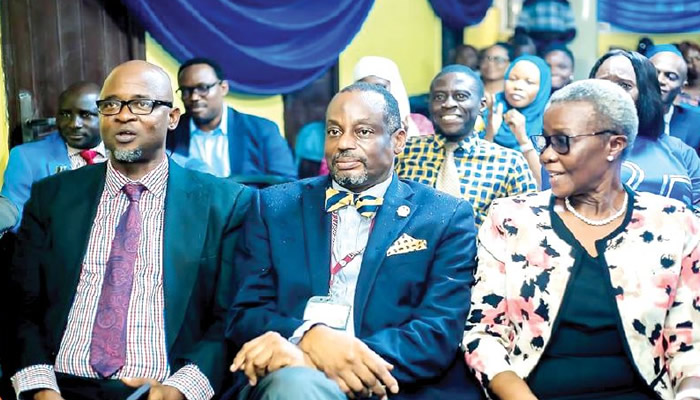
The daily ordeals and struggles faced by parents of children born with cleft and palate deformities were recently amplified through a photo-voice orofacial clefts photo exhibition organized by a Professor of Oral Pathology, Radiology, and Medicine, Azeez Butali, the Lagos University Teaching Hospital, and the international non-governmental organisation, Smile Train.

The event, which gave caregivers the opportunity to vividly share their stories, was held at the Surgical Skills Centre, LUTH, Idi-Araba, Lagos.

The exhibition, which is a product of 18 years of research, focused on mental health and also allowed the academic community to view the psychosocial impact of cleft lip and cleft palate on caregivers.

Speaking about the event, the Chief Medical Director of LUTH, Professor Wasiu Adeyemo, who was accompanied by the Provost of the College of Medicine, UNILAG, Prof. David Oke, noted that the exhibition, as seen through the stories shared by the caregivers, showcased the success stories of the cleft lip and palate section of the institution.

He assured that more would be done to improve research and standards, adding that UNILAG takes pride in being the first institution of learning in Africa to take a holistic approach to tackling cleft lip and deformed palate medical conditions.

Adeyemo said, “I am elated to see this day and the glowing faces of caregivers, who shared how the cleft caregiver’s cluster group with the support of Smile Train providing the fund, have impacted on their lives. I commend our own, Prof Ogunlewe for leading the unit and putting smiles on the faces of scores of these caregivers.

“It has been 18 years of hard work and we are at the forefront of providing solutions to cleft lip and palate in Africa, not just in surgery but in providing nutrition and speech conditioning of the child.”

On his part, Prof Butali, explained that the photovoice exhibition was a participatory research effort and that the result will be documented, as it showed the extent of stigmatisation faced by the victims.

He stated, “This is a participatory research where patients tell their stories themselves. They were trained to take pictures of what symbolises their moments, and what they go through.

“There is a picture of two kids fighting, made by a caregiver who disclosed that her husband beats her because of their child with cleft lip, and this is a case of domestic abuse.

“Another picture shows a road that is rough, which speaks of a mother who is depressed because of coping with a cleft lip child and the accompanying stigmatisation.

“We have another of the thirty photos displayed today at the exhibition that depicts a mother who is happy and relieved anytime she is in the clinic with other caregivers.

“All these inform us the researchers of the vivid impact of cleft lip medical condition on parents and caregivers, the psychosocial support given to the caregivers who are forty-three in number and the empathic support, Smile Train gives.

“We got 75 pictures in total from the photovoice; the other 45 were used for the documentary which we showed to the public.

“This photo voice is another way to tackle stigmatization and reduce it to the barest minimum. There is a picture of a bird being isolated, the woman doesn’t go out. She wakes up, makes her bed and goes back to sleep. She avoids going out because she is being stigmatized by neighbours around her.

“They just greet her from a distance and do not come near her and her child because they feel their kids will also catch the oral cleft condition. So, it’s that bad. We want to inform society and sensitise them that these people are not ‘abami’ (meaning strange persons); it’s just a birth defect and it is curable, please accept them.

“There is a young man who is in 300L at the Lagos University (Lagos State University). He was going to drop out of school two years ago before I met him because of his cleft. I had to encourage him to go back to school, I put him on a scholarship, paid his school fees and gave him N10,000 every month.

“He said he wants to do business; I gave him a start-up fund just to encourage him and keep him in school because cleft should not have prevented him from going to school. He graduated with a second-class upper grade. For me, we need to educate the society to accept them,” Butali stressed.

The Associate Head of Education and Training in Africa, Smile Train, Paul Nobi, said the Cleft Lip and Palate Care International, an NGO, established in 1999, had recorded two million patient interventions in more than 90 states where it operates globally.

He added that it had recorded 2000 patient interventions in Nigeria since 2006, providing surgery cost and sundry supports for caregivers.

He urged society not to stigmatise caregivers of cleft lip children as it is not a death sentence and that there is a cure for it.

Meanwhile, Prof Ogunlewe, who is revered as the mother and grand mum of Smile Train-sponsored Cleft Lip and Palate section of LUTH, noted that the unit takes care of victims and caregivers from infancy to the teenage period of 18 years with the NGO providing the fund.

He said, “Caring for cleft lip and palate has been a rewarding adventure for me and the intervention of Smile Train in 2006, swelled our care of patients, as we could only care for a few before now.

“We have 43 caregivers made up of two men and 41 women in our cluster unit and they have different stories. Caring for them goes beyond the surgery cost of N300,000 but providing nutrition, speech conditioning and other areas of therapy.”

The President, Association of Movie Producers, Queen Ebigieson, who was part of the dignitaries at the event, empathised with the caregivers and urged them not to relent in caring for and raising their children born with cleft lips.

She noted that there is a cure for the congenital defect and that with the partnership at the forum, there is hope.

Ebigieson advocated for a movie that would shed more light on cleft lip and palate deformity, and educate society on the need to embrace the caregivers and not stigmatise them.

The caregivers, who turned out in their numbers shared a myriad of sad experiences, basically on how they almost abandoned their children with cleft condition but for the intervention of Smile Train and LUTH.

One of them, Adebayo Farida, who was in tears, recalled how she discovered that her two-year-old daughter had a cleft lip medical condition and a hole in the heart.

She recalled being told about the Smile Train patient intervention in LUTH and pleaded for help as she had been turned down many times by other organisations.

Biden condemns shooting at Trump rally, says no place for violence

0

President Joe Biden has issued a statement following the shooting incident at former President Donald Trump’s campaign rally in Pennsylvania.

The disturbance, which occurred as Trump began his final rally before the Republican party convention, led to the former president being rushed off stage by Secret Service agents.

“I have been briefed on the shooting at Donald Trump’s rally in Pennsylvania. I’m grateful to hear that he’s safe and doing well. I’m praying for him and his family and for all those who were at the rally, as we await further information,” Biden said via X on Sunday..

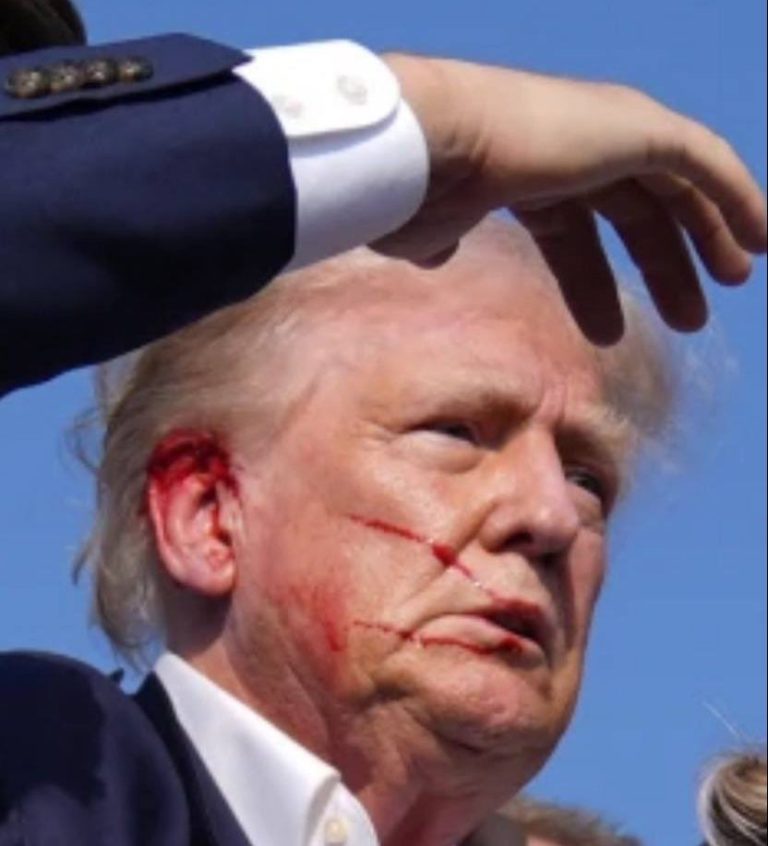
The incident unfolded dramatically, with witnesses reporting a series of loud bangs that sounded like gunshots. Trump was seen with blood on his right ear as security personnel surrounded him and quickly escorted him off the stage. The Secret Service later confirmed that the “former President is safe.”

John Yeykal, an attendee from Franklin, Pennsylvania, described the scene stating, “We saw a lot of people go down, looking confused. I heard the shots, it sounded like between firecrackers and a small caliber handgun.”

In his statement, President Biden expressed gratitude to the Secret Service for their swift action in ensuring Trump’s safety. He also took the opportunity to call for national unity in the face of such violence.

“Jill and I are grateful to the Secret Service for getting him to safety. There’s no place for this kind of violence in America. We must unite as one nation to condemn it,” Biden stated.

The incident has been declared an active crime scene, with Secret Service officers ordering reporters to leave the area.

Suspected shooter at Trump rally dead

0

The suspected shooter who wounded Republican presidential candidate Donald Trump at a rally is dead, US media reported Saturday.

One bystander was also said to have died.

“Butler County District Attorney Richard Goldinger said two people are dead, including an apparent shooter,” The Washington Post reported.

ABC News cited Goldinger as saying a second bystander may also have been hit.

AFP

Details later…

All rights reserved. This material, and other digital content on this website, may not be reproduced, published, broadcast, rewritten or redistributed in whole or in part without prior express written permission from According.

Contact: [email protected]

Low voter turnout mars Adamawa LG poll

0

The Adamawa State local government election conducted on Saturday by the State Independent Electoral Commission.

Some of the polling units visited by our correspondent around noon had no single vote cast in those units.

The Adamawa State Governor, Ahmadu Fintiri, cast his vote in Kirchinga Ward Unit 001 in his hometown, Madagali Local Government Area.

The governor, who expressed confidence in the commission over the conduct of the poll, said he was satisfied with the turnout he witnessed.

He said the electoral body had exhibited fairness in the conduct of the poll.

When our correspondent visited Sengere Primary School, which housed six polling units, only Unit 008, Korfa Wakili, was manned by electoral officials.

The presiding officer, Sadatu Vangu, said the unit had yet to see a voter since they resumed at about 8:25 am.

Children took over the election venue, playing football, to the admiration of some of the security agents who were on the ground to provide security.

Party agents, including those of the ruling Peoples Democratic Party, were also not on the ground.

At Polling Unit 023 Gerie 1, Sengere, Uniot 1, only two electoral officials were seen with empty ballot boxes.

The presiding officer, Michael Musa, said they were still waiting for voters to come out and vote.

The two leading opposition parties in the state; the All Progressives Congress and Social Democratic Party, boycotted the election, describing it as a shame and mockery of democracy.

However, the police directive on movement restriction was not effective as the popular grain market in Gerie Local Government Area was filled with sellers and buyers.

Constitutional amendment needed to strengthen LG autonomy – Abia PDP

0

The Abia State Chapter of the Peoples Democratic Party has said that there is the need for constitutional amendment to ensure local government autonomy.

It therefore called on the Presidency to submit an executive bill to the National Assembly to that effect.

This followed the judgment of the Supreme Court granting local government autonomy.

The Abia PDP Vice Chairman and Acting State Publicity Secretary, Abraham Amah, made this known in a statement shared with According Online on Saturday.

The statement partly read, “We commend the Supreme Court for laying to rest the longstanding issue of local government autonomy, and we wholeheartedly support this significant development.

“To further strengthen this autonomy and free local governments from undue political influence, we urge the Presidency to swiftly submit an executive bill to the National Assembly for a constitutional amendment reflecting the autonomy of local governments.

“This proposed constitutional revision should include measures such as dissolving the current Local Government Service Commissions and establishing bodies at the local council level to manage employees and guarantee their pensions through a well-structured contributory scheme.

“The bill should also support the direct allocation of federal funds to local governments, bypassing the Joint Allocation Account Committee, and ensure governors do not interfere with these funds.”

All rights reserved. This material, and other digital content on this website, may not be reproduced, published, broadcast, rewritten or redistributed in whole or in part without prior express written permission from According.

Contact: [email protected]

Trump is fine, being checked at medical facility

0

Republican presidential candidate Donald Trump is “fine” and being checked at a medical facility, his campaign said Saturday, after he was evacuated from the stage of a rally in Pennsylvania after what sounded like shots were heard.

“President Trump thanks law enforcement and first responders for their quick action during this heinous act. He is fine and is being checked out at a local medical facility. More details will follow,” said spokesman Steven Cheung in a statement.

AFP

Details later…

All rights reserved. This material, and other digital content on this website, may not be reproduced, published, broadcast, rewritten or redistributed in whole or in part without prior express written permission from According.

Contact: [email protected]

I fully endorse Trump, wish him rapid recovery

0

Elon Musk has publicly voiced his support for former President Donald Trump following a concerning incident at a Pennsylvania rally.

The tech mogul stated on Saturday via X, “I fully endorse President Trump and hope for his rapid recovery.”

This endorsement comes in the wake of a dramatic event during Trump’s campaign appearance on Saturday.

According to AFP, the Republican candidate was evacuated from the stage after what sounded like gunshots were heard at the rally.

Videos now circulating on social media suggest that Trump was sighted with blood on his right ear as security personnel quickly surrounded him.

The former president was then hurriedly escorted off the stage, raising his fist to the crowd as he departed.

All rights reserved. This material, and other digital content on this website, may not be reproduced, published, broadcast, rewritten or redistributed in whole or in part without prior express written permission from According.

Contact: [email protected]

Trump evacuated from Pennsylvania rally stage after apparent gunfire

0

Republican candidate Donald Trump was evacuated from the stage at a rally on Saturday after what sounded like shots rang out at the event in Pennsylvania, according to AFP.

The former US president was seen with blood on his right ear as he was surrounded by security agents, who hustled him off the stage as he raised his fist to the crowd.

AFP

Details later…

All rights reserved. This material, and other digital content on this website, may not be reproduced, published, broadcast, rewritten or redistributed in whole or in part without prior express written permission from According.

Contact: [email protected]