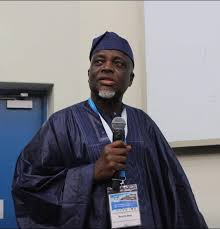
The Chairman, Board of Trustees of the Consortium of Universities in Kwara State (KU8+), Prof. Ishaq Olanrewaju Oloyede has challenged universities in the state to be the state’s “developmental brain box” by offering research-driven solutions to the state’s economic and social challenges.
The immediate past Registrar of the Joint Admissions and Matriculation Board (JAMB) made the call in a goodwill message at the weekend during the opening of the Fourth KU8+Conference at Summit University, Offa.
He urged the universities to join together their expertise to transform agriculture, revive dying industries and give the government objective advice on policies that can lead to sustainable development.
Mr Oloyede said universities should be apolitical and offer independent and objective advice to governments, which he said was a sanitizing role.
He recalled that when he was Vise Chancellor of the University of Ilorin, he was offered an appointment as a Presiding Officer in a national election but he turned it down because he felt that universities should be neutral and be there to mediate when political actors are at loggerheads.
He called for collaboration of the KU8+ institutions in developing innovative solutions that will improve agricultural productivity and economic growth saying Kwara is home to several Federal Government institutions with mandates in the agricultural sector.
Among these are the Agricultural and Rural Management Training Institute (ARMTI), Nigerian Stored Products Research Institute (NSPRI), Lower Niger River Basin Development Authority, National Center for Agricultural Mechanization (NCAM), Faculty of Agriculture and others.
Oloyede said agriculture was one of the state’s greatest strengths and the concentration of agricultural institutions was an opportunity for the universities to come up with solutions to the challenges facing the sector.
He also mourned the collapse of major industries in the state such as Bacita Sugar Company, Jebba Paper Mill and Tobacco Company.
Oloyede urged the universities to leverage research and innovation to revive such industries and re-invent the state’s economy.
He said universities should be helping governments plan for the future by generating new ideas and practical solutions to emerging challenges, rather than simply reacting to events.
The former JAMB Registrar, however, praised the Vise Chancellor of the University of Ilorin and Chairman of KU8+, Prof. Wahab Olasupo Egbewole for the formation of the consortium.
He said the consortium was an initiative of the Egbewole administration contrary to claims in some quarters that he founded KU8+. During my tenure as Vise Chancellor, the University of Ilorin pioneered some of the earlier collaborative initiatives like AWAU and U6+.
Read Also: Borno: Military Airstrikes Neutralise Nine Terrorists in Fresh Operation
Oba Mufutau Gbadamosi Esuwoye II, the Olofa of Offa also spoke and congratulated the organizers, describing KU8+ as a laudable initiative that was redefining collaboration among universities in the state.
He commended the university leaders for coming together to promote educational development, and expressed hope that the collaboration would enable Kwara to produce some of the best students in Nigeria thru shared programs and initiatives.
However, the second lead paper presenter, Emeritus Professor of Science Education, Olugbemiro Jegede, urged KU8+ members to improve collaboration thru a credit transfer system which would allow for the smooth movement of students among the member institutions.
Jegede also suggested that staff and student exchange programs, joint degree awards and collaborative teaching and research initiatives should be implemented to achieve greater academic integration among the universities.
He suggested a consortium-wide Learning Management System (LMS), virtual campuses, shared high performance computing facilities and cloud infrastructure as one academic ecosystem.
‘Pooling resources will cut down on unnecessary duplication, improve efficiency and make quality teaching, learning and research facilities accessible to all member universities,’ he said.
“Academic integrity, technological innovation, evidence-based practices and institutional collaboration would determine the future of higher education,” Jegede said.
He called on universities to break down the silos by connecting research, teaching and community engagement to promote a vibrant and inclusive higher education system that can drive national development.