Europe’s record-breaking summer heatwaves are already taking a huge economic toll, highlighting the increasing impact of climate change on the continent.
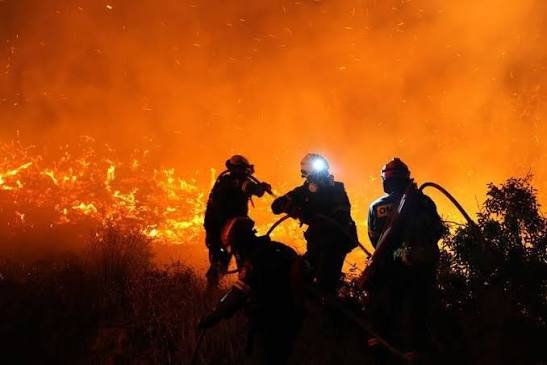
Scientists say global warming has worsened the heat and drought, disrupting power generation, river transport, agriculture and public health. Europe’s wildfire season is on course to be the worst on record.
Economists estimate the total losses are already in the hundreds of billions of euros and expect the economic impact to rise in coming years.
“We have multiple extreme weather events happening all at the same time and 2026 is especially worrying,” warned Sehrish Usman, an economist at the University of Mannheim.
“What makes 2026 particularly worrying from an economic perspective is that there are multiple episodes of extreme events,” he said.
“Take heatwaves, droughts, wildfires… these are happening at the same time and mostly in the same places, compounding their impact.”
June and July’s record heat has disrupted shipping on the Rhine and Danube, forced several nuclear reactors to reduce or stop production due to cooling problems and damaged agricultural output. Heat has also reduced worker productivity and caused tens of thousands of deaths, including more than 10,000 reported in Germany.
Allianz estimates that a two-week heatwave in June alone could reduce GDP in Europe by 0.3 percentage points, while ING estimates that disruptions on the Rhine could reduce GDP in Germany by 0.3 percentage points this year.
Allianz also warns that climate change could cut growth by 5-7% by 2030 in highly exposed economies such as Spain, France and Italy.
“The overall bill will be much bigger this year.
“This figure does not consider the fires, droughts, various floods or the expected El Nino,” said Allianz economist, Hazem.
The economic consequences may continue worsening after the extreme weather itself has passed, Usman said.
Read Also: Ghana Finds Fresh Value in Cashew Apples, Boosting Farmer Incomes
You would expect the damage to be biggest in the year that an extreme event happens and then to fade but we find the opposite,” he said.
“The economic impact builds in the years after because the extreme weather triggered a series of slow economic repercussions.”
Southern Europe is especially at risk, including declines in summer tourism, increases in food prices and crop failures.
Extreme heat could alter traditional holiday patterns, said Carsten Brzeski, ING economist.
“Can you imagine tourists marching thru southern Italy or Spain in 45 degrees? I can not. So I think the nature of tourism will change,” Brzeski said.
Extreme weather is also straining government finances as tax revenues decline and spending increases on emergency responses and climate adaptation. Allianz estimates lost economic output could reduce annual tax revenue by as much as 1.8% in France and 1.3% in Italy and Spain.
The upward fiscal burden could eventually add to pressure on the European Central Bank, particularly as governments face competing needs to finance defense, energy transition and climate resilience.