Home Blog

Security Chiefs Merit National Honours for Orire Rescue Mission – Lawmaker

0

The Deputy Spokesman of the House of Representatives, Philip Agbese, has called on President Bola Tinubu to confer a national honour on the country’s security chiefs for their recent exploits in Oyo and Borno states.

Agbese, who is the member representing Ado/Okpokwu/Ogbadibo Federal Constituency of Benue State, pointed to the rescue of schoolchildren and teachers abducted in the Orire area of Oyo State and the thwarting of an attempted mass abduction of students in Monguno, Borno State, as evidence of improved operational effectiveness.

“The achievements of the armed forces under the present military leadership are worthy of national recognition especially at a time the country is still battling insurgency, banditry and other security threats,” the lawmaker said.

“The safe return of the Orire victims is a victory to celebrate. It demonstrates what organized intelligence and military action can accomplish.

Read Also: Sani, Hamzat, Chinda Among Nominees as PDP, APC Beat INEC Deadline

“The successful resolution of the Orire abduction after 56 days of captivity and decisive intervention in Monguno, show the increasing effectiveness of our security apparatus under your leadership.

Our Chief of Defence Staff, Chief of Army Staff and other key military officers are worthy recipients of the GCON award having restored hope to families and safeguarded the future of our children. “These are laudable feats that deserve national recognition,” Agbese said.
He said praising good service in the armed forces will help boost the morale of personnel and help strengthen the public confidence in the security institutions of the nation.

“I think as an opposition member, credit must be given where credit is due. “The GCON for our security chiefs will boost their morale and send the signal that excellence in the protection of Nigerians transcends partisan lines,” he said.

Agbese also charged the Federal Government to sustain its investment in military hardware, intelligence gathering and welfare of security personnel to consolidate on the recent gains recorded in the fight against insecurity.

Mr President, let this be the beginning of closer collaboration. Nigerian parents and students are entitled to nothing less than total safety in their schools and communities.

“The heroes responsible for these results should be honored. “GCON for our security leadership is well-deserved recognition of their service and sacrifice.”

Sani, Hamzat, Chinda Among Nominees as PDP, APC Beat INEC Deadline

0

The Peoples Democratic Party (PDP) and the ruling All Progressives Congress (APC) have commenced the uploading of the names and particulars of their governorship and state Houses of Assembly candidates for the 2027 general elections onto the nomination portal of the Independent National Electoral Commission (INEC).

The PDP National Organising Secretary, Umar Bature, said the exercise had commenced by the opposition party on Saturday, while a senior APC official said the ruling party had also started submitting the details of candidates cleared by its primary election appeal panel and National Working Committee (NWC).

Speaking on the exercise, Bature said the PDP had not had any technical problem since the process began.

“The Peoples Democratic Party started uploading information of its governorship and state Houses of Assembly candidates to the INEC nomination portal on Saturday.

“The exercise has been going well, with no technical issues, and we are confident that the upload process will be completed well ahead of the deadline,” he said.

The Independent National Electoral Commission (INEC) had scheduled the submission of nomination forms for governorship and state Houses of Assembly candidates to span from 9am on July 18 to 6pm on August 8, 2026.

Earlier, political parties submitted nomination lists for their presidential and National Assembly candidates from June 27 to July 11.

The exercise was based on the submission of the Forms EC9 and EC9A to EC9E as per Section 29(1) of the Electoral Act, 2026.

Read Also: Nigeria Calls on ECOWAS to Take South Africa Xenophobia Crisis to African Union

An APC chieftain who spoke to The PUNCH on the condition of anonymity because he was not authorised to speak to the media said the party was giving priority to serving governors who were seeking re-election.

“I can confirm that the party started the upload process yesterday, with those 16 governors seeking re-election given priority,” the official said.

The APC source added that only those candidates whose nominations survived petitions before the primary election appeal committee and got the approval of the NWC would be uploaded.

“There may be minor adjustments to the original list of candidates, as the primary election appeal committee had considered some petitions and made its recommendations to the National Working Committee,” the source said.

“So, only candidates that went through the appeal committee review and got clearance from NWC were uploaded to INEC portal.

“We are confident exercise will be completed before the deadline.”

Among the incumbent governors, the APC list is expected to include Umo Eno of Akwa Ibom, Hyacinth Alia of Benue, Uba Sani of Kaduna, Abba Yusuf of Kano, Dikko Radda of Katsina and Nasir Idris of Kebbi.

Others are Umaru Bago of Niger, Caleb Mutfwang of Plateau, Ahmed Aliyu of Sokoto, Agbu Kefas of Taraba and Dauda Lawal of Zamfara.

First-time flagbearers such as Lagos State Deputy Governor, Obafemi Hamzat; Senator Solomon Adeola in Ogun; Kingsley Chinda in Rivers; and Eric Opah in Abia are also expected to make the party’s governorship list.

The party source also mentioned the names of Mohammed Abubakar (Bauchi), Mustapha Gubio (Borno), Jamilu Gwamna (Gombe), Ahmed Wadada (Nasarawa) and Baba Malam Wali (Yobe).

He said the APC had set up a committee to be headed by Jibrin Bancir, the Principal Private Secretary to the party’s national chairman to coordinate the collection and transmission of documents needed for the exercise.

“The committee receives the documents from the state chairmen, cross-checks the details, ensures that all the requirements are met and forwards same to the ICT department for uploading.

The arrangement is to make the process seamless, efficient and timely,” the source added.

INEC’s timetable says the personal particulars of presidential and National Assembly candidates will be published on August 8.

The details of governorship and state Houses of Assembly candidates are slated for display on August 29.

Political parties have until August 22 to withdraw or substitute presidential and National Assembly candidates, while governorship and state Assembly candidates must be withdrawn or substituted by September 19.

The PDP, APC and other political parties are expected to field a total of 28 governorship candidates and 993 candidates for state Houses of Assembly nationwide.

Anambra, Bayelsa, Edo, Ekiti, Imo, Kogi, Ondo and Osun states will not hold governorship elections because their elections are held outside the general election cycle.

Nigeria Calls on ECOWAS to Take South Africa Xenophobia Crisis to African Union

0

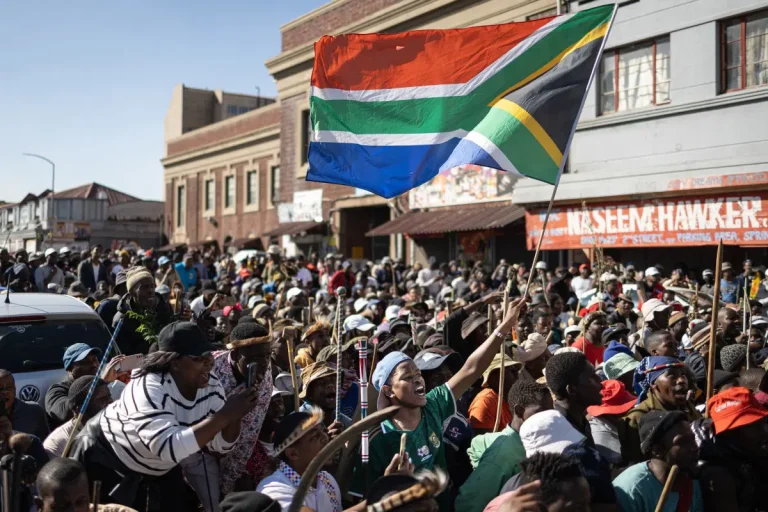
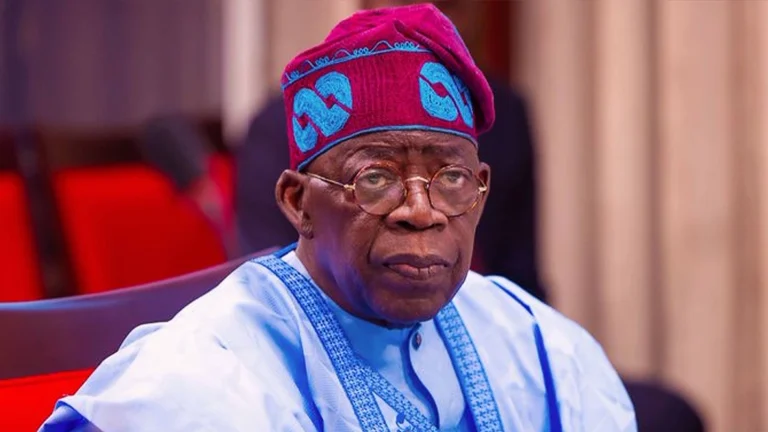
President Bola Ahmed Tinubu has called for a continental coordinated response to the recent xenophobic attacks on Nigerians and other African nationals in South Africa, urging the Economic Community of West African States (ECOWAS) to bring the matter before the African Union (AU).

The President made the appeal at the 69th Ordinary Session of the ECOWAS Authority of Heads of State and Government held in Lungi, Sierra Leone, where he was represented by Vice President Kashim Shettima, reports say.

Tinubu told regional leaders that he condemned what he called “Afrophobic” attacks on Nigerians and other Africans living in South Africa.

“Nigeria condemns in the strongest terms the recent Afrophobic attack on its citizens and other fellow Africans in the Republic of South Africa.

“As already mentioned by His Excellency, the President of Ghana, ECOWAS should bring this issue before the next meeting of the Authority of the African Union to send a clear message that this kind of behaviour is unacceptable,” he said.

The President also reminded South Africa of the support it received from other African countries in its struggle to end apartheid.

He further stated: “We should remind South Africa that the freedom it is enjoying today is because of the liberation efforts of African countries like Nigeria.

Nigerian Government had evacuated 1,490 citizens from South Africa in 7 batches and was still ready to engage further on the issue, Tinubu said.

The President’s position came days after the country’s Foreign Affairs Minister, Bianca Odumegwu-Ojukwu, suggested that Nigeria could consider retaliatory action over the attacks.

She also said that the National Assembly would make recommendations on the matter.

The Senate and House of Representatives have already condemned the attacks against African nationals and are reviewing the situation.

Senior Advocate of Nigeria, Femi Falana, also recently urged the Federal Government to sue South Africa at the African Court.

On the issue of xenophobia, Tinubu reaffirmed Nigeria’s commitment to the newly adopted ECOWAS Compact for the Future of Regional Integration, describing it as a strategic roadmap for promoting regional unity, economic cooperation, democratic governance and sustainable development.

Read Also: Osanipin Hails 60% Local Content as LAFBART Launches Made-in-Nigeria Vehicles

He said: “Being the largest economy and one of the key founding members of our Regional Economic Community, Nigeria remains committed to its historic responsibility to continue to promote regional unity, peace, economic integration and democratic governance.

He assured member states that Nigeria will continue to work with regional partners to implement the compact and achieve its strategic goals.

The President also restated Nigeria’s commitment to removing obstacles to trade, enhancing cross-border infrastructure and ensuring the free movement of people, goods and services across West Africa.

On democratic governance, Tinubu said insecurity and political instability were still major hindrances to development across the sub-region.

He restated Nigeria’s commitment to constitutional democracy, rule of law, respect for human rights and opposition to unconstitutional changes of government.

But he warned that bad governance and manipulation of constitutional provisions could just as well lead to political instability.

“More than adventurism, the best weapon to use against unconstitutional changes of government and mass protests that threaten to upset the public order is for us to enthrone good governance that will afford our people more tangible benefits.

“We must also resist the temptation to tamper with constitutional term limits or to exploit constitutional processes,” he said.

Tinubu also reaffirmed Nigeria’s support for the proposed ECOWAS Counter-Terrorism Force and efforts to strengthen the ECOWAS Standby Force through improved intelligence sharing, joint military operations and preventive diplomacy.

He further pledged Nigeria’s commitment to advancing gender equality, broadening opportunities for women leaders, investing in education and skills development, championing youth entrepreneurship and empowering youth across the region.

On relations with the Alliance of Sahel States, the President stressed the importance of dialogue and sustained engagement to maintain regional unity and to strengthen ECOWAS.

President Julius Maada Bio, who is hosting the summit, said it was an opportunity for leaders to take stock of the bloc’s achievements and plot a new course for West Africa.

ECOWAS Vision 2050 is a roadmap for building a peaceful, prosperous and integrated region anchored on democratic governance and driven by innovation, he said.

The President of the ECOWAS Commission, Dr Omar Alieu Touray, said the commission has strengthened democratic governance, electoral assistance, regional security cooperation and humanitarian interventions.

He also highlighted progress on major regional infrastructure projects such as the African Atlantic Gas Pipeline and the Abidjan-Lagos Corridor Highway Project, stating that they are critical to West Africa’s long-term economic integration and development.

Osanipin Hails 60% Local Content as LAFBART Launches Made-in-Nigeria Vehicles

0

Lafbart Innovations & Consulting Ltd. (LAFBART), a leading Nigerian automotive engineering and manufacturing company, has taken yet another big step towards realizing its vision of becoming one of Nigeria’s top innovative mobility solutions providers.

The indigenous automotive manufacturer, based in Akure, Ondo State, has just launched a range of Made-in-Nigeria vehicles for security, commerce, leisure and infotainment purposes, further illustrating the increasing ability of the Nigerian automotive industry to produce locally developed mobility solutions.

Speaking at the unveiling ceremony at the Dome in the state capital, the Director-General of the National Automotive Design and Development Council (NADDC), Chief Oluwemimo Osanipin, commended LAFBART for its patriotism and commitment to local manufacturing.

He said the company had responded positively to the Federal Government’s call for increased local value addition to vehicle manufacturing, a development that puts it in a position to benefit from the newly introduced Nigeria First Policy that prioritises locally manufactured products.

Earlier in his welcome address, the Managing Director/Chief Executive Officer, LAFBART, Mr. Abosede Adeleke, expressed delight over the company’s achievement of more than 60 per cent local content in the production of its indigenous tricycle, Keke Naija.

He credited the milestone to the steadfast support of the National Automotive Design and Development Council, which, he observed, has continued to encourage indigenous automotive companies to maximise their potential through capacity development and policy support.

The Deputy Governor of Ondo State, Dr. Olayide Adelami (mni), who represented Governor Lucky Aiyedatiwa, before the official unveiling of the new products, showered encomiums on LAFBART for making the state proud through innovation and technological advancement.

The company was described as a worthy ambassador of Ondo State, reiterating its reputation for deploying knowledge-driven innovations to solve societal challenges and enhance mobility solutions.

Read Also: Ganduje Says Atiku, Obi Cannot Beat Tinubu Without Northern Backing

The products unveiled included Patroller, which was described as the new face of security patrol in Nigeria. The security intervention vehicle is meant to fill existing gaps in patrol operations with things like external surveillance cameras, high-beam lighting, GPS navigation and a dedicated security locker.

The locally manufactured tricycle, Keke Naija, was also unveiled to compete favourably with existing models in the Nigerian market while promoting local content development.

VisioX, a cost-effective infotainment system that delivers visual and audio output along with user feedback input, was another innovation showcased at the event, offering diverse applications in various sectors.

The launch ceremony held on June 6, 2026 was attended by some dignitaries including the Chief of Staff to the Ondo State Government, Chief Segun Omojuwa; the Head of Service, Chief Segun Odusanya; directors and staff of the National Automotive Design and Development Council (NADDC); the Comptroller of Immigration, Ondo State Command; among other government officials and industry stakeholders.

Ganduje Says Atiku, Obi Cannot Beat Tinubu Without Northern Backing

0

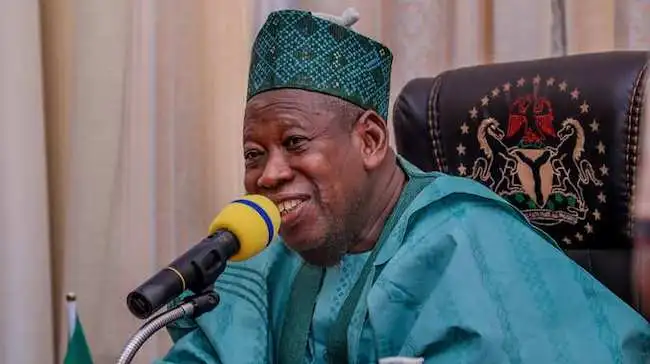
Former APC National Chairman, Abdullahi Umar Ganduje has said that former Vice President, Atiku Abubakar and former Anambra State Governor, Peter Obi lack the necessary political structure in Northern Nigeria to defeat President Bola Tinubu in the 2027 presidential election.

Speaking over the weekend at a public event in Kano, Ganduje said the North is the deciding region in presidential elections.

He said the two opposition candidates did not have the grass roots support to win the region.

“The North is strategic in every presidential election in Nigeria,” he said. “With due respect to our friends in the opposition, neither Peter Obi nor Atiku Abubakar can gather enough support in this part of the country to defeat President Tinubu in 2027.”

Read Also: APC Row Deepens as Iyabo Obasanjo Confronts Yayi Over Alleged Cash Offer

Ganduje also stated that although discussions on opposition coalition were ongoing, Atiku and Obi have not established strong political structures across the North to make meaningful electoral gains.

He called on the Independent National Electoral Commission (INEC) to make the registration of political parties more stringent, saying only parties with functional structures, distinct ideologies and presence across the country should be recognised.

“More rigorous registration standards will help strengthen our democracy by ensuring that only viable political parties are participating in elections,” he said.

APC Row Deepens as Iyabo Obasanjo Confronts Yayi Over Alleged Cash Offer

0

Former Ogun State governorship aspirant of the All Progressives Congress (APC), Iyabo Obasanjo, has responded to claims by the party’s governorship candidate, Solomon Adeola, that she left the party after he gave her money.

Adeola, popularly known as Yayi, was reported to have claimed that Obasanjo left the APC for the Peoples Democratic Party (PDP) because he failed to refund her campaign fee.

He claimed that when Obasanjo could not get money from him, she turned to PDP governorship candidate Ladi Adebutu for her demands.

In a statement, Obasanjo described Adeola as “a liar” and a politician without integrity.

She said that his claim was at variance with his purported efforts to convince her not to quit the APC.

She stated that if Adeola felt the request for reimbursement was an insult, he would not have called her repeatedly after she resigned from the APC, nor would he have reportedly offered her money to stay in the party.

“In the last meeting with the senator, her political team asked for three things but Adeola did not give any of them or give feedback,” Obasanjo explained.

Read Also: ADC Condemns Bwala’s ‘Terror Infiltration’ Remark, Calls It Irresponsible

“My supporters asked the senator for three things,” she said. 1st is the Senate seat. 2nd is the money back that I spent. 3rd is to include my people in his campaign.

I told him that whatever he came back with on these demands I would explain to them. He didn’t do any of the three and didn’t even speak to me again until he tried to call me after I left the party. I did not reply and he offered me money.

‘If he thought it was insulting, why was he offering me money not to leave the party? This guy is a total phony. He’s a liar.

The requests were made by Hon Aroyeun, Chief Toyin Jokosenumi and Hon Biodun Ajayi . I didn’t ask for anything. I told him he didn’t have to do everything but he should tell me what he was gonna do.

ADC Condemns Bwala’s ‘Terror Infiltration’ Remark, Calls It Irresponsible

0

The National Publicity Secretary of the African Democratic Congress (ADC), Bolaji Abdullahi, has reacted to allegations of terrorist infiltration into Nigeria’s security architecture.

Daniel Bwala, Special Adviser to the President on Policy Communication, reportedly confessed to the infiltration in an interview on The Link Up Podcast hosted by EchoRoom.

He said the Federal Government had already put in place measures to tackle insider threats but refused to give details in the interest of security.

The warning by the Presidency followed unconfirmed reports on social media that a soldier attached to an Army battalion in Geidam, Yobe State, had disappeared for about two days and was seen among Boko Haram fighters when the town was attacked.

According to these unverified accounts, the soldier’s commanding officer tracked his phone to Gashua, several hundred kilometres away from his duty post, leading troops in the area to search for him.

The reports also say he was stopped at a checkpoint while trying to travel to Gombe in disguise, and he set off an explosive device while being taken back to Geidam, after allegedly overpowering an escort.

The claims, which also allege that information from the soldier led to the arrest of other military personnel suspected of links to the terror group, could not be independently verified.

Bwala confirmed his assertions late on Saturday when asked if Nigeria’s military had been compromised by agents of terrorism.

Read Also: Borno School Attack: Soldiers, Police Rescue 46 After Foiling ISWAP Assault

“They could have one or two agents in the army, anywhere else,” he said, pointing to precedent in both the Army and the Police as evidence that such breaches were not theoretical.

“Our police have always been arrested, and soldiers arrested involved in this kind of thing,” he said.

But the Presidential aide argued that no security architecture anywhere in the world was completely immune from infiltration.

Reacting to the development, Abdullahi wondered during an interview with Punch, why the government had not prosecuted anyone if it had credible evidence of terrorist infiltration.

“This is an extremely serious allegation. But Bwala is not a serious man. So, it is hard to take anything he says seriously. But if there is any truth to the allegation, shouldn’t we be hearing of arrests and prosecution instead of allegations?

“After three years in power, the APC people still think they are in opposition and not a government with power and responsibility to run a government,” he said.

Borno School Attack: Soldiers, Police Rescue 46 After Foiling ISWAP Assault

0

Troops Thwart Mass Kidnap Attempt At FGGC Monguno, Rescue 46 Students

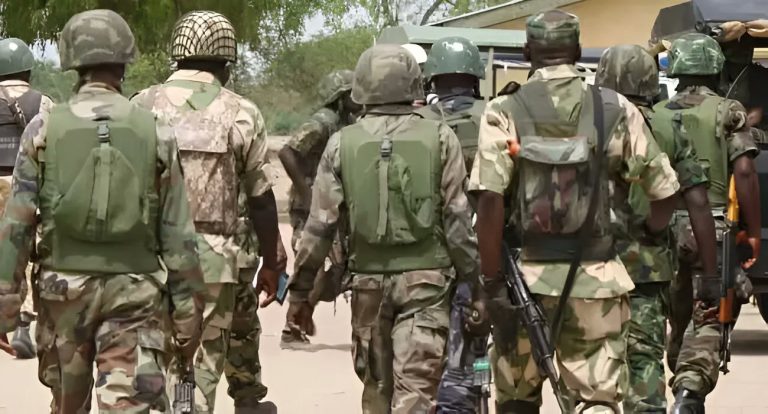
Troops of Operation HADIN KAI in conjunction with personnel of the Nigeria Police Mobile Force have successfully foiled an attempted mass abduction by suspected Islamic State West Africa Province (ISWAP) terrorists at the Federal Government Girls College (FGGC), Monguno, Borno State.

This development was made known by the Nigerian military in a statement issued Sunday by Captain Mohammed Goni, Acting Military Information Officer of Headquarters Joint Task Force (North East) Operation HADIN KAI.

The statement said the attack occurred at about 1.30 a.m. Saturday when the suspected terrorists invaded the school premises. The FGGC facility has now been converted into a temporary hostel by the Borno State Government for students of the Federal Polytechnic, Monguno.

The attackers allegedly entered the school with the help of suspected collaborators, apparently with the intention of kidnapping students, the military said. But the alert security personnel on duty quickly picked up the threat and responded with coordinated firepower to thwart the terrorists from executing their mission.

It said: “Troops of Operation HADIN KAI’s Sector 3 Quick Reaction Force (QRF) quickly reinforced the security team and overpowered the attackers with superior combat strength. The terrorists ran away without abducting any student when they met with fierce resistance from the combined military and police personnel.

Read Also: AdvoKC Foundation Calls on Tinubu to Sign Federal Audit Service Bill

The shootout did damage sections of the school’s infrastructure, but security forces were able to contain the attack and secure the area.

“After the operation, all the 46 students in the facility were safely rescued and evacuated to Kinnasara Barracks, Monguno where they were given immediate medical examinations and appropriate care. The military confirmed no abduction had taken place and all students rescued were in stable medical condition.

But the operation was not without its tragedy. The military said some students were killed by stray bullets fired by the fleeing terrorists in the clash. It expressed its deep condolences to the families of the victims and prayed for the repose of their souls.

Operation HADIN KAI also said investigations are ongoing to identify and arrest suspected collaborators believed to have aided the attackers. Troops and other security agencies are also in pursuit of the fleeing terrorists to ensure that they are brought to justice.

The military has reiterated its commitment to sustain its operations against the terrorist groups to destroy their operational networks and protect schools, public institutions and communities from future attacks, in its bid to restore lasting peace across the North-East. It also assured the residents that the security agencies are still on their toes and are determined to deny the terrorists the liberty to threaten lives and disrupt education in the region.

AdvoKC Foundation Calls on Tinubu to Sign Federal Audit Service Bill

0

The AdvoKC Foundation, a youth-led civic-tech organization dedicated to promoting transparency, democratic governance and public participation in Nigeria, has urged President, Bola Tinubu, to assent, without further delay, to the Federal Audit Service Bill, which has now passed both chambers of the 10th National Assembly and awaiting presidential action for over seven months.

The Bill seeks to repeal the colonial Audit Ordinance of 1956, an instrument that, in reality, ceased to be part of Nigerian law by virtue of the Revised Edition (Laws of the Federation of Nigeria) Decree of 1990 and is not found in either the 1990 or 2004 Laws of the Federation. Instead, the Bill would establish a separate Federal Audit Service and Federal Audit Board, extend the powers of the Auditor-General for the Federation and for the first time bring real timelines and sanctions to a function that has hitherto relied on slow, largely administrative penalties.

“The Auditor-General can tell Nigerians where public money has gone missing, but has no reliable means of making anyone answer for it,” said Habib Sheidu, Project Director of AdvoKC Foundation. That’s the difference with a watchman and a cop. This Bill finally gives teeth to the office. Every month it is not signed is a month that the gap remains open.”

The call is coming on the back of the International Monetary Fund’s 2026 Article IV Consultation report on Nigeria which showed that capital spending equal to about two percent of the GDP, about N8.8 trillion, was carried out outside the formal budget in 2025 and did not appear in official budget documents or implementation reports. IMF executive directors concluded the consultation with concern about off-budget spending and complicated financing instruments, and urged accelerating reforms to strengthen the budget process, public financial management, fiscal reporting, and accountability. The timely passage of the budget and the phasing out of the practice of overlapping budgets would further strengthen budget implementation, the Fund’s staff report added, along with a call to resume the regular publication of audited government accounts.

“The IMF report does not name this Bill but it doesn’t have to,” said Sheidu. “It describes, almost word for word, the very reform this Bill would deliver: a budget process that works on schedule, reconciled and published accounts as a matter of routine, and an audit institution with the independence to enforce that discipline. You cannot separate the mess of overlapping and re-enacted budgets from the absence of the audit law that would have caught the slippage before it required a repeal and re-enactment exercise to correct after the fact.”

Read Also: Withdraw Social Media Bill or Face Lawsuit, SERAP Tells NASS

The AdvoKC Foundation said this is not the first time the reform has come this close.

The Bill was first proposed in the 6th National Assembly (2007-2011) but did not scale through. The 7th National Assembly’s draft did not receive the two chambers’ concurrence. The Bill was passed by the 8th National Assembly and sent for assent in January 2019, but lapsed without assent, and no reason was ever communicated to the National Assembly. The new attempt by the 9th National Assembly could not complete the legislative process before the tenure of that Assembly expired in 2023.

Now before President Tinubu, the version introduced afresh in the 10th Assembly in October 2023 and to be passed by both chambers by December 2025, is therefore the fifth legislative attempt in almost two decades to give Nigeria a modern federal audit law, and only the second occasion on which it has reached a President’s desk.

The Foundation also relied on Section 58(4) of the Constitution of the Federal Republic of Nigeria, 1999 (as amended) which provides that the President shall within 30 days of the receipt of such Bill, assent to the Bill or communicate his reasons for withholding assent. The Bill is long overdue in now.

“Every week of silence is interpreted as ambivalence about the reforms this administration claims to be championing,” Sheidu added.

This Bill costs nothing to sign and buys a lot: it tells the IMF, the World Bank and international investors that Nigeria’s fiscal reforms are anchored on institutions, not just on pronouncements. And it tells Nigerians that a report from the Auditor-General will mean something at last.”

AdvoKC Foundation urges the President to grant his assent to the Bill now and with assent, to direct the constitution of the Federal Audit Board within 90 days, publication of a timeline for the appointment of the director general of the Federal Audit Service, and publication of a plain-language summary of the law. The Foundation said it will be tracking these milestones on its PromiseTracker.ng platform.

Withdraw Social Media Bill or Face Lawsuit, SERAP Tells NASS

0

SERAP urges Senate President, Godswill Akpabio and Speaker of the House of Representatives, Tajudeen Abbas to reject and withdraw Nigeria Data Protection (Amendment) Bill, 2026 SERAP said the Bill is a backdoor attempt to regulate social media, and expand government control over online expression, and is incompatible with international human rights standards.

A bill sponsored by Senator Ned Nwoko (APC, Delta North) aims to make social media platforms, data controllers and data processors that operate in Nigeria establish physical offices in the country and gives the Nigeria Data Protection Commission (NDPC) the power to shut down or ban the operations of any entity that fails to comply within 30 days.

In a letter dated 18 July 2026 and signed by SERAP Deputy Director Kolawole Oluwadare the organisation said: “Requirements compelling technology companies to establish local offices would increase government leverage over platforms, facilitate political pressure, make censorship demands easier and expose local employees to retaliation.”
“The Bill would grant sweeping powers to shut down or exclude social media platforms from the Nigerian market and expose millions of Nigerians to serious violations of their constitutionally and internationally guaranteed human rights.

“The Bill is following earlier attempts by the National Assembly to regulate social media that attracted widespread public opposition and serious human rights concerns.”

In part, the letter read: “The current Bill resurrects substantially similar proposals previously introduced by Senator Nwoko, raising renewed concerns that localisation requirements are being used as a vehicle for expanding governmental control over digital platforms and online expression.

“Whereas, if the Bill is passed into law in its present or substantially similar form, SERAP shall without delay take appropriate legal actions to challenge the legality of the Bill in the public interest and to ensure the full protection of the fundamental rights of Nigerians.

“The National Assembly should avoid localization requirements that unduly burden digital services and undermine citizens’ rights.

Read Also: NDC Chieftain Backs Peter Obi to Tackle Nigeria’s Security, Economy

“The Bill is a backdoor attack on social media and increased government control over online expression through corporate localisation requirements, rather than transparent and constitutionally permissible regulation.

“The Bill also runs the risk of re-creating the very dangers that the ECOWAS Court of Justice previously decried. In SERAP and Others v. Federal Republic of Nigeria, the Court found that the suspension of Twitter was a violation of the rights to freedom of expression, access to information and media freedom guaranteed under the African Charter.

“While the current Bill is not the Twitter suspension, it creates the avenue for that effect by proxy, by giving regulators the power to ban digital platforms from operating in Nigeria.

“The National Assembly shall not adopt laws which, by indirect means of regulation, may result in restrictions on fundamental rights prohibited by regional human rights law.

Governments have a legitimate interest in ensuring that digital platforms are operated responsibly and in accordance with domestic law. But such regulation must be firmly rooted in constitutional guarantees and international human rights standards.

“Digital service regulation should increase transparency, accountability and users’ rights – not provide new tools for censorship, surveillance or political interference.

“Any law that empowers regulators to ban digital platforms in Nigeria is likely to infringe on the rights of the people who rely on those platforms. The Bill’s new section 5(p) empowers the NDPC to prevent entities from carrying out operations in Nigeria without sufficient procedural safeguards.

“The Bill does not require prior judicial authorisation, does not require consideration of less restrictive alternatives, does not provide for a meaningful opportunity to remedy alleged non-compliance outside the arbitrary 30-day period, and does not require consideration of the impact of any prohibition on the fundamental rights of millions of Nigerians.

“In effect, the Bill grants an administrative agency the ability to impose sanctions comparable to a nationwide ban on digital communication without the procedural protections that are usually warranted whenever fundamental rights are at stake.

“The Bill cannot survive the test of Section 45 of the Nigerian Constitution which says that restrictions on fundamental rights can only be imposed when they are prescribed by law, are for a legitimate purpose and are reasonably justifiable in a democratic society.

“While improving regulatory compliance might be a legitimate governmental objective, the proposed amendment totally fails the constitutional and international human rights law tests of necessity and proportionality.

There is no evidence that the powers under the Nigeria Data Protection Act are insufficient, that the existing enforcement mechanisms have not worked or that less intrusive options would not be sufficient.

“The Bill imposes one of the harshest sanctions available: the exclusion of digital platforms from Nigeria simply because they have not established a physical office.

What it is now trying to do indirectly by means of regulatory localisation requirements cannot be done directly by the National Assembly constitutionally. For millions of Nigerians, the practical effect would be indistinguishable from a ban on the platform.

“The National Assembly should, as a matter of urgency, reject and withdraw the Bill which is patently inconsistent with the Nigerian Constitution and Nigeria’s obligations under the African Charter on Human and Peoples’ Rights and the International Covenant on Civil and Political Rights.

The Bill would harm the country’s digital economy, innovation ecosystem and international standing. The Bill is proposed as an amendment to the Nigeria Data Protection Act, with a view to enhancing regulatory compliance and consumer protection. However, the Bill has broad consequences in practice.

The Bill creates a statutory mechanism for the exclusion of digital platforms from Nigeria as it makes it mandatory for social media companies to establish physical offices in Nigeria to operate and empowers the NDPC to ban their operations after only 30 days of non-compliance.

“The amendment being discussed threatens much more than the interests of technology companies. This directly impacts the rights of millions of Nigerians who rely on digital platforms to exercise their rights to freedom of expression, receive and impart information, associate with others, participate in political life, carry out business, pursue education and engage in civic advocacy.

Section 39 of the Nigerian Constitution, Article 19 of the International Covenant on Civil and Political Rights and Article 9 of the African Charter on Human and Peoples’ Rights guarantee the rights to freedom of expression, digital rights and access to information.

The UN Human Rights Committee has consistently said that any restrictions on freedom of expression must always meet the criteria of legality, necessity and proportionality and that governments should use the least restrictive measures possible to achieve legitimate public aims.

The African Commission on Human and Peoples’ Rights’ Declaration of Principles on Freedom of Expression and Access to Information in Africa urges States to enhance universal access to the internet, refrain from undue restrictions on digital communications and protect online intermediaries from unwarranted interference.

Former UN Special Rapporteur on freedom of expression David Kaye has repeatedly warned governments against requiring technology companies to set up local offices as a means of facilitating censorship or indirect governmental pressure over content moderation decisions.

The UN Special Rapporteur on freedom of expression has cautioned against broad intermediary obligations on States that encourage private censorship or allow governments to exert undue influence on online platforms.

The Special Rapporteur has also observed that governments should not offload the responsibility to regulate lawful expression onto private companies in ways that increase governmental leverage over digital platforms.

“The proposed amendment is in direct conflict with the objectives of the Nigeria Startup Act 2022 and the National Digital Economy Policy and Strategy.

“Mandatory localisation requirements add significantly to compliance costs especially for start-ups, open-source projects, educational institutions, research organisations, AI developers and smaller technology companies, while making Nigeria less attractive as a destination for innovation and investment.

“There is no large democratic jurisdiction that imposes a blanket precondition that all social media platforms must have a physical office to be able to provide services.

“This is an opportunity for the National Assembly to reassert its commitment to constitutional democracy, the rule of law and Nigeria’s digital future by withdrawing the Bill forthwith.”