Home Blog

FAAN Appeals for Calm as Cashless System Faces Glitches in Abuja, Lagos Airports

0

Following traffic jams at Murtala Muhammed International Airport in Lagos and Nnamdi Azikiwe International Airport in Abuja on the first day of its nationwide Go Cashless initiative, the Federal Airports Authority of Nigeria, or FAAN, has advised drivers and airport patrons to exercise patience.

In a post on its X account on Sunday, FAAN stated that while previous notices and advertising encouraged early registration at its authorized offices, many vehicles attempted to register for the new Go-Cashless cards at the toll lanes, causing the traffic jam.

In accordance with the Federal Government’s order on cashless transactions, the Go Cashless Program formally launches today at MMIA and NAIA. The Federal Airports Authority of Nigeria expresses its profound gratitude to all drivers and airport passengers.

“We acknowledge that there was a traffic jam at the access gates today. A considerable number of drivers chose to register for their Go Cashless cards at the gates this morning despite the extensive exposure, notices, and repeated announcements given before to the start date, according to the statement.

FAAN noted that initial adjustment difficulties are typical for significant system transitions while acknowledging the brief delays.

According to the authority, it has improved on-ground coordination, expanded registration locations, and deployed additional staff to facilitate traffic flow.

The Central Bank of Nigeria’s push to encourage digital transactions is in line with the Go Cashless policy, which forbids cash purchases at executive lounges, parking lots, and entrance gates.

The program, which has been piloted in Lagos and Abuja since late 2025 in collaboration with Paystack, attempts to lower the hazards involved with cash handling while increasing processing speed, transparency, and operational efficiency.

Drivers were instructed by FAAN to get Go-Cashless cards at entrance gates, FAAN commercial offices, or partner bank branches and to make advance plans for future visits.

The public was informed by the authority that smoother operations in the days ahead would be ensured by continuous monitoring and modifications.

FAAN reaffirmed its commitment to offering a secure, effective, and top-notch airport experience, saying, “We appeal for your patience, understanding, and cooperation as we work diligently to stabilize and streamline the process.”

Fresh Boko Haram Assault Claims Life of Army Major in Borno

0

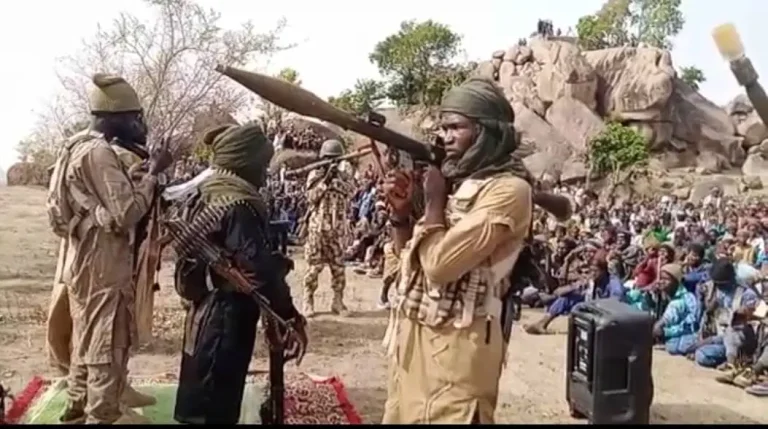
During an attack on a Nigerian Army installation in Borno State, armed rebels associated with Boko Haram are said to have killed numerous troops, including Army Major U. I. Mairiga.

Sources claim that early on Sunday morning, the attack targeted a forward military post along the Banki axis.

According to reports, the attackers overran the base in well-coordinated waves, overwhelming the troops that were positioned there.

The attack happened at the Forward Base Operations near the Banki intersection along the Bama-Gwaza Road, according to security sources. Hours passed while soldiers tried to fend off the invaders amid heavy gunfire.

The terrorists were recognized as belonging to the Islamic State West Africa Province, a group that has increased its attacks on military installations in the Northeast.

The operation confirmed the death of a senior Army officer. While several staff apparently fled into nearby bushes in the midst of the pandemonium, several more soldiers also perished.

An Army Major and numerous other soldiers were killed this morning in an attack at Forward Base operations at Banki crossroads at around 0400 hours by gunmen believed to be Boko Haram terrorists.

“They are transferring their bodies to the 7 Division Military Hospital in Maiduguri.”

The fallen troops’ remains were transferred to a military hospital in Maiduguri while efforts are still being made to find the missing soldiers.

Attacks on military sites in the state have increased in frequency since the most recent occurrence. An Army base in Jakana, Kaga Local Government Area, was attacked by militants weeks prior, at which time armored vehicles were destroyed and weaponry were taken away.

“Our side suffered numerous casualties in an attack by Boko Haram terrorists this morning, 06/02/2025, at an Army outpost along Maiduguri/Damaturu Road, Jakana town.”

Days before, seven soldiers, including a recently promoted Lieutenant Colonel, had been slain in another horrific ambush while on operational movement.

During these operations, the militants set off explosives and were shot at, according to military insiders, causing serious losses and injuries, with several soldiers still missing.

ISWAP has increased its influence in the Lake Chad region with the passing of former Boko Haram commander Abubakar Shekau. This has affected security forces in the area by absorbing defectors.

42 sheep have been found and four suspected livestock rustlers have been taken into custody by the Niger State Police Command in various operations throughout the state.

This was revealed in a statement on Sunday by Wasiu Abiodun, the command’s public relations officer, who stated that the arrests were conducted in response to reliable information.

The suspects were apprehended by police officers affiliated with the Crack Squad on February 24 at approximately 6 p.m., according to the statement.

23-year-old Abubakar Musa of Maito village via Lemu, 20-year-old Muhammad Ibeto of Kara via Jebba, 20-year-old Bello Saidu of Kara via Jebba, and 20-year-old Abubakar Alhaji of Kara via Jebba were identified as the suspects.

According to Abiodun, the arrests came about as a result of a tip that the culprits were spotted near Raba Forest via Mokwa with possibly stolen animals.

Responding quickly, police officers followed the criminals down Jebba-Mokwa Road.

“Some members of the syndicate fled into the forest, while four were apprehended,” he stated.

While being questioned, the suspects allegedly admitted to rustling the sheep from Salihu village through Mokwa and named other gang members.

The 42 recovered sheep have been claimed by their rightful owner, according to Abiodun, who also stated that efforts were being made to apprehend the fugitive suspects.

SERAP Calls on FCCPC to Probe Tech Giants for Media and Consumer Abuses

0

The Federal Competition and Consumer Protection Commission (FCCPC) has been urged by the Socio-Economic Rights and Accountability Project (SERAP) to look into claims that big tech companies are using opaque algorithms and market dominance to undermine Nigerian media, businesses, and citizens’ rights.

Kolawole Oluwadare, SERAP’s Deputy Director, signed a complaint on February 28, 2026, requesting that the FCCPC look into Google, Meta (Facebook), Apple, Microsoft (Bing), X (previously Twitter), TikTok, Amazon, and YouTube.

Oluwadare revealed this information in a statement on Sunday.

“To take measures necessary to urgently prevent further unfair market practices, algorithmic influence, consumer harm and abuses of media freedom, freedom of expression, privacy, and access to information and ensure compliance with Nigerian laws and international standards,” the group urged the commission.

Additionally, SERAP requested that the FCCPC hold a public hearing to examine the corporations’ alleged algorithmic discrimination, market dominance, data exploitation, and consumer harm.

“Big technology companies operate with enormous influence over Nigeria’s digital economy and information ecosystem, but they often escape accountability for the harms they cause,” SERAP wrote in its complaint to Mr. Tunji Bello, the Executive Vice Chairman and Chief Executive Officer of the FCCPC.

“These platforms can influence public discourse and market competition without transparency or meaningful oversight thanks to opaque algorithms, offshore revenue extraction, and hidden data practices.”

Millions of Nigerians, according to the group, depend on the platforms for news, information, and business opportunities.

Dominant digital platforms were referred to be “private gatekeepers of Nigeria’s information and business ecosystem” in the report.

“The integrity of Nigeria’s democracy, media plurality, consumer protection, and privacy are all at risk due to their opaque algorithms and market dominance, which are not only economic problems,” SERAP stated.

The FCCPC was cautioned that if it did not take immediate action, it would be forced to think about “all appropriate legal actions to compel regulatory intervention in the public interest.”

According to SERAP, Google’s investigations by the South African Competition Commission exposed systemic bias against local media content and resulted in algorithmic transparency, compliance monitoring, and financial compensation.

The group claimed that the corporations’ algorithmic technologies and business models were distorting Nigeria’s digital economy and violating the rights of Nigerians.

It claimed that “the right to privacy is reportedly being interfered with by the large-scale collection, retention, and monetization of Nigerians’ personal and behavioral data—often under complex and unclear consent mechanisms.”

Concerns were raised by SERAP over the possible effects of the claimed actions on media freedom, privacy rights, commercial viability, and the integrity of Nigeria’s upcoming elections.

The Federal Competition and Consumer Protection Act (FCCPA), including Sections 17 and 18, the 1999 Constitution (as amended), and international human rights norms would all be gravely violated if the claims were proven.

According to the group, the FCCPC has the authority to look into and enforce compliance against actions that significantly hinder, restrict, or distort competition in Nigeria under Sections 17 and 18 of the FCCPA.

According to SERAP, Nigerian media companies and content producers are still subject to algorithmic repression, revenue diversion to overseas platforms, and limited discoverability, which leads to violations of information access and freedom of expression.

It further stated that market dominance, discriminatory algorithmic ranking, opaque content moderation, and purported data consolidation could all work together to seriously stifle competition, hurt consumers, and undermine democratic institutions.

Therefore, SERAP encouraged the FCCPC to hold a public hearing to collect testimony from impacted Nigerians and to launch a thorough inquiry into the alleged conduct.

The demands go on to say, “Hold a public hearing to collect testimony from impacted Nigerians, including media outlets, journalists, small and medium-sized businesses, content producers, civil society organizations, and individual consumers;

“Require quarterly and biannual compliance reports, as well as transparency and fair treatment of Nigerian material, including disclosure of ranking, recommendation, and advertising algorithms;

“Assure corrective actions, such as the creation of a compensation fund, for damaged media organizations;

“Take immediate action to stop continued consumer harm, market distortion, and privacy and freedom of expression abuses;

“Summon individuals, demand the production of documents, and impose sanctions on the Respondents as needed and in cases where violations of competition, consumer rights, and rights protection are discovered;

Making certain that the FCCPC has the power to ask for more information when needed; and

“Grant any additional relief(s) that the Commission deems necessary to ensure compliance with Nigerian competition law and prevent unfair market practices.”
INEC Calls for ‘Plain Language’ Electoral Act Ahead of 2027 Polls

0

In order to make the recently modified Electoral Act easier for voters to understand, the Independent National Electoral Commission, or INEC, has urged the Nigerian government to demythologize it.

What Nigeria needs, according to INEC Chairman Professor Joash Amupitan, is a straightforward electoral law that is easy for all Nigerians to grasp and is written in a simplified manner.

At the Civil Society Network on Election Integrity and the Electoral Act’s town hall gathering in Abuja on Sunday, Prof. Amupitan made the request.

Given that Nigeria is a very diverse nation, particularly in terms of its political and electoral environments, the INEC Chairman’s demand came amid the debate surrounding the real-time transmission of election results, which he claimed has to be explained.

“We’ve gone through the entire Electoral Act and examined some of the controversial aspects, particularly in a nation with such a diverse population,” he stated.

Nigeria genuinely needs what I refer to as simple legislation—that is, legislation written in plain language—so that every Nigerian can comprehend and value the terms of each part.

When INEC entered the picture, we believed that the transmission of the results needed to be required. To be honest, though, our only issue was defining what we meant by “real time.”

For example, in the last FCT area council election in Kuje, the results for five area councils were released on schedule, but the Kabi ward results weren’t released until Sunday. Our policemen were unreachable via phone, so we were unable to contact them.

Transmission is not a problem in my opinion; rather, the sufficiency of our network is the issue.
You anticipate being able to send your results without any obstacles in a location like FCT.
“However, there was a situation where coverage prevented us from transmitting results in real time.”

INEC Announces Plans to Run Mock Election Across Nigeria Ahead of 2027 Polls

0

Ahead of the general elections in 2027, the Independent National Electoral Commission (INEC) has announced intentions to hold a nationwide mock presidential election in order to test its infrastructure for transmitting results and avoid a recurrence of previous technological issues.

Joash Amupitan, the chairman of INEC, reportedly revealed this on Sunday at the Citizens’ Townhall on the Electoral Act 2026 in Abuja, promising Nigerians that the commission is committed to holding what he called the nation’s “best election yet.”

The declaration comes after the general election schedule for 2027 was recently modified.

The elections for the governorship and state houses of assembly were previously scheduled by INEC for March 6, 2027, and the presidential and national assembly elections for February 20, 2027.

However, the new calendar places the governorship and state assembly elections on February 6, 2027, and the presidential and National Assembly elections on January 16, 2027.

The commission claims that the modifications adhere to the requirements of the Electoral Act of 2026.

Amupitan emphasized during the town hall meeting how crucial it is to fully test election technologies prior to implementation.

He stated that technology is now a major factor in elections worldwide, but it is crucial to thoroughly examine any new technology before implementing it.

“We are attempting to hold a simulated presidential election prior to the election in order to ensure that this transmission across the states does not fail.”

Although the Bimodal Voter Accreditation System (BVAS) was tested in off-cycle governorship elections in Osun and Ekiti before the general elections in 2023, he clarified that it was not adequately put through its paces for a national presidential fight.

He claims that the commission is eager to make sure that results are sent across states for the 2027 elections.

Amupitan said he was confident that the technical issues that occurred during the 2023 presidential election will not happen again.

He added that there are now protections in place to avoid repeat failures and that the alternative collation techniques allowed under the law are merely preventative measures and should not be used in place of electronic transmission.

According to the INEC chairman, the commission’s goal is to ensure smooth transmission while enhancing logistics and result collection procedures across the country.

President Bola Ahmed Tinubu recently signed the modified Electoral Act 2026 into law, which is the subject of current discussions.

Depending on operational viability, the change allows results to be transmitted both electronically and manually.

More modifications, especially requiring electronic broadcasting without backup options, have been demanded by opposition parties.

Amupitan reiterated INEC’s dedication to reliable elections, stating that reliable polls are essential to democracy.

The 2027 electorate, he said, is more politically conscious and recognizes the connection between elections and the advancement of the country.

Sam Amadi Questions Trust in INEC’s Tech Plans for 2027 Elections

0

No Nigerian should trust the Independent National Electoral Commission’s (INEC) use of technology, according to Dr. Sam Amadi, director of the Abuja School of Social and Political Thought.

Amadi made this statement on Sunday during the Election Act 2026 Citizens Town Hall Meeting in Abuja, the country’s capital.

According to him, INEC’s technology should be audited by a nonpartisan body.

“We finished the 2023 election with so many allegations and so many issues,” he said.

“No public hearing was held by the National Assembly, and neither Mahmood nor any of the officers were sworn to testify about what transpired. That’s chaotic!

“INEC’s technology deployment should not be trusted by anyone.”

APC Lawmakers Panic Over 2027 Tickets Amid Looming Defection Crisis

0

Large-scale defections from the All Progressives Congress (APC) are anticipated starting in April by the nation’s major opposition parties.

The Sun reported that the defections will result from primaries that will be held in the nation’s 36 State Houses of Assembly, 109 Senate districts, 360 federal constituencies, and 990 seats.

Lawmakers vying for return tickets are concerned that their state governors may work against them since the new Electoral Act eliminates indirect primaries.

In advance of the 2027 elections, the Independent National Electoral Commission (INEC) has already published a revised election schedule and announced how the main political parties will have primaries.

Some state and national assembly members who intend to rejoin the house told the aforementioned magazine that they would be seriously threatened by the recent defections of opposition governors to the ruling APC.

The parliamentarians, who wished to remain anonymous, claimed that the governors who joined the APC insisted on fielding candidates before to the upcoming general elections without consulting anyone they met within the party.

One of the Delta State lawmakers told the publication that the ability to choose flag bearers for the general elections of the next year was one of the agreements and talks that the governors made with the APC and President Bola Tinubu.

He claimed that several governors insisted on putting in new candidates, primarily from the Peoples Democratic Party (PDP), but were unwilling to make room for the APC members they had met when they left the party.

According to him, the irate APC members have initiated negotiations with the PDP, the African Democratic Congress (ADC), and the Labour Party (LP) in order to make accommodations and provide them with return tickets to parliament so they won’t be caught off guard.

In the states, political party formations are under the authority of the governors. Nearly all PDP governors have switched to the APC as of right now. They arrived with their own networks and supporters. Regretfully, the governors have already made arrangements with President Tinubu and the APC leadership to permit them to field candidates for the general elections in the next year.

A few of us are aware that we won’t receive the tickets. Starting talks with the PDP, ADC, and LP is our only choice. One of the legislators stated, “Hopefully, we will use our popularity to campaign and hope that we win our re-elections next year.”

The APC intends to hold its national and state house of assembly primaries close to the end of the window allowed by INEC in an effort to cut down on the number of mass defections.

According to an APC insider, candidates who are rejected will not be able to defect and obtain tickets from the opposition parties by the end of May this year if the plan is implemented.

APC Rep Claims Peter Obi’s Strategy Undermines His Electoral Chances

0

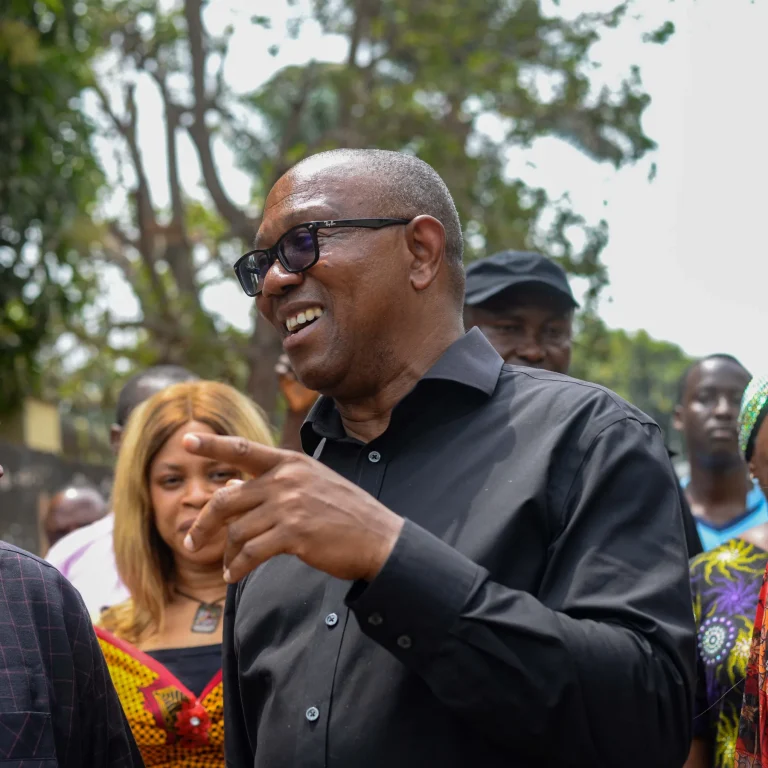
According to Clement Jimbo, the member of the House of Representatives who represents the Abak/Etim Ekpo/Ika federal district, Peter Obi, the previous presidential candidate of the Labour Party (LP), is incapable of winning any election in Nigeria.

In an interview with Cable News, Jimbo reportedly discussed Peter Obi’s partnership with the African Democratic Congress (ADC) coalition.

Citing his string of defections and incapacity to remain in a certain political party to develop and solidify, he claims Peter Obi is working against winning any elections in Nigeria.

He reiterated that Peter Obi is merely making noise and cannot win any election, arguing that many of his fans only exist online and are unaware of their polling place.

He declared, “I say this as a matter of fact: APC is not afraid of anyone.” The idea that movement and growth are traits of living things is something I learned in biology class, and I will use that concept here. You brought up Peter Obi, so allow me to immediately address that.

Moves have been made by Peter Obi. How does that tell you? that he is still alive. However, what way is he going? If you have a flight to catch at a specific time and you are not heading to the airport, you will never make it, according to logic.

Therefore, I am able to inform you that Mr. Peter Obi is not headed in the direction of winning any elections in this nation.

“I want to be extremely clear. He transitioned from the APGA to the PDP, then to the Labour Party, and finally to the ADC. He has not continued to develop and solidify himself within a single political party. You can guarantee a specific amount of winning percentage if you are aware of your home’s stability percentage. This is quite useful.

“I challenged Peter Obi to identify his Labour Party agent on any platform in my Abak Urban Ward 1 unit since there wasn’t one. It is necessary for you to have agents spread among the more than 8,000 voting places if you are a political personality or a party candidate hoping to win an election. He can’t meet that, though. It implies that the people he says are there are suspended in midair.

Peter Obi and the majority of his followers are engaged on social media, so let me challenge them as well. How many of them are aware of the polling places? Social media is not where elections are held. They cast how many votes? They had issues when the court requested copies of the results because of this. Therefore, Peter Obi is just creating noise. In Nigeria, he can’t win any elections.

Examine the members of the APC. The Congress for Progressive Change (CPC) in the north was led by the late President Muhammadu Buhari. In season and out, he ran for office three times in a row while remaining in his party. He never joined a different party. He recognized the dedication and sacrifice required to establish a political organization.

Islamic Cleric Raises Alarm Over State Police, Warns Tinubu of Abuse Risks

0

Sheikh Sani Yahaya Jingir, a well-known Islamic cleric from Plateau State, has sharply denounced the Federal Government’s intentions to create state police, cautioning that doing so will exacerbate insecurity and encourage political persecution.

According to reports, Jingir’s remarks were made just days after President Bola Tinubu asked the National Assembly to think about changing the Constitution to permit the establishment of state police as part of initiatives to address the nation’s growing level of insecurity.

Decentralizing police authority, especially in politically delicate states like Plateau, might lead to abuse, the cleric warned.

Speaking at a program in Jos on Sunday, the Islamic scholar, who is also the National Chairman of the Council of Ulama, Jama’atu Izalatul Bid’ah Wa’Ikamatis Sunnah, voiced concerns about the possibility of political manipulation of state-run security forces.

He claimed that under the pretense of preserving security, such institutions might be used to threaten or even kill political rivals.

He claimed that the state police might be used as a tool to undermine the tenuous peace in a politically heated setting like Plateau State.

Sheikh Jingir stated, “Some issues, they will pretend as if everything has gone down, but they will just raise them once the security outfit is established.”

The priest also attributed his long-standing disapproval of state police to worries that residents may use the force to target anyone they thought were settlers.

He cautioned that the establishment of security agencies under state control could give certain groups the confidence to drive others out of the state.

They claim that police should be established in every state. Will we accept this if someone says he will accept it? The question was rhetorical.

Worshippers reacted with a collective “Not at all.”

Sheikh Jingir warned against giving governors control over security forces in a direct address to President Tinubu.

“You are aware of how they deceived us.” Some of these politicians are not as good as you, President Bola Ahmed Tinubu, or as good as someone like Kashim Shettima.

“Wallahi, if you allow them to set up police, they will begin murdering people who don’t share their political views,” he continued.

His belief that not all political figures should be entrusted with such authority was emphasized by the mention of Vice President Kashim Shettima.

The cleric emphasized that peace and stability must trump partisan objectives, even as he acknowledged the growing insecurity in Nigeria.

Instead of establishing new security organizations that would widen gaps, he called for ongoing communication between communities and political players as a means of achieving enduring peace.

The argument over state police has heated up in recent weeks. Supporters contend that decentralized policing would speed up reaction times and enable local information collection, while opponents worry it may strengthen government control over security and worsen ethnic and political tensions.

Sheikh Jingir’s comments join the increasing chorus of people warning against the possible constitutional modifications being considered by the National Assembly, especially in states with a history of political and ethnic strife.

After 13 Years, NDLEA Captures Notorious Drug Kingpin

0

Renowned drug lord Reginald Peter Chidiebere has been apprehended by the National Drug Law Enforcement Agency (NDLEA) following 13 years of evasion.

It is understood that Chidiebere was arrested after new connections to substantial amounts of heroin and cocaine.

Chidiebere was brought before Justice Ayokunle Faji of the Federal High Court, Lagos, on charge number FHC/L/187c/2923. Chidiebere was initially detained in 2013 due to the transportation of cocaine into Nigeria.

However, soon after being freed, he went underground and jumped bail.

As one of the masterminds behind the trafficking of 49.70 kg of heroin from South Africa, his name reappeared in February 2024. At the import shed of the Murtala Muhammed International Airport in Ikeja, NDLEA agents stopped the shipment.

Igbuanugo Ebuka ThankGod, one of his guests, had an extra 2.20 kg of heroin recovered during a follow-up investigation at his Golden Platinum Hotel & Suites in the Okota neighborhood of Lagos on February 19, 2024.

NDLEA Suspect
The government blocked his bank accounts and obtained an interim forfeiture judgment against the hotel after the operation.

On February 13, 2026, Chidiebere finally turned himself in to the agency after his assets were banned and his freedom was restricted. In addition to new counts pertaining to the 2024 heroin seizures, he is currently in detention to face his outstanding 2013 accusations.

On Wednesday, February 25, 2026, NDLEA agents in Imo State busted a covert methamphetamine lab at Isiozi Obiato, Umuaka, in Njaba Local Government Area.

18.4 kg of methamphetamine in total, together with the equipment and precursor ingredients needed to produce the illegal drug, were found.

Femi Babafemi, the agency’s Director of Media and Advocacy, gave a statement on Sunday outlining the NDLEA’s many nationwide operations.


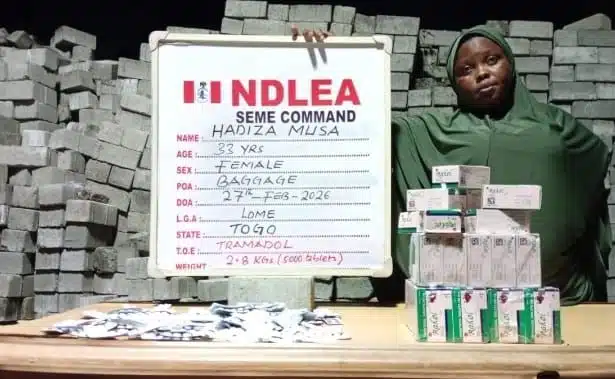
Officers found 5,000 tramadol pills hidden in the suitcase of a Togolese woman named Hadiza Musa at the departure tarmac at the Seme border in Badagry, Lagos.

Along the Ibeju-Lekki corridor of Lagos, in Akodo community, Seaside Eleko, 1,040 kg of skunk were also found by the operations from an incomplete construction.

Ashiru Bala, a 45-year-old suspect in Kano State, was apprehended with 1,499 bottles of codeine syrup hidden in a Volkswagen Golf. Similarly, on the Zaria–Dutsinma route, 21-year-old Yahaya Usaini was caught in Katsina State carrying 87.4 kg of skunk.

Adewale Fatunmise, 40, and Adebisi Korede, 25, were detained in Osogbo, Osun State, in relation to the confiscation of 18.085 kg of skunk.

NDLEA agents stopped a Mercedes-Benz on the Bali-Suntai route in Taraba State that was carrying 637,600 opioid pills, including exol-5, tramadol, and diazepam. A second operation in Lankaviri Yorro resulted in the recovery of 126.022 kg of skunk and the arrest of 27-year-old Musa Usman.

In the Federal Capital Territory, 499.2 kg of skunk were found in Dei-Dei, Abuja, and in Borno State, a 24-year-old suspect named Bulama Modu was found in possession of 7,000 tramadol capsules on the Bama-Konduga route.


With sensitization talks in schools throughout the states of Niger, Oyo, Jigawa, Cross River, and Kano, the organization also stepped up its War Against Drug Abuse campaign.

The officers of the MMIA, Seme, Lagos, Imo, Borno, Kano, Katsina, Taraba, Osun, and FCT Commands were praised by NDLEA Chairman/Chief Executive Officer Brig. Gen. Mohamed Buba Marwa (retd.) for the arrests and seizures.

In response to Chidiebere’s apprehension following more than ten years of evasion, Marwa stated that the agency remained committed to breaking up criminal networks.

He stated, “I commend our officers and men for their persistence and professionalism in this operation,” and that the organization would keep working to bring drug traffickers to justice.

The most recent events highlight NDLEA’s intensified campaign against drug trafficking organizations and its dedication to striking a balance between supply reduction and demand reduction tactics across the country.