Home Blog

Anti-Tinubu Post: Sowore Alleges Prosecution Is Targeting Him Unfairly

0

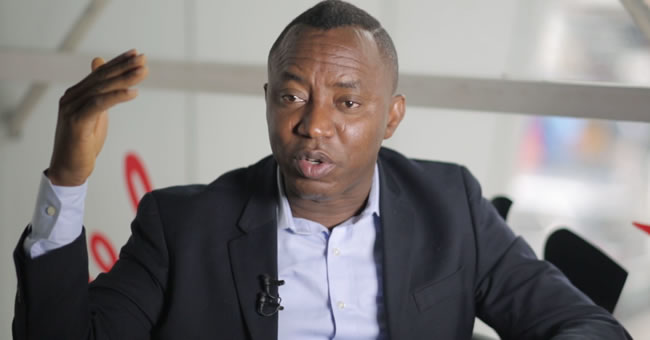
Omoyele Sowore, the African Action Congress (AAC) presidential candidate and activist, has accused the prosecution in his continuing federal case of punishing him rather than following due process.

In an interview with ARISE NEWS, Sowore denied that his accusation against President Bola Tinubu was purely a political viewpoint, claiming that it was founded on facts that he feels can be tested through the court process.
“It is a declaration of fact. And it states that if someone has been involved in drug dealing or trafficking, there is no status of limitation.

“Even if you are president, the NDLEA might still try you when your term ends. We can make that point. And in this case, it is more than that.

“During End SARS, there was an active case in the Federal High Court involving the misappropriation of billions of dollars in taxes—taxes that were supposed to be paid by Alpha Beta and were tied to this president. He never handled the matter.

“After End SARS, we were told that the documents were burned in court to cover it up. And we have several of these,” Sowore explained.

Sowore went on to say that he had begged the authorities to allow the case to go to trial so that he could submit his evidence, but that instead, efforts were made to undermine his defence.

“What I told them was, why don’t you simply calm down? Let us prove this case in court. But just as we were about to prove the case, our counsel began tearing into their only witness—a DSS employee who claimed to have discovered that I made this remark. The judge became agitated.

“He said ‘Stop.'” If you do not stop, come and kneel down here. It has never happened before. I tried to get my primary attorney, Marshal Abubakar, to kneel before a judge because they didn’t want us to deliver our evidence.

“They are interested in convicting, punishing me without conviction,” he claimed.

Sowore claimed that freedom of expression should be maintained by the rule of law and not dictated by those in power. He said that the Cybercrime Act should not be used to suppress critics or criminalize statements regarding public authorities.

His words come as he faces a prosecution over social media posts in which he referred to President Tinubu as a “criminal.”

The case resulted in the revocation of his bail after he failed to appear in court, although he was eventually given new bail under tougher terms.

Sowore also underlined that his advocacy is motivated by a desire for justice rather than political ambition, saying he will continue to speak out against what he considers injustice, regardless of the personal consequences.

2027: Atiku appoints Kenneth Okonkwo spokesperson after ADC VP dispute

0

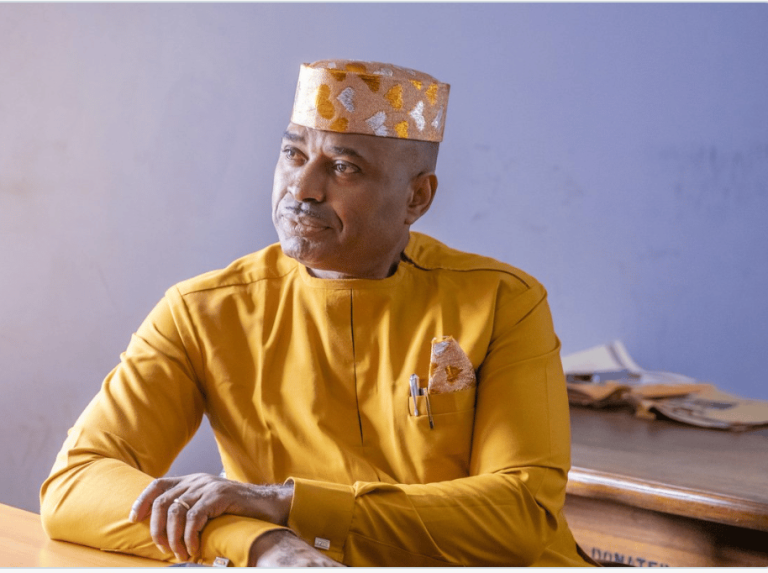
Former Vice President, Atiku Abubakar has appointed actor-turned-politician and chieftain of the African Democratic Congress, ADC, Kenneth Okonkwo, as his spokesperson.

It followed weeks after the politician publicly criticised the party’s selection of vice-presidential candidate for the 2027 general election.

Okonkwo made the announcement in a statement on his official X handle on Thursday, thanking Atiku for the appointment.

“I give all the glory to God to be appointed by His Excellency Atiku Abubakar as his Spokesperson. “I thank HE AA for the massive trust placed in me,” he wrote.

The former presidential campaign spokesperson of the Labour Party, LP, described the appointment as a reflection of Atiku’s inclusive leadership style, saying the former vice president prefers dialogue and consensus building to hostility towards associates with divergent views.

“Instead of taking offence with any of his associates for expressing genuine reservations of any action taken, HE AA always goes for dialogue and compromise that will engender solution to problems,” Okonkwo stated.

He said that discussions with Atiku and other ADC leaders had dwelt on issues around the political interests of the South-East in spite of what he called constraints created by the Electoral Act, 2026.

“At a dialogue with HE AA and other well-meaning members of the African Democratic Congress, the interests of the South-East have been discussed and guaranteed within the existing challenges posed by the Electoral Act, 2026 and the realities on ground,” he added.

Okonkwo also thanked Kashim Imam, former ADC National Chairman Ralphs Nwosu and Atiku’s Senior Special Assistant on Special Duties, Ekene Onwuka for their roles in strengthening the party ahead of the 2027 elections.

I am grateful to my family, fans and friends for their prayers and support, which God answered by covering my errors and colouring my efforts to pave way for this appointment. “Still I covet your prayers for wisdom, courage, provision and protection to execute this challenging post that will usher in a glorious and great Nigeria,” he said.

The appointment comes on the heels of Okonkwo’s public criticism of the ADC’s selection of its vice-presidential candidate for the 2027 presidential election.

He had warned that reports that the party was considering a candidate from the South-South region for the vice-presidential slot, could further deepen what he described as the continued marginalisation of the South-East in Nigeria’s political structure.

He said such a decision would further deny the South-East the opportunity of producing either the president or vice president, a situation he said had been on since 1999.

FG Slashes Import Tariffs On Rice, Cars And More To Ease Cost Of Living

0

In a major policy shift aimed at easing Nigeria’s worsening cost-of-living crisis, the Federal Government has commenced a wide-scale cut in import duties on essential goods, including food staples, passenger vehicles, mass transit buses, electric vehicles and manufacturing machinery.

The new rates, which came into effect this July, were reported to be contained in the 2026 Fiscal Policy Measures approved by the Minister of Finance and Coordinating Minister of the Economy, Taiwo Oyedele.

The policy is considered to be one of the most significant overhauls of Nigeria’s tariff regime in recent years, with 127 tariff lines targeted with reduced rates across household consumption, transport, manufacturing and industrial activity.

The government’s decision comes at a critical time for the economy as many Nigerians continue to struggle with high food prices, transport costs and weak purchasing power. While inflation had eased from its peak of around 33 per cent in late 2024, concerns have lingered about renewed price pressures.

S&P Global recently raised its 2026 inflation forecast for Nigeria to 16.9 per cent, saying global energy shocks were exerting pressure and had contributed to a sharp rise in petrol prices.

Duty Reduced on Rice, Sugar, Palm Oil
A key part of the new fiscal measures is aimed at food items commonly consumed by Nigerian households.

The revised rates reduced the duty on bulk rice to 47.5 per cent from 70 per cent and broken rice now attracts duty of 30 per cent.

Duties on raw cane sugar have been reduced to a range of 55 to 57.5 per cent and crude palm oil now attracts a duty of 28.75 per cent, down from 35 per cent.

The cuts are intended to reduce the price of staple foods and costs for commercial food producers.

Rice is still a staple in many homes and the cut in duty should ease pressure if the gains are passed on to consumers.

But analysts warned that lower duties alone may not necessarily mean cheaper food, especially with ongoing exchange rate pressures, high fuel prices, logistics costs and port charges.

Relief for Vehicles, EVs, Buses
The new tariff regime also has a major focus on the transport sector.

Duty on passenger vehicles has been cut down from 70 per cent to 40 per cent, a move that is expected to reduce the landed cost of imported cars.

Mass transit buses and electric vehicles were also fully exempted from import duties to lower transport costs and encourage the use of cleaner energy, the government said.

Machinery for manufacturing now attracts zero per cent duty as part of a move to revive industry, reduce production costs and promote investment in local manufacturing.

The policy could assist transport operators who are dependent on imported buses, trucks, minibuses and light commercial vehicles for interstate haulage and urban transport services, stakeholders said.

Many operators are running old fleets, which are expensive to maintain, fuel inefficient and break down frequently. The large number of unserviceable vehicles on Nigerian roads has been blamed on the high cost of vehicle replacement.

Industry players are forecasting that with the reduction in import levies, the landed cost of vehicles will gradually decline. This could enable transport companies and independent operators to renew their fleets at a lower cost.

Potential Impact on Food Prices
It is understood that the policy could also be of advantage to the logistics sector, especially in cases where agricultural produce is transported over long distances by trucks.

Transport costs add a significant amount to the prices of food in Nigerian markets, particularly for staple crops such as sorghum, millet, maize, yam and cassava, which are transported from rural production centres in the North to urban markets in the South.

Stakeholders believe that any savings on haulage costs could eventually be passed on to the final retail prices of food items.

But the effect is likely to be more of a drip than a bang.

Lower vehicle acquisition costs could also improve efficiency in the transport sector by allowing operators to invest in more fuel efficient and reliable vehicles, reduce breakdowns and improve delivery turnaround time.

But these potential gains may be undermined by other structural pressures in the economy.

Crude oil prices have fallen below $73 in the international market, but fuel prices remain above N1,000 per litre. The exchange rate is still fluctuating between N1,400 and N1,500 to the dollar.

These factors mean the reduction in import levies might slow the pace of increases in transport costs, but they will not immediately reduce fares or food prices.

A public commentator, Kehinde Aluko, told the Guardian the policy raised questions about consistency in government economic management.

He said that for years, the Federal Government encouraged local production, especially in agriculture, by using high tariffs to protect Nigerian farmers from cheaper imports.

Aluko warned that a rapid reduction of tariffs on rice and other commodities could damage investor confidence and harm local farmers who had made investment decisions based on protectionist policies.

“The government is not just cutting revenue, it is shifting the tax burden from imports to consumption, he said.

“The government’s strategy is not just about reducing revenues, it’s about a fundamental shift in the tax burden from imports to consumption. We will also be introducing new excise duties on non-alcoholic beverages, alcoholic drinks and tobacco products from July 1, 2026, and a ‘green tax’ surcharge on higher-engine vehicles.

“This means that relief from lower import duties can be offset by higher prices of everyday consumables and luxury items. For the average Nigerian, the near future is a kind of tug of war. “On the one hand, it may become cheaper to buy a car or industrial machinery, but the daily cost of a bottle of soda or a pack of cigarettes will almost certainly go up,” he said.

Aluko, a telecom expert himself, said the real test of the policy would be whether the relief at the ports would outweigh new costs at the checkout counter.

He said the next few months will be a critical test for the economy and the resilience of the Nigerian people as the government changes focus.

Importers fear logjams
Importers, freight forwarders and car dealers said tariff reduction alone may not bring about the desired economic outcome.

Among the major determinants of the final cost of imported goods were the volatility of the exchange rate, multiple port charges, logistics costs, terminal handling fees and delays in cargo clearance, they said.

The argument from them is that the benefits will not be fully achieved by businesses or ordinary Nigerians without dealing with these bottlenecks and tariff cuts.

They noted that tariff adjustments were also implemented on selected products during the tenure of former President Muhammadu Buhari to encourage local production and address economic realities.

The tariff on imported vehicles was reduced from 35 per cent to 10 per cent in 2021.

However, stakeholders said the measure yielded mixed results. While some importers enjoyed lower duties on some items, these gains were largely eaten up by foreign exchange volatility, rising shipping costs, inflation and port related charges.

Thus the expected fall in consumer prices was not entirely realised.

Manager of Client Services at Inspired Cars, Iwayeye Olatunji, said the reduction in import duty on vehicles and spare parts is a welcome development but may not lead to significant reductions in the prices of vehicles.

High exchange rates and other charges related to imports could blunt the new policy, he said.

Olatunji said that previous reduction of duty under the Buhari administration had little impact on the prices of vehicles as only about 10 per cent difference was recorded.

But consumers might not see much price relief because several other costs connected with importing cars are still the same, he said, even though the new tariff looks good on paper.

“Honestly, before, it was mostly on paper. Fine, the duty was reduced but did it really have any direct impact on the market? That’s a different problem. “When the duty is cut, but other supporting fees are still there, the total price doesn’t really change,” he said.

Frank Ogunojemite, the National President of the Africa Association of Professional Freight Forwarders and Logistics of Nigeria, said the policy would not be judged by the announcement but by its practical effect.

He said the key measures would be the impact on the cost of doing business, the prices of imported goods and the overall cost of living.

“The difference is that today tariff reduction alone cannot achieve the desired economic result. The key determinants of the final cost of imported goods remain volatility of exchange rates, multiple port charges, logistics costs, terminal handling charges and delays in cargo clearance. “However, tariff reductions benefits may not be fully felt by businesses or ordinary Nigerians unless these bottlenecks are addressed simultaneously,” he added.

Ogunojemite urged the Federal Government to closely monitor the market responses to ensure that the intended benefits get to consumers and are not swallowed up by inefficiencies in the supply chain.

“Nigerians want to see the benefits beyond policy documents. Lower tariffs should ultimately mean cheaper landing costs, more import activity, better business confidence and cheaper products for consumers,” he said.

Importer sees policy gap.
Clinton Ikechukwu Okoro, importer and Chief Executive Officer of Globe Joy Investment Nigeria Limited, confirmed that the new duty rates have commenced at the ports.

He, however, said the process showed a disconnect between policymakers and operators in the automotive import sector.

The earlier reduction in vehicle duties under the Buhari administration, according to Okoro, did not translate to a significant drop in the prices of vehicles or a boost in imports.

He said vehicle prices have continued to rise sharply, making car ownership increasingly difficult for many Nigerians.

He said that imports of used vehicles have fallen sharply in the last few years despite earlier duty cuts.

Okoro said he was cautiously optimistic the latest policy could encourage vehicle imports if the reductions prove meaningful after a detailed review.

Mixed reactions were received from stakeholders in the automotive sector on the new tariff regime, especially on the importation of vehicles.

Some cautioned that the policy could hurt local vehicle manufacturing, but others argued that it would increase affordability and the availability of vehicles in the market.

The Managing Partner of Transtech Industrial Consulting, Luqman Mamudu, said the tariff difference on passenger vehicles was not sufficient to provide meaningful protection to local manufacturers.

Although effective tariff protection is about 70 per cent, the 40 per cent differential on passenger cars is insufficient to encourage serious investment in vehicle manufacturing, he said.

Mamudu said that Nigeria’s automotive industry still required deliberate protection by the government within the limits allowed under the Economic Community of West African States Common External Tariff.

“The industry requires deliberate protection including full utilization of the Import Adjustment Tax (IAT) window and applicable levies. Those measures can then be phased out gradually as the industry evolves,” he said.

Many foreign vehicle makers get huge government subsidies in their countries, making it difficult for Nigerian assemblers to compete just on tariff protection, he said.

He told the Federal Government to supplement tariff measures with local concessions and incentives to attract global automakers to establish production plants in Nigeria.

“The auto industry has a multiplier effect on the total economic development. “So too much is no support by government,” Mamudu added.

Zero Tax On Commercial Vehicles Slammed
Mamudu also faulted the Federal Government’s decision to impose zero per cent import tariff on commercial vehicles, saying it is too much and could be detrimental to Nigeria’s emerging commercial vehicle assembly industry.

The policy will not much lower car prices, nor help local production, he said.

“Local manufacturers have made strides in increasing local content and commercial vehicle assembly was one of the success stories of the National Automotive Industry Development Plan,” he said.

“Commercial vehicle plants are easier to build and increase local content. “The automotive body building is one area where Nigeria has built a good local capacity over the years,” he said.

Mamudu said that before the 2020 Finance Act, local assemblers only imported engines and carb assemblies as complete parts, while companies like Transit Support and Dangote Industries were beginning to invest in facilities to produce more parts locally.

He said the lowering of import tariffs on commercial vehicles from 35 per cent to 10 per cent in 2020, which was the same as the tariff on fully built imported vehicles, caused the collapse of many assembly plants.

“Nearly every commercial vehicle assembly plant was closed down. “Today, many companies rely on imports, while only a few still import semi-knocked down kits mainly for logistics advantages and to keep their equipment in operation,” he said.

He warned that with tariffs now down to zero, remaining operators may be forced to shut down their assembly facilities altogether.

The National President, Association of Motor Dealers of Nigeria, Prince Ajibola Adedoyin, however, hailed the tariff review, saying it was an improvement.

Adedoyin said the lower tariffs would enhance vehicle availability in the Nigerian market and make vehicles more affordable to consumers.

“It’s an upgrade. “It will make things more accessible and prices more affordable,” he said.

The differing views reflect the difficult balance facing the Federal Government in trying to reduce prices for consumers, ease business costs and protect local production.

For ordinary Nigerians, the next few months will tell whether the tariff cuts will lead to cheaper food, lower transport costs and more affordable vehicles, or whether pressure on the exchange rate, port charges and inflation will eat up the expected gains.
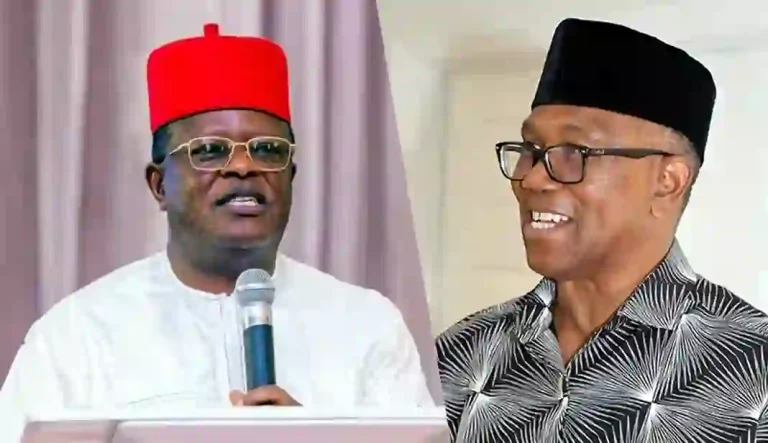
Umahi Dares Peter Obi To Public Debate On ‘Offensive Road’ Picture

0

Minister of Works David Umahi has challenged former Anambra State Governor Peter Obi to a debate on road infrastructure, saying it is in bad taste to take a picture of a bad portion of road for campaign purposes.

Obi should know the realities of governance as a former governor, Umahi said, during the Wednesday’s commissioning of the Akwanga–Jos–Bauchi–Gombe–Borno superhighway in Nasarawa State.

When my brother, the former governor of Anambra State, who should know governance makes some statements, it makes me very sad. I saw on social media where he got to a bad spot on the road and took a picture. It is bad for his dignity and personality.
“And I’m always up for discussion. I’m always willing to disaggregate the cost, the unique cost of concrete, and to debate with him. And so I feel so sad because governance is everybody’s responsibility,” he added.

He further stated that the federal government would cover Yobe and from Yobe, Gombe to Maiduguri whose entire length is 700 kilometres.
“Don’t forget that the first legacy project of Mr President is 750, cutting across Lagos to Ondo to Edo to Delta to Bayelsa to Rivers to Akwa Ibom and Cross River. And then the third legacy project is taking off from Cross River where the first legacy project stopped. And that is from Cross River to my state, Ebonyi, where we are starting the first section. The second section has just been approved and it is going from Ebonyi down to Benue, down to the Benue boundary between Benue and Ebonyi. “That’s another 168 kilometres awarded,” he said.

In his remarks, President Bola Tinubu said the road is a legacy project that was approved by the Federal Executive Council (FEC) and constructed in phases.

“In Section 1, Phase 1 of the Akwanga–Maiduguri Superhighway, it is a 125-kilometre stretch from Akwanga–Kaduna–Jos, Nasarawa, Kaduna and Plateau States as part of the larger 700-kilometre Akwanga–Maiduguri Superhighway, cutting across five states in the North-East as follows:

“Akwanga-Kaduna-Jos, 125 kilometres. Jos-Bauchi, 135 kilometres. Bauchi-Gombe, 162 kilometres. Gombe-Biu, 125 kilometres. Biu to Maiduguri, 188 kilometres, all totalling 700 kilometres. “They are distances between communities and cities along one of the most important inland corridors in the country,” he said.

Akpabio To Wike: ‘Let PDP Die’ As He Nearly Makes Verbal Gaffe

0

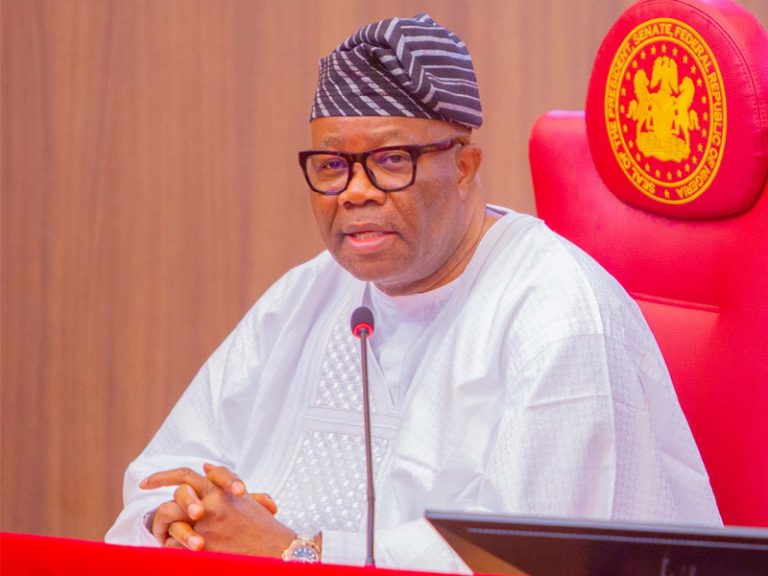
SENATE President Godswill Akpabio on Wednesday lampooned the Peoples Democratic Party (PDP), saying he did not know that the party was still in existence.

Akpabio almost said the PDP National Working Committee (NWC) while trying to recognise members of the NWC of the ruling All Progressives Congress (APC) present at the event. Akpabio spoke at the inauguration of the full-scope development of Akinwumi Ajibola Street in the Gaduwa district of Abuja.

Almost committing the gaffe, Akpabio said the Minister of the Federal Capital Territory (FCT), Nyesom Wike should stop confusing people and allow PDP to die.

“I didn’t know PDP still exists. “Wike stop confusing us, if a party has died let it die,” the Senate President said.

Meanwhile, Akpabio has recently commended the Minister of the Federal Capital Territory (FCT), Nyesom Wike, for his efforts in the nation’s capital.

“The FCT now functions like a full state,” Akpabio said.

This was disclosed by the lawmaker on Tuesday when he commissioned the newly constructed Gomani-Dafa-Yangoji roads in the Kwali Area Council to mark Tinubu’s third anniversary as president, it was reported.

Akpabio, representing President Bola Tinubu at the commissioning, admitted that the FCT now has an active Head of Service, numerous Parastatals, Permanent Secretaries, Coordinators of Satellite town development and other agencies under the Wike-led administration.

N98.5bn Legal Battle: Court Encourages CBN, NIBSS To Reach Settlement

0

The Federal High Court in Lagos has asked Enterprise Logistics Speciale Limited, the Central Bank of Nigeria (CBN), Nigeria Inter-Bank solution System Plc (NIBSS), and Avanage Nigeria Limited to reach an amicable solution in a patent infringement claim for ₦98.5 billion.

Justice Deinde Dipeolu issued the directive after declining to begin trial because some of the defendants lacked lawyers.

The plaintiffs, Enterprise Logistics Speciale Limited and its Managing Director, Samuel Kolajo, are seeking damages for alleged infringement of their patented cash management technology, breach of a Non-Disclosure Agreement, and alleged losses resulting from the refusal to deploy their solution on Nigeria’s payment infrastructure.

Tayo Oyetibo (SAN) represented the plaintiffs in the proceedings, with Jessica Adeola-Ajayi and Esther Bawa, while Olaoluwa Ale-Daniel represented NIBSS.

There were no representatives from the Central Bank of Nigeria, Avanage Nigeria Limited, or the Registrar of Patents and Designs.

Oyetibo informed the court that the matter had been set for trial and that the plaintiffs’ witness was present and ready to testify.

However, in the interests of fairness, fairness Dipeolu ruled that hearing notifications should be issued and served on the absent defendants first.

The judge also drew the parties’ attention to provisions in the Federal High Court Act that allow courts to facilitate amicable conflict resolution.

He then directed the parties to meet and make sincere attempts to address the dispute outside of court.

NIBSS counsel stated that the payment system operator is subject to the CBN’s regulatory control and cannot make unilateral choices.

He contended that NIBSS was opposed to forming a monopoly, which he saw as crucial to the debate.

Oyetibo, on the other hand, contended that the plaintiffs had made significant investments in creating patented innovations that the defendants allegedly attempted to infringe on.

He claimed that the disputed innovations belonged to the second plaintiff, and that the law guaranteed him exclusive use of the inventions.

The plaintiffs, according to the senior advocate, are still open to negotiating a settlement.

In their amended statement of claim, the plaintiffs claimed that beginning in 2011, they developed multiple cash management technologies to modernize Nigeria’s cash handling system and limit the movement of physical currency in the banking industry.

The inventions were categorized as Mobile Smart Deposit, Mobile Cash Sorting and Processing Device, PillarSalt Cash Supply Chain, Cash Recycling and Retail Cash Management Solution, and PillarSalt Cash and Terminal Management System.

They stated that the inventions were covered by three patent certificates obtained under the Patents and Designs Act.

The plaintiffs claimed that after sharing information about their innovations with the defendants, the CBN issued instructions for the registration and operation of Bank Neutral Cash Hubs, which they claimed largely copied their patented techniques without approval or compensation.

They are requesting that the court proclaim them the exclusive owners of the patented technology and prevent the defendants from using them without written approval.

They also want the court to order NIBSS to activate their PillarSalt Cash Management Solution on the Nigeria Central Switch within 30 days and to invalidate the CBN’s Bank Neutral Cash Hubs guidelines.

The monetary claims include ₦500m in general damages for alleged patent infringement against the first and second defendants, ₦200m for alleged breach of a 2015 Non-Disclosure Agreement against NIBSS, and ₦97.8bn for alleged losses due to NIBSS’s refusal to integrate the PillarSalt solution since December 2016.

In its updated defence, NIBSS denied violating any patents or the Non-Disclosure Agreement.

It contended that the plaintiffs sought exclusive rights that would prevent other operators with similar solutions from accessing the national payment infrastructure, which would constitute an illegal restraint of commerce and the formation of a monopoly.

If settlement talks fail, Justice Dipeolu adjourned the case for trial on October 15 and 16, 2026.

Former Minister Uche Nnaji Nabbed At Abuja Airport

0

Former Minister of Science and Technology, Uche Nnaji, was arrested on Wednesday at the Nnamdi Azikiwe International Airport, Abuja when he arrived from Enugu in a chartered flight.

Nnaji is to be handed over to the Independent Corrupt Practices and Other Related Offences Commission (ICPC) for interrogation.

The arrest is part of an ongoing ICPC investigation into allegations that the former minister forged his academic certificates.

In mid-June, a Federal High Court in Abuja granted the anti-corruption agency leave to arrest Nnaji in connection with its investigation of the alleged certificate forgery. The court also empowered the commission to declare him wanted via national newspapers, social media platforms and other media channels. Papers

According to court documents, the ICPC sought the ex parte order after Nnaji allegedly failed to respond to several invitations extended to him to appear for questioning in relation to the investigation.

The commission told the court that it had repeatedly tried to get him to attend “investigative activities” but had failed, so it asked the court for permission to arrest him and declare him wanted.

Nnaji was arrested Wednesday upon arrival at the Abuja airport and is expected to be handed over to the ICPC for further investigation.

As of the filing of this report, the ICPC has not issued any official statement on the arrest. Nnaji and his representatives also did not immediately respond to the allegations.

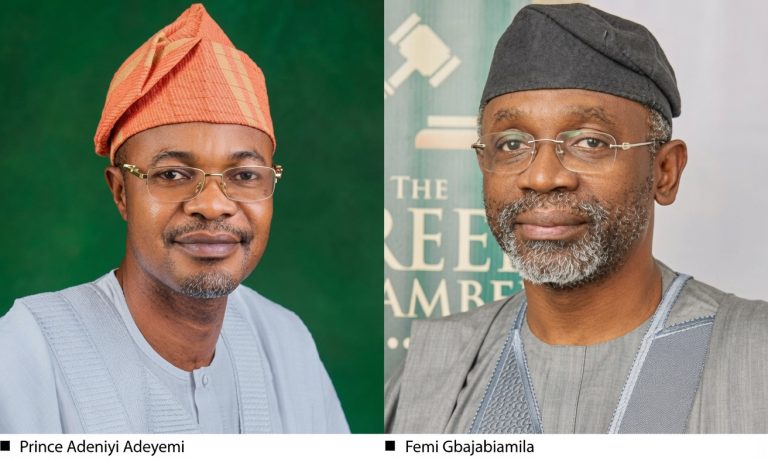
Gbajabiamila: Group Seeks Investigation Into Adeyemi Over Alleged Impersonation

0

The Centre for Transparency and Accountability in Governance, CTAG, has asked the Department of State Services, DSS, Nigeria Police Force and other relevant anti-corruption agencies to immediately arrest and investigate one Prince Adeniyi Adeyemi over what it called “a dangerous pattern of impersonation, misinformation, a cocktail of blackmail and attempts to undermine public institutions.

The group made the call in a statement signed by its Executive Director, Comrade Sunday Itodo and made available to newsmen in Makurdi on Wednesday.

The group condemned what it said were “reckless and scandalous allegations” made by Adeyemi against the Chief of Staff to the President, Rt. Hon. Femi Gbajabiamila, saying such allegations must not be left uninvestigated.
The categorical disclaimer issued by the OCS to the President that no agency known as the Presidential Foreign Intervention Promotion Council exists under the Presidency, raises serious questions about the authenticity of Adeyemi’s claims and activities.

“The group said, “Prince Adeyemi has claimed publicly to be the head of an agency which the Presidency has unequivocally denied knowledge of. This is a serious matter involving national security, public confidence and the integrity of government institutions. “The DSS and the police must invite and investigate him immediately.”

CTAG has urged Adeyemi to make public immediately his alleged appointment letter as the Head of the so-called Presidential Foreign Intervention Promotion Council.

“If indeed such an agency exists and Prince Adeyemi was legitimately appointed to head it, he should make public his appointment letter and reveal the authority under which the appointment was made.

He also claimed that the Office of the Head of the Civil Service of the Federation approved not less than 300 staff members for the take-off of the agency. Nigerians have the right to know who these alleged staff members are.

“We are therefore demanding that Prince Adeyemi should immediately publish the list of the said 300 staff, where and when their recruitment was advertised, give evidence of their appointments, disclose the platform on which they are being paid and state the source of funds being used in paying them,” Itodo said.

The group also faulted Adeyemi’s claim that the agency has an account with the Central Bank of Nigeria (CBN) stating that “if there is such CBN account in the name of this purported agency, Nigerians must know who authorised the opening of such account, who the signatories are, and under what legal instrument the account was created.

“The CBN should also specify if any account exists in the name of the said agency and provide the public with relevant information within the ambit of the law.
CTAG, on the allegation that he allegedly paid N600 million to secure the position through a third party allegedly linked to the Chief of Staff, described the allegation as weighty and one that cannot be left in the realm of speculation.

“Adeyemi has alleged that he paid N600 million to acquire the position with N400 million allegedly transferred through a third party as upfront. Such an allegation is too serious to be taken lightly.

He should immediately provide documentary evidence of the transactions including bank transfer records, payment receipts, account details, dates of payment, identities of intermediaries involved and any communication establishing the alleged arrangement.

He must also provide incontrovertible evidence in support of his allegation that Femi Gbajabiamila demanded a percentage of the purported N24 billion take-off grant allegedly approved for the agency.

“These are criminal allegations,” the group said. They cannot be hurled in the public square without proof.”

The group emphasized that those in public offices must be made to account when there is evidence, but strongly warned against unsubstantiated allegations, blackmail and deliberate attempts to tarnish the image for pecuniary or any other ulterior motives.

“It is becoming increasingly common for some individuals and groups to weaponise false allegations and media sensationalism in a desperate bid to blackmail, distract or extort public officials,” Itodo said.

“Nigerians are not buying these antics any more. Those who specialise in the business of character assassination and blackmail should know that public is increasingly aware of their methods and will not subscribe to such schemes.

“Although no public officer is above scrutiny, allegations should be based on verifiable evidence. “The era of reckless accusations without consequences must end,” the statement said.

Therefore, CTAG called on all security agencies to carry out a thorough and transparent investigation into all the allegations by Prince Adeyemi and ensure that anyone found guilty of impersonation, fraud, false information or criminal defamation is prosecuted according to the law.

“The integrity of the Presidency and other public institutions must be protected from those who seek to exploit them for personal gain or notoriety,” the statement said.

Reject lies, religious leaders tell Igbos

0

The Coalition of Concerned Igbo Religious Leaders (Christian, Traditional and Interfaith) has declared that the forces who twisted the Aburi Accord leading to the Biafra war are still working against Igbo interests.

The coalition, which comprises bishops, pastors, priests, and custodians of Igbo traditional spirituality across Alaigbo, spoke in a statement released by Rev Tony Uzor Anthony on Wednesday in Umuahia.

The religious leaders said they decided to speak out not because of partisan politics but from the moral and spiritual duty to defend truth, protect the people, and confront the recurring betrayal that has long plagued the Igbo nation.

“The same forces that twisted the Aburi Accord in 1967 are at work again today. The method is identical: take an agreement or a defensive initiative born of necessity, distort it through propaganda, and blame the victim for the ensuing crisis. In 1967, the Aburi Accord in Ghana produced a clear understanding that Nigeria must be restructured on a confederal basis to guarantee regional autonomy and protect the Eastern Region from marginalisation. Yet Britain and the Nigerian military government, through deliberate distortion and bad faith, reframed that consensus as “Ojukwu’s ultimatum for war.” The result was a brutal conflict that cost millions of Igbo lives. Today, history repeats itself with chilling precision,” the statement said.

The religious leaders noted that the Eastern Security Network (ESN) was birthed by necessity after Igbo governors, led by Dave Umahi and backed by then-Army Chief Tukur Buratai, unilaterally proscribed IPOB and invited the Nigerian military into our land under the guise of Operation Python Dance II.

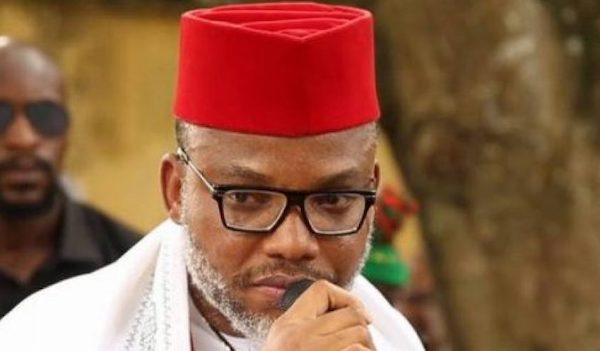
“What specific criminal incident by Mazi Nnamdi Kanu or IPOB triggered that proscription? None has ever been credibly demonstrated. Kanu had just been released from Kuje Prison in April 2017 by lawful court order. He toured every state in Igboland. Millions of our people — men, women, and youths — trooped out peacefully to welcome him. That massive, lawful expression of love and solidarity was what certain Igbo governors and their federal handlers labelled “terrorism.”

“ESN emerged later to shield our communities from the Fulani banditry and herdsmen atrocities that intensified after those military operations. For years, ESN has stood as a buffer, preventing the scale of carnage witnessed in other parts of Nigeria. Yet today, the same voices that invited the army and enabled the insecurity now pour resources — state and federal — into smearing ESN and Mazi Nnamdi Kanu as the architects of the very insecurity they helped create. Paid agents, compromised social-media noise-makers, and even some previously appointed by Kanu himself now work openly with anti-Biafra forces to sustain this lie. Their goal is transparent: keep Mazi Nnamdi Kanu in illegal detention without any proven crime, thereby neutralising the one figure whose freedom threatens the status quo,” the statement added.

The religious leaders said they are asking the simple questions Igbos have stopped asking because fear and propaganda have dulled consciences.

It asked, “Under what subsisting Nigerian law did Justice James Omotosho deliver the 20 November 2025 conviction? The proscription itself, the trial, and the judgment rest on statutes many of which have been repealed or whose application has been fatally challenged on jurisdictional and fair-hearing grounds. Till date, neither the judge nor his enablers have answered this elementary question.

“Why did Igbo governors, envious of Kanu’s unmatched popularity among the masses, rush to proscribe IPOB and open the gates for military invasion instead of engaging the legitimate grievances he raised?

“Why is sit-at-home — a non-violent protest tactic — now blamed for insecurity while the governors who invited the army and the federal forces that turned our land into a theatre of operations are shielded from scrutiny?”

They noted that the problem with Igbos is not their industriousness, republican spirit, or our demand for justice. According to them, the problem is the persistent presence of slaves — men and women who, for personal gain, political appointment, or sheer envy, have mortgaged the collective destiny of Ndigbo to external oppressors.

The religious leaders noted that these internal saboteurs twist every narrative, celebrate every setback to the Biafra cause, and attack the very structures (like ESN) that have shielded the women, children, and farmlands from the banditry that has ravaged other regions.

“Mazi Nnamdi Kanu has refused to break. He has risen above the wickedness, the treachery, and the paid propaganda. He remains an uncommon Igboman — a prisoner of conscience whose only “crime” is refusing to accept the permanent subjugation of his people. Like the biblical Paul writing epistles from prison, or Joseph sold into slavery by his own brothers, Kanu’s chains have only amplified his voice and clarified his mission.

“We, Igbo religious leaders, therefore call on every son and daughter of Alaigbo: Reject the lies. Demand that those who claim ESN is the problem produce evidence of who created the conditions for insecurity in the first place.

“Insist on the unconditional release of Mazi Nnamdi Kanu as the indispensable first step toward genuine peace and restructuring.

“Refuse to be divided by envy, fear, or the promise of crumbs from the master’s table.

“Return to the spirit of Aburi — not the twisted version, but the original demand for a restructured federation or, where that is denied, the legitimate exercise of self-determination,” the religious leaders added.

Philip Agbese’s Constituency Projects Spotlight Focus on Education and Community Development

The ongoing construction of a modern classroom block at Ijigban Ward in Ado Local Government Area has reached the roofing stage, marking another milestone in one of the constituency projects facilitated by the Member representing Ado, Okpokwu and Ogbadibo Federal Constituency in the House of Representatives, Hon. Chief Dr. Bishop Philip Agbese.

The project is among several interventions aimed at improving public infrastructure across communities within the Enone Federal Constituency, with education receiving significant attention through classroom construction and school improvement initiatives.

When construction began, the site was at the foundation stage. Recent inspections show that the structure has now risen to full height, with roofing scheduled to commence this week. The progress has been welcomed by residents, many of whom say the completed facility will provide a better learning environment for pupils and teachers.

According to information made available during project monitoring visits, the regular publication of construction updates is intended to keep constituents informed about the status of constituency projects while encouraging transparency and public accountability. Residents are also encouraged to monitor ongoing projects and ensure contractors deliver quality work within agreed timelines.

Beyond the Ijigban classroom project, several infrastructure initiatives have been undertaken across Ado, Okpokwu and Ogbadibo Local Government Areas, covering sectors such as education, community development and public facilities. These projects form part of efforts to address identified needs within the constituency through constituency intervention programmes.

Political analysts note that visible infrastructure projects often serve as measurable indicators of constituency representation, particularly when accompanied by regular public updates and community engagement throughout implementation.

As work progresses on the Ijigban classroom block, residents are looking forward to its completion and eventual handover, with expectations that the facility will contribute to improved access to quality education for children in the community.

The classroom project reflects the continuing emphasis on educational infrastructure within the constituency, where community members and stakeholders have expressed interest in seeing ongoing development projects completed and put into public use.