Home Blog

Kenneth Okonkwo Cautions Nigerians Against APC’s Questionable Actions

0

The All Progressives Congress (APC) government has been accused by Nollywood actor and politician Kenneth Okonkwo of purposefully keeping a lot of information from Nigerians.

According to reports, Okonkwo said this in an interview with the Channels Television program “Sunrise Daily.”

Kenneth discussed how an unidentified law was used to conduct the just finished Federal Capital Territory (FCT) Area Council elections, when the APC won five of the six Area Councils.

The African Democratic Congress (ADC) chieftain is skeptical of the ruling party and cautioned that Nigerians should not be influenced by their actions.

In addition, Kenneth Okonkwo asked why the gazetted copy of the Electoral Act 2026 was still unavailable.

“Nigerians should not be carried away by this dubious APC’s actions,” he declared. As of right moment, the Electoral Act 2026 has not been gazetted.

The purpose of APC’s deliberate concealment is to prevent Nigerians from understanding anything until it is too late.

“Unknown legislation was used to conduct the FCT election. Furthermore, this violates the rule of law. A law must be publicized in the public domain before it may be enforced against the people.

The Edo State government or its operatives, according to Kenneth Okonkwo, were responsible for the latest assassination attempt on Peter Obi, the presidential candidate of the Labour Party for 2023.

It was remembered that Peter Obi and other ADC chieftains in Edo State were ambushed by gunmen.

In an interview with Arise Television’s “Prime Time,” Okonkwo claimed that incumbent Edo State Governor Monday Okpehbolo had once threatened Peter Obi with expulsion if he entered the state without his permission.

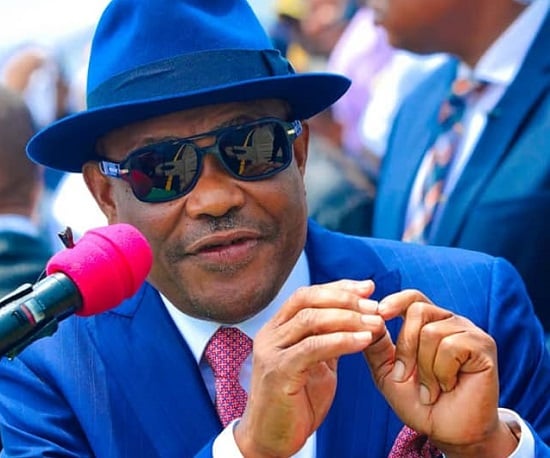
‘PDP Still Hasn’t Learned’ – Wike Backs Tinubu Once More

0

In defense of his ongoing support for President Bola Tinubu and candidates who share his views, Nyesom Wike, the Minister of the Federal Capital Territory, claimed Monday that his party, the Peoples Democratic Party, “appeared not to have learned.”

During a media briefing in Abuja, Wike reaffirmed that he had previously stated in 2023 that he was supporting the President.

“Even as a PDP man, I told you in 2023 that I was going to work for the President.” “I believe that the other parties did not present serious candidates, and I have good reason to believe that,” he stated.

The minister insisted that his stance on politics had not altered.
Wike criticized his party’s internal situation, saying it had not learned from its mistakes.

“I have stated on multiple occasions that my party doesn’t seem to have learned, in my opinion. For this reason, I declared my intention to back Mr. President for a second term,” he stated.

He also criticized the party for not consulting him about its candidates.
“My party did not consult me on the candidates they were going to present as a minister,” he continued.

The minister emphasized that, as long as candidates support the President’s reelection campaign, his support transcends party boundaries.

“I declared my intention to back candidates who back Mr. President’s reelection. Whichever party they are a member of is irrelevant. He declared, “Of course, I will set up camp with them if they back Mr. President.”

Regarding the way the February 21, 2025, FCT elections were conducted, Wike emphasized that the procedure extends beyond the day of voting.

An election is a procedure. The nomination of candidates is the first step, followed by the campaigns and voting. “It’s not just about one day,” he remarked.

The controversy surrounding movement limitations that were announced prior to the FCT polls was also addressed by Wike, who insisted that the directive was issued for security reasons and with presidential consent.

With the president’s assent, movement was prohibited starting at 8 p.m. for security reasons. He stated, “It was to make sure that people didn’t bring troublemakers into the city to create a crisis.”

Claims that the bill denied voters their right to vote were denied by him.

Saturday was election day, and voting was open from 6 a.m. until 6 p.m. You cannot claim that they were denied the right to vote. That isn’t right,” he said.

Wike responded to criticism that he was acting within his authority when he visited polling places.

“I have been given the authority.” He stated, “I have been granted a certain amount of authority to act on behalf of the President.”

He denied that he had any influence over the outcome of the election.

“My name wasn’t on the ballot. I never advised anyone not to cast their ballot for any candidate. He said, “I only stated that I would back candidates who back Mr. President.”

In response to allegations of political meddling in council elections, Wike emphasized his political affiliation.

“Let me be clear: I work as a politician. He stated, “I decided to become a politician because politics is about winning.”

He addressed claims of voter disenfranchisement and refuted them.

Disenfranchisement: What is it? Does it deter people from voting if a party declares it is not ready for an election? People who were disenfranchised were not denied the right to vote, which was not the case, he stated.

In closing, Wike urged those who had been wronged to pursue legal action.

“Anyone who is unhappy should visit the tribunal. If the tribunal determines that a repeat is required, let them cancel the election. “The result won’t be any different,” he declared.

During the elections on February 21, the All Progressives Congress won five of the six chairmanship positions in the Federal Capital Territory’s Area Councils.

While the PDP won the leadership in Gwagwalada, the ruling party declared victory in Abuja Municipal Area Council, Abaji, Bwari, Kwali, and Kuje.

Nenadi Usman: Winning Elections Depends on Strong Grassroots Support

0

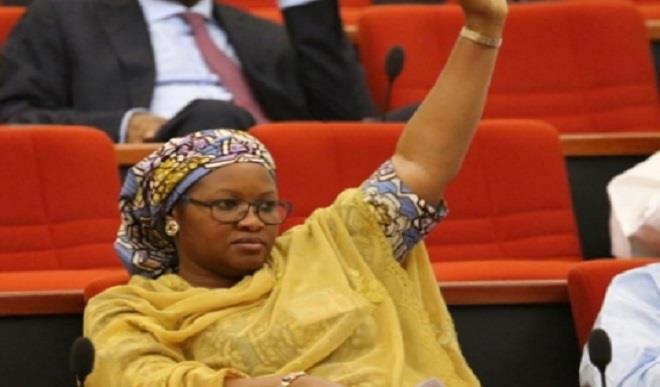
In order to improve the credibility of elections, Senator Nenadi Usman, the Interim National Chairman of the Labour Party, has called for political parties to increase their base of support at the grassroots level. He has emphasized that successful elections depend on successful grassroots mobilization.

Speaking at a town hall gathering in Abuja about the Electoral Act 2026, Usman stated that a political party’s presence and readiness at the polling place determine whether it succeeds or fails.

Although she acknowledged that the debate over the Section 60(3) provision has been overblown, she praised lawmakers for approving the electronic transfer of results to INEC’s IReV portal.
In order to preserve votes and guarantee accurate results, she emphasized that parties should use agents who have received proper training.

Usman emphasized that instead of depending only on INEC, parties should fortify their internal systems and carry out their duties with diligence.

Party rules shall be followed in accordance with Section 84(2) of the Electoral Act 2026, which requires candidate nominations by direct primaries or consensus.

The integrity of the 2027 elections, she stated, “will depend on Nigerians’ collective resolve and vigilance, not just statutory provisions or institutional mechanisms.”

Cashless Payments Now Active on Abia’s Green Shuttle Bus Service

0

As part of its efforts to modernize public transportation in the state, the Abia State Government has started the full implementation of the Abia Connect Card, a cashless payment system for the Green Shuttle Bus Service.

The goal of the project, which is being led by the Ministry of Transportation under Governor Alex Otti’s leadership, is to give locals a smooth commute.

The government hailed the development as a turning point in its efforts to create a digitized, transparent, and effective transportation ecosystem in a statement released on Sunday by Okey Kanu, the Commissioner for Information, on behalf of the Abia Ministry of Information handles.

The statement claims that the Abia Connect Card, often referred to as the “Abia State Card,” removes the annoyances of cash payments, such as delays, disagreements over change, and income leaks.

“We are purposefully avoiding the inconveniences associated with using cash. The Abia Connect Card makes transportation as easy as tapping. It is effective, dependable, and made to make sure that everyone can use our public transportation system,” the statement said.

The government stated that residents can presently get the first card for free at authorized agent locations and designated Green Shuttle ports in Aba and Umuahia.

In order to obtain the card, potential users must provide their ABSSIN; those without one may register using the Abia Pay portal.

Commuters must tap their card on the payment device upon boarding after funding it, subject to a ₦50 top-up charge. A confirmation sound will ring to confirm the successful payment.

According to the statement, the Green Shuttle Service runs both intra-city and inter-city routes, the card has no expiration date, and money loaded onto it is always valid.

According to Kanu, the intercity fares are ₦800 for Aba–Umuahia and ₦1,000 for Umuahia–Ohafia. Within Aba and Umuahia, city services are provided on specified routes for a fixed fee of ₦150.

In an effort to improve accountability and transparency in the transportation industry, the state administration encouraged passengers to take advantage of the current free card distribution.

“Our goal is still to establish Abia State’s transportation system as a shining example of creativity, effectiveness, and openness in Nigeria.

The statement further said, “I urge every resident to get their cards and participate in this revolutionary journey towards a smarter Abia.”

OPEC+ to Boost Oil Output in April Amid Global Demand

0

On Sunday, the Organization of the Petroleum Exporting Countries (OPEC) and its allies, often referred to as OPEC+, agreed to increase oil production by 206,000 barrels per day (bpd) in April.

“The announcement follows a virtual meeting where member nations, including Saudi Arabia, Russia, Iraq, the United Arab Emirates, Kuwait, Kazakhstan, Algeria, and Oman, reviewed global market conditions and outlook,” the OPEC website said.

“A production adjustment of 206,000 barrels per day was agreed upon by the eight participating countries, who decided to resume the unwinding of the 1.65 million barrels per day of additional voluntary adjustments announced in April 2023,” the statement read.

It further stated that the low oil inventories were a reflection of the sound market fundamentals and the stable outlook for the world economy.

OPEC stated that the 1.65 million barrels per day of voluntary reductions will be implemented gradually and might be partially or completely reversed based on changing market conditions.

It stated that the following decisions will be made during a meeting of eight nations on April 5.

The OPEC-planned production increases for the first quarter of 2026 are anticipated to terminate with the April output rise.

The 1.65 million barrels per day voluntary production cuts were first announced in April 2023 and then extended until the end of 2026.

The introduction of OPEC+ came after Israeli and American raids on Iran sparked worries about supply disruptions in the Middle East, particularly in the area surrounding the Strait of Hormuz.

FAAN Appeals for Calm as Cashless System Faces Glitches in Abuja, Lagos Airports

0

Following traffic jams at Murtala Muhammed International Airport in Lagos and Nnamdi Azikiwe International Airport in Abuja on the first day of its nationwide Go Cashless initiative, the Federal Airports Authority of Nigeria, or FAAN, has advised drivers and airport patrons to exercise patience.

In a post on its X account on Sunday, FAAN stated that while previous notices and advertising encouraged early registration at its authorized offices, many vehicles attempted to register for the new Go-Cashless cards at the toll lanes, causing the traffic jam.

In accordance with the Federal Government’s order on cashless transactions, the Go Cashless Program formally launches today at MMIA and NAIA. The Federal Airports Authority of Nigeria expresses its profound gratitude to all drivers and airport passengers.

“We acknowledge that there was a traffic jam at the access gates today. A considerable number of drivers chose to register for their Go Cashless cards at the gates this morning despite the extensive exposure, notices, and repeated announcements given before to the start date, according to the statement.

FAAN noted that initial adjustment difficulties are typical for significant system transitions while acknowledging the brief delays.

According to the authority, it has improved on-ground coordination, expanded registration locations, and deployed additional staff to facilitate traffic flow.

The Central Bank of Nigeria’s push to encourage digital transactions is in line with the Go Cashless policy, which forbids cash purchases at executive lounges, parking lots, and entrance gates.

The program, which has been piloted in Lagos and Abuja since late 2025 in collaboration with Paystack, attempts to lower the hazards involved with cash handling while increasing processing speed, transparency, and operational efficiency.

Drivers were instructed by FAAN to get Go-Cashless cards at entrance gates, FAAN commercial offices, or partner bank branches and to make advance plans for future visits.

The public was informed by the authority that smoother operations in the days ahead would be ensured by continuous monitoring and modifications.

FAAN reaffirmed its commitment to offering a secure, effective, and top-notch airport experience, saying, “We appeal for your patience, understanding, and cooperation as we work diligently to stabilize and streamline the process.”

Fresh Boko Haram Assault Claims Life of Army Major in Borno

0

During an attack on a Nigerian Army installation in Borno State, armed rebels associated with Boko Haram are said to have killed numerous troops, including Army Major U. I. Mairiga.

Sources claim that early on Sunday morning, the attack targeted a forward military post along the Banki axis.

According to reports, the attackers overran the base in well-coordinated waves, overwhelming the troops that were positioned there.

The attack happened at the Forward Base Operations near the Banki intersection along the Bama-Gwaza Road, according to security sources. Hours passed while soldiers tried to fend off the invaders amid heavy gunfire.

The terrorists were recognized as belonging to the Islamic State West Africa Province, a group that has increased its attacks on military installations in the Northeast.

The operation confirmed the death of a senior Army officer. While several staff apparently fled into nearby bushes in the midst of the pandemonium, several more soldiers also perished.

An Army Major and numerous other soldiers were killed this morning in an attack at Forward Base operations at Banki crossroads at around 0400 hours by gunmen believed to be Boko Haram terrorists.

“They are transferring their bodies to the 7 Division Military Hospital in Maiduguri.”

The fallen troops’ remains were transferred to a military hospital in Maiduguri while efforts are still being made to find the missing soldiers.

Attacks on military sites in the state have increased in frequency since the most recent occurrence. An Army base in Jakana, Kaga Local Government Area, was attacked by militants weeks prior, at which time armored vehicles were destroyed and weaponry were taken away.

“Our side suffered numerous casualties in an attack by Boko Haram terrorists this morning, 06/02/2025, at an Army outpost along Maiduguri/Damaturu Road, Jakana town.”

Days before, seven soldiers, including a recently promoted Lieutenant Colonel, had been slain in another horrific ambush while on operational movement.

During these operations, the militants set off explosives and were shot at, according to military insiders, causing serious losses and injuries, with several soldiers still missing.

ISWAP has increased its influence in the Lake Chad region with the passing of former Boko Haram commander Abubakar Shekau. This has affected security forces in the area by absorbing defectors.

42 sheep have been found and four suspected livestock rustlers have been taken into custody by the Niger State Police Command in various operations throughout the state.

This was revealed in a statement on Sunday by Wasiu Abiodun, the command’s public relations officer, who stated that the arrests were conducted in response to reliable information.

The suspects were apprehended by police officers affiliated with the Crack Squad on February 24 at approximately 6 p.m., according to the statement.

23-year-old Abubakar Musa of Maito village via Lemu, 20-year-old Muhammad Ibeto of Kara via Jebba, 20-year-old Bello Saidu of Kara via Jebba, and 20-year-old Abubakar Alhaji of Kara via Jebba were identified as the suspects.

According to Abiodun, the arrests came about as a result of a tip that the culprits were spotted near Raba Forest via Mokwa with possibly stolen animals.

Responding quickly, police officers followed the criminals down Jebba-Mokwa Road.

“Some members of the syndicate fled into the forest, while four were apprehended,” he stated.

While being questioned, the suspects allegedly admitted to rustling the sheep from Salihu village through Mokwa and named other gang members.

The 42 recovered sheep have been claimed by their rightful owner, according to Abiodun, who also stated that efforts were being made to apprehend the fugitive suspects.

SERAP Calls on FCCPC to Probe Tech Giants for Media and Consumer Abuses

0

The Federal Competition and Consumer Protection Commission (FCCPC) has been urged by the Socio-Economic Rights and Accountability Project (SERAP) to look into claims that big tech companies are using opaque algorithms and market dominance to undermine Nigerian media, businesses, and citizens’ rights.

Kolawole Oluwadare, SERAP’s Deputy Director, signed a complaint on February 28, 2026, requesting that the FCCPC look into Google, Meta (Facebook), Apple, Microsoft (Bing), X (previously Twitter), TikTok, Amazon, and YouTube.

Oluwadare revealed this information in a statement on Sunday.

“To take measures necessary to urgently prevent further unfair market practices, algorithmic influence, consumer harm and abuses of media freedom, freedom of expression, privacy, and access to information and ensure compliance with Nigerian laws and international standards,” the group urged the commission.

Additionally, SERAP requested that the FCCPC hold a public hearing to examine the corporations’ alleged algorithmic discrimination, market dominance, data exploitation, and consumer harm.

“Big technology companies operate with enormous influence over Nigeria’s digital economy and information ecosystem, but they often escape accountability for the harms they cause,” SERAP wrote in its complaint to Mr. Tunji Bello, the Executive Vice Chairman and Chief Executive Officer of the FCCPC.

“These platforms can influence public discourse and market competition without transparency or meaningful oversight thanks to opaque algorithms, offshore revenue extraction, and hidden data practices.”

Millions of Nigerians, according to the group, depend on the platforms for news, information, and business opportunities.

Dominant digital platforms were referred to be “private gatekeepers of Nigeria’s information and business ecosystem” in the report.

“The integrity of Nigeria’s democracy, media plurality, consumer protection, and privacy are all at risk due to their opaque algorithms and market dominance, which are not only economic problems,” SERAP stated.

The FCCPC was cautioned that if it did not take immediate action, it would be forced to think about “all appropriate legal actions to compel regulatory intervention in the public interest.”

According to SERAP, Google’s investigations by the South African Competition Commission exposed systemic bias against local media content and resulted in algorithmic transparency, compliance monitoring, and financial compensation.

The group claimed that the corporations’ algorithmic technologies and business models were distorting Nigeria’s digital economy and violating the rights of Nigerians.

It claimed that “the right to privacy is reportedly being interfered with by the large-scale collection, retention, and monetization of Nigerians’ personal and behavioral data—often under complex and unclear consent mechanisms.”

Concerns were raised by SERAP over the possible effects of the claimed actions on media freedom, privacy rights, commercial viability, and the integrity of Nigeria’s upcoming elections.

The Federal Competition and Consumer Protection Act (FCCPA), including Sections 17 and 18, the 1999 Constitution (as amended), and international human rights norms would all be gravely violated if the claims were proven.

According to the group, the FCCPC has the authority to look into and enforce compliance against actions that significantly hinder, restrict, or distort competition in Nigeria under Sections 17 and 18 of the FCCPA.

According to SERAP, Nigerian media companies and content producers are still subject to algorithmic repression, revenue diversion to overseas platforms, and limited discoverability, which leads to violations of information access and freedom of expression.

It further stated that market dominance, discriminatory algorithmic ranking, opaque content moderation, and purported data consolidation could all work together to seriously stifle competition, hurt consumers, and undermine democratic institutions.

Therefore, SERAP encouraged the FCCPC to hold a public hearing to collect testimony from impacted Nigerians and to launch a thorough inquiry into the alleged conduct.

The demands go on to say, “Hold a public hearing to collect testimony from impacted Nigerians, including media outlets, journalists, small and medium-sized businesses, content producers, civil society organizations, and individual consumers;

“Require quarterly and biannual compliance reports, as well as transparency and fair treatment of Nigerian material, including disclosure of ranking, recommendation, and advertising algorithms;

“Assure corrective actions, such as the creation of a compensation fund, for damaged media organizations;

“Take immediate action to stop continued consumer harm, market distortion, and privacy and freedom of expression abuses;

“Summon individuals, demand the production of documents, and impose sanctions on the Respondents as needed and in cases where violations of competition, consumer rights, and rights protection are discovered;

Making certain that the FCCPC has the power to ask for more information when needed; and

“Grant any additional relief(s) that the Commission deems necessary to ensure compliance with Nigerian competition law and prevent unfair market practices.”

INEC Calls for ‘Plain Language’ Electoral Act Ahead of 2027 Polls

0

In order to make the recently modified Electoral Act easier for voters to understand, the Independent National Electoral Commission, or INEC, has urged the Nigerian government to demythologize it.

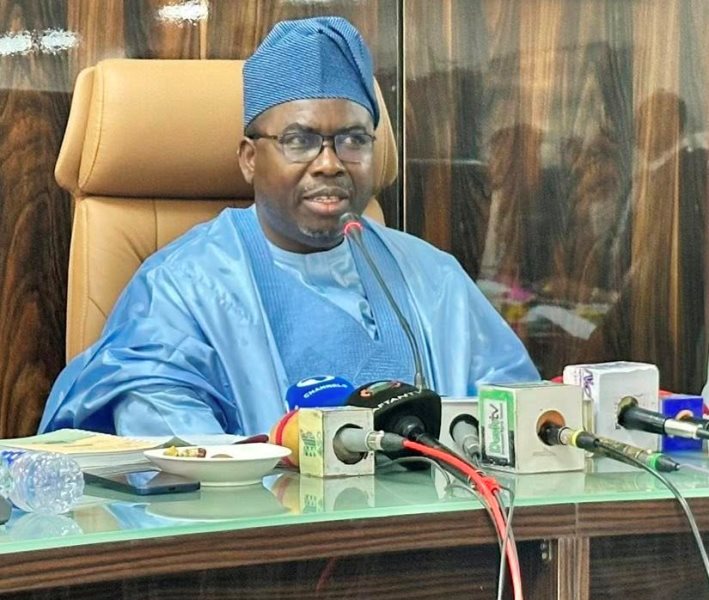
What Nigeria needs, according to INEC Chairman Professor Joash Amupitan, is a straightforward electoral law that is easy for all Nigerians to grasp and is written in a simplified manner.

At the Civil Society Network on Election Integrity and the Electoral Act’s town hall gathering in Abuja on Sunday, Prof. Amupitan made the request.

Given that Nigeria is a very diverse nation, particularly in terms of its political and electoral environments, the INEC Chairman’s demand came amid the debate surrounding the real-time transmission of election results, which he claimed has to be explained.

“We’ve gone through the entire Electoral Act and examined some of the controversial aspects, particularly in a nation with such a diverse population,” he stated.

Nigeria genuinely needs what I refer to as simple legislation—that is, legislation written in plain language—so that every Nigerian can comprehend and value the terms of each part.

When INEC entered the picture, we believed that the transmission of the results needed to be required. To be honest, though, our only issue was defining what we meant by “real time.”

For example, in the last FCT area council election in Kuje, the results for five area councils were released on schedule, but the Kabi ward results weren’t released until Sunday. Our policemen were unreachable via phone, so we were unable to contact them.

Transmission is not a problem in my opinion; rather, the sufficiency of our network is the issue.
You anticipate being able to send your results without any obstacles in a location like FCT.
“However, there was a situation where coverage prevented us from transmitting results in real time.”

INEC Announces Plans to Run Mock Election Across Nigeria Ahead of 2027 Polls

0

Ahead of the general elections in 2027, the Independent National Electoral Commission (INEC) has announced intentions to hold a nationwide mock presidential election in order to test its infrastructure for transmitting results and avoid a recurrence of previous technological issues.

Joash Amupitan, the chairman of INEC, reportedly revealed this on Sunday at the Citizens’ Townhall on the Electoral Act 2026 in Abuja, promising Nigerians that the commission is committed to holding what he called the nation’s “best election yet.”

The declaration comes after the general election schedule for 2027 was recently modified.

The elections for the governorship and state houses of assembly were previously scheduled by INEC for March 6, 2027, and the presidential and national assembly elections for February 20, 2027.

However, the new calendar places the governorship and state assembly elections on February 6, 2027, and the presidential and National Assembly elections on January 16, 2027.

The commission claims that the modifications adhere to the requirements of the Electoral Act of 2026.

Amupitan emphasized during the town hall meeting how crucial it is to fully test election technologies prior to implementation.

He stated that technology is now a major factor in elections worldwide, but it is crucial to thoroughly examine any new technology before implementing it.

“We are attempting to hold a simulated presidential election prior to the election in order to ensure that this transmission across the states does not fail.”

Although the Bimodal Voter Accreditation System (BVAS) was tested in off-cycle governorship elections in Osun and Ekiti before the general elections in 2023, he clarified that it was not adequately put through its paces for a national presidential fight.

He claims that the commission is eager to make sure that results are sent across states for the 2027 elections.

Amupitan said he was confident that the technical issues that occurred during the 2023 presidential election will not happen again.

He added that there are now protections in place to avoid repeat failures and that the alternative collation techniques allowed under the law are merely preventative measures and should not be used in place of electronic transmission.

According to the INEC chairman, the commission’s goal is to ensure smooth transmission while enhancing logistics and result collection procedures across the country.

President Bola Ahmed Tinubu recently signed the modified Electoral Act 2026 into law, which is the subject of current discussions.

Depending on operational viability, the change allows results to be transmitted both electronically and manually.

More modifications, especially requiring electronic broadcasting without backup options, have been demanded by opposition parties.

Amupitan reiterated INEC’s dedication to reliable elections, stating that reliable polls are essential to democracy.

The 2027 electorate, he said, is more politically conscious and recognizes the connection between elections and the advancement of the country.