Home Blog

‘Nigeria’s Current Sacrifices Will Pay Off’ – Akintunde Assures Citizens

0

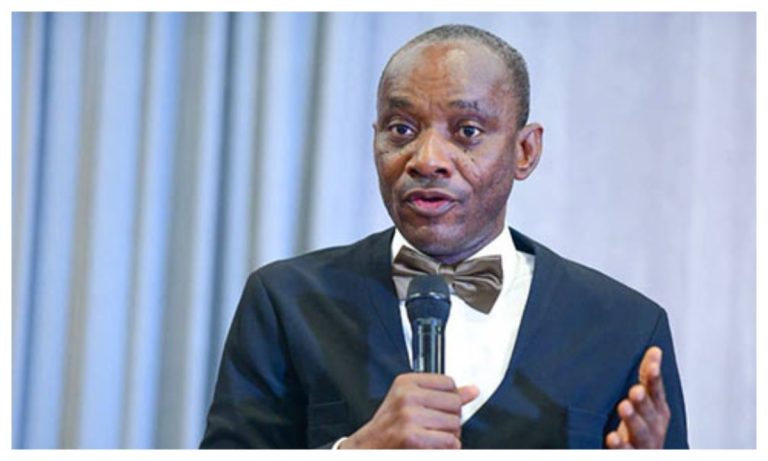
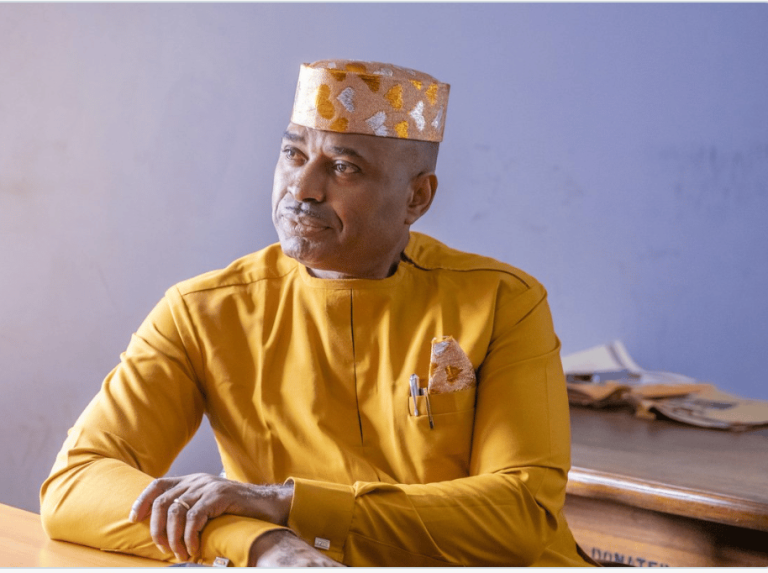
In this interview, Tope Akintunde, the convener of the Yayi Progressives Movement, a powerful political organization in Ogun State, argues that President Bola Tinubu’s economic reform plans are still the best for Nigeria. Additionally, he asserts that, according to a poll conducted in January 2027, Senator Solomon Adeola and Prince Dapo Abiodun are the best contenders for Ogun State Governorship and Ogun East Senatorial, respectively. Excerpts from James Sowole.

What is your current political path as a grassroots Ogun State political mobilizer?

My name is Armstrong “Tope Akintunde,” and I am descended from the late Fowodara of Araromi, Iperu-Remo, Ogun state. My bachelor’s degree was obtained from the University of Agriculture, Abeokuta (UNAAB), which is now the Federal University of Agriculture, Abeokuta (FUNAAB).

In 2009, I started working for Suru Group Limited, a real estate firm in Lagos, as Executive Director, Special Projects. I was also Aerofield Homes Limited’s Managing Director and CEO at the same time. I’ve had the honor of going to a number of real estate and project management conferences, seminars, training sessions, and courses in Nigeria, Europe, and the US throughout the years. At the University of Oxford’s Saïd Business School in the United Kingdom, I most recently finished an executive real estate program.

I hold the titles of Associate Member of the Nigerian Institute of Management (NIM), Fellow of the Institute of Professional Managers and Administrators of Nigeria (IPMA), and Certified Customer Relationship Manager (CRM/CEP). Among other honors, I received an honorary doctorate in business administration and corporate governance from the European-American University in partnership with the Republic of Panama and the Kingdom of Bunyoro-Kitara in recent years.

Our operations are still guided by my passion, which has always been to give Nigerians adequate, affordable housing.

However, politics offers me another way to give back to my community. I naturally became involved in politics because I was passionate about public engagement and grassroots mobilization.

Nigeria is now dealing with issues related to security and the economy. Can the goals of President Bola Tinubu’s programs be achieved?

Every country had its hard times. Nigeria is no different. Even if there are current security and economic issues, I think they will pass and the nation will eventually recover. In order to combat insecurity, boost the economy, and prepare Nigeria for long-term growth, President Bola Tinubu is working nonstop. Although these reforms might be challenging in the short run, I have no doubt that history will recognize them as essential stages in the nation’s reconstruction.

The current struggles, especially the insecurity, make no Nigerian pleased, but significant reforms will take time.

Rome was not created overnight, as the saying goes. I implore Nigerians to continue being encouraging, unified, and hopeful. I think today’s sacrifices will eventually benefit the country.

As Chairman of Aerofield Homes Limited and Convener of the Yayi Progressives Movement, how do you manage business and politics?

Success, in my opinion, stems from having a clear objective. My passion for public service is politics, but my career is real estate. By God’s blessing, I began both travels at a young age, and today my business and political movement are well-known. The two don’t seem to contradict each other. Due to their distinct functions, they enhance one another. While politics allows me to make social and political contributions, business allows me to make economic contributions. Both have been successfully managed thanks to careful preparation, self-control, and dedication.

What motivated the Yayi Progressives Movement to be founded?

Through many phases of political participation, the movement has developed. It started out as the Dapo Abiodun Continuity Agenda (DACA), which was created to help Governor Dapo Abiodun’s reelection prior to the 2023 general election. The platform evolved into the Omoluabi Movement to incorporate more expansive progressive ideas centered on inclusivity and people-oriented leadership as political circumstances changed and consultations grew. It later evolved into the Yayi Progressives Movement after strategic partnerships with a number of political support groups, including artisan associations around Ogun State.

It was a purposeful change. It demonstrates our commitment to creating a more powerful grassroots political platform that can unite Ogun State’s residents behind a common progressive goal.

What makes the Yayi Progressives Movement different from other Ogun State political organizations?

With more than 50,000 members spread throughout the state’s 20 local government areas, the Yayi Progressives Movement has developed into one of Ogun State’s biggest grassroots political organizations.

Our ability to be inclusive is our strength. We unite young people, women, professionals, students, craftsmen, community leaders, and party supporters on a single platform.

Beyond politics, especially for youth, we offer chances for civic engagement, leadership training, and mentoring. We are still dedicated to encouraging democratic engagement and grassroots participation across Ogun State while endorsing all APC candidates.

In the upcoming general election, Governor Dapo Abiodun is the APC’s candidate for Ogun East Senatorial seat. How likely is he to win?

I think Governor Dapo Abiodun has excellent prospects. Having worked for Ogun State for almost eight years, his accomplishments in the areas of infrastructure, healthcare, education, and economic growth speak for themselves. His approach to leadership has been inclusive, consultative, and results-driven throughout the entire state. His move to the Senate will allow him to maintain Ogun’s national representation while building on the progress made during his administration.

The emergence of Senator Solomon Adeola as the APC’s favored candidate for governor has drawn criticism from the opposition. What is your answer?

Each opposition party is free to express its views. Nonetheless, we continue to prioritize showcasing the top applicant to Ogun State residents. Yewa has not historically produced a governor since Ogun State was established more than 50 years ago. Many think that by endorsing a suitable candidate from that axis, 2027 offers a chance to advance justice, equity, and inclusivity. With his legislative background and dedication to public service, Senator Olamilekan Adeola has proven to be competent. I think he has the skills, background, and leadership attributes needed to effectively lead Ogun State.

Why is Senator Adeola the best candidate for the job?

Senator Adeola has a combination of grassroots appeal, administrative skill, and legislative expertise. He has established a reputation for efficient representation, infrastructure development, and responsible use of public funds during his years in government. His goals for Ogun State are centered on youth empowerment, education, healthcare, infrastructure revitalization, industrial growth, and economic development.

His ability to bring disparate political interests inside the APC together while preserving solid ties throughout the state is equally significant. In my opinion, he provides Ogun State with the leadership, vision, and experience it needs to reach new heights.

What message would you like to convey to the Ogun State people?

As members of the All Progressives Congress, we pledge to keep mobilizing support for democratic development and decent administration. The Yayi Progressives Movement will keep growing its grassroots involvement throughout the state, promoting policies that advance sustainable development and encouraging increased political participation. I implore the people of Ogun State to continue being peaceful, unified, and dedicated to the advancement of our beloved state. By working together, we can create a more prosperous Ogun where progress is made in every neighborhood.
Why The NYSC Reform Committee Opposed Making National Service Optional – Joe Abah

0

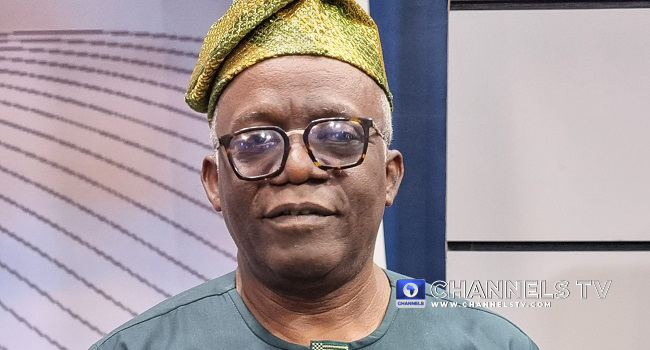
Dr. Joe Abah, member National Youth Service Corps (NYSC) Reform Committee has explained why the panel rejected proposals that sought to make national service optional and introduce mandatory full military training for all corps members.

Abah’s clarification came after a critic, Muyiwa Saka, accused the committee of rejecting the idea of an optional scheme.

Saka posted on X: “The main indicator that Dr Joe got that reform madly wrong was that retort about zero possibility of national service being optional… The refusal to pursue that option only made it seem an academic exercise that satisfied everyone except the corpers concerned.
The committee did look at that option, Abah responded, but turned it down on principle.

“The committee did look at that option and rejected it on the grounds that it shouldn’t be optional whether or not you serve your country,” he said.

We also considered compulsory full military service, and asked ourselves if we wanted 500,000 people trained in the handling of weapons every year, which the military cannot absorb. “We also rejected that option, so we don’t end up having NYSC-military-trained non-state actors on top of all the armed non-state actors we have now.”
Of course, you can have a contrary view,” he added. It doesn’t mean that those who don’t share your view are ‘madly wrong’.”

In 2025, the Federal Government established the NYSC Reform Committee to review the 53-year-old scheme and bring it in line with the present needs of youth and national development.

The committee’s mandate involved a review of policy and legal frameworks, stakeholder consultations and making recommendations for amendments to the NYSC Act.

The Federal Executive Council has approved a major revamp of the scheme that will include a six-week orientation curriculum, 11 specialised career streams and a shift to civilian leadership.

The reforms would make the NYSC “safer” through risk-based deployment and ensure “every corps member must leave NYSC better prepared for work, enterprise and national service”, said President Bola Tinubu.

Gbajabiamila Controversy: Buhari’s Ex-Minister Says Presidency Must Provide More Answers

0

Solomon Dalung, a former Minister of Youth and Sports under President Muhammadu Buhari’s administration, has criticised the Presidency’s defence of the Chief of Staff to the President, Femi Gbajabiamila, over allegations surrounding Prince Adeniyi Adeyemi Matthew.

He added that the official response issued by presidential spokesman, Bayo Onanuga, did not address critical questions on how a purportedly fictitious presidential agency was allegedly operating within government circles.

He said while the Presidency tried to exonerate Gbajabiamila, its explanation exposed gaping holes in government oversight.

The Presidency must explain how an individual allegedly forged an appointment letter, operated from the Federal Secretariat, recruited personnel, engaged government institutions, met diplomats and reportedly obtained a Central Bank of Nigeria (CBN) account without being detected, he said.

He also questioned reports that the alleged agency was included in the national budget.

“If the council was fake how did it get into the budget,” Dalung said.

He said budget proposals undergo several stages of executive and legislative scrutiny before approval and asked who introduced, processed and approved the alleged provision.

Dalung also asked how the office space was allegedly got at the Federal Secretariat, who gave approval for the allocation of the space and why the operation was not discovered earlier.

He also challenged reports of the death of Dolapo Babatunde Tanimola, who investigators said was identified by Adeyemi as the person who helped procure the alleged forged appointment letter.

Dalung asked if investigators had conducted an autopsy, coroner’s inquest or forensic review of Tanimola’s communications and financial records.

Dalung, however, said while the allegations against Adeyemi were before the court, accountability should not end with the prosecution of one person.

The government must explain how its institutions interacted or failed to detect what the Presidency describes as a fictitious agency, he said.

Dalung called on the Presidency to release documentary evidence, timelines and official records on the alleged inclusion of the agency in the national budget, its alleged operations within the Federal Secretariat and the breakdown of institutional safeguards.

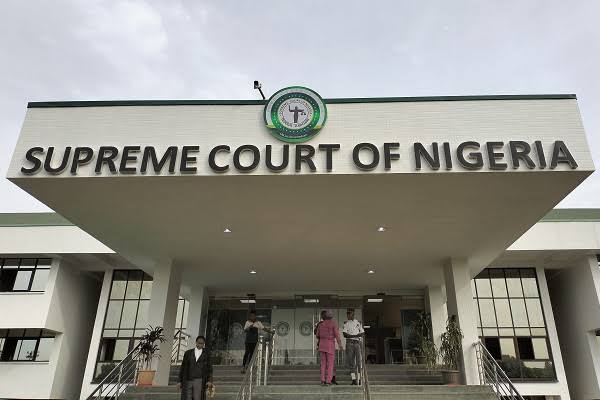
Supreme Court Introduces E-Filing, Phases Out Manual Case Filing

0

The Supreme Court of Nigeria, Wednesday, started electronic filing of appeals, in its bid to achieve efficient justice delivery in the country.

The Chief Justice of Nigeria (CJN), Justice Kudirat Kekere-Ekun, stated that the innovation, which is a landmark reform, was launched through the Nigerian Case Management System (NCMS) to modernise judicial administration, improve efficiency and strengthen the integrity of court records.

Implementation of the NCMS and coming into force of the Supreme Court (Compulsory Upload of Electronic Copies of Processes, Appeal Records and Other Matters) Practice Directions, is seen as a major step towards building a fully digitised and technology driven Supreme Court.

“The Judiciary in Nigeria cannot afford to remain on the sidelines of this global transformation,” the CJN said. The NCMS is designed to support the entire lifecycle of appeals before the Supreme Court by reducing reliance on manual processes and paper-based record management.

Kekere-Ekun said the system would improve case tracking, document management, record retrieval and overall workflow in the court registry.

Highlighting the security benefits of the digital platform, the CJN said the system would create a secured electronic repository and a comprehensive audit trail for court documents, thereby reducing opportunities for unauthorised alterations, loss or manipulation of court records.

However, the CJN said the implementation of the system would be in phases to ensure a smooth transition.

Kekere-Ekun said the first phase will entail mandatory uploading of electronic copies of processes and records in pending appeals, adding that the exercise will cover, in the first instance, appeals scheduled for hearing between September and December 2026 and counsel are to upload all relevant documents within the timelines stipulated by the new Practice Directions.

It will then continue to rollout quarterly until all the pending appeals before the Supreme Court are captured on the platform.

The second phase will entail the full electronic filing of court processes, enabling litigants and legal practitioners to file and follow appeals electronically, via a digital platform, in line with international best practices.

Justice Kekere-Ekun added that the digital filing system would also improve the court’s capacity to verify the authenticity of documents, detect irregularities and keep secure, transparent and traceable records of every transaction done on the platform.

He warned that only genuine and properly authorised court processes should be uploaded to the platform, adding that any attempt to upload forged, altered or unauthorised documents would attract legal, regulatory and disciplinary sanctions.

The Chairman of the Judicial Information Technology Policy Committee (JITPO-COM) and Chief Judge of Borno State, Justice Kashim Zannah, had earlier described the launch of the system as a historic milestone that would transform the administration of justice across the country.

The Supreme Court has over the years delivered landmark judgements that have shaped justice delivery in Nigeria and beyond, Justice Zannah said, adding that the introduction of the NCMS is another defining chapter in the nation’s judicial history.

He congratulated the CJN and the Justices of the Supreme Court for spear heading the initiative, saying their efforts would make them immortal in history.

The Nigeria Case Management System, he said, is a transformative digital platform that would bring together the country’s superior courts into a single unified justice system.

He stated that unlike jurisdictions where courts operate on different digital platforms, which leads to inefficiencies, the NCMS enables the smooth transition of cases from the High Courts, the National Industrial Court and the Sharia and Customary Courts of Appeal to the Court of Appeal and eventually the Supreme Court.

Justice Zannah said the system would eliminate many of the challenges of the traditional paper-based system including delays in compiling records of appeal, loss of court documents and other administrative bottlenecks.

‘Tinubu’s Ultimate Cluelessness’ — Sam Amadi Reacts To Alleged Fake Agency Saga

0

Sam Amadi, former chairman of the Nigerian Electricity Regulatory Commission (NERC), has chastised President Bola Tinubu and the Presidency over the purported bogus Presidential Economic Advisory Council.

In a post on X on Thursday, Amadi questioned how a non-existent government organization reportedly worked within the Presidency without being noticed.

He claimed that Presidency officials should have questioned the agency’s existence, accusing the administration of a lack of awareness.

“So no one in the Presidency could say, ‘Wait a minute, when did we form this agency?’ Tinubu is then the epitome of incompetency. Many so-called technocrats and vain academicians believe he should be re-elected,” Amadi said.

His remarks came after Bayo Onanuga, Special Adviser to the President on Information and Strategy, dismissed Adeyemi Adeniyi Matthew’s assertions that he had been named Director-General of a Presidential Economic Advisory Council.

The Presidency classified the council as a fictional entity, with Adeyemi facing criminal charges for forgery, impersonation, and acquiring by false pretense.

According to the Presidency, investigations by security agencies revealed that Adeyemi forged appointment documents, falsely represented himself as a government appointee, operated multiple bank accounts linked to fictitious agencies, and fraudulently opened a Central Bank of Nigeria account without receiving any government funds.

The Presidency also advised lawmakers and members of the public not to promote Adeyemi’s assertions, pointing out that the case is still being heard in court.

Sunny Alli Faults Nollywood For Promoting Witchcraft And Money Ritual Stories

0

Veteran Yoruba actor, filmmaker and producer Sunny Alli has dismissed popular beliefs in money rituals, saying many stories about witchcraft in Nollywood are not realistic and lack evidence.

The actor, known for films like Omo Ghetto, Lagos Girls (Omoge Eko), Omo Olè and Okan Soso shared his thoughts in an interview on YouTube programme Oyinmomo, talking about everything from scriptwriting to superstition and the type of stories he enjoys telling.

Alli states that he intentionally omits scenes of witchcraft gatherings from his scripts because they are based on unverifiable claims.
“There are some things that will never show up in my scripts. Like witch-gatherings. I don’t think they are realistic because no one has proven that they exist. ‘People say that witches meet up in red clothes, but who has really been there to see it?’ he said.

The veteran actor wanted to know how such scenes became a norm in Nigerian films, and said nobody has been able to give convincing evidence about how witches operate.

“Who documented everything about witches? What are they really like? I can write about accidents or other real life experiences because people can relate to them. “Those are stories that make sense,” he added.

Alli denied the popular belief that wealth could be obtained by ritual means, saying that such claims did not stand up to logical scrutiny.

“I have always said I don’t believe in money rituals. They say a demon gives them the money.” I ask them, does the demon have a printing press? “Is it the money of the Central Bank of Nigeria or the money of a Bureau de Change?” he wanted to know.

Whenever I asked these questions, the believers in the belief would usually alter their explanations, he said.

“The money comes through contracts that the person never bid for, and when they couldn’t answer, they came up with another story. I like scripts that have a basis in reality. I just don’t believe in money rituals,” said Alli.

The actor also discussed his history with football betting, stating that he has given up gambling.

I used to bet on football but I don’t anymore. “I believe God doesn’t condone gambling and I thank Him that it’s behind me now,” he said.

Alli is one of the founding members of the Odunfa Caucus and still one of the respected men in the Yoruba movie industry. He has earned many accolades over the years for his emotional performances and contributions as an actor, producer and director.

Falana Faults FG Over Gbajabiamila, Says Government Cannot Clear Anyone

0

Human rights lawyer, Femi Falana, says that the presidency cannot exonerate anyone charged with committing a crime.

Falana said this in response to the statement by the Presidency which cleared the Chief of Staff to the President, Femi Gbajabiamila, of the bribery allegations, it was reported.

Bayo Onanuga, the Special Adviser to the President on Information and Strategy, described the allegations as the handiwork of a man who purportedly posed as the Director-General of a non-existent government agency.

But speaking with Punch, Falana said the presidency was not constitutionally empowered to exonerate anyone on the matter and urged for an independent probe of both the Chief of Staff to the President, Femi Gbajabiamila and the acclaimed Director-General of the Presidential Foreign Intervention Promotion Council/Presidential Economic Advisory Council, Prince Adeniyi Adeyemi.

He argued that the executive branch was constitutionally incapable of clearing any of the parties and the anti-corruption machinery must be allowed to run its full course independently.

“The Presidency cannot absolve anybody,” he told one of our correspondents in a chat. It is the prerogative of the police and anti-graft agencies to investigate cases of official corruption.

“The Presidency can only refer Femi Gbajabiamila and the other person to the ICPC on the basis that allegations of fraud and corruption have been raised.”

The senior advocate questioned the financial provisions linked to the purported agency, saying, “The government will have to explain to Nigerians how a whopping sum of ₦24bn was budgeted for an unknown agency, and how that agency had accounts with the Central Bank of Nigeria.”

He demanded an explanation of how a fictitious body was able to secure a CBN account and attract a budget line.

Anti-Tinubu Post: Sowore Alleges Prosecution Is Targeting Him Unfairly

0

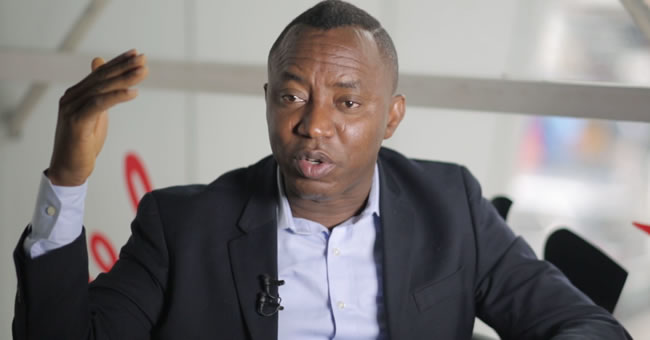
Omoyele Sowore, the African Action Congress (AAC) presidential candidate and activist, has accused the prosecution in his continuing federal case of punishing him rather than following due process.

In an interview with ARISE NEWS, Sowore denied that his accusation against President Bola Tinubu was purely a political viewpoint, claiming that it was founded on facts that he feels can be tested through the court process.
“It is a declaration of fact. And it states that if someone has been involved in drug dealing or trafficking, there is no status of limitation.

“Even if you are president, the NDLEA might still try you when your term ends. We can make that point. And in this case, it is more than that.

“During End SARS, there was an active case in the Federal High Court involving the misappropriation of billions of dollars in taxes—taxes that were supposed to be paid by Alpha Beta and were tied to this president. He never handled the matter.

“After End SARS, we were told that the documents were burned in court to cover it up. And we have several of these,” Sowore explained.

Sowore went on to say that he had begged the authorities to allow the case to go to trial so that he could submit his evidence, but that instead, efforts were made to undermine his defence.

“What I told them was, why don’t you simply calm down? Let us prove this case in court. But just as we were about to prove the case, our counsel began tearing into their only witness—a DSS employee who claimed to have discovered that I made this remark. The judge became agitated.

“He said ‘Stop.'” If you do not stop, come and kneel down here. It has never happened before. I tried to get my primary attorney, Marshal Abubakar, to kneel before a judge because they didn’t want us to deliver our evidence.

“They are interested in convicting, punishing me without conviction,” he claimed.

Sowore claimed that freedom of expression should be maintained by the rule of law and not dictated by those in power. He said that the Cybercrime Act should not be used to suppress critics or criminalize statements regarding public authorities.

His words come as he faces a prosecution over social media posts in which he referred to President Tinubu as a “criminal.”

The case resulted in the revocation of his bail after he failed to appear in court, although he was eventually given new bail under tougher terms.

Sowore also underlined that his advocacy is motivated by a desire for justice rather than political ambition, saying he will continue to speak out against what he considers injustice, regardless of the personal consequences.

2027: Atiku appoints Kenneth Okonkwo spokesperson after ADC VP dispute

0

Former Vice President, Atiku Abubakar has appointed actor-turned-politician and chieftain of the African Democratic Congress, ADC, Kenneth Okonkwo, as his spokesperson.

It followed weeks after the politician publicly criticised the party’s selection of vice-presidential candidate for the 2027 general election.

Okonkwo made the announcement in a statement on his official X handle on Thursday, thanking Atiku for the appointment.

“I give all the glory to God to be appointed by His Excellency Atiku Abubakar as his Spokesperson. “I thank HE AA for the massive trust placed in me,” he wrote.

The former presidential campaign spokesperson of the Labour Party, LP, described the appointment as a reflection of Atiku’s inclusive leadership style, saying the former vice president prefers dialogue and consensus building to hostility towards associates with divergent views.

“Instead of taking offence with any of his associates for expressing genuine reservations of any action taken, HE AA always goes for dialogue and compromise that will engender solution to problems,” Okonkwo stated.

He said that discussions with Atiku and other ADC leaders had dwelt on issues around the political interests of the South-East in spite of what he called constraints created by the Electoral Act, 2026.

“At a dialogue with HE AA and other well-meaning members of the African Democratic Congress, the interests of the South-East have been discussed and guaranteed within the existing challenges posed by the Electoral Act, 2026 and the realities on ground,” he added.

Okonkwo also thanked Kashim Imam, former ADC National Chairman Ralphs Nwosu and Atiku’s Senior Special Assistant on Special Duties, Ekene Onwuka for their roles in strengthening the party ahead of the 2027 elections.

I am grateful to my family, fans and friends for their prayers and support, which God answered by covering my errors and colouring my efforts to pave way for this appointment. “Still I covet your prayers for wisdom, courage, provision and protection to execute this challenging post that will usher in a glorious and great Nigeria,” he said.

The appointment comes on the heels of Okonkwo’s public criticism of the ADC’s selection of its vice-presidential candidate for the 2027 presidential election.

He had warned that reports that the party was considering a candidate from the South-South region for the vice-presidential slot, could further deepen what he described as the continued marginalisation of the South-East in Nigeria’s political structure.

He said such a decision would further deny the South-East the opportunity of producing either the president or vice president, a situation he said had been on since 1999.

FG Slashes Import Tariffs On Rice, Cars And More To Ease Cost Of Living

0

In a major policy shift aimed at easing Nigeria’s worsening cost-of-living crisis, the Federal Government has commenced a wide-scale cut in import duties on essential goods, including food staples, passenger vehicles, mass transit buses, electric vehicles and manufacturing machinery.

The new rates, which came into effect this July, were reported to be contained in the 2026 Fiscal Policy Measures approved by the Minister of Finance and Coordinating Minister of the Economy, Taiwo Oyedele.

The policy is considered to be one of the most significant overhauls of Nigeria’s tariff regime in recent years, with 127 tariff lines targeted with reduced rates across household consumption, transport, manufacturing and industrial activity.

The government’s decision comes at a critical time for the economy as many Nigerians continue to struggle with high food prices, transport costs and weak purchasing power. While inflation had eased from its peak of around 33 per cent in late 2024, concerns have lingered about renewed price pressures.

S&P Global recently raised its 2026 inflation forecast for Nigeria to 16.9 per cent, saying global energy shocks were exerting pressure and had contributed to a sharp rise in petrol prices.

Duty Reduced on Rice, Sugar, Palm Oil
A key part of the new fiscal measures is aimed at food items commonly consumed by Nigerian households.

The revised rates reduced the duty on bulk rice to 47.5 per cent from 70 per cent and broken rice now attracts duty of 30 per cent.

Duties on raw cane sugar have been reduced to a range of 55 to 57.5 per cent and crude palm oil now attracts a duty of 28.75 per cent, down from 35 per cent.

The cuts are intended to reduce the price of staple foods and costs for commercial food producers.

Rice is still a staple in many homes and the cut in duty should ease pressure if the gains are passed on to consumers.

But analysts warned that lower duties alone may not necessarily mean cheaper food, especially with ongoing exchange rate pressures, high fuel prices, logistics costs and port charges.

Relief for Vehicles, EVs, Buses
The new tariff regime also has a major focus on the transport sector.

Duty on passenger vehicles has been cut down from 70 per cent to 40 per cent, a move that is expected to reduce the landed cost of imported cars.

Mass transit buses and electric vehicles were also fully exempted from import duties to lower transport costs and encourage the use of cleaner energy, the government said.

Machinery for manufacturing now attracts zero per cent duty as part of a move to revive industry, reduce production costs and promote investment in local manufacturing.

The policy could assist transport operators who are dependent on imported buses, trucks, minibuses and light commercial vehicles for interstate haulage and urban transport services, stakeholders said.

Many operators are running old fleets, which are expensive to maintain, fuel inefficient and break down frequently. The large number of unserviceable vehicles on Nigerian roads has been blamed on the high cost of vehicle replacement.

Industry players are forecasting that with the reduction in import levies, the landed cost of vehicles will gradually decline. This could enable transport companies and independent operators to renew their fleets at a lower cost.

Potential Impact on Food Prices
It is understood that the policy could also be of advantage to the logistics sector, especially in cases where agricultural produce is transported over long distances by trucks.

Transport costs add a significant amount to the prices of food in Nigerian markets, particularly for staple crops such as sorghum, millet, maize, yam and cassava, which are transported from rural production centres in the North to urban markets in the South.

Stakeholders believe that any savings on haulage costs could eventually be passed on to the final retail prices of food items.

But the effect is likely to be more of a drip than a bang.

Lower vehicle acquisition costs could also improve efficiency in the transport sector by allowing operators to invest in more fuel efficient and reliable vehicles, reduce breakdowns and improve delivery turnaround time.

But these potential gains may be undermined by other structural pressures in the economy.

Crude oil prices have fallen below $73 in the international market, but fuel prices remain above N1,000 per litre. The exchange rate is still fluctuating between N1,400 and N1,500 to the dollar.

These factors mean the reduction in import levies might slow the pace of increases in transport costs, but they will not immediately reduce fares or food prices.

A public commentator, Kehinde Aluko, told the Guardian the policy raised questions about consistency in government economic management.

He said that for years, the Federal Government encouraged local production, especially in agriculture, by using high tariffs to protect Nigerian farmers from cheaper imports.

Aluko warned that a rapid reduction of tariffs on rice and other commodities could damage investor confidence and harm local farmers who had made investment decisions based on protectionist policies.

“The government is not just cutting revenue, it is shifting the tax burden from imports to consumption, he said.

“The government’s strategy is not just about reducing revenues, it’s about a fundamental shift in the tax burden from imports to consumption. We will also be introducing new excise duties on non-alcoholic beverages, alcoholic drinks and tobacco products from July 1, 2026, and a ‘green tax’ surcharge on higher-engine vehicles.

“This means that relief from lower import duties can be offset by higher prices of everyday consumables and luxury items. For the average Nigerian, the near future is a kind of tug of war. “On the one hand, it may become cheaper to buy a car or industrial machinery, but the daily cost of a bottle of soda or a pack of cigarettes will almost certainly go up,” he said.

Aluko, a telecom expert himself, said the real test of the policy would be whether the relief at the ports would outweigh new costs at the checkout counter.

He said the next few months will be a critical test for the economy and the resilience of the Nigerian people as the government changes focus.

Importers fear logjams
Importers, freight forwarders and car dealers said tariff reduction alone may not bring about the desired economic outcome.

Among the major determinants of the final cost of imported goods were the volatility of the exchange rate, multiple port charges, logistics costs, terminal handling fees and delays in cargo clearance, they said.

The argument from them is that the benefits will not be fully achieved by businesses or ordinary Nigerians without dealing with these bottlenecks and tariff cuts.

They noted that tariff adjustments were also implemented on selected products during the tenure of former President Muhammadu Buhari to encourage local production and address economic realities.

The tariff on imported vehicles was reduced from 35 per cent to 10 per cent in 2021.

However, stakeholders said the measure yielded mixed results. While some importers enjoyed lower duties on some items, these gains were largely eaten up by foreign exchange volatility, rising shipping costs, inflation and port related charges.

Thus the expected fall in consumer prices was not entirely realised.

Manager of Client Services at Inspired Cars, Iwayeye Olatunji, said the reduction in import duty on vehicles and spare parts is a welcome development but may not lead to significant reductions in the prices of vehicles.

High exchange rates and other charges related to imports could blunt the new policy, he said.

Olatunji said that previous reduction of duty under the Buhari administration had little impact on the prices of vehicles as only about 10 per cent difference was recorded.

But consumers might not see much price relief because several other costs connected with importing cars are still the same, he said, even though the new tariff looks good on paper.

“Honestly, before, it was mostly on paper. Fine, the duty was reduced but did it really have any direct impact on the market? That’s a different problem. “When the duty is cut, but other supporting fees are still there, the total price doesn’t really change,” he said.

Frank Ogunojemite, the National President of the Africa Association of Professional Freight Forwarders and Logistics of Nigeria, said the policy would not be judged by the announcement but by its practical effect.

He said the key measures would be the impact on the cost of doing business, the prices of imported goods and the overall cost of living.

“The difference is that today tariff reduction alone cannot achieve the desired economic result. The key determinants of the final cost of imported goods remain volatility of exchange rates, multiple port charges, logistics costs, terminal handling charges and delays in cargo clearance. “However, tariff reductions benefits may not be fully felt by businesses or ordinary Nigerians unless these bottlenecks are addressed simultaneously,” he added.

Ogunojemite urged the Federal Government to closely monitor the market responses to ensure that the intended benefits get to consumers and are not swallowed up by inefficiencies in the supply chain.

“Nigerians want to see the benefits beyond policy documents. Lower tariffs should ultimately mean cheaper landing costs, more import activity, better business confidence and cheaper products for consumers,” he said.

Importer sees policy gap.
Clinton Ikechukwu Okoro, importer and Chief Executive Officer of Globe Joy Investment Nigeria Limited, confirmed that the new duty rates have commenced at the ports.

He, however, said the process showed a disconnect between policymakers and operators in the automotive import sector.

The earlier reduction in vehicle duties under the Buhari administration, according to Okoro, did not translate to a significant drop in the prices of vehicles or a boost in imports.

He said vehicle prices have continued to rise sharply, making car ownership increasingly difficult for many Nigerians.

He said that imports of used vehicles have fallen sharply in the last few years despite earlier duty cuts.

Okoro said he was cautiously optimistic the latest policy could encourage vehicle imports if the reductions prove meaningful after a detailed review.

Mixed reactions were received from stakeholders in the automotive sector on the new tariff regime, especially on the importation of vehicles.

Some cautioned that the policy could hurt local vehicle manufacturing, but others argued that it would increase affordability and the availability of vehicles in the market.

The Managing Partner of Transtech Industrial Consulting, Luqman Mamudu, said the tariff difference on passenger vehicles was not sufficient to provide meaningful protection to local manufacturers.

Although effective tariff protection is about 70 per cent, the 40 per cent differential on passenger cars is insufficient to encourage serious investment in vehicle manufacturing, he said.

Mamudu said that Nigeria’s automotive industry still required deliberate protection by the government within the limits allowed under the Economic Community of West African States Common External Tariff.

“The industry requires deliberate protection including full utilization of the Import Adjustment Tax (IAT) window and applicable levies. Those measures can then be phased out gradually as the industry evolves,” he said.

Many foreign vehicle makers get huge government subsidies in their countries, making it difficult for Nigerian assemblers to compete just on tariff protection, he said.

He told the Federal Government to supplement tariff measures with local concessions and incentives to attract global automakers to establish production plants in Nigeria.

“The auto industry has a multiplier effect on the total economic development. “So too much is no support by government,” Mamudu added.

Zero Tax On Commercial Vehicles Slammed
Mamudu also faulted the Federal Government’s decision to impose zero per cent import tariff on commercial vehicles, saying it is too much and could be detrimental to Nigeria’s emerging commercial vehicle assembly industry.

The policy will not much lower car prices, nor help local production, he said.

“Local manufacturers have made strides in increasing local content and commercial vehicle assembly was one of the success stories of the National Automotive Industry Development Plan,” he said.

“Commercial vehicle plants are easier to build and increase local content. “The automotive body building is one area where Nigeria has built a good local capacity over the years,” he said.

Mamudu said that before the 2020 Finance Act, local assemblers only imported engines and carb assemblies as complete parts, while companies like Transit Support and Dangote Industries were beginning to invest in facilities to produce more parts locally.

He said the lowering of import tariffs on commercial vehicles from 35 per cent to 10 per cent in 2020, which was the same as the tariff on fully built imported vehicles, caused the collapse of many assembly plants.

“Nearly every commercial vehicle assembly plant was closed down. “Today, many companies rely on imports, while only a few still import semi-knocked down kits mainly for logistics advantages and to keep their equipment in operation,” he said.

He warned that with tariffs now down to zero, remaining operators may be forced to shut down their assembly facilities altogether.

The National President, Association of Motor Dealers of Nigeria, Prince Ajibola Adedoyin, however, hailed the tariff review, saying it was an improvement.

Adedoyin said the lower tariffs would enhance vehicle availability in the Nigerian market and make vehicles more affordable to consumers.

“It’s an upgrade. “It will make things more accessible and prices more affordable,” he said.

The differing views reflect the difficult balance facing the Federal Government in trying to reduce prices for consumers, ease business costs and protect local production.

For ordinary Nigerians, the next few months will tell whether the tariff cuts will lead to cheaper food, lower transport costs and more affordable vehicles, or whether pressure on the exchange rate, port charges and inflation will eat up the expected gains.