Home Blog

Cashless Policy: FAAN Introduces Multiple Payment Methods at Airports

0

Under the “Operation Go Cashless” initiative, the Federal Airports Authority of Nigeria (FAAN) has implemented four digital payment methods at airport access gates around the country.

According to the authority, the measure is a component of initiatives to do away with cash transactions, enhance operational effectiveness, and support Nigeria’s larger shift to a cashless economy.

FAAN described the authorized payment methods for drivers and airport patrons in a statement posted on its official 𝕏 account on Tuesday.

Four Accepted Channels of Payment
The authority states that the choices are as follows:

“The fastest and most seamless payment option” is how FAAN Go Cashless Card is described.
E-Tag: Designed to facilitate automatic deductions without pausing at gates for frequent users.
VIP Sticker: For vehicles with permissioned access.
ATM/Debit Card via POS: Available on-site, although processing times may differ because of issues with the banking network.
“The following payment options are available to ensure smooth and efficient access,” FAAN said.

The organization also stated that the Go Cashless Card is available to airport patrons at its commercial offices and certain access gates across the country. Additionally, it revealed that card administration and registration are available online via its webpage.

On March 1, 2026, the cashless policy went into force, prohibiting cash payments at all FAAN pay locations, including executive lounges, parking lots, and toll gates.

Murtala Muhammed International Airport and Nnamdi Azikiwe International Airport were among the major hubs where the program, which was started in collaboration with Paystack, was first introduced in September 2025.

According to FAAN, the policy complies with Nigeria’s Central Bank’s directives to increase the use of electronic payments throughout the nation.

Confusion and excessive gridlock at the airports in Lagos and Abuja marred the first day of full implementation, despite the expected benefits.

Some passengers reportedly missed planned flights due to traffic congestion at entrance gates.

When drivers came without prepaid cards, they had to rely on Point of Sale machines, which led to lengthy lines and delayed processing times.

The congestion was made worse by network-related problems that affected point-of-sale transactions, according to some airport patrons.

However, FAAN insisted that the project will eventually improve service delivery.

The authority emphasized that the system is intended to make transactions “faster, safer, and more convenient,” with the potential to increase income by up to 75% through fewer cash handling and increased transparency.

To reduce wait times at entrance gates, FAAN asked frequent travelers to fill their Go Cashless cards ahead of time.

For the time being, travelers at Nigeria’s main airports are acclimating to a new system in which cash is no longer king.

Ex-Deputy Governor Takes Helm of Oyo APC

0

Moses Alake Adeyemo, a former deputy governor of the state, was chosen by members of the All Progressives Congress (APC) Oyo State chapter to serve as the party’s chairman.

At the party’s state congress on Tuesday, the news was made.

Obafemi Awolowo Stadium in Oke Ado, Ibadan, served as the venue for the congress.

Representatives from the Independent National Electoral Commission (INEC) also saw it.

According to our correspondent, Adeyemo was the deputy to Abiola Ajimobi, the state’s most recent governor, who held office from 2011 to 2019.

He is from Oyo State’s Oke Ogun geopolitical zone.

Wasiu Olawale Sadare, who was reinstated as the party’s publicity secretary, is another elected official.

Details will come later.

Enugu–Onitsha Road Upgrade: Umahi Orders Concrete Instead of Asphalt

0

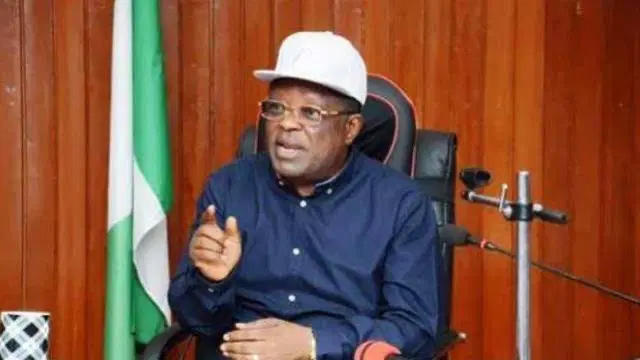
RCC Construction Company, one of the companies managing the completion of the Enugu–Onitsha Expressway in Anambra and Enugu States under the “Road Infrastructure Development and Refurbishment Investment Tax Credit Scheme,” has been instructed by Minister of Works Engineer David Umahi to use concrete going forward to finish the remaining 23 kilometers of the road.

During an inspection tour at the Amansea axis of the road, Umahi gave the order, expressing satisfaction with the quality of work completed thus far by the two contractors. However, he insisted that going forward, all federal roads in the nation must be built with concrete rather than asphalt, arguing that there is no reason to waste money on asphalt since it costs N94,000 to asphalt a square meter of road that may not last up to 15 months, while it costs N92,000 to build a square meter of concrete road that can last up to 100 years.
In order to ensure the road’s durability, the Minister gave the contractor instructions to excavate the flooded sections up to two feet, fill them with lumps of roughly 30 cm, sharp sand, and stone base, and finish the inner and outer portions of the remaining 23 km with laterite and raise them to the level of the existing asphalt.

He continued by saying that the contractor should use pulverization to grind down the current wearing course and binder course, apply 10 cm of stone foundation mixed with 3.5 cm of cement, properly compact it, and lay the remaining 10 cm across the pavement and carriageway using a paver.

Engineer Emeka Oparah, the Federal Comptroller of Works in Anambra State, stated that the road, which has been finished up to the second binder stage, will offer a long-term solution to its previously poor condition. He added that the remaining eight hundred meters of the road from the Amansea axis to the Immigration Junction will be finished by the end of May 2026.

The MTN Nigeria Project Manager, Engineer. Tochukwu Onuora expressed their admiration for the speed and caliber of work completed thus far, thanking the Minister for allocating 104 km of single carriageway out of the 107 km dual carriageway. The project was estimated to cost N202 billion, and Engineer Sachin Thakare, the Project Manager for RCC, stated that they are confident in the road’s durability because it is raised above the current asphalt. (Obileri Ngozi, absradiotelevision)

Electoral Transparency at Risk, Claims Adebayo, Criticizing Tinubu

0

Prince Adewole Adebayo, a former Social Democratic Party (SDP) presidential candidate, has harshly condemned the recent changes to Nigeria’s Electoral Act that President Bola Tinubu signed into law, calling it “a setback for transparency and democratic integrity.”

Adebayo accused the federal government of prioritizing “loopholes over transparency by weakening provisions for the electronic transmission of election results” in a message he issued on his official X (previously Twitter) account, @Pres_Adebayo.

The SDP leader claims that although “electronic transmission has not been completely abolished, the new revisions to the 2022 Electoral Act make it discretionary rather than mandatory — a shift he believes could undermine the credibility of future elections.”

“I was in Abuja and witnessed the anger of the Nigerian people after the government approved revisions to the 2022 Electoral Act,” he continued.

“What ought to have been required real-time broadcasting has been left up to personal preference. That gap is significant.

He contended that making electronic transmission optional essentially reverts the system to manual collation as the standard procedure, raising the possibility of manipulation and undermining public confidence.

The practical default is to manually compile the findings when electronic transmission is not required.

“And trust in the process is damaged when results go through opaque channels,” he stated.

According to the SDP chairman, the signing of the modified law is “a blow against the very essence of Nigerian democracy,” and the administration is purposefully avoiding openness.

“It is unacceptable to remove the required electronic transmission since it makes it simpler to manipulate the results.

He said, “This administration is attacking the very democracy that generations of Nigerians fought so hard to secure.”

He added that the amendments are “a shameless attempt to remain in power” and accused President Tinubu of dishonoring the tradition of Nigeria’s democratic struggle.

Adebayo insisted that rather than eroding technological safeguards in the electoral process, Nigeria should be moving closer to fully computerized voting.

He also noted that Nigerians currently depend on technological systems for communication, banking, and business, and he questioned why the same level of trust shouldn’t extend to vote protection.

“When votes are sent in real time and transparently, a record is created. There is confirmation. He stated, “There is accountability.

Adebayo urged people and communities nationwide to keep calling for openness and justice in the voting process in spite of the new law.

“The law may have changed, but the demand for transparency has not,” he declared, promising to support Nigerians who think their nation “deserves better.”

Political players and civil society organizations have been debating the Electoral Act’s revisions. Critics have warned that the public’s confidence may be impacted by the lowering of electronic transmission regulations before to the general elections in 2027.


Senior Police Officers Seek Continuity, Akande Endorses Fayoade for IGP

0

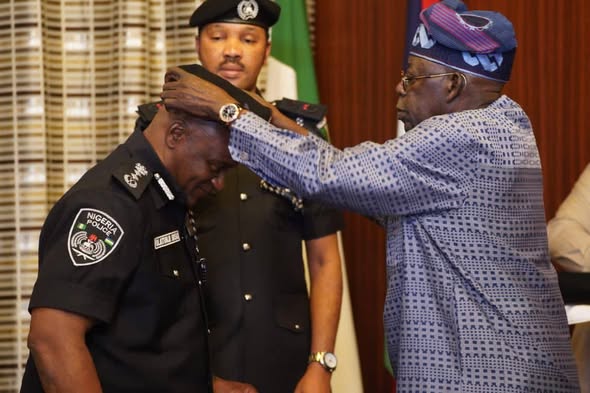
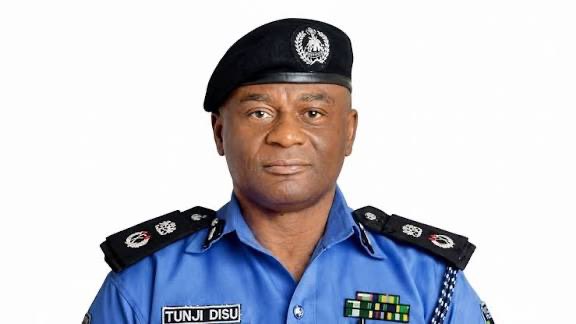
President Bola Ahmed Tinubu is facing increasing pressure on the future of multiple Deputy Inspectors-General of Police (DIGs) due to worries that Olatunji Disu, the recently appointed DIG, does not have a solid management team.

Senior officers in the Nigeria Police Force are lobbying to keep their positions due to strong internal maneuvering caused by uncertainty around the top hierarchy, according to multiple sources within the force.

Just two months before Disu was due to retire at the necessary age of sixty, he received his position.

Disu was elevated to Assistant Inspector-General on March 6, 2025, after being born in Lagos State on April 13, 1966. Prior to being promoted to IGP, he was scheduled to retire on April 13, 2026.

However, regardless of age or years of service, an Inspector-General is entitled to a fixed four-year term under the modified Police Act, which means Disu might hold the position until 2030.

Despite this clause, insiders assert that any extension beyond his original retirement timeframe may be complicated by new institutional and political circumstances.

According to sources who spoke with Sahara Reporters, certain current DIGs are under increasing pressure to stay in their positions, claiming that any significant reorganization would be premature given Disu’s approaching retirement.

The President is allegedly being urged by various stakeholders to restructure the leadership structure so that the next IGP may put together his own reliable management team.

According to a source close to the presidency, “pressure has been building to fire the DIGs because the newly appointed IGP, Disu, has no management team to work with, and the DIGs are building pressure of their own to remain because they claim Disu is retiring soon.”

Allegations of political lobbying over possible succession scenarios complicate the situation.

According to sources, DIG Adegoke Fayoade’s retention is being pushed for by former APC National Chairman Bisi Akande in order to position him to succeed Disu.

“Bisi Akande is especially working to keep DIG Adegoke Fayoade on board in the hopes that he will succeed Disu. Tinubu is still under pressure from him, according to a source.

Insiders claim that Fayoade might be kept and put in charge of the Force Criminal Investigation and Intelligence Department (FCIID) while leadership talks are ongoing, even if a restructure eliminates other DIGs.

Internal divisions within the ruling All Progressives Congress (APC), in particular, are said to have resurfaced as a result of the development.

Following the departure of former IGP Kayode Egbetokun, news surfaced last week that the Presidency had stopped a planned mandatory retirement of roughly thirty DIGs and AIGs.

Several DIGs, including those in charge of Finance, Logistics, ICT, Training, and Research and Planning, were tagged for retirement in order to maintain command hierarchy, according to an internal list that circulated within the Force.

However, President Tinubu stepped in to halt the mass retirement, according to a source close to the presidency.

The insider stated, “The new acting IGP Disu needs their experience, so the Presidency has stopped firing DIGs and AIGs.”

Jonathan and Kwankwaso Joint Ticket Could Rattle APC, Primate Ayodele Warns

0

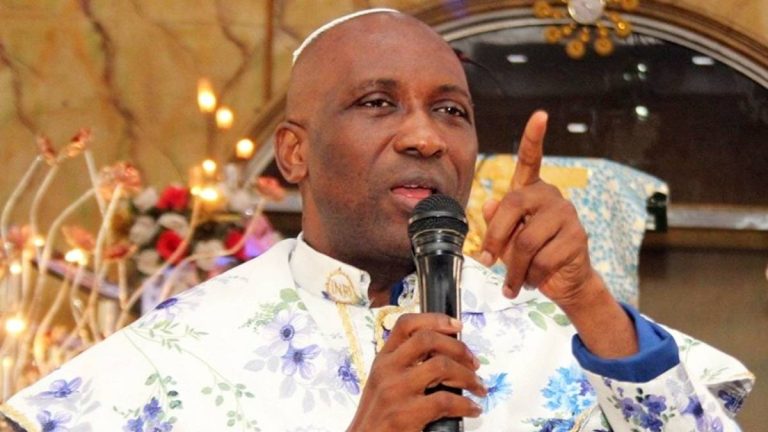
Primate Elijah Ayodele, the leader of the INRI Evangelical Spiritual Church, has forecast that the ruling All Progressives Congress (APC) would be seriously challenged in the upcoming general election by a potential presidential ticket that includes former Kano State governor Rabiu Kwankwaso and former President Goodluck Jonathan.

Ayodele stated that such an alliance will upend the APC and make the election extremely competitive during a recent church service that was posted online.

He claims that “Jonathan and Kwankwaso will be on that ticket, and it’s going to give the APC Tinubu government a very tough time.”

The clergyman suggested that Kwankwaso think about becoming a member of the African Democratic Congress (ADC).

He pointed out that the party might offer a stage for a powerful opposition movement.

He said, “Kwankwaso should go to ADC,” implying that doing so will help assemble a strong presidential team.

The ruling party would not have an easy time winning the next election, Ayodele emphasized.

It won’t be a simple election. He said, “No, it’s not.”

The political environment might change dramatically before people cast their ballots, he continued.

Additionally, he asserted that backing for the proposed alliance could come from abroad.

DSS Arrests Man Over Alleged Assassination Plot Against Peter Obi, Others

0

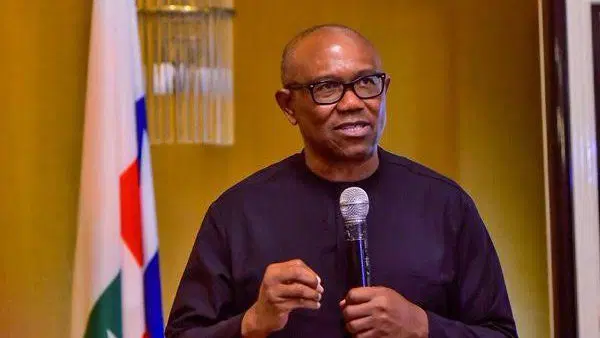
According to reports, Obi and a number of leaders and members of the opposition African Democratic Congress (ADC), as well as former All Progressives Congress (APC) National Chairman John Oyegun, barely avoided death on February 24 when armed men opened fire during a political gathering in Benin.

Later, Udeme Monday Stephen, a netizen, claimed responsibility for the attack and threatened Obi further on his 𝕏 account.

Online, Stephen declared that Obi was fortunate to have escaped in Benin and promised that the former presidential candidate would not have the same luck the next time.

“We cautioned Obi not to enter Edo State, but he confused our determination with the online chatter of his Obidiots. Thank heavens, Obi made it through this one.

“I found out he’s visiting my state, Rivers. My soldiers will take care of that one and they won’t miss the target. “A bastard is destined to die, so speak no peace to him and wish him a long life,” Stephen wrote.

The man has been taken into custody, according to Zagazola Makama, a security and counterinsurgency specialist in the Lake Chad region.

On Monday, Makama announced this via a post on its official X account.

According to the post, a top security source disclosed that DSS agents initiated a clandestine investigation as soon as the threat was made, using forensic equipment to track down and capture the suspect.

The source claims that Stephen teaches at Jessica High School in Eliozu, which is situated in the Obio-Akpor Local Government Area of Rivers State’s Umuehere Community.

The source emphasized, “I firmly believe that the result of the agency’s forensic investigations implicated the suspect.”

“You are aware that the DSS is always aware of its duty to investigate credible intelligence, regardless of tribe or religion, as a responsible security organization tasked with counter-espionage, VIP protection, and other asset protection duties.”

According to Makaka, the source stated, “They quickly deployed operatives, and the man who threatened Peter Obi was caught and is in custody.”

Borno Operation: Military Neutralises ISWAP Fighters, Recovers Arms

0

In intense overnight fighting, troops of Operation HADIN KAI defeated ISWAP terrorists’ coordinated strikes on important military posts in Borno State, killing a number of rebels and seizing heavy weapons and ammunition.

Between the late hours of February 28 and the early hours of March 1, 2026, the Joint Task Force (North East) soldiers repelled attacks on Forward Operating Bases at Mayanti, Gajigana, and Gajiram as part of Operation HADIN KAI.

While soldiers at Gajigana were able to hold their ground and keep complete control of the base, the insurgents suffered significant fatalities in battles at Mayanti and Gajiram, and significant combat equipment was recovered.

On February 28, Mayanti was the target of a massive terrorist strike. While reinforcements battled through ambushes and threats of improvised explosive devices (IEDs) to drive out the invaders, brave soldiers remained steadfast in the face of heavy enemy fire.

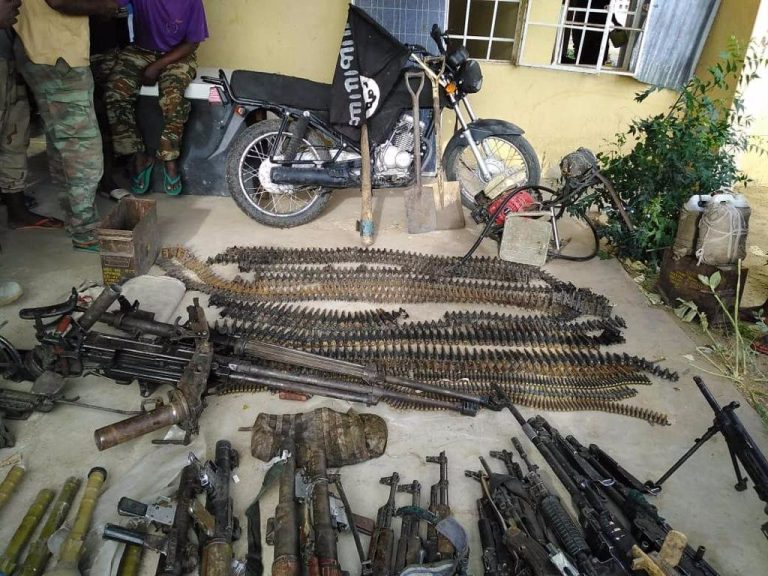
Five terrorist bodies were found by the army following the gunfight, along with a cache of weaponry that included three PKT automatic anti-aircraft guns, two RPG-7 tubes, four AK-47 rifles, two FN rifles, three RPG explosives, and a significant amount of 7.62mm ammo. More terrorists may have fled with gunshot wounds, according to bloodstains along the escape routes.

Nonetheless, the military affirmed that an officer gave his life in the conflict.

The Forward Operating Base in Gajiram was overrun by terrorists armed with PKT rifles, rocket-propelled grenades, and armed drones just hours later on March 1 at around 1:15 a.m. Determined soldiers, backed by air support, put up a fierce fight against the assault.

Three bodies were left behind by the terrorists as they fled in a disorganized manner. Additionally, troops found six fully filled 7.62mm NATO magazines, four AK-47 rifles, five anti-tank bombs, three locally manufactured mortar bombs, one armed drone, barbed wire cutters, specialized ammo, and poisoned arrows that had been left in flight.

A Nigerian Army Aviation chopper promptly transported one injured soldier for more specialized medical care.

At Kayawa Village, forces confronted terrorists who were escaping during associated offensive operations under Sector 2. Three motorcycles, five bicycles, and a tricycle were left behind by the rebels as they ran.

Additionally, troops detained two confessed ISWAP logistical providers and destroyed known life-support facilities used by the terrorists. Additionally found were medications and medical supplies intended to treat injured rebels.

Similar to this, troops neutralized two terrorists during an ambush operation near Bulturam Corner and Dadingel in Gujba Local Government Area. They also found a bicycle, four AK-47 magazines, and two AK-47 weapons.

Lieutenant Colonel Sani Uba, the Media Information Officer for Headquarters Joint Task Force (North East), Operation HADIN KAI, confirmed the development.

“A significant number of terrorists attacked FOB Mayanti on February 28, 2026. While reinforcements battled through ambush and IED threats to defeat the invaders, valiant troops remained steadfast in the face of heavy enemy fire. Five terrorist bodies were confirmed to have been used, and three PKT automatic anti-aircraft weapons, two RPG-7 tubes, four AK-47 rifles, two FN rifles, three RPG bombs, and a significant amount of 7.62mm ammunition were recovered. Blood trails suggested that there may have been more victims.

Similar to this, on March 1, 2026, at around 01:15, terrorists armed with PKT rifles, RPGs, and armed drones attacked FOB Gajiram. However, resolute forces backed by air assets defeated them. Along the withdrawal route, three terrorist bodies, four AK-47 rifles, five anti-tank bombs, three locally manufactured mortar bombs, one armed drone, six fully loaded 7.62mm NATO magazines, barbed wire cutters, specialized ammo, and poisoned arrows left behind in flight were all found.

“Terrorists were forced to flee and abandon a tricycle, three motorcycles, and five bicycles during related offensive actions under Sector 2 at Kayawa Village.” Additionally, troops recovered medications and medical supplies used to treat injured terrorists, detained two confessed ISWAP logistical providers, and demolished identified life-support systems. Additionally, troops neutralized two terrorists during an ambush near Bulturam Corner and Dadingel in Gujba LGA and found two AK-47 rifles, four AK-47 magazines, and other stuff. Every place is still completely under personal control.

He reiterated that soldiers will continue their offensive operations until all terrorist elements in the North-East theater were eliminated.

On Monday, two terrorists were killed and an automatic rifle was found in Benue by troops of Sector 1 of Operation Whirl Stroke (OPWS).

This was verified in a Makurdi announcement by Lt. Ahmad Zubairu, the OPWS Headquarters Makurdi’s acting Media Information Officer.

According to Zubairu, the soldiers accomplished the feat while conducting a combined combat and confidence-boosting patrol along the Katsina-Ala–Zaki Biam Road.

According to the media and information officer, they quickly mobilized to the scene in coordination with Benue State Civil Protection Guard personnel, acting on reliable information provided by the people.

“Troops made touch with the suspected bandits upon reaching the designated site.

Two of the terrorists were neutralized during the ensuing battle, while the rest ran into the nearby jungle, possibly suffering gunshot wounds.

“One AK-47 rifle, one AK-47 magazine, eight rounds of 7.62mm special ammunition, and two green camouflage uniforms abandoned by the fleeing criminals were recovered by the troops after they exploited the area,” he stated.

The OPWS Commander, Maj.-Gen. Moses Gara, was cited by Zubairu as praising the troops’ bravery, professionalism, and prompt response.

In the battle against terrorism and banditry, Gara stated, their proactive approach and dedication to duty continue to produce favorable outcomes.

The commander thanked the locals for their timely and useful intelligence, which was still essential to the operation’s success.

He reassured the locals of the military’s steadfast commitment to protecting people and property and urged them to continue cooperating with security services.
Setting a Strategic Security Agenda for New IGP, Olatunji Disu

0

According to Linus Aleke, Nigerians and security experts have presented a list of strategic initiatives and changes that they think Acting Inspector-General of Police Olatunji Disu should follow in order to improve national security and fortify the Nigeria Police Force.

The Acting Inspector-General of Police, Olatunji Disu, has been presented with a comprehensive reform agenda by Nigerians and security professionals, who have urged him to take decisive action to reposition the Nigeria Police Force for increased efficiency and public trust. The necessity for strong leadership that fosters professionalism, discipline, and responsibility while rebuilding confidence between the police and the communities they serve is at the heart of their recommendations.

The use of intelligence-led policing to replace an excessive reliance on checkpoints and routine patrols is a recurrent theme in their submissions. Stakeholders claim that better intelligence collection and analysis would allow the Force to break up criminal networks across the country and respond more strategically to new threats.

Additionally, they emphasized that the police would be more credible and effective if operational standards were strengthened in accordance with worldwide best practices.

Another top priority was bettering the wellbeing of Force officers and personnel. In order to raise morale and promote greater dedication to duty, contributors emphasized the need for improved working conditions, contemporary equipment, appropriate clothing, and higher compensation. They emphasized that stronger cooperation between the police and local communities is essential to safeguarding lives and property across the country and asked for the full implementation of the Police Act, especially the sections pertaining to community policing and specialized units.

Sule Momodu, a former deputy commander-general of the National Drug Law Enforcement Agency (NDLEA), argued for broad reforms, stating that in order to effectively combat crime, no police division should have fewer than 20 operating cars.

Speaking during a news conference in Abuja, he emphasized the significance of sufficient logistics under each division’s purview. In addition to patrol cars, he suggested using bicycles, motorcycles, and foot patrols to increase security coverage, particularly in remote locations.

In order to reposition the Force, Momodu advised the Acting Inspector-General to give the full implementation of the new Police Act first priority.

He maintained that the Act’s correct application would improve productivity and service provision. He demanded better welfare packages, including enough uniforms and shoes, as well as upgraded radio communication equipment to guarantee smooth information transfer between divisional stations and state command headquarters, in addition to logistics.

Additionally, he insisted that intelligence-led policing should be prioritized above regular “show of force” operations and static roadblocks, which he claimed had little effect. While congratulating Disu on his appointment, Momodu emphasized that concrete reforms would ultimately define his term and expressed confidence in his ability to make the Force a more professional and people-friendly organization.

Momodu called attention to Section 20 of the Police Act, stating that police officers in Nigeria should not be paid less than those in other law enforcement agencies. He also called for the clause to be put into effect right away. Additionally, he suggested activating the Act’s provisions for specialized “spy police” teams to protect properties and VIPs, with the requesting organizations covering the costs of hiring, training, and compensation.

He claimed that this would enable the redeployment of thousands of personnel who had previously been tasked with protecting VIPs, lessen the financial strain on the government, and provide job possibilities.

In order to close policing gaps in marginalized neighborhoods, he also urged the activation of special constable laws. He suggested that the Acting Inspector-General get an executive summary of the Police Act from the Force’s legal department to guarantee thorough implementation of the law. Momodu also called for the establishment of community policing committees at the municipal and state levels, as well as the reactivation of police call centers in state capitals. He stated that improving divisional police stations across the country would improve operational performance and foster favorable working conditions.

Ambassador Ogbole Amedu Ode, a former spokeswoman for the Ministry of Foreign Affairs, also emphasized better welfare, such as better housing and salaries, as a means of raising morale. Additionally, he demanded that operational standards be raised to align with global best practices. He suggested increasing recruiting to reach the widely cited ratio of one police officer to 400 inhabitants so that the police could take entire responsibility for internal security and the military could concentrate on protecting the country’s territorial integrity.

Odita Sunday, a renowned crime reporter and former president of the Crime Reporters Association of Nigeria (CRAN), called on Disu to request a state of emergency for police funds. He maintained that without sufficient Force motivation and equipment, significant transformation would be difficult. He asserts that a typical police command should have at least 500 patrol cars, assisted by drones and helicopters. He also suggested significant emergency financing, sufficient monthly operational allotments for divisional headquarters, and higher constable salaries, cautioning that inadequate compensation weakens professionalism and creates unfavorable incentives.

In order to stop employees from abusing their positions, former FCT Command Commissioner of Police Lawrence Alobi advocated for strong oversight procedures. He advised Disu to concentrate on training, capacity building, and efficient monitoring while praising President Bola Tinubu for selecting a skilled officer. Alobi emphasized that effective supervision allows senior executives to direct subordinates and guarantee seamless operations. Additionally, he argued that the Inspector-General, who is familiar with the capabilities and deployment requirements of his officers, should have complete operational discretion, freeing the police from needless political meddling.

The authors as a whole concurred that repositioning the Nigeria Police Force requires professionalism, better welfare, intelligence-driven operations, and faithful application of the Police Act. They expressed hope that Acting Inspector-General Olatunji Disu’s resolute leadership and persistent reforms would greatly improve internal security and rebuild public trust in the Force.

One Dead, Five Missing After Nigerian Tugboat Sinks Off South Africa Coast

0

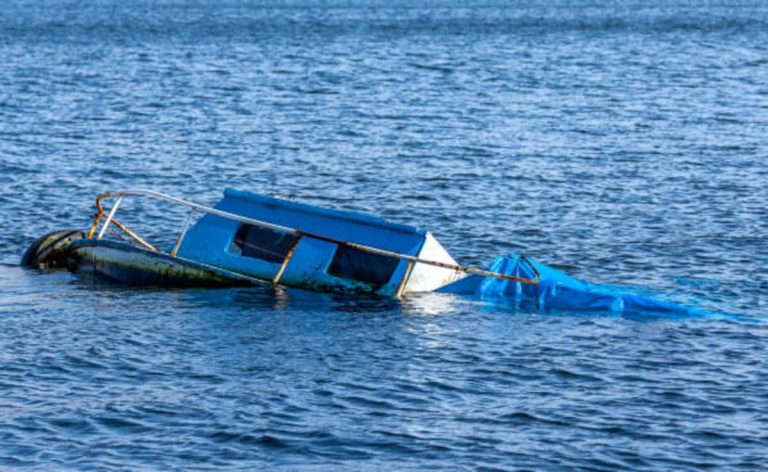
After the Nigerian tugboat LEO sank in South African waters on Saturday night, a Nigerian national has been officially declared deceased.

According to reports, the ship, carrying eighteen passengers, went down after running aground in inclement weather. Search and rescue operations are ongoing, and while 12 crew members were saved, five more are still unaccounted for.

The incident was revealed by the Federal Government in a statement sent to Dr. Magnus Eze, the Minister of State for Foreign Affairs, by the Special Assistant on Communication and New Media.

The statement claims that after the tugboat ran into problems about eighteen nautical miles off the coast between Cape Town and Durban, South African transport authorities notified Nigerian officials. After completing repairs in South Africa, the ship reportedly went aground during a storm while en way to Lagos.

Ambassador Bianca Odumegwu Ojukwu, the Minister of State for Foreign Affairs, said that five people are still missing and that one death has been reported.

She further revealed that survivors are being transported to Port Elizabeth, where officials of the Nigerian High Commission are expected to receive them and provide necessary support.

The Federal Government stated that while attempts to find the missing crew members escalate, it is keeping regular communication with South African authorities. Although extreme weather has been identified as a contributing factor, maritime officials have not yet ascertained the complete circumstances surrounding the tragedy.