Home Blog

North-West Food Bank Initiative Begins As First Lady Calls For State Support

0

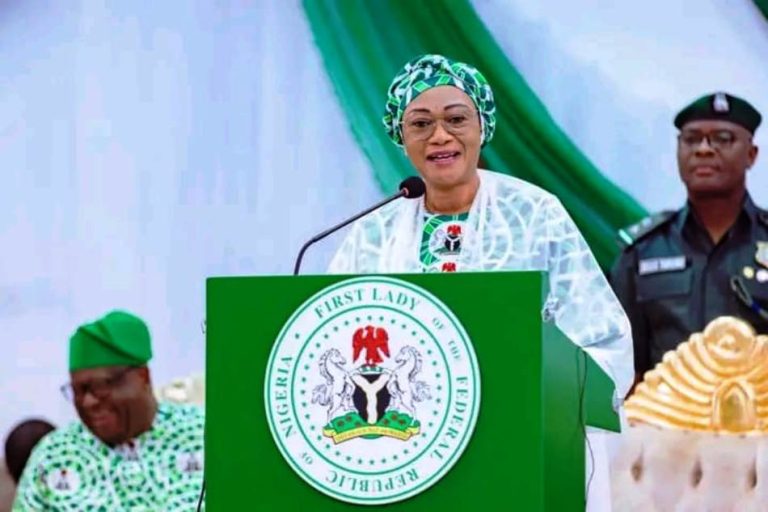
The North-West National Community Food Bank was established in Hadejia, Jigawa State, by Nigeria’s First Lady, Senator Oluremi Tinubu, CON. She has called on state governments around the region to actively support the program as it is implemented countrywide.

The National Community Food Bank Programme is a purposeful and long-term solution to food insecurity and malnutrition among vulnerable households nationwide, according to the First Lady’s remarks during the inauguration.

According to her, the program’s goal is to guarantee that pregnant women, breastfeeding moms, and vulnerable children under the age of six have access to wholesome food.

She claims that the program is in line with President Bola Ahmed Tinubu’s Renewed Hope Agenda, GCFR, especially in terms of enhancing food security, enhancing healthcare results, and creating a more powerful and prosperous Nigeria.

Tinubu clarified that the Office of the First Lady, the Federal Ministry of Health and Social Welfare, the National Primary Health Care Development Agency (NPHCDA), and the Bank of Agriculture have formed a strategic partnership to carry out the initiative.

She noted that the program was initially introduced in Abuja on April 2, 2026, along with its Board of Trustees.
The First Lady also praised the Federal and Jigawa State governments for their investments in healthcare and education, citing the initiatives launched during her visit as proof of their dedication to enhancing the well-being of their constituents.
She expressed hope that the installation of a new dialysis machine at the Hadejia Dialysis Center will offer patients and their families much-needed relief, pointing out that the communities in and surrounding Hadejia have long struggled with an increasing burden of chronic kidney disease.

Additionally, Tinubu emphasized the importance of the Bola Ahmed Tinubu Academy, stating that it demonstrates President Tinubu’s dedication to the advancement of human capital and academic quality.
“We are ensuring a better tomorrow for our children by investing in their education today,” she declared.

In order to guarantee the Community Food Bank Program’s success, she urged people, organizations, institutions, and development partners throughout the North-West geopolitical zone to actively support and take part in it.

The National Community Food Bank Program, according to Jigawa State Governor Umar Namadi, is a timely intervention that upholds the constitutional rights of the government.

duty to protect citizens’ wellbeing by enhancing their access to sufficient food.

According to him, the program enhances the state’s current initiatives to fight hunger, bolster social protection, and enhance the welfare of families at risk.

The governor claims that Jigawa’s State Food and Nutrition Policy and State Social Protection Policy, which offer targeted nutrition support for mothers, children, and disadvantaged households, have already created a robust policy framework.

Namadi went on to say that by providing wholesome food directly to people who are most in need via a coordinated, community-based approach, the Community Food Bank Programme would further enhance these initiatives.

Umeh Claims PMP Is Being Used To Frustrate NDC’s 2027 Election Plans

0

The lawmaker representing the Anambra Central Senatorial District, Victor Umeh, has said that the Peace Movement Party, PMP, was being used to prevent the participation of the Nigeria Democratic Congress, NDC, in the 2027 general elections.

Umeh made the allegation on Monday when he was a guest on Arise Television’s ‘Prime Time’ interview.

The victory-sign logo is a global symbol and does not belong to the PMP, he said.

“PMP is preventing NDC from participating in the 2027 Elelection.

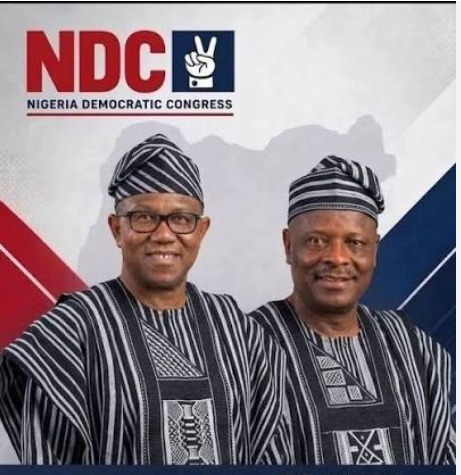
“When Peter Obi, Rabiu Kwankwaso and some of us joined the NDC on May 3, the following day, May 4, an application was filed to set aside the registration of the party, even though the NDC had been registered for about five months.

“The logo does not belong to the PMP as it is not a registered political party. In the registration of a party, a symbol ceases to be a symbol of a party and becomes exclusive to that party once registered with INEC.

“After that, it is legally the property of the registered party and no other political party can use it,” he said.

Recall that a Federal High Court in Lokoja, Kogi State, had set aside its earlier judgment directing the Independent National Electoral Commission, INEC, to register the NDC as a political party.

Political Tension In Ondo APC As Members Demand Review Of Candidates List

0

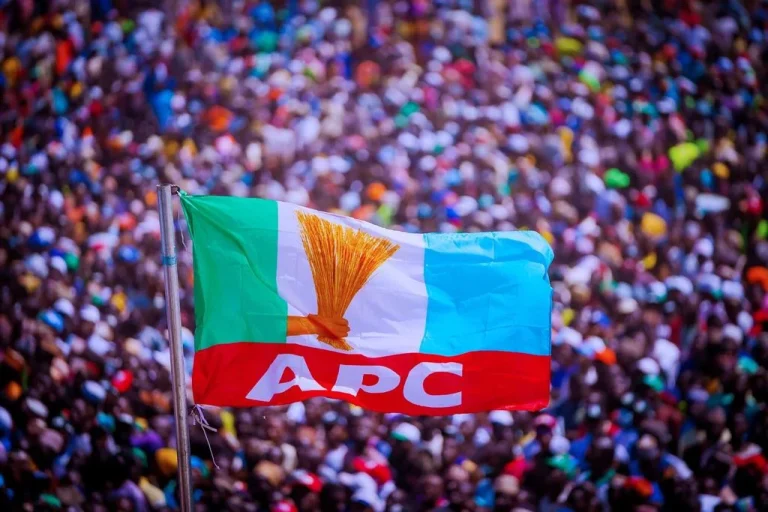
The crisis rocking the Ondo State chapter of the All Progressives Congress (APC), took a fresh turn on Tuesday, as aggrieved party members staged a protest in Akure, the state capital.

Carrying placards with various inscriptions, protesters took to major roads and marched through the state capital to register their grievances, it was reported.

The protest follows the reversal of the results of some Senate and House of Representatives primaries across constituencies in Ondo State by the National Working Committee (NWC) of the APC, which deprived eight candidates of their tickets to accommodate new nominees.

Reports were also received from the Primary Election Appeal Committees of the NWC and a fresh list of candidates approved in accordance with the Electoral Act and the guidelines of the Independent National Electoral Commission (INEC).

But the loyalists of the affected aspirants rejected the adjustments and called for the release of the actual results of the direct primary elections conducted across the state.

Some of the placards read: “Ondo State Is on Fire,” “Ondo State Says No to Abuja Result,” “No to Corner-Corner Appeal,” “We No Go Gree,” and “Let Our Votes Count.”

The Ondo State Commissioner for Women Affairs and Social Development, Mrs Seun Osamaye, speaking on behalf of the protesters, said the list being circulated was fake and did not reflect the outcome of the direct primaries conducted in the 203 wards of the state.

“We, the women of Ondo State who are members of the APC, have come out to express our displeasure with the fake list being circulated. “We believe it is fake because it does not represent the mandate of the people.

“The party members knew the names of those who came out of the direct primaries and wondered why the names on the revised list were different from those voted for during the exercise,” said Osamaye.

She appealed to President Bola Tinubu to intervene, saying she was confident he would do so, in accordance with his promise to uphold fairness, justice and democratic principles.

Also speaking, a youth leader in the party, Bright Ojo, called the revised list a “democratic coup” against APC members in Ondo State.

“This is a protest against a democratic coup in Ondo State. “During the direct primary, the people voted en mass and the results reflected the will and mandate of the people from the field,” he said.

Ojo claimed that the amended list included the names of aspirants who failed the primaries and challenged the role of the party’s national leadership in the changes.

Take The Battle To Their Camps – Ndume Reacts To Borno Kidnap Incident

0

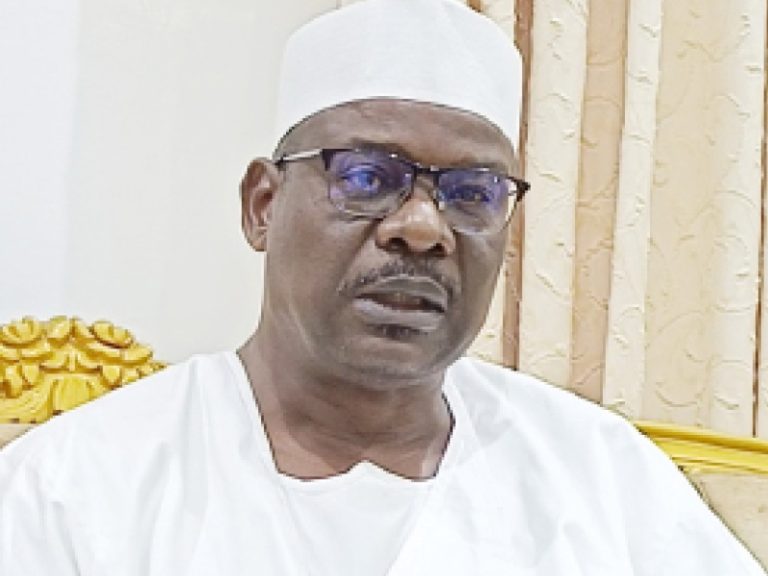
The lawmaker representing Borno South senatorial district, Ali Ndume, has urged the Federal Government to do more to convince Nigerians that it can manage the country’s security situation.

He made the appeal following Monday’s abduction of students sitting for the ongoing National Examinations Council (NECO) examinations in the Lassa, Askira/Uba Local Government Area of Borno State by terrorists.

It was learnt that the terrorists, who stormed the school, disguised themselves as members of the military and the newly created Forest Guard security outfit, and shot sporadically before abducting about 42 students and women selling food items within the school premises.

Reacting to the development, Ndume in a statement, however, called on the federal government to be proactive in its crusade against insurgency and banditry.

He said the federal government, working with the sub-nationals, must do more to convince Nigerians that they were up and doing concerning security emergencies.

“This new kidnapping is disturbing at a time when we do not know the fate of children of Mussa, kidnapped last month,” he said.

“I call on the security forces to intensify efforts for the safe return of the 42 students of Mussa Primary and Junior Secondary School, those kidnapped in Ngoshe, those kidnapped along Buratai-Biu Road and those kidnapped today.

“The way to disabuse the minds of Nigerians that the terrorists are overwhelming the government and security personnel is to take the battle to their hideouts and assure Nigerians that they can conveniently sleep with their two eyes closed.

Ndume commended the efforts of the security agencies on the ground, who pursued and secured the release of some of the victims, for their prompt intervention in confronting the bandits. He urged more synergy among all security agencies to nip further attacks in the bud.

CBN’s Regulatory Reset Explained: Impact On Banks, Customers And Economy

0

For years, Nigeria’s financial system has been under the shadow of regulatory warnings, weak enforcement and recurring compliance failures.

But with the recent wave of sanctions by the Central Bank of Nigeria (CBN), there appears to be a more decisive era, one where penalties are not just corrective measures but instruments capable of reshaping the behaviour, structure and credibility of the banking and financial ecosystem.

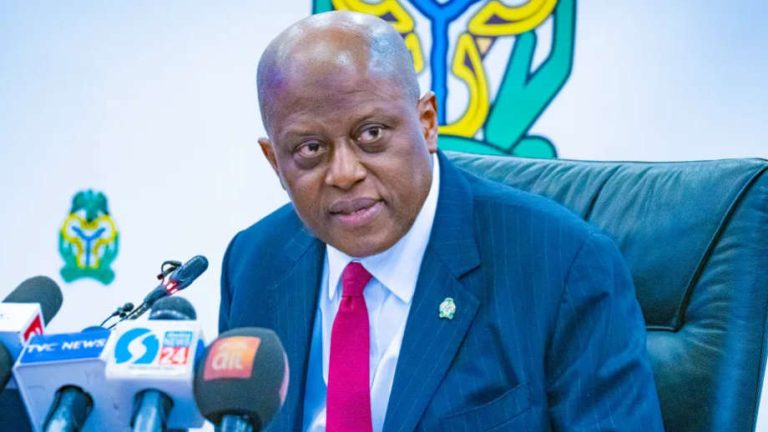
The apex bank, recently, ordered banks to freeze accounts, assets and transactions related to six individuals and four bureau de change (BDC) operators accused of terrorism financing.
The directive issued in a circular dated June 24, 2026 and backed by the June 18 update of the Nigeria Sanctions List, requires regulated institutions to identify and freeze without prior notice all funds, assets and economic resources of the designated persons and entities.

It also applies to companies owned directly or indirectly to the extent of 50 per cent or more by those named, so the sanctions could be broader than the initial list suggests.

For Nigeria’s financial sector, the importance is not in the names on the list but in the compliance posture that the CBN is now demanding.

In practical terms, the move raises the bar for all regulated institutions. Now, in addition to performing standard customer screening, commercial banks, merchant banks, payment service banks and other financial service providers are expected to constantly check accounts against updated sanctions lists, identify aliases, trace beneficial ownership and detect attempts to move funds through third parties or shell structures.

That will certainly give compliance departments a more central role in day-to-day banking decisions. Transaction monitoring systems will need to become more responsive, more integrated with sanctions intelligence and more sharp. In an environment where even indirect control can lead to a freeze, institutions may be more conservative in opening accounts, clearing foreign exchange transactions or dealing with customers with opaque ownership structures.

A compliance officer at a commercial bank might put it like this: the risk is no longer about whether a customer is sanctioned, but whether the customer is connected to a sanctioned network through ownership, control or transactions. That distinction is important because the CBN’s directive makes it clear that institutions can be penalised for failing to identify hidden links.

BDCs in the hot chair

It is especially important to include four bureau de change operators as it brings renewed attention to a segment that has long been vulnerable to abuse. BDCs are legitimate players in Nigeria’s foreign exchange ecosystem, but have also been associated in public debate with weak controls, cash-heavy transactions and exposure to illicit flows.

The apex bank, by naming Generation Currency Bureau De Change Limited, Manhattan Bureau De Change Limited, Nine to Nine Exchange Bureau De Change Limited and Abbal Bako & Sons Bureau De Change Limited, is effectively saying that the informal end of the FX market is not outside the reach of sanctions enforcement. That will likely compel the broader BDC sector to tighten record-keeping, customer identification and transaction screening.

This is where illicit finance cases come in, the first policy response is often to target the channels that make quick, fragmented transfers possible.” A former regulator or anti-money laundering expert would likely see this as part of a broader pattern.

One of such channels in Nigeria are BDCs. The current sanctions, then, serve as a warning to the rest of the industry that lax controls could lead to more oversight or tougher restrictions.

FX market impact

“I think the broader currency market could also be influenced. While targeted, the sanctions can change behaviour across the system by making banks and BDCs more cautious about counterparties, especially in high-risk, cash-intensive or cross-border transactions.

That might boost transparency over time but in the short term it may slow down some deals as institutions get more defensive.

The upshot for legitimate businesses that depend on speedy FX access, especially importers and small traders, could be mixed. On the one hand, tighter controls could lower the risk of dirty money entering the market and increase confidence in formal channels. But tighter screening can mean more paperwork, more delays, and more friction in a market that is already sensitive to policy shifts.

This is why experts may see the sanctions as part of a bigger effort to discipline Nigeria’s FX ecosystem. If the message is sustained it could encourage more reporting discipline and more formalised transactions. But if enforcement is uneven, the market may just adapt around the restrictions, leaving the underlying vulnerabilities intact.

International co-ordination

The sanctions also show how close Nigeria’s implementation is now to international counter-terrorism financing efforts. The Nigeria Sanctions Committee said the designations were made in conjunction with the United States Department of the Treasury’s Office of Foreign Assets Control under Executive Order 13224, as amended, and welcomed the U.S. action against Mukhtar Muhammad and associated companies.

That coordination matters because terrorism financing rarely stays within one jurisdiction. Financial trails are often traced through domestic accounts, cross-border transfers, cash conversion points and informal exchange networks . If Nigeria’s sanctions list aligns with OFAC action, it increases the scope of the freeze orders and narrows the room for sanctioned actors to move to another system and continue operating.
However, there is a claim that this is the point at which the policy becomes more effective because the objective is both denial of access and punishment. Authorities make it more difficult for suspect networks to use international banking lines, trade channels, or money service companies to transfer value by restricting official financial routes and coordinating the reaction with foreign partners.

Regulatory ramifications

The CBN has previously stated that regulated institutions are required to submit reports and adhere strictly to anti-money laundering and counterterrorism funding regulations. A more proactive supervisory approach than many market players are accustomed to is demonstrated by the regulator’s directive to file STRs and disclose information about impacted accounts within 48 hours.

This may result in more frequent regulatory involvement and more invasive surveillance. As the CBN looks for evidence that institutions are following the order rather than just accepting it, off-site assessments, on-site inspections, and penalties compliance checks may become more frequent. This implies that banks will probably have to pay more for non-compliance.

Longer term, this might encourage Nigerian institutions to spend more on staff training, sanctions screening software, and financial intelligence technologies. Additionally, it might strengthen collaboration between the Office of the National Security Adviser, the CBN, the NFIU, the EFCC, and the DSS, especially when financial trails are included in larger security investigations.

The fines have greater importance since they represent a change from reactive enforcement to preventive disruption. Instead of relying solely on criminal prosecution, the authorities are defending themselves through the financial system. Actors who previously depended on opacity now face harsher penalties and quicker identification, which might change incentives throughout the industry.

But there is a test of balance associated with the policy. Nigeria must strengthen regulations without unnecessarily frightening lawful market players or making routine transactions so difficult that consumers turn to unofficial channels. Firm, accurate, and regularly enforced anti-terror financing laws are the most effective.

Expert response

Speaking to Daily Sun, experts applauded the action and noted that it tackles the funding source that keeps extremist organizations afloat.

They claim that because money is required for recruiting, moving, communicating, and purchasing equipment, the general consensus in these situations is that denying a network access to funds can be just as harmful as a kinetic strike.

David Adonri, vice chairman of Highcap Securities’ board of directors and a specialist in economics, praised the top bank for taking a proactive stance against the sanctions list.

“This is a wise focus on BDCs as a means of financing terrorism. These actions target illegitimate flows, which are painful. I hope this is not an isolated incident but rather a part of ongoing push to fix the banking system’s underlying flaws.

Some of these BDCs have a lot of skeletons in their cupboard and their actions are unmonitored. Therefore, it makes likely that the top bank made the initial move, according to Adonri.

However, he claimed that the mechanics of sanctions—rather than the theory—are the challenge.

He continued, “It will depend on how quickly institutions can identify all related accounts, how well they can trace indirect ownership, and whether they have systems strong enough to catch disguised relationships before money moves.”

Chief Business Officer Ayodeji Ebo expressed a similar opinion, stating that if enforcement is continuous, the action could improve Nigeria’s banking system’s trust.

Clear sanctions compliance can bolster anti-money laundering regulations, boost correspondent banking confidence, and demonstrate that the system is intolerant of misuse. However, he clarified, “that only holds true if regulators maintain pressure on institutions and apply the rules consistently.”

The way Nigeria’s financial system deals with illicit finance may change if the current action is followed by ongoing oversight, improved data sharing, and credible consequences for violations.

The system will probably take it in and move on if it becomes a one-time headline. Whether the pressure persists long after the initial news of the sanctions fades will be the true test of success.

Summarization

Therefore, the most recent sanctions from the CBN go beyond a single circular and list of names. They are part of a larger effort to strengthen Nigeria’s financial architecture against misuse, compel institutions to investigate ownership and transaction trails in greater detail, and coordinate domestic enforcement with international counterterrorism initiatives.

In this regard, the decision may have more to do with how the entire financial system acts going forward than it does with who was frozen last week.
Peter Obi’s Name Now On INEC Portal As NDC Announces Date For Kwankwaso’s Upload

0

The Nigeria Democratic Congress (NDC) said it has submitted the name of its presidential candidate, Peter Obi, to the nomination portal of the Independent National Electoral Commission (INEC).

Senator Seriake Dickson, the party’s National Leader, disclosed this in a statement on Monday. He said the NDC had filed an appeal against a recent court ruling and an application for stay of execution.

The statement said the appeal processes had been served on the INEC Chairman and the commission.

“The party said it had been given access to the INEC portal to upload the names of its candidates as in line with the electoral timetable.

The statement added: “Today, the NDC has filed an appeal against the ruling and a stay of execution/injunction served with a covering letter to the INEC chairman and his team to do what is right according to law and what is legally sensible.

“The Nigeria Democratic Congress is here to stay and is a duly registered party in Nigeria which has participated in all the political processes so far and as I said yesterday, nomination processes have already been concluded and in the eyes of the law, candidates have already emerged from the party for all offices across the country in primaries that were observed, monitored and recorded by INEC.

“What is left now is the administrative process of submitting the names to INEC and we have been given access to the portal to upload our qualified candidates.

“My name and that of the Presidential Candidate have been uploaded to the INEC portal, while that of the Vice Presidential Candidate will be done tomorrow after the deposition is completed. The process is also continuing for other candidates.

“As we have religiously adhered to the INEC timetable, we have from now till 11th of next month to upload all National Assembly candidates, while that of governors and State Houses of Assembly will end on July 17. So there is enough time for all the names of the candidates to be submitted to INEC and there is no reason for anyone to panic.

“As National Leader, I must also thank all aspirants and those who showed interest for various offices. As they know, primaries, no matter how well-run, have only one winner. The processes were not perfect but we have tried to resolve these differences in this short period, for a new party dealing with such a high volume of aspirants in a direct primary situation managed by stakeholders in every state and by party leaders.

“Reconciliation processes have started and we expect them to reach everyone, to complement what I and the leadership have continued to do. And we assure them that all those who have expressed interest will be carried along in the party’s campaigns, committees and structures, because they constitute the grassroots strength and the backbone of our party.

“Congratulations to all NDC candidates, members and all lovers of democracy.

“Our multi-party democracy must not perish. Desperados and mercenaries masquerading as political leaders will not destroy our hard-earned democracy.

We appreciate the solidarity, support and prayers of Nigerians.

“We also thank INEC led by Professor Joash Amupitan for their professionalism so far and we expect them to continue on this path and they will have the understanding of us all.

We thank him for his actions in registering the NDC and two other parties as directed by the court but we also note his stance in filing an affidavit in opposition to the suit to deregister some opposition parties and reversing the non recognition of the chairmanship of David Mark of the ADC as directed by the court.

“All leaders must be united to preserve the neutrality of the institutions that protect our democracy and our nation’s integrity, despite the imperfections of our institutions, INEC, the judiciary and security agencies.

“Having filed and served our appeal and the applications that go with it, the ball is now in the court of the judiciary and we expect the judiciary to do what is right under the law.”

Buba Galadima Raises Alarm Over Possible Misuse Of State Police Ahead Of 2027 Elections

0

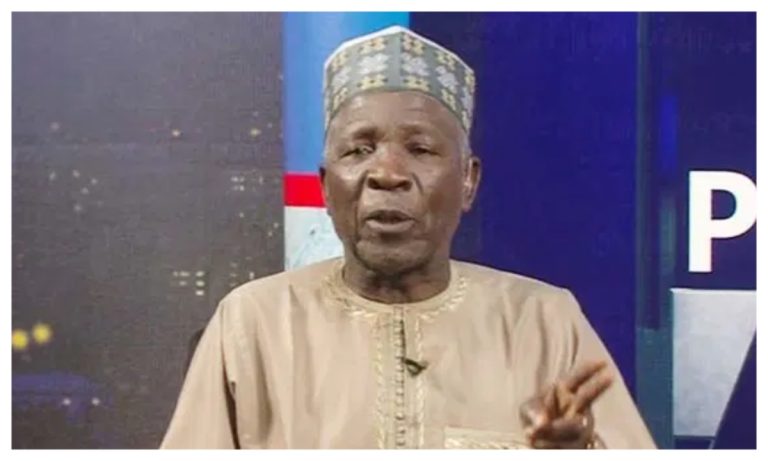
A chieftain of the Nigeria Democratic Congress, NDC, Buba Galadima, on Tuesday accused President Bola Tinubu and state governors of attempting to establish state police to use as a tool of destruction in the 2027 general elections.

Galadima said state police would bring more problems in the country.

Galadima, who featured on Arise Television’s Morning Show, asked how the state police would tackle security challenges if the Nigerian Army and police cannot.

He stated that: “Nobody ever thought of state police to resolve our security challenges. If the Nigerian police and the Nigerian military cannot solve the security situation in the country, I wonder how the state police would be able to do that.

“All we know is that the President and the governors are looking for state police before the election so that they use them as political thugs to attack the opposition, disarm the election and kill democracy.

“I was old enough to see what happened during the native authority police. Three months to election, the native authority police will look up all opposition elements in their territorial jurisdiction and gather them when elections approach. Some of them will say you have abused the emir, judge or you are wearing shoes when your village head was seated on the chair then they would send all of them into detention.

“Most of the Hausa people you see everywhere in Nigeria and Africa are the overflow of the abuse of native authority in Northern Nigeria and that is why they had to run for their dear life and hide somewhere.

“The state police can be used to destroy the unity of this country because there are certain states where only one tribe or religion would constitute the state police such that other people from the other parts of the country would not have liberty to do their business as enshrined by the constitution.

“State police for me would create more problems and divisions.”

Dangote Refinery Receives First UAE Crude Supply As Operations Expand

0

Dangote Petroleum Refinery has bought two cargoes of crude oil from the United Arab Emirates (UAE).

The latest crude import from the UAE is the first-ever procurement of Middle Eastern crude as the plant expands its feedstock sources amid persistent domestic supply constraints from Nigerian National Petroleum Company Limited, NNPCL, S&P Global Commodity Insights reports.

The refinery was designed to mainly process Nigeria’s light sweet crude, but has diversified its crude slate further as operations ramp up optimally.

The refinery has been expanding the slate of crude grades it refines as part of its ambition to become a fully merchant refinery, S&P Global said. It said Nigeria supplied about 70 per cent of the crude imports to the refinery in 2025 and 24 per cent came from the United States.

The NNPCL had guaranteed the supply of between 13 and 15 cargoes of Nigerian crude monthly in naira under an arrangement called the naira-for-crude deal, which helped the refinery to reduce its foreign exchange exposure.

But the deal did not help the mega-refinery’s domestic crude supply.

Earlier this year, Bird said the refinery planned to boost the share of heavier crude grades in its mix of feedstocks. “We want to heavy up the barrel, for sure,” Bird said in April.

It was reported that crude oil prices had eased to less than $70 a barrel last week but started to rise on Monday after the latest strikes by the United States and Iran despite the completion of the peace deal.

Senate And House Of Reps Move Forward With Different State Police Bills

0

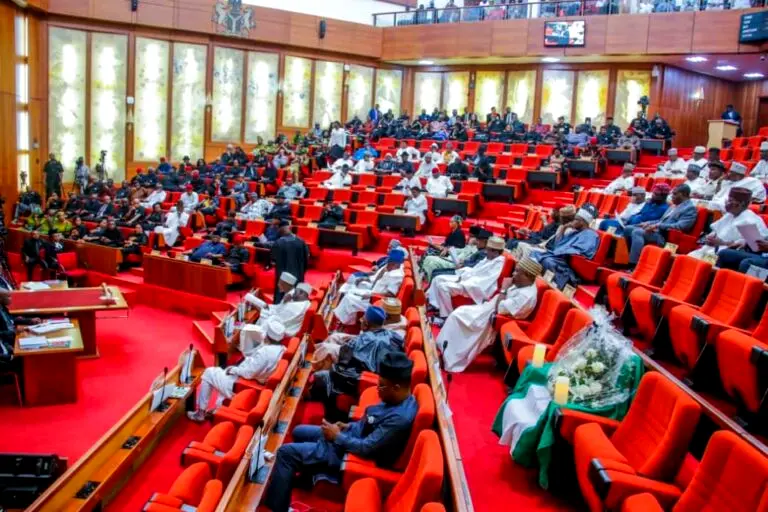
The Senate and the House of Representatives are to commence the harmonisation of the different versions of the Constitution Alteration Bill seeking the establishment of state police before transmitting the legislation to the 36 state Houses of Assembly for approval.

The House of Representatives had on June 10 passed the bill, and the Senate had on June 24 approved the Executive Bill transmitted by President Bola Tinubu.

The amendment to the constitution will have to be passed by not less than two-thirds of the Houses of Assembly of the states before it is referred to the President for assent.

The Senate version of the bill has 26 clauses while the House version has 18. There are significant differences in several constitutional amendments proposed by both chambers.

Comparison of the two versions revealed that the House made limited amendments to Sections 34, 35, 39, 42, 89, 129, 153 and 197 of the Constitution, while the Senate amended Sections 84, 89, 121, 124, 129, 157, 158, 160, 197, 201 and 202.

Both chambers introduced a new Section 214 to replace the existing constitutional provision for the establishment of the Nigeria Police Force. But the Senate added 15 new sub-clauses to the section, compared to seven in the House version.

The two chambers also had different views on the structure of Section 215, which relates to the appointment and control of the police.

The Senate called the provision “Appointment, Command, Direction and Tenure” and called the head of a state police command “Commander” while the House kept the title “Appointment of Inspector-General of Police and Commissioner of Police of a State” and described the head of the state police as “Commissioner of Police.”

Likewise, both chambers replaced Section 216 with brand new provisions but gave different duties.

The Senate titled the section “National Police Standards, Oversight and Accountability,” whereas the House adopted “Removal of Inspector-General of Police and Commissioner of Police of a State.

The Senate version also contains seven transitional provisions for the establishment of state police and substantial amendments to the Second, Third and Fourth Schedules of the Constitution while the House amended only the Second and Third Schedules.

Deputy Speaker of the House of Representatives and Chairman of the House Committee on Constitution Review, Benjamin Kalu, said a conference committee would be constituted after the House resumes from recess on July 7 to harmonise the differences

Akin Rotimi, the House spokesman, also confirmed that the committee would harmonise the two versions before the final document is transmitted to the states.

Kalu said the bill was the result of extensive consultations between the Executive and other stakeholders.

“Actually, it is an Executive Bill right now. We’ve handled it in the House of Representatives, and the Senate has done the same. “Where we are now is that we’re going to have what we call the conference committee because we practise bicameral legislation,” he said.

To him, the Senate and House versions are basically the same, with just some drafting differences.

“There’s nothing fundamental. “But we need to be in tandem for it to be a unified piece of legislation from the National Assembly,” he added.

“I am confident that the harmonisation process will be completed shortly after the lawmakers resume,” Kalu said.

“When we come back from recess on July 7, the House will establish the conference committee. “If there is a need to convene an emergency meeting before then, the leadership of the National Assembly would consider it.”

“When we’re done, we’re going to turn it over to the states the same day. It will be a ceremonial handing over where we invite the Speakers of the state Houses of Assembly and formally hand the bill to them.

“I think the governors have done the groundwork already and it should be back within a week when it gets to them for Mr President’s assent,” he said.

The deputy speaker said the proposal had enjoyed broad national support including from state governors and the Conference of Speakers which has pledged to ensure speedy consideration by state legislatures.

According to Kalu, the proposed legislation has built-in safeguards to prevent abuse of the state police by governors and to ensure compliance with national policing standards.

The National Police Council will set the minimum standards. Any state seeking to establish a police service shall meet such requirements prior to certification.

“States are free to go above those standards, but the minimum benchmark is necessary to ensure professionalism and accountability,” he said.

Meanwhile, the Governor of Lagos State, Babajide Sanwo-Olu said the state was ready to establish its own police service once the bill becomes law. He noted that Lagos would tap from the experience of retired security chiefs to beef up its security architecture.

NDLEA Announces Proposed Changes To Drug Offender Penalties

0

The Federal Government (FG) is planning to change Nigeria’s anti-drug legislation to remove the possibility of fines for convicted drug traffickers, a move the National Drug Law Enforcement Agency (NDLEA) claims will improve the country’s fight against illicit drug trafficking and abuse.

The agency’s Director of Media and Advocacy, Femi Babafemi, stated this during an interview on Channels Television’s Sunrise Daily, where he complimented the judiciary for its cooperation in getting convictions against drug criminals.
Babafemi said the NDLEA enjoys a great working relationship with the courts, noting that the agency records a conviction rate of about 90 per cent, with many of its cases ending without appeals because suspects are often arrested with overwhelming evidence.

“We’ve had a very good relationship with the judiciary because when you look at our conviction rate, it’s almost 90 per cent. In our own instance, you barely find any appeal because we get criminals with the exhibits right there,” he said.

Despite the accomplishment, Babafemi cited the clause permitting convicted drug offenders to pay fines instead of serving prison sentences as a major loophole in the law.

According to him, some offenders utilize the possibility by paying penalties ranging from millions of naira after conviction, so avoiding custodial sentences.
He indicated that the Office of the Attorney General of the Federation and Minister of Justice is already working on an executive draft to alter the law and eliminate the fine option.

“We’re grateful that the Federal Government, through the Office of the Attorney General, is addressing that. An executive bill will shortly be transmitted to the National Assembly to change the legislation so there will be no option of fine,” Babafemi stated.

He stated that after the amendment is passed, convicted drug traffickers would face mandatory prison terms, with sentences estimated to vary from a minimum of 15 years to as much as 25 years, depending on the offence.

Babafemi stated that the heavier penalties would serve as a stronger deterrent, as offenders would not only lose their freedom but also forfeit assets tied to their illicit actions.

“They will know that once they are arrested and convicted, they are going to jail, and they will lose everything. The NDLEA would not close its eyes to their assets. Those assets are forfeited and auctioned to the public,” he said.

The NDLEA official expressed confidence that removing the fine option will solve a critical loophole in the country’s anti-drug enforcement framework and enhance efforts to prevent drug trafficking and misuse nationally.