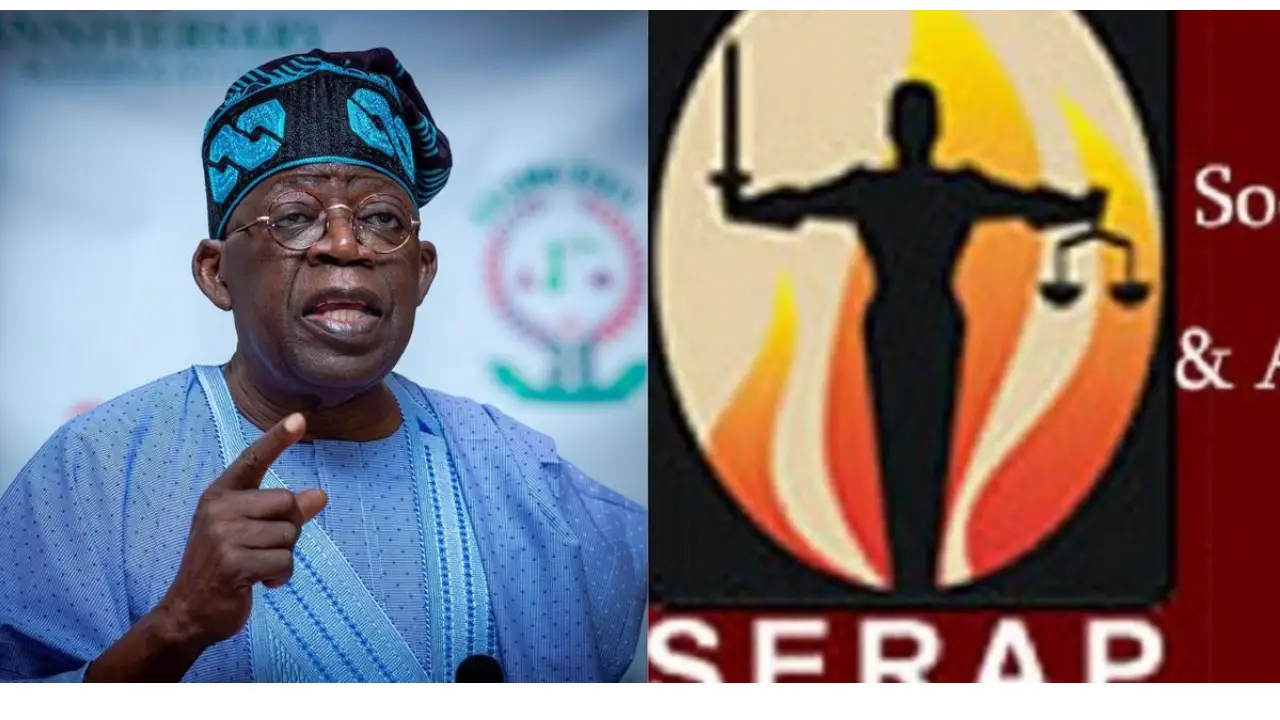
The Socio-Economic Rights and Accountability Project, or SERAP, has urged President Bola Tinubu to direct Bosun Tijani, Minister of Communications, Innovation, and the Digital Economy, to withdraw the Lawful Interception of Communications Regulations, 2019.
The regulations, according to SERAP, are “unconstitutional, unlawful, and entirely inconsistent with Nigeria’s international obligations.”
This was stated in a letter dated February 21, 2026, and signed by SERAP deputy director Kolawole Oluwadare.
The organization stressed the critical need for a transparent legislative process to ensure that any authorized interception framework adheres to constitutional safeguards, judicial scrutiny, and international human rights norms.
The call follows allegations by former Kaduna State Governor Nasir El-Rufai that the National Security Adviser (NSA) Nuhu Ribadu’s phone conversation was intercepted.
El-Rufai reportedly claimed, “The NSA’s call was intercepted.” They do the same with our calls, and we overheard him say, “They should arrest me.”
According to SERAP, the regulations establish “a sweeping mass surveillance regime that violates Nigerians’ constitutionally and internationally guaranteed human rights, including privacy and freedom of expression.”
The organization criticized the regulations for granting “overly broad and vague powers to intercept communications on grounds such as ‘national security,’ ‘economic wellbeing,’ and ‘public emergency,’ without adequate judicial safeguards, independent oversight, transparency, or effective remedies.”
The letter also expressed concern about the forthcoming 2027 general elections, claiming that “broad and weakly safeguarded interception powers create a real risk of abuse during politically sensitive periods.”
It continued: “Surveillance measures that lack strict necessity, proportionality and independent judicial oversight can easily be weaponised against political opponents, journalists, civil society actors and election observers.”
SERAP emphasized the importance of privacy in political processes, stating, “Free and fair elections are dependent on confidential communications, protected journalistic sources, and open democratic debate.”
“Any misuse of intercepted data for intimidation, political advantage or disinformation would fundamentally undermine Nigerians’ right to political participation and electoral integrity.”
The organization advocated for modest, clearly defined interception powers supported by independent judicial authority and adequate remedies, claiming that current legislation “fail all three tests” of legality, need, and proportionality.
SERAP criticized two specific provisions: Regulation 4, which grants “broad discretionary interception power with minimal clarity regarding the scope or limits of such discretion,” and Regulation 23, which allows the Nigerian Communications Commission to designate additional authorities with interception powers, creating “ambiguity and undermines legal certainty.”
The group also criticized provisions that allow interception without a warrant in broad circumstances, the lack of notification to affected individuals, and the requirement to disclose encryption keys, which it said “weakens cybersecurity for everyone and fails to provide safeguards for journalists, lawyers, and human rights defenders.”
SERAP concluded, “While SERAP recognizes the government’s responsibility to address national security and organized crime, such goals must be pursued within constitutional and international human rights limits.” Regulations are neither required nor proportionate in a democratic society.
The organization also sought a response within seven days, warning that failure to comply would force it to take “all appropriate legal actions to ensure the government complies with our request in the public interest.”
Join Television Nigerian Whatsapp Now
Join Television Nigerian Facebook Now
Join Television Nigerian Twitter Now
Join Television Nigerian YouTUbe Now