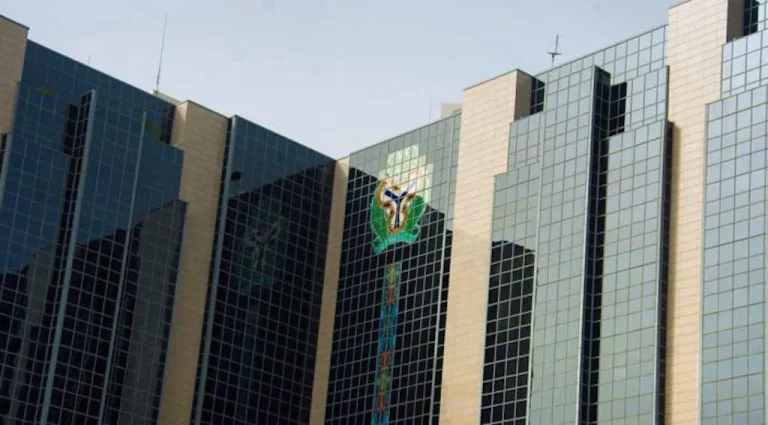
Even if broader liquidity indicators and external buffers are strengthening, Nigeria’s private sector credit landscape is beginning to show symptoms of strain due to the Central Bank of Nigeria’s (CBN) extended tight monetary policy.
A system trapped between macroeconomic stabilization and the pressing need to release growth-supporting credit is shown by recent CBN statistics, laying the groundwork for a potentially significant change in 2026.
The CBN reports that in November 2025, private sector credit extended (PSCE) increased slightly by 0.3 percent month over month to N74.6 trillion.
While the slight increase points to some resilience, the overall picture is less encouraging: PSCE fell by 2% year over year, highlighting the dampening effect of high interest rates and tight liquidity circumstances on borrowing and investment.
The CBN’s aggressive policy approach, which was used to control inflation, stabilize the naira, and rebuild trust in the macroeconomic system, is primarily responsible for this moderation.
The cost of financing has increased due to higher policy rates and stricter liquidity requirements, forcing banks to be more selective when creating credit and causing companies to postpone expansion plans.
A Wide-Ranging Credit System Under Stress
Crucially, the PSCE data includes lending from deposit money banks (DMBs) as well as the whole banking and credit ecosystem in Nigeria. It consists of microfinance banks, non-interest banks, and state-owned development finance institutions like the Bank of India. Nevertheless, DMBs continue to have a strong position, accounting for over 69% of all private sector loans.
On the other hand, a narrower lens presents a somewhat different picture. As of the end of June 2025, total lending by deposit money banks was N58.2 trillion, according to data from the CBN’s Quarterly Statistical Bulletin (QSB) for the second quarter of 2025. This represents a moderate 4 percent gain year over year.
There appears to be a difference of almost N16.5 trillion between this figure and the overall PSCE total.
While timing discrepancies between datasets may account for some of this discrepancy, analysts point out that a sizable amount represents credit provided by non-DMB organizations, such as development banks, microfinance lenders, and other specialized players, whose role has subtly grown as traditional banks exercise caution.
This changing makeup indicates that although the banking system is still liquid, policy restrictions, worries about asset quality, and the need to protect capital in a volatile operating environment have limited risk appetite, particularly among big commercial lenders.
Credit Lags, Liquidity Increases
Ironically, strong expansion in important monetary aggregates is occurring concurrently with the downturn in private sector credit. Both the narrow money supply (M2) and the broad money supply (M3) increased by 13% annually to roughly N122.9 trillion and N123.0 trillion, respectively, indicating sufficient liquidity in the system.
The increase in net foreign assets, which increased by 115% year over year to N37.4 trillion, is even more remarkable.
Due to robust diaspora remittances and robust foreign portfolio inflows after foreign currency market reforms, Nigeria’s external cash situation has significantly improved, as evidenced by this fast expansion.
This tendency is further demonstrated by Nigeria’s external reserves, which increased by $4.6 billion annually to $45.5 billion in full 2025.
The CBN is now better equipped to handle external shocks, support the naira, and keep foreign investors confident thanks to the reserve build-up.
However, transmission to private sector credit has been subdued despite these favorable liquidity signals, which serves as a warning that lending is not guaranteed by liquidity alone. Credit expansion is still largely determined by price stability, risk perception, and policy clarity.
Government Credit Conveys a Different Message
The picture of credit extended to the government is not entirely clear. Lending to the public sector fell precipitously by 33% year over year as a result of initiatives to stop deficit monetization and lessen the crowding-out of private borrowers. However, government credit increased by 6% to N26.4 trillion on a monthly basis, indicating sporadic funding need in the face of budgetary constraints.
Many people view the yearly decrease in government borrowing from the domestic banking system as a beneficial structural change. It makes room for more private sector lending, at least in principle, by reducing competition for bank funds. However, because of current monetary constraint and cautious bank behavior, the gains have not yet fully materialized in practice.
Companies Are Squeezed
The consequences are real for traders, manufacturers, and service providers. High lending rates have limited working capital funding, tightened margins, and postponed capital expenditures, especially for small and medium-sized businesses.
Internal cash flows and alternative financing sources, such as development finance organizations and unofficial credit markets, are becoming more and more important to many businesses.
Economists contend that if macroeconomic stability is maintained, the long-term benefits could be substantial even while the short-term suffering is real.
A healthier credit cycle would eventually result from lower risk premiums, a more stable currency rate, and stronger external buffers.
2026: A Credit Turning Point?
Anticipations for a less restrictive domestic policy environment in 2026 are growing. Improving business conditions and a lower inflation outlook will probably allow the CBN to reassess its position, possibly loosening policy rates and liquidity restrictions.
In particular, deposit money banks, which are anticipated to emerge from the ongoing recapitalization process with stronger balance sheets and increased risk-bearing capacity, could release pent-up demand for credit as a result of this change.
Banks with adequate capital are better able to fund large-scale projects, offer longer-term loans, and increase credit penetration in important economic sectors.
According to analysts, private sector credit growth might significantly resume in 2026, supporting output expansion, job creation, and a wider economic recovery, if monetary easing is carefully timed and anchored on protracted deflation.
Stability and Growth in Balance
In the end, the most recent figures emphasize the challenging balancing act Nigeria’s monetary authorities must perform in order to maintain macroeconomic stability without restricting the credit required to spur growth.
The slowdown in private sector credit serves as a reminder that stabilization has a price, but it also shows that the groundwork for a longer-lasting expansion is being established.
The challenge will be to make sure that Nigeria’s increasing liquidity, improved external position, and higher banks capital transfer into real-economy lending as inflation pressures subside and confidence recovers.
The greatest economy in Africa may start a new, more sustainable loan cycle in 2026 if that transmission mechanism works.