Greetings One of the most difficult aspects of Nigeria’s economic restructuring program is still the power industry. The industry still has significant structural, financial, and governance issues in spite of numerous reform initiatives over the years.
These issues are multifaceted and include transmission bottlenecks, inadequate investment capacity, political economy restrictions, tariff distortions, and a prolonged liquidity crisis throughout the value chain. The sector’s financing gap has grown and subsidy dependence has been solidified as a result of the failure to establish a fully cost-reflective tariff regime, primarily because of social and political sensitivities following recent macroeconomic reforms.
In order to keep the system from collapsing and maintain the supply of electricity, government involvement has become necessary in the near future. However, without deeper structural repairs, increased transparency, and the execution of reforms gradually but credibly, the existing trajectory—which is marked by mounting sector debt at approximately ₦4 trillion—is not financially sustainable.
Background and Situation
Power sector reform has long been seen as essential to Nigeria’s industrial development, social welfare, and economic competitiveness.
However, progress has been uneven and gradual. Because the electricity sector’s value chain—gas supply, generation, transmission, and distribution—is so intertwined that flaws in one part threaten the system as a whole, it poses a different kind of problem than other reform areas.
The reform environment has become more complex due to recent macroeconomic changes, such as the removal of fuel subsidies and the unification of foreign currencies, which have increased cost-of-living pressures and strengthened opposition to tariff modifications in the power sector.
Tariff Reform’s Political Economics
The challenge of creating a truly cost-reflective pricing structure is a significant barrier to power sector reform.
Because of worries about affordability and the social effects of reforms on consumers and businesses, electricity tariffs are still capped.
However, the industry cannot provide enough cash to support operations or draw in new investment without cost-reflective pricing.
Because of the ensuing subsidy burden, the government has been compelled to make financial interventions on a regular basis, thereby shifting inefficiencies and revenue shortfalls onto the public balance sheet.
Therefore, one of the most politically delicate and technically challenging aspects of Nigeria’s current reform agenda is power sector reform.
Problems with Privatization and Structural Weaknesses
In addition to tariff problems, the industry has intrinsic structural flaws, especially since privatization.
Concerns still exist about:
• Some private investors’ financial and technical capacity
• Deficits in due diligence and transparency throughout the privatization process
• Ineffective operations and poor governance, particularly in the TCN and distribution corporations (Discos) These difficulties have restricted revenue collection, lowered service quality, and decreased operators’ capacity to make investments in network upgrades and loss mitigation.
Public Ownership and Transmission Restrictions
The Transmission Company of Nigeria (TCN) is still entirely owned and run by the government. Control of this vital infrastructure by the public sector has been linked to delayed network growth, insufficient investment, and operational inefficiencies.
Transmission continues to be a major bottleneck that limits the use of generation capacity and lowers system reliability. Liquidity and service delivery issues throughout the value chain are made worse by this segment’s flaws.
Grid collapses are less common, nevertheless, because to recent initiatives under the Presidential Power Initiative.
Crisis in Liquidity Throughout the Power Value Chain
The power industry functions as a closely connected chain. One segment’s financial difficulties spread swiftly to others. Presently:
• It is difficult for generating firms (Gencos) to pay gas providers.
• Discos, or distribution corporations, cannot make enough money to fulfill their commitments to Gencos.
• There are governance issues and underinvestment in transmission infrastructure. A systemic liquidity problem has been solidified by these circumstances, threatening sector sustainability and confidence.
Justification for Governmental Financial Involvement
In the short term, government involvement to close the sector’s financing shortfall is now unavoidable due to the scope and immediacy of the situation.
Preventing a failure of the electrical supply system is the goal of recent efforts, such as bond issuances to settle outstanding commitments, especially to gas suppliers and Gencos.
While longer-term reforms are progressively put into place, such interventions are required to keep power available for homes and businesses.
Progressive Reform and New Positive Advancements
There is a compelling justification for gradual and incremental reform, even though a swift shift to complete subsidy elimination may not be politically feasible. Current events show cautious progress, such as:
• The implementation of distinct tariff bands, like Band A
• Greater decentralization, with states taking on more operational and regulatory responsibilities
• The growth of autonomous power initiatives
• Growing use of renewable energy solutions in homes and businesses These patterns imply that the industry is gradually moving toward higher resilience and diversity in spite of present difficulties.
Risks to Debt, Transparency, and Fiscal Sustainability
The finance paradigm in use today is unsustainable. Sector liabilities have increased to around N4 trillion and are still rising. It is imperative to guarantee that all unresolved claims are:
• Correctly confirmed
• Conducted a thorough audit
• Credibly and openly managed
Nigeria’s experience with fuel subsidy programs highlights how susceptible subsidy schemes are to misuse and dishonesty. Therefore, to avoid comparable results in the power industry, strong oversight and accountability measures are crucial.
Policy Consequences and Suggestions
Establish a Clear Plan for Cost-Reflective Tariffs
Adopt a gradual and predictable shift to cost-reflective pricing while providing vulnerable customers with tailored social protection.
Enhance Accountability and Governance
Boost openness in financial settlements, debt verification, and subsidy administration.
Resolve Weaknesses in the Distribution Sector
Set performance standards for discos, such as loss minimization, technology advancements, and recapitalization.
Restructure Transmission Control
To increase productivity and investment, investigate other management or concession structures for TCN.
Encourage Renewables and Decentralization
To ease the strain on the national grid, promote state-level initiatives, independent power projects, and the use of renewable energy.
Reduce Financial Exposure
Financial assistance from the government should be clearly time-bound and connected to quantifiable reform benchmarks.
Summarization
Nigeria’s power sector reform is a gradual, long-term process rather than a short-term solution.
Progress will be slow due to the sector’s complexity, institutional flaws, and political economy limitations.
However, the current trajectory will continue unsustainable unless strong action is taken to address structural inefficiencies, enhance governance, and guarantee fiscal discipline.
Building a financially viable, dependable, and inclusive electricity industry that can support Nigeria’s economic growth and development requires a balanced approach that combines short-term government support with medium-to long-term structural transformation.
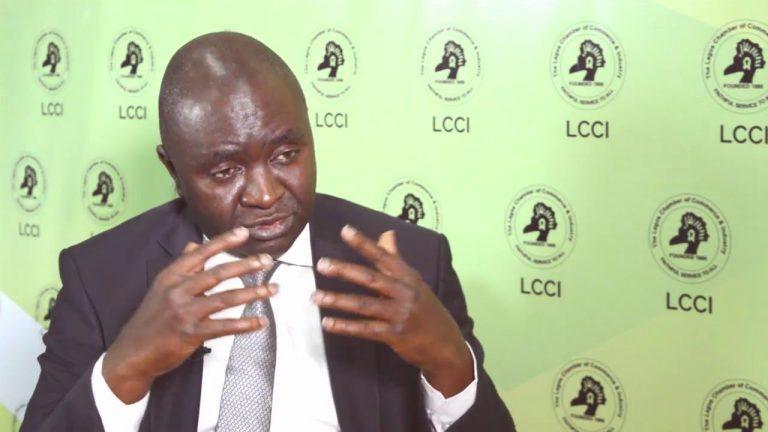
• The CEO of the Centre for the Promotion of Private Enterprise (CPPE) is Dr. Muda Yusuf.