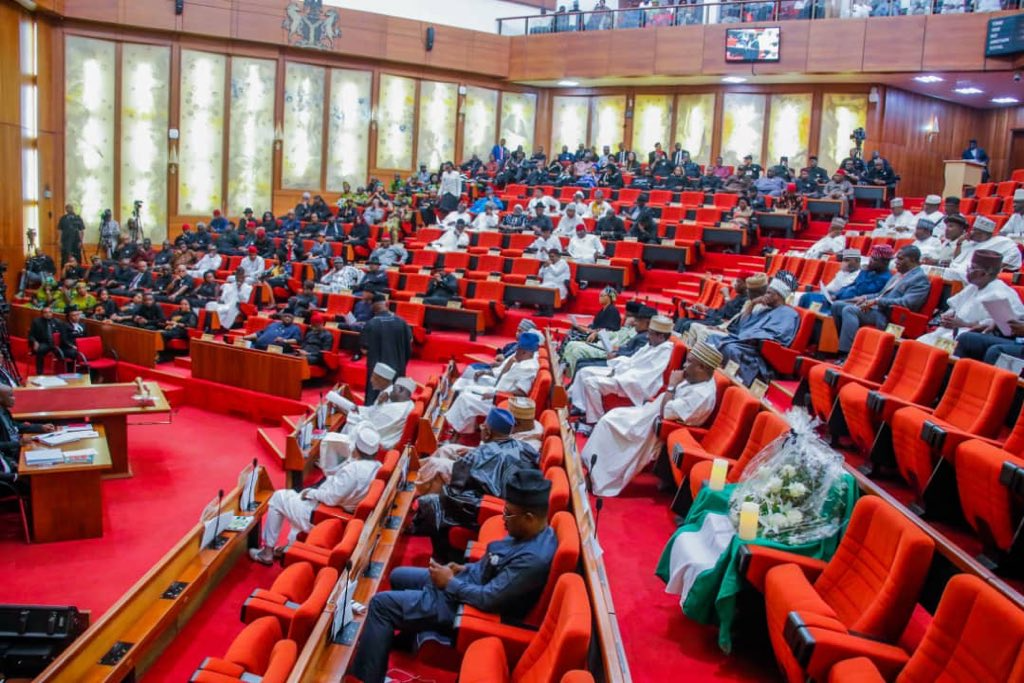
What transpired in one of the National Assembly’s committee chambers last week was more than just a procedural dispute; it was a striking example of how politics, precedent, power, and personality interact to confirm Nigeria’s foreign representatives.
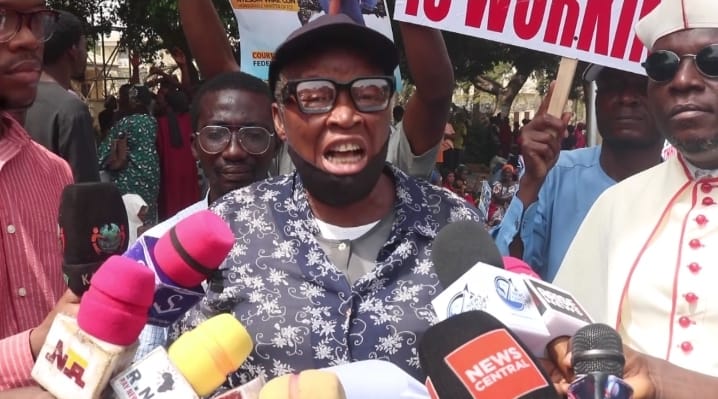
Reno Omokri, a well-known non-career ambassadorial candidate, was at the center of the controversy. Senators Adams Oshiomhole and Ali Ndume got into a furious argument over Omokri’s screening.
Their altercation, which was characterized by high voices and pointed procedural disputes, briefly took over the meeting and brought attention to what is frequently a pointless exercise on a national level.
The competence and readiness of applicants had already come under intense scrutiny a day earlier due to another incident, this time involving a career diplomat who was unable to name all three senators from his home state.
When taken as a whole, these occurrences turned the screenings into a more comprehensive discussion about norms, symbols, and the constitutional role of the Senate in molding Nigeria’s public image.
Beyond the drama, the ambassadorial screening process represents a turning point in Nigeria’s foreign policy. Following months of openings and acting appointments, President Tinubu’s nomination of 65 nominees—34 career and 31 non-career—indicates a desire to reevaluate diplomatic missions.
The list highlights the dual nature of Nigeria’s ambassadorial system—professional diplomacy on the one hand and political representation on the other—by combining seasoned diplomats with political heavyweights, former governors, retired service chiefs, and presidential loyalists.
In this backdrop, a staggered screening procedure was initiated by the Senate Committee on Foreign Affairs, which is presided over by former Niger State governor Senator Mohammed Bello.
The strategy adhered to long-standing legislative custom by gathering nominees and, where appropriate, permitting former lawmakers and high-ranking public officials to bow and leave. However, as events have shown, when personalities clash and political stakes rise, convention itself may easily turn into a contentious area.
The crisis occurred during the screening of a mixed set of applicants, which included Omokri, a well-known public pundit and non-career nominee, along with four career diplomats.
Senator Ndume, who represents Borno South, proposed that the delegation be let to bow and depart, claiming that the committee was already familiar with the career diplomats and that Omokri’s public persona eliminated the need for additional interrogation. Other senators expressed interest in speaking before the motion could be properly seconded, which led the chairman to acknowledge more interventions.
When Senator Oshiomhole was acknowledged to speak and Ndume insisted that no discussion could begin until his motion had been properly seconded, what could have remained a mere procedural diversion took a dramatic turn.
Oshiomhole disagreed, stating that the chairman’s acknowledgment granted him the authority to speak to the committee. The chairman had to continually call for order as the argument swiftly turned into a shouting match that stopped the meeting for about twenty minutes.
In addition to the outcome of a single motion, the chair’s power, the interpretation of Senate rules, and, implicitly, the influence of individual senators in committee discussions were all at risk.
Oshiomhole, who had previously criticized President Tinubu and the ruling party, used his contribution to launch a vigorous defense of Omokri once the situation had somewhat calmed down. He portrayed Omokri as a pragmatist capable of progress and national loyalty. He maintained that the President’s readiness to nominate erstwhile opponents showed inclusivity and political maturity, traits that he claimed should be praised rather than viewed with mistrust.
However, Ndume insisted that a protracted discussion was superfluous because there was no official appeal against Omokri.
In contrast to Oshiomhole’s emphasis on discretion and political judgment, he insisted on protocol, saying that a proposal that was not seconded was dead. Different legislative oversight philosophies—one based only on regulations and the other on political context—were exposed by the conversation.
Many observers saw the altercation as representative of the Nigerian Senate, a body where formalities frequently conceal more serious power battles. Both Ndume and Oshiomhole are seasoned politicians known for their strong personal values and independence. Some members acknowledged in private that their disagreement was more about who controls the tone and tempo of discussions within influential committees than it was about the nominee in issue.
Some contended that the incident demonstrated democracy in action, despite its mess, while others expressed worries about efficiency and decorum. They pointed out that parliamentary scrutiny is rarely a sterile process, particularly when nominees have a lot of political symbolism or baggage.
Wednesday’s screening emphasized concerns about competency, while Thursday’s clash brought attention to political tension. When challenged to list all three of his state’s senators, Emmanuel Adeyemi, a career diplomat from Ekiti State with outstanding academic qualifications and international assignments, faltered. He mentioned Senator Yemi Adaramodu and Senate Leader Opeyemi Bamidele accurately, but he was unable to remember Senator Cyril Fasuyi. When a member of his delegation was observed frantically looking up the missing name online, the situation got worse.
Committee members harshly criticized the oversight. Senator Asuquo Ekpenyong warned that Nigeria’s reputation abroad could not afford such instances of unpreparedness, characterizing the occurrence as a sign of a deeper illness. The worry was shared by Senators Oshiomhole and Seriake Dickson, who emphasized that political knowledge and attention to detail were crucial qualities for diplomats expected to represent the nation’s interests overseas. Despite appeals for forgiveness, the harm had already been done.
The event revealed a contradiction in the screening procedure. In a system where ambassadors are also expected to confidently traverse Nigeria’s internal political terrain, career diplomats’ perceived technical expertise and institutional knowledge may become a liability due to their isolation from domestic political realities.
The ongoing discussion about striking a balance between career and non-career activities lies at the heart of both episodes. Professional diplomacy proponents contend that in a complicated international setting, consistency, protocol proficiency, and training are essential.
In response, proponents of political appointments argue that envoys must also be reliable representatives of the President, able to use their power and access to further political and economic objectives.
An attempt to combine both strategies may be seen in President Tinubu’s selection of nominees.
Political leaders including as former governors Ifeanyi Ugwuanyi and Victor Ikpeazu, retired military commanders Abdulrahman Dambazzau and Ibok-Ete Ibas, and vocal political players like Femi Fani-Kayode and Reno Omokri coexist with seasoned diplomats like Sulu Gambari and Maimuna Ibrahim.
Therefore, the Senate’s responsibility goes beyond individual screening to guarantee that the diplomatic corps’ general makeup is in line with Nigeria’s strategic interests.
The “take a bow and go” custom, which is frequently used, was also scrutinized again. Critics contend that the approach jeopardizes accountability even if it is intended to speed up proceedings for former parliamentarians and high-ranking officials who are already familiar to the Senate. They argue that even symbolic questioning reassures citizens that no nominee is immune from vetting in an era of increased public scrutiny.
Opeyemi Bamidele, the Senate Leader, defended the convention by pointing out that several of the nominees were well-known among their peers and had previously served in the National Assembly. However, the Omokri incident showed that familiarity does not always equate to harmony or peace.
Beyond the spectacle, the screenings serve as a springboard for a major reform of Nigeria’s diplomatic outposts. The nation’s international standing has been undermined by years of underfunding, protracted vacancies, and changing geopolitical conditions.
The Tinubu administration has made it clear that it intends to revitalize diplomacy as a means of promoting diaspora involvement, security collaboration, and economic recovery. A key component of that goal will be the caliber, reliability, and unity of Nigeria’s ambassadors.
Ultimately, the commotion in the Senate chamber was unsettling, somewhat unedifying, but eventually illuminating. It highlighted the conflicts that exist within Nigeria’s democratic institutions between politics and process, loyalty and knowledge, and efficiency and discussion.
For a public that is frequently kept in the dark about the inner workings of legislative oversight, the event provided a unique window into the debate and resolution of decisions that shape Nigeria’s international representation.
It will be difficult to put aside personality conflicts and concentrate solely on content as the Senate works to complete the confirmation process. Nigeria’s ambassadors will soon represent the country overseas, and the process that created them must, in spite of its flaws, demonstrate the gravity and accountability of that duty.
Join Television Nigerian Whatsapp Now
Join Television Nigerian Facebook Now
Join Television Nigerian Twitter Now
Join Television Nigerian YouTUbe Now