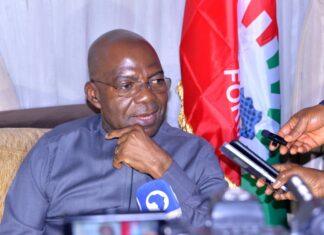
Peter Obi, a former presidential candidate for the Labour Party, has bemoaned the fact that Nigerians are living in abject poverty while politicians are occupied with power struggles.
Obi claimed that Nigeria is regressing while other countries are rescuing millions of people from poverty in a post on his verified X handle on Thursday.
According to Obi, the startling figure of over 62% of Nigerians, or 141 million people, living in poverty shows that over half of the country’s population is in appalling circumstances.
A hard reality faces our country as we politicians fight for jobs and control of party structures, frequently exchanging posts even before elections are over.
The number of Nigerians living in poverty increased from 81 million in 2019 to over 139 million in 2025, according to World Bank data. Between 2023 and 2024, the number of Nigerians living in poverty increased by 14 million, from 115 million to 129 million.
According to projections, this number would rise to approximately 141 million in 2026, which means that between 2023 and 2026, an extra 26 million Nigerians will fall into poverty.
These dire predictions are supported by the Nigeria Economic Outlook 2026 report, “Turning Macroeconomic Stability into Sustainable Growth.” A staggering 141 million people, or 62% of the population, are predicted to live in poverty by 2026.
The paper emphasizes that poor real income growth and continuously high living expenses would continue to worsen poverty despite recent attempts at stabilization.
The majority of Nigerians won’t see enough income growth to offset rising expenses. Sustained high prices resulting from energy, logistics, and exchange-rate volatility will continue to be a hardship even though headline inflation may decline.
Because food accounts for up to 70% of their overall consumption, low-income people are particularly exposed to price shocks and food inflation.
Micro, small, and medium-sized businesses that depend on local customers are under tremendous strain as a result of this growing tide of poverty, which also reduces demand and decreases purchasing power. If we don’t see strong job creation, productivity growth, and efficient social safety measures, a persistent rise in poverty might destroy state finances, deplete human capital, and obstruct economic recovery.
“We are on a very different path than countries like Indonesia and India. From 35–40% in 2000 to an astounding 5.3% now, India has substantially decreased extreme poverty. Due to persistent investments in social safety, health care, and education, poverty in Indonesia has decreased from over 30% in 2000 to about 8%.
In the meantime, poverty in Nigeria has increased from roughly 40% in 2000 to a startling 62% now.
Can we accept that a child born in Nigeria today has one of the highest chances of being born into poverty worldwide? The fact that 141 million Nigerians live in poverty is a clear threat to our future as well as a national failing. It’s time to stop being complacent. Macroeconomic stability, investments in agriculture, food supply, logistics, education, health, productivity, and the creation of large-scale jobs are all structural reforms that are now necessary rather than optional, he said.
Join Television Nigerian Whatsapp Now
Join Television Nigerian Facebook Now
Join Television Nigerian Twitter Now
Join Television Nigerian YouTUbe Now