Home Blog Page 994

Differences between i.e. and e.g.

0

Among all word pairs with confusing meanings and uses, i.e. and e.g. occupy a peculiar position. They are identical especially because they are two-letter abbreviations. They are, however, not to be used interchangeably because their meanings are different.

To start with, i.e. is the abbreviation of the Latin phrase ‘id est’, which means ‘that is’ or ‘in other words.’ On the other hand, e.g., also a Latin expression, refers to  ’exempli gratia’, meaning, ‘for example’. With i.e, we explain, restate or emphasise what has been said but, with e.g,  we cite the examples of a particular element or occurrence. Consider the difference in the following examples:

I need a car, i.e. something good enough to regularly take me from Abuja to Kaduna.

Many politicians were present, e.g. Chief John Nnadi and Alhaji Dauda Gumsu.

In the above clauses, while i.e. gives further information about the desired car in the first sentence, e.g introduces examples of the politicians present, in the second..

Difference in scope

Another major difference between the two terms is that when you use i.e., you somehow re-present the entirety of the original/initial statement.  The element that the i.e. introduces usually restates or reflects the whole of the first expression. When you use e.g., however, you normally only list parts of the examples. There will be others (examples) you cannot exhaustively capture at that moment:

Many social events hold in Lagos by the end of the year, i.e. October to December.

Lagos is the place to be for many dreamers, i.e. many folks desirous of socioeconomic breakthrough.

England played against several other countries during the competition, e.g. Slovakia and Netherlands.

Spain paraded many young players, e.g. Lamine and Williams.

Need for commas and parenthesis

To avoid structural confusion, you should use punctuation marks like commas, brackets and dashes to delineate i.e. and e.g.:

Many countries are participating in the Olympic Games, i.e. those that qualified from their different continents.

Many countries are participating in the Olympic Games, e.g. Nigeria, Ghana, France and Spain.

Many countries are participating in the Olympic Games (i.e. those that qualified from their different countries) as the reported noted.

Many countries are participating in the Olympic Games (e.g. Nigeria, Ghana, France and Spain) as the reporter noted.

Between ‘including’ and ‘e.g.’

The function of ‘including’ is similar to that of ‘e.g.’ in the sense that it also connotes ‘for example’. This, however, further suggests that it is a part of the things you have in mind that is involved when you use ‘including’. That is why some speakers/writer still labour to say ‘including, but not limited to’  when speaking or writing:

    Many countries are participating in the Olympic Games (e.g. Nigeria, Ghana, France and Spain) as the reporter noted.

Many countries are participating in the Olympic Games (including Nigeria, Ghana, France and Spain) as the reported noted.

Dash vs i.e.

The dash can work with i.e. but it can also entirely replace it (i.e.). The reason is that the punctuation mark ntroduces additional information:

I need a good rest — i.e. after the competition.

    I need a good rest — after the competition.

Dangote Group targets $30bn revenue to strengthen naira

0

The President of Dangote Group, Aliko Dangote, has said that his businesses’ $30bn revenue target by the end of 2025 will boost the naira.

Dangote said this on Sunday during a tour of Dangote Petroleum Refinery & Petrochemicals and Dangote Fertiliser Limited by media executives, indicating a plan to attain independence from the Central Bank of Nigeria in foreign exchange sourcing.

Africa’s richest man said that the expected significant inflow of forex into Nigeria through his businesses will automatically boost the value of our local currency and make the naira regain its value in the comity of international currencies worldwide.

The refinery began full operations in 2024, initially focusing on refining intermediate products, such as polypropylene, naphtha, RCO, petrol, diesel, and jet fuel.

He explained that the refinery entered its steady-state production phase in March 2024. Additionally, he anticipated production ramping up to 500,000 barrels per day with 15 crude cargoes per month by August, increasing to 550,000 bpd by the end of the year, and aiming for 650,000 bpd by the first quarter of 2025.

“Petrol production will commence in July with sales from August,” assured Dangote.

He also revealed that the group intends to list Dangote Petroleum Refinery & Petrochemicals and Dangote Fertilizer Limited on the Nigerian Exchange Group in the first quarter of 2025.

He added that this initiative would enable Nigerians to participate in the ownership of these companies.

“Due to the nature of our business with both the refinery and the fertiliser, we are aiming to list them by the end of this year. However, depending on circumstances, worst-case scenario, we anticipate listing them before the end of the first quarter of next year. This will allow us to offer shares for sale and enable Nigerians to participate as shareholders,” Dangote stated.

The Dangote Refinery, which will process 650,000 barrels per day at full capacity, stands as Africa’s largest oil refinery and the world’s largest single-train facility.

Also, Dangote Fertiliser Limited operates Africa’s largest granulated urea fertiliser complex.

Currently, Dangote Cement is Nigeria’s most capitalised company.

While noting that the total storage capacity of the refinery is 4.5 billion litres, sufficient to cover 20 days of Nigeria’s crude requirement and store products equivalent to 15 days of Nigeria’s petrol consumption, he stressed that the refinery would produce 53 million litres of petrol per day and 1.1 million tonnes per day.

He added that the refinery was equipped with dedicated loading gantries featuring 86 loading bays, along with specialised marine facilities for the offloading of crude and the loading of petroleum products.

Additionally, the facility, he said, included a 900-kilotonne per annum polypropylene plant, with production capacities of 36,000 tonnes per annum for sulphur and 585,000 tonnes per annum for carbon black.

The Vice President of Oil and Gas, Dangote Industries Limited, Devakumar Edwin, reiterated the commitment of the company to enhance local capacity in critical sectors of the economy.

He said Dangote Industries Limited had empowered young Nigerians to assume key roles across its operations, with many even becoming expatriates in other nations.

Edwin stressed the refinery’s status as the world’s largest single-train complex constructed entirely by a Nigerian company, highlighting a significant achievement in local engineering and construction capabilities.

Noting that most refineries were built by foreign companies, he said it is a source of pride that a Nigerian company, acting directly as an engineering, procurement, and construction contractor, designed and built the world’s largest single-train refinery complex. He said this has enhanced the capacity of many Nigerians involved in the process and that a Nigerian company can build a refinery anywhere in the world.

“It is a thing of pride that the largest single train refinery in the world is 100 per cent designed, engineered, and constructed by a Nigerian company as an EPC contractor,” he said.

While expressing gratitude to the media executives, the Group Executive Director of Commercial Operations at Dangote Industries Limited, Fatima Dangote, reiterated the company’s dedication to creating a positive impact on the economy.

She commended Dangote’s steadfast commitment to advancing the continent’s development.

“He (Dangote) is committed to ensuring the success of Nigeria and Africa as a nation and a continent. Our focus extends beyond profit to solving problems and achieving self-sufficiency across all sectors in Africa. By meeting global standards, we have positioned ourselves to export our products to every continent in the world,” she said.

Tinubu bows to Ogoni youths’ pressure, reinstates HYREP coordinator

0

President Bola Tinubu, on Monday, reinstated Prof. Nenibarini Zabbey, as the Project Coordinator of the Hydrocarbon Pollution Remediation Project.

This comes after massive protests on Monday by hundreds of youths and various groups from the Ogoni extraction in Rivers State.

The President’s Special Adviser on Media and Publicity, Ajuri Ngelale, announced Zabbey’s reinstatement in a statement on Monday titled ‘President Tinubu reinstates professor Nenibarini Zabbey, as HYREP Coordinator.’

Monday’s development comes two days after Tinubu approved the appointment of Dr Olufemi Adekanmbi, a former Commissioner for Special Duties, Culture and Tourism in Ondo State, as the new Project Coordinator for the Hydrocarbon Pollution Remediation Project.

Explaining the reason for the reversal, the Presidency said Tinubu “reached the decision following a performance review of the HYPREP Project Coordinator and concluded that the Project Coordinator is fit to discharge his functions by the regulations guiding the execution of the Hydrocarbon Pollution Remediation Project.”

Zabbey was first appointed HYPREP Coordinator in May 2023 by former President Muhammadu Buhari, succeeding Dr. Giadom Dumbari.

On Monday, Ogoni youths occupied HYREP located along the Ken Saro-Wiwa Road in Port Harcourt, demanding the reinstatement of Zabbey, an indigene.

The protesters, numbering over 200, rejected Zabbey’s removal, saying they would occupy the office until the President reversed his decision and appoint an Ogoni indigene.

Speaking to newsmen, leader of the protesters and Publicity Secretary of MOSOP, Savior Oscar, said they were there to register their dissatisfaction with the decision of the President.

Oscar stated, “We are here to tell Mr President and the world that the Ogoni have been marginalised and neglected for too long; that the Ogoni people have suffered untold hardship for several decades.

“This project office for the clean-up of Ogoni land is not something we merit from the Federal Government. It was given to us out of the Ogoni struggle. And the money that is being used to run the HYPREP office is not Federal Government’s money; it is Ogoni money.

“So we decide who will be Project Coordinator and it must be an Ogoni son. We, the Ogoni people, have the priority to decide who the Project Coordinator of HYPREP will be.

“President Bola Tinubu addressed Nigerians on June 12, he never never mentioned anything about the Ogoni problem. His predecessor, Muhammadu Buhari, added the Ogoni issue in his New Year address, but President Tinubu has never addressed the Ogoni issue. We reject the removal of our son, Professor Nenibarini Zabbey as the HYPREP PC.”

On his part, National President, National Youths Council of Ogoni People, Barinuazor Emmanuel, said the protest would be sustained until their demands were met.

“We are here to show our solidarity that Ogoni indigene must be the Project Coordinator of HYPREP. We have just heard that the President has reversed his decision. We want to thank him for reinstating Professor Zabbey.

“And we send this as a note of warning that this project is our project. Ogoni people have lost more than two thousand lives and the best lives, Ken Saro-Wiwa and 13 others on this project. And we are telling the federal government that this year’s budget of N380 billion has not been implemented.

“We want peace in Ogoni and we want to use this medium to call on the federal government to release all funds due to HYPREP to enableit do its job effectively.”

Also, the Chairman, HYPREP Host communities, Barigie Goodluck, called on the Federal government to make the remediation process work and reinstate Prof. Zabbey as the HYPREP Coordinator.

He stated, “We have 19 contactors in Bomu in Gokana LGA, which is a community I represent. Professor Nenibarini Zabbey has done what he is supposed to do. We are aware that some contractors that felt they have connections at the federal level are the ones behind all these things.

“We want to say that as Ogoni people, we will not take it, There is no way you will remove a known Professor that knows his job and bring in one Dr that we don’t know where he is coming from. It should not be a political appointment.

“The Ogoni people will not accept this because Professor Zabbey has done well for the Ogoni people and has done well on this project. He has our support. If the federal government doesn’t want to clean our polluted environment, no problem.  But if Professor Zabbey is not reinstated we will not accept any other person.”

Our correspondent reports that while the protest reports of Professor Zabbey’s reinstatement filtered in turning the atmosphere into jubilation as calm returned at the HYPREP office,

Court dismisses suit challenging Akpata’s candidacy

0

The Federal High Court in Benin on Monday dismissed a suit seeking the removal of Olumide Akpata as the Labour Party governorship candidate for the September 21 governorship election in Edo State.

Justice Babatunde Quadri ruled that the court lacked the jurisdiction to entertain the suit filed by Kenneth Imasuagbon, who competed with Akpata for the LP governorship ticket.

The court held that Imasuagbon failed to exhaust the internal dispute resolution mechanisms within the Labour Party before seeking legal action.

The court further said that Imasuagbon’s claim of Akpata not signing the indemnity form is statute-barred.

The court also declared the lawsuit as premature and without substantial evidence to support its claims.

The judge said, “This court lacks jurisdiction to entertain the suit; it lacks merit and is based on speculation. The claimant failed to exhaust the internal dispute resolution of the party before seeking legal action, hence, robbing the court of jurisdiction.

“The claim that Akpata did not sign did not sign the indemnity form is status-barred and therefore the court lacks jurisdiction.”

All rights reserved. This material, and other digital content on this website, may not be reproduced, published, broadcast, rewritten or redistributed in whole or in part without prior express written permission from According.

Contact: [email protected]

INEC okays 134 observers for Edo, Ondo polls

0

The Independent National Electoral Commission has said a total of 134 local and international election observer groups have been accredited to monitor the governorship polls in Edo and Ondo states.

A breakdown by the commission revealed that 124 are domestic, while 10 are international observer groups.

The According reports that Edo and Ondo governorship polls are slated for September 21 and  November 16, respectively.

The commission, in a statement on Monday by its National Commissioner and Chairman, Information and Voter Education Committee, Sam Olumekun disclosed that a total of 153 applications were received from observer groups out of which 134 met the stipulated requirements.

Olumekun added that out of the 134 groups, 28 are gender-based, three represent persons with disability, eight are faith-based, 10 are foreign groups and  100 “are working in areas relevant to the functions of INEC”.

He said, “In continuation of preparations for the 2024 Edo and Ondo State governorship elections, the commission is pleased to provide an update on the accreditation of observers for the elections.

“A total of 153 applications were received from interested organisations. After a review as provided by our regulations and guidelines, 134 groups (124 domestic and 10 international) met the requirements for accreditation.

“The classification of the organisations shows that 28 are gender-based, three represent persons with disability, eight are faith-based, 10 are foreign and over 100 others working in areas relevant to the functions of INEC, most of them with previous experience of election observation.”

Olumekun urged the selected groups to proceed to the next stage of the registration process.

He said, “The next step is for the accredited organisations to upload the personal details and photographs of their field observers to our dedicated portal established for that purpose. To this end, the commission is organising a one-day training for representatives of observer groups on Wednesday 17th July 2024.”

Anambra passengers decry police extortion on roads

0

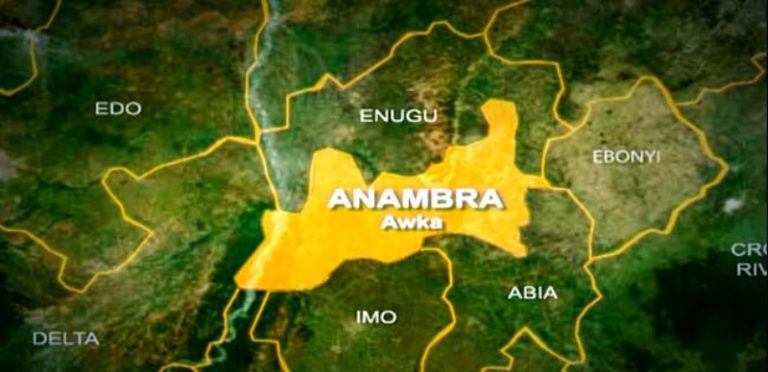
Some tricycle passengers along the Onitsha-Owerri Road in Anambra State have cried out over the incessant harassment and extortion from security operatives mounting roadblocks in the area.

One of the victims, who identified himself as Kingsley Ebuka, who spoke to our correspondent on Monday, made a passionate appeal to the Anambra State Commissioner of Police, Nnaghe Obono Itam, to caution his men against incessant harassment, humiliation and extortion of passengers on major roads in the state.

He alleged that the level of extortion by policemen who mounted roadblocks on the roads, particularly in the commercial city of Onitsha, had become inexplicable and life had become unbearable for the road users.

Briefing journalists at the Human Rights office in Onitsha, on Monday, Ebuka alleged that he boarded a tricycle at Oba in Idemili South Local Government Area of the state on Thursday and was heading to a destination in Onitsha.

He said on getting to a checkpoint opposite the School of Metallurgical Training Institute, on the Onitsha-Owerri Road, some policemen in uniform flagged the tricycle down and after extorting N200 from the operator, ordered some of the passengers to come down.

He said, “On alighting from the tricycle, in obedience to the order, the policemen ordered us to surrender our GSM phones to them for searching. On surrendering the handsets to them, the policemen ordered each of the passengers to transfer as much as N350,000 to a certain POS account or be arrested and handed over to either the Special Anti-Robbery Squad, SARS or Special Anti Cults Squad, SPACS, for prosecution as common criminals.

“Out of fear of being whisked off and probably shot dead along the road and tagged a criminal or an IPOB member, I transferred the sum of N150,000 remaining in my bank account into the designated POS account given to us by the policemen before they handed my phone back to me and went after other passengers.”

Ebuka alleged that these policemen wearing black uniforms stationed themselves with a white Hiace commuter bus immediately after another police roadblock in front of the metallurgical institute.

“The policemen had already detained some other passengers inside the white Hiace bus they were operating with and were threatening to move them to SARS or SPACS for allegedly failing to transfer a reasonable amount of money into the designated POS account.

“Their modus operandi is that when they order the passengers out of a commercial tricycle or bus, they would force the passengers to open their phones and show them their account balance before they seize the phone and order you to transfer the balance of the amount to the designated POS.

“The N150,000 they forced me to transfer to them on Thursday was what was remaining in my account. I am in distress and stranded at the moment. I call on the CP to intervene into this situation and help to fish out these perpetrators giving the police a bad name.

“I have also gone to the human rights office to lodge complaints and possible transmission to the appropriate police authorities for prompt action. I can identify the officers involved if called upon any time to do so.”

Another victim, Uche Chidalu, said, “I was in a Keke going home from Upper Iweka. At the same spot, the police officers flagged down the Keke, and after collecting N200 from the Keke man, ordered the passengers to alight.

“When we alighted, they forced us to open our mobile phones and they went straight to our bank details, but luckily for me, there was no reasonable amount of money in my account, while others were forced to make payment into a designated POS. They detained me and some people inside their vehicle.

“That night, I had to call my brother to transfer money to me which I used in bailing myself. This is an ugly development and we call on the authorities to investigate this properly and allow sanity to prevail on the roads.”

Commenting on the ugly development, the Chairman of Campaign for Democracy, in the South-East Zone, Dede Uzor, who was also at the human rights office, told journalists that he was once a victim of such extortion, but said he used his influence to resist the policemen until a crowd started gathering and wanted to attack them before they fled.

Uzor said, “The policemen started mentioning one police formation to the other where they would take me if I did not transfer a certain huge amount of money to their designated POS account but I told them that I was ready to follow them to wherever they wanted to take me to.

“As we were arguing on that, a mammoth crowd gathered and captured one of them, while others fled but I pleaded with the crowd to let the captured one go and they obeyed me and let him go with a minor beating but without inflicting any bodily harm or injury on him.”

The Director at the Human Rights Office, Onitsha, Chief Gilbert Ikem, said the complaints would be transmitted to the appropriate authorities for investigation while advising residents to devise a means of hiding their bank details on their telephones to beat the new tactics of the extortions.

The state police spokesman, SP Tochukwu Ikenga, when contacted on the development, called on the victims to come forward with their complaints and evidence to enable the police to begin investigation.

“Let the victims come forward with their complaints and evidence so that the police can begin an investigation on the matter,” he said.

Never knew I would live to be 90 – Soyinka

0

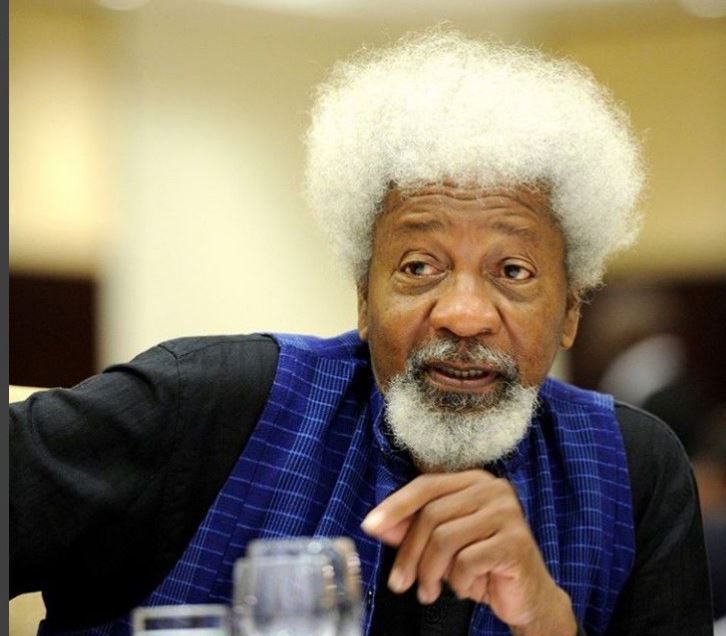
The Nobel Laureate, Prof. Wole Soyinka, on Monday, said he never knew he would live to be 90.

Soyinka revealed this while answering questions from about 383 students who participated in the 2024 edition of the Wole Soyinka International Cultural Exchange Programme held at Prof. Soyinka’s ARI residence, Ijegba, Abeokuta.

This was as the Governor of Ogun State, Dapo Abiodun,  announced scholarships and gifts of laptops to nine students who emerged best in an essay competition organised to mark Soyinka’s 90th birthday.

Born on July 13, 1934, the Nobel Laureate clocked 90 on Saturday.

While answering questions from children on his life experiences for the past 90 years, Soyinka said he did not envisage living up to 90, adding that he decided to be a writer to correct some anomalies from stories he listened to while growing up.

On why he broke into a radio station during the military era, he said: “I never broke into a radio station, but sneaked in. The radio station was holding on to something that belonged to the people, and I decided to retrieve it. If that item had been played, it would have demoralised the people and established the culture of brutality.”

He chided Nigerians for always criticising the state but unwilling to examine themselves.

Soyinka said crimes like kidnapping and robbery, among others, could not be blamed on poverty or inequality, but on selfishness and the desire to live a life of luxury.

He lauded Governor Abiodun for helping to develop the environment around his abode and saving it from degradation, even as he emphasised that this has led to his not abandoning the country.

Speaking during the programme, Abiodun emphasised that the gifts of scholarships and laptops were to encourage the students to keep writing as well as motivate others to participate in the next edition of the competition.

Describing the Noble Laureate as the most celebrated black African, who had excelled in his chosen career, the governor noted that as the key to bringing about change and prosperity in Nigeria and around the world, it was imperative to engage the youth and ensure that their thinking and goals were oriented toward progress for the motherland and humanity.

He said the Wole Soyinka International Cultural Exchange was established to honour the playwright’s legacy and reflect on his lifelong commitment to education, cultural exchange, and nurturing future leaders.

He added that the initiative underscored Soyinka’s values, which include justice, freedom, and the pursuit of excellence in the arts and humanities.

Abiodun said this year’s theme, “Engaging National Interest on Good Governance, Understanding Nation-Building,” perfectly encapsulated  Soyinka’s profound commitment to creating a just and equitable world.

The Wole Soyinka International Cultural Exchange focuses on essay competition,  advocacy, and performing arts, which include poetry, drama, and Spoken Word.

The governor said: “We celebrate a project that, for over 14 years, has upheld his ideals and vision. There is no doubt that the Nobel Laureate has optimally utilised the inherent values and wisdom of African culture and tradition in his global engagement as a world citizen of African descent.

“The mission and underlying objectives of WSICE are clear and commendable. They seek to create unity among mankind regardless of nationality, culture, or religion by focusing on youth as the future of humanity, in line with the thoughts and guiding principles of Professor Wole Soyinka.”

The 2024 Wole Soyinka International Cultural Exchange Programme drew students from different parts of the country who participated in an essay competition on national and international topics.

About 383 students participated in the competition, 90 were chosen, while nine were selected with Alabi Oluwanifemi emerging as the best essayist, Okoye Collins John came second, while Adebusi Adeoluwa, came third.

2018 Offa bank robbery suspects learn fate Aug 2

0

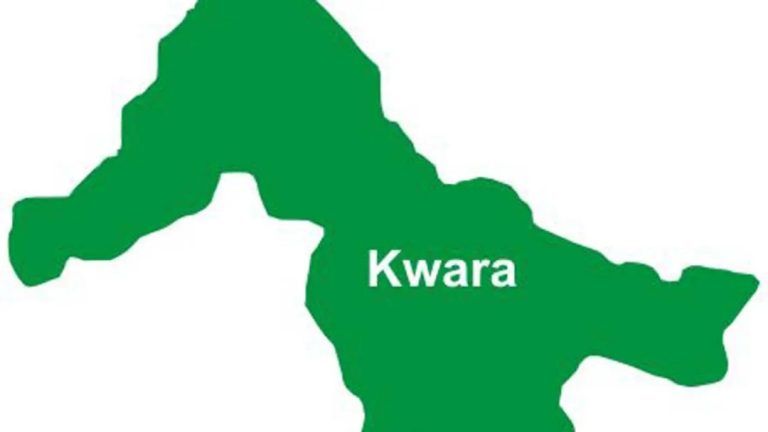
A Kwara State High Court in Ilorin, on Monday, fixed August 2 to deliver judgment in the case of six suspects standing trial for the bloody 2018 bank robbery in Offa.

Justice Haleema Salman fixed the date after the prosecution counsel, Rotimi Jacobs (SAN), and the defence counsel, Mathias Emeribe, adopted their final written addresses and canvassed final arguments in the six-year-long trial.

The bloody robbery, which happened on April 5, 2018 in the ancient town of Offa, Offa Local Government Area of  Kwara State, led to the death of about 33 persons, including nine policemen.

The bank robbers reportedly made away with an undisclosed large sum of money from the attacked commercial banks.

The defendants on trial are a policeman, Michael Adikwu (who later died in police custody), Ayoade Akinnibosun, Azeez Salahudeen, Niyi Ogundiran, Ibikunle Ogunleye and Adeola Abraham.

They are facing charges bordering on criminal conspiracy to rob banks, murder of nine policemen and other citizens, and illegal possession of firearms.

The defendants were arraigned on November 11, 2018 and pleaded not guilty, following which the trial opened.

All rights reserved. This material, and other digital content on this website, may not be reproduced, published, broadcast, rewritten or redistributed in whole or in part without prior express written permission from According.

Contact: [email protected]

FG sends 740 rice trucks to states

0

The Federal Government said, on Monday, that it had dispatched 20 trucks of rice to each of the 36 states and the Federal Capital Territory, Abuja.

The recent move is part of measures to douse the food crisis and the economic burden of Nigerians.

The Minister of Information and National Orientation, Mohammed Idris, disclosed this to State House correspondents at the end of the Federal Executive Council meeting presided over by President Bola Tinubu at the Aso Rock Villa, Abuja, on Monday.

Idris, who appealed to state governors to ensure equitable distribution of the rice to those who need it the most, said each state and the FCT had received 20 trucks containing 1,200 bags of 25kg of rice.

The minister, who sat alongside the President’s Special Adviser on Information and Strategy, Bayo Onanuga, said Tinubu directed the Minister of Agriculture to ensure that Nigerians get the rice supply.

He said,“The council deliberated on the state of affairs in Nigeria, especially the issue of food supply and shortage of food on the tables of many Nigerians.

“After exhaustive deliberations, the Minister of Agriculture had earlier been directed to ensure that food is being made available to Nigerians, and the understanding is that about 20 trucks of rice have already been supplied to each of the states of the federation, including the Federal Capital Territory. Each truck carries about 1,200 bags of 25kg of rice.

“This is part of the measures that government is taking, in addition to so many others, to ensure that the hardship being experienced by Nigerians is drastically ameliorated.

“Therefore, each state government has received 20 trucks of rice for onward distribution to the most vulnerable.  This is a first step and the Federal Government will continue to support all the sub-nationals so that the hardship being experienced by most Nigerians, in terms of shortage of food supply, is breached.

“It is expected that the state governors will go ahead to distribute this food item to the most vulnerable so that the hardship, as I said, being experienced will be brought down significantly,” the minister added.

The council also called for the expedited rollout of Compressed Natural Gas-powered vehicles.

“The Federal Executive Council has directed the presidential committee on CNG to expedite its activities to supply buses, also to make it possible for the conversion kits to be available to most Nigerians.

“They have already started, but the Federal Executive Council asked them to redouble their effort so that conversion kits that we need for the CNG to populate with are made available.

“Also, the conversion centres that had earlier been approved will also be significantly upgraded so that Nigerians will have more conversion centres, more conversion kits,” he said.

The FG also called for increased compliance with the CNG initiative “to reduce our over-reliance on PMS and this will in turn also aid our energy transition from fossil fuel to renewable energy.”

Judiciary independence will be sustained, says CJN

0

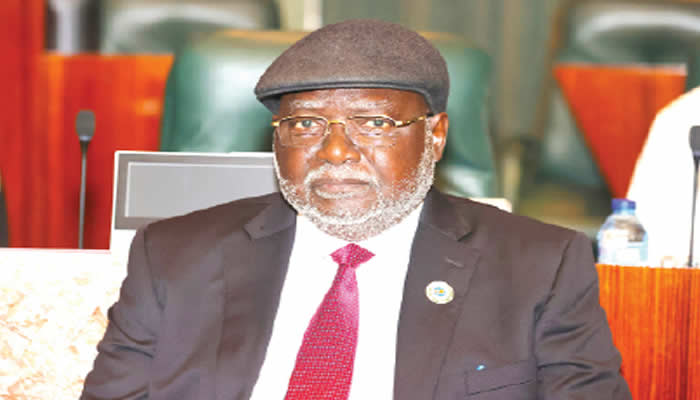
The Chief Justice of Nigeria, Justice Olukayode Ariwoola, has said the judiciary will not relent in the efforts to continue to assert its independence and be an impartial arbiter.

This was as he harped on the need for judge to continue to build capacity to be able to live up to the societal expection in the discharge of their duties.

The CJN spoke at a workshop with the theme: “Judicial independence and judge craft,” organised by the National Judicial Institute in collaboration with the Forum Against Counterfeiting, in Abuja.

He said despite significant progress made in attaining judicial independence, more still needed to be done.

“Ongoing and sustained effort are still required to address the challenges faced. We will not relent in seeking better options and actions that will ensure that the Nigerian judiciary remains a strong, impartial and independent arbiter of justice and the rule of law,” Justice Ariwoola said.

The CJN added that judges must boost their capacities as way of restoring confidence in the judiciary.

He said, “The act and science of judging requires deep and contextual understanding of the law, commitment to do justice and the innate ability to apply legal principles to complex and often vexatious issues without fear of favor.

“I must also reiterate that the substantive requirements of judicial independence, judge craft and the art of judging are built around public expectations for judges to decide matters before them fairly impartially and on the basis of facts.

“Such decisions must go in accordance with the law, without restrictions, improper influences, inducements, pressures, threats or interference, directly or indirectly, from any quarter of for any reason.”

Global Chairman of FAC, Dr Anthony Idigbe (SAN), spoke on the use of technology in case management to achieve efficiency.

He referred to Grudin’s Law, which suggests that when those who benefit from a technology are not those who do the work, the technology is likely to fail or be subverted.

According to him, digital transformation is not about technology but people and processes.

He gave tips as to how the people issues in digital transformation in the judiciary can be resolved.

Idigbe, Senior Partner at Punuka Attorneys and Solicitors, said FAC was focused on promoting the rule of law generally but with a particular focus on anticounterfeiting.

NJI Administrator, Justice Salisu Abdullahi, described the pursuit of justice as the cornerstone of any thriving democracy.

He said, “It is essential that our judicial system operates with utmost efficiency and effectiveness to uphold the principles upon which our nation was founded.

“In this light, concerted efforts must be made towards the timely resolution of cases, the streamlining of legal procedure and the elimination of unnecessary delays.

“It is imperative that we ensure that justice is not only done but is done in a manner that respects the rights and needs of all parties involved as swift justice instills confidence in our legal system.

“The theme of this workshop could not have come at a better time than now as it is designed to afford the justices and judges the opportunity to appraise the judicial system and consequently suggest conventions for improvement.

“As society evolves, we must continue to be dynamic and pragmatic in order to adequately address the conflicts that will inevitably arise, bearing in mind that the only constant thing in life is change.

“In order achieve efficiency and effectiveness, we must in invest in technology, case management, continuing judicial education and access to justice, among others.”

Retired Justice of the Supreme Court, Amina Augie, noted that the power of the judiciary lies in the confidence the people have in its activities and decisions, which every judge must protect.

“We need to be able to show that justice is not only done, it is seen to be done, and that in the judgment you write, in whatever you are doing, they are able to see and trust that you are doing the right thing, and that you are deciding fairly,” she said.

She added that it is the process of creating the type of judgments that sustain public confidence in the system that constitutes the art and craft of judging.

Drawing from her experience, Justice Augie noted judgment writing is tedious and requires commitment on the part of a judge to be able to weave together all the issues involved in a case and deliver a lucid verdict.

She cautioned against judges allowing others to write judgments for them, noting that a judge’s judgment reflect who he is.

A judge of the National Industrial Court, Justice Nelson Ogbuanya, urged the judiciary to reassess its communication strategies to change some public perceptions that are misconceived.

He said: “Nigerian judiciary gained notoriety for adjournments and delays not because every court or every judge is involved, but because that is the posturing that has been communicated and perceived by the people.

“If one court is inefficient, it rubs off on the entire judiciary, as it is has also been rhetorically echoed: ‘Go to court!’  The corporate culture of the Nigerian judiciary should be passionately positive in its vision and mission.

“Deliberate and constant monitoring and benchmarking of judicial performance in efficiency and integrity would be recipe for rebranding the perceived communication of inefficiency and corrupt tendencies, with which the judicial system in Nigeria has been branded and labelled.

“Concerted efforts should, therefore, be geared towards re-branding the perceived negative public branding of the Judiciary as communicated through conducts which invariably condensed as what the Judiciary represents, albeit erroneously.”

FAC National Coordinator for Nigeria, Mrs Ebelechukwu Enedah, who is also a partner at Punuka Attorneys & Solicitors, said the theme was borne out of the fact that the judiciary had been bedeviled with attacks on its independence at different levels in developed and underdeveloped countries.

“In upholding the rule of law, the courts have found that they must find a way to uphold their independence from the ongoing siege, especially in recent times, so as not to undermine the independence of the judiciary. These attacks have come from the executive, the legislature, and the private sector.

“Even though there are constitutional, statutory, and administrative rules in place to promote judicial independence, it has become apparent in the face of recent siege that more needs to be done to ensure that judicial officers hold to the highest standard of professional and personal conduct that can withstand these attacks and uphold the rule of law,” she said.